
Disclosure: This post may contain affiliate links. If you purchase through one of our links, we may earn a commission at no additional cost to you.
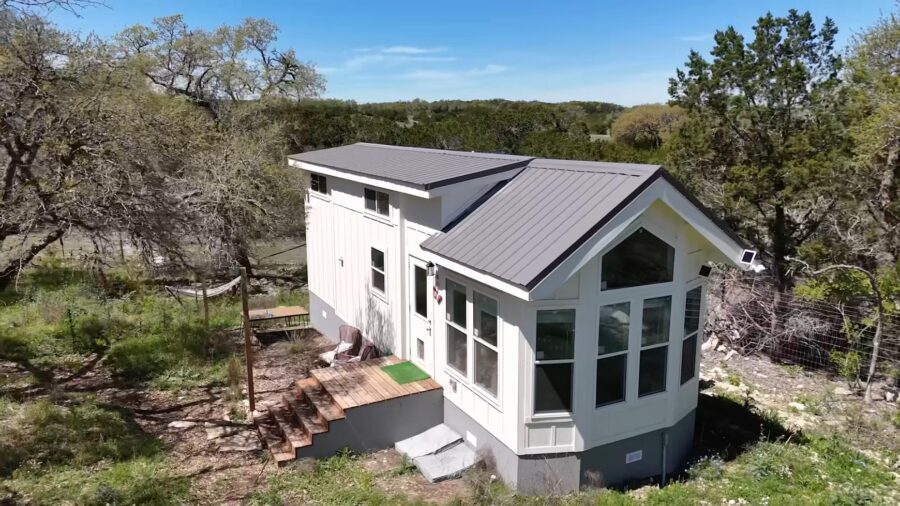
Maya Higa wanted to live where her work was. So when she bought 15 acres in the Texas Hill Country near Austin and founded Alveus Sanctuary, a nonprofit home for about 35 animals that can’t be released back into the wild, she put a 380-square-foot tiny house in a quiet corner of the property. Her red foxes live across the way. Her studio, where she livestreams the animals to a large online audience, is a short walk down the drive.
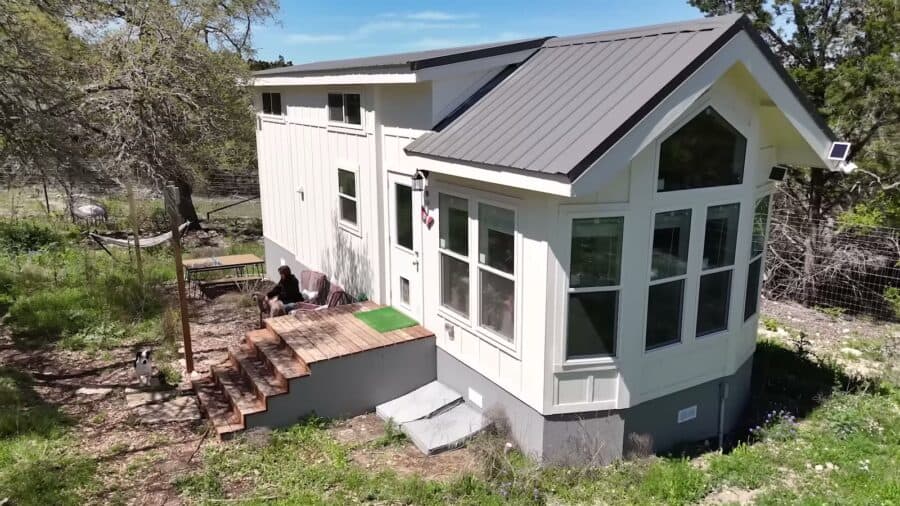
Maya didn’t build the house. It was a model home on a sales lot with other tiny houses, and she bought it as-is. It was trucked to the sanctuary, set down, leveled and ready to live in right away, for a total cost of about $99,000. She shares the 35-by-11-foot home with her two dogs, Bella and Maverick, and an elderly ferret named Mushroom who has his own room.
Jenna Kausal of Tiny House Giant Journey toured the home and the sanctuary with Maya. The house is a good case study in buying a finished model instead of building, and in how a small home fits a life that’s mostly lived outdoors.
Don’t miss other interesting tiny homes like this – join our FREE Tiny House Newsletter!
A Move-In-Ready Model Home Instead of a Custom Build
Plenty of people picture a tiny house as a long DIY project. Maya skipped all of that. “I definitely did not build this myself,” she says. Buying a dealer’s model home meant she could see and walk through the exact house before paying for it, and there was no build queue. Delivery was mostly a matter of preparing a level spot and running power, water and internet to it.
Her checklist was short: lots of windows, high ceilings and a loft to sleep in. The result is bright and open. Standing inside, the 11-foot width and tall ceiling are more noticeable than the square footage. “It actually doesn’t feel tiny to me at all,” she says.
Bay Windows That Make the Living Room Feel Bigger
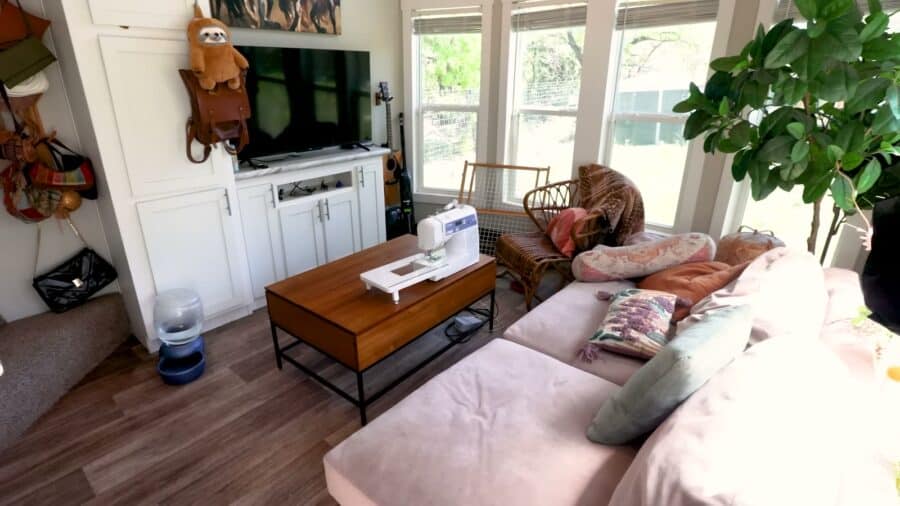
The living room sits at the gabled end of the house, where a three-sided bay of windows pushes out past the main wall. It’s Maya’s favorite spot. She never closes the blinds and wakes up to the morning light. The bay works the way a good porch does: it adds a little floor area, and it pulls your eye outdoors so the room reads as larger than it is.
A pink sectional, a lift-top coffee table, a small TV and her sewing machine all fit here. A setup like this works because each piece has a clear job and the center of the room stays open.
A Real Kitchen for Someone Who Loves to Cook
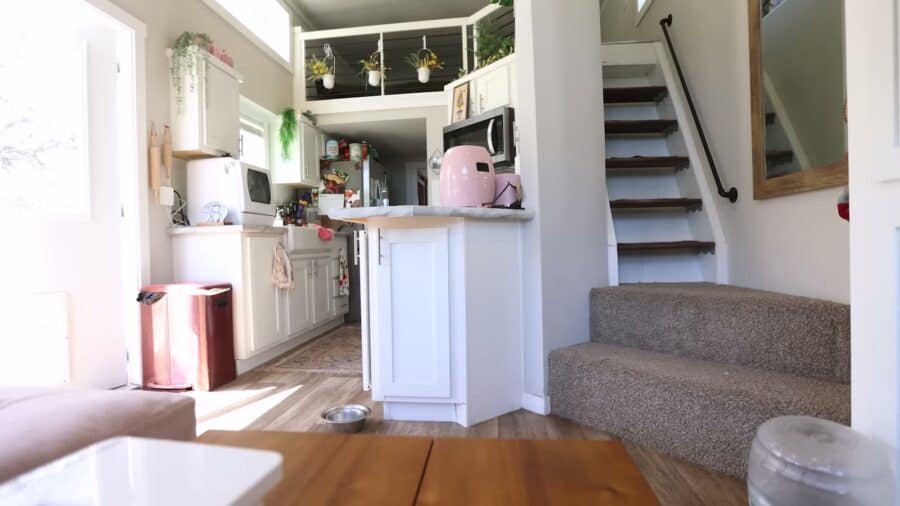
Maya cooks a lot, so the kitchen takes up most of the house, and she says that’s a good thing. There’s a full-size refrigerator, a full range with a microwave above it, and a deep sink. She also tiled the backsplash in a mosaic she did herself and is proud of.
One practical detail: a full-size dishwasher wouldn’t fit, so she uses a countertop dishwasher that hooks up to the sink faucet. It’s a good fix for anyone who wants a dishwasher in a small kitchen without giving up a base cabinet.

A Compact Bathroom With a Generous Shower
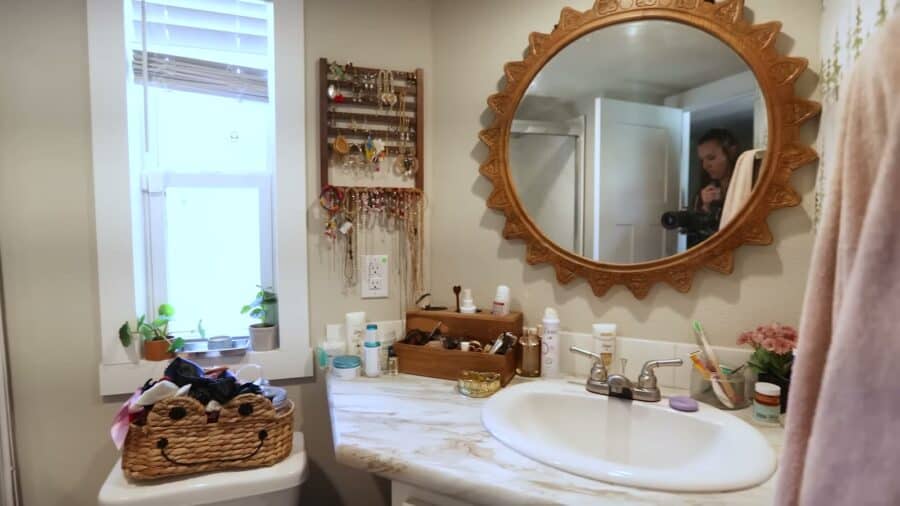
The bathroom is small, but the shower is a good size, and that’s usually the fixture people miss most when they downsize. Maya personalized the room by replacing the small medicine-cabinet mirror that came with the house with a large sunburst mirror. A wall-mounted jewelry organizer beside the window keeps the counter clear.
An 8×8 Office Shared With a Ferret Named Mushroom
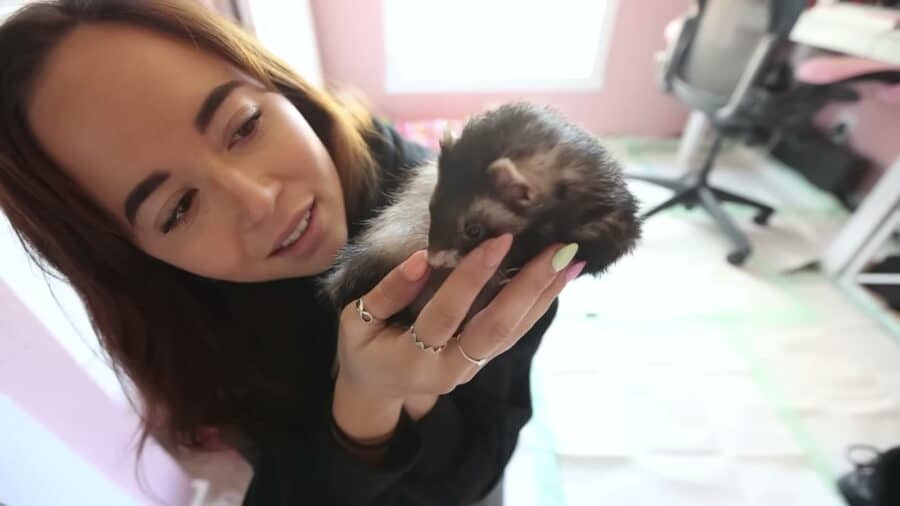
The main-floor bedroom is the most unusual room in the house. It started as Maya’s streaming office. When one of her two older ferrets died, she gave the whole room to the survivor, Mushroom. Now 8 by 8 feet of the house is lined with potty pads and painted pink, her favorite color. A piece of plywood screwed across the doorway keeps the dogs out, and her computer desk shares the space.
It’s a good example of how flexible a main-floor room is in a small house. One room can work as an office, a guest room or, in Maya’s case, a home for a pet, and having that room means the loft never has to do double duty.
A Spacious Sleeping Loft With Built-In Cube Storage
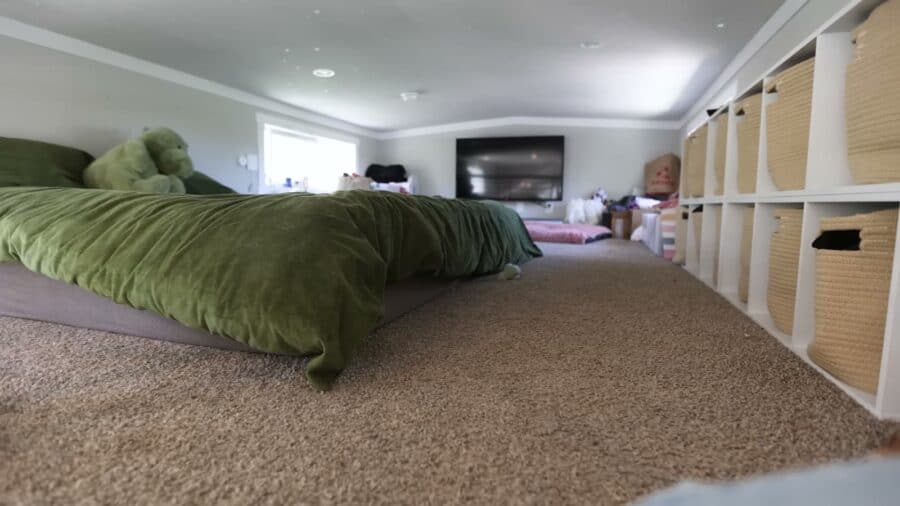
A real staircase, not a ladder, leads to the loft, which is easier on Maya and the dogs, who both sleep up there with her. The loft runs a long way over the kitchen and bathroom, with enough room for the bed, a crafting area and a wall of cube shelving. Woven baskets in the cubes hold most of her clothes, so the house doesn’t need a big closet.
She also stuck glow-in-the-dark stars on the ceiling. With the ceiling so close overhead, she says it feels like being out in space.
A Fenced Yard With a Dog Door
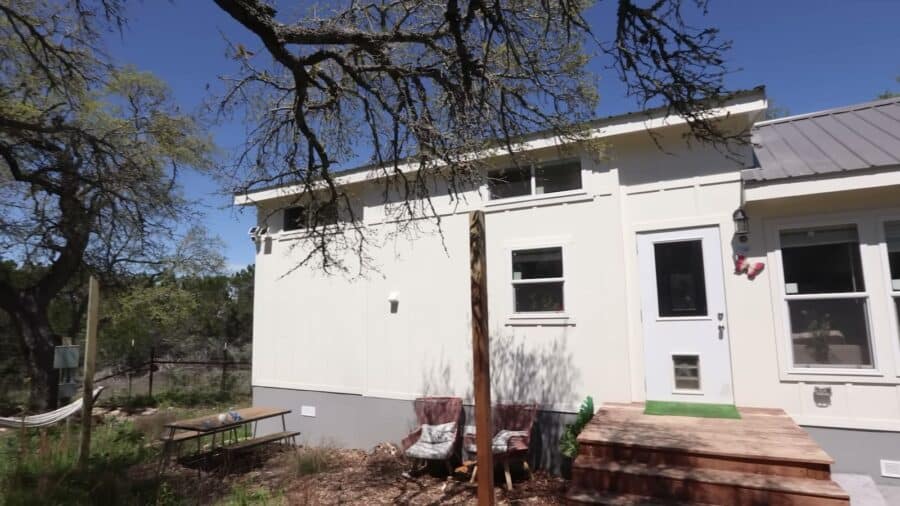
Outside, a privacy fence encloses Maya’s yard so Bella and Maverick can run freely, and a dog door lets them come and go from the house. A small deck leads to the back door. She set posts for string lights over a hangout area and admits that project stalled after a couple of days. Utilities were brought in for the house, and an air-conditioning unit, which you need in Central Texas, sits out back.
A Yard Left Wild for Pollinators
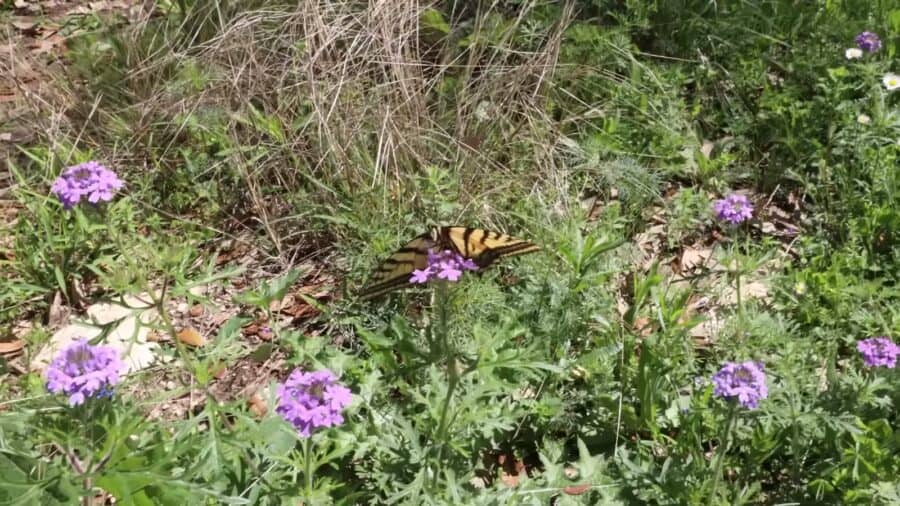
The yard looks overgrown on purpose. Maya is especially passionate about invertebrate conservation, so she leaves the native plants mostly undisturbed to give caterpillars, moths, butterflies and beetles a place to live. “It looks kind of crazy because it’s undisturbed, but that’s how they like it, so that’s how I like it,” she says. A hanging swing gives her a place to read among them.
It’s an easy idea to borrow. A small house on a big lot leaves a lot of land, and letting part of it grow native costs nothing and does more for wildlife than mowed grass.
Life on a 15-Acre Animal Sanctuary
Almost all of the property belongs to the sanctuary. Maya founded Alveus in 2021, after she started livestreaming while rehabilitating hawks in California in 2019 and saw how viewers bonded with the animals on screen. Her idea is that people who get to know one animal’s name, personality and favorite foods will care more about its species in the wild.
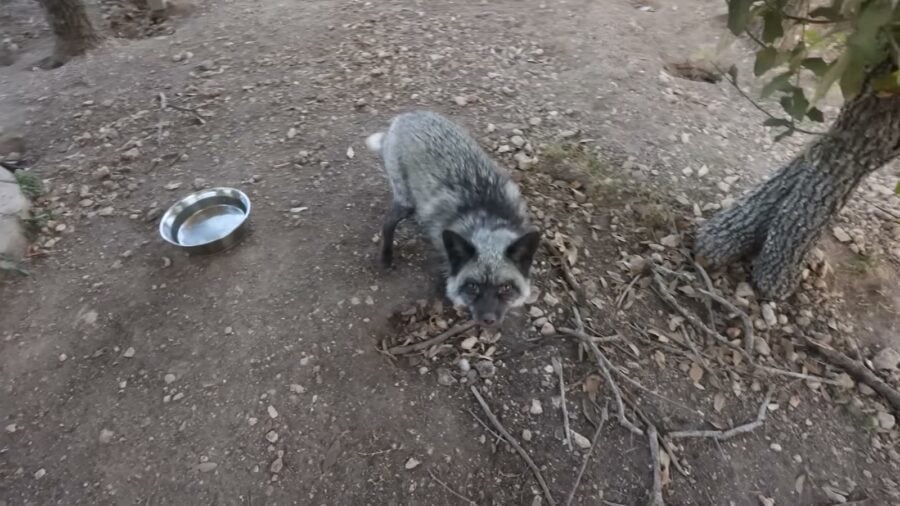
Every resident has a story that teaches something. Across from Maya’s house are two American red foxes. Fenn came from the illegal pet trade, where foxes are bred for unusual coat colors like his, and Reed was orphaned in California and raised by people, so neither can survive in the wild. The sanctuary also has crows, a sulcata tortoise, parrots, chickens, chinchillas, reptiles and insects.
The Studio Where the Sanctuary Goes Live
Three buildings came with the land: a house where an animal care staff member lives, a nutrition house for preparing diets and enrichment, and the studio where Maya works every day. The studio is full of cameras, lights, microphones and monitors, and it’s where much of Alveus’s educational programming is filmed and streamed. Because her house is close by, her commute is a walk across the property.

Stompy the Emu and the Pasture Residents
The pasture is the other half of the sanctuary. Stompy, a common emu, arrived at 14 days old after he was hatched in an incubator and raised by people at a California zoo. He’s now a fully grown, very affectionate bird and one of the sanctuary’s education ambassadors.

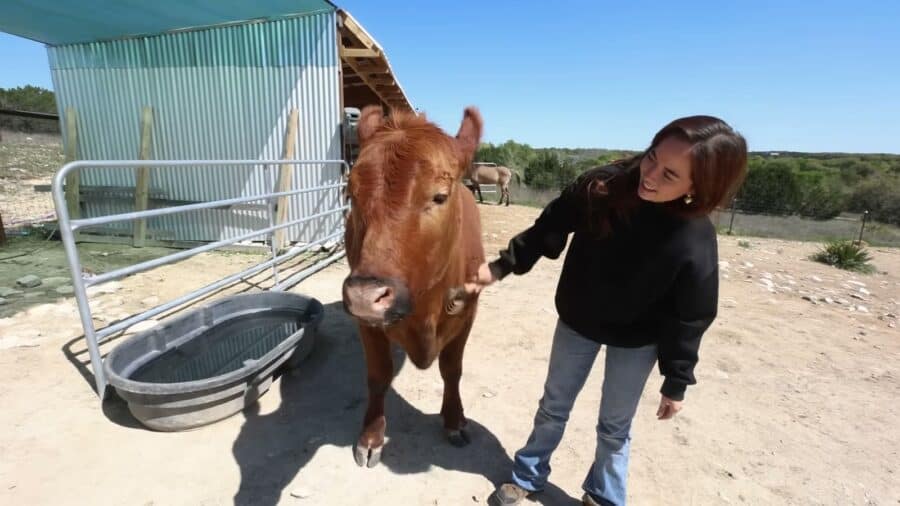
He shares the pasture with two donkeys, Jalapeño and Serrano, both rescued from a Central Texas feedlot, and with Winnie the Moo, a Red Angus cow from a beef operation in Oklahoma. Maya uses Winnie to talk about the environmental impact of agriculture and how consumer choices add up. When the video was filmed, Winnie had just turned two, which is already longer than most beef cattle live.
Opa and Momo, Two Rescued Marmosets
Two marmosets, Opa (a common marmoset) and Momo (a black-tufted marmoset), were rescued from a neglectful pet owner. Opa arrived with metabolic bone disease and little use of his back legs. Momo had dental disease so severe that more than half of his teeth were removed. Both have recovered. They live in an enclosure with outdoor space and a heated and air-conditioned indoor room, which these small Brazilian primates need to get through Texas winters and summers.

Growing the Sanctuary
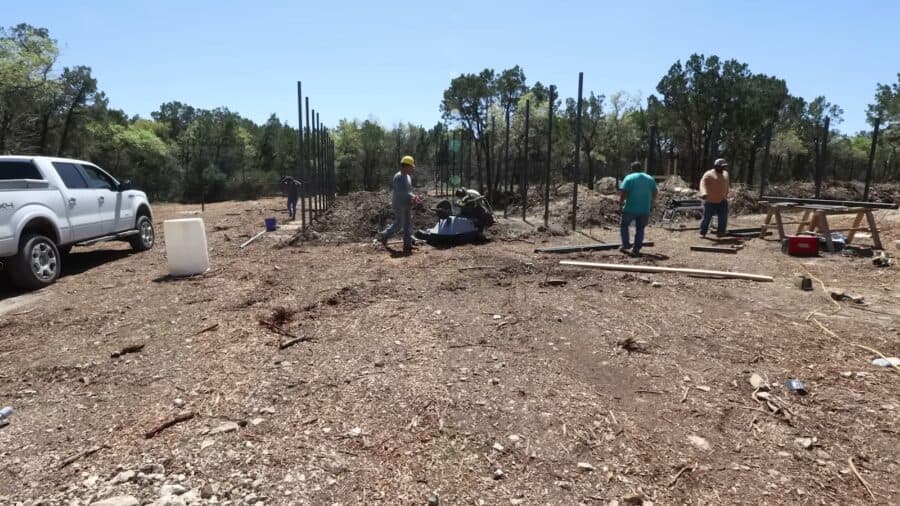
When the video was filmed, Alveus was working on its largest project yet: an enclosure for two wolves coming from another facility. Maya’s whole house is 35 by 11 feet. The wolf enclosure was planned at 220 by 65 feet. That contrast says a lot about her priorities: keep her own space small and give the animals as much room as possible.
Living Small to Leave Room for Wild Places
Maya connects her tiny house to her conservation work. Habitat loss is the leading cause of extinction worldwide, she points out, and much of it comes from clearing land to make things we use briefly and throw away. Consuming less is one of the most useful things a person can do, and a smaller home naturally leads to buying less. She admits the hardest part of tiny living for her is clutter. Anything left on the counter makes the whole house look messy, so she has had to cut back on her belongings.
Design Details
- Size: about 380 sq. ft. (35 ft. long by 11 ft. wide)
- Type: model home bought as-is from a tiny house sales lot, trucked in and leveled on site
- Total cost: about $99,000
- Location: Alveus Sanctuary, a 15-acre property in the Texas Hill Country near Austin
- Sleeping: long staircase-access loft with cube-shelf clothing storage
- Main floor: bay-window living room, full kitchen, bathroom with a large shower, and an 8×8 office/pet room
- Kitchen: full-size fridge, full range, microwave, deep sink, countertop dishwasher, DIY mosaic backsplash
- Utilities: grid electricity, water and internet run to the house; air conditioning
- Outdoors: fenced dog yard with a dog door, small deck, native pollinator garden
- Residents: Maya, dogs Bella and Maverick, and Mushroom the ferret
What Makes This Tiny Home Special
- Buying a model can be the fastest path. Maya walked through the finished house before buying, skipped the build wait, and lived in it as soon as it was set down.
- Windows and ceiling height matter more than square feet. The bay window and tall ceiling are why 380 square feet doesn’t feel tiny to her.
- A main-floor room is very flexible. Hers has been a streaming office and a pet room, and it keeps the loft for sleeping only.
- Stairs beat ladders when pets share the loft. Both dogs climb up to sleep with her every night.
- Small appliances solve small-kitchen problems. A countertop dishwasher on the faucet gives her a dishwasher without losing a cabinet.
- A small house leaves land for nature. Living small on a large property leaves most of the land for animals and native plants.
Learn More and Support Alveus
- Alveus Sanctuary – the nonprofit’s official site, with the animals’ stories and ways to donate or support the sanctuary
- Alveus on Twitch – live camera feeds and educational streams from the enclosures
- Alveus on YouTube and Instagram – videos and updates on the residents
- Maya Higa on Instagram, Twitch and YouTube – Maya’s personal channels
- The Xerces Society – a well-regarded invertebrate conservation nonprofit with free guides to planting for pollinators, if Maya’s wild yard inspires you
- Tiny House Giant Journey on YouTube – Jenna’s channel of home tours, including this one
Video Tour: Maya’s Tiny House and Alveus Sanctuary
Highlights
- Maya Higa founded Alveus Sanctuary in 2021 and lives on site in a 380 sq. ft. tiny house.
- She bought a finished model home as-is for about $99,000 and had it delivered, so she could move in right away.
- The bay-window living room, high ceilings and long staircase loft make the home feel much larger than it is.
- An 8×8 main-floor office doubles as a room for her ferret, Mushroom; her two dogs sleep in the loft with her.
- The sanctuary cares for about 35 non-releasable animals, including foxes, marmosets, an emu, donkeys, a cow, parrots and chickens, and shares them with viewers through livestreams.
- Her yard is left wild for pollinators, part of her belief that living small leaves more room for wild places.
Related Stories
- What Going Smaller Really Costs: Tiny House, Park Model, ADU, and More
- Pam and Jeff’s Debt-Free Retirement in a No-Loft Park Model at The Oaks on 37
- Tiny Timbers Agrihood: 16 Tiny Homes Around a Garden in St. Croix Falls, Wisconsin
- Her Scandinavian-Style Tiny Home in Tasmania!
Our big thanks to Jenna for sharing!
You can share this using the e-mail and social media re-share buttons below. Thanks!
If you enjoyed this you’ll LOVE our Free Daily Tiny House Newsletter with even more!
You can also join our Small House Newsletter!
Also, try our Tiny Houses For Sale Newsletter! Thank you!
More Like This: Tiny Houses | Video Tours | Solo Tiny House Living | Tiny House Interiors
See The Latest: Go Back Home to See Our Latest Tiny Houses
Disclosure: This post may contain affiliate links. If you purchase through one of our links, we may earn a commission at no additional cost to you.


Alex
Latest posts by Alex (see all)
- A Family of Four Lives Mortgage-Free in a 20-Ft Shipping Container in Queensland - October 28, 2026
- Sleeping Barrel: A Wooden Barrel Cabin in a Sheep Pasture in Germany - October 28, 2026
- Sleep in a Boeing 727 Above the Jungle at Hotel Costa Verde in Costa Rica - October 28, 2026







Oh I love your home and a sewing machine on top of it. Pink and Red are my favorite colors plus purple. Colors of the rainbow are delightful to me. Dogs, yes, I rescue only old abandoned, dumped, abused seniors dogs, on no. 5 at the moment as I live in an apt that only allows 1 dog at a time….being an ole senior lady I feel that is better then not helping at all. I love dogs and horses and nature and life and trees and color…You seen like such a delightful young lady…Keep up the great work your doing!