
Disclosure: This post may contain affiliate links. If you purchase through one of our links, we may earn a commission at no additional cost to you.
Bellingham, Washington is about to become one of the most interesting tiny house towns in America — not because of a builder or a luxury THOW, but because the city keeps proving that a cluster of 96-square-foot cabins can pull people off the street and into permanent housing.
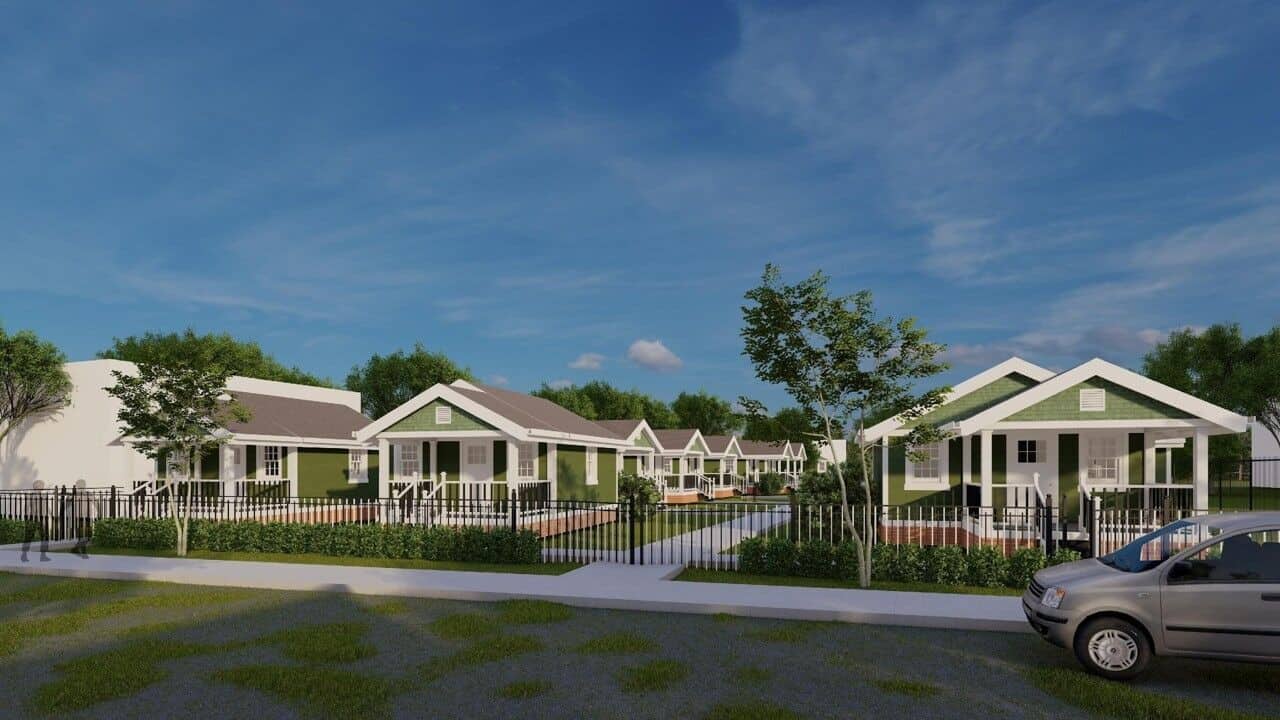
The city has just confirmed its third tiny home village. It will bring 35 to 40 tiny houses to a city-owned lot at 2140 Division Street in the Irongate neighborhood, with construction starting in the winter of 2026 and residents expected to move in during early 2027. The nonprofit HomesNOW! Not Later will operate it, using the same resident-governed model that has made its North Haven village one of the most quietly successful shelter projects in the Pacific Northwest.
Images courtesy of HomesNOW! Not Later
What Is Actually Being Built on Division Street
The site sits next to the Whatcom County Jail Work Center and the county’s triage center, on land the city already owned and had been using for storage. That location is not an accident. Putting transitional housing beside existing county services means residents leaving jail, detox, or crisis care have somewhere to land that is not a sidewalk.
Here is what the city has committed to so far:
- 35 to 40 tiny homes for adults exiting homelessness
- A shared kitchen, bathroom, shower and laundry building
- Full electrical, water and sewer hookups run to the site
- Resident self-governance with peer support, following the HomesNOW! model
- Construction beginning winter 2026, opening early 2027
Total cost is roughly $1.2 million — which works out to somewhere near $30,000 per unit including all the site infrastructure. For context, a single unit of conventional affordable apartment housing in Washington routinely runs $300,000 to $400,000 to build. That order-of-magnitude difference is the entire argument for tiny home villages as emergency infrastructure.
Where the Money Comes From
The funding is stacked from three local sources rather than a single federal grant, which is part of why this project can move on a roughly 18-month timeline instead of a five-year one:
- $500,000 — City of Bellingham Affordable Housing Sales Tax
- $400,000 — Justice Project Sales Tax
- $300,000 — Community partners and donations
The city funds construction and initial setup. HomesNOW! then handles daily operations, which keeps the ongoing public cost dramatically lower than a staffed congregate shelter.
You can read the city’s own announcement on the City of Bellingham news page, and the original reporting from Cascadia Daily News.
Images courtesy of HomesNOW! Not Later
The Model It’s Copying: North Haven
To understand why Bellingham is building a third village, you have to look at the second one.
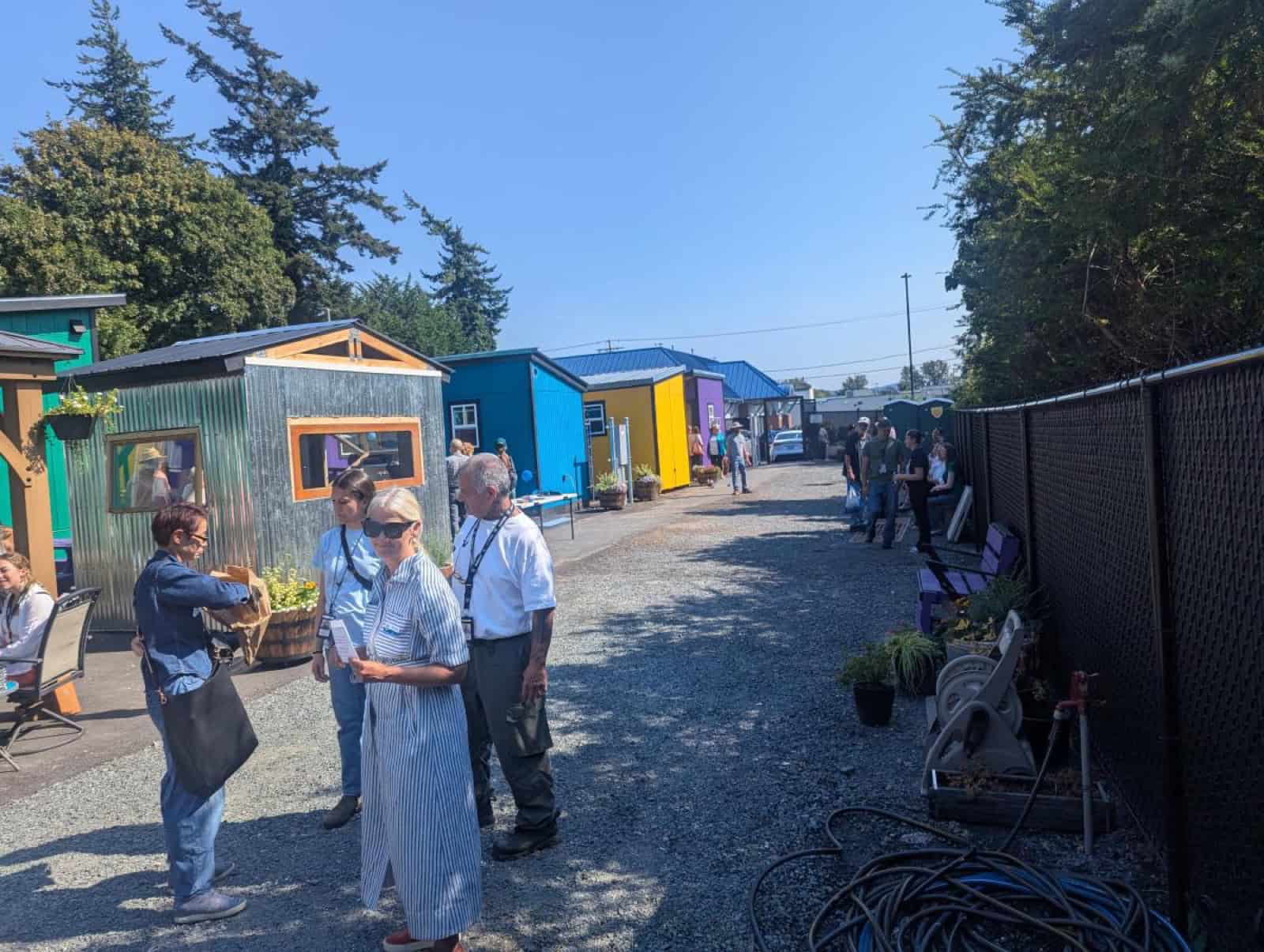
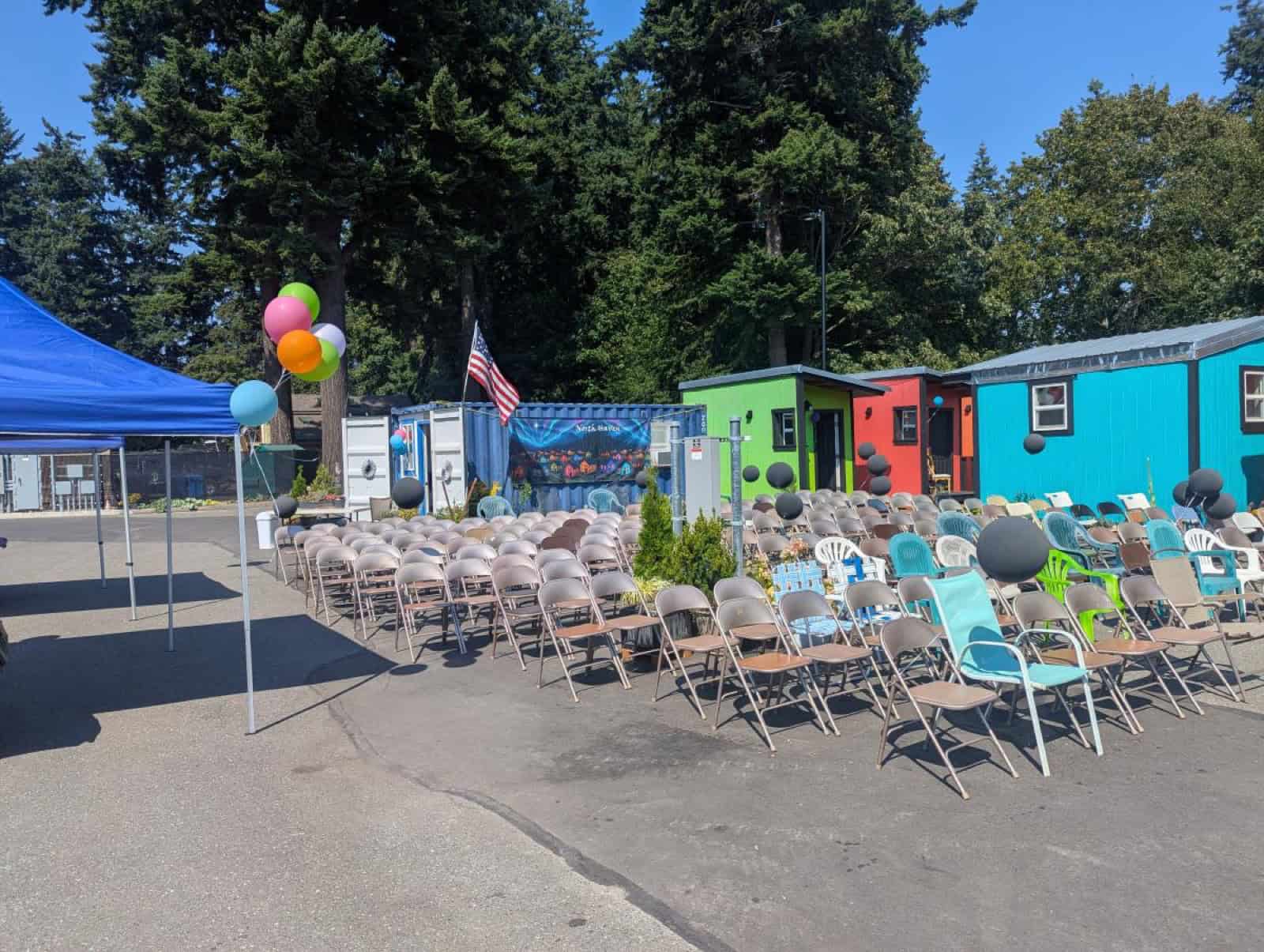
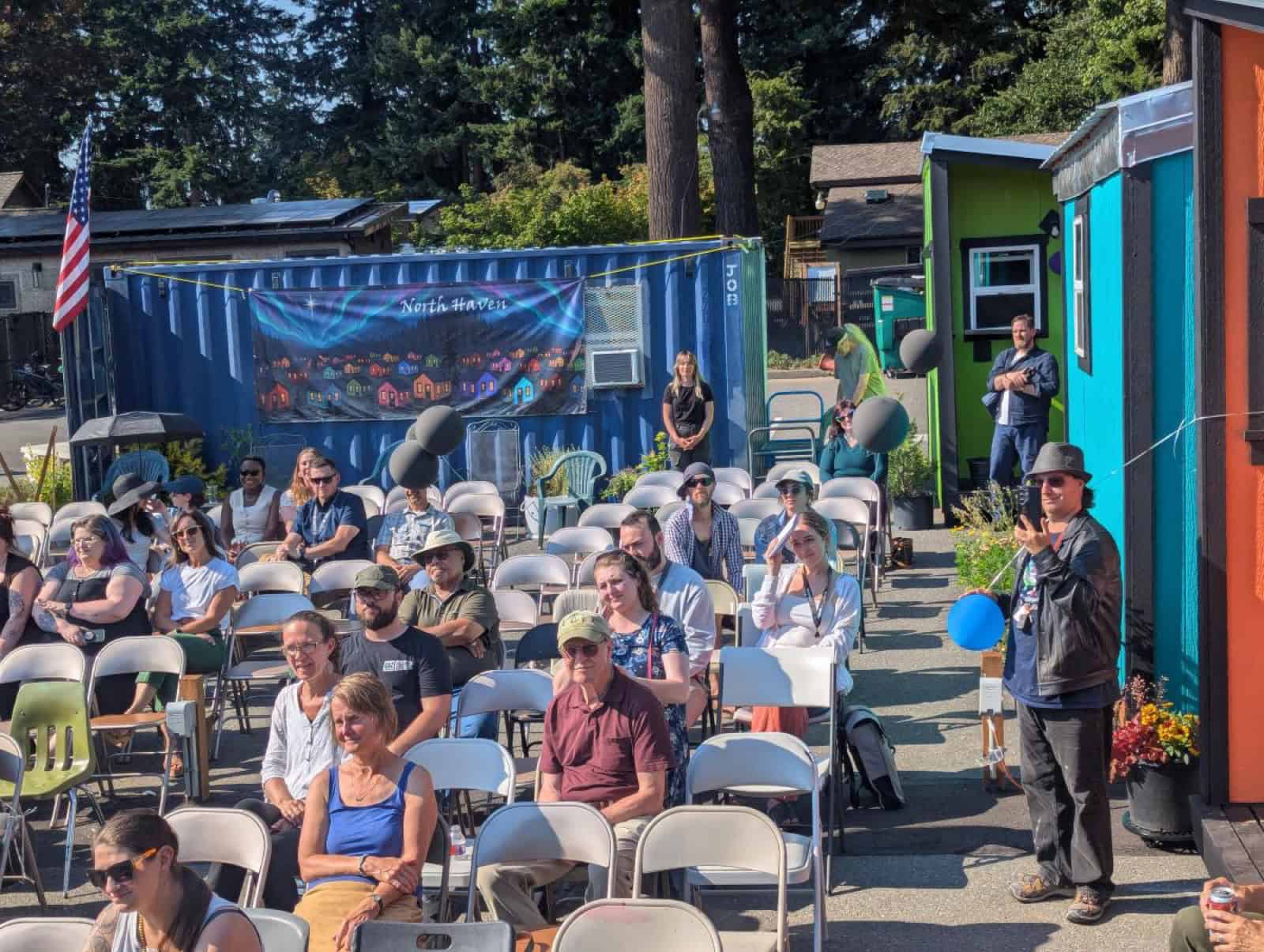
North Haven opened at 3300 Northwest Avenue in the Birchwood neighborhood in May of 2025, with a public celebration that August. It holds 47 tiny homes — 19 newly built, plus 23 relocated from the old Unity Village in Fairhaven and the Swift Haven site in the Puget neighborhood. Rather than run three scattered camps, the city consolidated them onto one properly serviced property it purchased for $1.2 million, with about $1.4 million more in site development and relocation.
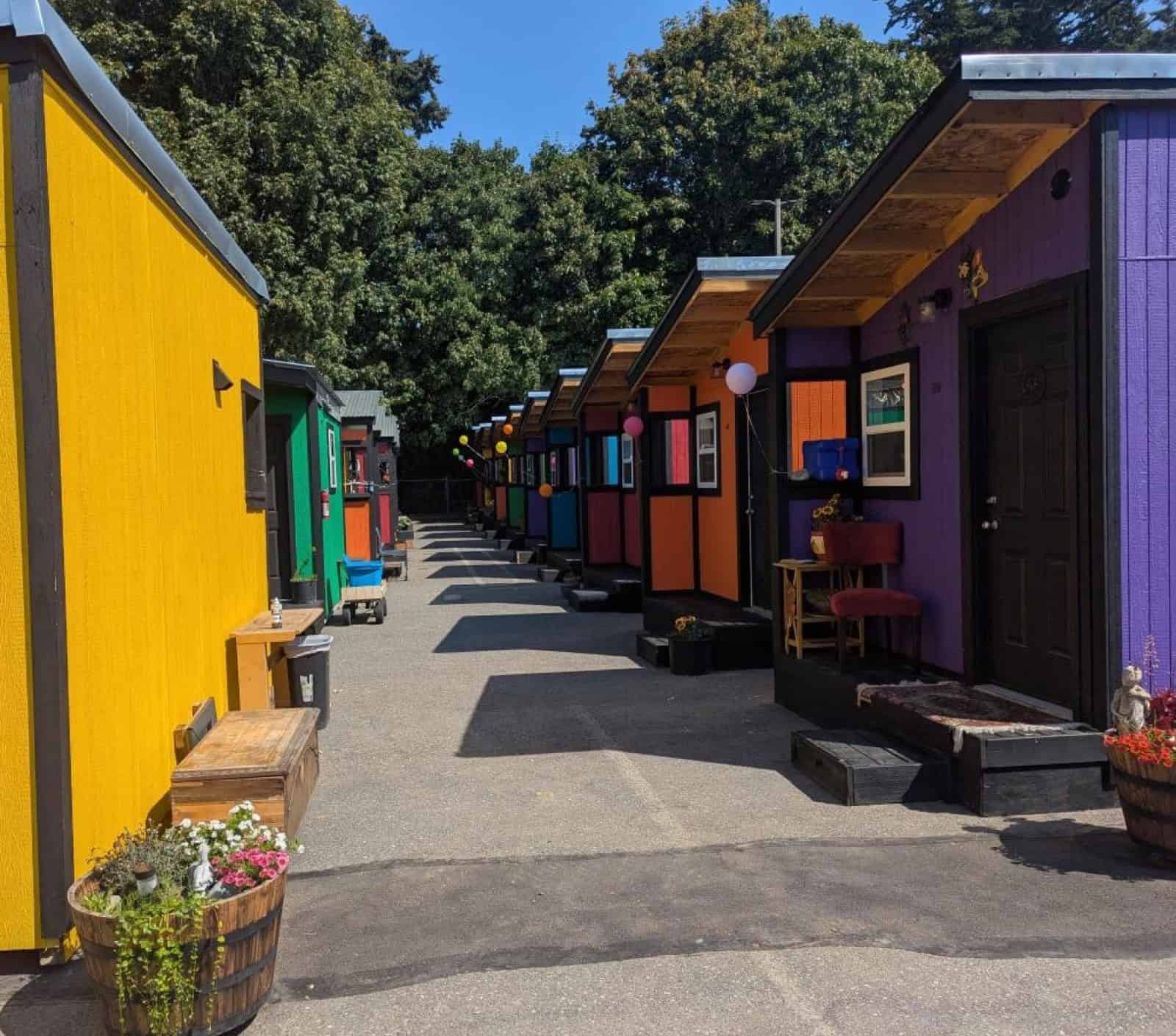
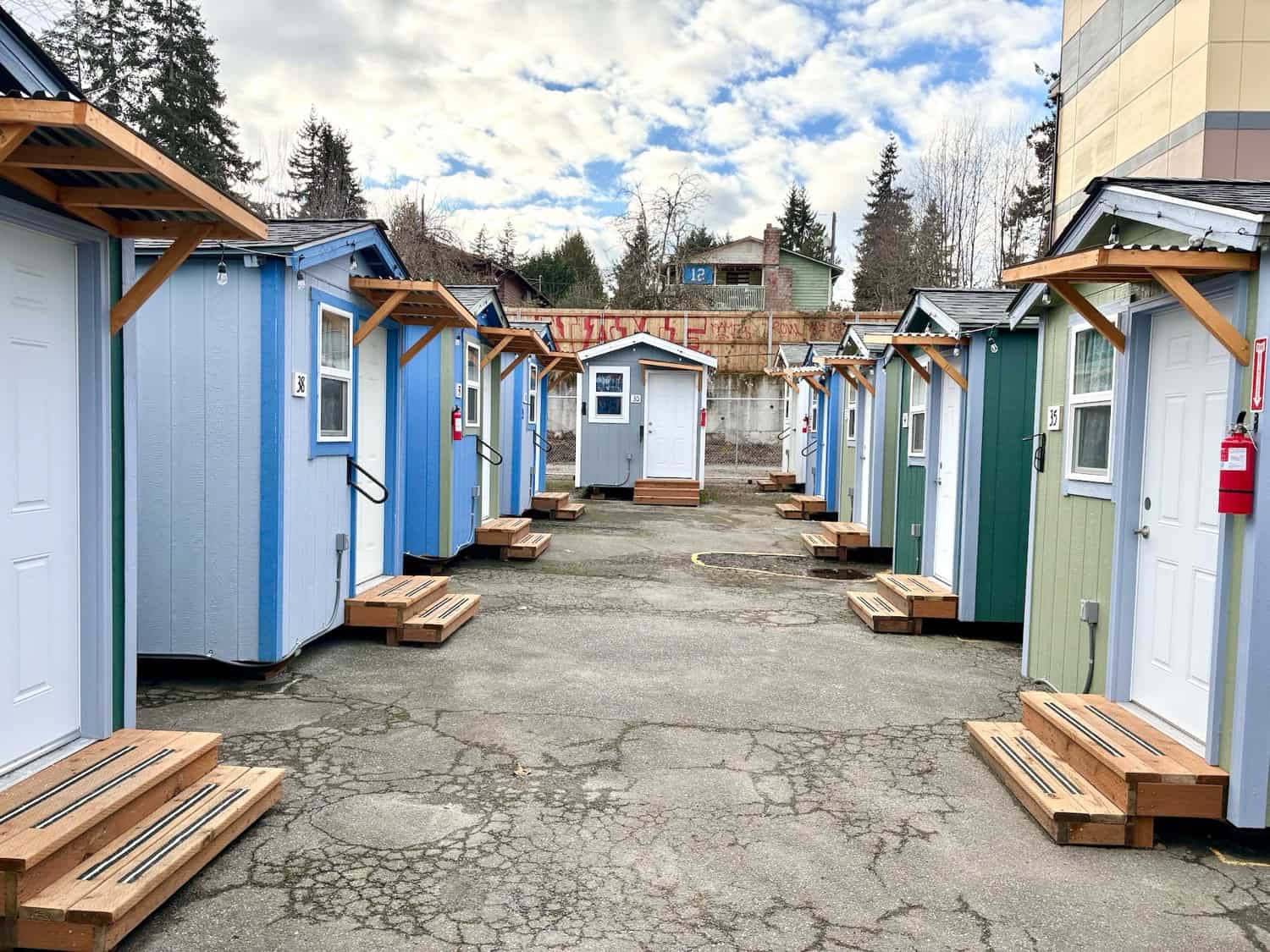
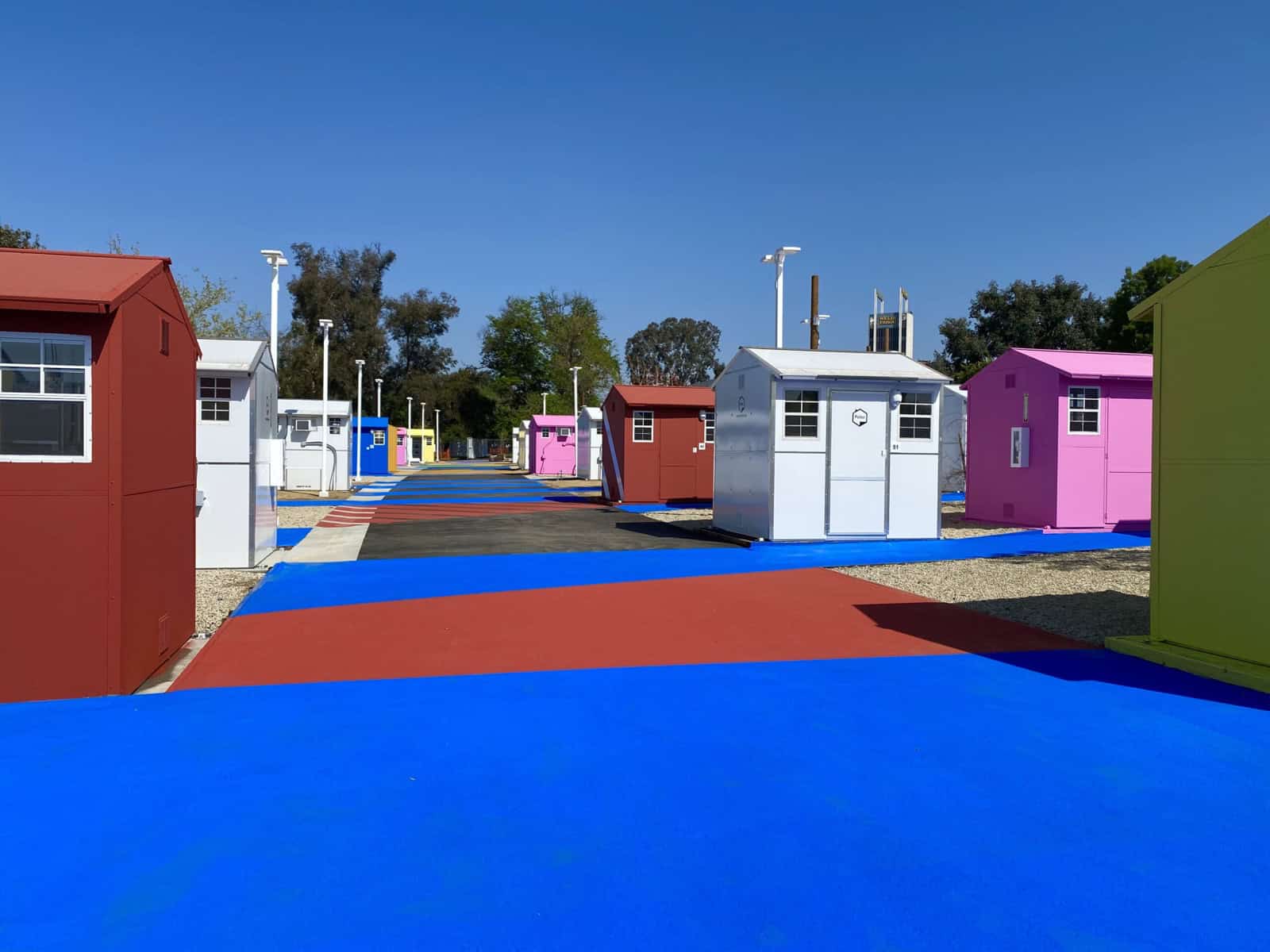
Each home is 8 feet by 12 feet — 96 square feet — with insulation, heat, electricity, a window and a door that locks. That last detail matters more than it sounds. A locking door is the difference between sleeping and not sleeping.
Residents share:
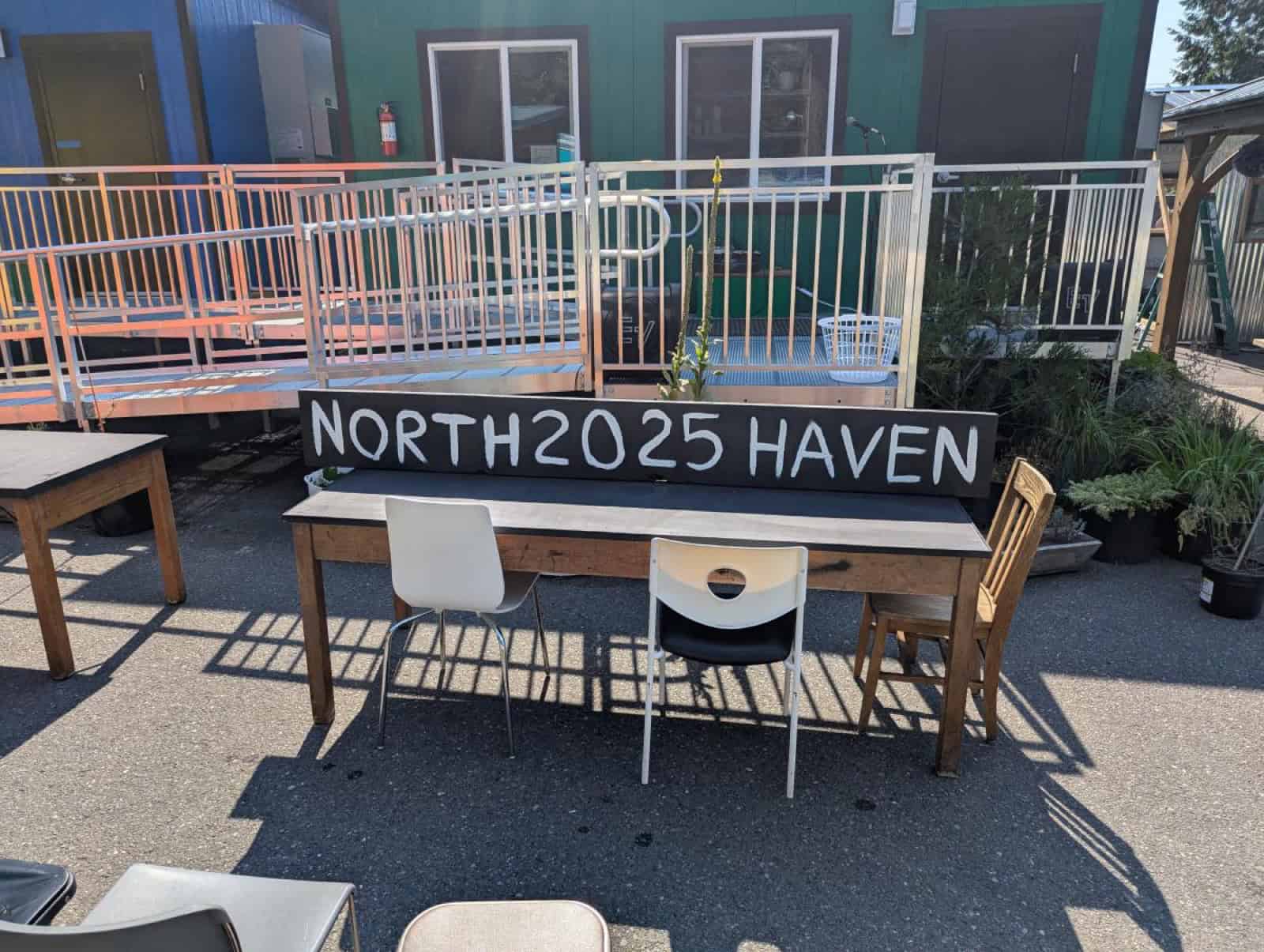
- Two kitchens, one of them ADA accessible
- Bathrooms, showers and laundry
- Covered common areas and a gazebo
- Garden beds and container planting
Pets are allowed. Alcohol and hard drugs are not.
Images courtesy of HomesNOW! Not Later
A 70 Percent Rehousing Rate
The number that should get national attention: North Haven moves roughly 70 percent of its residents into permanent housing.
That figure comes from HomesNOW! co-director Tina Hayes, who was herself formerly unhoused. Her framing of the village is worth quoting directly:
“It’s only a stepping stone. We’re here to give a hand up, not a hand out.”
The village is not designed to be permanent housing and does not pretend to be. Residents can stay as long as they are actively working toward permanent housing — there is no arbitrary 30-day or 90-day clock — but the entire structure is oriented toward exit. Staff and peer leaders help residents with mental health treatment, substance recovery, job training, resume building, rebuilding a rental history, and basic life skills that get lost during years on the street.
In a one-year retrospective published in July 2026, residents described what the change actually felt like:
“It was a miracle. It was a God-send. I was getting ready to die on the streets.” — Desiree Rodriguez, resident and village coordinator
“It saved me from a lot of things. I’m not at rock bottom anymore.” — Tina Eastman, resident and mother, eleven months at North Haven
Frank Jones, a co-coordinator who spent five years homeless before arriving, pointed to the two things the village provides that no amount of outreach can: stability and safety.
Residents Build and Run the Place
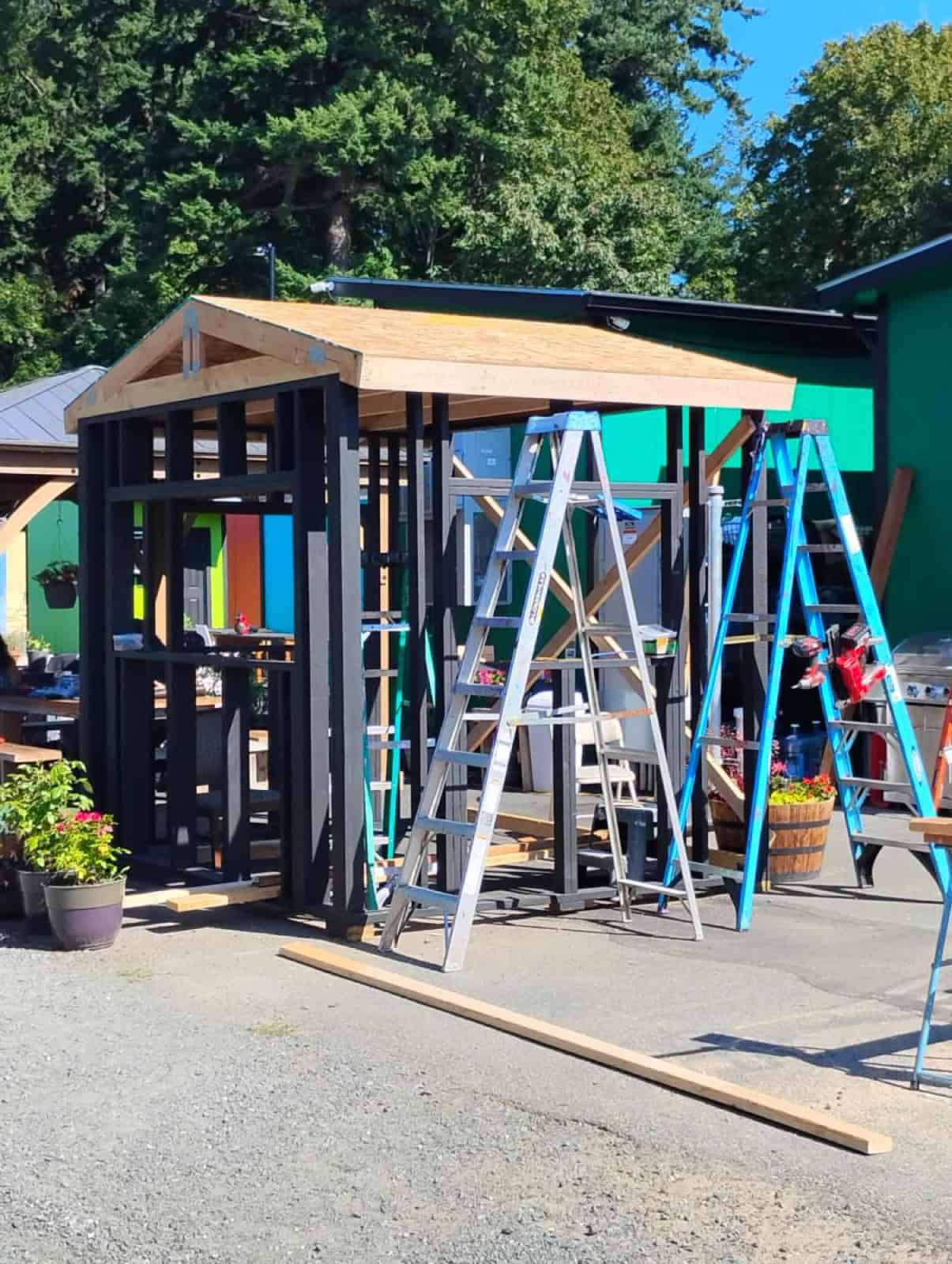
This is the part most tiny house readers will find genuinely interesting. HomesNOW! villages are not managed from an office downtown. Residents are elected to coordinator roles, enforce the code of conduct themselves, screen applicants, and — as the photos below show — build and repair the units.
Images courtesy of HomesNOW! Not Later
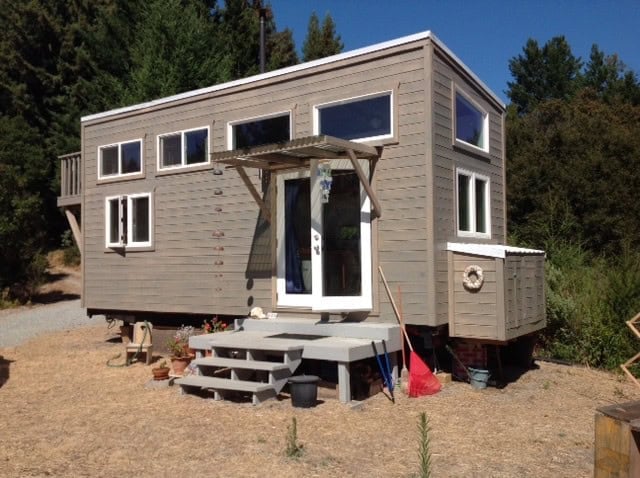
The construction is deliberately simple: stick-framed walls, a shed or shallow-gable roof, corrugated metal or painted T1-11 siding, a single window, an entry door. Nothing here requires a specialized builder. That simplicity is what allows a village to be assembled by volunteers and residents for a fraction of conventional cost — and it is exactly the same construction logic that DIY tiny house builders use.
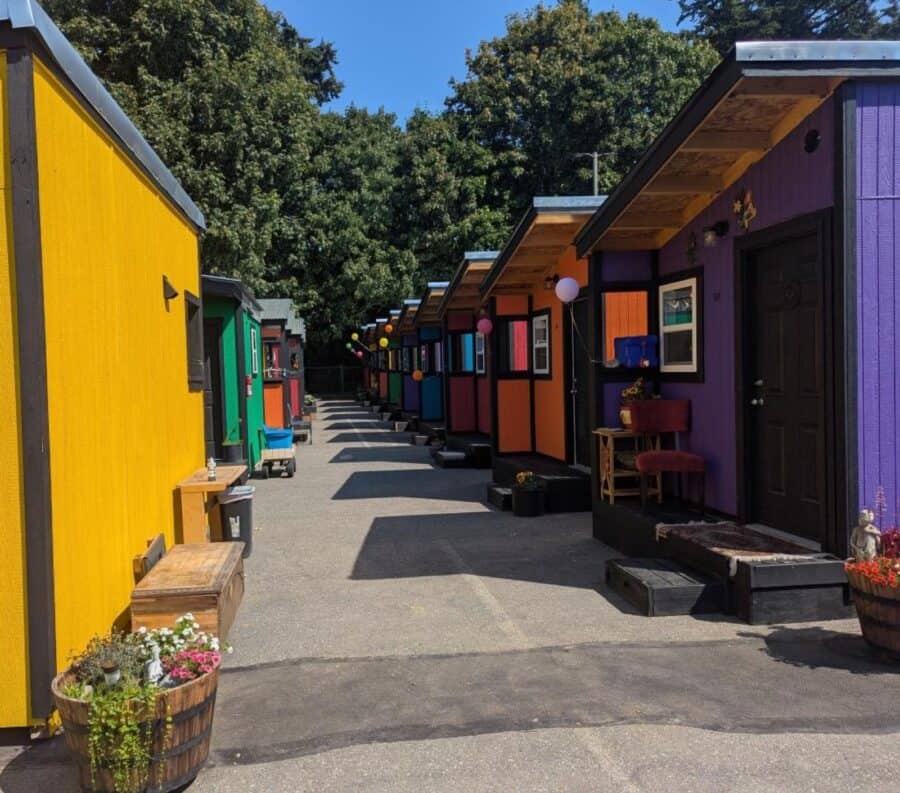
Then residents make them their own. Look closely at the hero photo and you’ll see house numbers, framed art hung beside the doors, potted sunflowers, a small side table, a welcome mat, a chair on the stoop. That is not a shelter bed. That is an address.
Bellingham’s Other Village: Gardenview
The city’s first village, Gardenview, opened in 2021 at 1399 Woburn Street on the former “Clean Green” municipal facility site. It holds 35 tiny houses, also 8×12, available to singles or couples.
Gardenview runs on a different model than the HomesNOW! villages. It is managed by the nonprofit Road2Home in partnership with the City of Bellingham, Whatcom County, and the Low-Income Housing Institute (LIHI) — the same Seattle organization behind that city’s tiny house village network. Gardenview provides 24/7 staff supervision and housing case management, and it primarily serves homeless seniors and medically fragile adults.
So Bellingham now runs two complementary approaches side by side: a staffed, higher-support model at Gardenview for people who need clinical oversight, and a resident-governed, peer-led model at North Haven and the coming Division Street site for people who can self-manage with support. Once all three are open, the city will have roughly 117 to 122 tiny homes dedicated to transitional housing.
Images courtesy of HomesNOW! Not Later
The Regulatory Catch Nobody Talks About
Here is the structural problem hanging over all of this: Bellingham’s municipal code does not currently allow permanent tiny home villages.
Under the existing code, a permitted village can operate in one location for two years, followed by up to three one-year extensions. That is a five-year maximum before the village must, in theory, pick up and move.
This is why Unity Village and Swift Haven were relocated into North Haven in the first place. It is an enormous amount of churn for infrastructure that requires trenching in sewer, water and power. It also makes it difficult to justify better-built units, because nobody wants to invest in a permanent-quality structure on a temporary permit.
If Bellingham wants tiny home villages to be part of its long-term housing strategy — and building a third one strongly suggests it does — the code will eventually need to catch up. Watch for that conversation at City Council over the next couple of years. It is the single biggest variable in whether these villages become durable infrastructure or stay in permanent motion.
Why This Matters Beyond Bellingham
Whatcom County’s 2025 Point-in-Time count recorded 815 individuals across 650 households experiencing homelessness, including 337 people unsheltered — sleeping in places not meant for human habitation. Roughly 120 tiny homes obviously does not solve that. But it makes a serious dent in the unsheltered number, at a cost and a construction speed that conventional housing simply cannot match.
The broader lesson for the tiny house movement is this: the same things that make a tiny house appealing to a voluntary downsizer — low cost, fast build, small footprint, simple systems, strong community — are the exact things that make it work as emergency housing. The difference is only who holds the key.
Bellingham has now run this experiment for five years across three sites, with a 70 percent rehousing rate to show for it. Other cities should be paying attention.
Images courtesy of HomesNOW! Not Later
Division Street Village at a Glance
- Location: 2140 Division Street, Irongate neighborhood, Bellingham, WA
- Units: 35–40 tiny homes
- Typical unit size: 8′ x 12′ (96 sq ft), based on the North Haven standard
- Operator: HomesNOW! Not Later
- Land: City-owned, previously used for storage
- Cost: ~$1.2 million
- Funding: $500K affordable housing sales tax, $400K justice project sales tax, $300K community partners
- Shared facilities: Kitchen, bathrooms, showers, laundry
- Utilities: Electrical, water, sewer
- Governance: Resident self-governance with peer support and a code of conduct
- Stay length: Open-ended while actively seeking permanent housing
- Construction begins: Winter 2026
- Opens: Early 2027
Bellingham’s Three Villages Compared
- Gardenview — 1399 Woburn St. | 35 homes | opened 2021 | operated by Road2Home with LIHI | 24/7 staffing | serves seniors and medically fragile adults
- North Haven — 3300 Northwest Ave. | 47 homes | opened May 2025 | operated by HomesNOW! | resident-governed | ~70% rehousing rate
- Division Street — 2140 Division St. | 35–40 homes | opening early 2027 | operated by HomesNOW! | resident-governed
Learn More and Get Involved
- HomesNOW! Not Later — the operating nonprofit; accepts donations, volunteers and building material contributions
- City of Bellingham — City to build third tiny home village
- City of Bellingham — North Haven Village project page
- City of Bellingham — Gardenview Tiny House Village project page
- Road2Home — Gardenview Village
- Cascadia Daily News — New tiny home village set to open in Bellingham in 2027
- The Spokesman-Review — This Bellingham tiny village opened a year ago. Residents say it saved them
- Salish Current — North Haven tiny home village officially opens
- Whatcom County — Homelessness & Housing data
Highlights
- Bellingham’s third tiny home village will bring 35–40 homes to 2140 Division Street
- Construction starts winter 2026; residents move in early 2027
- Total cost roughly $1.2 million — about $30,000 per unit with infrastructure
- Operated by HomesNOW! Not Later using resident self-governance
- Modeled on North Haven, which reports a ~70% permanent rehousing rate
- Units are typically 8′ x 12′ with heat, power, insulation and a locking door
- Shared kitchens, bathrooms, showers and laundry serve the village
- City code still caps villages at two years plus three one-year extensions
- Once open, Bellingham will have roughly 120 tiny homes in transitional use
What do you think — should more cities be building tiny home villages like this instead of large congregate shelters? Let us know in the comments.
You can share this tiny house with your friends and family for free using the easy share buttons below. Thanks!
Join our Tiny House Newsletter for more!
=> https://tinyhousetalk.com/tinyhousenewsletter
Join The Small House Newsletter
=> https://tinyhousetalk.com/small-house-newsletter/
Join Our Tiny Houses For Sale Newsletter
=> http://tinyhousetalk.com/tiny-houses-for-sale-newsletter
Disclosure: This post may contain affiliate links. If you purchase through one of our links, we may earn a commission at no additional cost to you.


Alex
Latest posts by Alex (see all)
- The Atlas by Zook Cabins: A 233 Sq. Ft. Park Model With a Bed That Rolls Onto the Deck - October 22, 2026
- Red Oak Fire Lookout: An 80-Foot Steel Tower With a 14×14 Cab - October 22, 2026
- White Oak Treehouse: Built Into a 210-Year-Old Oak - October 22, 2026

Keep enabling drug addicts instead of forcing them to go into treatment programs to kick their addiction and get jobs and contribute to society. Living for 20 years in Seattle showed me providing freebies to addicts does not change them or solve anything. Yet law abiding non-addicts struggle to pay their bills including high property taxes to fund addicts who increasingly make Seattle so unsafe. Bellingham should have paid attention to what has happened in once beautiful Seattle…..drug wars, residents putting up barricades to keep the violence out, the Mayor losing all major businesses fleeing to safer states, etc.
Silencing free speech? That’s very Nazi behavior….
Your free speech comment is up…..was just stuck in approval.
I am in need of housing and have built a lot of structures in my lifetime,I’m not a carpenter but was raised by a master carpenter…I could help in some of the construction at a limited pace as I’m 61 and on ssdi my name is Garth Kneer and have lived in the county since 1968…