
Disclosure: This post may contain affiliate links. If you purchase through one of our links, we may earn a commission at no additional cost to you.
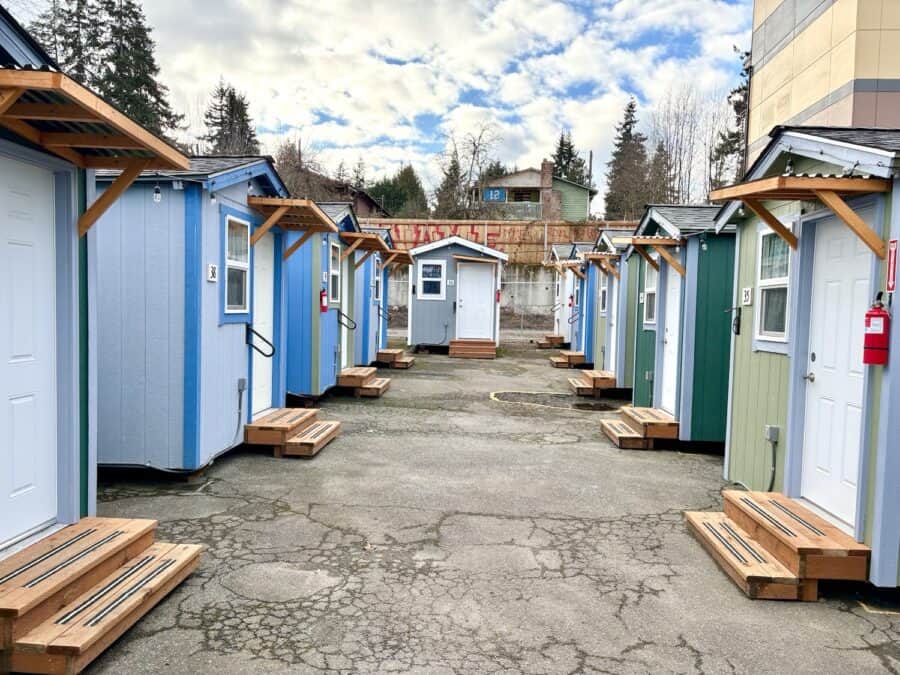
Of all the tiny house villages going up in America right now, Seattle’s are the ones that actually look like tiny houses — gabled roofs, lap siding, real windows, little porch awnings, wooden steps, a house number beside the door. They are not modular pods. They are wood-framed cottages, and most of them were built by volunteers on weekends.
The newest one broke ground in May on one of the most expensive blocks in the city. Belmont Tiny House Village is bringing 32 tiny houses to a vacant lot at 1737 Belmont Ave in the heart of Capitol Hill, and it was scheduled to open by the end of July 2026 — right about now.
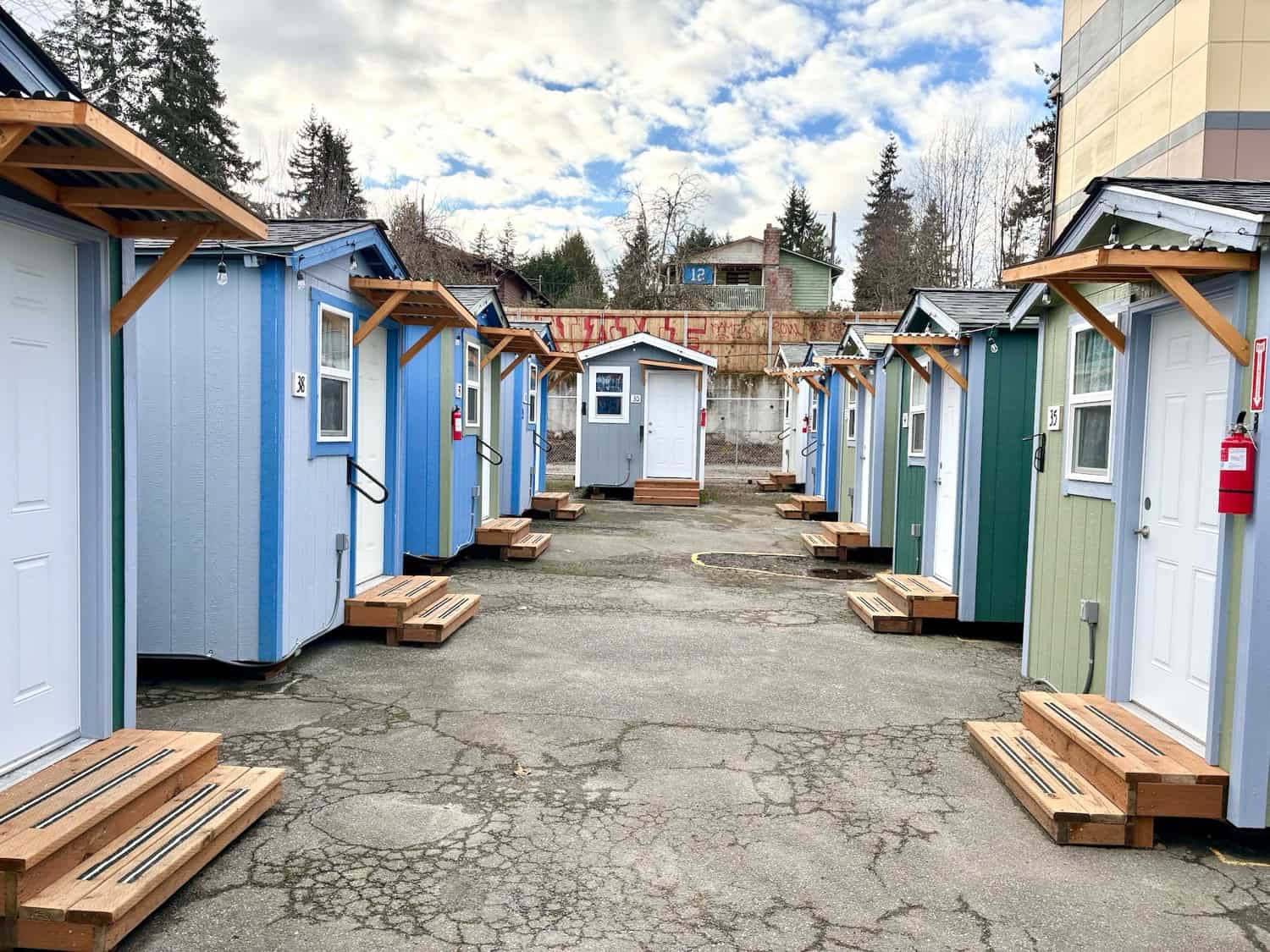
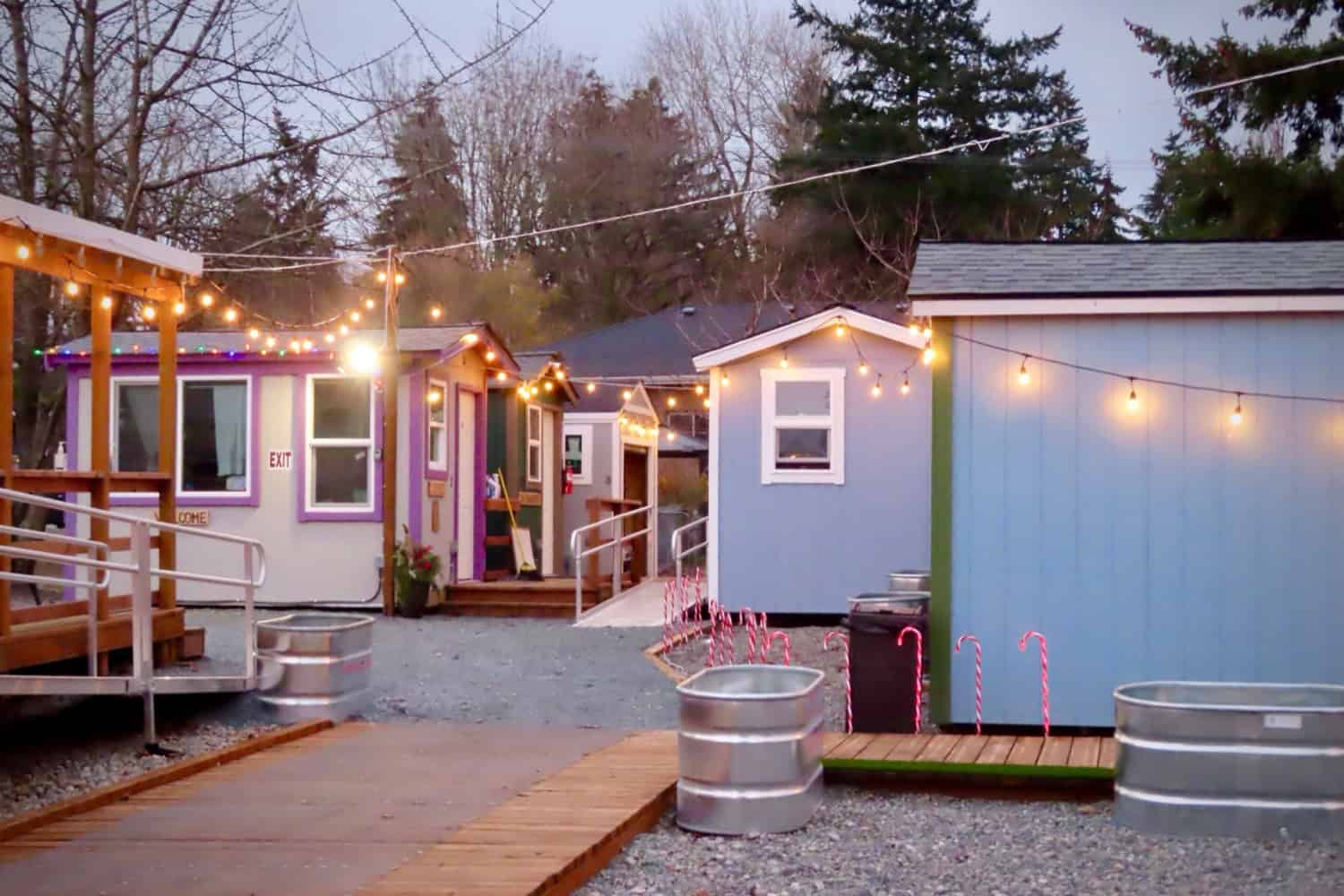
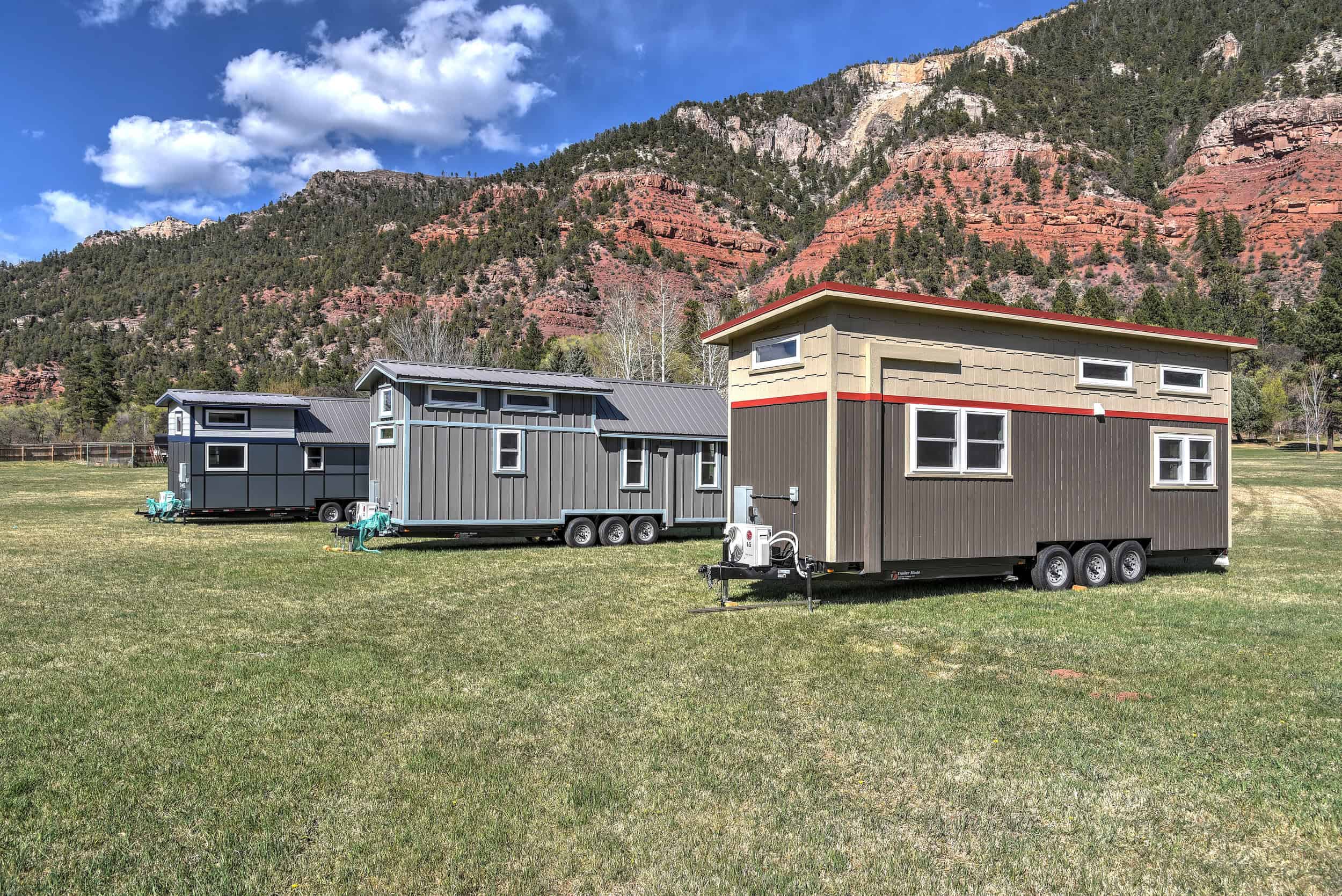
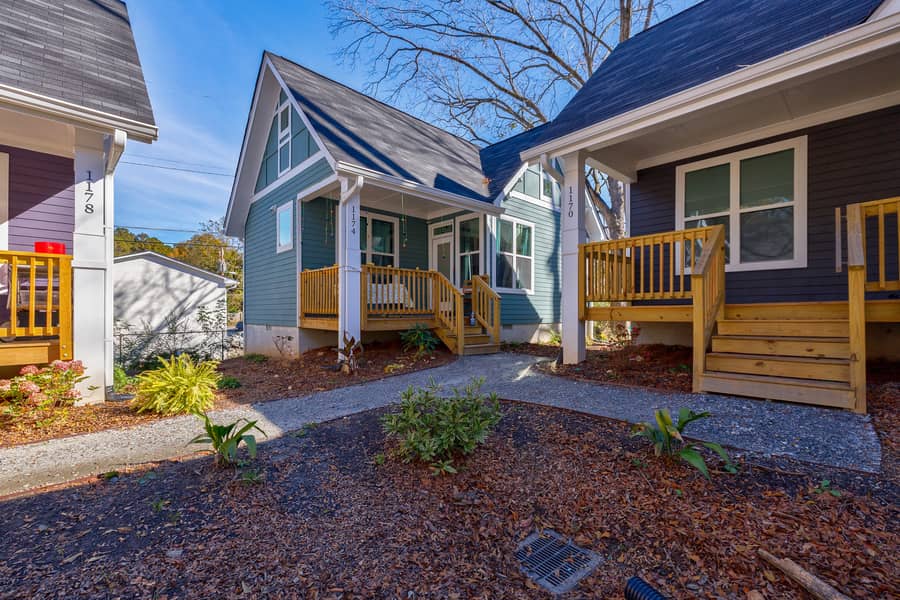
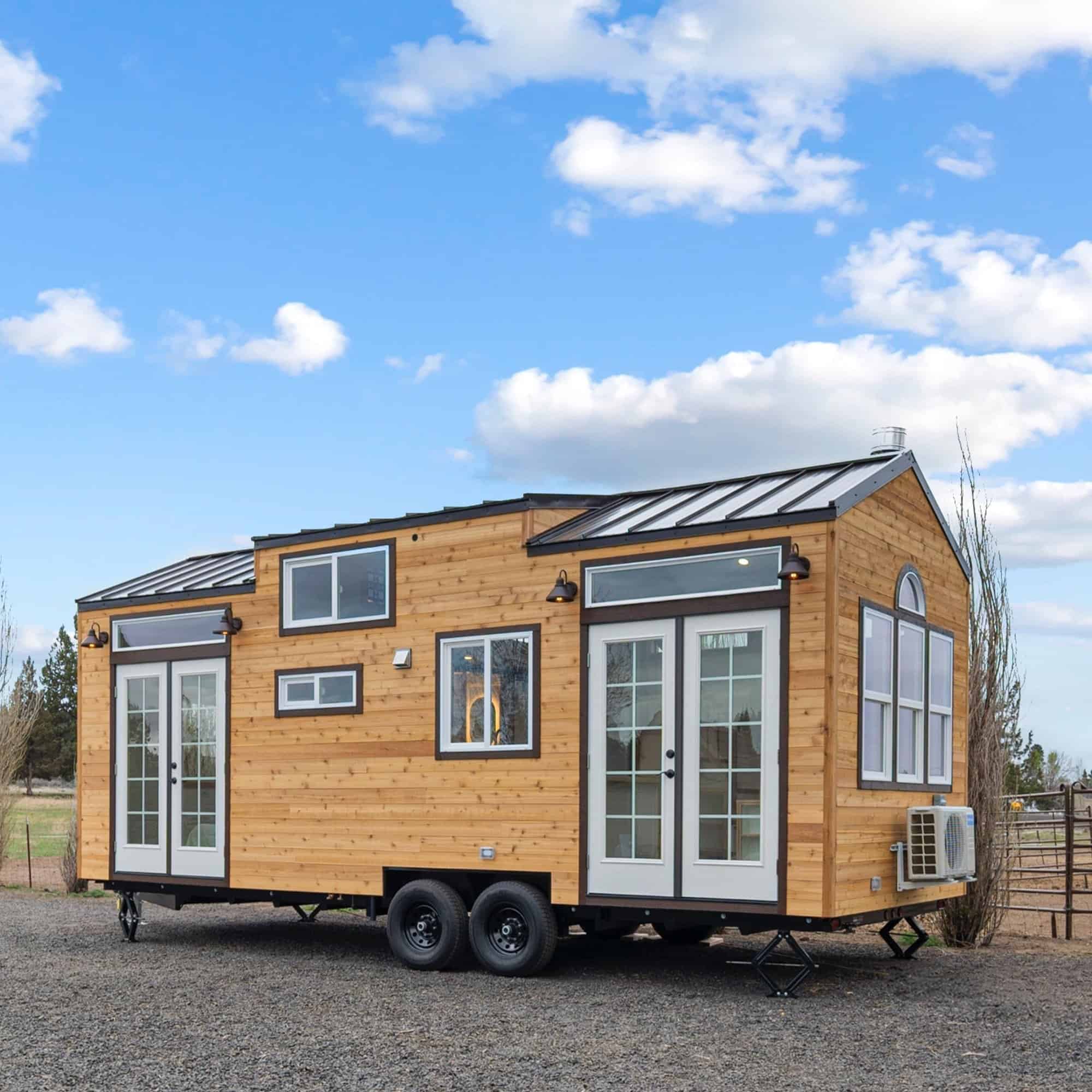
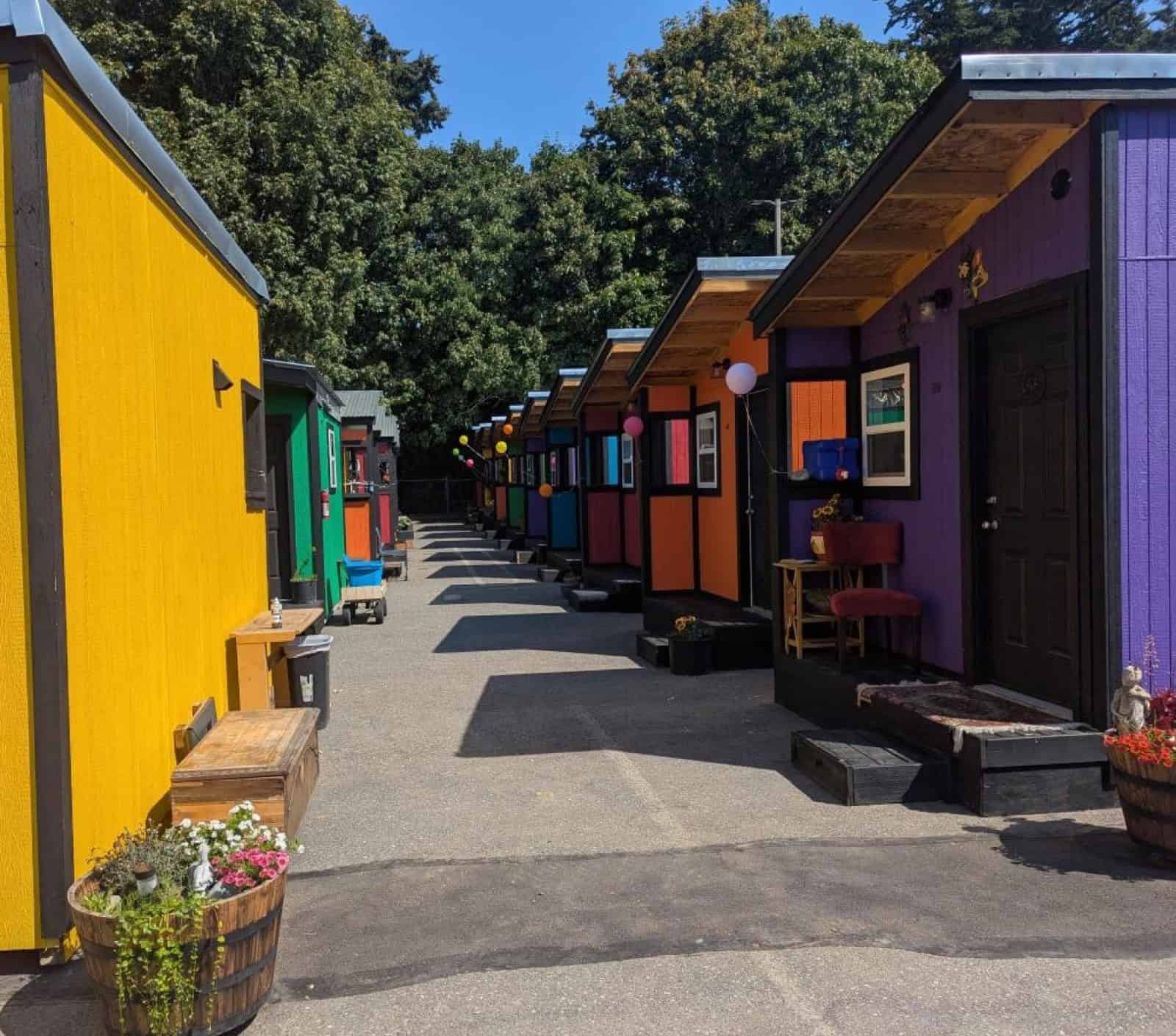
Images courtesy of Sound Foundations NW. Photos show existing Puget Sound tiny house villages, not the new Belmont site.
What’s Being Built on Belmont Ave
The Low Income Housing Institute (LIHI) is building and will operate the village. Trucks began delivering the finished 96-square-foot houses to the cleared lot in the 1700 block of Belmont Ave in late May 2026.
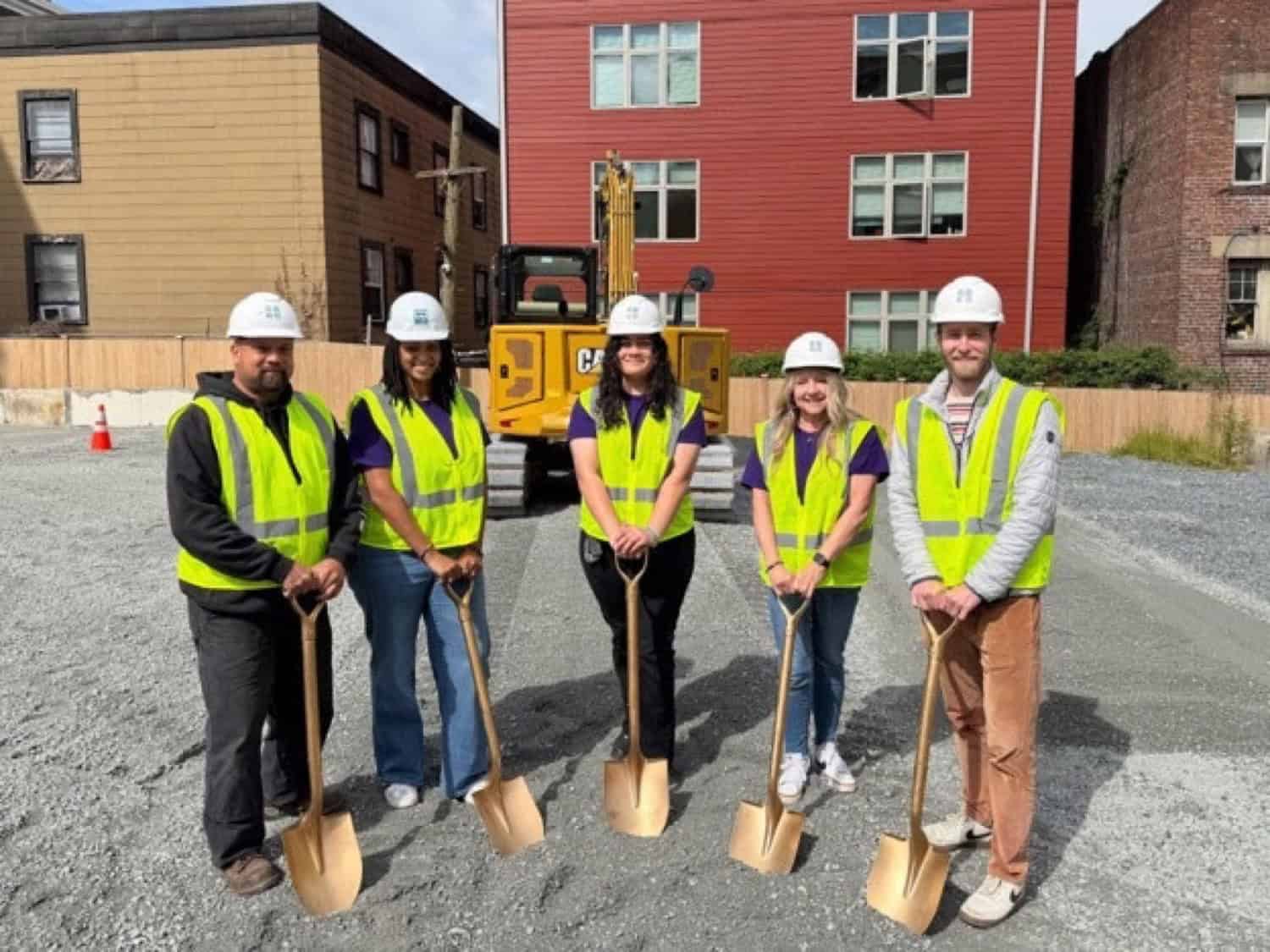
Belmont Tiny House Village groundbreaking. Image courtesy of the Low Income Housing Institute.
The build includes:
- 32 tiny houses, each 96 square feet (8′ x 12′)
- Six accessible tiny houses, plus accessible common facilities
- 24/7 staffing
- A security pavilion
- Staff and case management offices
- A community kitchen
- Hygiene and laundry facilities
On the services side, an on-site case manager helps residents with housing applications, employment, income support, healthcare, obtaining ID, benefits applications and educational programs. An on-site behavioral health specialist provides direct services and referrals to outpatient care, including medication-assisted treatment.
Total cost is about $1.1 million for the emergency shelter build — roughly $34,000 per house including village infrastructure. Funding comes through the King County Regional Homelessness Authority, of which Seattle supplies roughly 61% of the total budget.
The Site Has a Backstory
Here is the detail that makes Belmont unusual: this lot was supposed to be a 120-unit permanent supportive housing building.
The Downtown Emergency Service Center (DESC) had planned a permanent apartment building on the parcel. That project stalled — as a great many affordable housing projects have in the current financing environment — leaving a cleared, empty lot sitting in the middle of one of Seattle’s densest neighborhoods.
Rather than let it sit vacant for years, the site was flipped to a tiny house village on an interim basis. DESC still intends to build the permanent housing there eventually. The tiny houses are, quite literally, placeholders — which is exactly the use case they are best suited for, and a reminder that these villages are designed to be picked up and moved.
The Houses Are Volunteer-Built for About $4,500 in Materials
This is the part that should interest anyone who has ever framed a wall.
Images courtesy of Sound Foundations NW
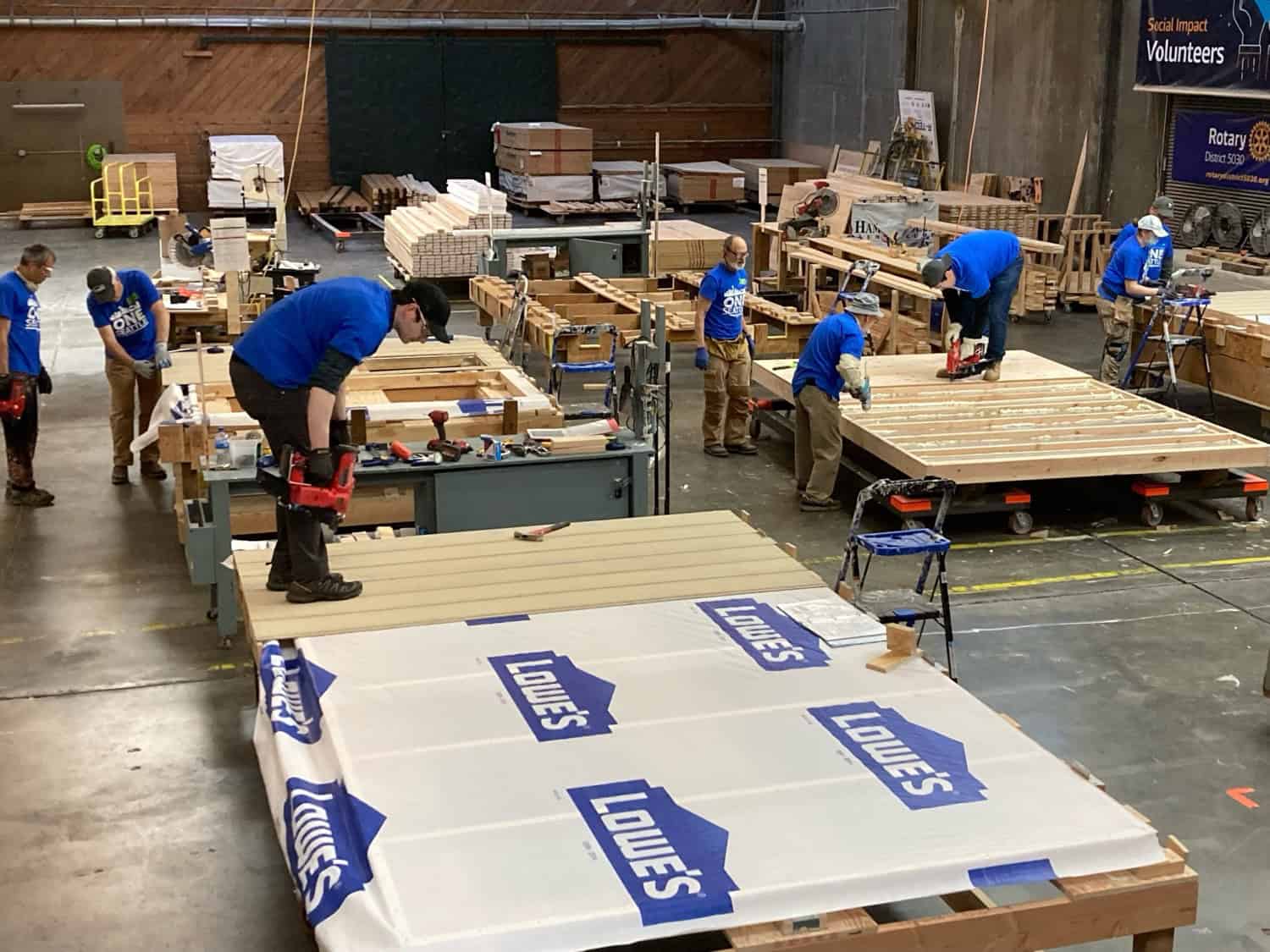
LIHI builds the villages, staffs them and runs the services. But the houses themselves largely come from a separate nonprofit: Sound Foundations NW, which builds them in a Seattle warehouse it calls The Hope Factory.
The specs, straight from their build program:
- 8 ft x 12 ft — “roughly the size of an apartment-sized bedroom”
- Wood frame, fully insulated, architect-designed
- Asphalt shingle roof and durable Pergo-style flooring
- Two operable windows and a locking front door
- Wired for electricity — overhead light and wall outlets
- Space heater and air conditioning unit provided
- Built to last roughly 20 years
And the numbers that make it work:
- ~$4,500 in materials per house (Spring 2026)
- ~$28,000 all-in per home including village infrastructure and first-year operations
- Four walls and a roof framed in one day; a complete house in about two weeks
- Roughly 3–4 houses per week at a moderate pace
- Volunteers need no construction experience — the shop runs on large jigs and templates
- Minimum volunteer age is 16; build days run six days a week
As of spring 2026, roughly 750 of these houses are in service across about 19 villages around Puget Sound. Sponsors including Rotary districts, church groups and corporate volunteer programs staff the build floor.
If you have ever wondered whether volunteer labor can produce housing at meaningful scale, this is the closest thing to a working answer in the country.
Why These Look Like Houses and Not Boxes
Images courtesy of Sound Foundations NW
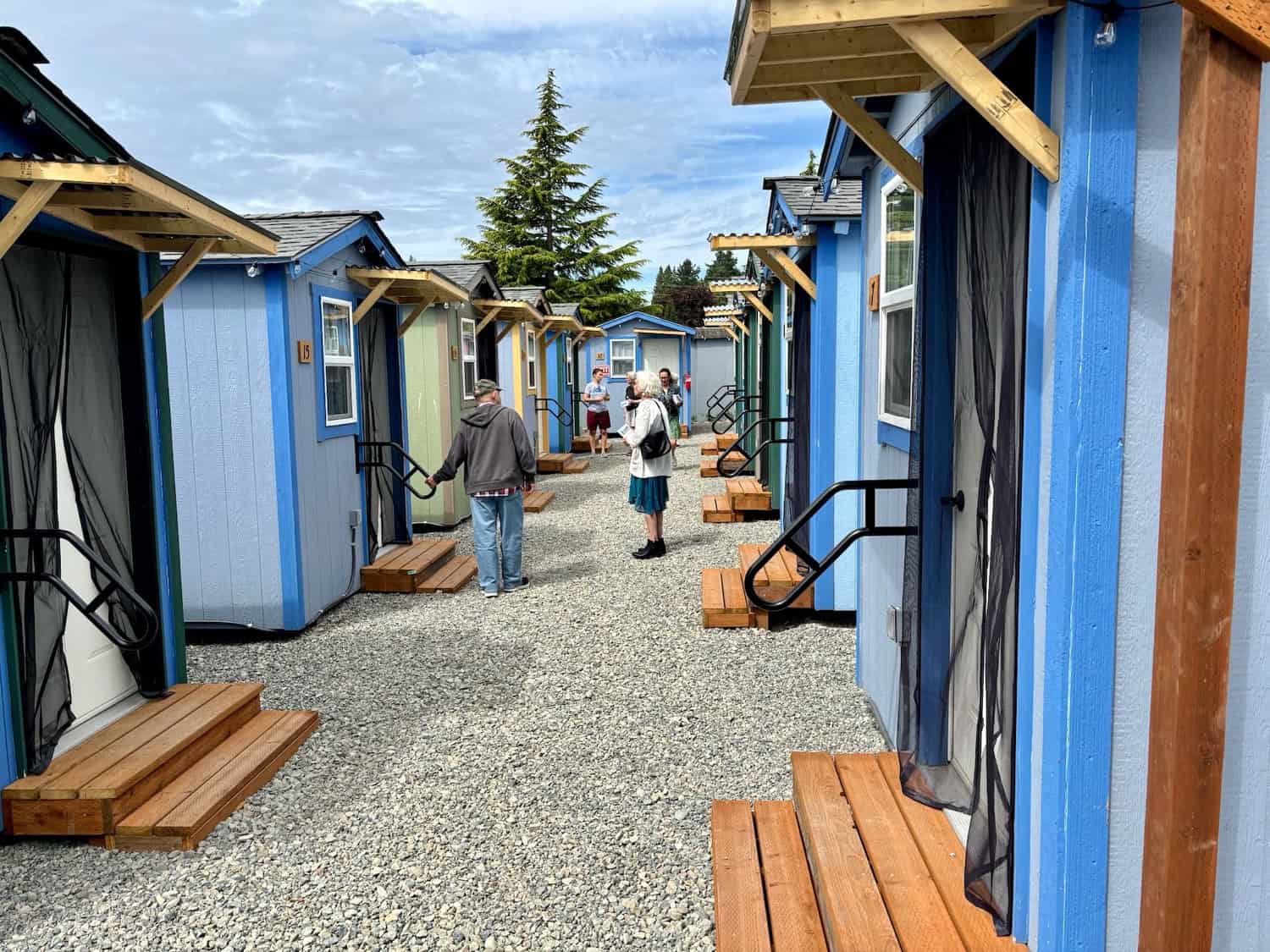
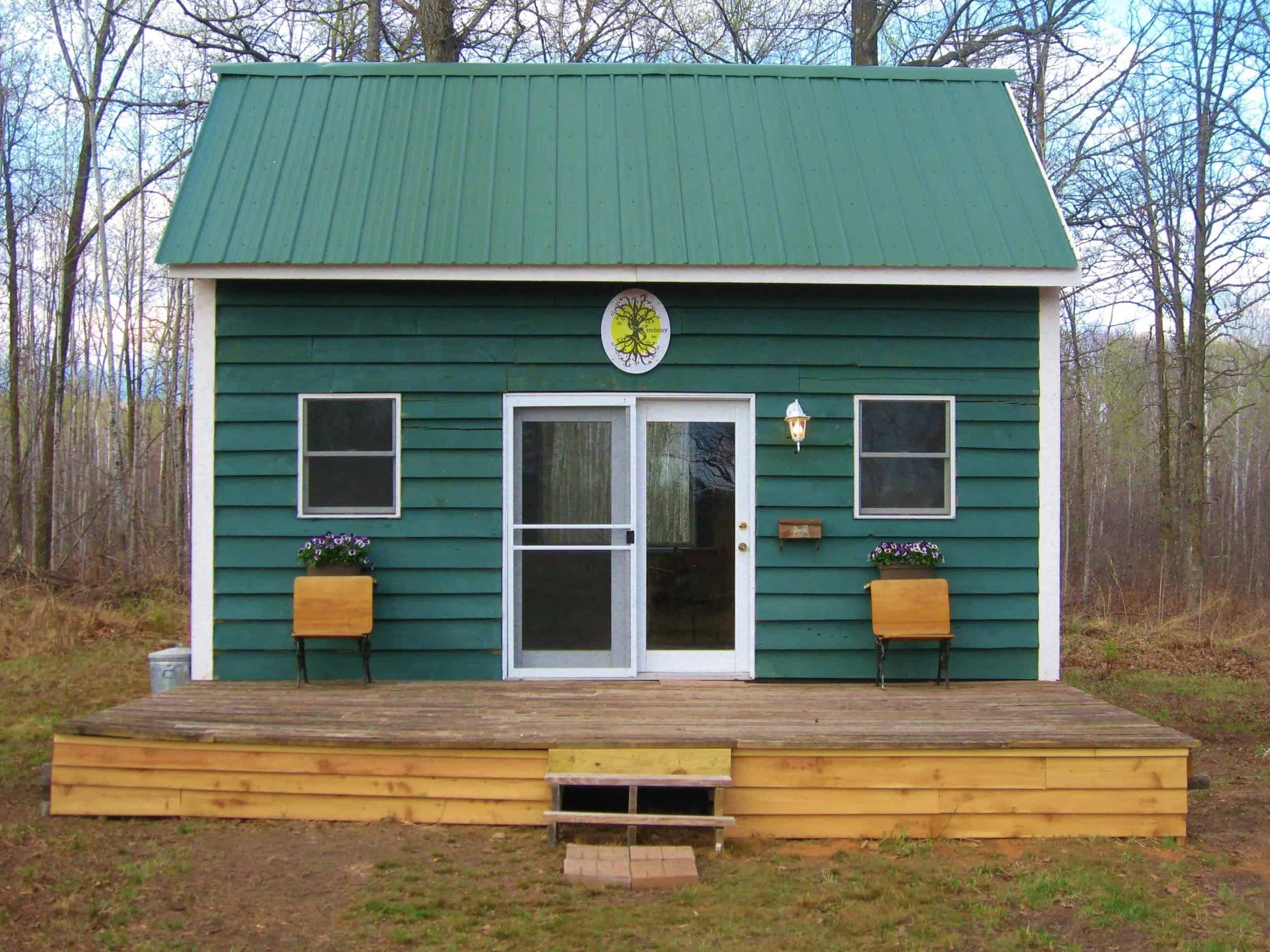
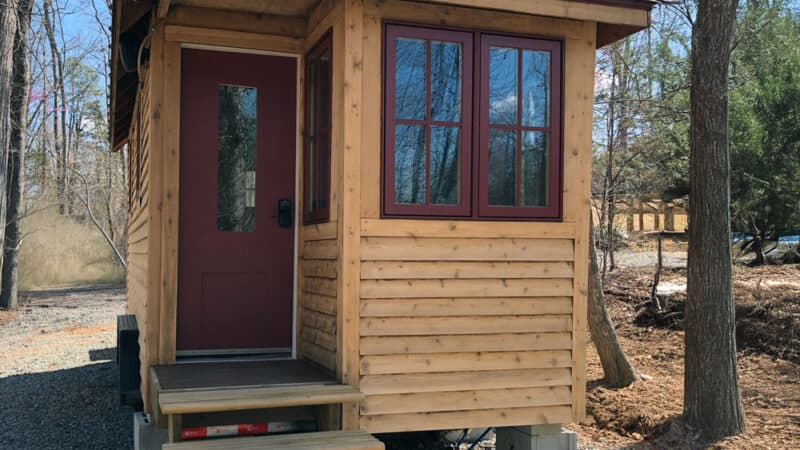
Compare a Seattle tiny house to the aluminum-panel units used in most other cities and the difference is immediate. Seattle’s have pitched shingled roofs, painted lap siding in blues and greens and grays, trimmed windows, cedar entry awnings on brackets, wooden steps, handrails, and a number plate by the door.
None of that is required. All of it is deliberate. A wood-framed house with a porch roof reads as a home — to the person inside, to the neighbors across the street, and to the city council members voting on whether to allow more of them. It is a lot harder to object to a cottage than to a shed.
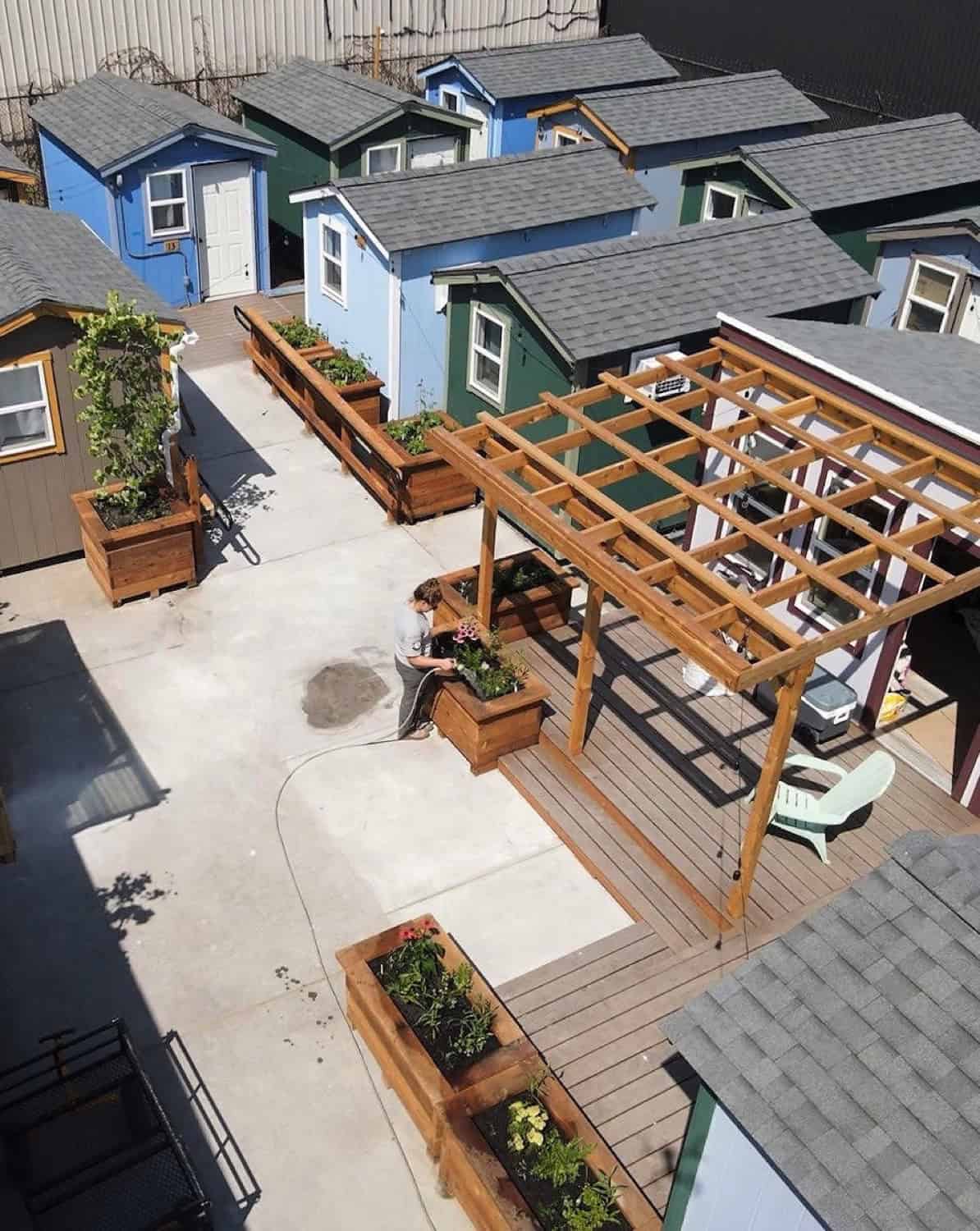
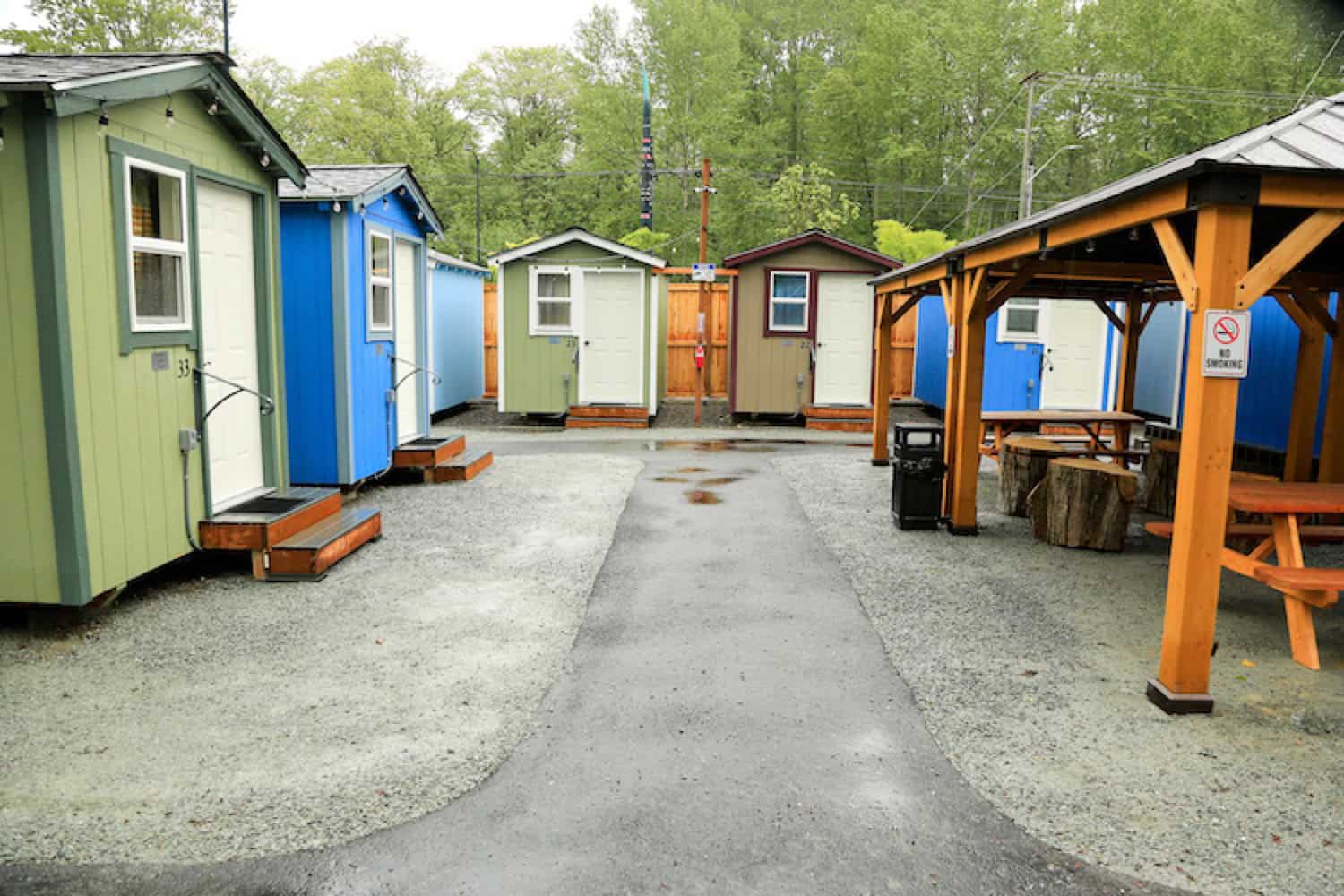
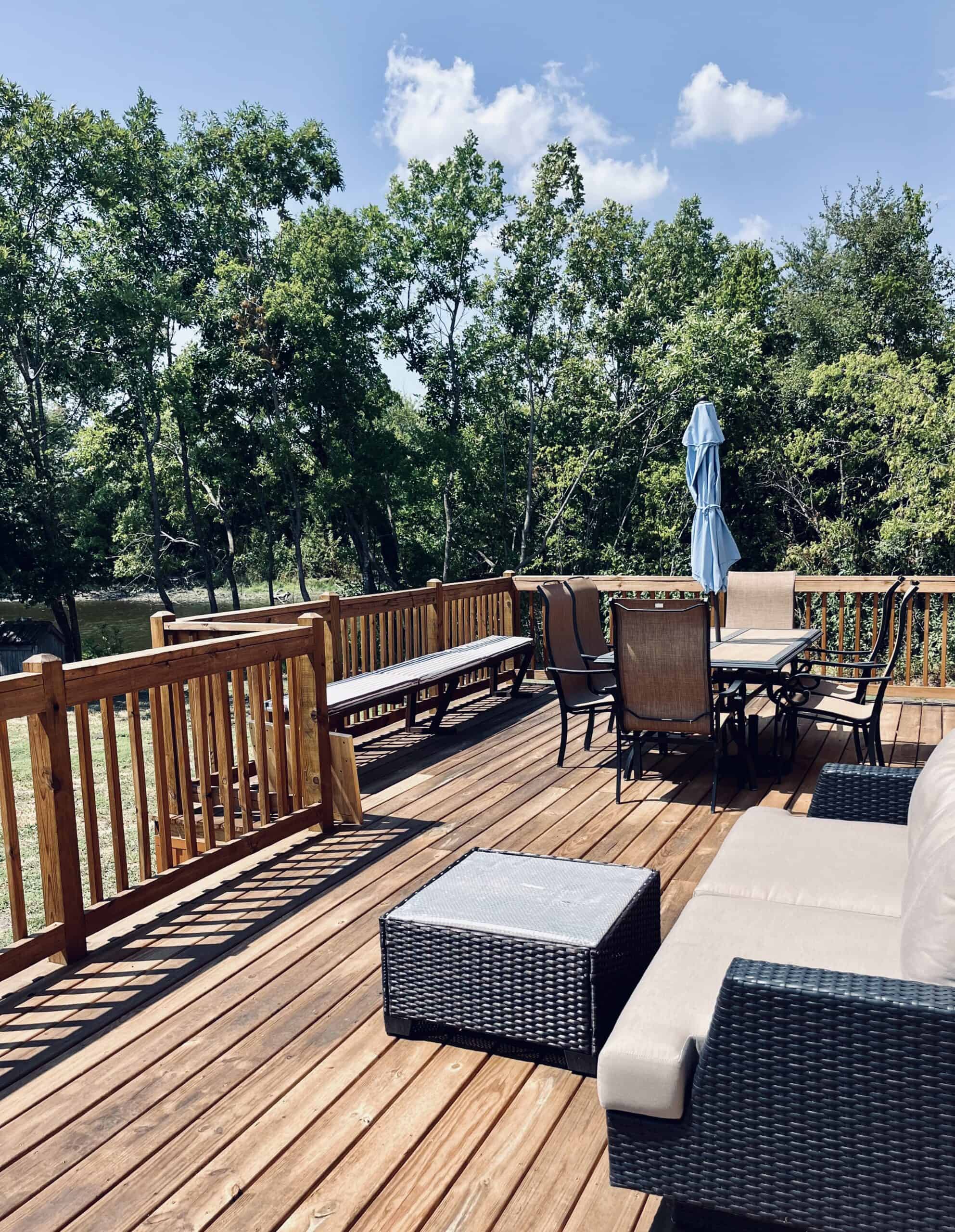
The villages themselves get the same treatment. Common areas include gazebos and picnic tables, raised planter beds, pergolas, string lights over the walkways.
Images courtesy of Sound Foundations NW
Images courtesy of Sound Foundations NW
Six of the 32 Will Be Accessible
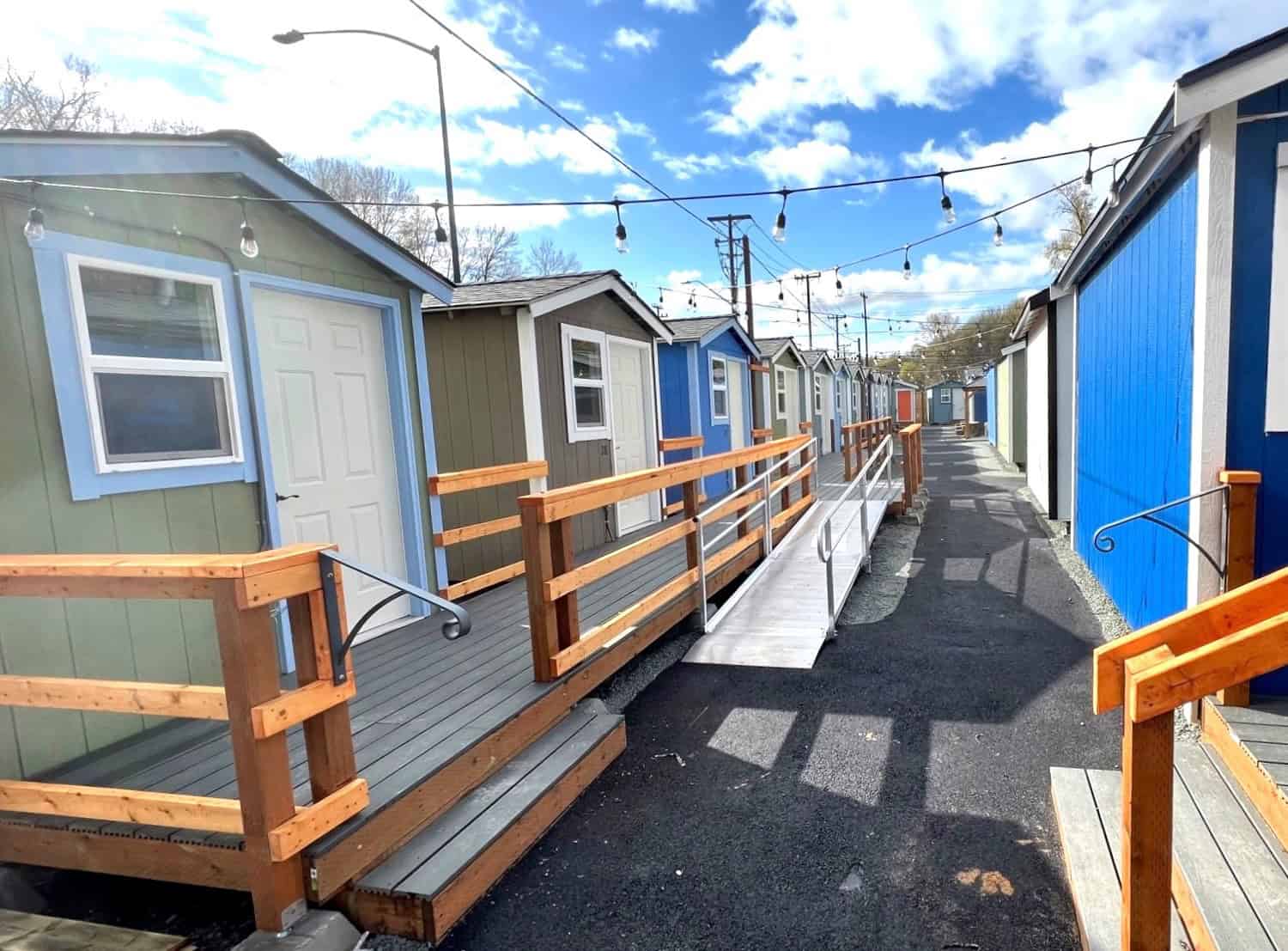
Belmont will include six accessible tiny houses along with accessible common facilities. In practice that means wider doors, ramps rather than steps, and hard-surfaced routes between the houses and the shared kitchen, bathrooms and laundry.
Images courtesy of Sound Foundations NW
It is worth noting how much of the accessibility burden falls on the village rather than the house. When bathrooms are shared and detached, the path matters as much as the doorway — which is one of the real design tradeoffs of the no-plumbing tiny house model.
Do Seattle’s Villages Actually Work?
Seattle has been running tiny house villages longer than almost anyone, so there is real data.
LIHI operates or supports 18 tiny house villages across King, Pierce, Thurston and Whatcom counties. Their reported outcomes:
- 2,080 people lived in LIHI tiny houses and shelters in 2022
- 53% of people exiting a Seattle tiny house obtained permanent housing (2023)
- A separate analysis found roughly 55% moved into permanent housing across the network, with nearly all remaining housed
- Salmon Bay Village reported a 60% rate
Independent analysis backs the trend. Permanent housing exits from tiny house villages rose from roughly 50% in 2022 to 63% in 2023, against just 14–19% for traditional congregate shelters. Villages also run about 90% occupancy versus a 77% system-wide average — congregate shelters sat at 23% vacancy in 2021.
That occupancy gap is the whole argument. People will take a tiny house. Many will not take a mat on a gym floor.
City analysis also found tiny house villages to be the lowest capital-cost shelter option, at an estimated $15,000 per house in startup costs, with competitive annual operating costs.
The Criticism, Which Is Real
It would not be an honest article without this section.
Seattle’s villages run on a low-barrier model: residents are not required to be sober or enrolled in treatment to get a house. In 2026 that policy became a live controversy after Andrea Suarez of the advocacy group We Heart Seattle published video from Interbay Village in which a resident described where people go to use fentanyl and other hard drugs on site, often alongside a dealer. LIHI acknowledged that drug use occurs inside villages. Suarez was subsequently banned from the village.
Critics argue the low-barrier approach enables addiction and that villages import problems into residential blocks. Supporters counter that sobriety requirements are precisely what keeps the most vulnerable people out of shelter entirely, and that a housed person using drugs is far more reachable than an unhoused one.
Neighboring business owners near several sites have also objected that they were not properly notified before projects were announced — a recurring complaint that helped drive new Good Neighbor Agreement requirements into recent city legislation.
Where you land on this depends on what you think shelter is for. But readers deserve to know the debate exists rather than getting a press release.
Seattle Just Made It Legal to Build Bigger Villages
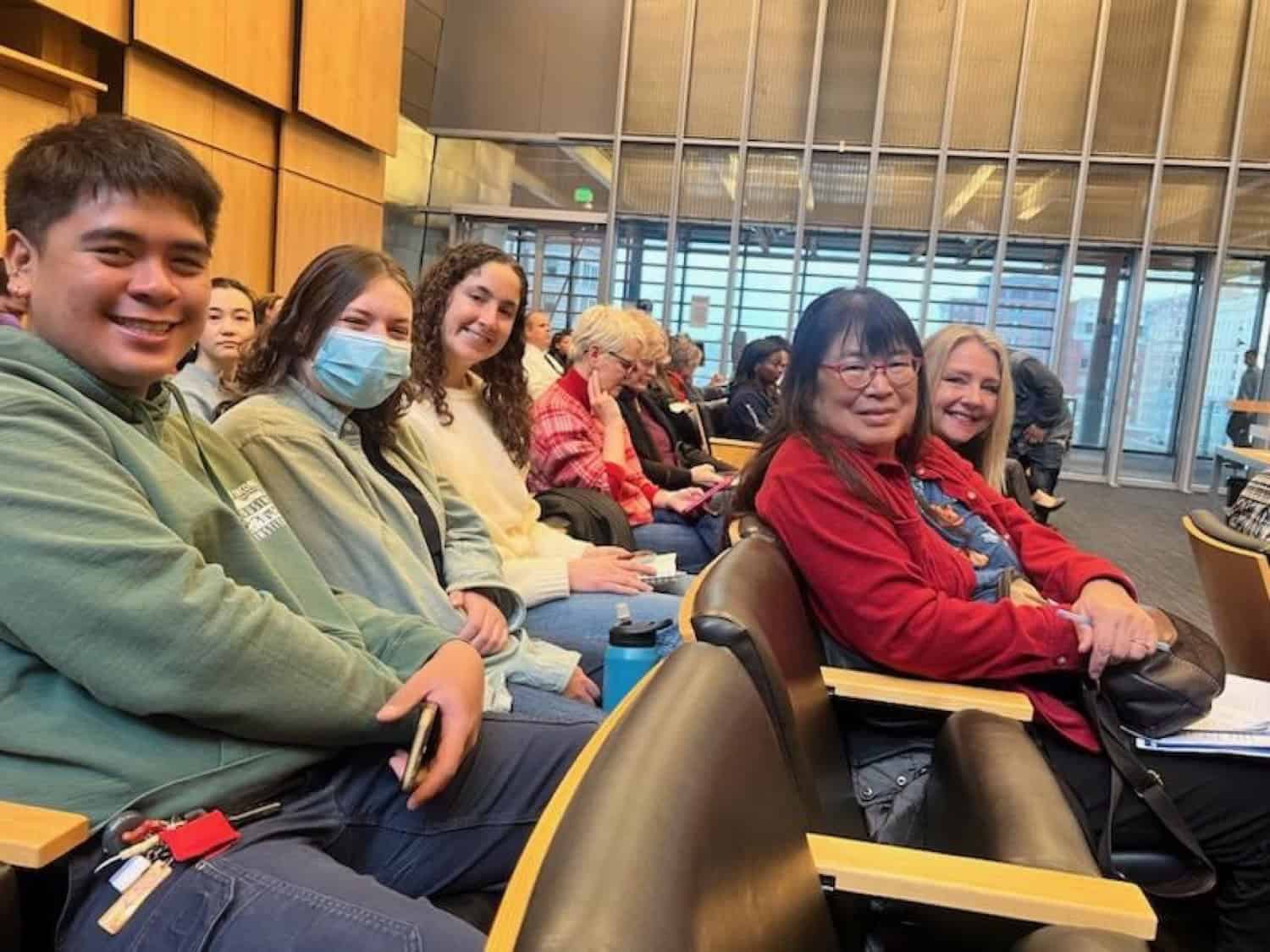
Image courtesy of the Low Income Housing Institute
Belmont arrived in the middle of the biggest policy shift Seattle’s villages have seen.
Mayor Katie Wilson campaigned on adding 1,000 new shelter beds in her first year, with 500 targeted before the FIFA World Cup came to Seattle in June 2026. Her “Shelter Acceleration” package moved three bills:
- CB 121184 — makes it far easier to lease land for transitional encampments. It raises the parcel size cap the Finance and Administrative Services director can sign off on from 18,000 to 65,000 square feet, and allows the city to pay market rate rather than a capped per-square-foot rent.
- CB 121195 — sponsored by Councilmember Dionne Foster, raises the maximum village size from 100 occupants to 150, and allows one pilot village of up to 250. It passed on an interim one-year basis while permanent legislation goes through the Land Use and Sustainability Committee.
- A third measure provided $5 million toward the first of the 1,000 new units.
The council trimmed Wilson’s original proposal, which would have allowed a 250-person village in every council district. Council members also added public safety and Good Neighbor Agreement requirements.
Reporting in June suggested the administration fell short of the pre-World Cup target, so the 1,000-bed goal remains a live question.
Images courtesy of Sound Foundations NW
How Seattle Compares
We have now covered three tiny home village programs, and the contrasts are sharp:
- Seattle (LIHI): 96 sq ft wood-framed houses, volunteer-built for ~$4,500 in materials, ~$28K all-in. 18+ villages. ~53–63% permanent housing exits.
- Bellingham (HomesNOW!): 96 sq ft units, resident-governed with peer leadership, ~$30K per unit. ~70% rehousing rate.
- Los Angeles (Pallet/Hope the Mission): 64 sq ft aluminum-panel units, factory-built, ~$42K per bed. ~1,282 beds. ~23% permanent housing exits.
Same basic idea. Wildly different results. The pattern that keeps showing up is that the Pacific Northwest programs — smaller, cheaper, more community-driven — dramatically outperform the largest and most expensive one. Whether that is governance, scale, local housing markets, or all three is a genuinely open question. But it is not a coincidence worth ignoring.
Belmont Tiny House Village at a Glance
- Location: 1737 Belmont Ave, Capitol Hill, Seattle, WA
- Houses: 32
- House size: 96 sq ft (8′ x 12′)
- Accessible units: 6, plus accessible common facilities
- Operator: Low Income Housing Institute (LIHI)
- House builder: Sound Foundations NW
- Cost: ~$1.1 million (about $34K per house)
- Funding: King County Regional Homelessness Authority
- On site: 24/7 staffing, security pavilion, case management offices, community kitchen, hygiene and laundry facilities
- Services: On-site case manager and behavioral health specialist
- Groundbreaking: May 2026
- Target opening: End of July 2026
- Site future: Interim use — DESC still plans 120 units of permanent supportive housing here
Want to Help Build One?
This is the rare homelessness story with a direct hands-on answer. Sound Foundations NW takes volunteers six days a week at The Hope Factory, no experience needed, minimum age 16. Individuals and groups both welcome. If you can hold a drill, you can put a wall together.
- Sound Foundations NW — build volunteering, sponsorship, donations
- LIHI volunteer page
Learn More
- CHS Capitol Hill Seattle — Belmont Tiny House Village breaks ground
- LIHI — Belmont THV breaks ground & council vote to expand villages
- The Registry — LIHI plans 32-unit Belmont Tiny House Village
- Sound Foundations NW — Tiny house FAQs and specs
- Sound Foundations NW — Tiny home villages work, and the data to prove it
- LIHI — The numbers behind tiny houses and shelters
- PubliCola — Shelter Acceleration plan moves forward
- CHS — Public safety and Good Neighbor Agreement requirements
- DESC — Belmont Supportive Housing
- KCRHA — Olympic Hills Tiny House Village
Highlights
- Belmont Tiny House Village brings 32 tiny houses to 1737 Belmont Ave on Capitol Hill
- Broke ground May 2026 with a target opening at the end of July 2026
- Houses are 96 sq ft (8′ x 12′), wood-framed, insulated, with heat, A/C and a locking door
- Six houses and the common facilities will be accessible
- Built by Sound Foundations NW volunteers for about $4,500 in materials each
- Total project cost ~$1.1 million, funded through the King County Regional Homelessness Authority
- Operated by LIHI with 24/7 staffing, community kitchen, hygiene and laundry
- The lot is an interim use — DESC still plans 120 permanent supportive housing units there
- Seattle villages report 53–63% permanent housing exits vs 14–19% for congregate shelters
- Seattle just raised the village size cap from 100 to 150 people, with one 250-person pilot
What do you think — does the Seattle approach of real wood-framed cottages built by volunteers beat the factory-panel model other cities use? Let us know in the comments.
You can share this with your friends and family for free using the easy share buttons below. Thanks!
Join our Tiny House Newsletter for more!
=> https://tinyhousetalk.com/tinyhousenewsletter
Join The Small House Newsletter
=> https://tinyhousetalk.com/small-house-newsletter/
Join Our Tiny Houses For Sale Newsletter
=> http://tinyhousetalk.com/tiny-houses-for-sale-newsletter
Disclosure: This post may contain affiliate links. If you purchase through one of our links, we may earn a commission at no additional cost to you.


Alex
Latest posts by Alex (see all)
- Ryan Mitchell of The Tiny Life Is Selling the Tiny House He Built and Lived In for Nearly a Decade - October 13, 2026
- Dragon Avalon 24′: A Move-In Ready Tiny House With a First-Floor Bedroom and Two Lofts - October 13, 2026
- Tiny Life Blackberry: A Park Model with a Loft and Storage Stairs at Peaceful Meadows - October 13, 2026
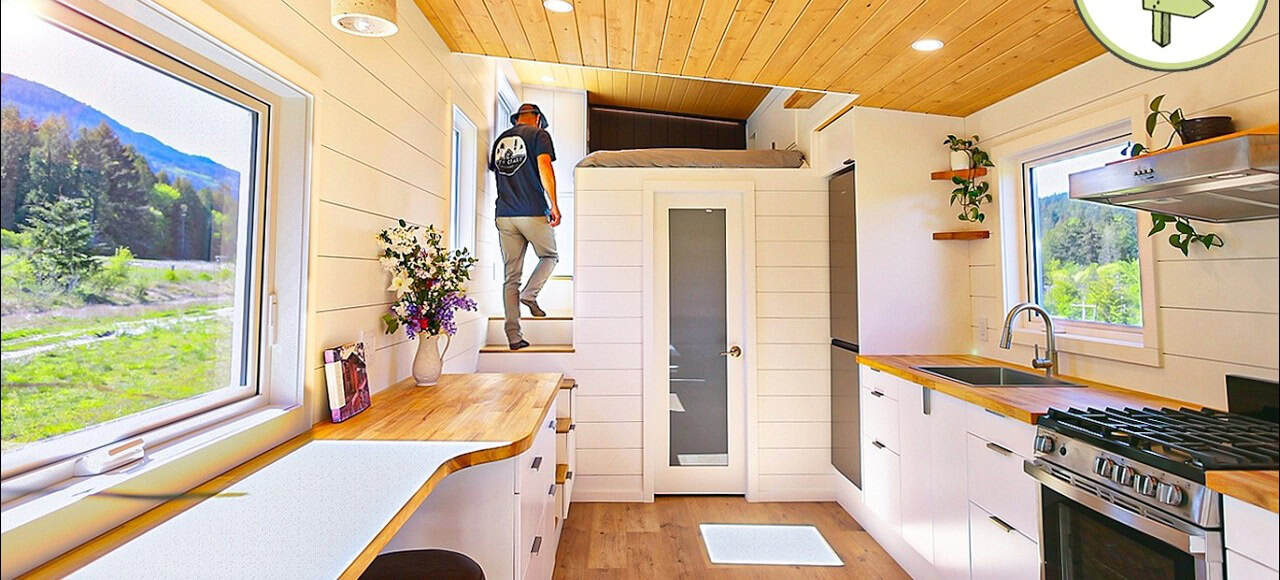
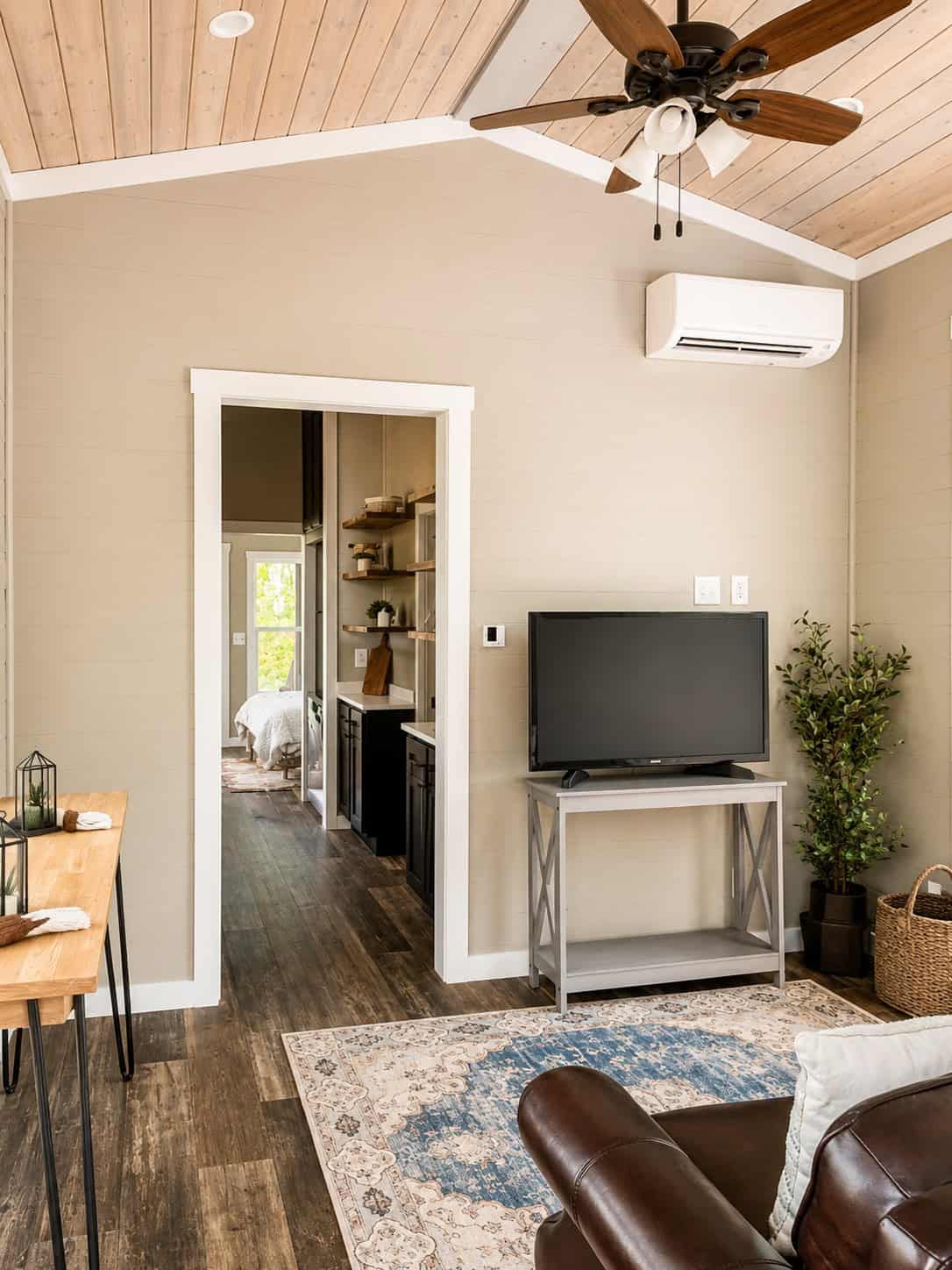

would like to see the inside of one.
They should be permanent housing though. Let people rent them for what they can afford. If they can’t afford anything at all, then let them be free. There should also be senior tiny houses for seniors on very low income. There are a lot of homeless seniors out there; they just know how to hid.