Disclosure: This post may contain affiliate links. If you purchase through one of our links, we may earn a commission at no additional cost to you.
Los Angeles just opened another tiny home village — and this one sits in a place most cities would never think to build: a strip of land beside the train tracks at the Van Nuys Amtrak and Metrolink station.
The new Van Nuys Tiny Home Village opened to residents on Monday, June 29, 2026, with 50 tiny homes and 100 beds. It filled to capacity within the week and now has a waiting list. It is the fourth tiny home village in Council District 2 and the 35th shelter site operated by the nonprofit Hope the Mission.
For anyone who follows tiny houses, this is worth a close look — not because it is aspirational, but because it is the largest real-world test of the tiny house form factor happening anywhere in America. And the results, as you will see below, are genuinely mixed.
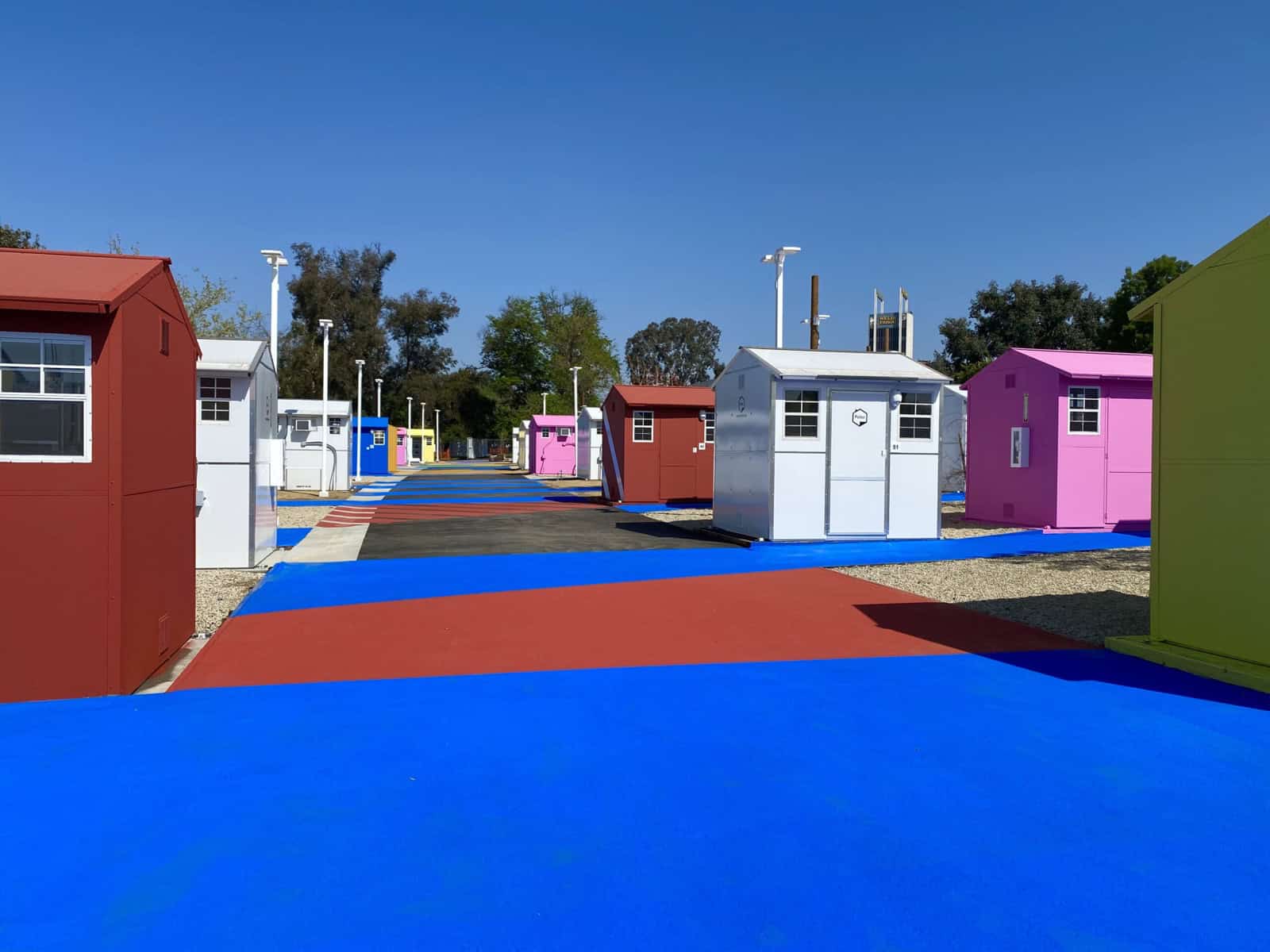
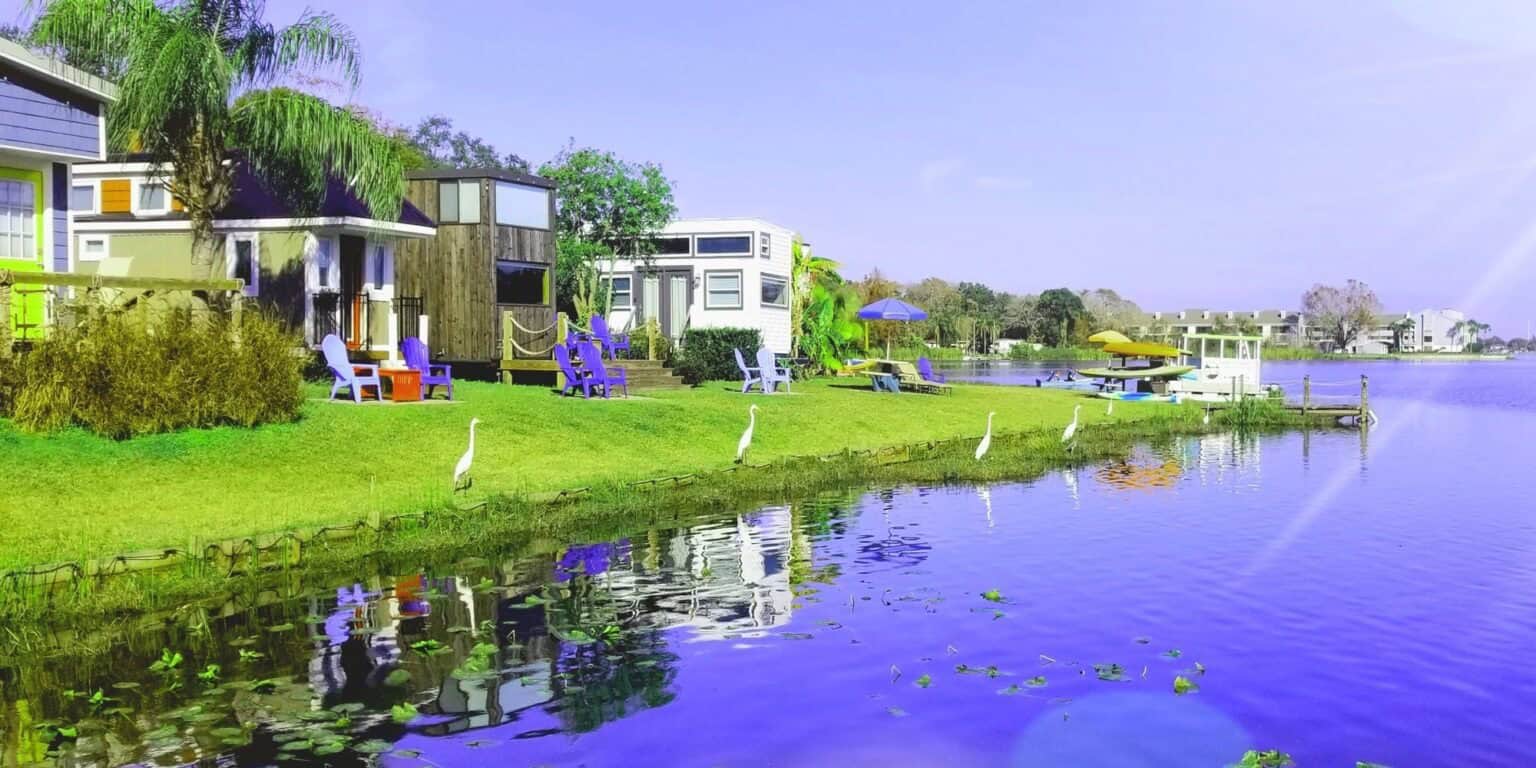
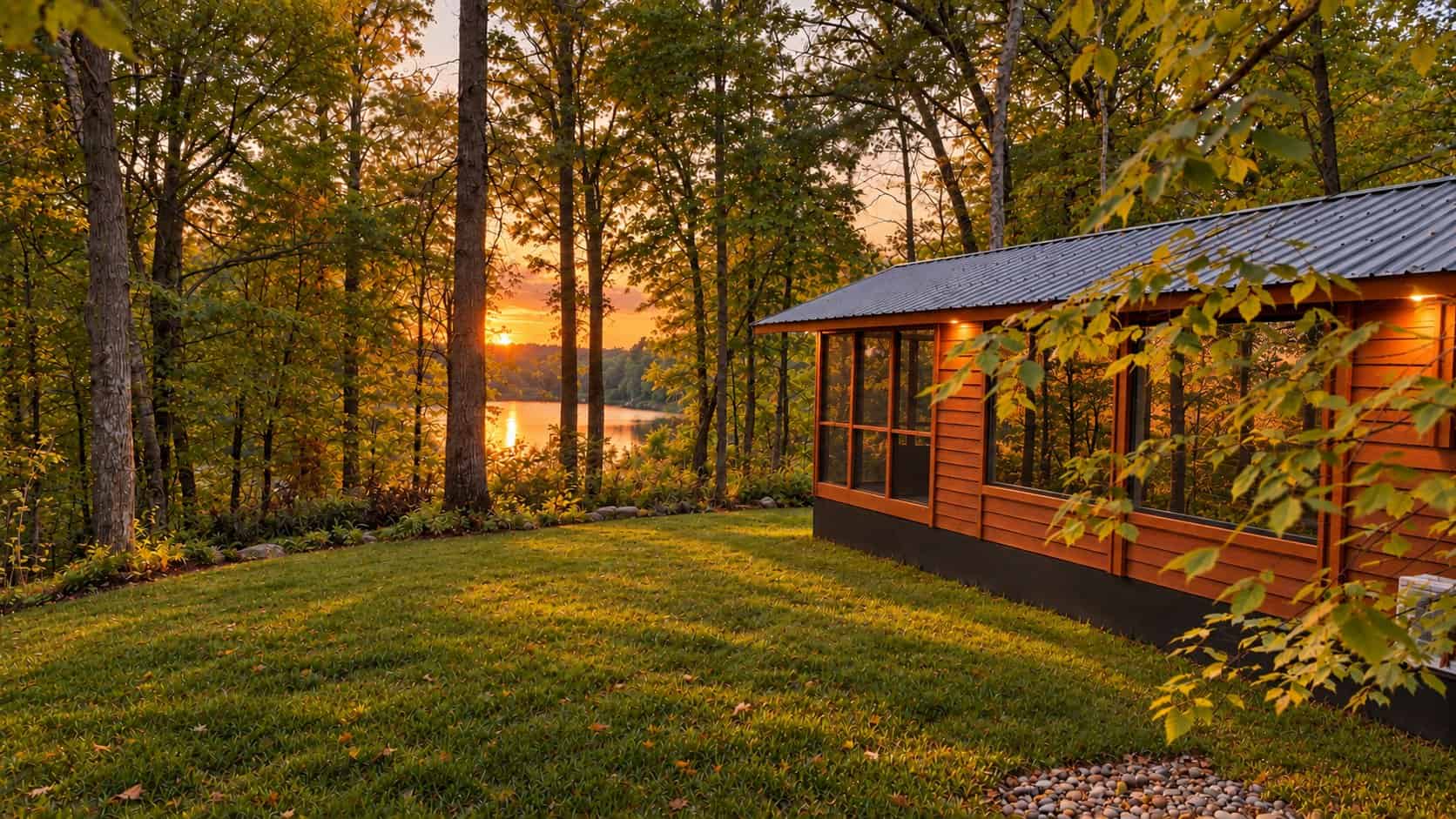
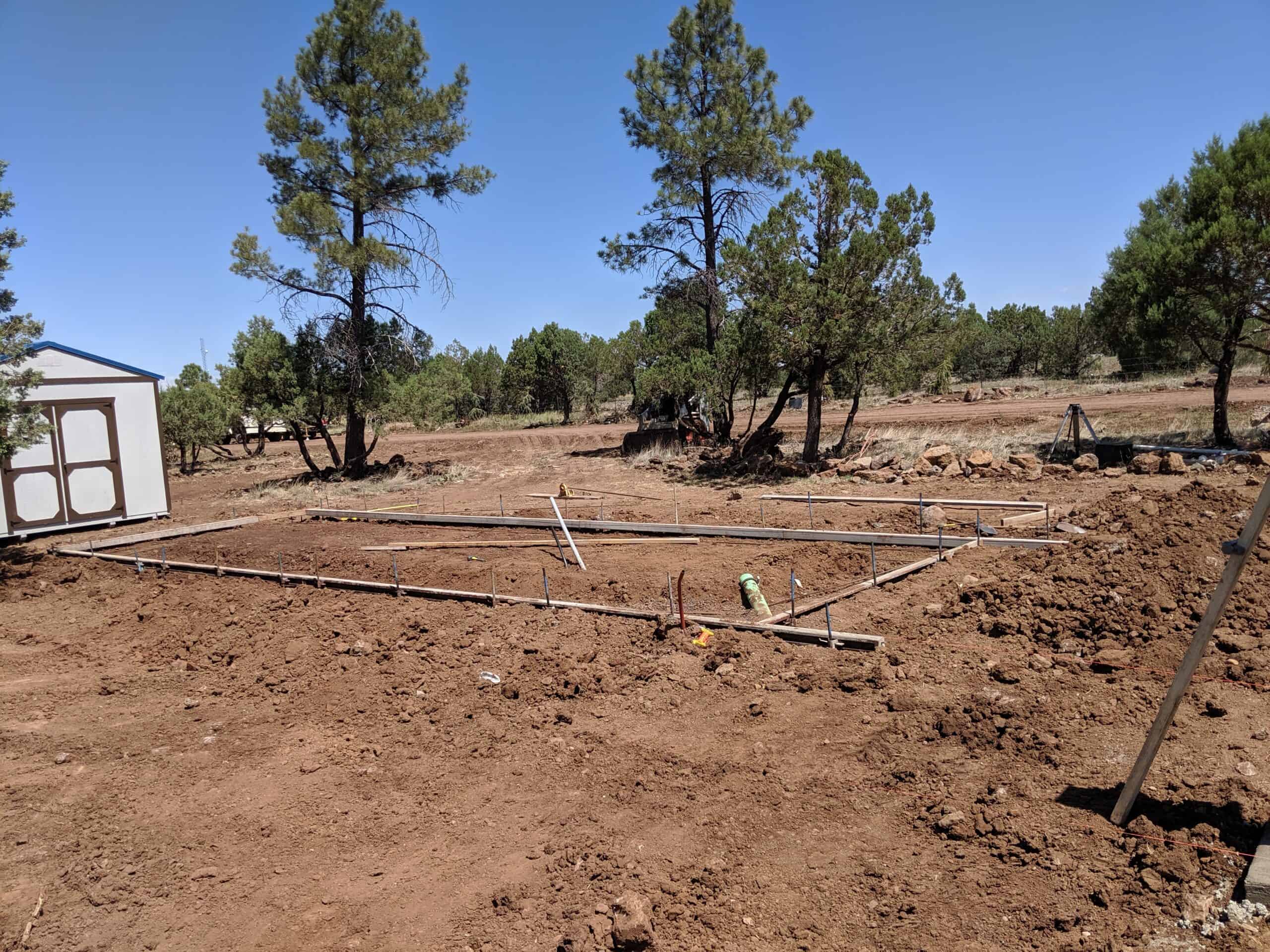
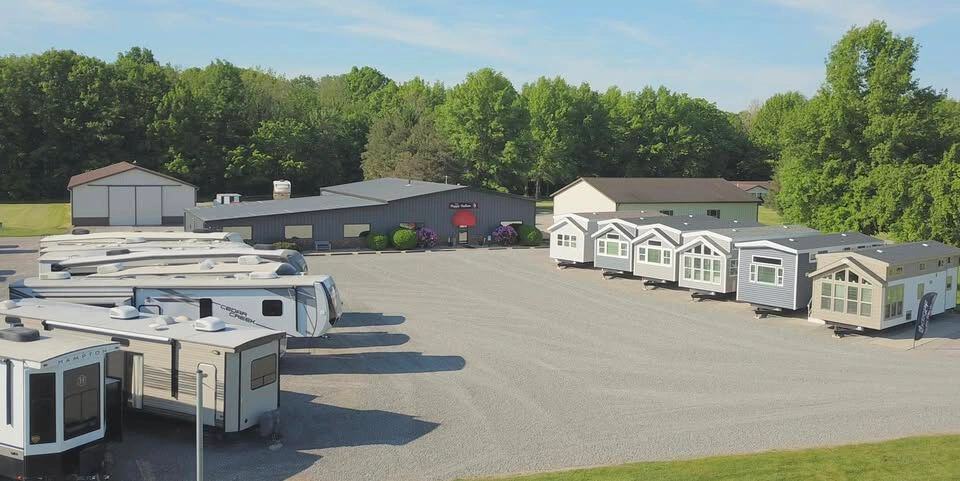
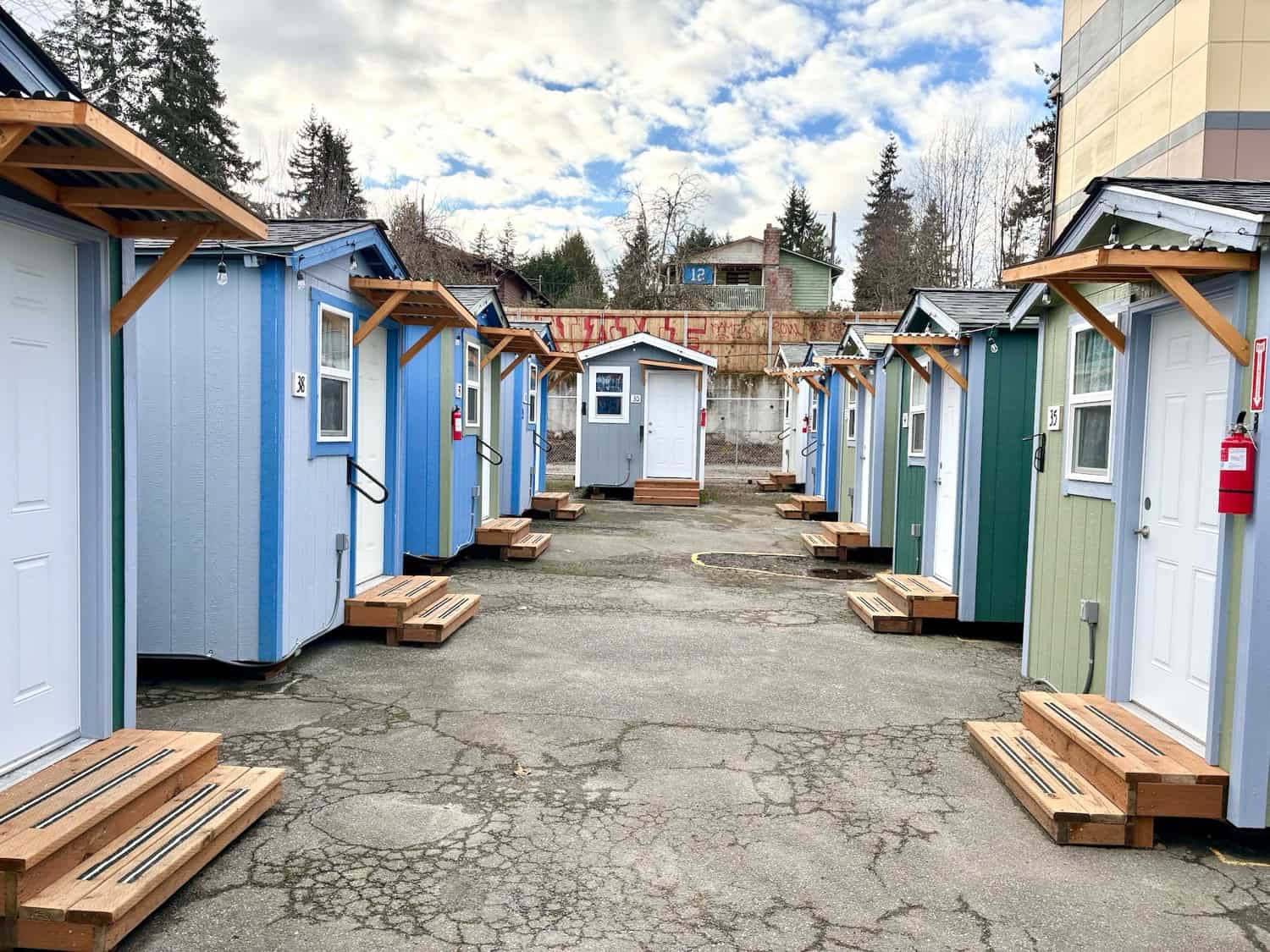
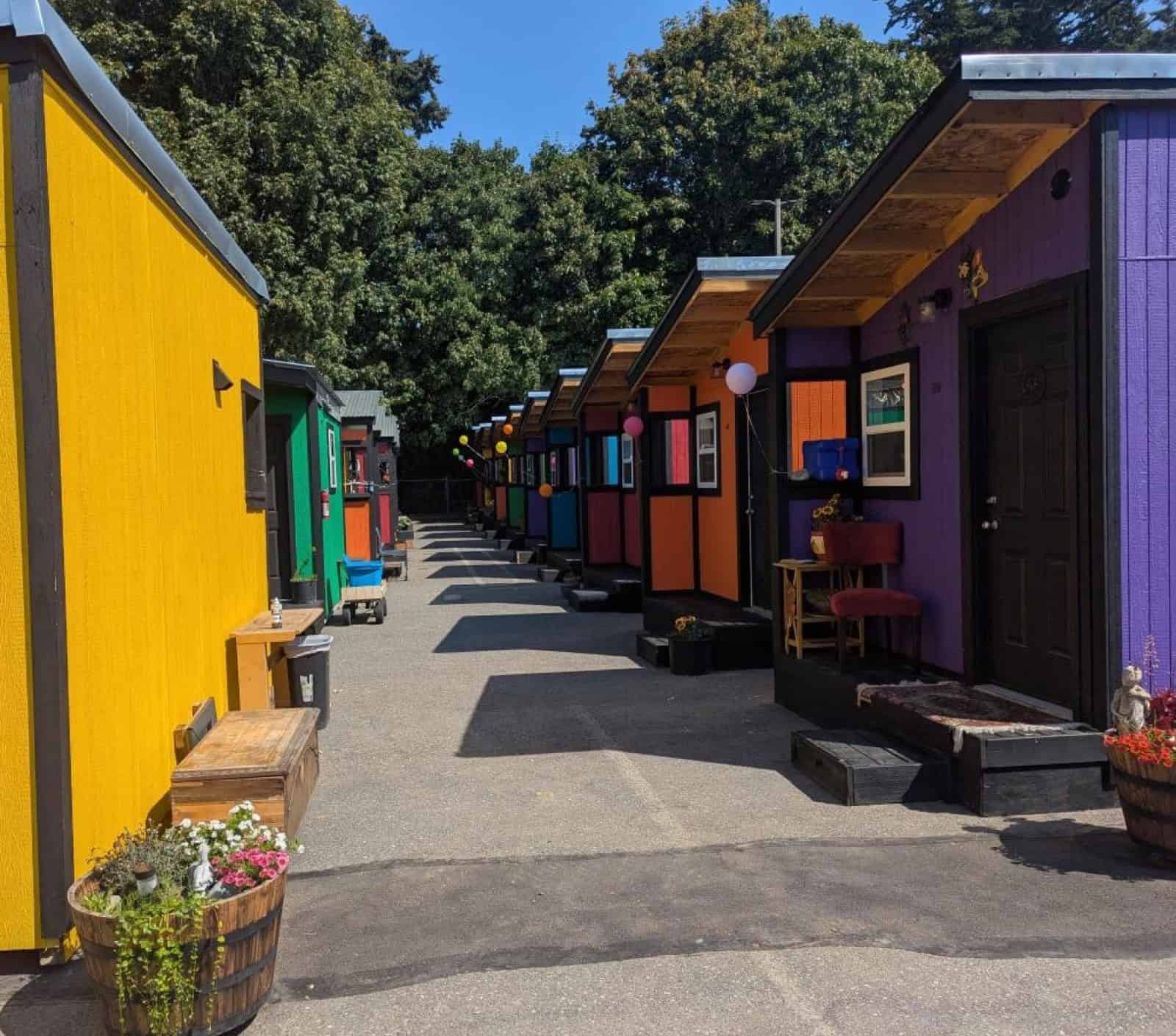
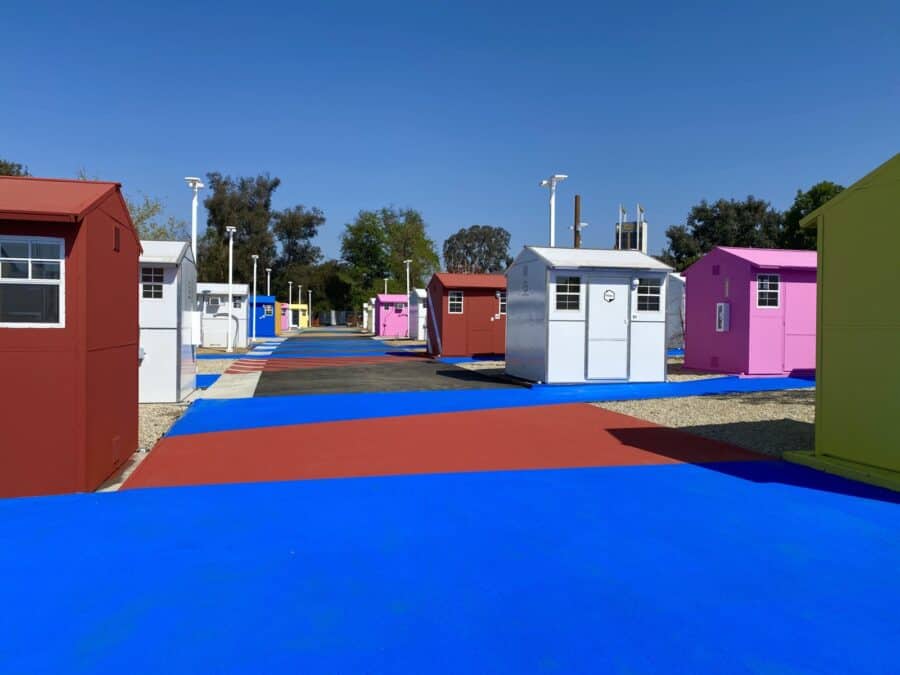
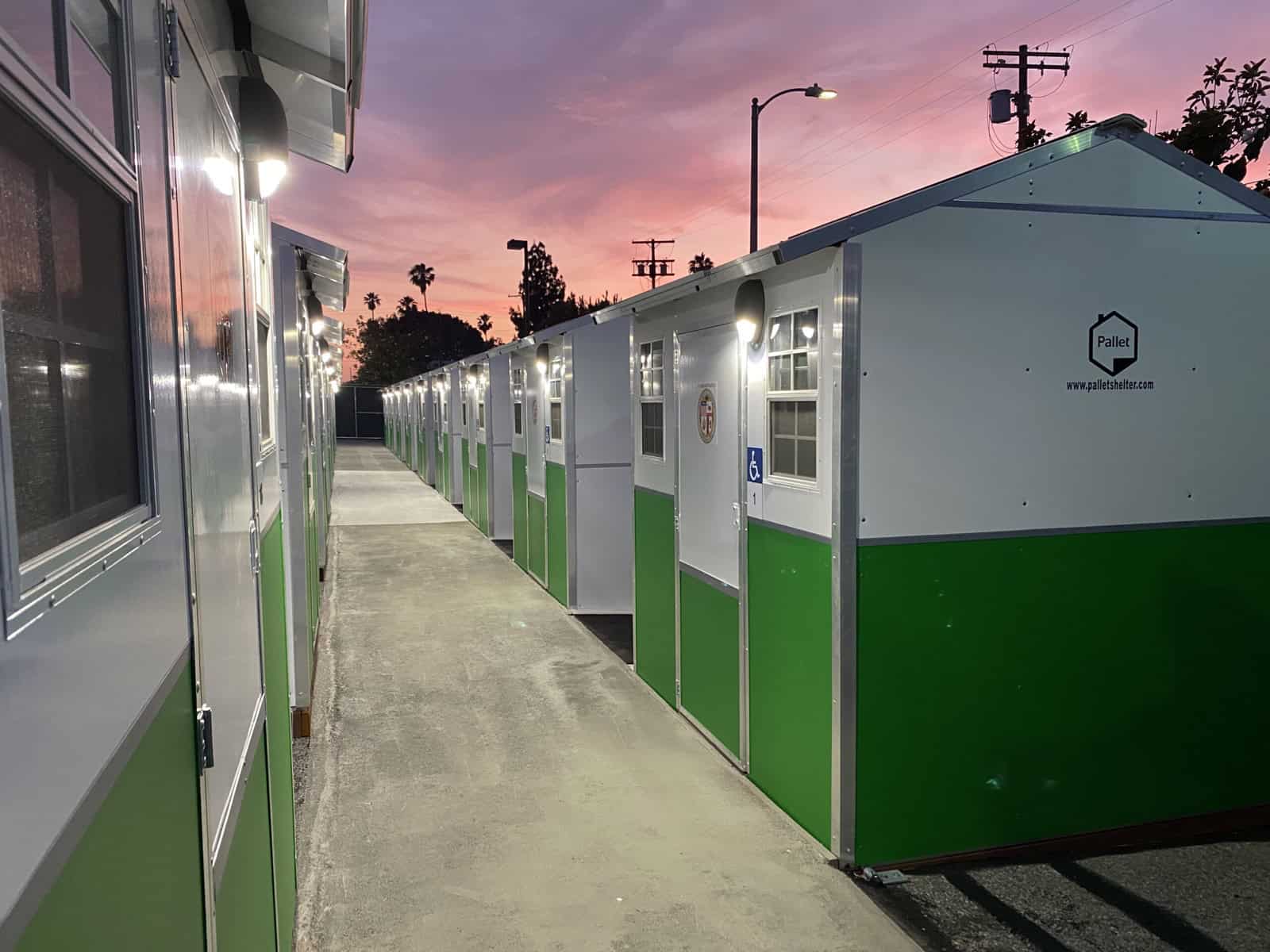
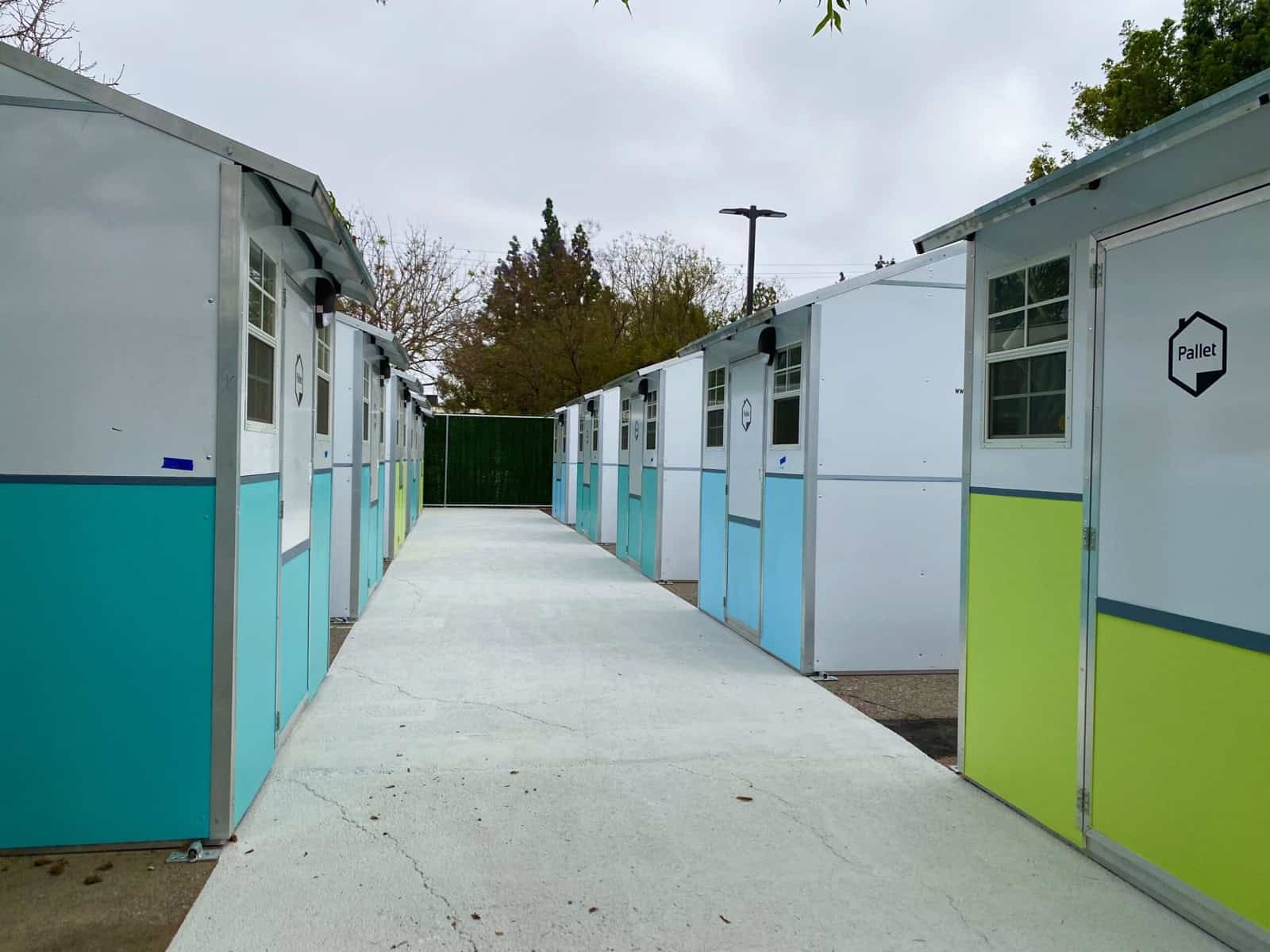
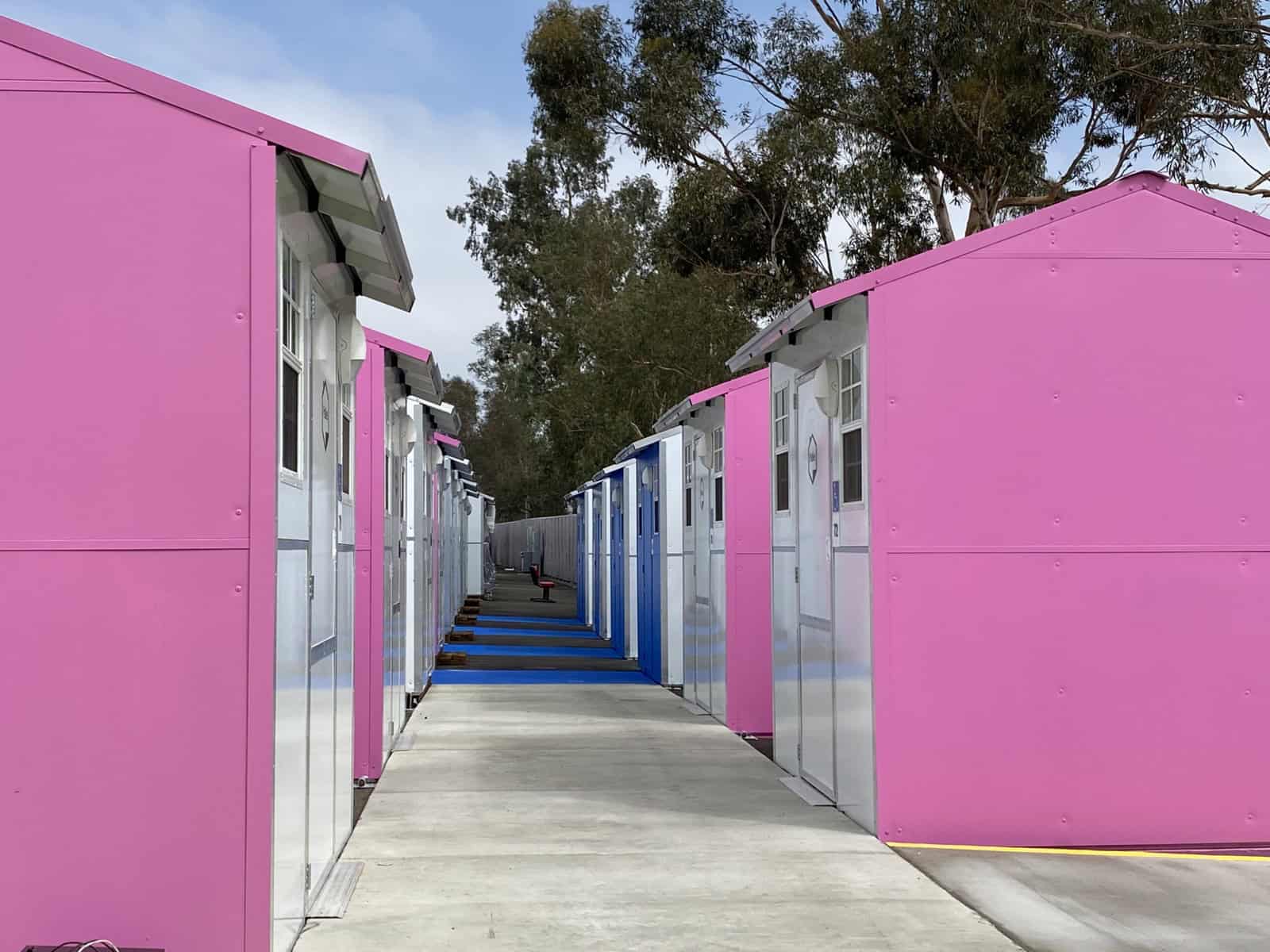
Images courtesy of Hope the Mission. Photos show Hope the Mission’s existing Los Angeles villages, not the new Van Nuys site.
What Opened in Van Nuys
The village occupies land adjacent to the Van Nuys Metrolink station parking lot, next to an existing A Bridge Home shelter at 7724 Van Nuys Blvd. That neighboring facility is a 200-bed sprung structure built in 2022, split evenly between men and women. Add the new village and roughly 300 people are now sheltered on that single site.
Here’s what was built:
- 50 tiny homes, each 64 square feet
- 100 beds total — two beds per unit
- Heat, air conditioning, windows, electrical outlets, shelving and a lockable front door
- Pet friendly
- Trailer-based restrooms and showers
- Dining area with freshly prepared meals
- On-site washers and dryers
- 24/7 case management and housing navigation
Priority goes to people already living in Council District 2 — a district covering North Hollywood, Studio City, Sun Valley, Toluca Lake, Valley Glen, Valley Village and Van Nuys. Outreach teams enroll residents directly from encampments rather than requiring people to find their way to an intake office.
The project cost more than $5.5 million, funded through California’s Emergency Stabilization Beds (ESB) program for construction, with the City of Los Angeles covering daily operations. It broke ground on August 1, 2025 and took roughly 18 months from groundbreaking to move-in.
The Unit: 64 Square Feet, Aluminum, Built in an Hour
Every unit at Van Nuys is a Pallet Shelter 64 — and if you have seen photos of any American tiny home village in the last five years, you have almost certainly seen one.
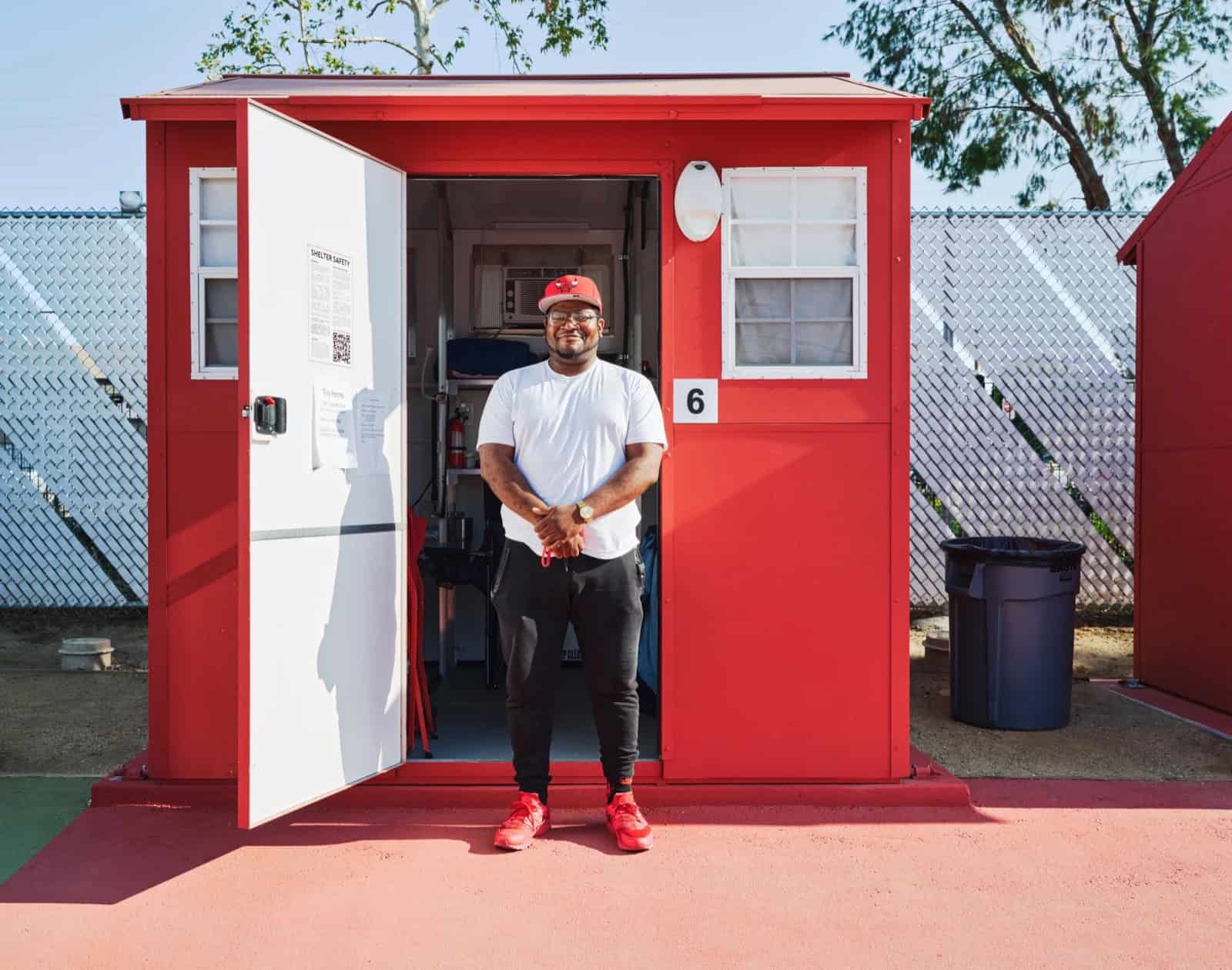
Images courtesy of Hope the Mission
Pallet is a public benefit corporation founded in 2016 and headquartered in Everett, Washington. Its shelters are built from aluminum framing and composite panels — chosen specifically because they wipe clean and bolt together fast. A single unit goes up in about an hour. An entire village can be standing in weeks.
The product line runs:
- Shelter 64 — 64 sq ft, sleeps 1–2 (the model used across LA)
- Shelter 100 — 100 sq ft, sleeps up to 4
- Community 400 & 800 — larger shared structures
- Dedicated hygiene, accessible half-bath and laundry units
There is one more detail about Pallet that deserves mention: the company is a fair chance employer. It deliberately hires people with lived experience of homelessness, substance use disorder, or criminal justice involvement, and builds the shelters using techniques borrowed from aerospace manufacturing. The people building the units have often lived in something like them.
Images courtesy of Hope the Mission
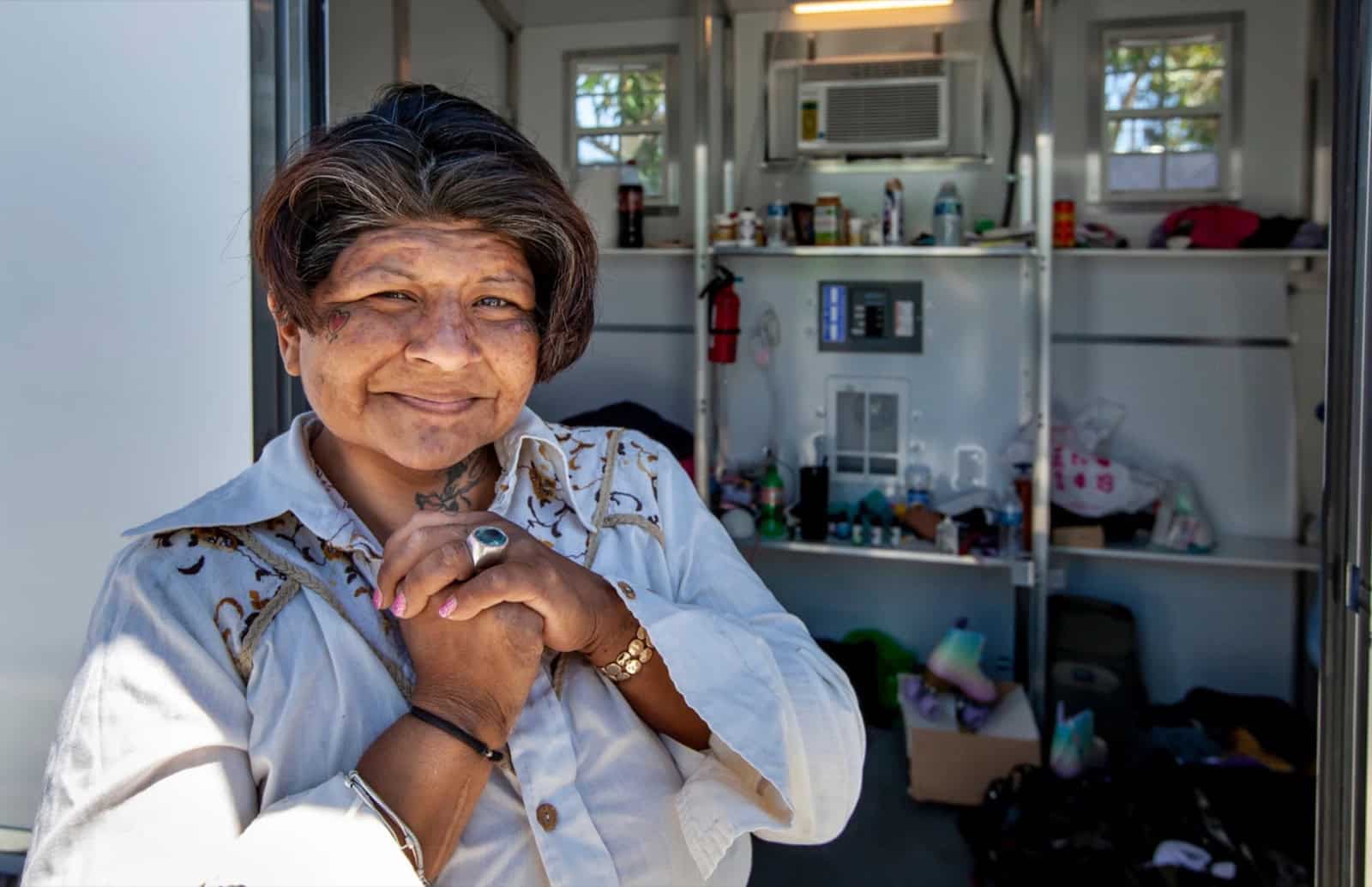
Look inside and the design logic is clear. Everything is wall-mounted and off the floor: a through-wall AC unit, open metal shelving for personal belongings, an electrical panel, a fire extinguisher, two beds. There is no plumbing in the unit — bathrooms and showers are in shared trailers. That single decision is what keeps the cost and build time low, and it is the same tradeoff a lot of off-grid tiny house builders make voluntarily.
Why the Pet Policy Matters More Than It Sounds
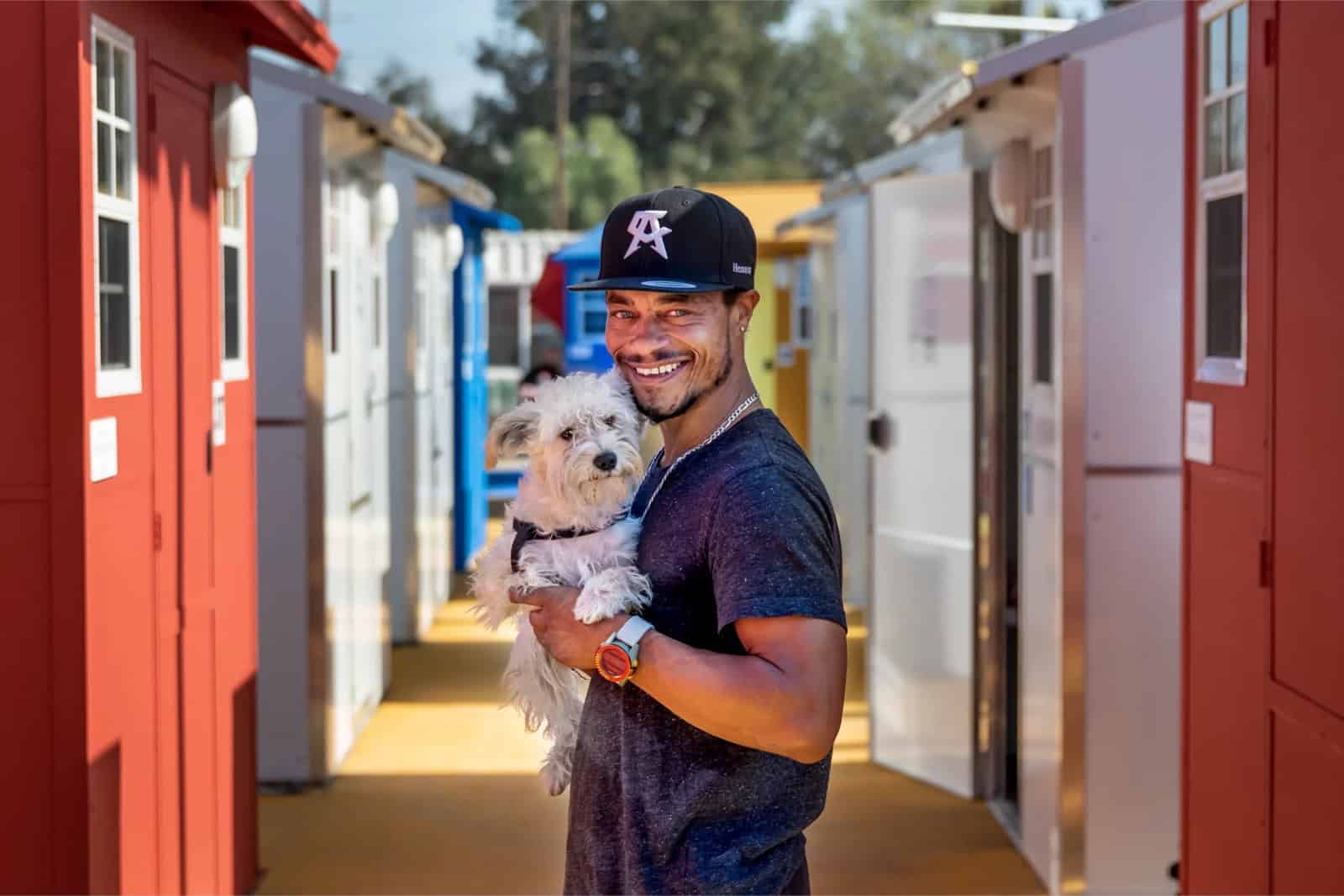
The Van Nuys village is pet friendly, and so are Pallet villages generally. This is not a small nicety.
Images courtesy of Hope the Mission
A large share of unsheltered people refuse traditional congregate shelter for three reasons: they cannot bring their pet, they cannot bring their possessions, and they cannot stay with their partner. Tiny home villages solve all three. Each unit has a door that locks, room for belongings, space for a partner, and no rule against the dog. That is the entire reason villages fill up when barracks-style shelters sit half empty.
Rowan Vansleve, president of Hope the Mission, made a related point about who these beds reach:
“These beds are incredibly important for women who are on the streets.”
Los Angeles Has Been Running This Experiment Since 2021
Van Nuys is not an experiment anymore — it is an iteration. Los Angeles has been building tiny home villages for five years.
Images courtesy of Hope the Mission
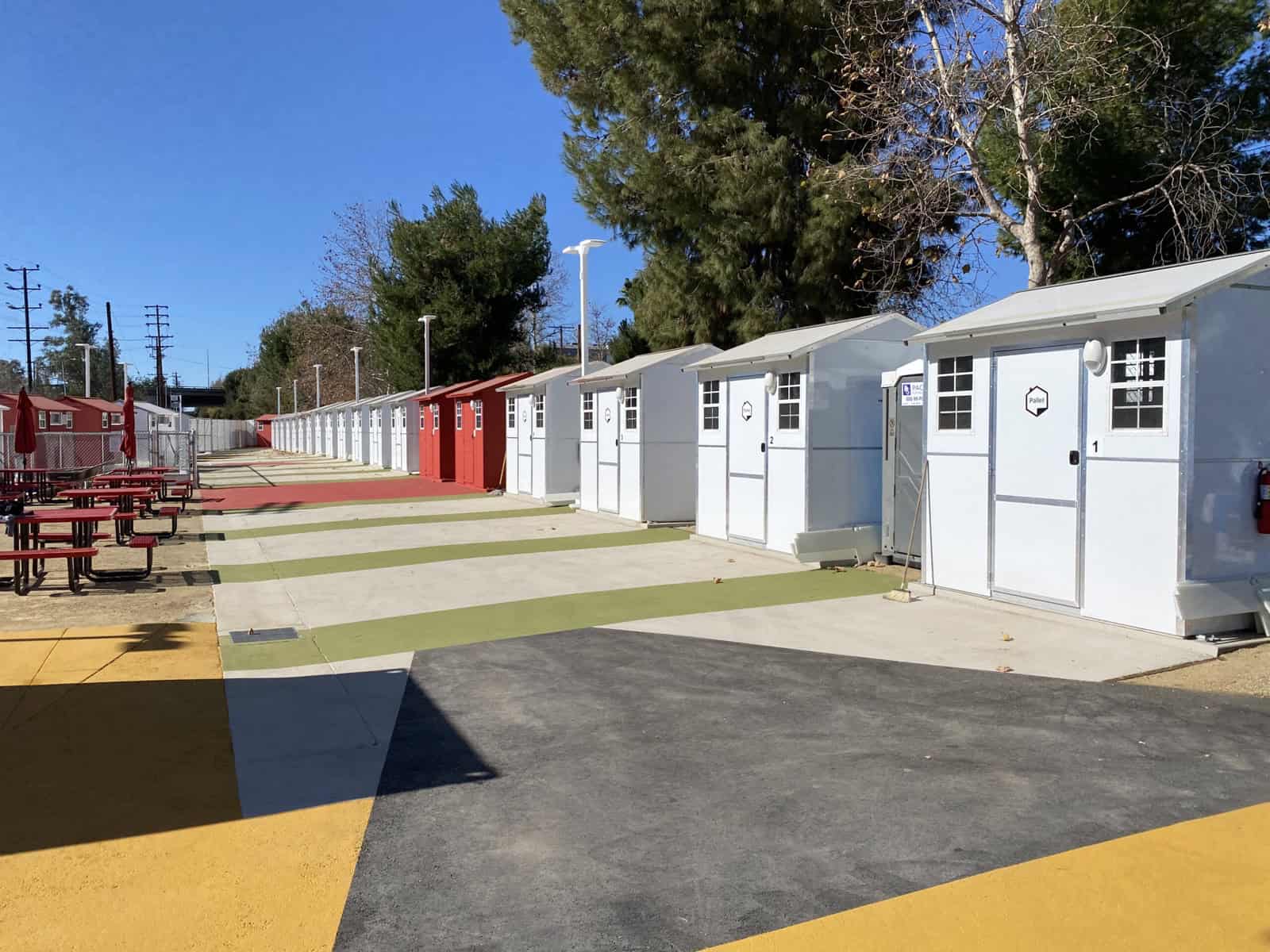
The first was the Chandler Boulevard Tiny Home Village in North Hollywood, which opened in February 2021 — also operated by Hope the Mission (then called Hope of the Valley Rescue Mission). It holds 40 homes and 75 beds, cost about $4.9 million, and was designed by Lehrer Architects, who gave it the bold painted ground plane and saturated color blocking you can see in the photos throughout this post. Those colors were a deliberate design decision, not decoration — the idea was that a shelter should not look like a punishment.
Since then the city has built roughly 9 to 14 Pallet villages depending on how you count, totaling around 1,282 beds. Hope the Mission alone now runs four villages in Council District 2, two A Bridge Home sites, and a Homeless Services Navigation Center in North Hollywood — sheltering more than 700 people nightly in that district.
The organization’s cumulative numbers are worth pausing on: 945,350 nights of shelter, 2,836,050 hot meals, and 1,772,075 showers since it began as a volunteer ministry serving meals at a Sun Valley church in 2009.
Images courtesy of Hope the Mission
The Honest Part: What the Data Shows
Here is where this story gets more complicated than the ribbon-cutting suggests, and it would be dishonest to leave it out.
In March 2025, LA Public Press published an investigation analyzing LA Homeless Services Authority data across 12 villages and roughly 800 units over a 13-month period ending March 1, 2024. Reporters also interviewed more than 40 residents at 10 villages. The findings:
- 53% of residents (1,047 of about 2,000) returned to homelessness when they left
- 23% (462 people) moved into permanent housing
- 4.4% (87 people) went to jail, prison or detention
- Average stay was 153 days — well past the 90-day goal
- 33 deaths occurred across the villages during the period
- About half of interviewed residents reported unresponsive staff; 19 cited water leaks or flooding; 19 reported drugs, alcohol or weapons on site despite bans; 17 complained about restroom access
On cost, the A-Mark Foundation calculated an average of $42,344 per bed across LA villages, with wide variation — the first Chandler Blvd units reportedly worked out to around $130,000 each, a figure that prompted city officials to publicly demand cost reductions. Operators are reimbursed roughly $55 per bed per night by LAHSA.
For comparison, the average construction cost of a permanent supportive housing unit in Los Angeles was $596,846 in 2021. So the villages are still dramatically cheaper — but “cheaper than the most expensive housing in America” is a low bar, and a 23% permanent housing exit rate is not the outcome anyone was promised.
So Is It Working?
The fairest answer is: it depends entirely on what you think the villages are for.
If the standard is “does this end homelessness for the people who enter,” the LA data says no more often than yes. If the standard is “does this get people off the sidewalk into a locked, climate-controlled, safe space tonight, faster and cheaper than any alternative,” the answer is clearly yes.
Councilmember Adrin Nazarian has been direct about the framing:
“This is not a permanent solution. The goal is to serve as a bridge.”
He expects residents to stay “anywhere from maybe six months to a year, year and a half.” Vansleve of Hope the Mission put it another way:
“We need a weigh station in the middle, just like these. We need every weapon we can to end homelessness.”
There is also a wider trend worth noting. LAHSA’s 2025 count found homelessness declined for a second consecutive year — down 4% countywide to 72,308, and down 3.4% in the City of LA to 43,699. Unsheltered homelessness dropped 9.5% countywide and has fallen 17.5% in the city over two years, alongside an 8.5% increase in people entering interim housing. Council District 2 specifically reported a 35% drop in unsheltered homelessness and a 38% increase in interim shelter placements year over year.
Caveat: a RAND Corporation study found the official count captured only about 68% of the unsheltered population in three key LA neighborhoods, so the declines may be overstated.
Images courtesy of Hope the Mission
What Tiny House People Should Take From This
A few things stand out if you care about small structures rather than housing policy:
Speed is the whole point. A Pallet unit assembles in an hour. A village goes up in weeks. Nothing in conventional construction comes close, and that speed exists precisely because the unit is small, dry (no plumbing), factory-built, and bolted rather than framed.
64 square feet is genuinely enough for shelter — and genuinely not enough for a home. The LA data is arguably evidence of both. People will accept 64 square feet with a lock over a tent every time. But nobody is meant to stay, and the average stay of 153 days suggests the exit pipeline, not the unit, is the bottleneck.
Operations matter more than architecture. The complaints in the investigation — unresponsive staff, leaks, broken systems, restroom access — are management and maintenance failures, not design failures. Compare that to Bellingham, Washington’s resident-governed villages, which report a roughly 70% rehousing rate with a fraction of LA’s budget. Same basic building. Very different results.
Color is not frivolous. Lehrer Architects understood something real: dignity is partly visual. A bright yellow door with a house number reads differently than a gray box with an ID tag, both to the person living there and to the neighborhood next door.
Images courtesy of Hope the Mission
Van Nuys Tiny Home Village at a Glance
- Location: Adjacent to Van Nuys Amtrak/Metrolink station, near 7724 Van Nuys Blvd, Van Nuys, CA
- Units: 50 tiny homes
- Beds: 100 (two per unit)
- Unit size: 64 square feet
- Manufacturer: Pallet (Shelter 64 model)
- Operator: Hope the Mission
- Cost: $5.5 million+
- Construction funding: California Emergency Stabilization Beds (ESB) program
- Operations funding: City of Los Angeles
- In-unit: Heat, A/C, windows, outlets, shelving, two beds, locking door
- Shared: Restroom/shower trailers, dining area with prepared meals, laundry
- Pets: Allowed
- Priority: Council District 2 residents
- Groundbreaking: August 1, 2025
- Opened: June 29, 2026
- Expected stay: 6 months to 18 months
- Status: At capacity with a waiting list
How to Get Help or Refer Someone
Placement is not first-come, first-served at the gate. Referrals run through the county system:
- Call 211 (LA County’s homeless services line), or
- Visit a local Homeless Services Navigation Center or access center, or
- Connect with a street outreach team, which enrolls people directly
Learn More
- The San Fernando Valley Sun — New Tiny Homes Village to Open Monday in Van Nuys
- ABC7 Los Angeles — Van Nuys opens new tiny home village with 100 beds
- Sun Valley Area Neighborhood Council — Groundbreaking coverage
- Van Nuys Neighborhood Council — New Interim Shelter Opens In Van Nuys
- Hope the Mission — Tiny Homes Villages
- Pallet — Los Angeles case study
- LA Public Press — Tiny homes are a flawed solution to LA’s homelessness crisis
- A-Mark Foundation — What are the costs of building tiny home villages?
- HUD User — Chandler Boulevard Tiny Homes Village case study
- LAHSA — Declining homelessness is now a trend in Los Angeles County
Highlights
- Van Nuys Tiny Home Village opened June 29, 2026 with 50 homes and 100 beds
- Built beside the Van Nuys Amtrak/Metrolink station on previously unused land
- Units are 64 sq ft Pallet shelters with heat, A/C, outlets, shelving and locking doors
- Pet friendly, with shared restroom, shower, dining and laundry facilities
- Cost over $5.5 million; state ESB grant built it, the City of LA runs it
- Operated by Hope the Mission — its 35th shelter site, with eight more planned
- Fourth village in Council District 2, bringing that district past 700 nightly beds
- Filled to capacity within a week and now has a waiting list
- LA has built roughly 1,282 tiny home beds since 2021
- A 2025 investigation found 23% of LA village residents exit to permanent housing and 53% return to homelessness
What do you think — are 64-square-foot villages the right emergency response, or is the money better spent elsewhere? Let us know in the comments.
You can share this with your friends and family for free using the easy share buttons below. Thanks!
Join our Tiny House Newsletter for more!
=> https://tinyhousetalk.com/tinyhousenewsletter
Join The Small House Newsletter
=> https://tinyhousetalk.com/small-house-newsletter/
Join Our Tiny Houses For Sale Newsletter
=> http://tinyhousetalk.com/tiny-houses-for-sale-newsletter
Disclosure: This post may contain affiliate links. If you purchase through one of our links, we may earn a commission at no additional cost to you.


Alex
Latest posts by Alex (see all)
- Forestville Cabin: A Restored 1964 Redwood Cabin on an Acre of Redwoods - October 8, 2026
- El Capitan Canyon’s Safari Cabin: A Hilltop Two-Bedroom Cabin With Ocean Views and an Outdoor Shower - October 8, 2026
- High Camp Teardrop: A Portland-Built Aluminum Camper with a Slide-Out Kitchen - October 8, 2026