Disclosure: This post may contain affiliate links. If you purchase through one of our links, we may earn a commission at no additional cost to you.
If you already own a pickup or a utility trailer, you’re closer to having a camper than you might think. The Freedom Camper is a one-piece insulated shell, built in Lamar, Missouri, that weighs about 175 to 270 pounds depending on size. It drops into a truck bed or bolts onto a 5×8 (or larger) utility trailer, and pricing starts at roughly $3,440.
Playing with Sticks, a YouTube channel that covers budget camping rigs, toured several versions at an outdoor show, from a bare truck-bed sleeper to a fully kitted overland trailer. What makes it interesting isn’t luxury. It’s a blank, weatherproof box you can carry with two people and finish however you want.
Images via Playing with Sticks/YouTube
A Wood-Free Shell You Can Lift Over Your Head
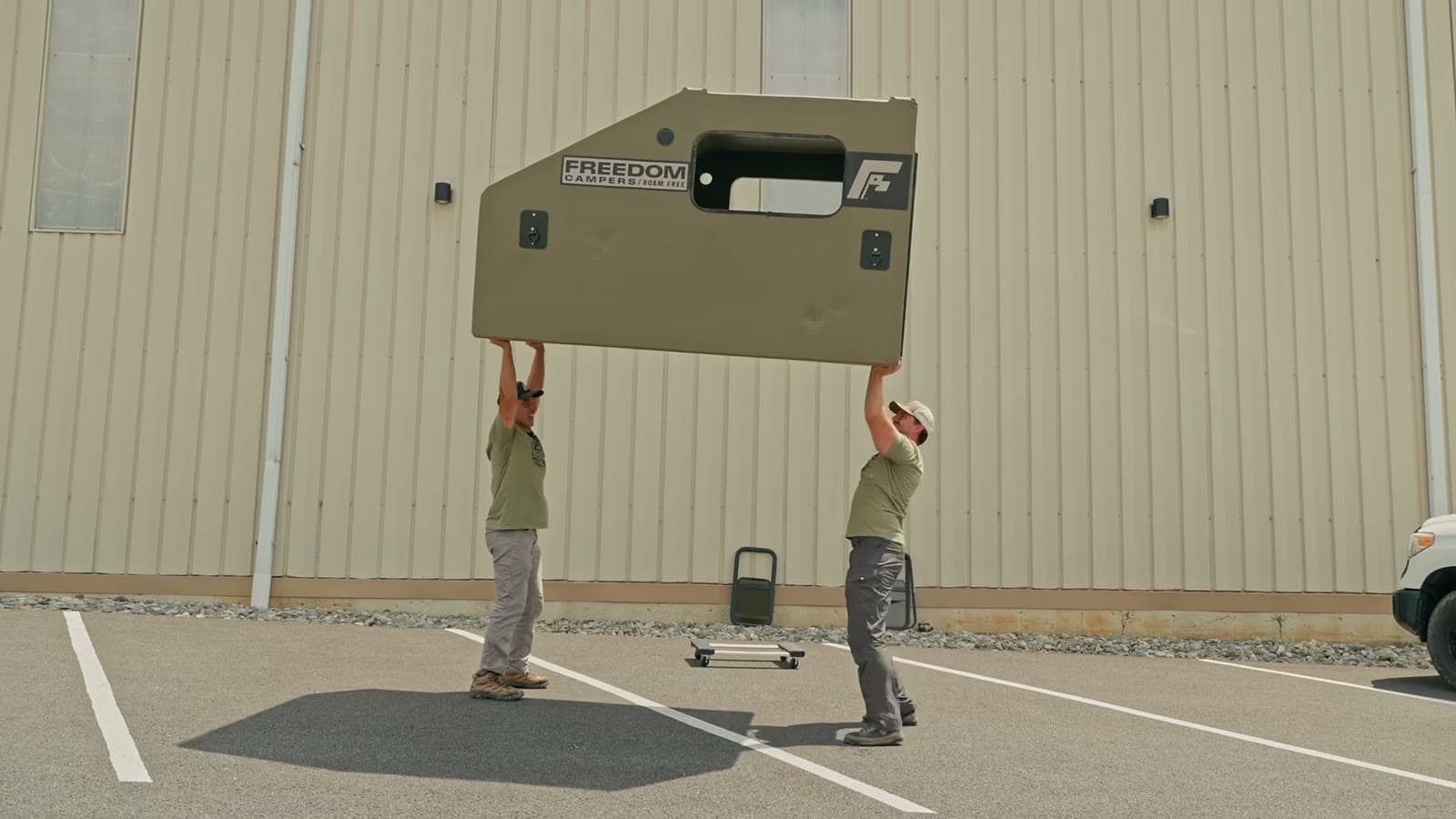
There’s no wood framing in the walls. The shell is high-density foam coated with a polyurea skin, similar to a spray-in bedliner. That’s how the popular 58″ x 89″ size gets down to about 195 pounds, light enough for two people to lift overhead, as the opening shot of the video shows. No rot-prone framing also means fewer places for water to cause trouble over time, which is a common failure point on budget campers.
Images via Playing with Sticks/YouTube
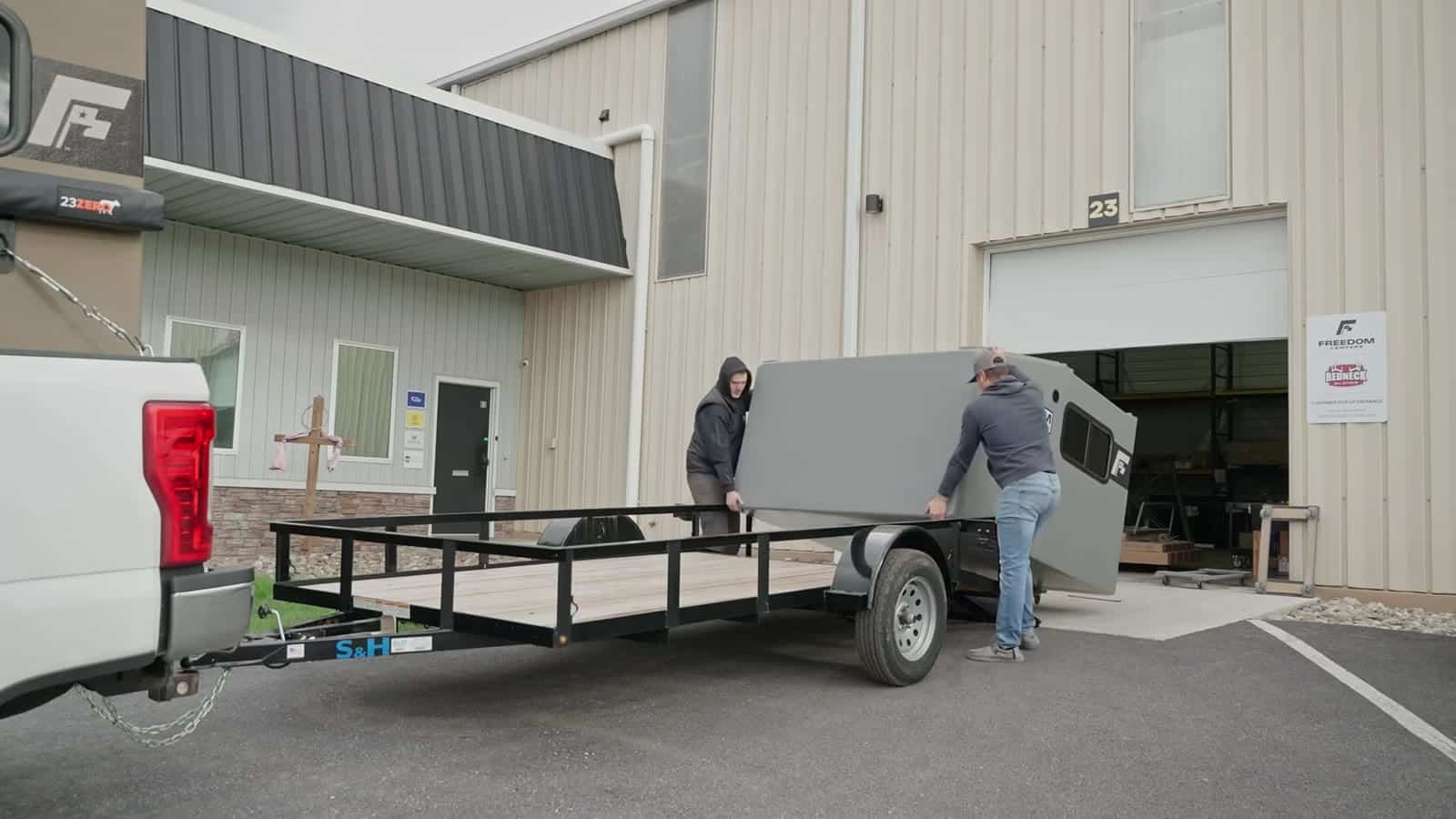
Because it’s so light, the same shell can move from a truck bed to a trailer and back. Freedom sells a $150 turnbuckle kit for trucks (included with the truck version) and a $39.99 bolt-down kit for trailers. The camper body itself is the same either way.
The Fully Built Overland Trailer
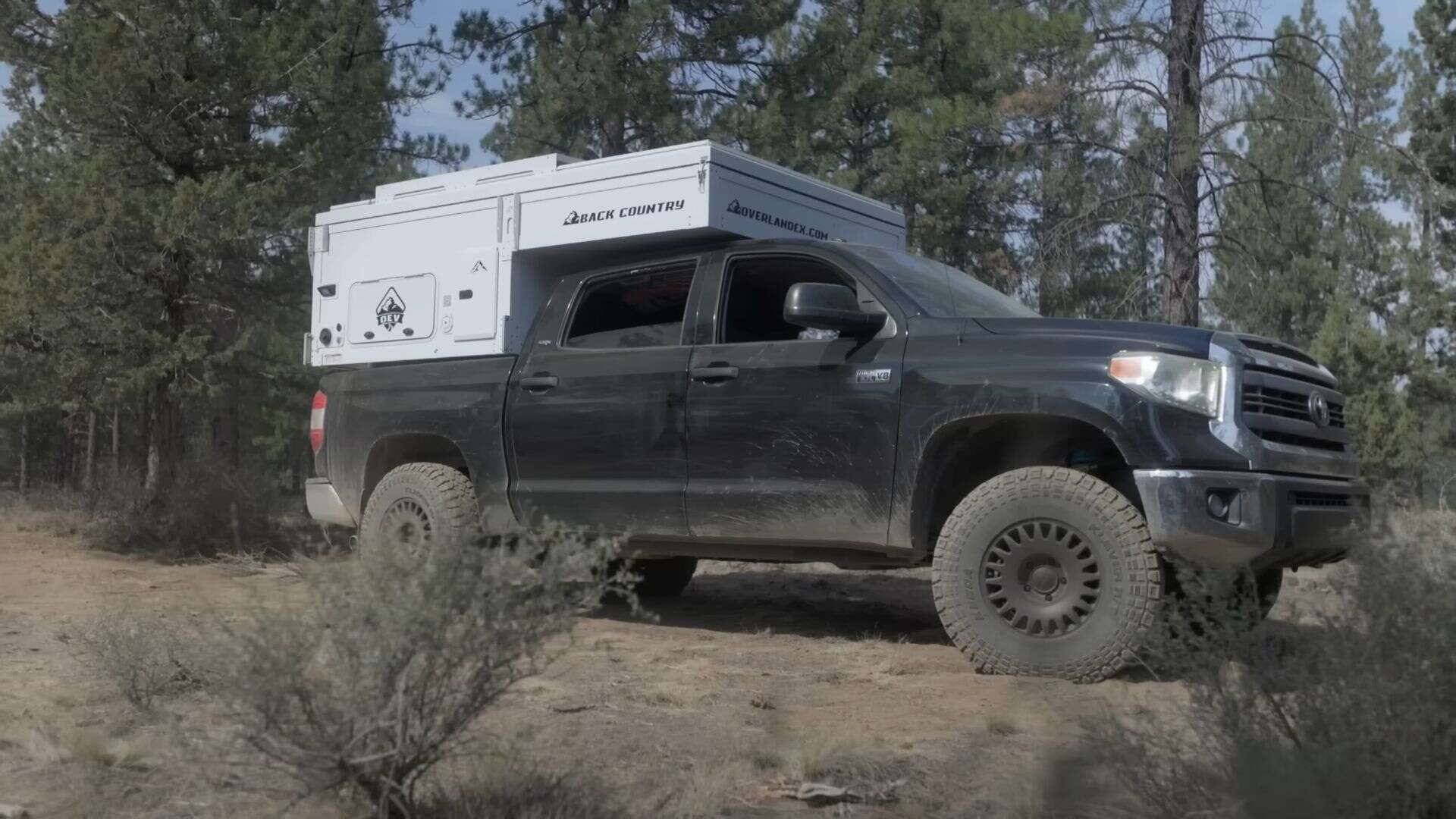
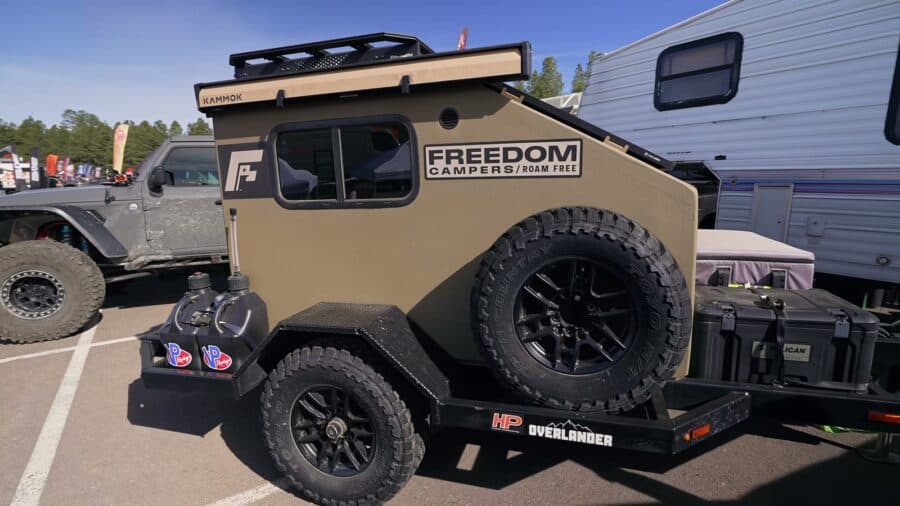
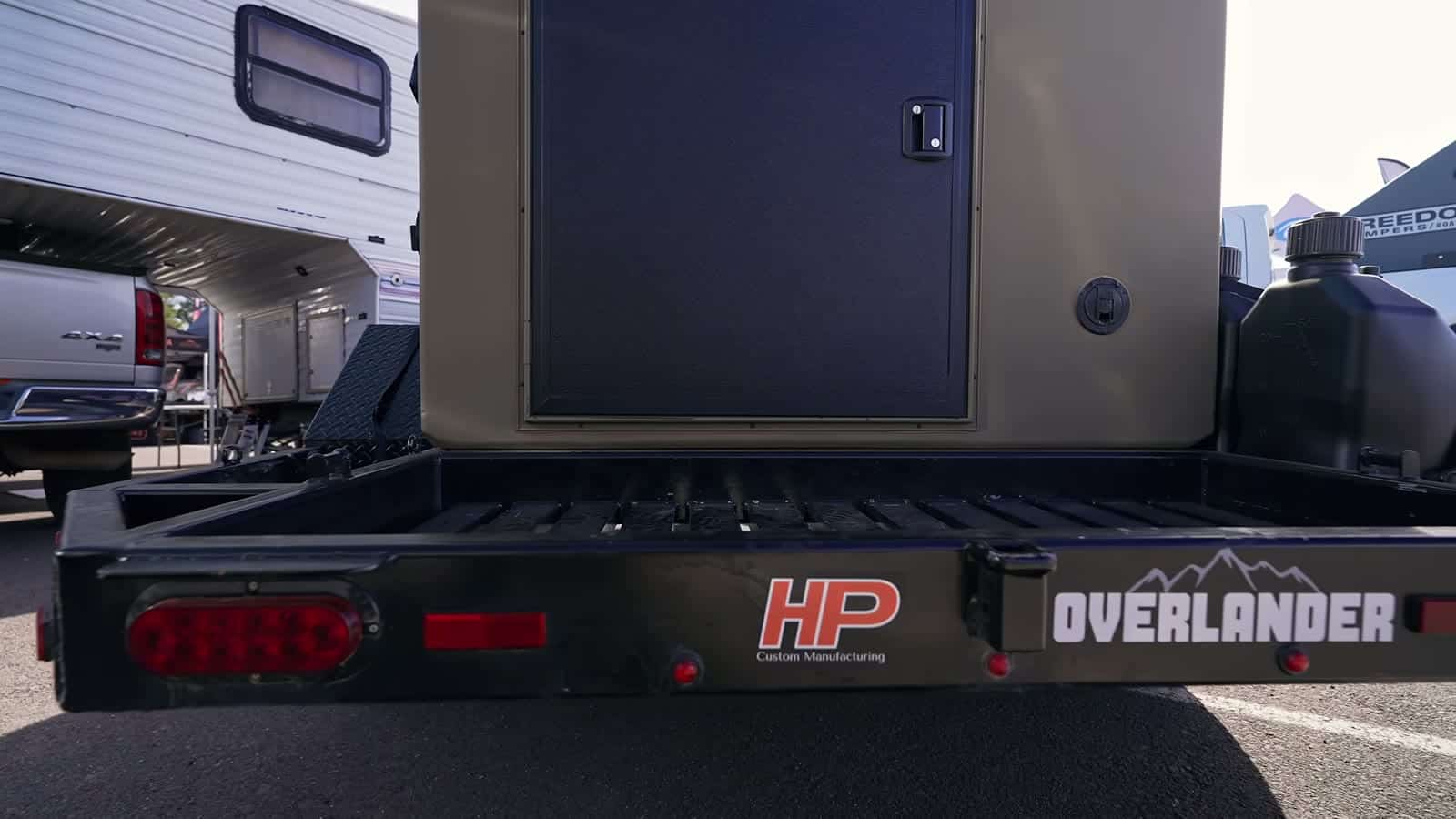
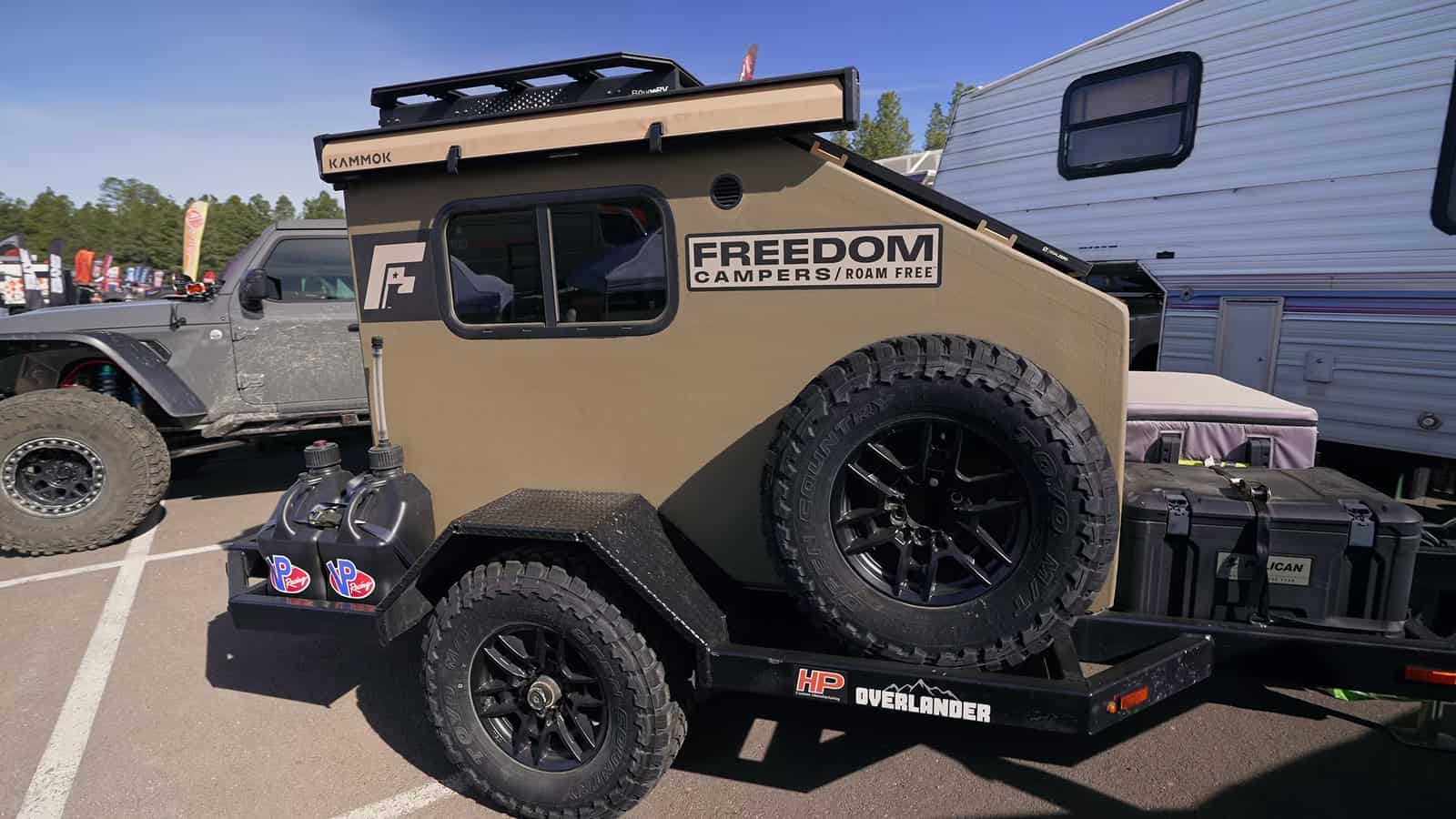
The headline build in the video puts the shell on an HP Overlander off-road trailer with a spare tire, side-mounted water jugs, a roof rack, and a Kammok awning. It’s a good example of where the shell can go: Freedom supplies the box, and the owner adds the trailer, rack, solar, and outdoor kitchen pieces.
Images via Playing with Sticks/YouTube
Behind the camper, a flat rear deck holds coolers, a power station, and recovery gear outside the sleeping space. That keeps fuel, water, and dirty gear out of the cabin, which matters when the whole interior is about the size of a queen bed.
Truck Bed Camper Fit
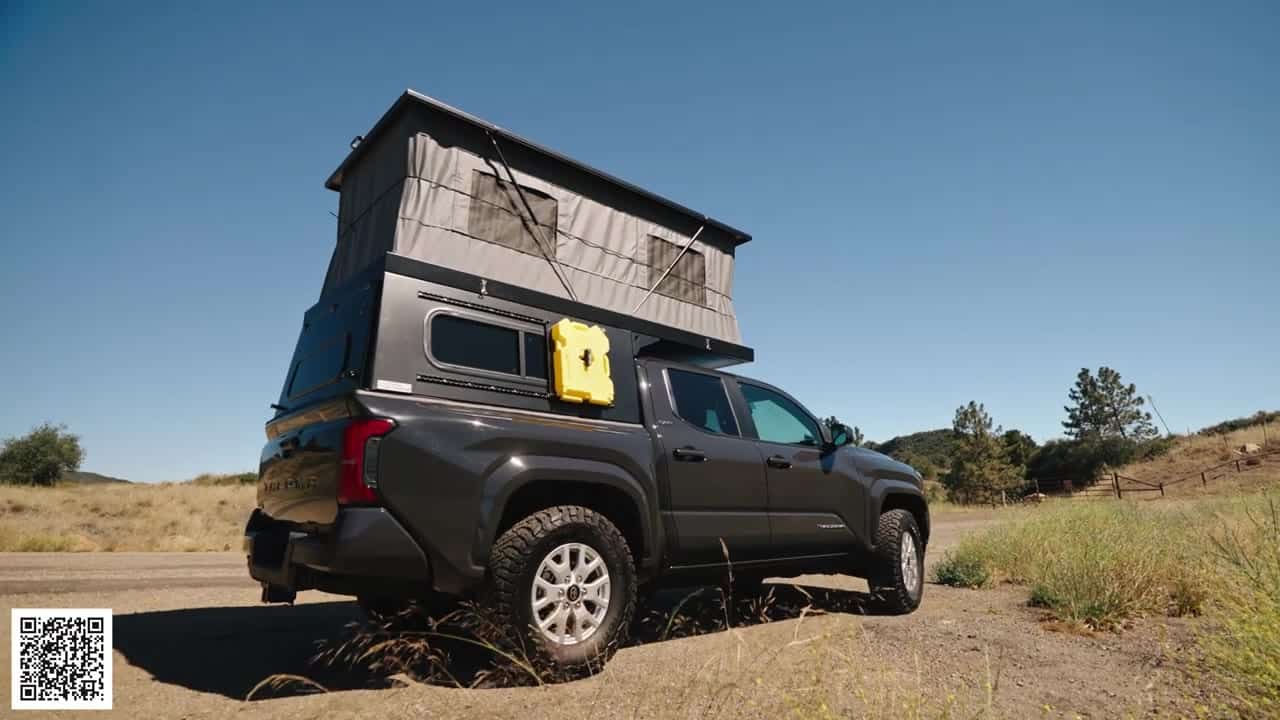
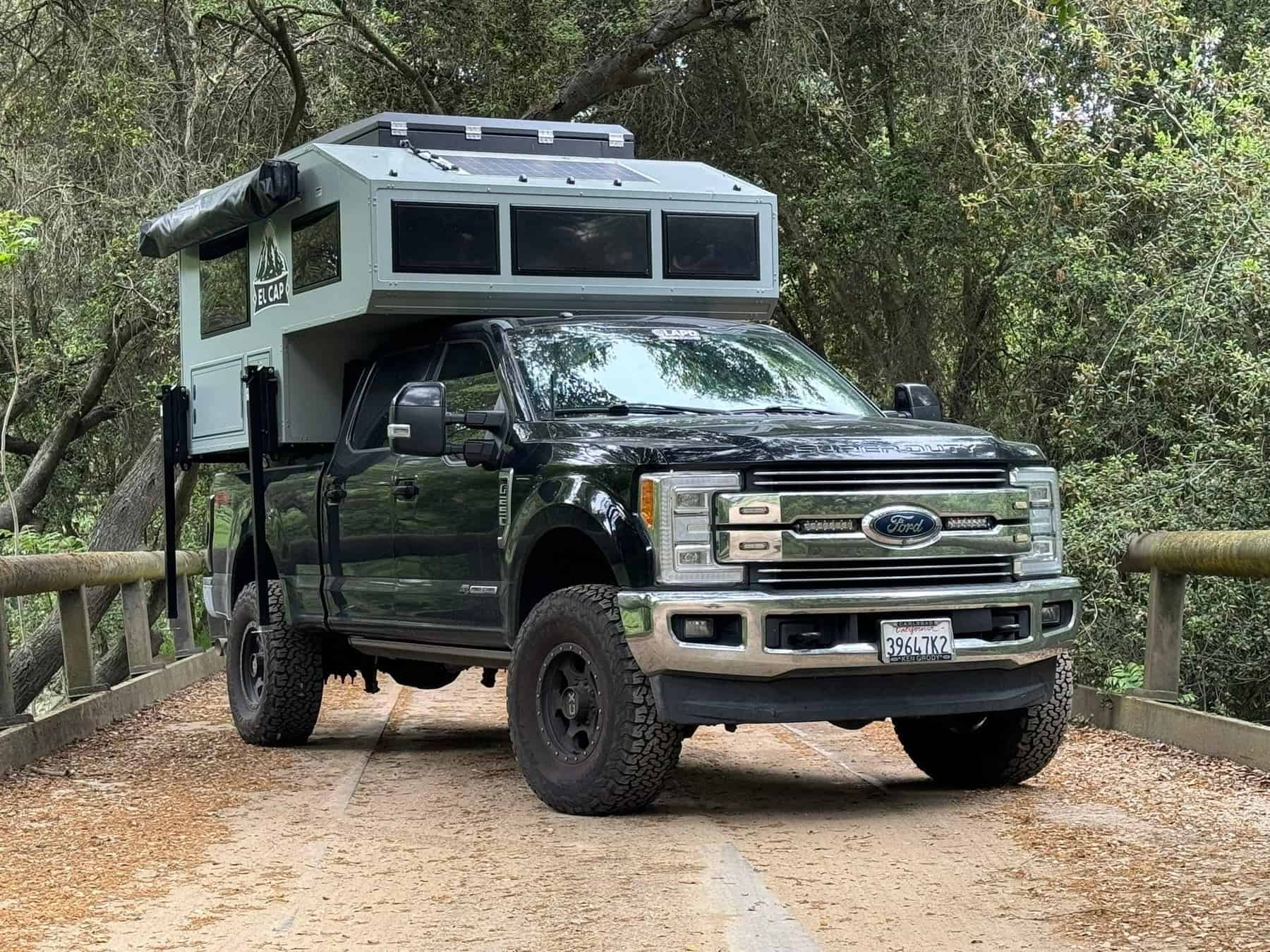
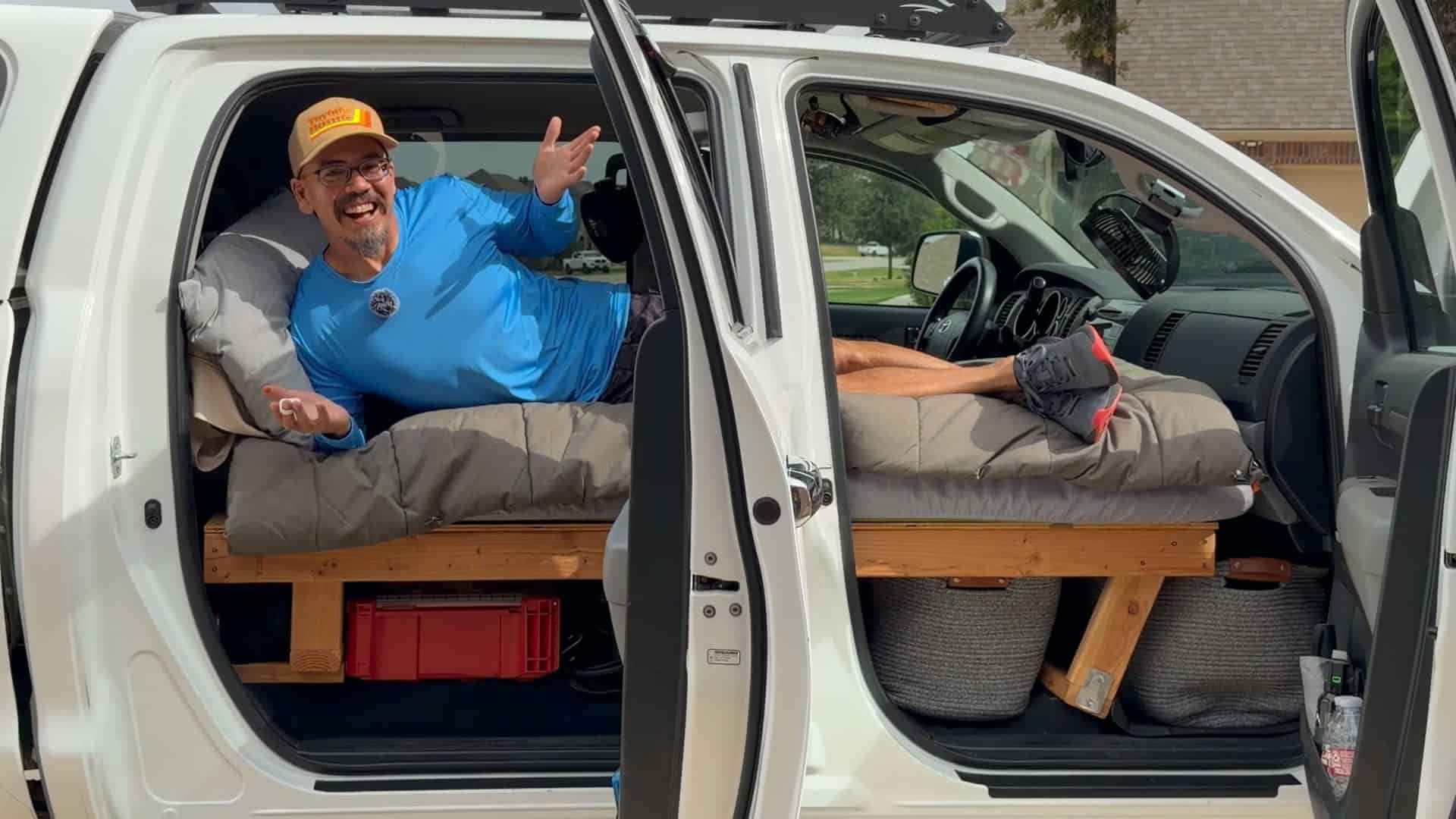
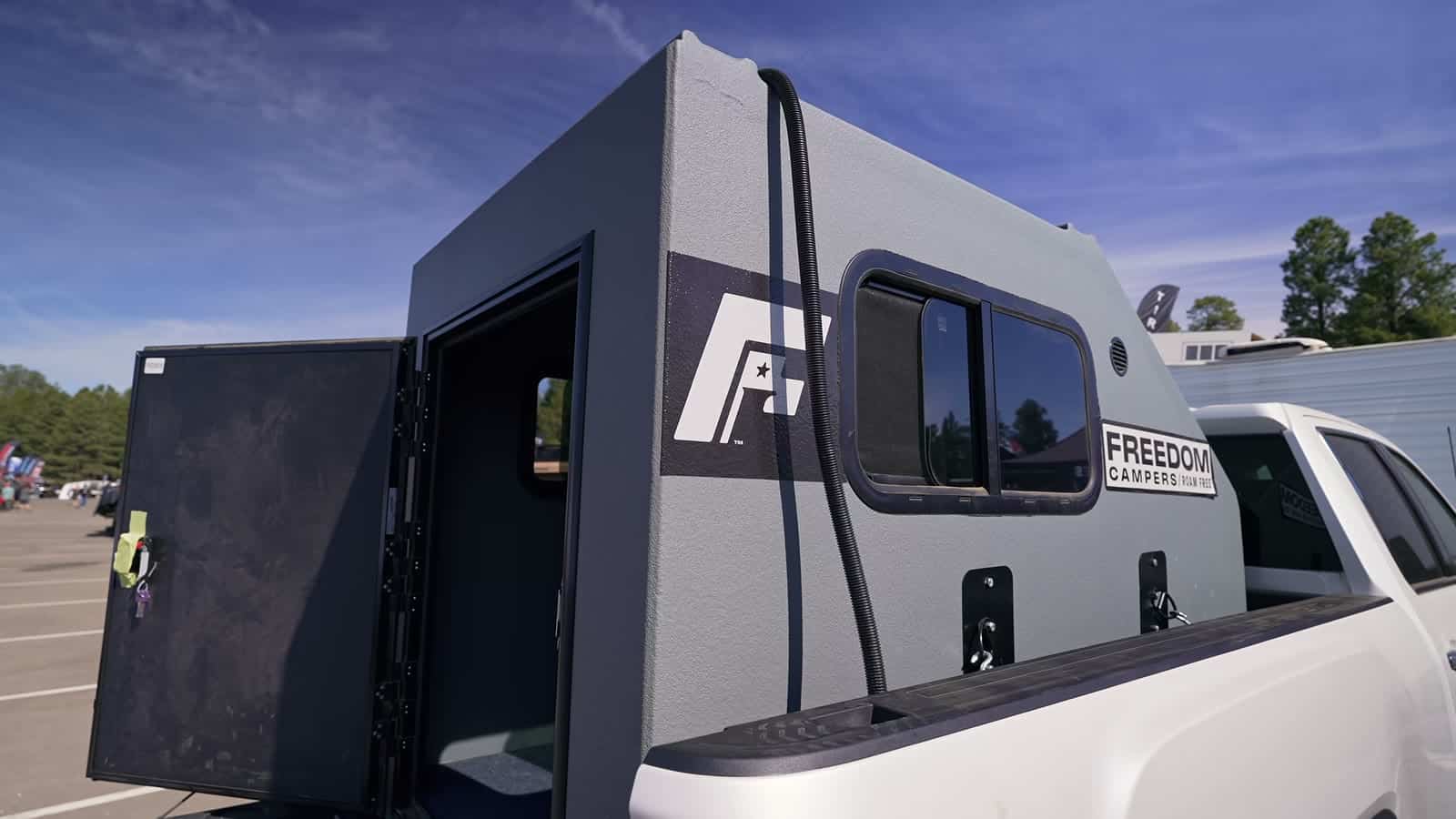
In a pickup, the shell rides on top of the bed rails and is held down with four turnbuckles to the outside of the bed. Freedom requires a platform under the three smaller sizes so the floor clears the wheel wells. You can use an aftermarket drawer system or build a simple wood frame from their DIY guide. The bonus is real storage under your bed.
Images via Playing with Sticks/YouTube
The 48″ x 79″ size is meant for midsize trucks like the Tacoma, Ranger, Colorado, Frontier, and Gladiator. The 58″-wide sizes fit full-size trucks such as the F-150, Silverado, Ram, and Tundra, and the 72″ x 89″ is built for flatbeds wider than 72.5 inches.
Solar, A/C, and Off-Grid Power
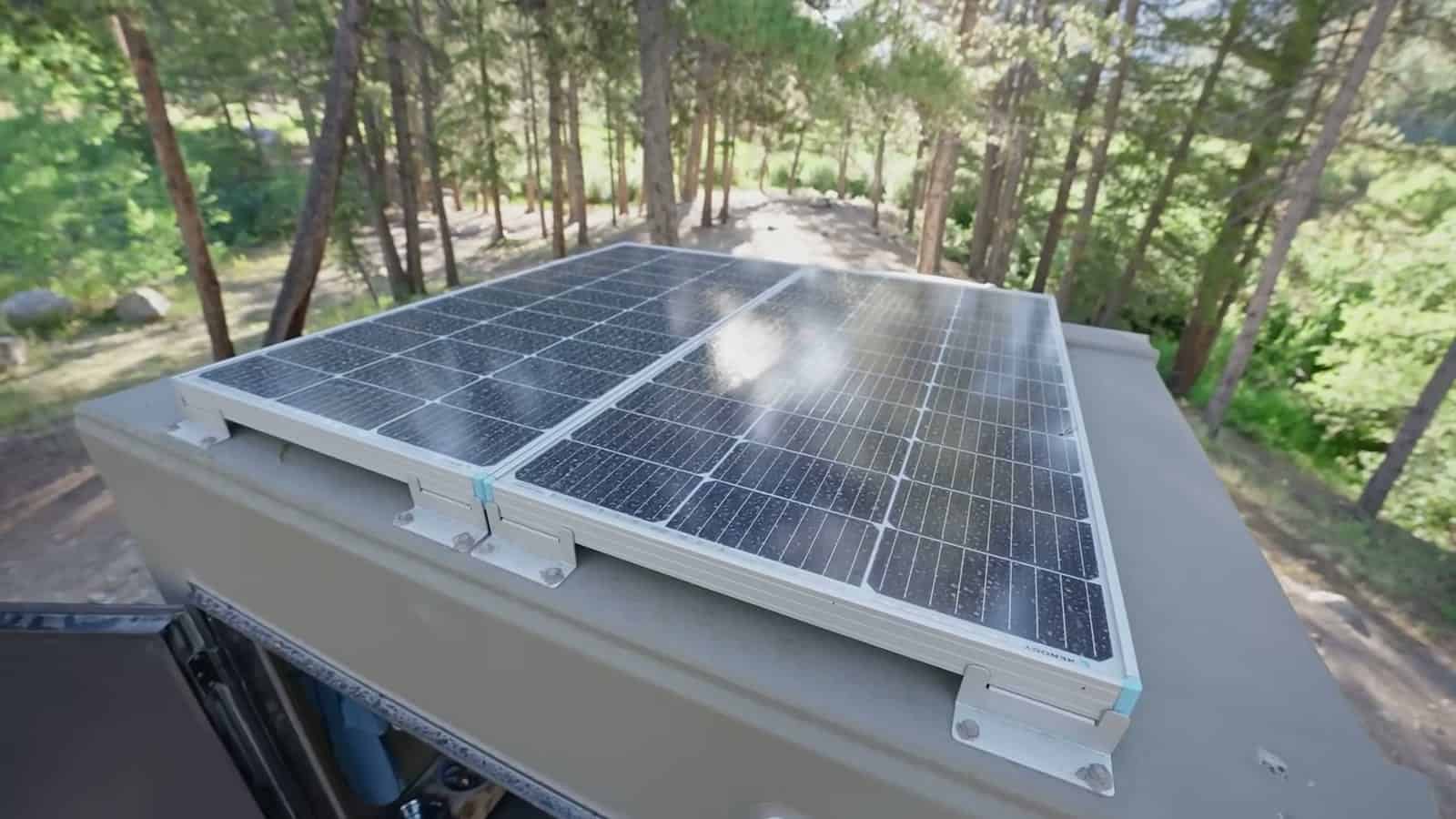
Every camper has embedded anchor points, so you can mount gear without drilling random holes in the foam. One demo unit carried a pair of rigid solar panels on the roof. Others showed a rooftop rack with a folding tri-fold panel. Power is up to you: most owners run a portable power station or a battery bank inside.
Images via Playing with Sticks/YouTube
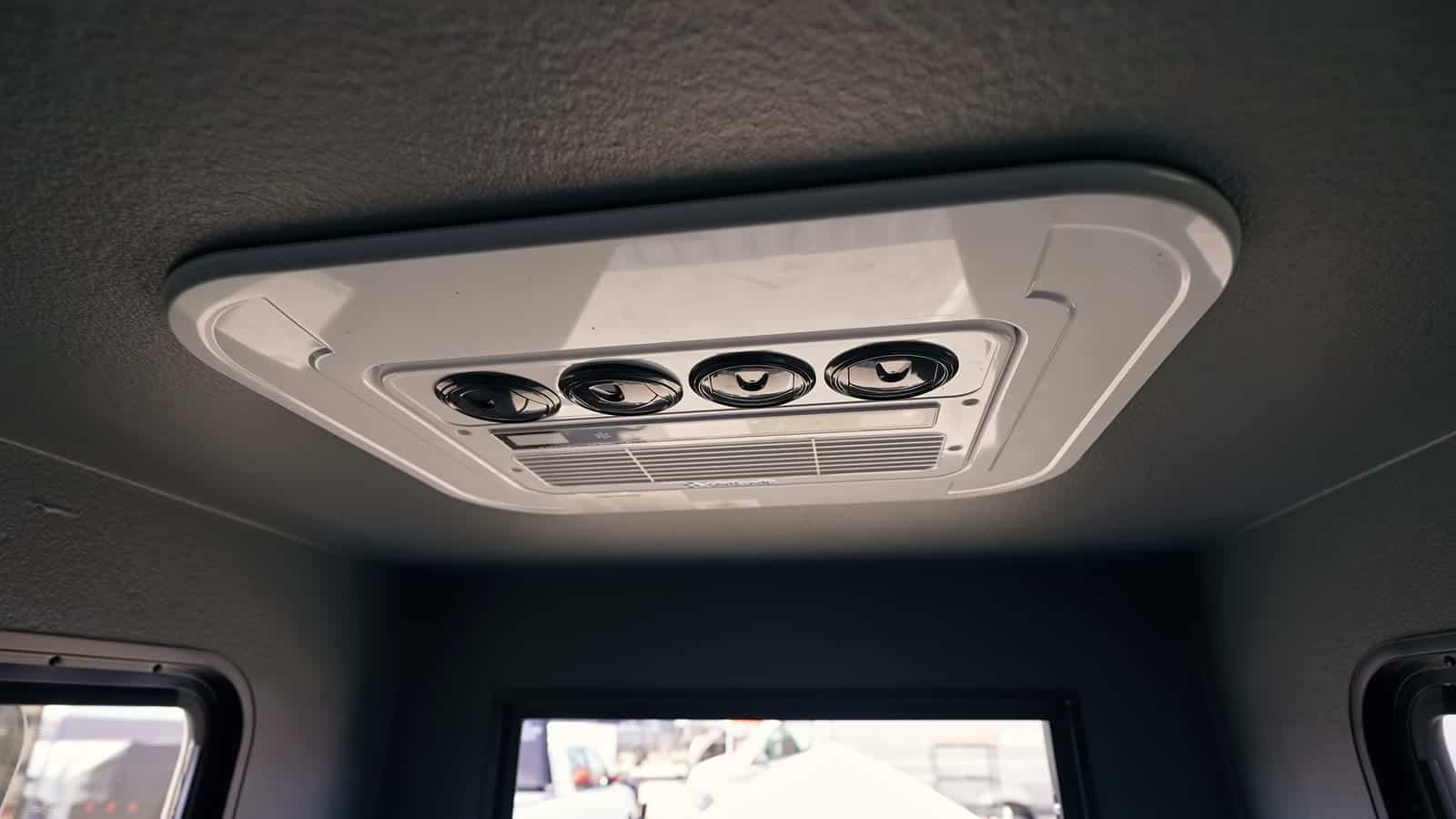
For hot weather, Freedom sells a 10,000 BTU 12V rooftop air conditioner ($974.99) with supplemental heat that runs off a battery, with no generator needed. The video walks through the power math. A 12V A/C can drain a small battery fast, so plan your battery and solar capacity before you buy it. The cheaper option is a portable A/C that vents through a small port in the wall.
Images via Playing with Sticks/YouTube
A Blank Interior on Purpose
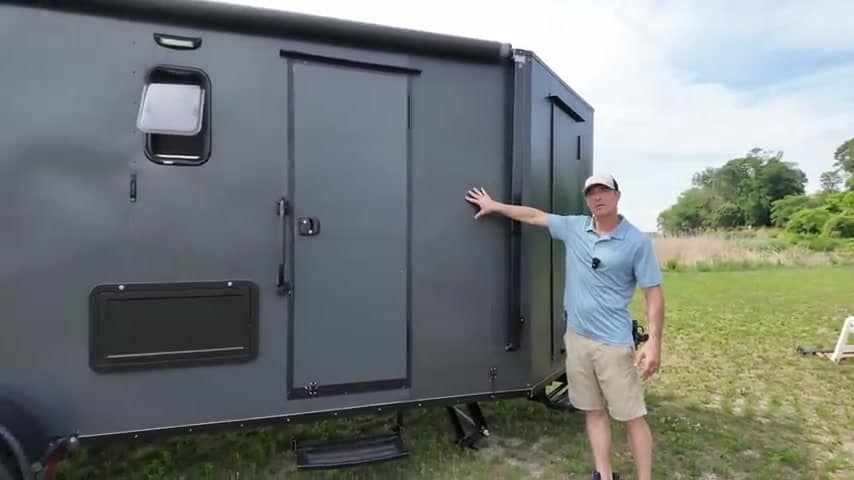
Open the door and you’ll find a carpeted floor, gray walls, a window on each side, and roof vents. That’s it. There’s no bed, kitchen, or wiring, and that’s the point. The interior is meant to be a blank canvas for your own mattress, storage, and lighting, which keeps the price down and lets you build it around how you actually camp.
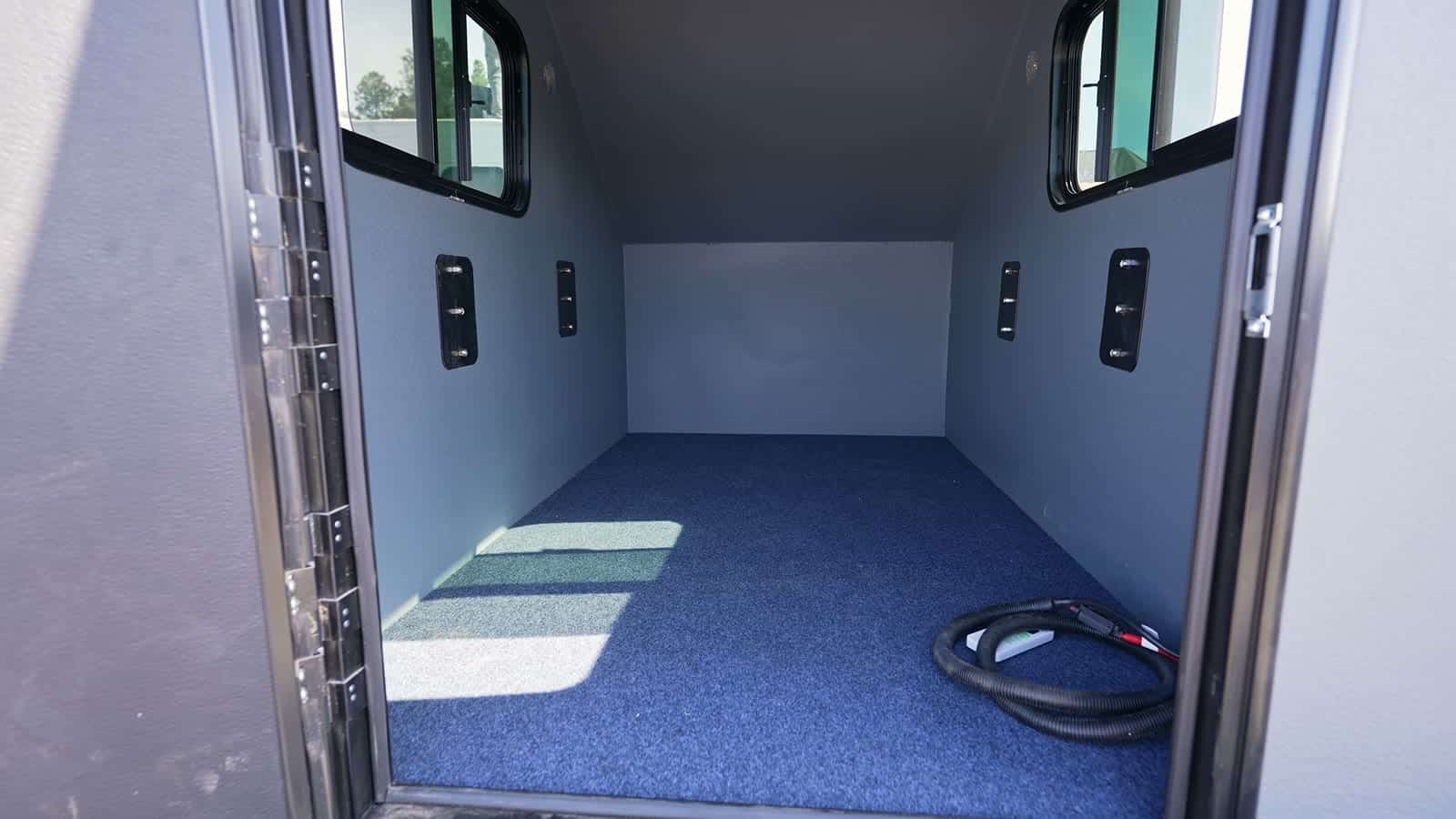
Images via Playing with Sticks/YouTube
The interior is about 48 inches tall, so this is a sit-up-and-sleep camper, not a stand-up one. In the 58″ x 89″, the inside length is 84.5 inches. The host, who is over six feet tall, stretches out with room to spare. In the 72″ x 89″, the inside width grows to 68 inches, enough for a full-size mattress plus side storage.
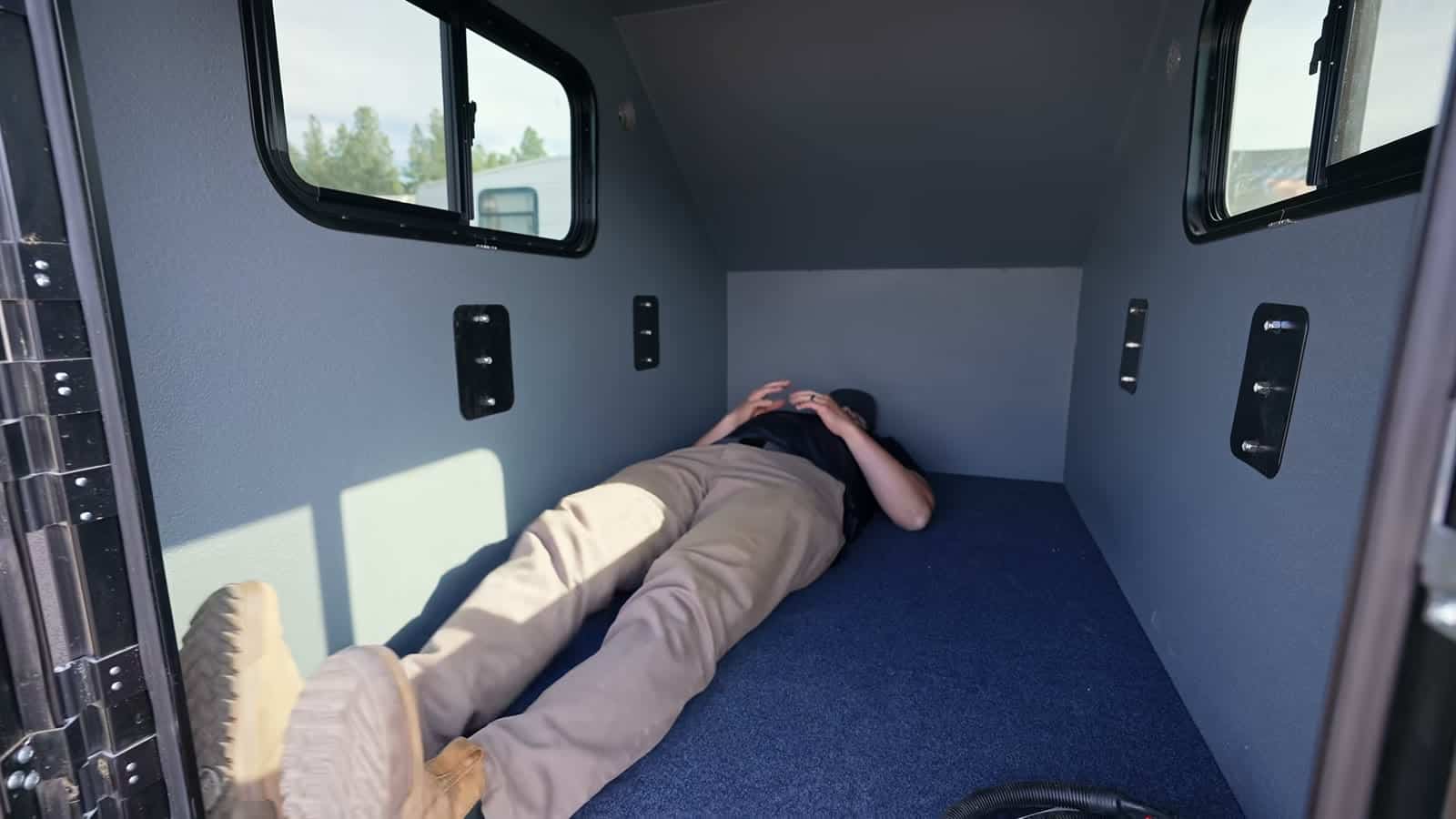
Images via Playing with Sticks/YouTube
Beyond Camping
Because it’s a light, insulated box, owners use it for more than weekend trips. The video shows it as a hunting blind, an ice-fishing shack, a gear hauler, and even a base for a rooftop tent on a small utility trailer, which adds a second sleeping level. Customer reviews on Freedom’s site mention a trip from Tennessee to Alaska and back, and one owner who uses it in place of hotels for work travel.
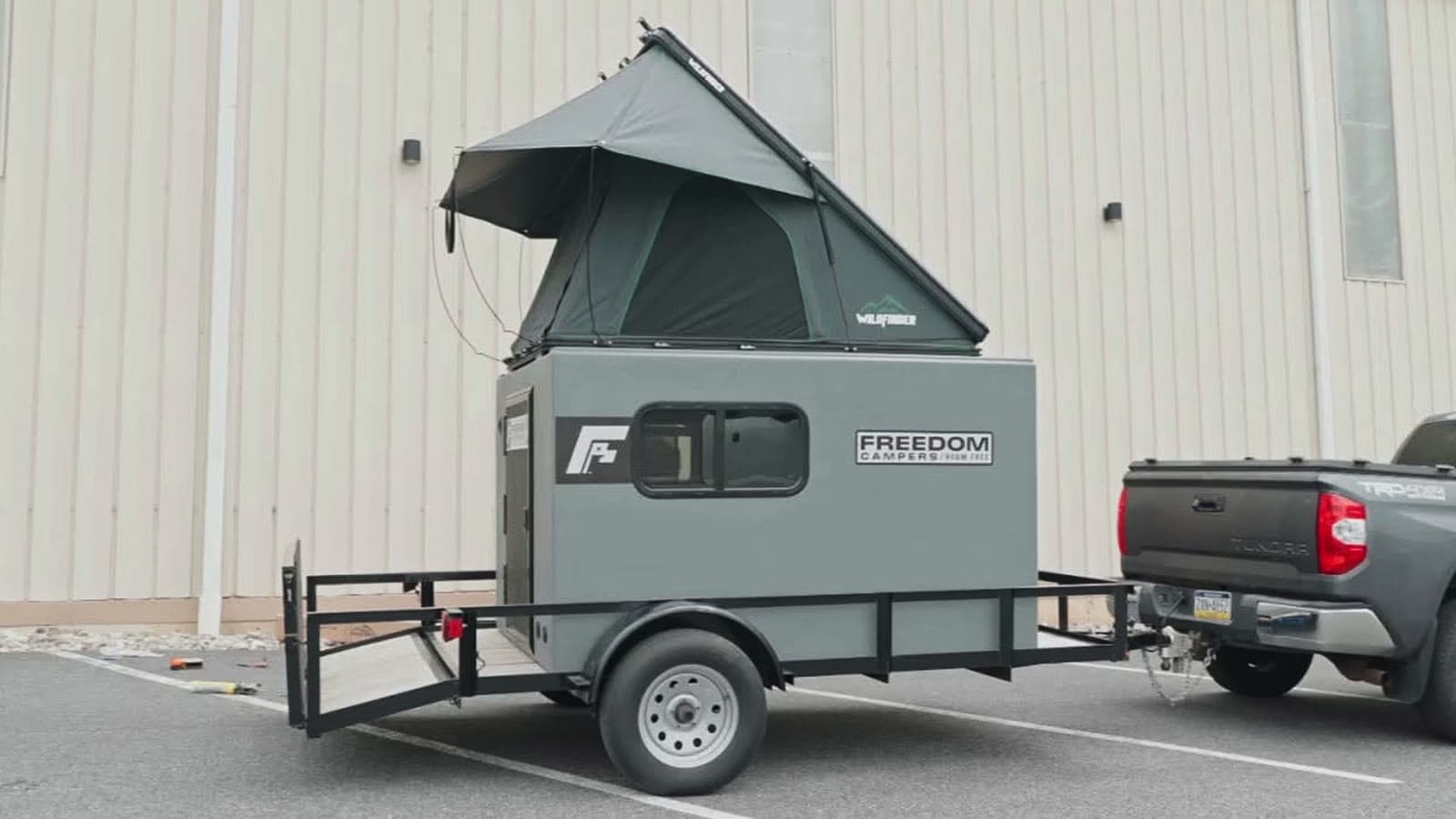
Images via Playing with Sticks/YouTube
Heating, Insulation, and Condensation
Freedom markets the shells as four-season campers, and the video tests that in cooler weather with a small diesel heater and a portable Propex heater, both vented from outside. Insulation keeps the walls from sweating as badly as a bare metal or fiberglass topper, but people breathing in a small, sealed space still create moisture. Crack a vent or run the fan, especially in cold weather.
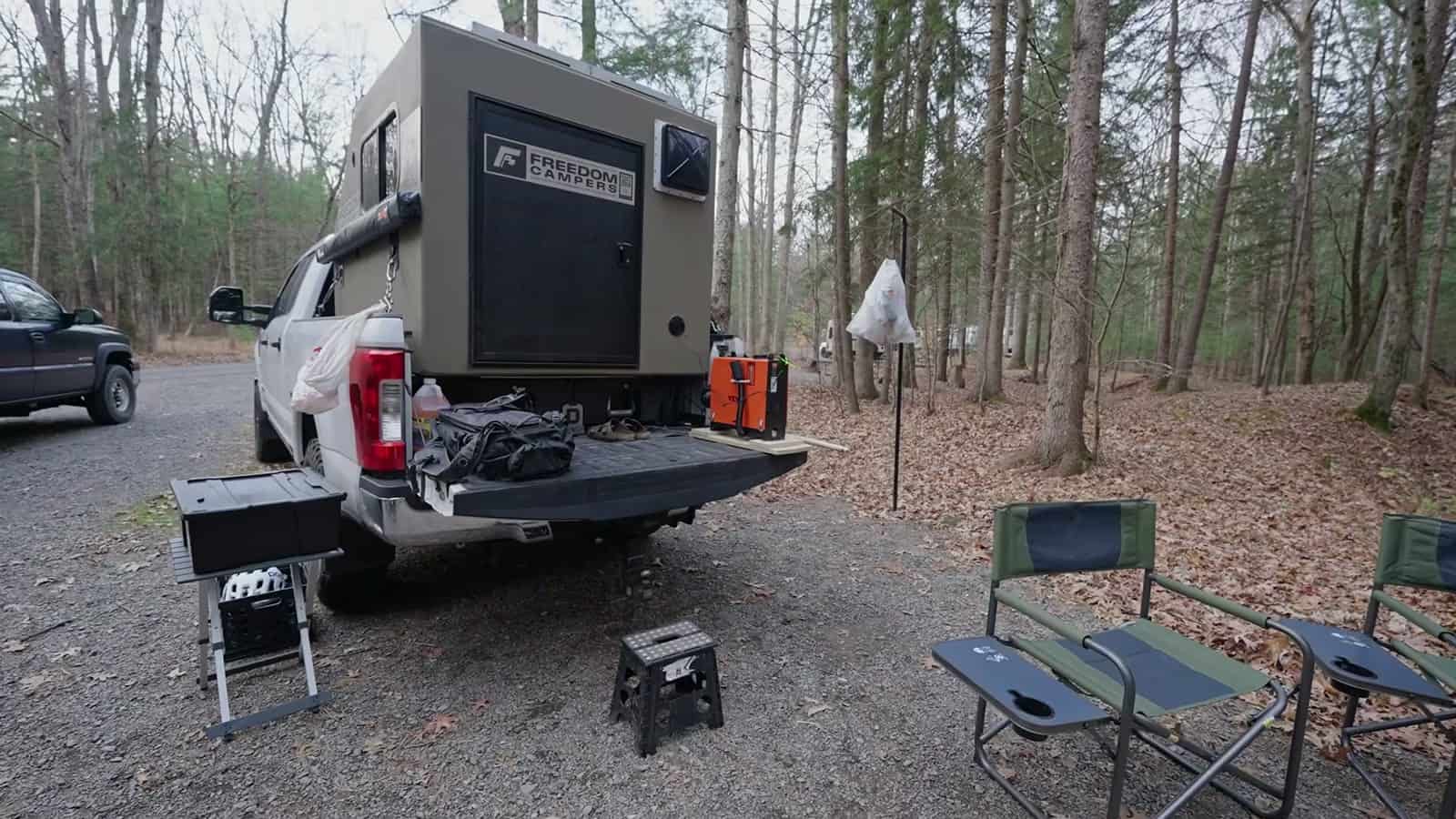
Images via Playing with Sticks/YouTube
Images via Playing with Sticks/YouTube
Design Details
- Maker: Freedom Campers, built in Lamar, Missouri
- Construction: wood-free high-density foam shell with a polyurea coating
- Sizes (outside): 48″ x 79″, 58″ x 79″, 58″ x 89″, and 72″ x 89″, all 54″ tall
- Interior height: about 48″
- Weight: 175 lb, 185 lb, 195 lb, and 270 lb by size
- Sleeps: 1 to 2
- Standard: lockable door, 30″ x 15″ window, roof vents, embedded anchor points
- Truck bed version: about $3,500 to $4,600 with the turnbuckle mounting kit
- Trailer version: about $3,440 to $4,540
- Add-ons: 12V rooftop A/C ($974.99), 12V vent fan ($159.99), mounting kits
- Warranty: 3-year limited
What Makes This Build Special
- Uses what you already own. If you have a truck or a utility trailer, the shell is most of the camper. There’s no second vehicle to register or maintain.
- Light enough to swap. At under 200 pounds for most sizes, two people can lift it off and park the truck for daily driving.
- Nothing to rot. With no wood framing, there’s no hidden water damage to worry about down the road.
- Finish it your way. The bare interior means you only pay for the bed, power, and storage you actually want.
- Honest trade-off. It’s pricey for “a box,” as the host admits, but it’s far cheaper and lighter than a hard-side truck camper or a small travel trailer.
Things to Know Before You Buy
- Shipping covers the lower 48, but many Western and New England states need a custom freight quote. The 72″ x 89″ ships by freight only.
- The three smaller sizes need a platform in the truck bed. Budget for a drawer system or a DIY frame.
- Check your truck’s bed length against Freedom’s fit guide. Some sizes ride with the tailgate down.
- Prices change, so confirm current pricing on Freedom Campers’ site or with a dealer.
Video Tour
Watch the full tour by Playing with Sticks, including the power math for the 12V A/C and the cold-weather heater test:
Learn More
- Freedom Camper truck bed version
- Freedom Camper trailer version
- Playing with Sticks on YouTube (more budget camper builds)
More small campers on Tiny House Talk:
- He Built a $6,500 Mini Camper From a Cargo Trailer While Road-Tripping 8 States
- Native 185: The Smart Compact Camper Module for Mid-Size Vehicles
- Alaskan HS 640: A Lightweight Composite Hard-Side Truck Camper
- Kimbo 6: A Hard-Side Truck Camper
Highlights
- One-piece insulated foam-and-polyurea shell, built in Missouri
- 175 to 270 pounds, so two people can lift it
- Fits midsize trucks, full-size trucks, flatbeds, or 5×8+ utility trailers
- Blank interior, ready for your own bed, power, and storage
- Optional 12V rooftop A/C, vent fan, and mounting kits
- Starts around $3,440
Disclosure: This post may contain affiliate links. If you purchase through one of our links, we may earn a commission at no additional cost to you.


Alex
Latest posts by Alex (see all)
- Freedom Camper: A 195-Pound Insulated Shell That Turns Your Truck or Utility Trailer Into a Camper - October 23, 2026
- She and Her Friends Built This Foam Teardrop Camper in One Weekend for $1,000 - October 23, 2026
- Timberleaf Classic: A Handcrafted Colorado Teardrop With a Big Skylight and Full Galley - October 23, 2026