Disclosure: This post may contain affiliate links. If you purchase through one of our links, we may earn a commission at no additional cost to you.
The Going Tiny Series, Part 6 of 45 · Guide 1 of 5: The Tiny House Money Plan
A free chapter goes up every day. See every part. Rather have it all at once, with printable worksheets? Get the Going Tiny Toolkit.
For many readers, the house they already own is their biggest asset and their main way to pay for a smaller home. That’s a strong position. But the money you actually walk away with is less than the sale price, and the time in between costs money too.
Equity is not the same as cash in hand
Your equity is roughly what the house is worth minus what you owe on it. Your net proceeds are what’s left after all the costs of selling. That second number is the one you can spend.
Costs that come out of the sale
- Real estate commissions. After a 2024 legal settlement involving the National Association of Realtors, commissions are negotiated more openly, and buyers now agree to pay their own agent directly unless the seller offers to help. Many sellers still pay something toward both agents. Total commissions in 2026 often land around 4.5 to 6 percent of the sale price, and they’re negotiable.
- Seller closing costs: title, escrow, transfer taxes, recording fees, and attorney fees in some states. Commonly about 1 to 3 percent of the sale price, more in states with high transfer taxes.
- Repairs and preparation: fixes the buyer’s inspection turns up, painting, cleaning, sometimes staging.
- Concessions: money toward the buyer’s closing costs, if you agree to it.
- Mortgage payoff and any home equity loans.
Costs while you wait
These are called carrying costs: what it costs to own the house each month while it’s on the market. Mortgage, taxes, insurance, utilities, and yard care keep going whether or not you live there. If it takes four months to sell and your carrying costs are $1,800 a month, that’s $7,200.
Taxes
In the U.S., many people who sell their main home can exclude a large amount of gain from federal income tax if they owned and lived in it for at least two of the last five years (up to $250,000 for a single filer and $500,000 for a married couple filing jointly, under current rules). If your home has gone up a lot in value or you’ve rented it out, talk with a tax professional before you sell.
Want to do this on paper?
The printable PDF of The Tiny House Money Plan has fill-in worksheets for this step, including:
- Your Current Monthly Cost of Living
- Path Cost Estimator
- Your Savings Timeline
They come with all five guides in the Going Tiny Toolkit.
A worked example
Dan and Ruth (from Part 4) expect to sell their house for $340,000. They owe $95,000.
| Line | Amount |
|---|---|
| Expected sale price | $340,000 |
| Minus mortgage payoff | −$95,000 |
| Minus commissions (5%) | −$17,000 |
| Minus seller closing costs (2%) | −$6,800 |
| Minus repairs and prep before listing | −$5,000 |
| Minus 3 months of carrying costs | −$4,500 |
| Minus moving and short-term storage | −$3,000 |
| Estimated net proceeds | $208,700 |
That’s $36,300 less than their “equity” of $245,000. Still a lot of money, and enough for many smaller paths. But if they had planned on $245,000, they’d be short.
Keep a cushion
When you plan your next home, don’t spend every dollar of your proceeds. Keep an emergency and repair reserve. Some readers also keep a portion invested or in savings as a backstop in case the smaller path doesn’t work out and they need to rent for a while.
A real home from Tiny House Talk
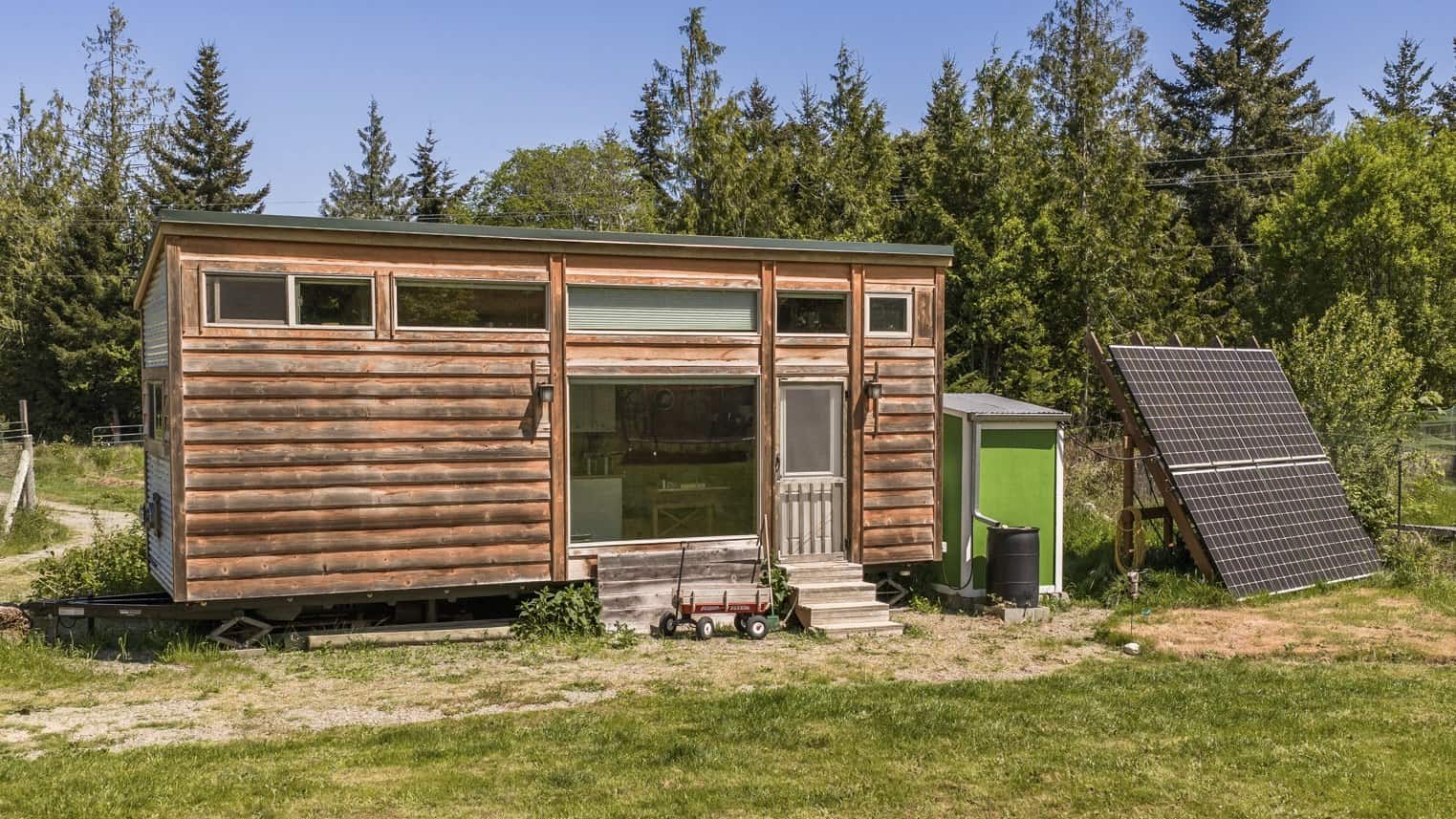
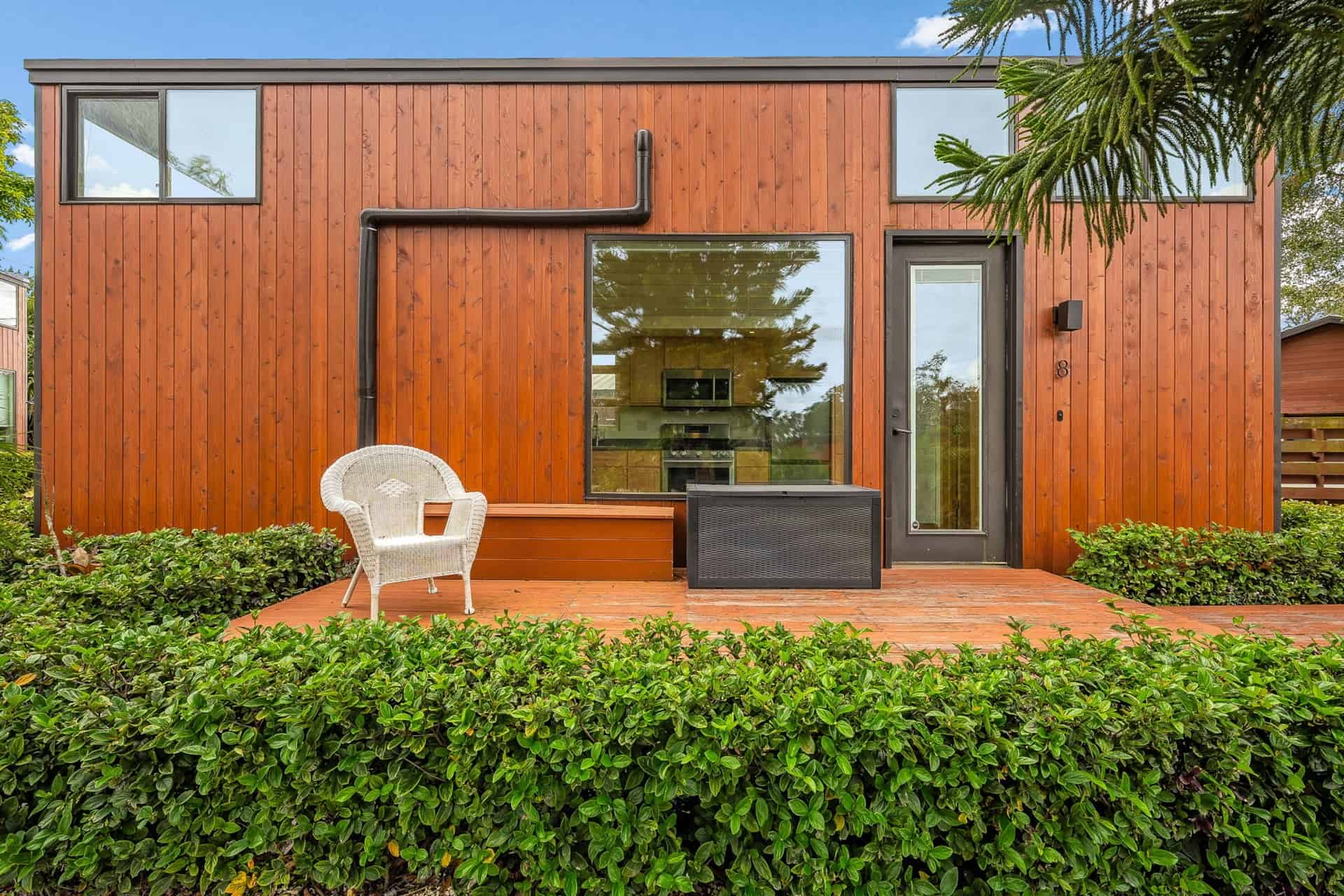
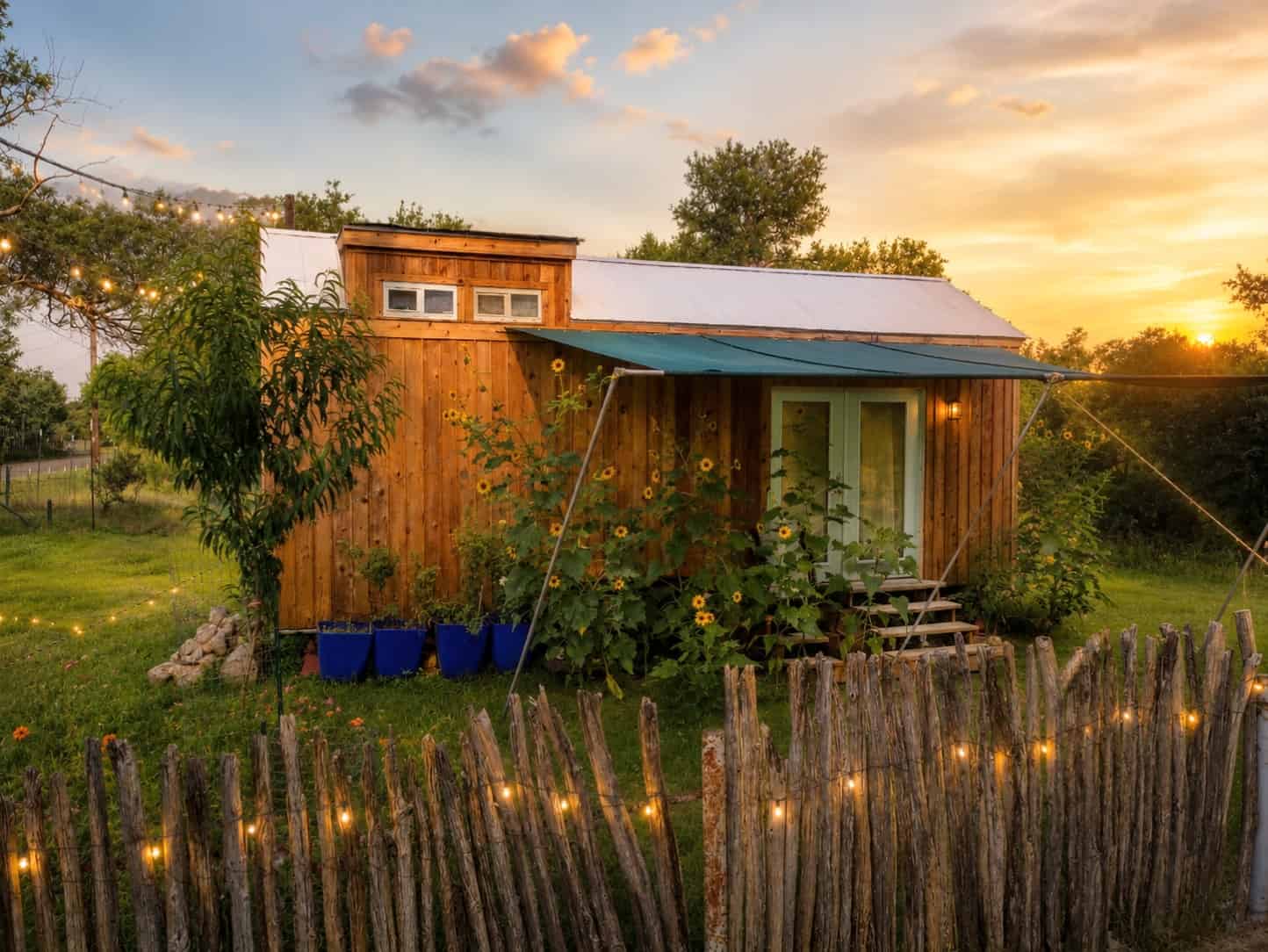
Photo courtesy of Allison Williams
Selling a modest house bought them eight mortgage-free years
A modest house can be enough. Allison's family sold their 927 sq ft Portland house, bought land in Washington, and paid $54,000 cash for a tiny house in 2018. Upgrades over the years ran about $8,000 to $10,000. They lived nearly eight years mortgage-free, which let her husband stay home with their daughter.
Where to live in between
Selling first gives you the most certainty about your budget and puts you in a strong position as a cash buyer. Buying first means you may carry two homes or need a bridge loan. Most readers on a budget sell first. Options for the gap:
- A rent-back: negotiated with the buyer so you stay a few weeks or months after closing, usually paying rent.
- Furnished short-term rental for a few months, sometimes cheaper at off-season rates.
- Family or friends, with a clear end date.
- A camper at a campground, which doubles as a trial of small living.
- Renting the small home or community you’re considering, if rentals are offered.
If the house needs work or won’t sell easily
An older home in a slow market may sell for less or take longer. Options include selling “as is” for a lower price, making only the repairs that matter most to buyers, or getting an offer from a cash home-buying company (convenient, but usually well below market value; compare carefully). If family members live with you, the timeline and decision belong to everyone involved. Guide 4 (it starts with Part 27 on November 14), Bringing Them On Board, has help for those conversations.
Be careful borrowing against the big house to build small
It’s tempting to take out a home equity loan to build your tiny house before selling. If the build goes over budget, the sale takes longer, or prices drop, you could end up with two homes and two payments. If you go this route, have a clear exit plan and a realistic budget with a cushion.
Your turn
What's the money question you're stuck on right now? Tell me in the comments.
Prefer the clean, printable version?
This series is free to read here, and it always will be. If you’d rather have it as five clean, printable PDFs, that’s the Going Tiny Toolkit:
- The Tiny House Money Plan (the guide this chapter comes from): real 2026 cost ranges, a savings plan for any income, and every way people pay
- Where Can I Put It?
- Tiny Without the Ladder
- Bringing Them On Board
- Your First Tiny Steps
Every guide adds printable worksheets and a 30-day action plan, and Tiny Without the Ladder comes with the bonus One-Level Floor Plan Idea Book (18 to-scale floor plans). All five are $47, with a 30-day refund.
← Previous: Part 5: How to Save for a Tiny or Small Home on Any Income
Next (tomorrow): Part 7: How People Actually Pay for a Tiny House: Every Option
Not sure which part matters most for you? The free 10-minute What’s Really Holding You Back? quiz tells you where to start. And to get a new part (and a new home) in your inbox each day, join the free Tiny House Newsletter.
Disclosure: This post may contain affiliate links. If you purchase through one of our links, we may earn a commission at no additional cost to you.


Alex
Latest posts by Alex (see all)
- Selling the Big House to Downsize: The Real Math - October 24, 2026
- Freedom Camper: A 195-Pound Insulated Shell That Turns Your Truck or Utility Trailer Into a Camper - October 23, 2026
- She and Her Friends Built This Foam Teardrop Camper in One Weekend for $1,000 - October 23, 2026