
Disclosure: This post may contain affiliate links. If you purchase through one of our links, we may earn a commission at no additional cost to you.
The Going Tiny Series, Part 42 of 45 · Guide 5 of 5: Your First Tiny Steps
A free chapter goes up every day. See every part. Rather have it all at once, with printable worksheets? Get the Going Tiny Toolkit.
Aside from the money, the only thing holding me back is the lack of builders in the Midwest, or at least Michigan in general for me.
— Michael, Tiny House Talk reader
There are many more tiny and small home builders today than when Michael wrote that, and many deliver across several states. That’s good news. It also means you’ll be vetting builders you may never meet in person, and that takes care. Most builders are honest, hardworking people. A careful process protects you from the few who aren’t, and from honest builders who are simply overextended.
Where to find builders
- Tiny house festivals, open houses, and builder showrooms, where you can walk through finished homes.
- Local tiny house groups (ask members who they used, and how it went).
- Builder directories and listing sites (treat these as starting points, not endorsements).
- Local general contractors and shed or cabin builders, especially for foundation homes and ADUs.
- For park models and manufactured homes, dealers and communities that sell them.
The vetting checklist (the short version)
- See finished homes in person if at all possible, or on a live video walk-through where you direct the camera.
- Talk to at least three past clients, ideally ones who’ve lived in their home a year or more. Ask what went wrong and how the builder handled it.
- Confirm the business is real. Check state business registration, how long they’ve operated, and any contractor license your state requires.
- Check complaints with your state attorney general’s consumer protection office and online review sites. Look for patterns, not one angry review.
- Ask about certification. For houses on wheels, third-party certification (such as RVIA or NOAH, which inspects tiny homes against RV and residential standards) often makes financing, insurance, and RV park acceptance easier. For foundation homes, ask about permits and inspections. Modular and manufactured homes have their own state or HUD approvals.
- Ask for proof of insurance.
- Get a detailed written contract with a specification sheet (what’s included, brands or grades of materials), price, timeline, payment schedule, change-order process, warranty, delivery terms, and what happens if either side cancels.
- Read the warranty: what’s covered, for how long, and who comes to fix things if you live far away.
Want to do this on paper?
Download and print the worksheets for this step, free:
- Worksheet 6: Builder Vetting Checklist (free printable PDF)
The full set of worksheets, plus the clean printable guides, comes with all five guides in the Going Tiny Toolkit.
Red flags
Slow down or walk away if you see
- A very large upfront deposit before any work starts, or pressure to pay most of the price early.
- No references, or only references who are friends or family.
- No written contract, or a vague one (“tiny house, 24 ft, $XX,XXX”).
- Pressure tactics: “price goes up Friday,” “only one build slot left,” “pay today to lock it in.”
- Requests for payment by wire transfer, cryptocurrency, gift cards, or to a personal account.
- Bank details that arrive or change by email. Scammers sometimes impersonate real builders. Verify through contact information on the builder’s official website, and confirm in a second way before sending money.
- No certification or permit plan, when you’ll need one for financing, insurance, or parking.
- They can’t show you a home they’ve finished, or they won’t let you visit during the build.
- Prices far below everyone else’s.
Payment schedules
A healthy payment schedule ties payments to visible progress, so you never pay far ahead of the work. A typical structure has a deposit to secure a build slot and order materials, then payments at milestones (for example: framing complete, dried-in, rough systems complete, final completion and inspection), with a final payment at delivery or after a walk-through. Ask for photos or a visit at each milestone before you pay. Pay with a method that leaves a paper trail, and keep copies of everything.
Some buyers use a lender’s draw schedule or an escrow arrangement for extra protection. The Tiny House Money Plan discusses financing options that may require or support this.
Visiting finished homes
Tiny house festivals and open houses are among the best ways to learn. In a single afternoon you can walk through a dozen homes, test lofts and stairs, sit on built-in sofas, and talk to builders face to face. Bring a tape measure and a notebook. Notice:
- How the kitchen feels when two people are in it.
- Bathroom size, shower size, toilet type.
- Stair steepness and handrails; loft headroom.
- Where coats, shoes, and cleaning supplies go.
- Finish quality: tight trim joints, doors that close smoothly, no gaps around windows.
Festival dates change every year. Search “tiny house festival” plus your state or region and the year.
Prefer writing to phone calls?
That’s completely reasonable, and a good builder will accommodate it. Email creates a written record of every promise, which protects both of you. If you’re deaf or hard of hearing, many builders can do video calls with captions or text chat for walk-throughs.
Take Worksheet 6 (free download): Builder Vetting Checklist with you to every builder conversation.
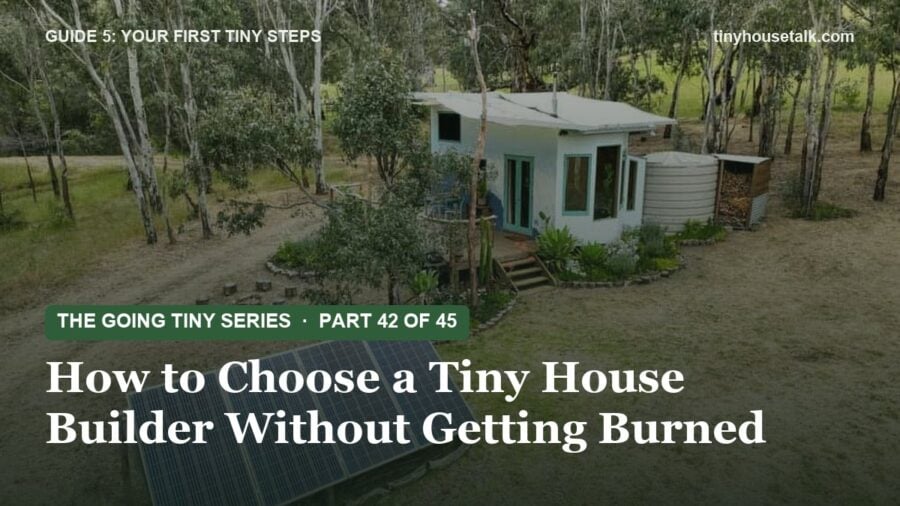
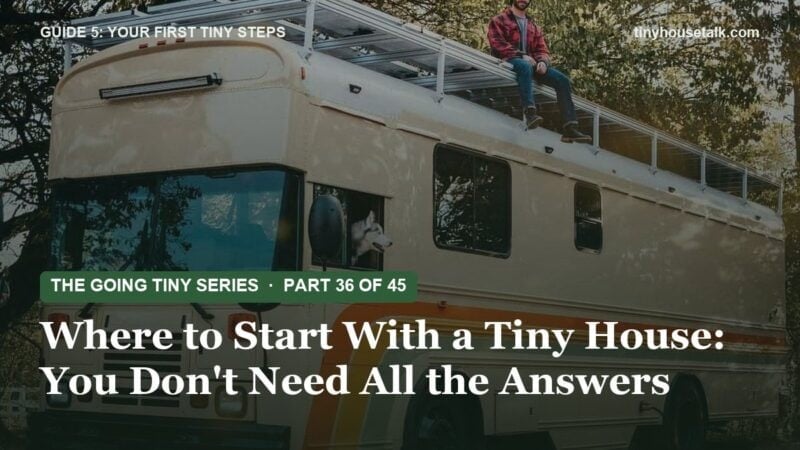
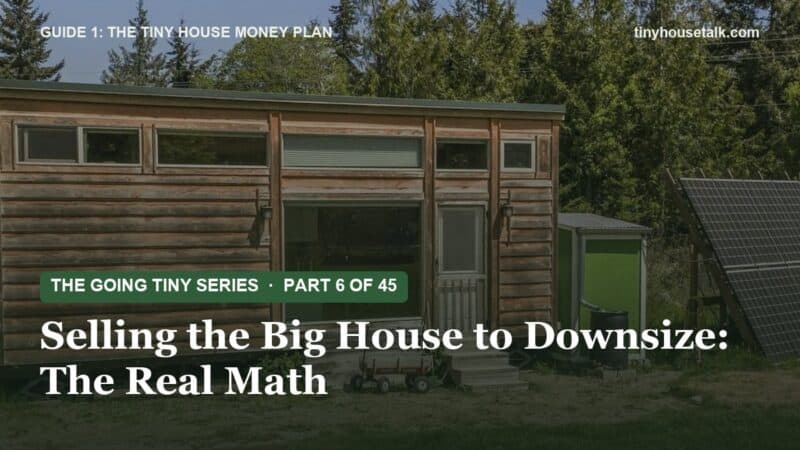
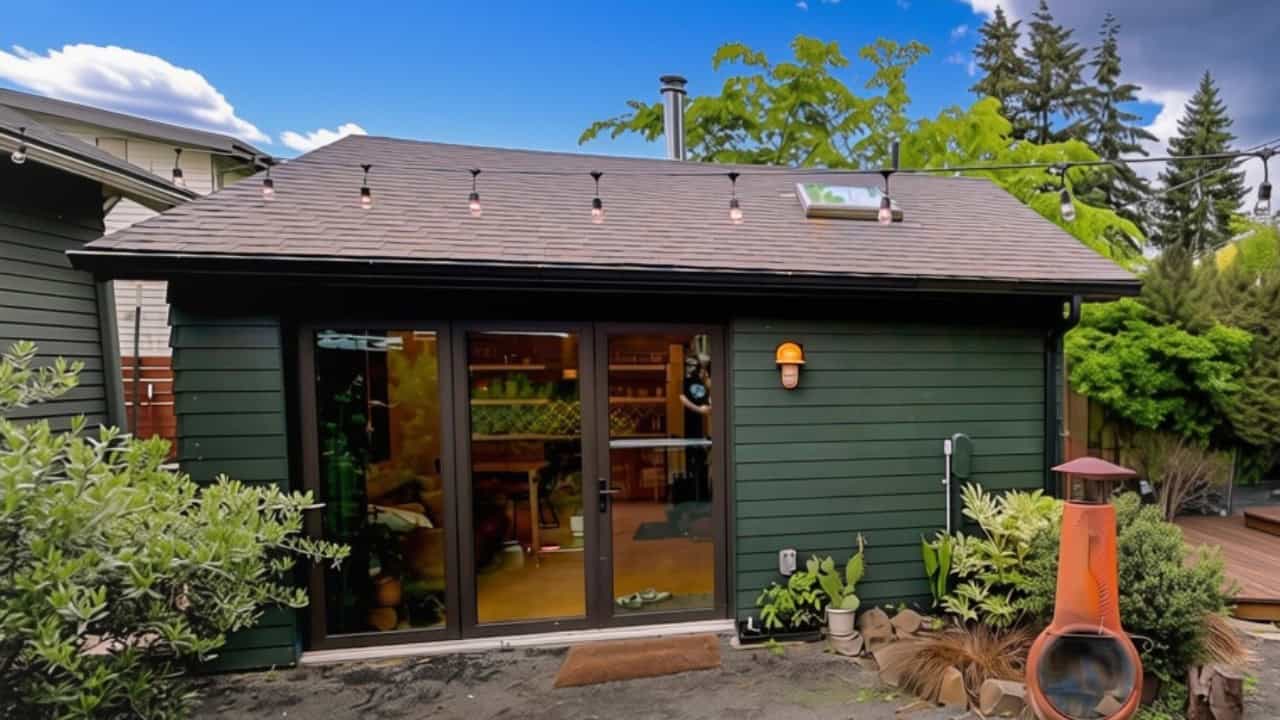
Top photo: Tess and Joel's off-grid tiny house runs on rainwater. Photo via Living Big in a Tiny House/YouTube. See their story.
Your turn
What's the very first step you're taking? Tell me in the comments so I can cheer you on.
Prefer the clean, printable version?
This series is free to read here, and it always will be. If you’d rather have it as five clean, printable PDFs, that’s the Going Tiny Toolkit:
- Your First Tiny Steps (the guide this chapter comes from): the five big decisions in order, a space-needs calculator, builder vetting, and a 90-day roadmap
- The Tiny House Money Plan
- Where Can I Put It?
- Tiny Without the Ladder
- Bringing Them On Board
Every guide adds printable worksheets and a 30-day action plan, and Tiny Without the Ladder comes with the bonus One-Level Floor Plan Idea Book (18 to-scale floor plans). All five are $47, with a 30-day refund.
← Previous: Part 41: Build, Buy, or Somewhere In Between? Getting Your Tiny Home
Next (tomorrow): Part 43: Tiny House Systems: Power, Water, Waste, Heat, and Air
Not sure which part matters most for you? The free 10-minute What’s Really Holding You Back? quiz tells you where to start. And to get a new part (and a new home) in your inbox each day, join the free Tiny House Newsletter.
Disclosure: This post may contain affiliate links. If you purchase through one of our links, we may earn a commission at no additional cost to you.


Alex
Latest posts by Alex (see all)
- Tiny House Communities in Texas: A Complete Guide - November 29, 2026
- South Florida Tiny Homes: Where to Look In and Near Miami, Fort Lauderdale, and Palm Beach - November 29, 2026
- Touring Escape Tampa Bay’s Tiny House Village in Thonotosassa, Florida - November 29, 2026

Join the Conversation
No comments yet. Be the first to join the conversation.