Disclosure: This post may contain affiliate links. If you purchase through one of our links, we may earn a commission at no additional cost to you.
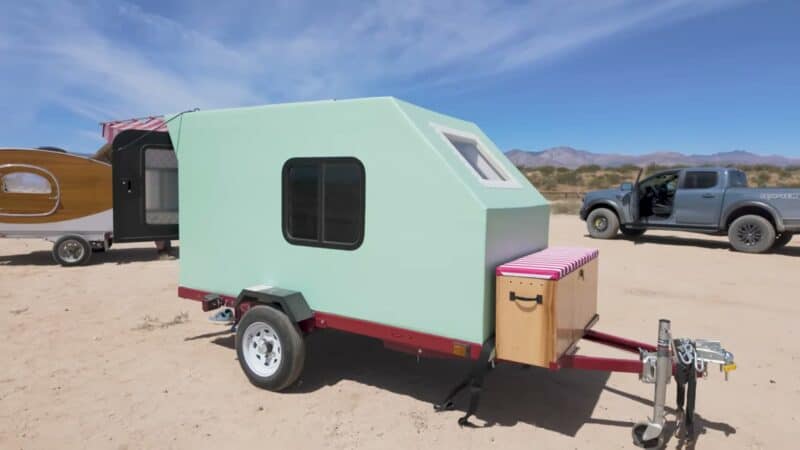
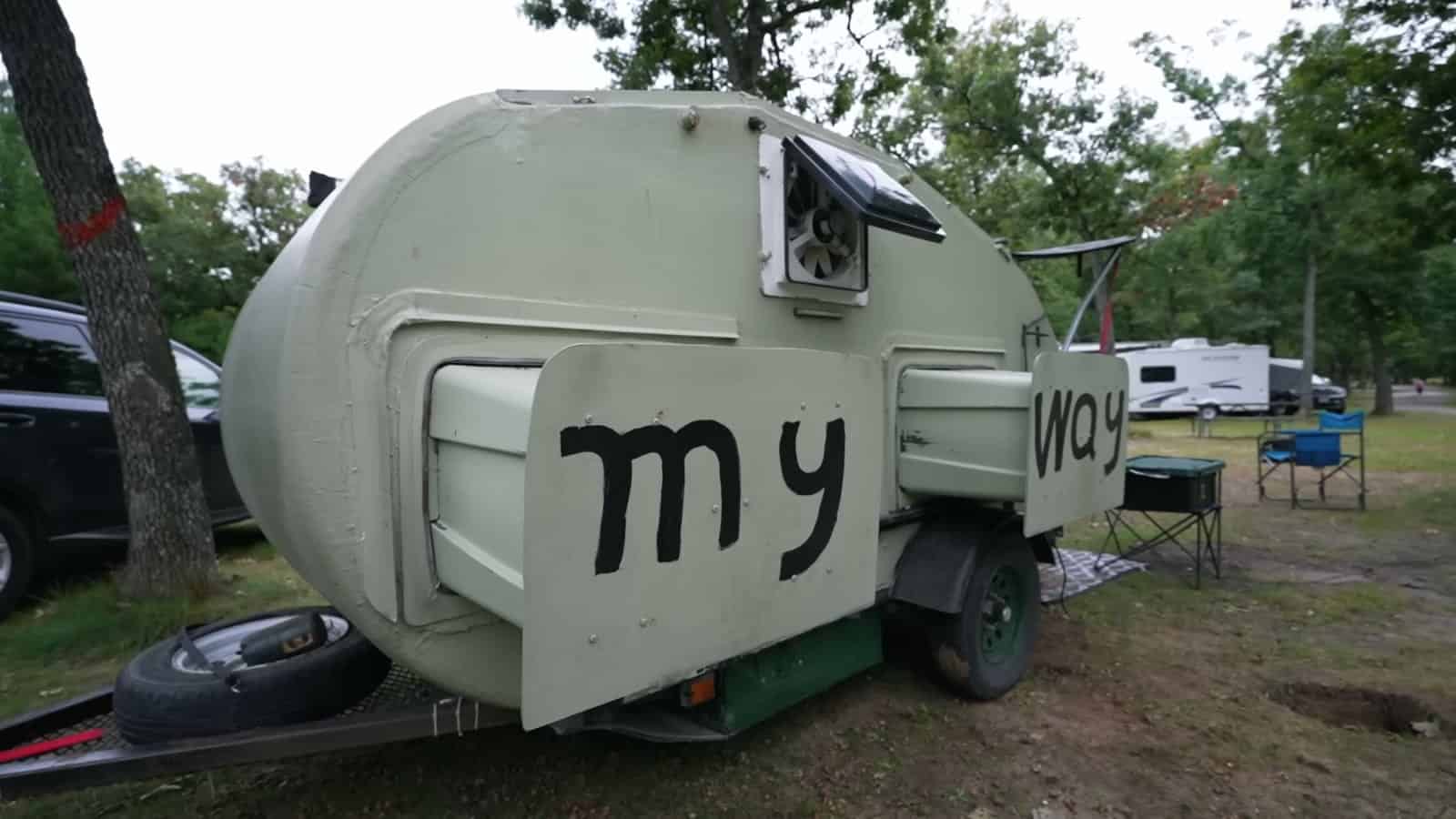
Foam teardrop trailers, or “foamies,” have a reputation as cheap weekend projects that won’t hold up on the highway. Kenneth’s trailer argues otherwise. He built it from foam and canvas on a basic 5×8 utility trailer, with no wood framing at all, and he and his wife Dixie have put about 12,000 miles a year on it for four years. That’s roughly 48,000 miles, and the trailer sits outside, uncovered, the rest of the time.
It’s also full of ideas you won’t find in a factory teardrop: a composting toilet with privacy curtains, two sideways beds that slide out of the walls on storage tubs, a drop floor you can stand in, and a galley hatch made from a pickup tonneau cover. Playing with Sticks, a YouTube channel that covers small and budget campers, calls it the most affordable trailer they’ve ever featured.
Images via Playing with Sticks/YouTube
A Bathroom in a 5×8 Teardrop
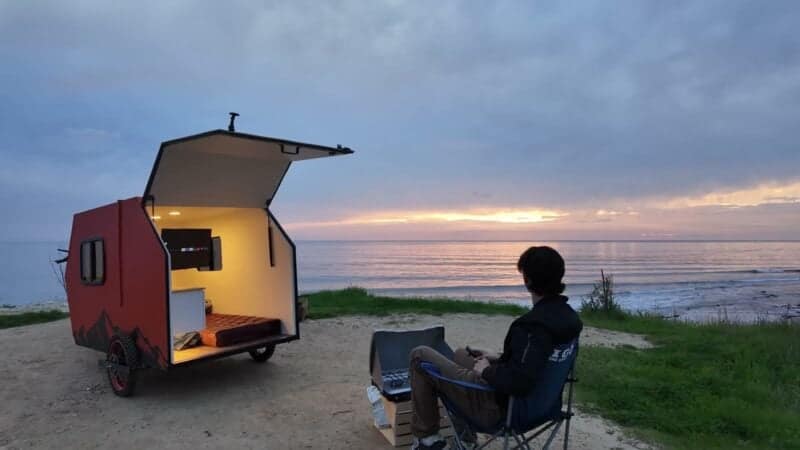
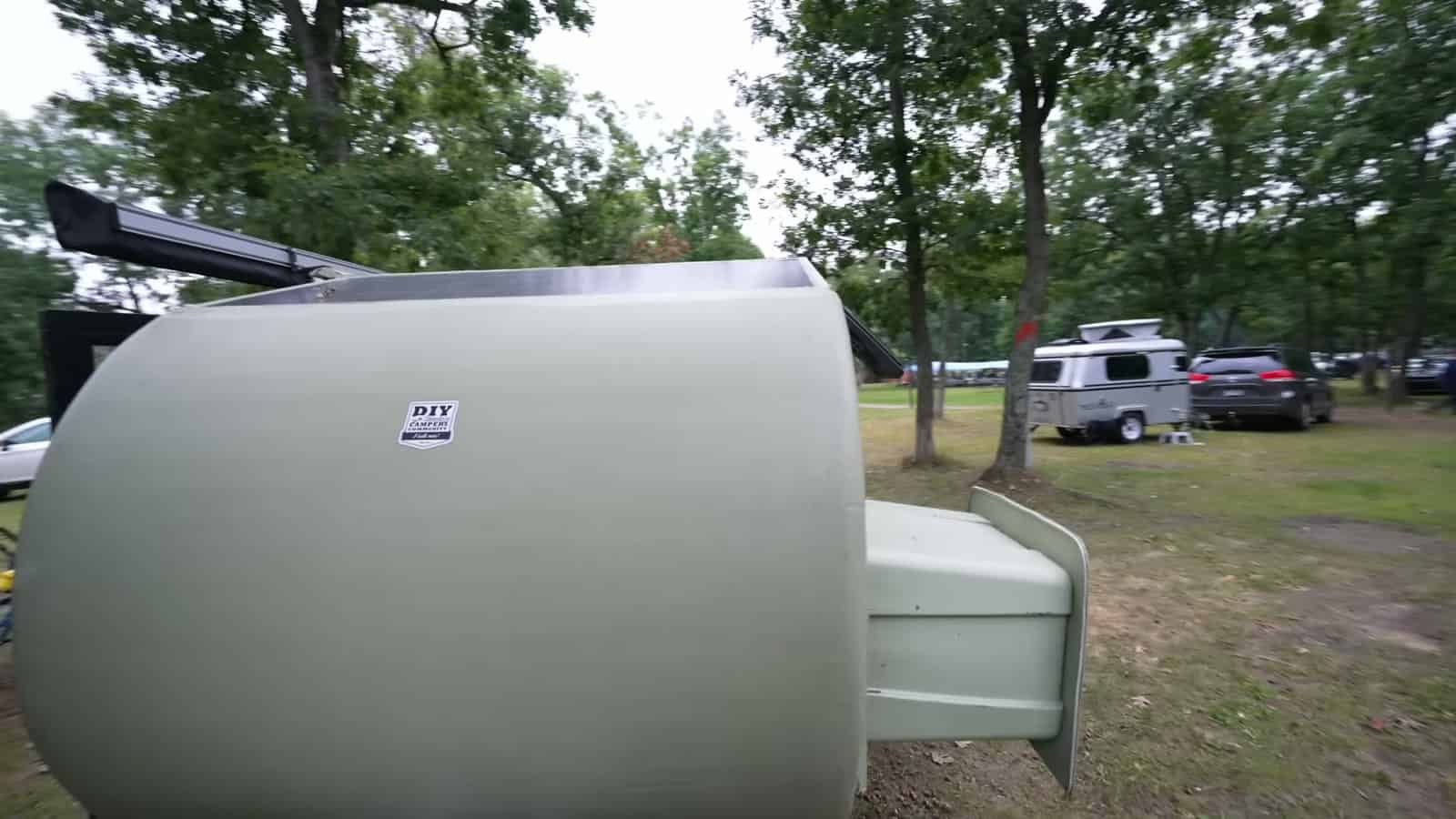
It all started with one request. Dixie wanted a bathroom, and that’s a tall order in a 5×8 teardrop, where a queen bed normally fills the whole cabin. Kenneth’s solution was to turn the beds sideways. That freed up the middle of the trailer for a toilet, but a 5-foot-wide trailer is too narrow for an adult to sleep across. So he made each bed longer with a slide-out.
Images via Playing with Sticks/YouTube
The slide-outs are plain plastic storage tubs. He noticed that tubs often stick together tightly when stacked in the store, so he glued one into the wall, cut it flush, and slid a second tub inside it. At camp, the mattress holds the inner tub out to make room for your feet. To leave, he pushes it back in and hooks it over a small cleat. It’s a clever reuse of a cheap part: the tubs are waterproof, they fit together well, and they cost a few dollars instead of a custom slide mechanism. The words “my” and “way” painted on the two tubs sum up the whole build.
No Wood Frame, and Solar Panels for a Roof
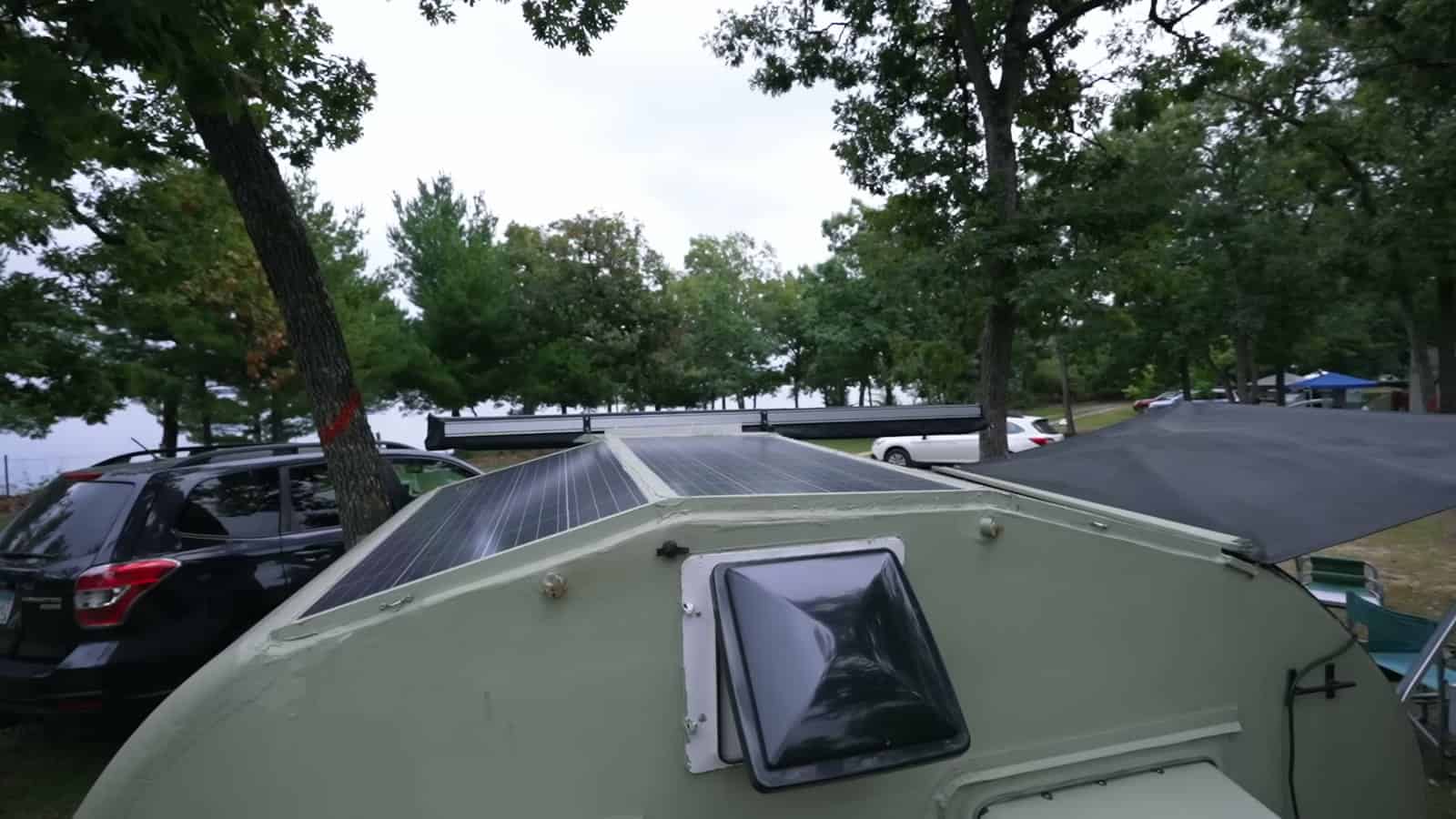
The whole body is foam covered with canvas. There’s no wood structure inside, yet the shell is stiff enough to hold three rigid solar panels. Those panels aren’t mounted on the roof. They are the roof over that section. Next to them is a large skylight, and a budget awning that Kenneth picked up from NAPA rolls out over the door.
Images via Playing with Sticks/YouTube
This is a big part of why foamies are so light. Foam does the work of insulation, wall, and structure in one layer, and the canvas skin (often finished with glue and paint, a method called “poor man’s fiberglass”) protects it from weather and dings. The tools are simple too. The video notes that a build like this needs little more than a box cutter and a straight edge.
A Cut-Down Storm Door
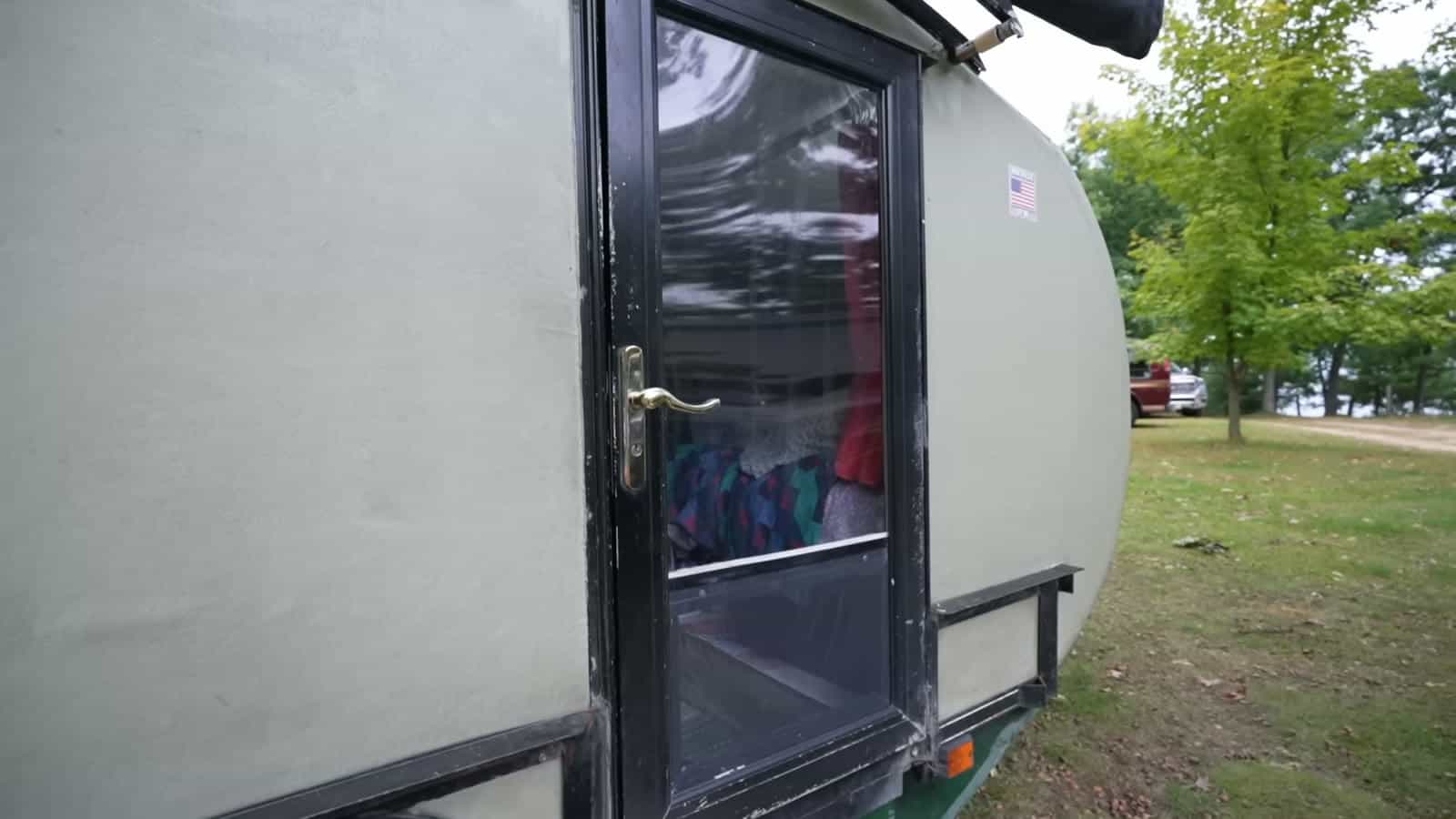
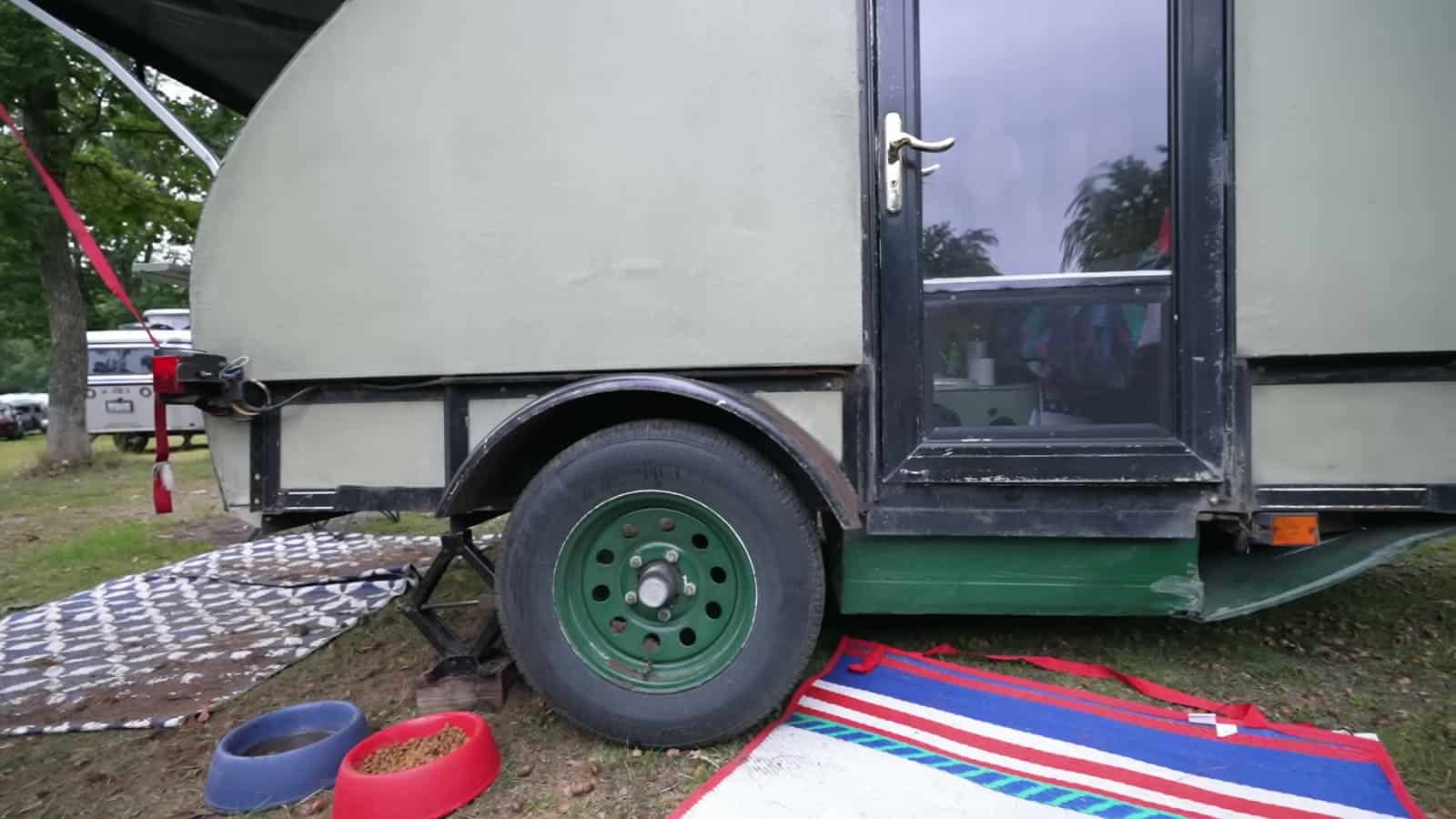
Instead of a teardrop door, Kenneth cut down a full-view storm door and added his own window plus a vent at the bottom that folds in and out. A storm door is cheap, it’s already weatherproof, and it comes with a frame, latch, and handle. Those are the parts that are hardest to make yourself when the wall is foam.
Images via Playing with Sticks/YouTube
A Drop Floor for Standing Room
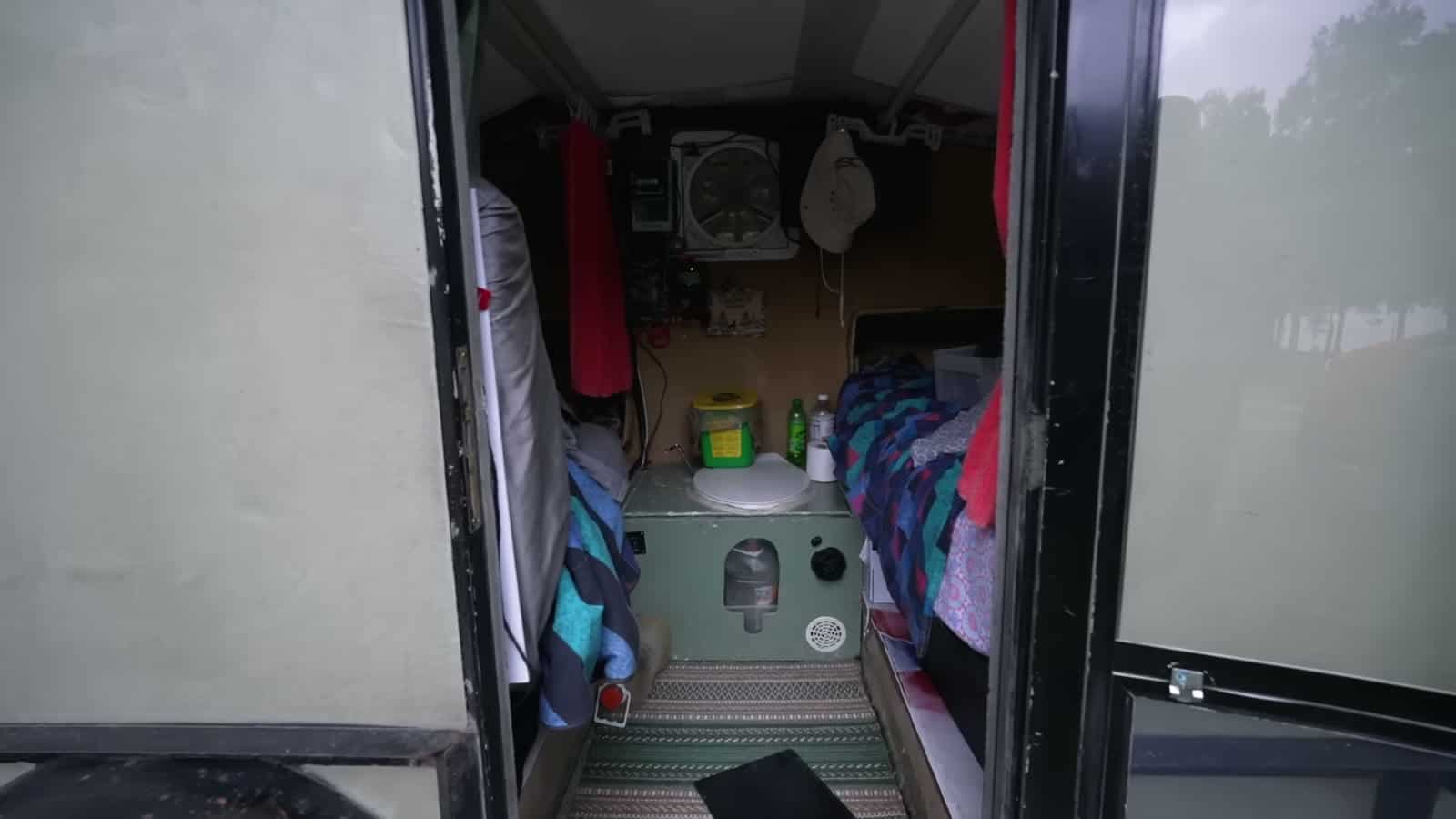
From the outside, the trailer looks far too short to stand in. Kenneth added a drop floor between the beds, which lowers the floor below the trailer deck so there’s real headroom where you get dressed and use the bathroom. The host steps in and stands up with room to spare.
Images via Playing with Sticks/YouTube
The obvious worry is ground clearance. Kenneth built the drop floor out of thin material on purpose. If he ever hits something, it tears off instead of ripping the trailer apart. In his words, at worst it’s “a little duct tape” and he can still get home. It’s a smart way to think about a weak point: design it to fail cheaply.
Shower Curtain and Privacy Curtains
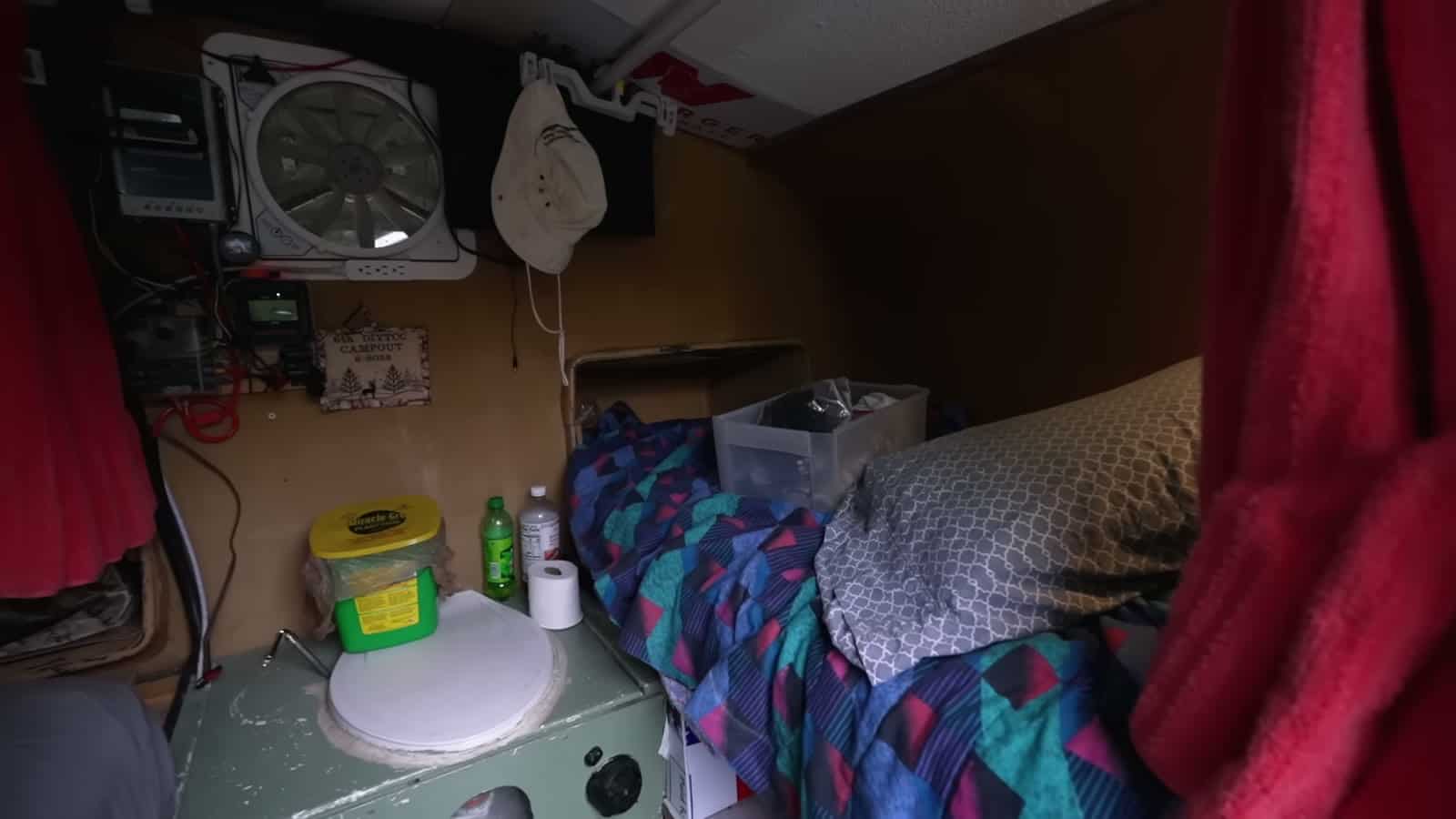
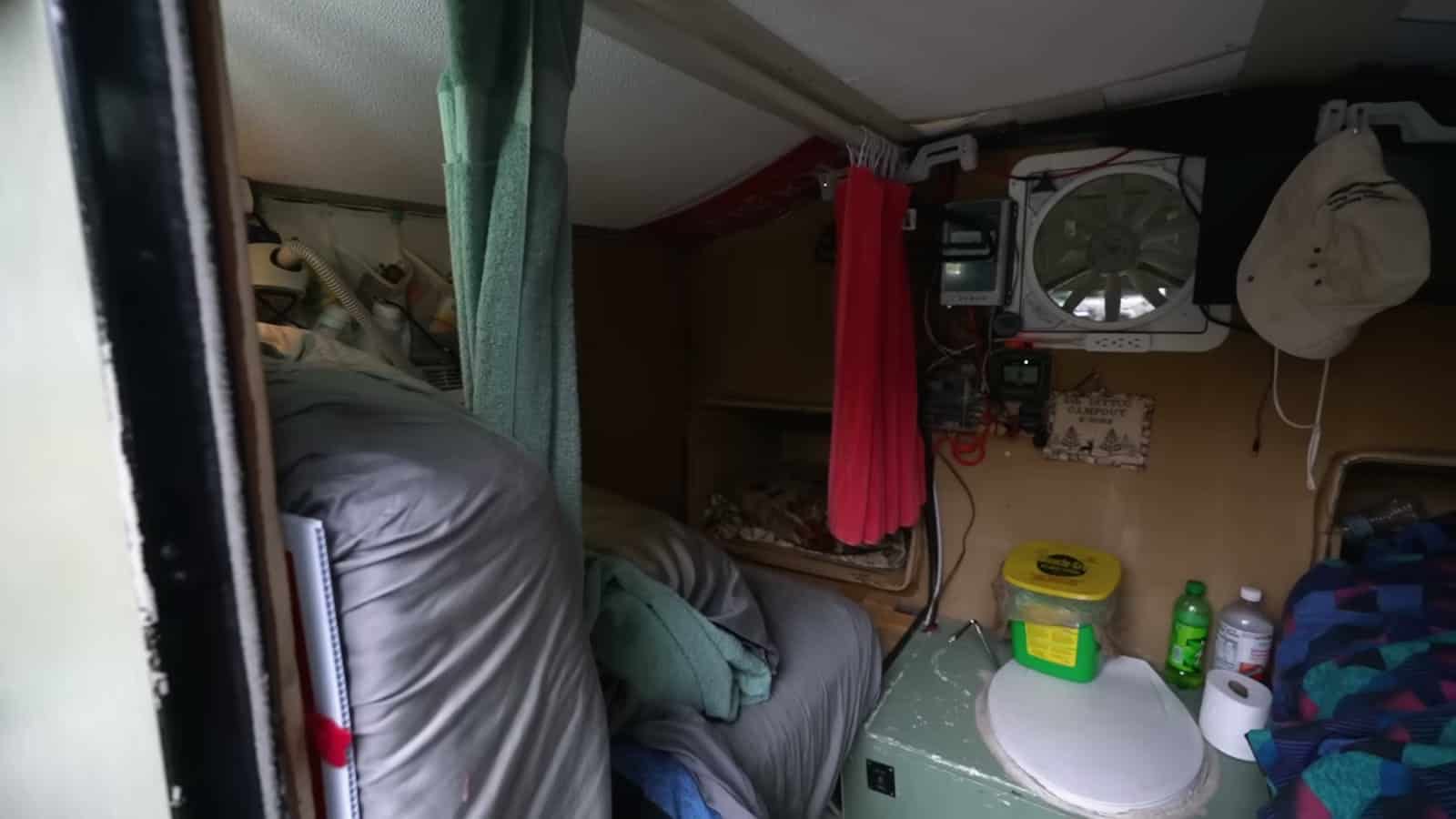
A small slide-out holds a curtain so he can shower outside the door and then step into a dry spot to dress, instead of dropping clothes on wet ground. Inside, privacy curtains close off the toilet area when one of them needs to use it. That’s something you almost never see in a camper this small.
Images via Playing with Sticks/YouTube
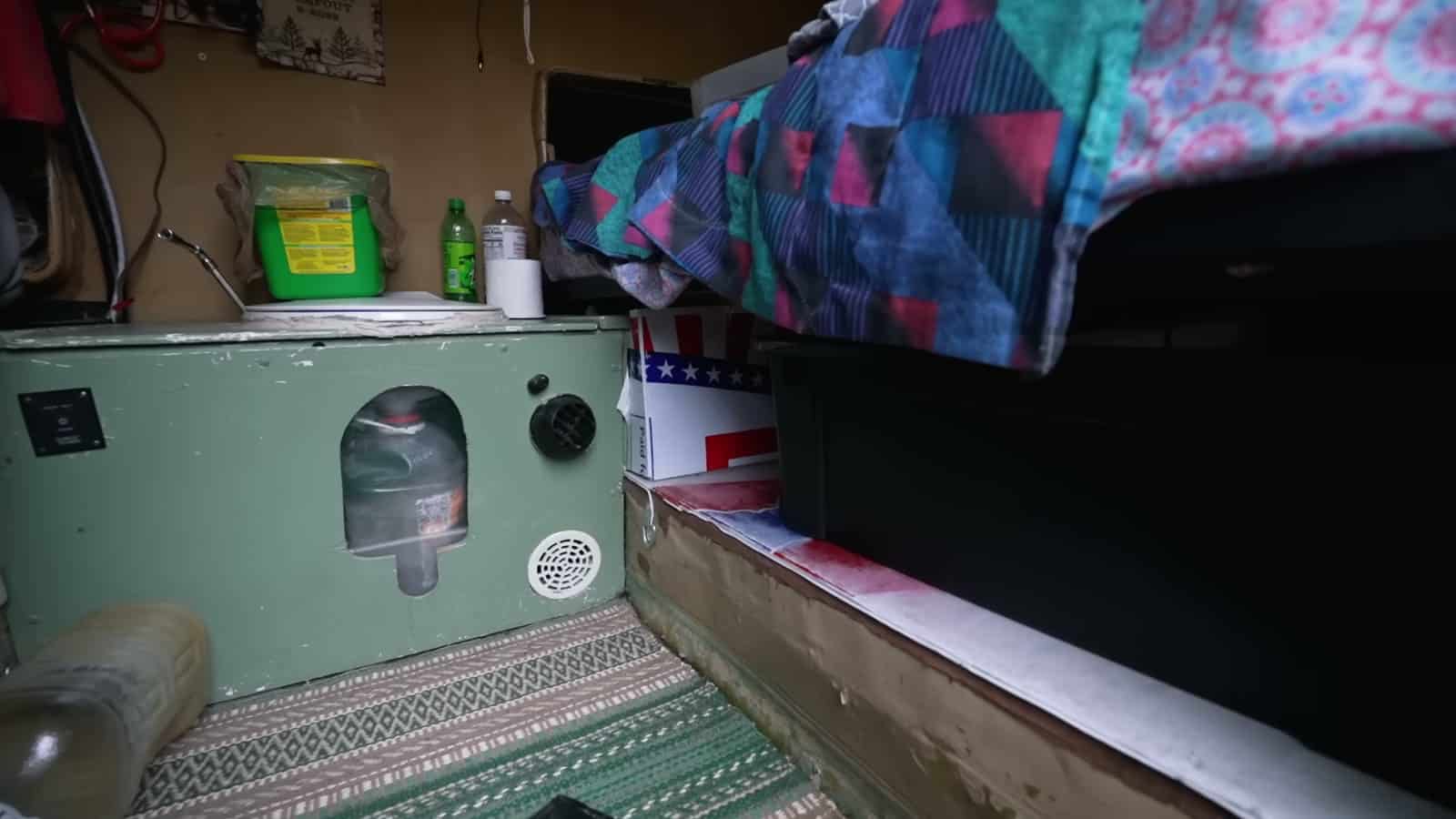
A Composting Toilet That Doesn’t Smell
The toilet is a urine-diverting composting toilet. Separating liquids from solids is what keeps the smell down, and both Kenneth and the host say there’s almost no odor. There’s also no black tank and no “stinky slinky” sewer hose to deal with. Raising the beds to clear the trailer’s side rails had a bonus too: there’s plenty of storage underneath them.
Images via Playing with Sticks/YouTube
A Diesel Heater Running on Kerosene
Under one side of the bathroom is a budget Chinese diesel heater. Kenneth fuels it with kerosene instead of diesel. He says anyone from a northern climate who has run a kerosene “bullet” heater knows they run cleanly for a long time, while diesel tends to mean more maintenance. On the other side of the bathroom is a lithium battery, and a 12V vent fan in the wall moves air through the cabin.
Images via Playing with Sticks/YouTube
With all that foam, the trailer holds heat well. Kenneth has camped in it below zero. At 10 below, the heater works hard, but usually it’s just taking the chill off. The one cold spot is the slide-out tub at the foot of the bed, which isn’t insulated, so you learn to tuck your feet in on cold nights.
A Galley Hatch Made From a Tonneau Cover
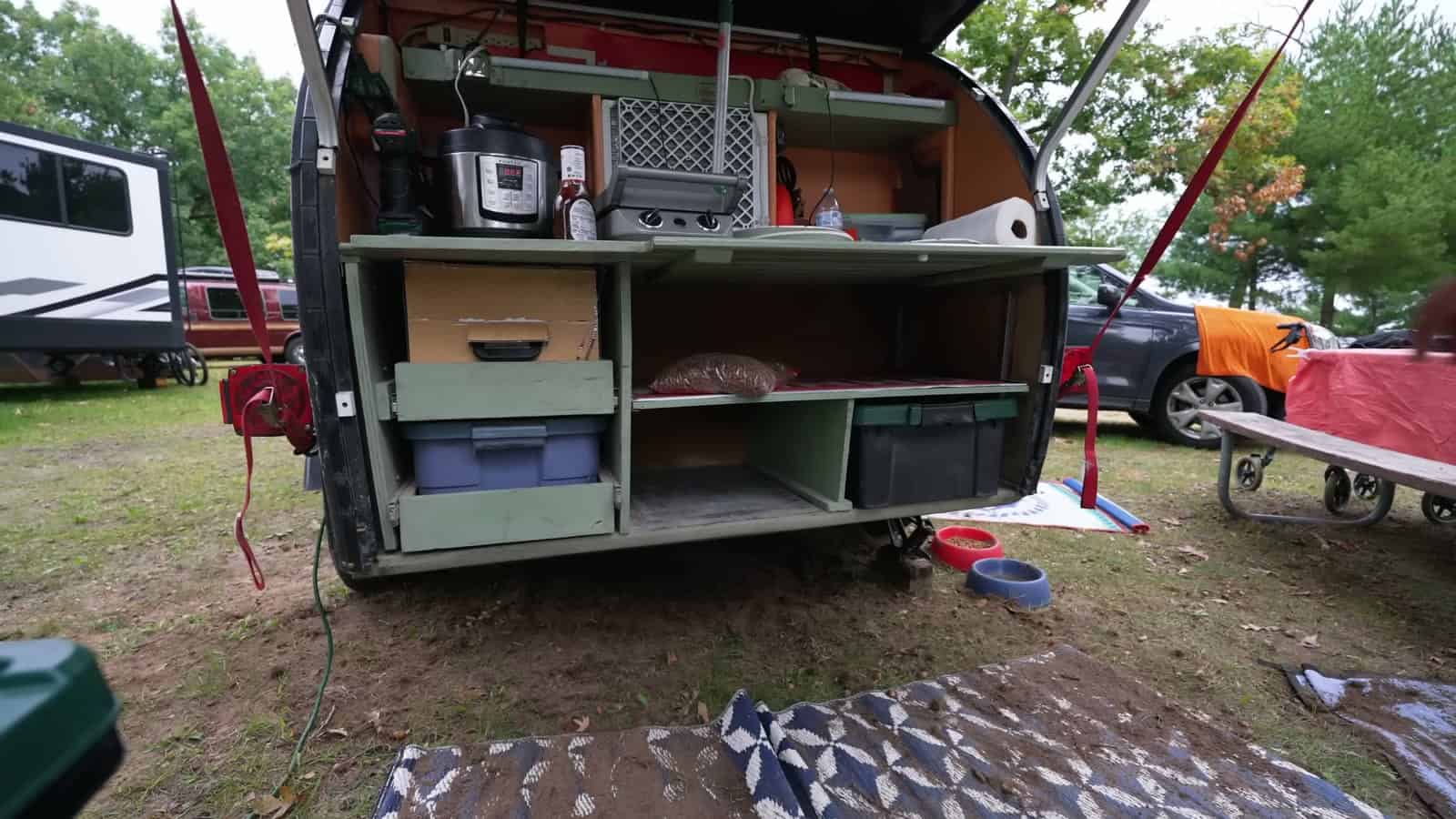
A normal teardrop hatch needs a solid frame to hinge from, and foam just tears around the hardware. So Kenneth used a pickup tonneau cover as the hatch. He cut the rails, bent them to the curve of the trailer, and glued them down, using ratchet straps as clamps while the glue set.
Images via Playing with Sticks/YouTube
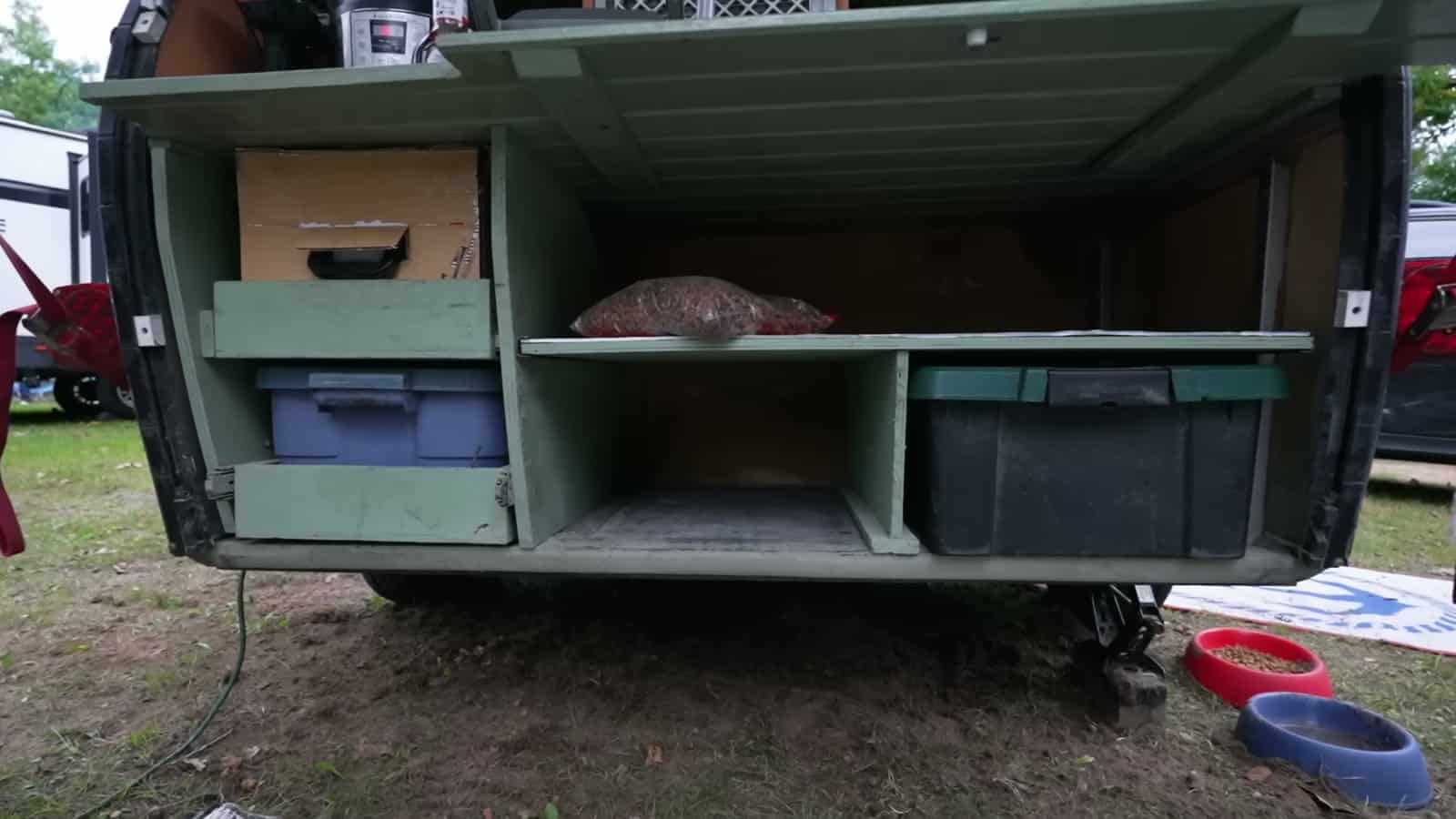
Under the hatch, the galley holds three director’s chairs, three storage bins, and a small Iceco 12V fridge. He cooks with an Instant Pot and a Cuisinart cooker. There’s also a second battery back here that’s normally left disconnected. Both Kenneth and Dixie use CPAP machines, so that spare battery means they never lose power in the middle of the night.
Images via Playing with Sticks/YouTube
Built on a Store-Bought Utility Trailer
The base is an off-the-shelf Carry-On 5×8 utility trailer from Tractor Supply. Kenneth kept the trailer’s edge rails in place and points out that the Tractor Supply version comes with 13-inch wheels, while the Home Depot version has 12-inch ones. He wanted the bigger wheels.
Images via Playing with Sticks/YouTube
Fully loaded with gear and food, the whole camper comes in around 1,100 pounds. Someone chasing a lighter tow could start with a lighter trailer frame. Kenneth chose durability.
Design Details
- Builder: Kenneth (DIY), for himself and his wife Dixie
- Base: Carry-On 5×8 utility trailer from Tractor Supply, 13-inch wheels
- Construction: foam and canvas, no wood framing
- Weight: about 1,100 lb loaded
- Sleeping: two sideways beds that extend on nested storage-tub slide-outs
- Bathroom: urine-diverting composting toilet, privacy curtains, outdoor shower curtain slide-out
- Headroom: drop floor for standing room
- Door: cut-down full-view storm door with a homemade window and fold-out vent
- Heat: budget diesel heater burning kerosene
- Power: three solar panels that form part of the roof, a lithium battery, and a backup battery for CPAPs
- Ventilation: large skylight and 12V vent fan
- Galley: tonneau-cover hatch, 12V fridge, Instant Pot, storage bins
- Miles: about 48,000 in four years (about 12,000 a year)
What Makes This Build Special
- It answers the durability question. Four years and around 48,000 miles, parked outside year-round, is real-world proof that a well-built foamie can last.
- A bathroom in a 5×8. Turning the beds sideways and adding slide-outs freed the middle of the trailer for a toilet, which almost no teardrop has.
- Household parts used well. Storage tubs, a storm door, and a tonneau cover each solve a problem that is hard to fix in foam: slide-outs, a framed door, and a galley hatch.
- Weak points that fail safely. The drop floor is made to tear away rather than damage the trailer.
- Built around real needs. Standing room for Dixie, privacy, winter heat, and backup power for two CPAP machines all shaped the design.
Lessons for Your Own Foam Teardrop
- Foam can carry surprising loads, but plan where hardware attaches. Hinges and latches can tear out of bare foam, so borrow framed parts like doors and hatches when you can.
- Think about which parts you can afford to lose. A cheap, replaceable drop floor beats a strong one that damages the trailer when it hits something.
- Slide-outs and anything else that sticks out of the shell will be colder unless you insulate them.
- Your base trailer can be the heaviest piece. Weigh it before you build, and choose the frame and wheels to suit how far and how often you will tow.
- A composting toilet with urine separation is one of the easiest ways to add a bathroom without tanks or plumbing.
Video Tour
Watch Kenneth walk through the whole trailer with Playing with Sticks, including the slide-outs, the drop floor, and the galley:
Learn More
If you want to build your own foamie, these are the resources Playing with Sticks recommends:
- Tom’s Foam Teardrop Trailer Tour (a very lightweight, cost-focused build)
- Tom’s Vespa Foamie Teardrop (proof that a foamie can be beautiful)
- Lucy’s foam teardrop build videos (step-by-step build process)
- Playing with Sticks on YouTube (more small and budget campers)
More small campers on Tiny House Talk:
- This Copper-Clad Steampunk Teardrop Trailer Takes Tiny Travel to Another Level
- He Built a $6,500 Mini Camper From a Cargo Trailer While Road-Tripping 8 States
- Escapod TOPO2 Nomad: Customizable Off-Road Camping Trailer
Highlights
- DIY foam-and-canvas teardrop with no wood framing
- About 48,000 miles in four years, parked outside year-round
- Composting toilet, privacy curtains, and an outdoor shower setup
- Two sideways beds on storage-tub slide-outs
- Drop floor for standing headroom
- Solar-panel roof, lithium power, and a kerosene-fueled heater
- Tonneau-cover galley hatch on a 5×8 Tractor Supply trailer
Disclosure: This post may contain affiliate links. If you purchase through one of our links, we may earn a commission at no additional cost to you.


Alex
Latest posts by Alex (see all)
- This DIY Foam Teardrop Trailer Fits a Bathroom and Has Logged 48,000 Miles - October 24, 2026
- They Turned Their Garage Into a 370 Sq Ft Home and Rent Out the Main House - October 24, 2026
- He Quit His Job at 50 and Built a $50K Cordwood Home Lit by Colorful Bottles in the Missouri Ozarks - October 24, 2026