Disclosure: This post may contain affiliate links. If you purchase through one of our links, we may earn a commission at no additional cost to you.
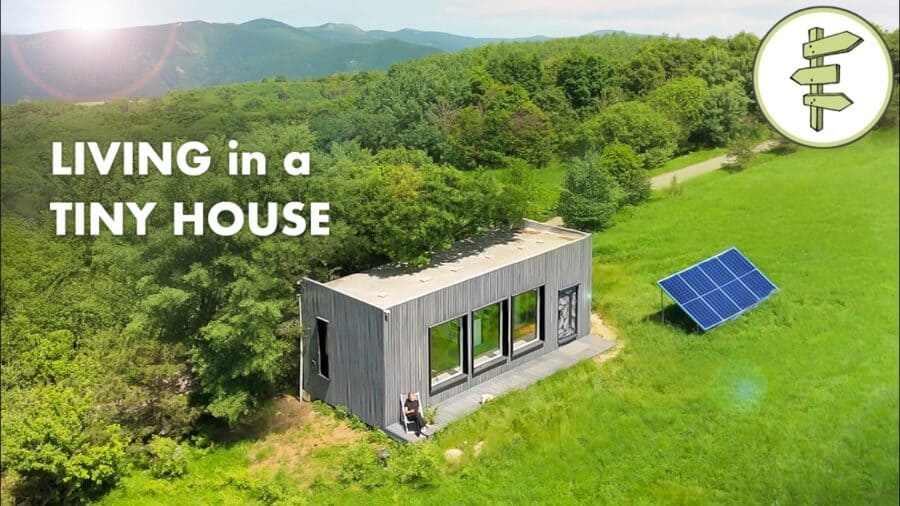
Ivan designed and built his own off-grid tiny house on a budget in Bulgaria, and he’s been living in it for three years. At 420 square feet, it’s basically an off-grid studio apartment, with solar power, propane for cooking, water piped from a neighbor’s well, and a septic system. He wanted a place to play music without bothering anyone, with the comfort of a city apartment and the self-sufficiency of off-grid living. Exploring Alternatives takes the tour.
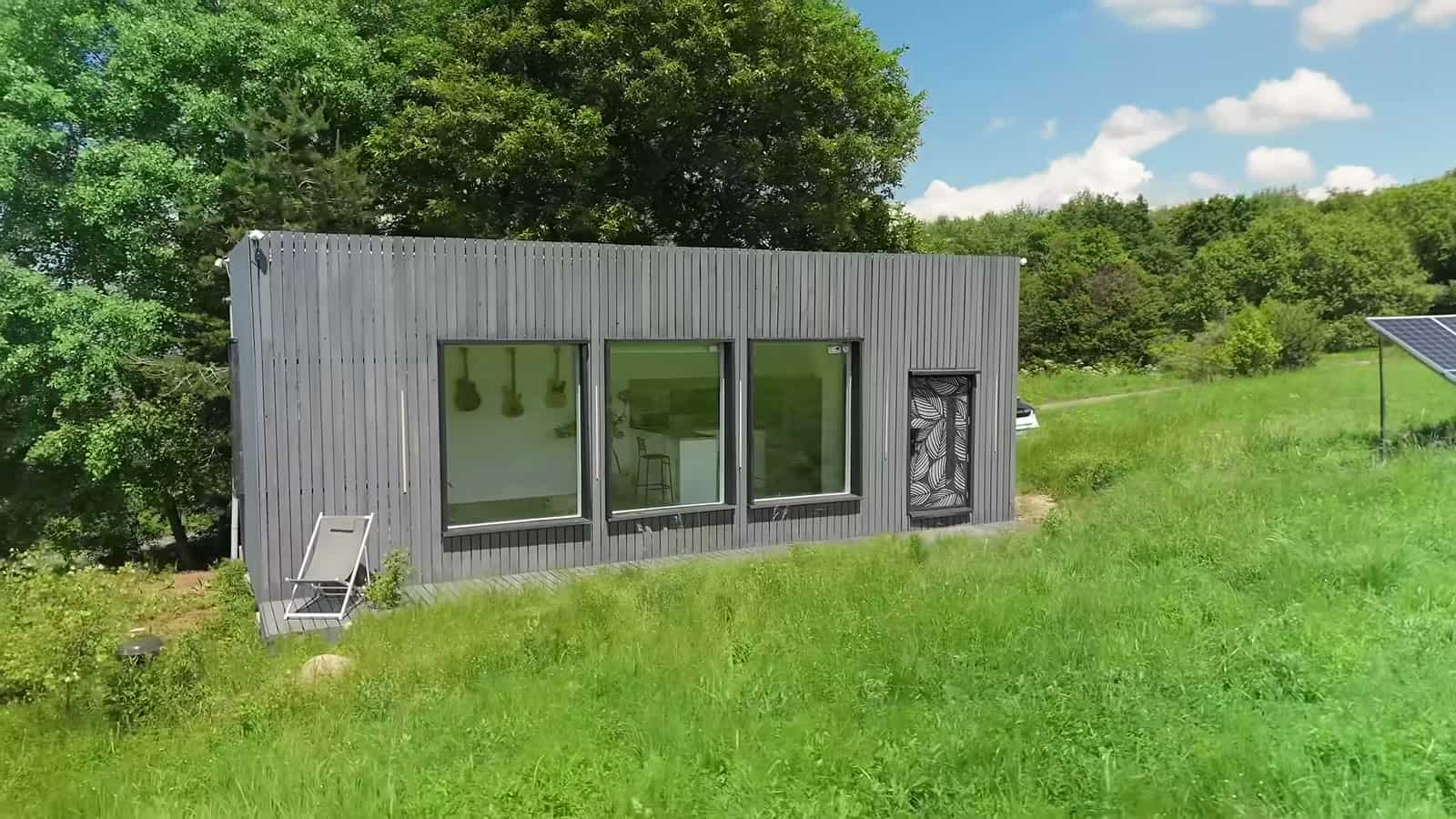
Built on Pillars on Agricultural Land
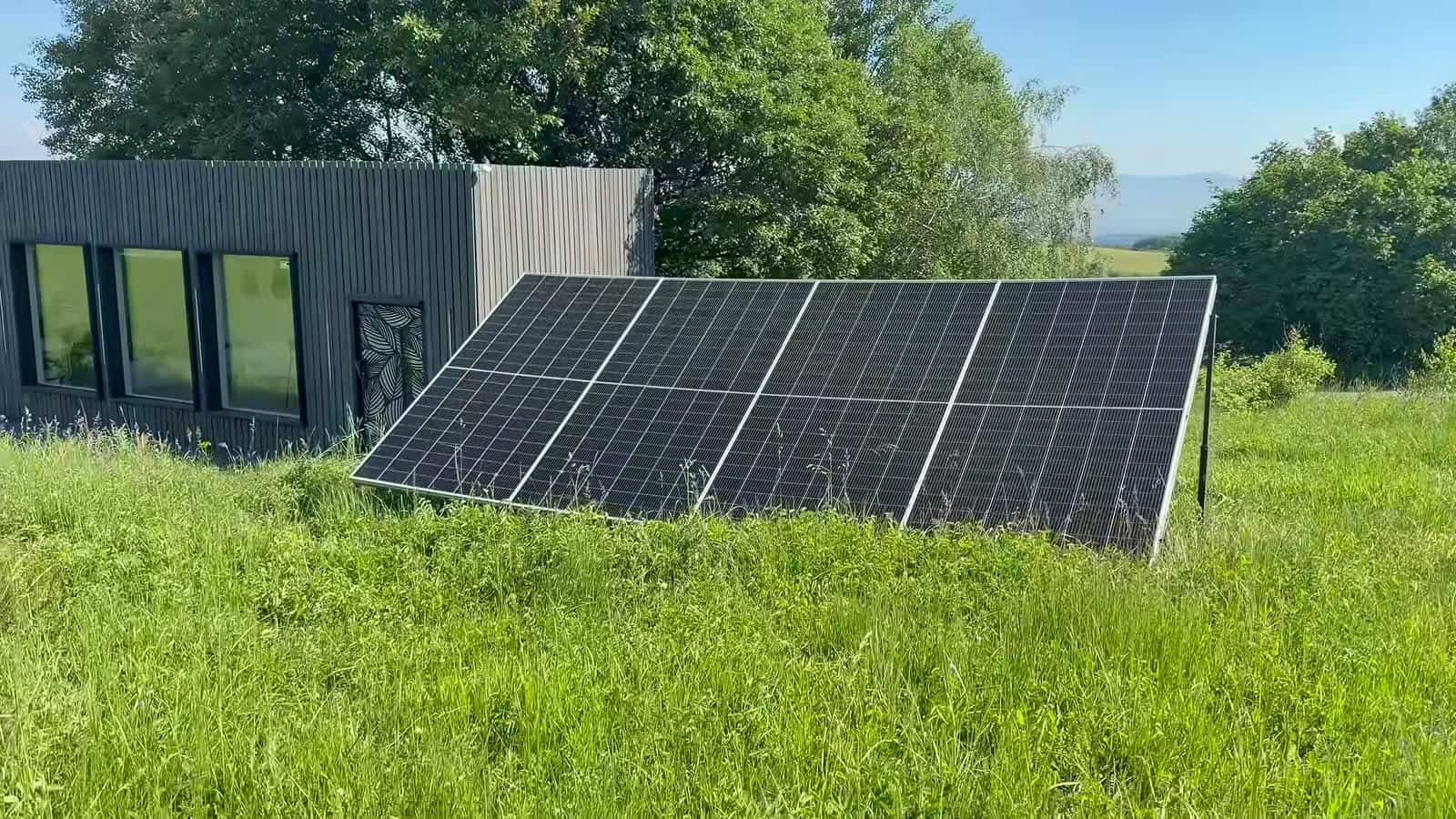
Ivan built the house on concrete pillars on a small piece of agricultural land, about 4,300 square feet. To follow the local land rules, he had to make sure the house stayed movable. The studio measures 4 by 10 meters, or about 40 square meters (420 square feet). The simple gray-clad box sits in a meadow with mountain views, about a 20-minute drive from Sofia, the capital, with a wooden deck out front and a ground-mounted solar array nearby.
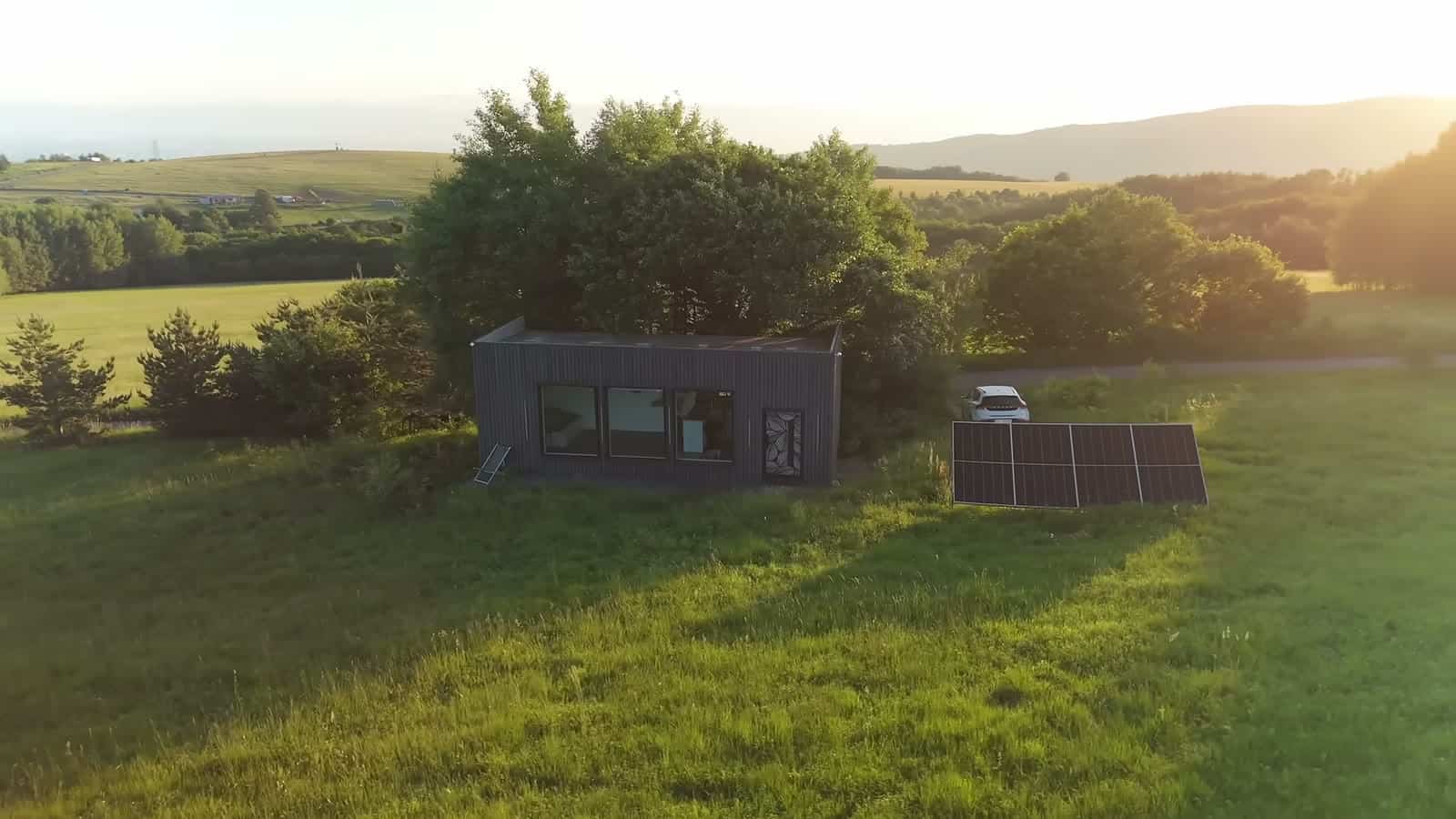
An Open Studio with a View
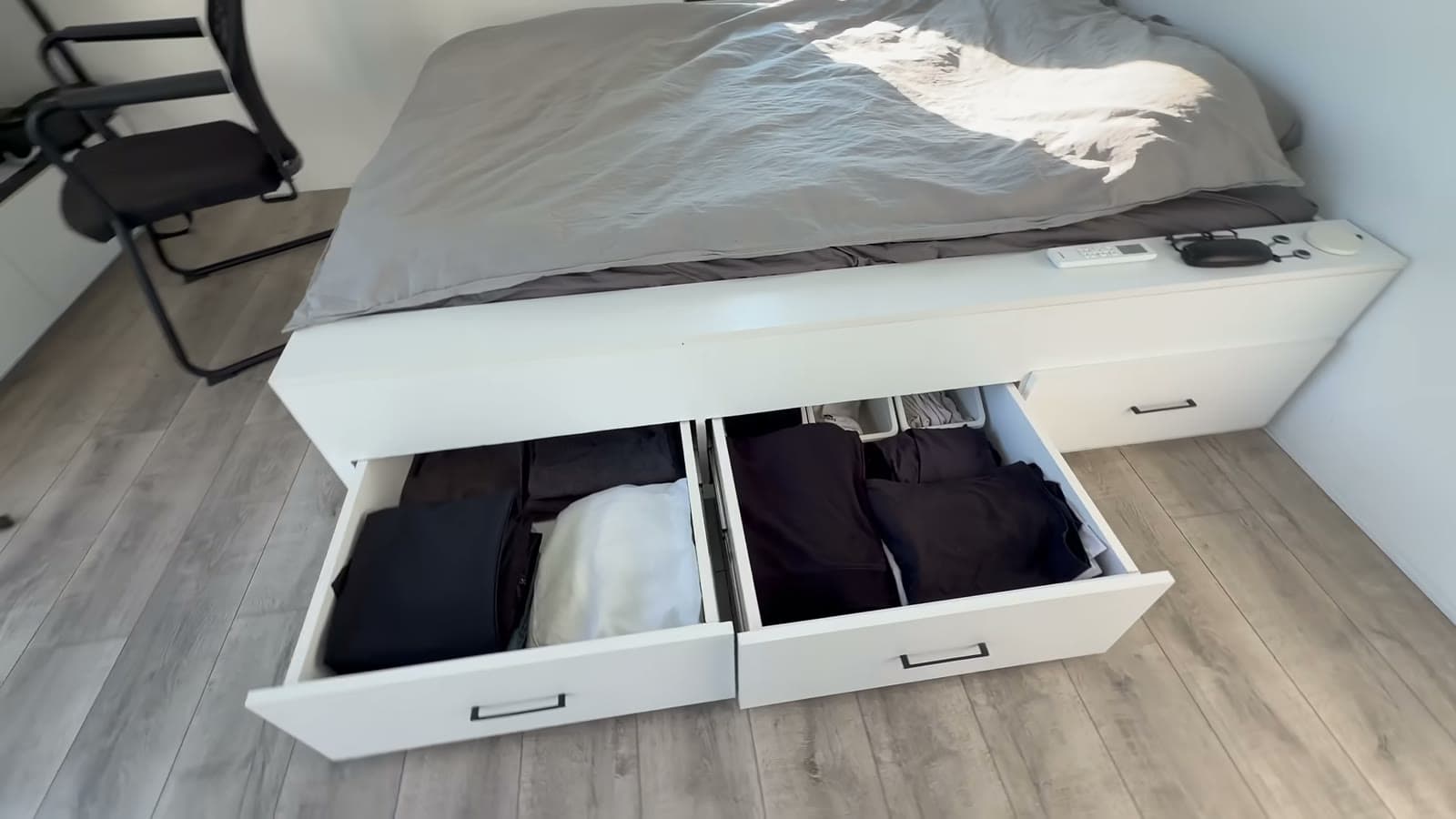
Inside, the layout is one open room. At one end, a platform bed with drawers underneath sits beneath large windows looking out to the meadow and mountains. The space is simple and bright, with room to relax, sleep, and play music. A row of electric and acoustic guitars hangs on the long wall.
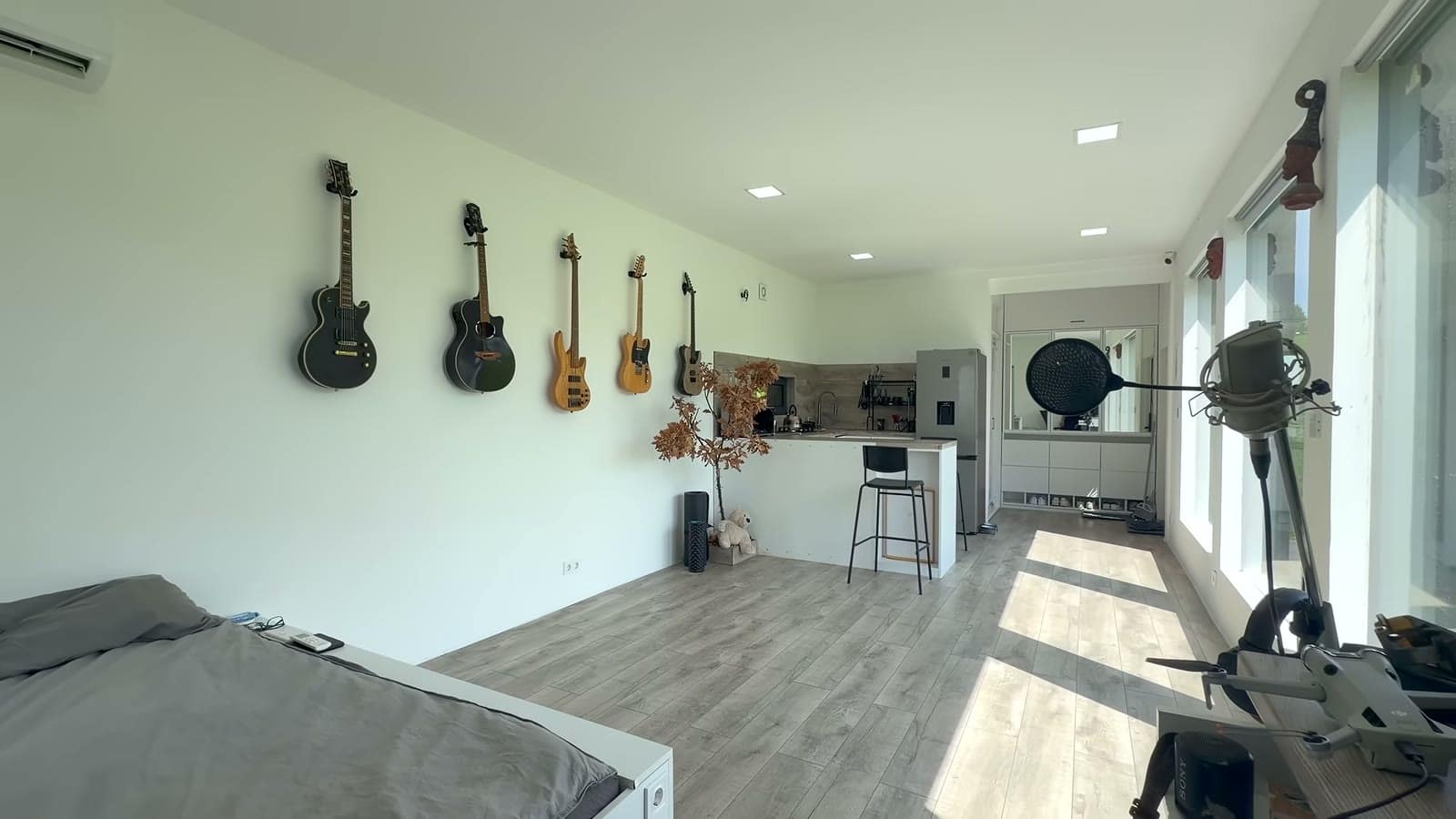
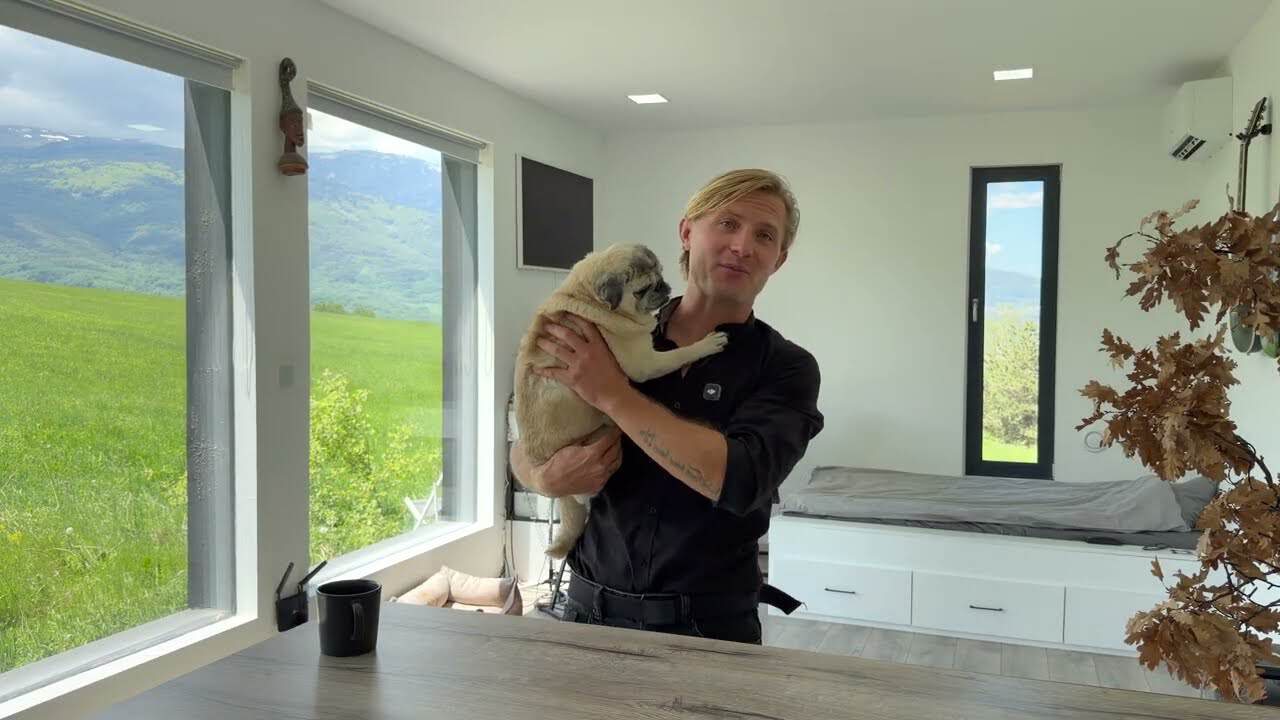
The bed has two deep pull-out drawers underneath, which hold most of his clothes.
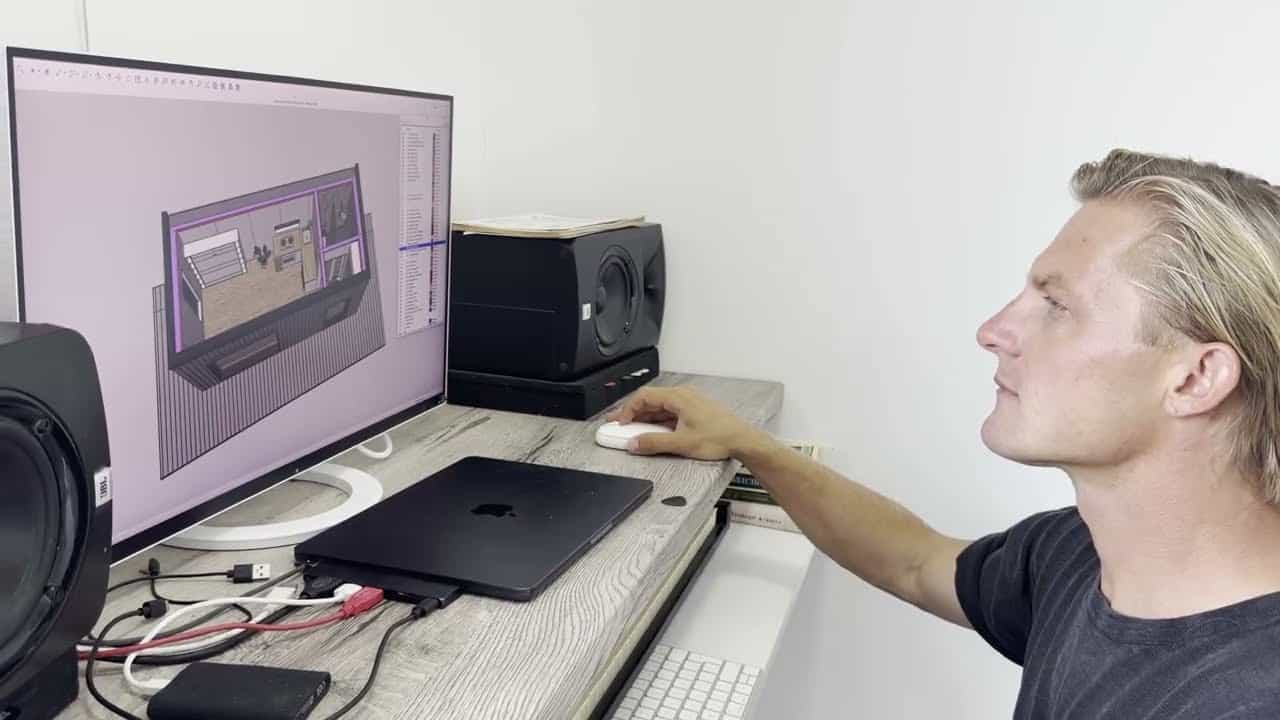
At the other end, a desk with a monitor and speakers serves as Ivan’s workspace, where he designs projects in 3D.
A Full Kitchen and a Handmade Sink
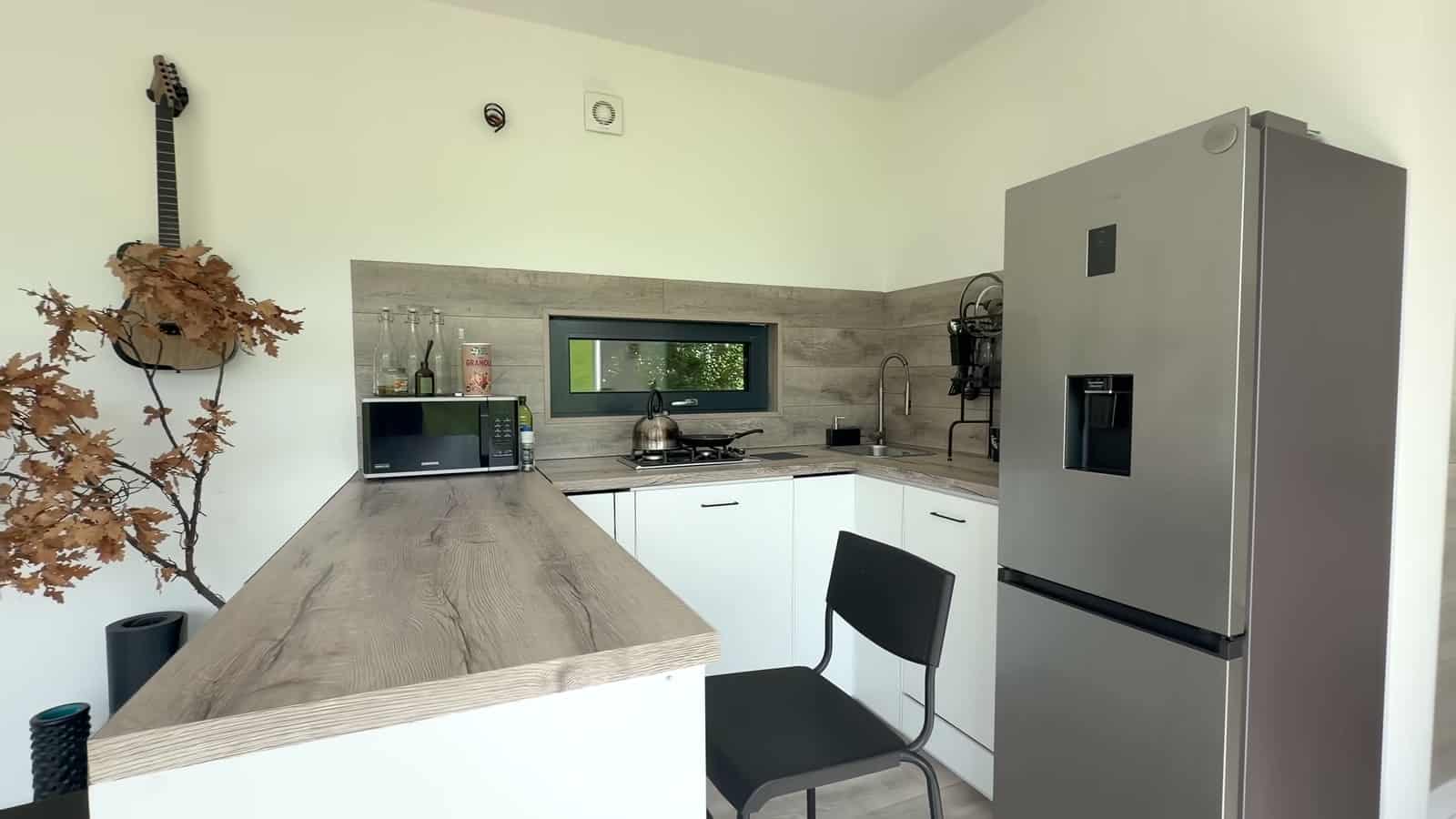
Ivan loves to cook, so he wanted a well-equipped kitchen with a full-size oven. The L-shaped kitchen has wood-look counters, a full-size refrigerator, a microwave, and a dishwasher to save water. He cooks on propane even though his solar could run induction, and he goes through about one 27-liter bottle a year.
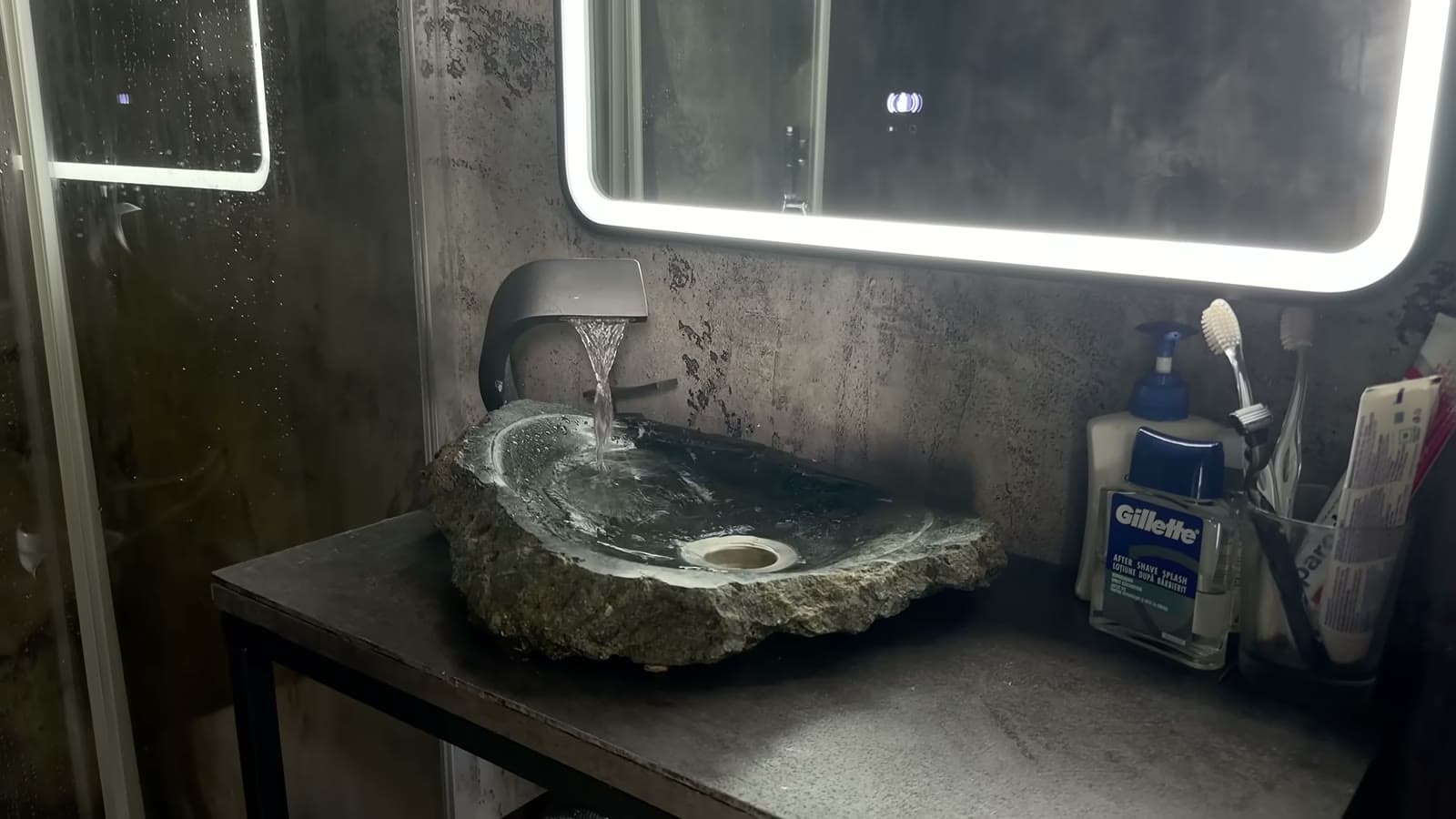
In the bathroom, the vessel sink is one he made himself from a piece of rock, and he built the sliding bathroom door too.
Off-Grid Systems
The house runs on solar power. Ivan assembled the system himself from 32 lithium iron phosphate cells, about 30 kWh of storage, charged by 660-watt Canadian Solar panels. Bulgaria is sunny, so for most of the year his batteries rarely drop below 75 to 80 percent. In winter he runs a gasoline generator five or six times to top them up. An air conditioner handles both heating and cooling when it’s sunny, with a small propane heater for dark winter days. The walls have 15 cm of rock wool insulation, the floor and ceiling have 20 cm, and there’s an extra 5 cm layer of XPS foam under heated floors.
Water was the hardest part. Groundwater lies deep here, so Ivan first built a rainwater system with gutters, a filter, and an underground tank. It didn’t keep up, so he ran a water line from his neighbor’s well and rebuilt the filtration, which now gives him an unlimited supply of fresh water. A septic tank handles waste and only needs bacteria added about once a month. With no utility bills, the house delivers the self-sufficiency he was looking for.
What It Cost
Ivan tracked every expense in a spreadsheet. He shared these numbers in the video, from building the house about three years earlier:
- House: about €24,000 for the finished shell with floors, windows, and bathroom fixtures, not counting his own labor
- Land: about €14,000 for roughly 4,300 square feet of agricultural land
- Solar system: about €6,000, assembled himself from individual components
- Total: slightly over €50,000 including furniture, appliances, and smart-home systems
He notes that materials cost more now, so treat these as a starting benchmark rather than a current quote.
His Third Build
This is the third home Ivan has built. He lived in his first tiny house for a year and a half and also built a home for his neighbor. He says learning to build made homeownership accessible for him, and he’s now working on a video guide to help others build their own tiny houses.
Watch the Full Tour
Exploring Alternatives visits Ivan’s studio in this video.
Video: Exploring Alternatives, “Man Builds His Own Affordable Off-Grid Tiny House.”
Design Details
- Owner and builder: Ivan (Gradoboev Builds)
- Location: near Sofia, Bulgaria, on agricultural land
- Size: 4 x 10 m, about 420 sq. ft.
- Foundation: concrete pillars, kept movable to meet local rules
- Layout: open studio with a platform bed and a workspace
- Power: solar with about 30 kWh of DIY lithium iron phosphate batteries; gasoline generator backup
- Heating and cooling: air conditioner, small propane heater, heated floors
- Cooking: propane
- Water: line from a neighbor’s well (previously rainwater collection)
- Waste: septic tank
- Total cost: slightly over €50,000 including land, solar, and furnishings (per Ivan, about three years ago)
What Makes This Build Special
- A self-designed, self-built home made on a budget.
- Off-grid systems with no utility bills.
- A quiet studio where Ivan can play music without disturbing anyone.
- A builder who’s sharing what he’s learned with others.
For more self-built and off-grid homes, see 13 off-grid builds that prove self-sufficiency works, the Wobbly Hobbit cob and timber tiny house, and another Exploring Alternatives tour, Be Tiny’s B.Drop.24f in Quebec.
Learn More
Ivan’s Off-Grid Studio
Ivan’s website: gradoboev.build · YouTube @gradoboev.builds
Video tour: Exploring Alternatives · exploringalternatives.ca · @exploringalternatives
Video stills: Exploring Alternatives.
Highlights
- A 420 sq. ft. off-grid studio in Bulgaria
- Designed and built by owner Ivan
- Solar, propane, piped well water, and septic
- Built on pillars and kept movable
- About €50,000 all in, including the land
- His third home build
Explore More
- 13 Off-Grid Builds That Prove Self-Sufficiency Actually Works
- Wobbly Hobbit: A Cob and Timber Tiny House
- Be Tiny’s B.Drop.24f
- 11 Alternative Tiny Homes Bursting with Personality
- Video Tours
Would you build your own off-grid studio like Ivan’s? Tell us in the comments.
If you enjoyed this you’ll LOVE our Free Daily Tiny House Newsletter with even more!
You can also join our Small House Newsletter!
Also, try our Tiny Houses For Sale Newsletter! Thank you!
More Like This: Small Houses | Off-Grid | Modern Tiny Houses | Tiny House Interiors | Video Tours
Disclosure: This post may contain affiliate links. If you purchase through one of our links, we may earn a commission at no additional cost to you.


Alex
Latest posts by Alex (see all)
- Ivan’s Self-Built 420 Sq. Ft. Off-Grid Studio in Bulgaria - October 31, 2026
- She Skipped a $150K Tiny House for an $80K Destination Trailer - October 31, 2026
- A Team Canada Speed Skater’s Off-Grid Tiny House on a Calgary Ranch - October 31, 2026