
Disclosure: This post may contain affiliate links. If you purchase through one of our links, we may earn a commission at no additional cost to you.
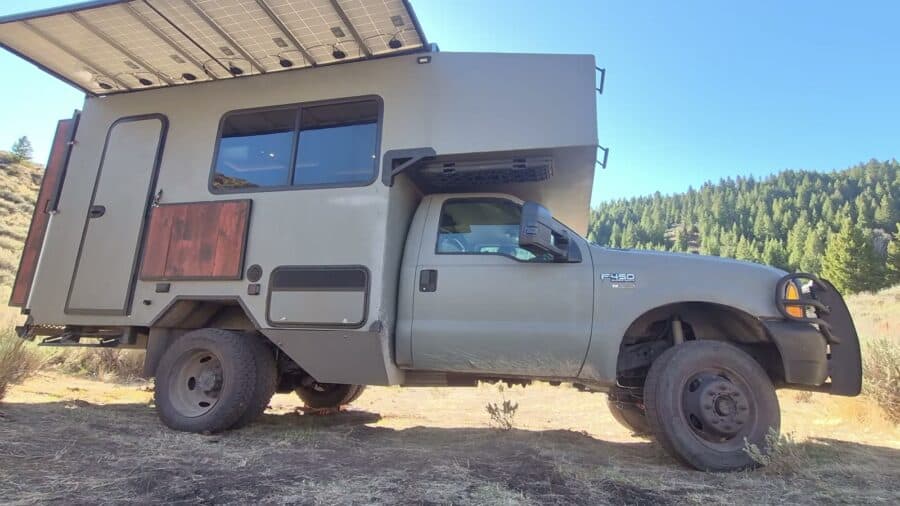
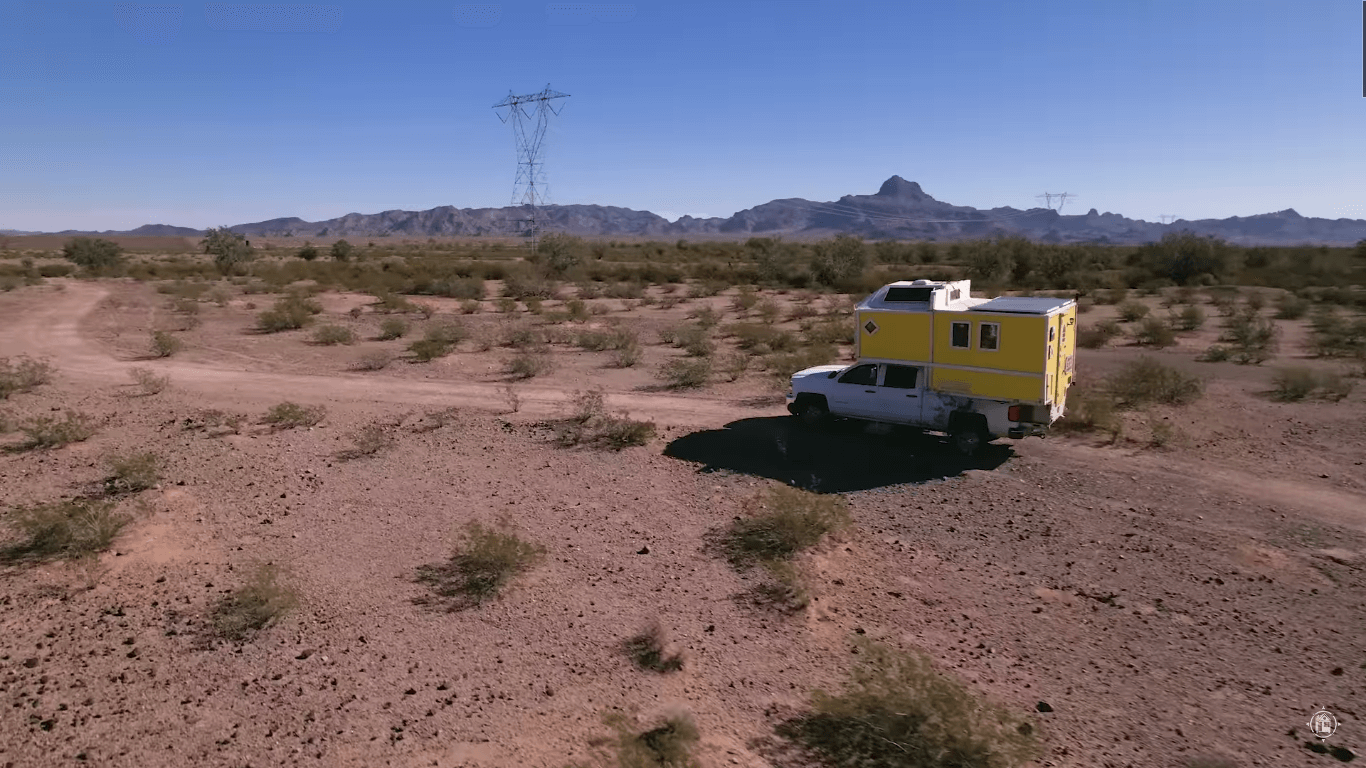
Shaughn wanted a rig that could carry him deep into Alaska and keep him there for months. He couldn’t afford to buy one, so he built one. He started with a 1999 Ford F-450 dump truck and spent four years turning it into an aluminum-framed, off-grid truck camper with expandable solar, a 14 kWh lithium battery bank, a 100-gallon water tank that can refill itself from a stream, and a Home Assistant “brain” that runs the place while he’s out hiking.
His full build video covers every step, from the bare chassis to a first long drive west, and it is unusually honest about the setbacks. He ran out of money twice, put the truck aside for two years to sail the East Coast, and found more rust than he expected underneath it.
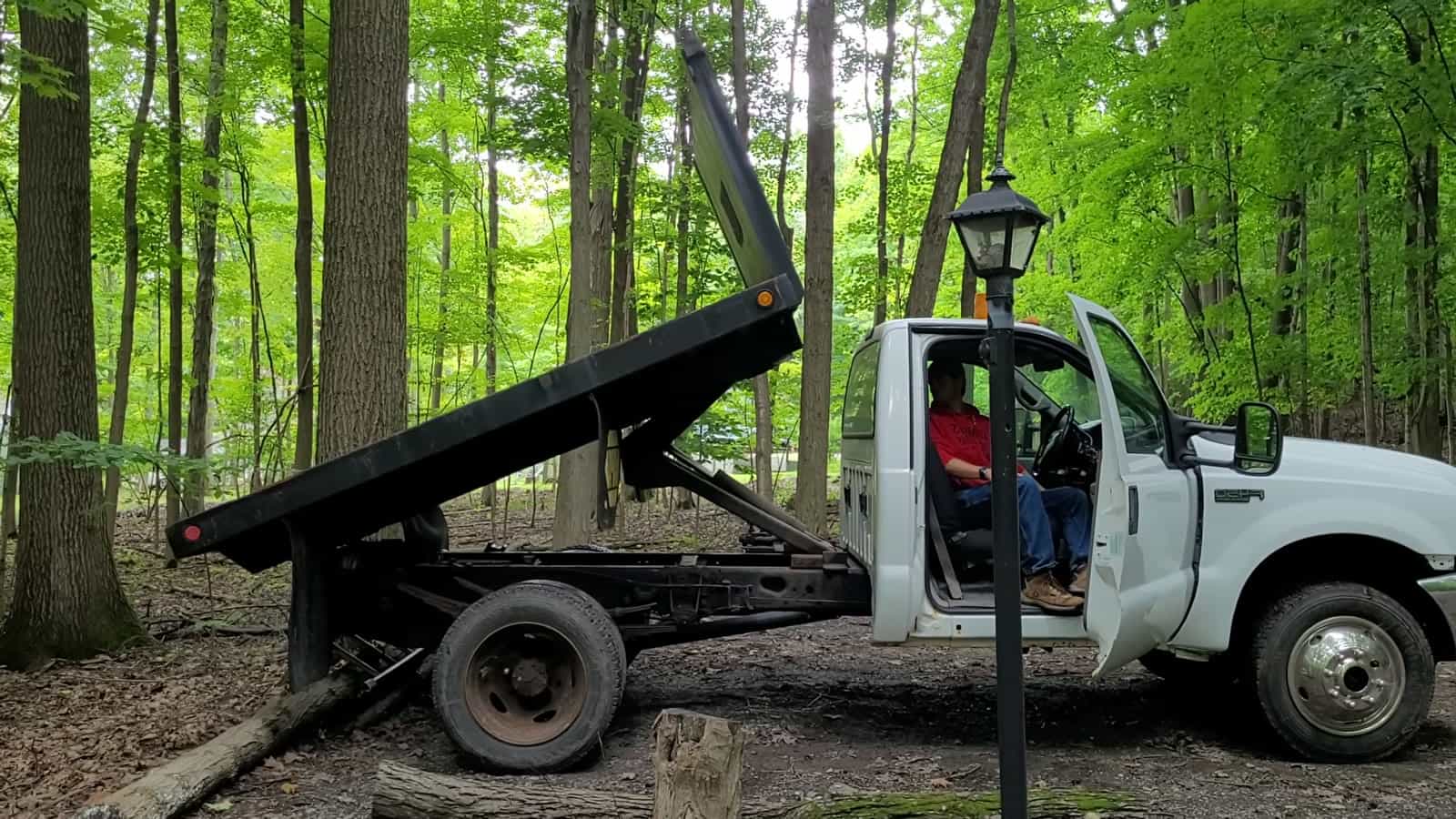
Image via Shaughn/YouTube
Why a Diesel Dump Truck Made Sense as a Starting Point
Reliability came first. The truck has the 7.3-liter Power Stroke diesel, an engine known for running for hundreds of thousands of miles, and it had only about 65,000 miles on it. Shaughn paid $11,000 for the truck, then sold the dump bed on Facebook Marketplace for $1,300. To fund the rest he sold his car and moved back in with his parents. A one-ton chassis cab also gives you a clean, flat frame to build on, plus far more payload than a pickup bed camper could ever use.
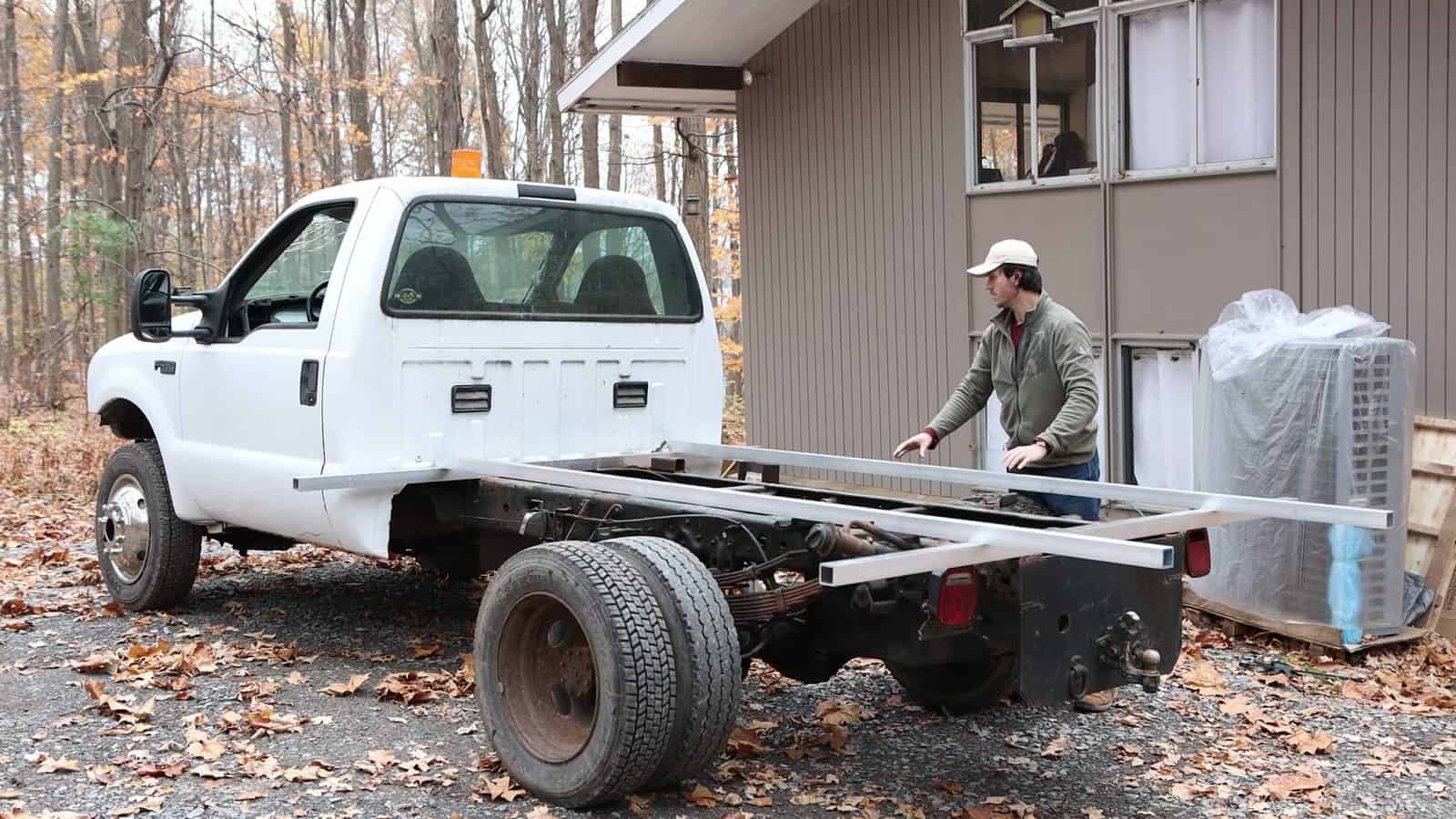
Image via Shaughn/YouTube
An Aluminum Frame Welded by a First-Time Welder
He needed a frame that could take the twisting of off-road driving without being so heavy that the truck would sink in the first mud hole. That pointed to aluminum. He ordered stock from a local metal shop, bought a secondhand Harbor Freight welder and spool gun, and learned to weld aluminum on the project itself, which is not an easy first metal. It took practice welds that finally passed a hammer test, then four straight days of welding and grinding, before the frame matched his 3D design.
Sandwich Wall Panels from Home Depot Materials
The walls are structural sandwich panels built from materials you can buy at a big-box store. Each has a thin (about 1/16-inch) aluminum skin outside, 1.5 inches of rigid foam insulation in the middle, and sanded 1/4-inch maple plywood inside, all glued into one stiff, insulated panel. The first glue-up failed overnight because the foam board had a plastic film on it. Once he sanded that off, every panel bonded. The panels were pre-cut, riveted into the frame, and sealed at every opening with Sikaflex.
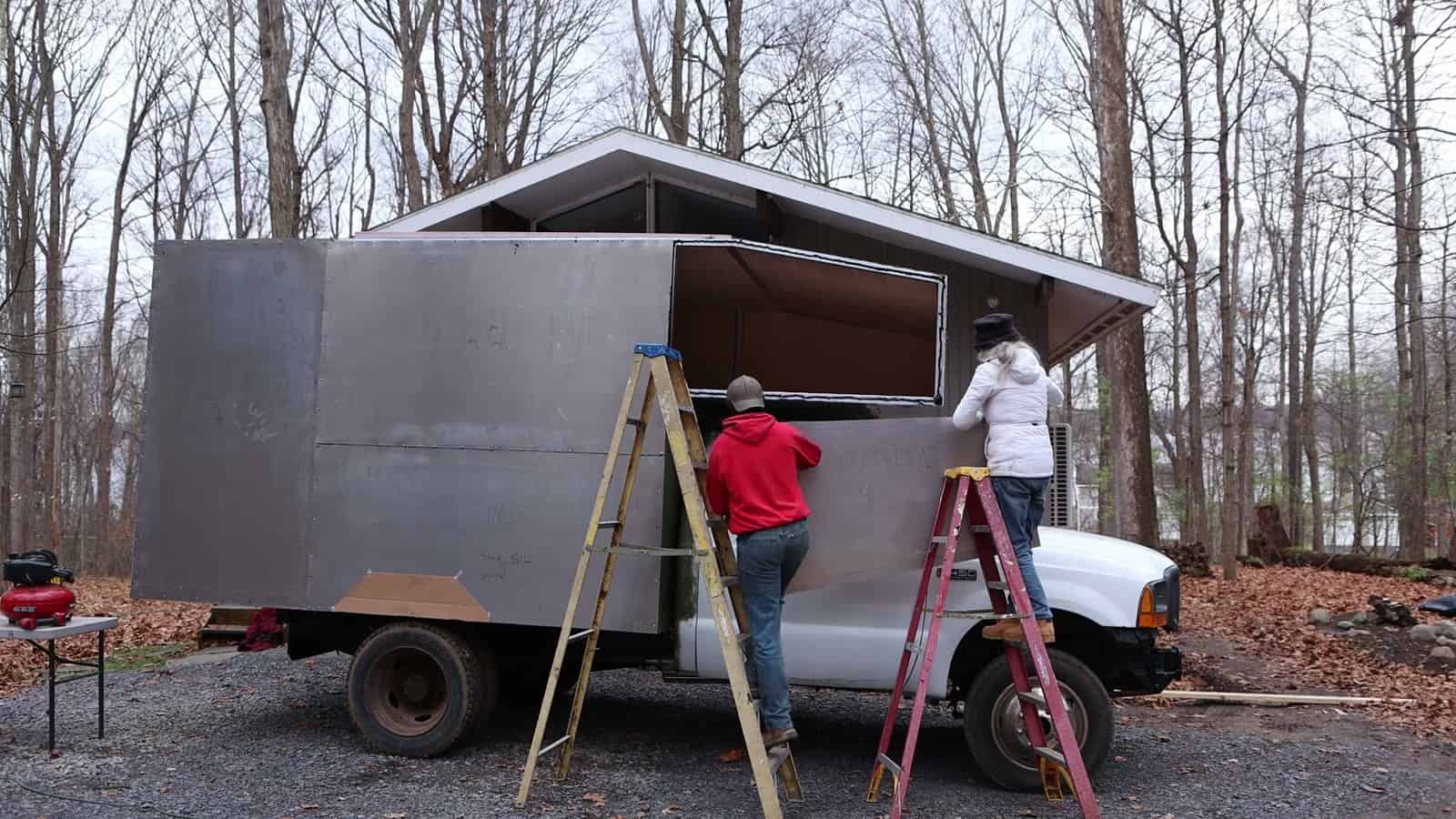
Image via Shaughn/YouTube
Weatherproofing meant layer after layer: Sikaflex, a perimeter sealant, body filler over the seams, more sealant, primer, then paint. A plain gray coat scratched too easily on branches, so he rolled a pickup-style bed liner over the whole exterior. Now he doesn’t worry about brush scraping the sides. For windows he skipped the expensive dual-pane awning units and used ice cream truck windows, a budget choice that still lets in a lot of light.
Water That Refills from a Stream
A 100-gallon fresh water tank is a good supply, but it eventually runs out. So Shaughn installed two pumps. One works like any RV pump and sends water from the tank to the faucet. The other is plumbed in reverse: drop a hose from an exterior inlet into a lake or stream, and it pulls the water through carbon and pleated sediment filters, each finer than the last, and pumps it into the tank. Drinking water then goes through one more 0.01-micron filter under the sink. With this setup the camper doesn’t depend on wells or city water.
A 14 kWh Battery Bank and an Energy Budget
The build stopped while he worked four months of cleaning jobs to pay for solar and batteries. The bank uses 16 lithium iron phosphate cells, which he compares to roughly 40 lead-acid car batteries in usable capacity, all fitted under the couch. They run through a 48-volt all-in-one unit that is the inverter, the solar charge controller and the shore power charger in one, rated at 6,500 watts continuous. That is enough to run the air conditioner and power tools at once.
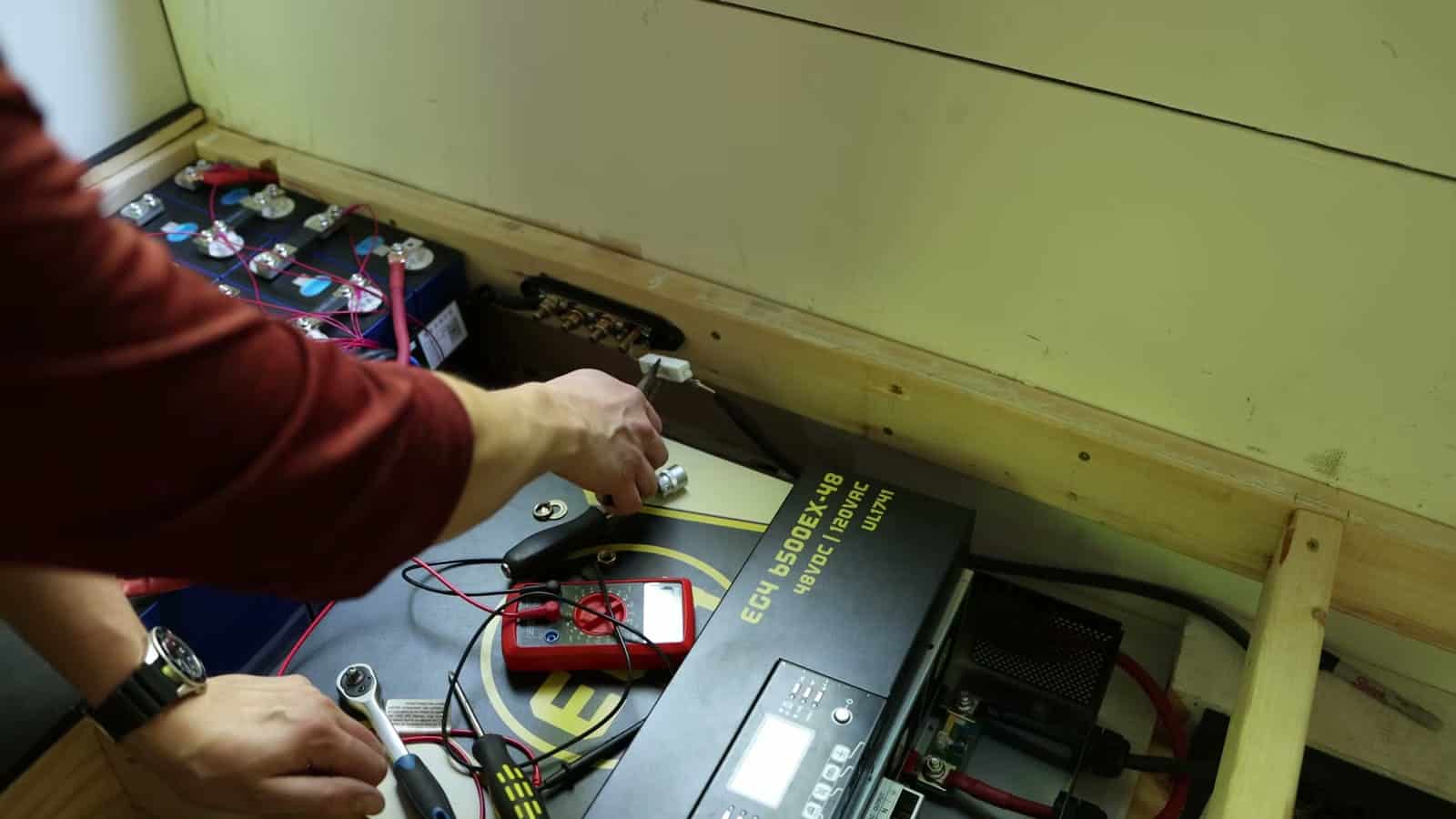
Image via Shaughn/YouTube
He makes a point many off-grid builds miss: you can only use, on average, as much energy as you produce each day. Solar panels are now cheaper than batteries. The real limit is roof area. To fit about 2,800 watts of solar on a truck small enough to make three-point turns on forest roads, he designed panels that fold out from the roof.
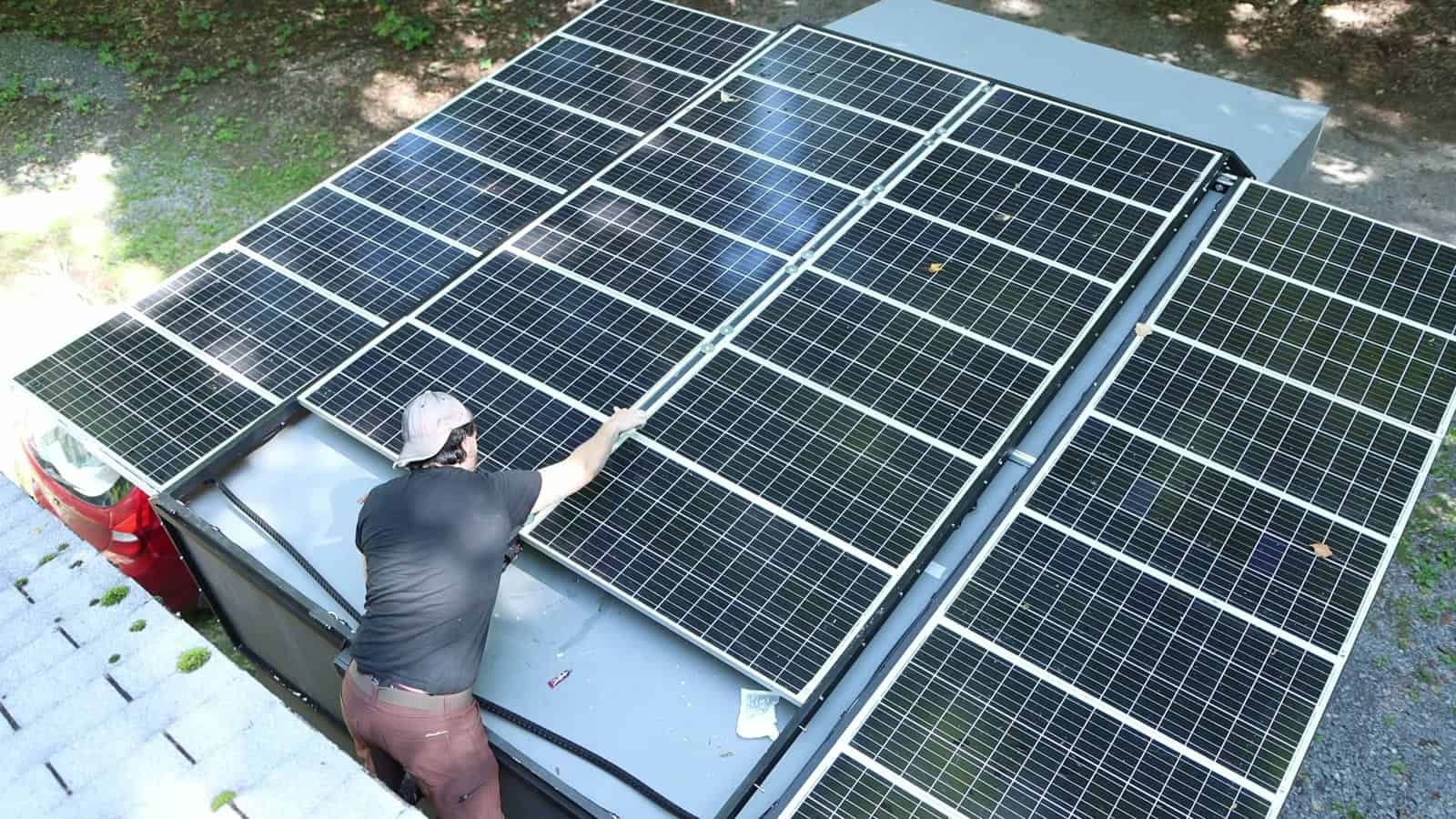
Image via Shaughn/YouTube
A Warm, Wood-Lined Interior About the Size of Two King Beds
EarthRoamer expedition trucks were a big inspiration, especially how comfortable they are inside. After a day outside, Shaughn wanted to kick off his boots, cook a hot meal and feel at home. The challenge was fitting that into a floor about the size of two king mattresses side by side. The result is a cherry-toned interior with wood cabinets, LED cove lighting, a wood slat partition and patterned cushions.
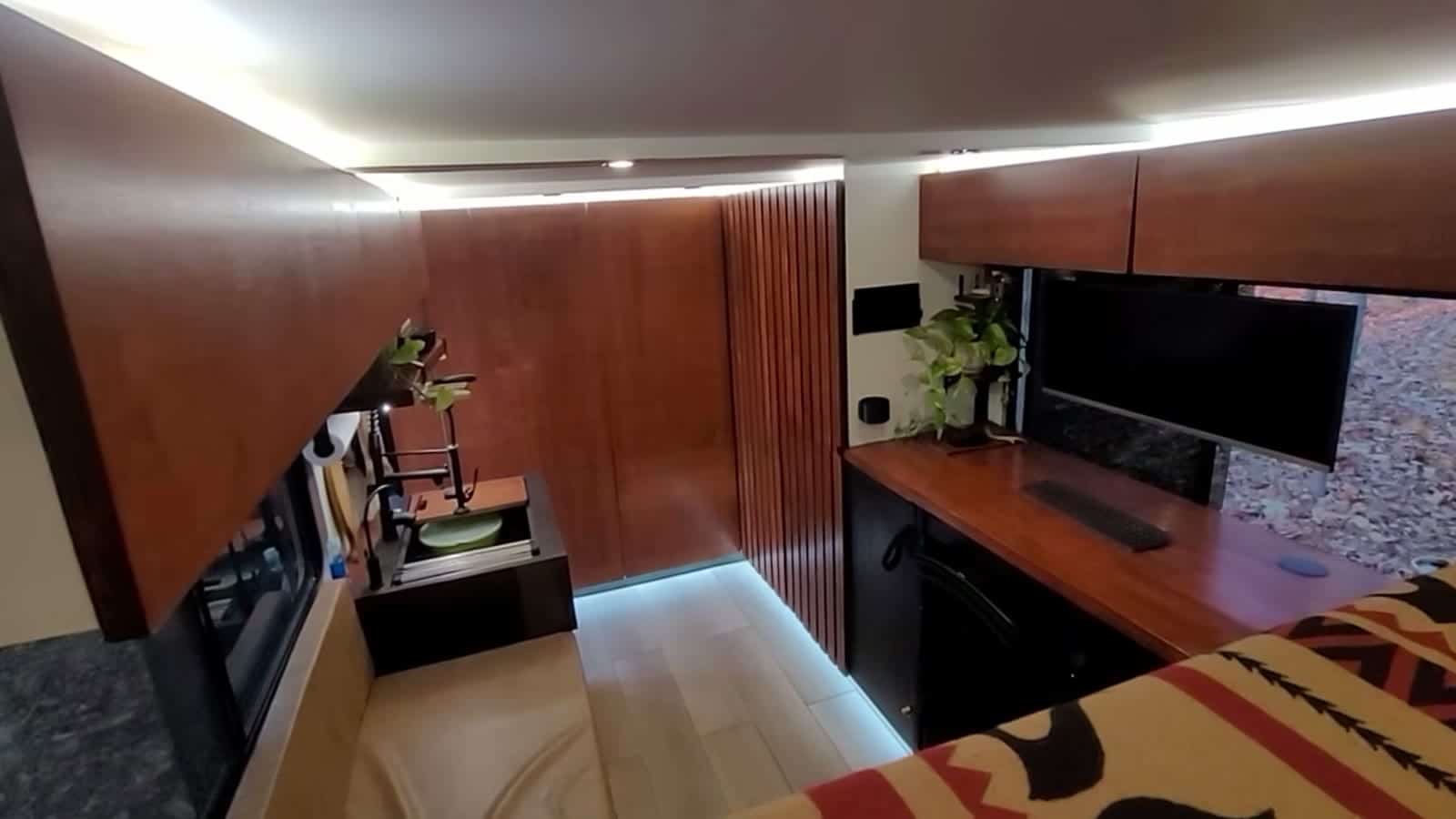
Image via Shaughn/YouTube
A full desk with a large monitor sits under one window, so the camper works as an office too.
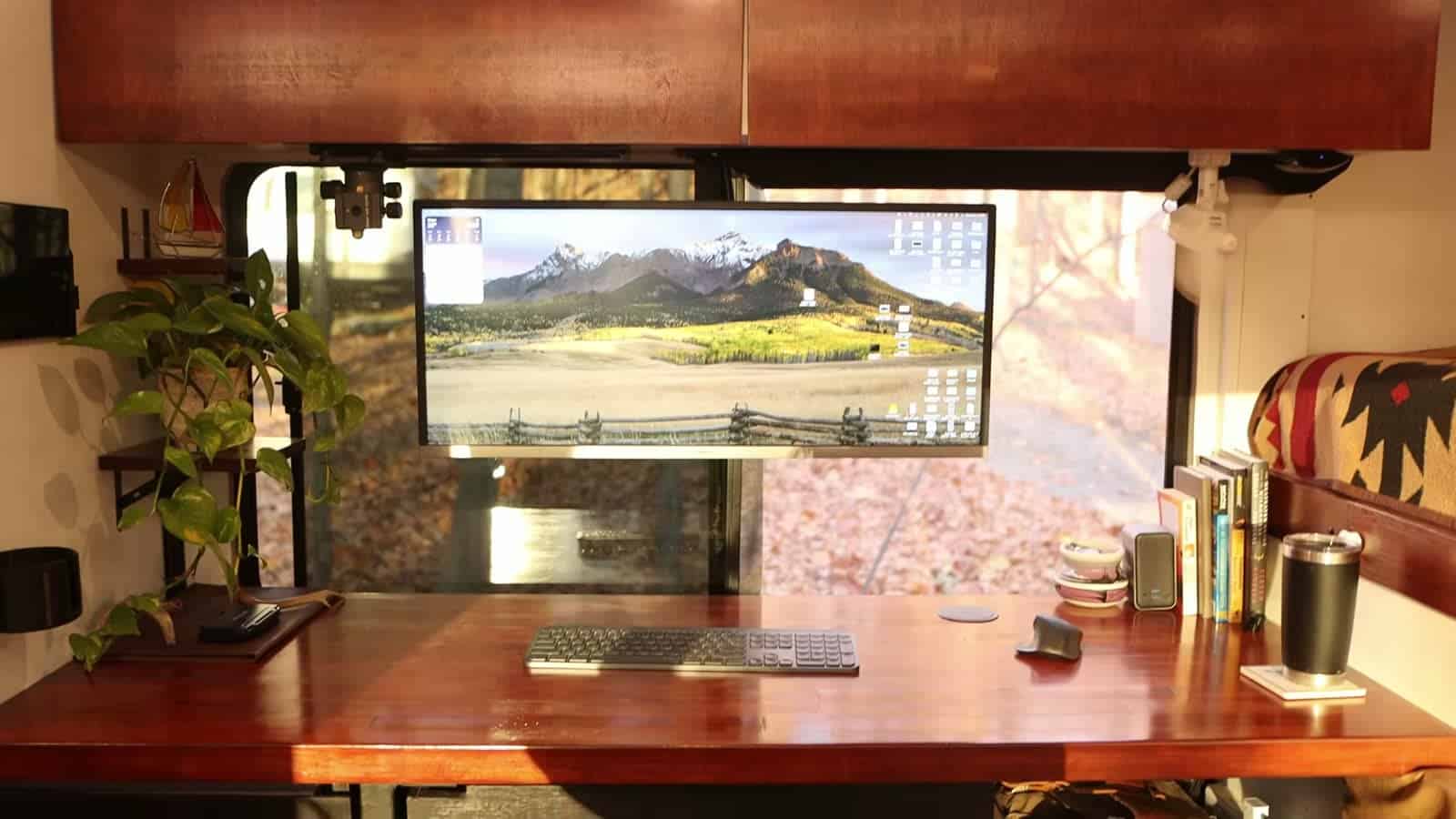
Image via Shaughn/YouTube
Across from it, an L-shaped couch with patterned cushions is where he relaxes, and it sits over the battery bank.
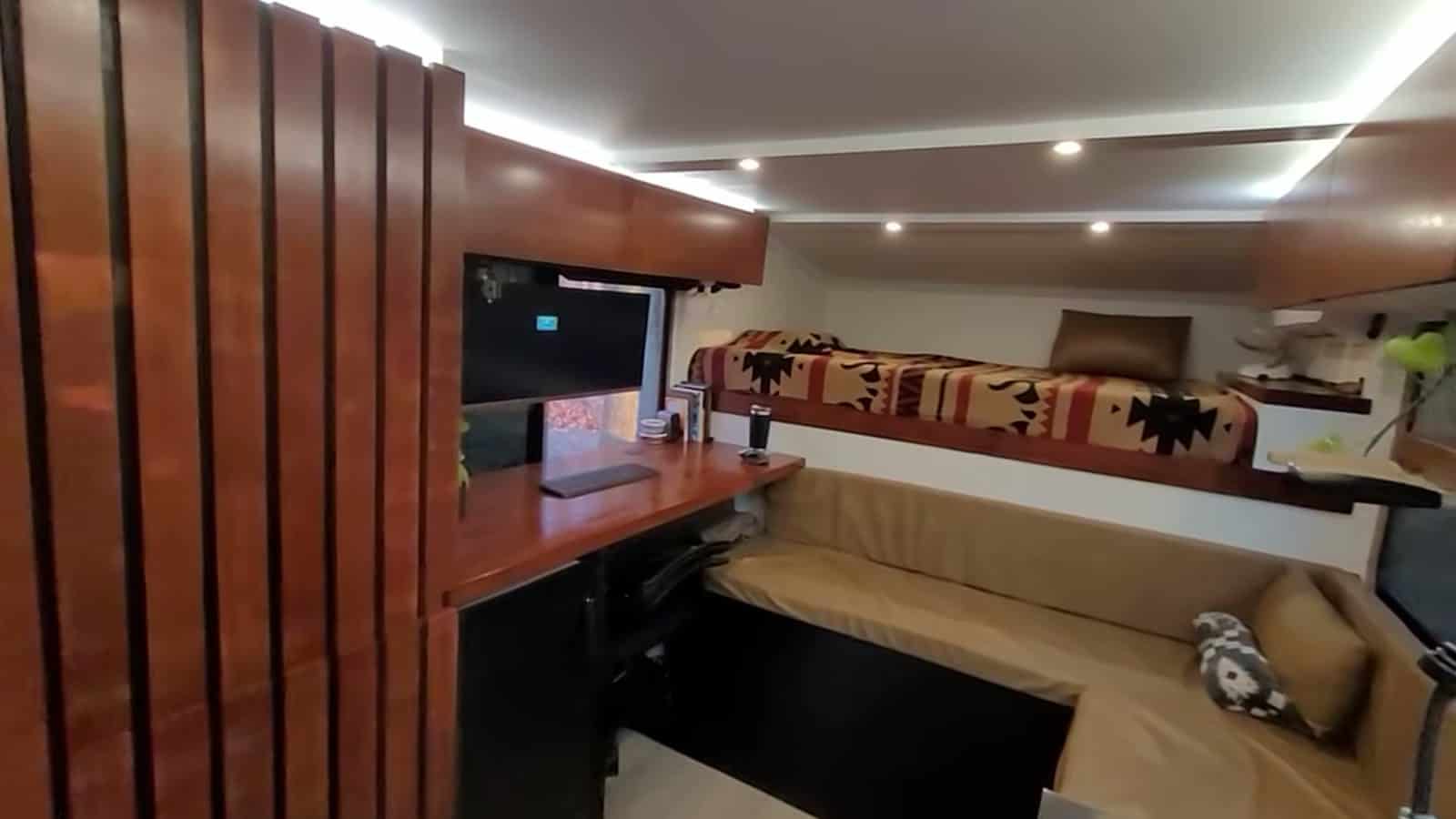
Image via Shaughn/YouTube
A Kitchen and Laundry Built for Long Stays
The kitchen centers on a black workstation sink with a roll-up drying rack and a fitted cutting board, plus a portable induction cooktop. A full-size chest freezer gives him room to store food he catches or hunts, which matters for someone planning to live off the land. The video also shows a composting toilet, a stand mixer tucked into a cabinet, and a compact twin-tub washing machine, so laundry doesn’t mean a trip to town.
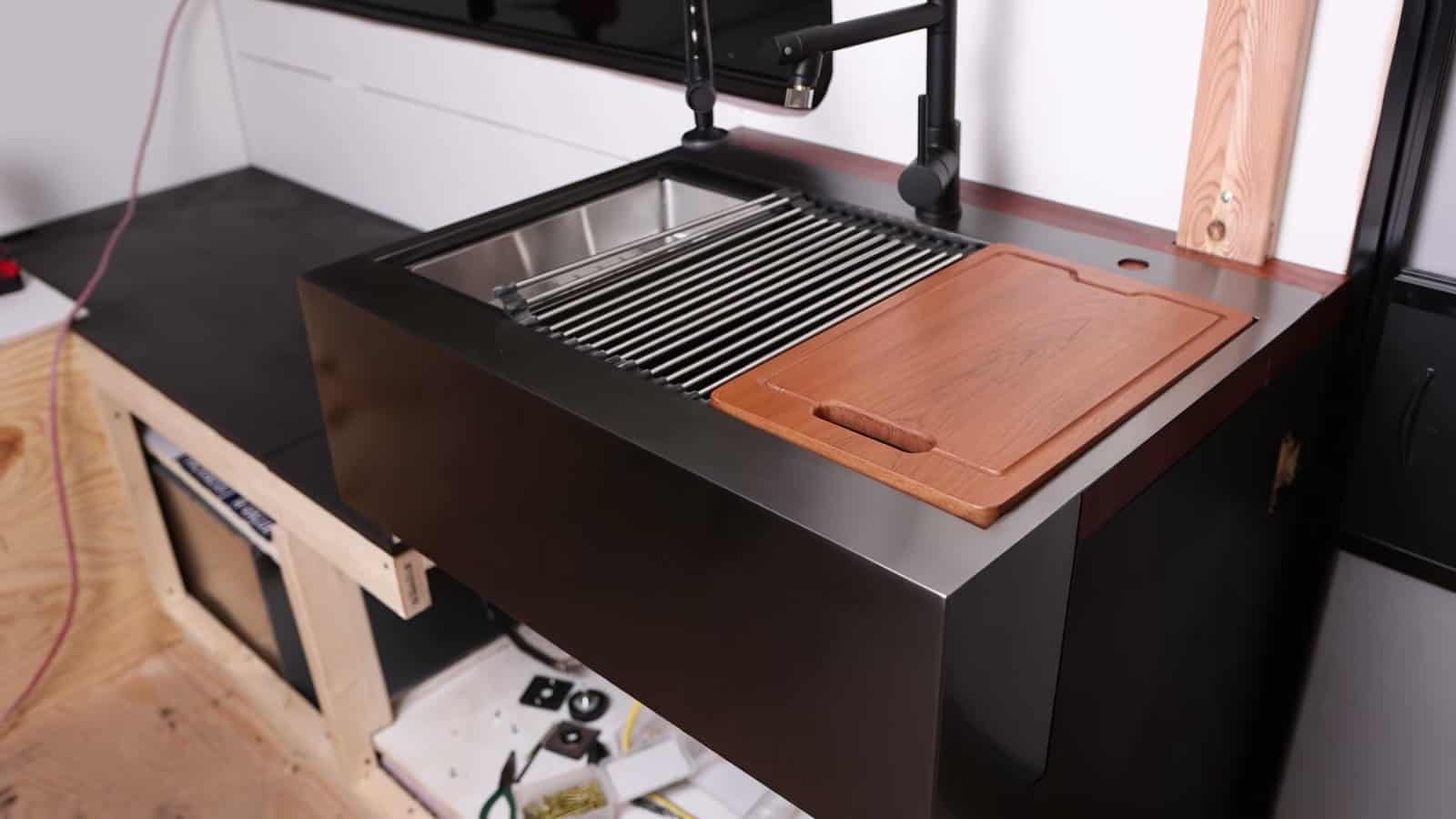
Image via Shaughn/YouTube
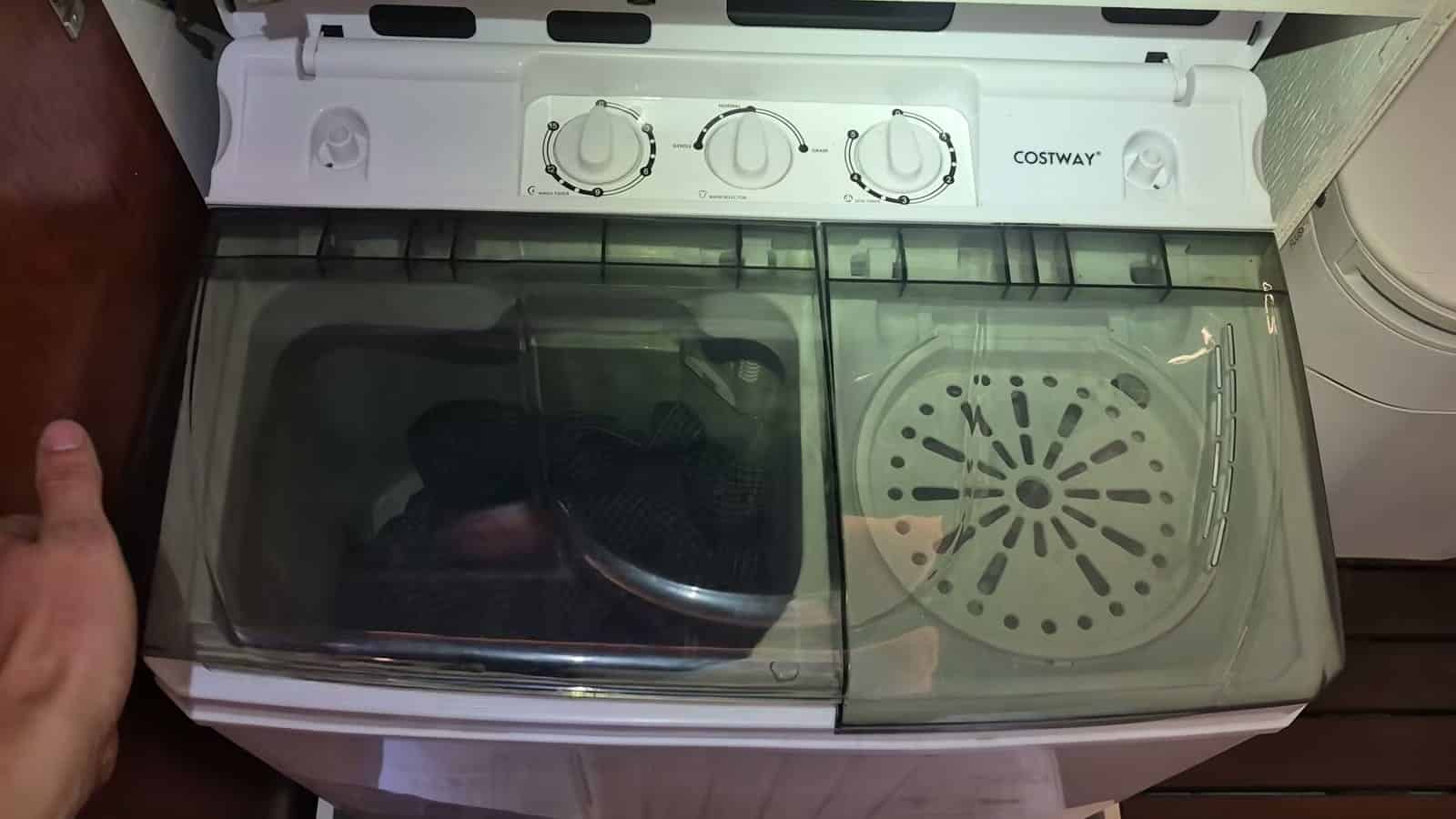
Image via Shaughn/YouTube
Home Assistant Runs the Camper on Its Own
Shaughn wanted a home, not a housekeeping job, so he built what he calls a little Jarvis. The free Home Assistant software runs on a small computer in the closet and reads sensors throughout the camper. If it’s cold, it turns on the tank heaters so nothing freezes. If the batteries get hot, it starts the cooling fans. It even forecasts tomorrow’s solar output from where he’s parked and how much shade nearby trees will cast. All of it works without internet. The wall dashboard shows power draw, water level, temperature and an estimated number of days he can stay put.
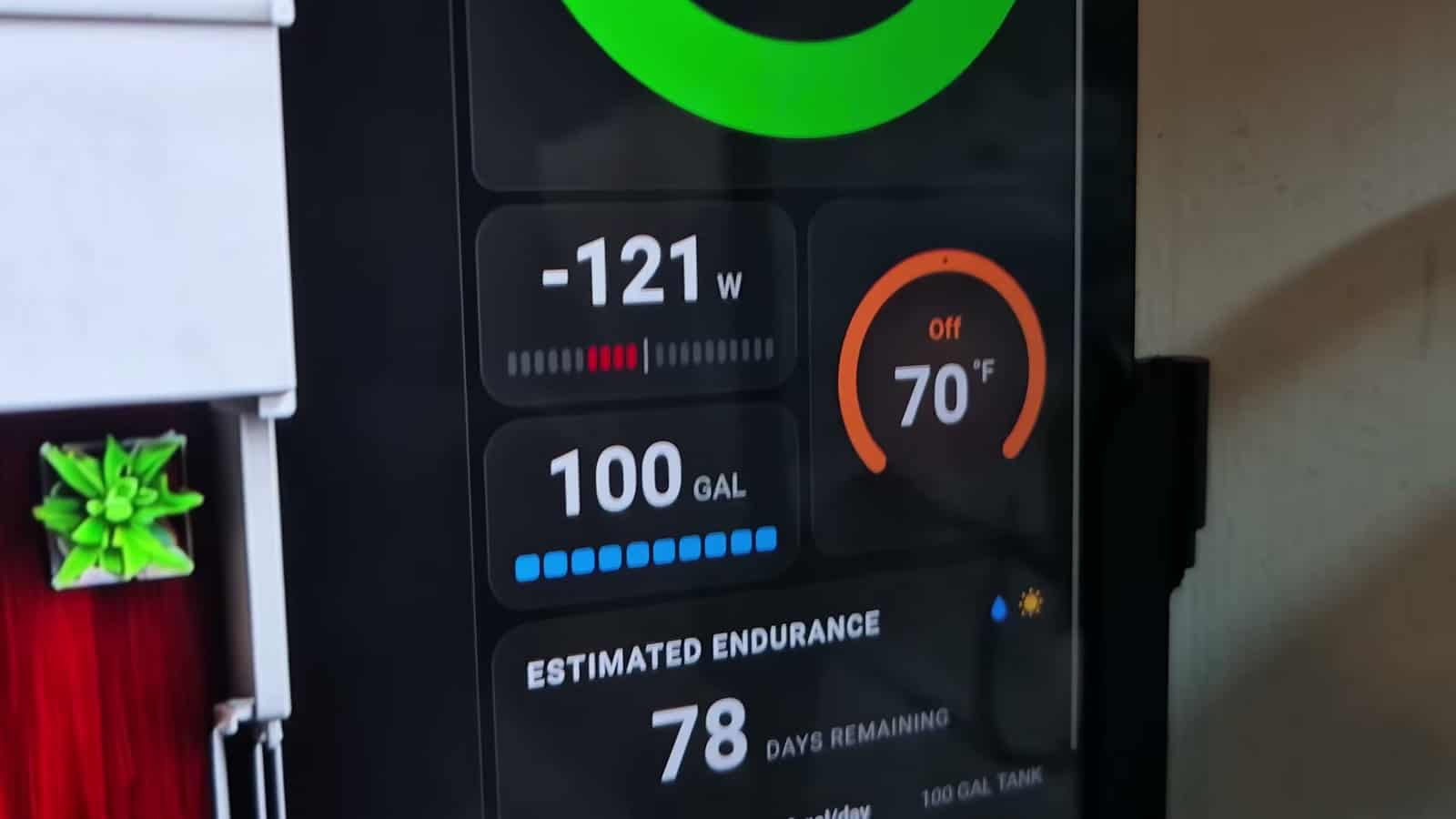
Image via Shaughn/YouTube
Fixing the Truck Under the Camper
With the camper almost finished, he and his parents bought a sailboat, and he spent two years sailing up and down the East Coast and to the Bahamas. When he came back he admitted the truck wasn’t ready. The crossmember holding the fuel tank was nearly rusted through, and seals were leaking at the rear differential pinion and the transfer case. Neither would survive Alaska’s Dalton Highway.
The biggest upgrade is a double-bellow airbag suspension, controlled separately at each corner. He can level the camper, raise the ride height and steady it on the road. He also fitted a much thicker sway bar to stop the body roll that came with the heavy box. Then the list kept growing: a rebuilt driveshaft, a new crossmember, the fuel sending unit, an inline fuel filter, new fuel lines, a resealed and repainted rear axle and a parking brake repair. When the mini-split lost its refrigerant while he was away, he took a course, earned his HVAC certification and recharged it himself.
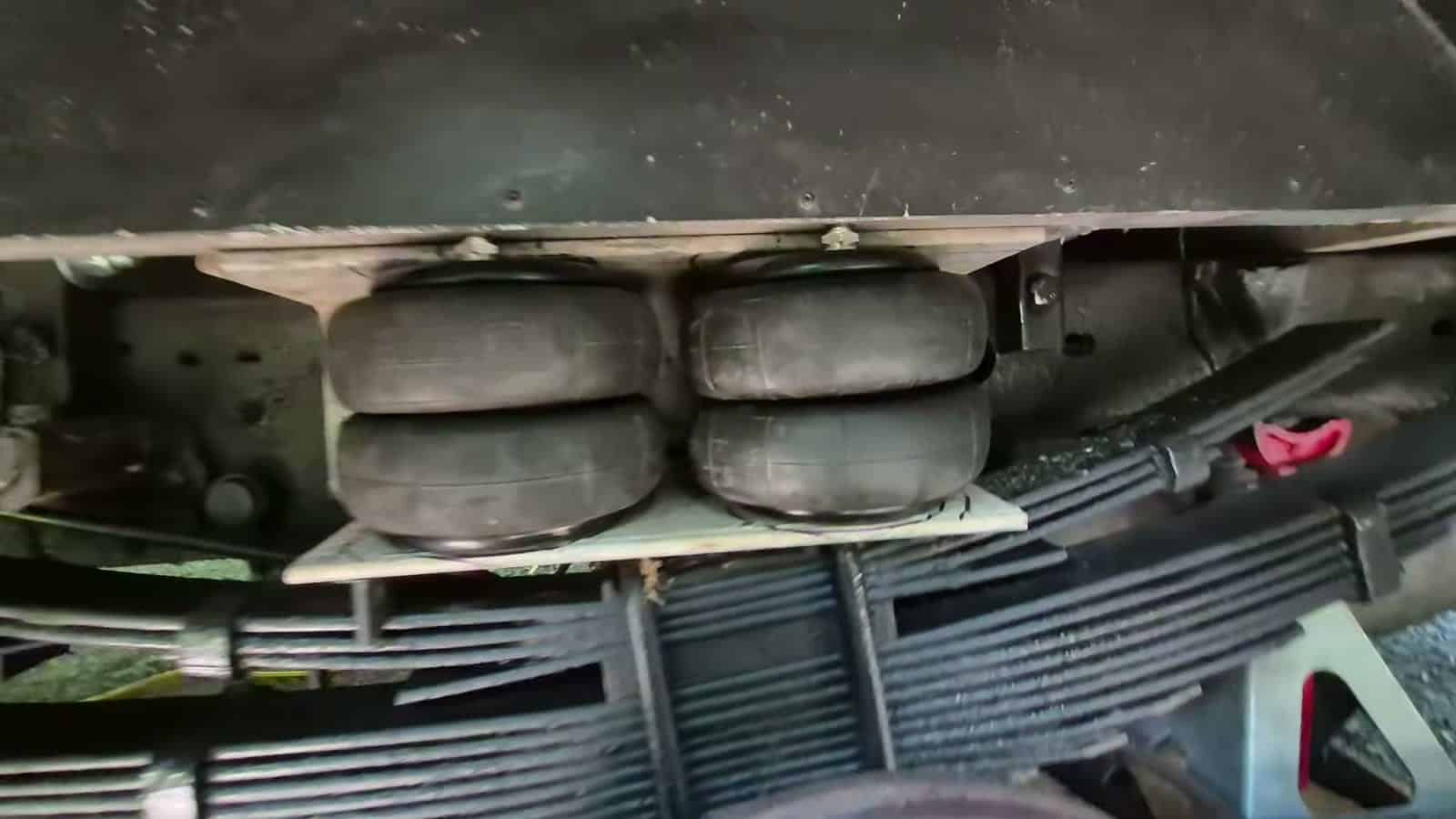
Image via Shaughn/YouTube
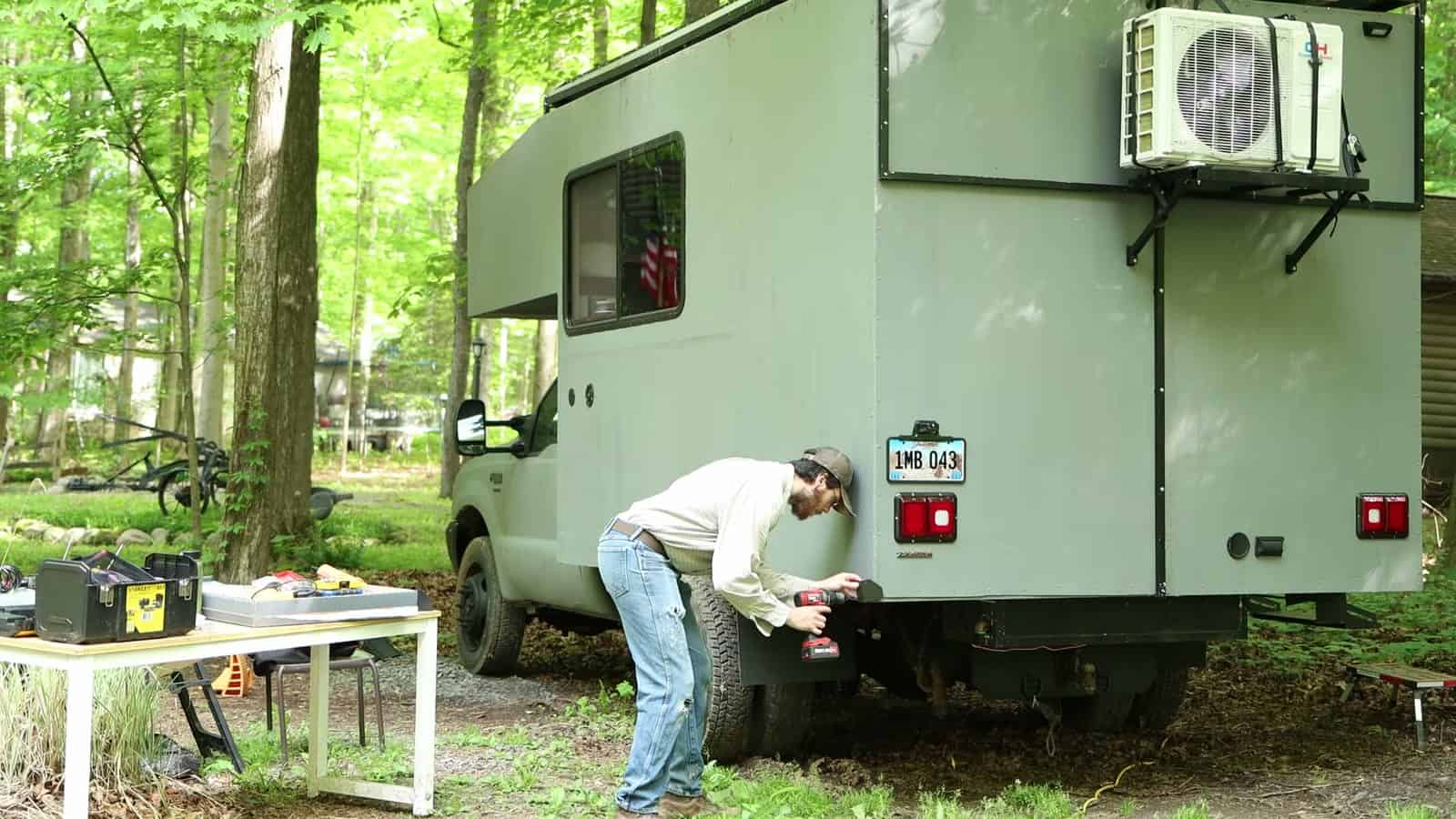
Image via Shaughn/YouTube
The Road Toward Alaska
Shaughn calls the project his version of Dick Proenneke’s story in One Man’s Wilderness, “a cabin on wheels.” The video ends 1,672 days after he bought the truck, as he heads west through mountain country. He is honest that he didn’t reach Alaska this time because the money ran out again. He now plans to drive north in spring 2027 and document backcountry life along the way.
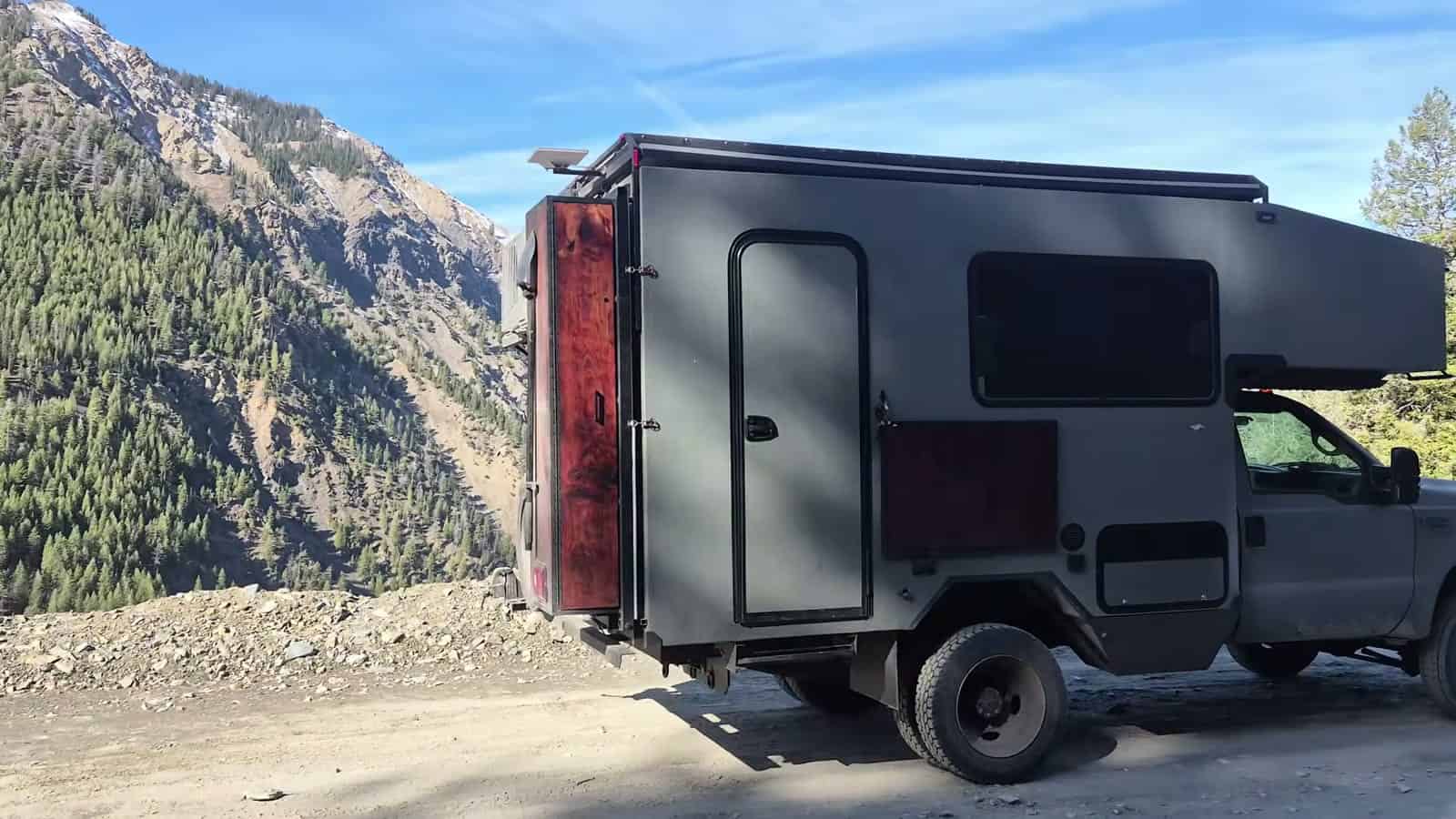
Image via Shaughn/YouTube
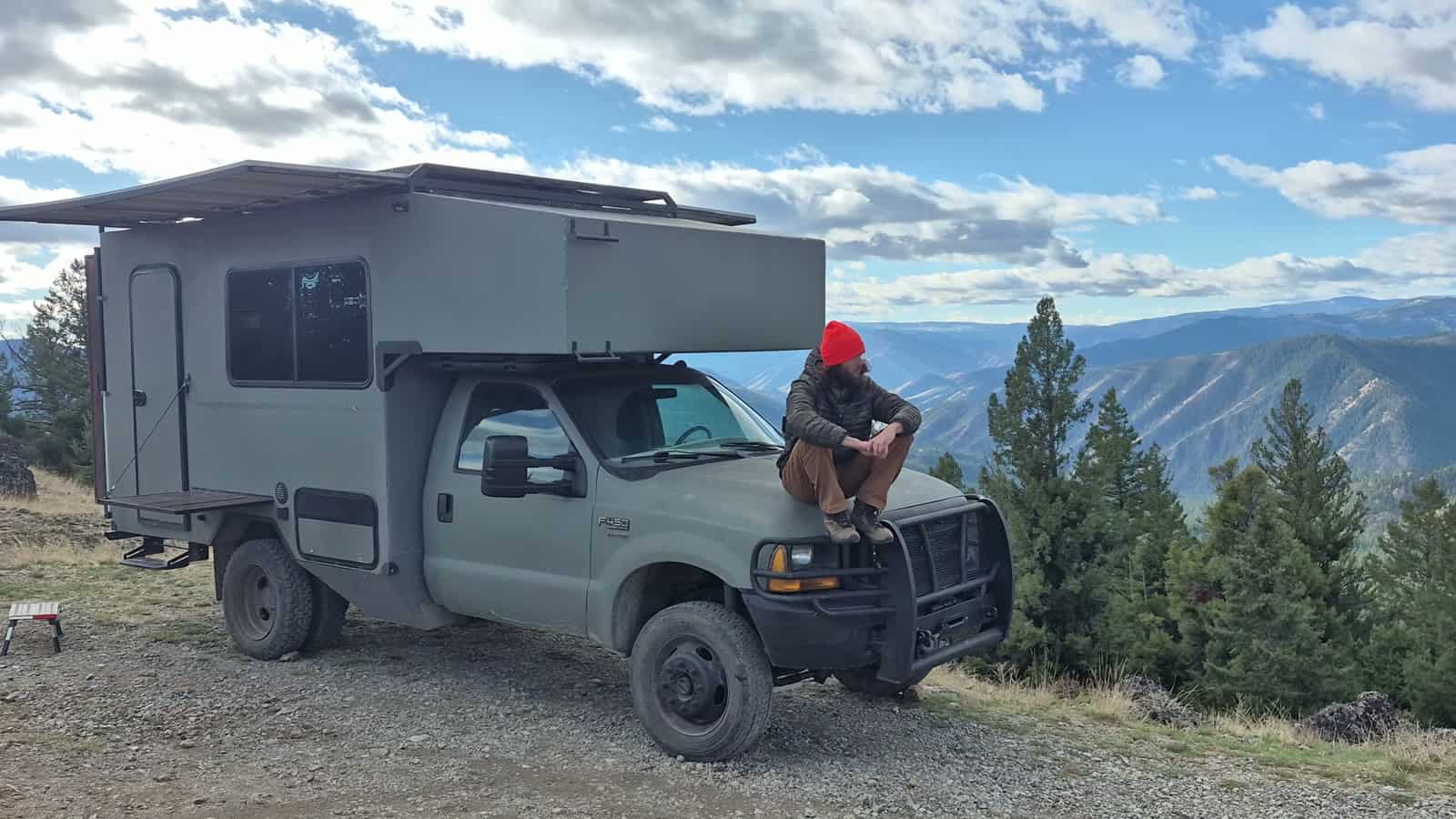
Image via Shaughn/YouTube
Design Details
- Base vehicle: 1999 Ford F-450 4×4, 7.3L diesel, about 65,000 miles when bought
- Truck cost: $11,000 (dump bed resold for $1,300)
- Frame: Welded aluminum, built by the owner
- Walls: Aluminum skin, 1.5″ rigid foam, 1/4″ maple ply, glued and riveted
- Exterior finish: Roll-on bed liner over primer and paint
- Solar: About 2,800 watts, expandable
- Batteries: 14 kWh lithium iron phosphate (16 cells)
- Inverter: 48V all-in-one, 6,500W continuous
- Water: 100-gallon tank, reverse pump and filter chain to refill from natural sources, 0.01-micron drinking filter
- Climate: Mini-split heat pump for heating and cooling
- Kitchen: Workstation sink, portable induction, full-size chest freezer
- Automation: Home Assistant, runs offline
- Suspension: Four-corner airbag system, upgraded sway bar
- Build time: About four years, including a two-year pause
Lessons from This Truck Camper Build
- Inspect the chassis before you build the house. Shaughn’s biggest regret was focusing on the living space while the frame and seals underneath needed work.
- Do a test panel first. One unexpected plastic film nearly ruined every wall. A small glue-up test catches problems like that early.
- Size solar to your daily use. Energy in has to match energy out. Roof area, not price, usually sets the limit, and that’s why the panels fold out.
- Plan the wiring and plumbing before you buy anything. Because everything was mapped ahead of time, the systems went in without tearing anything apart.
- Automation is cheap. Free software and a few sensors protect the tanks and batteries while you’re away from the rig.
Learn More
Video Tour
Highlights
- 1999 Ford F-450 dump truck turned into an off-grid truck camper
- Owner-welded aluminum frame and insulated sandwich wall panels
- About 2,800W of expandable solar and a 14 kWh lithium bank
- 100-gallon water tank that can refill from a stream
- Home Assistant automation that works without internet
- Four-corner airbag suspension for leveling and stability
Related Stories
- Sundown Station: Brayden Griffith’s DIY Truck Camper
- He Turned a 10-Ton Semi-Truck Into an Off-Grid Tiny House
- Their Ultimate Overlanding Truck Camper
Disclosure: This post may contain affiliate links. If you purchase through one of our links, we may earn a commission at no additional cost to you.


Alex
Latest posts by Alex (see all)
- He Turned a 1999 Dump Truck into an Off-Grid Truck Camper Built for Alaska - November 20, 2026
- The Treasure Chest: A New AWD Sprinter 144 Camper Van with Maple Finishes and a Real Freezer - November 20, 2026
- Sleep in a Covered Wagon on the Applegate River, Where Oregon’s Pioneer Trails Once Ran - November 20, 2026






Join the Conversation
No comments yet. Be the first to join the conversation.