
Disclosure: This post may contain affiliate links. If you purchase through one of our links, we may earn a commission at no additional cost to you.
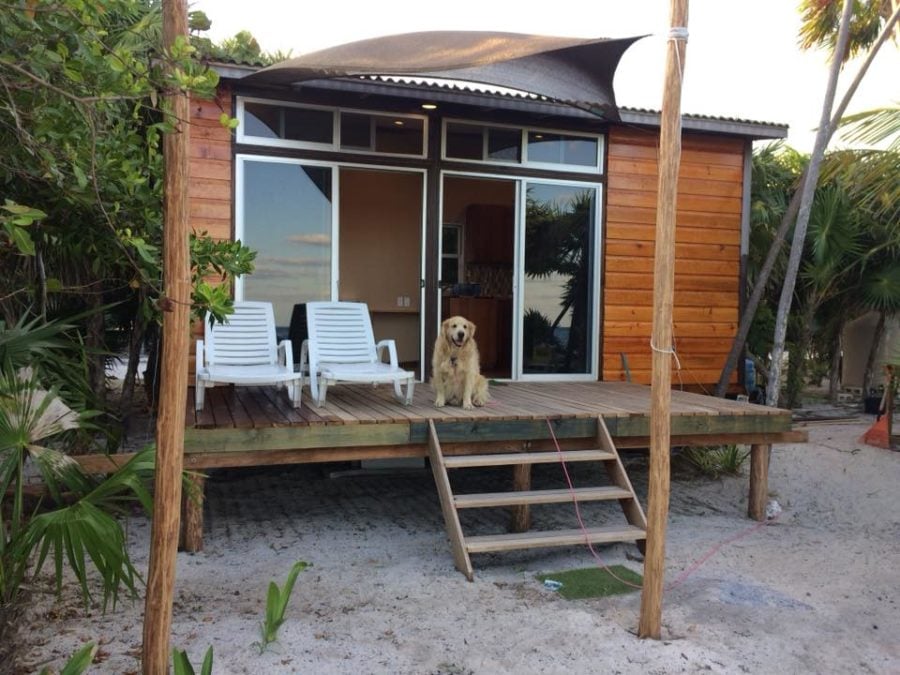
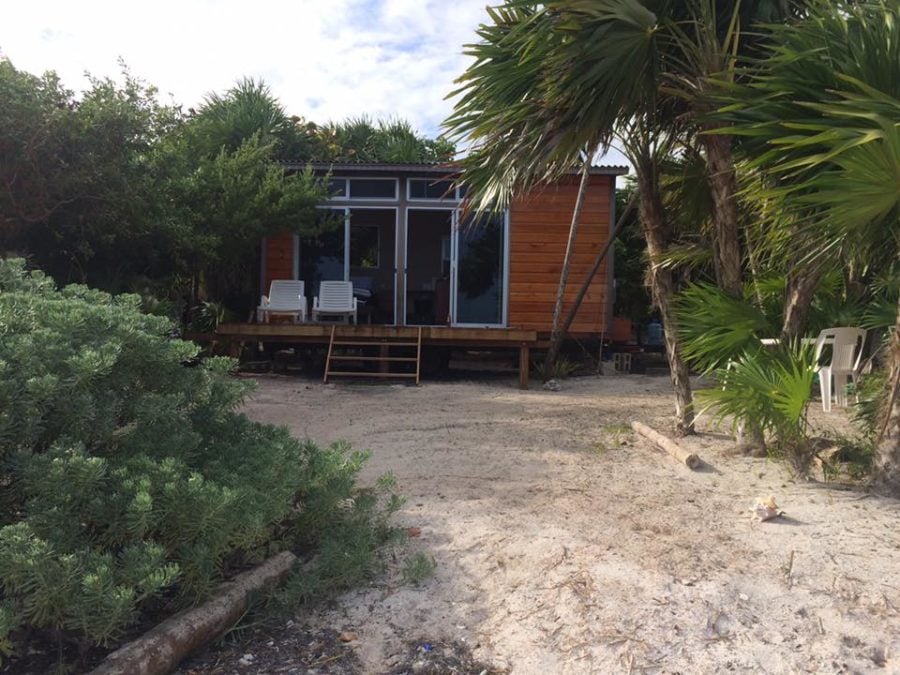
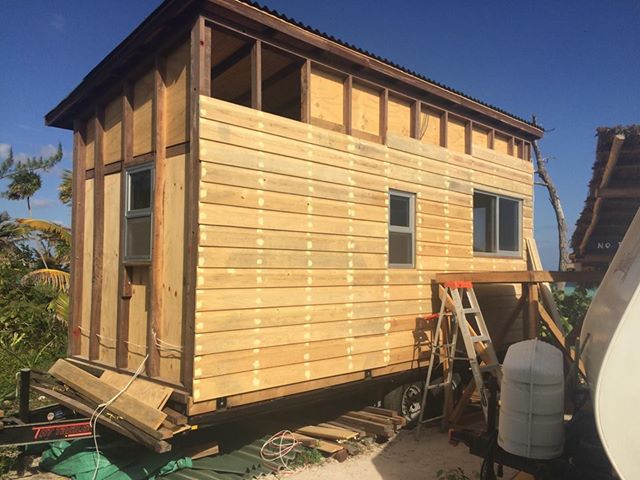
David Gauci built this little wood-sided house on the beach in Mahahual, a small town on Mexico’s Caribbean coast in Quintana Roo. He and his wife, Peggy, parked a 22-foot trailer just north of it to live in while they built, and the house itself sits on a trailer frame so it can be pulled back from the beach.
It runs completely off the grid on solar power, with a composting toilet and rainwater collection, and nearly everything inside is built from a dense local hardwood called zapote. David shared photos and the story of the build with us, along with a look at the boat the couple call home the rest of the year.
A Solar-Powered Tiny House on the Beach in Mahahual
Images via David Gauci
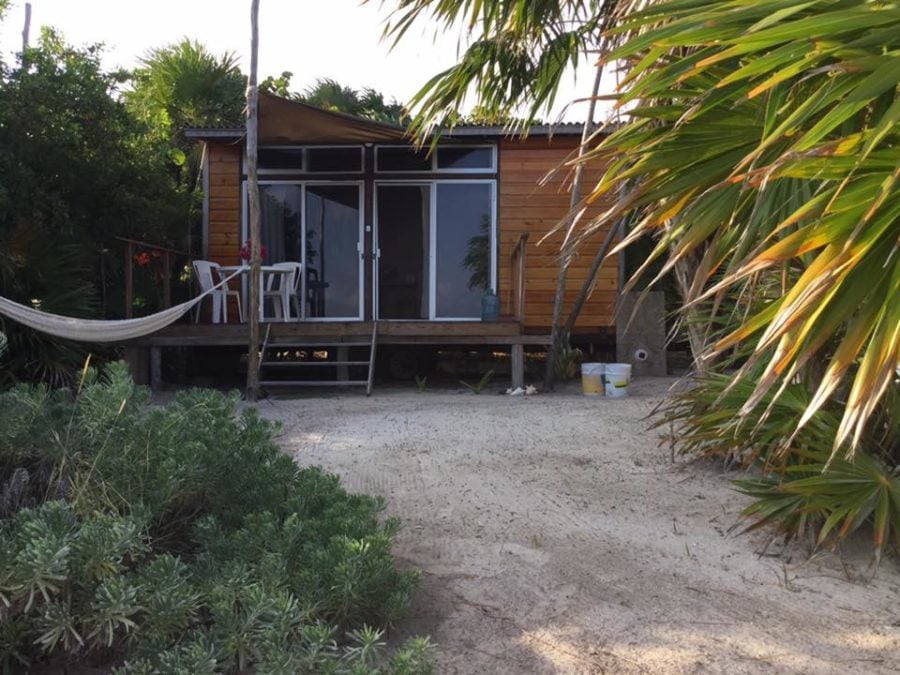
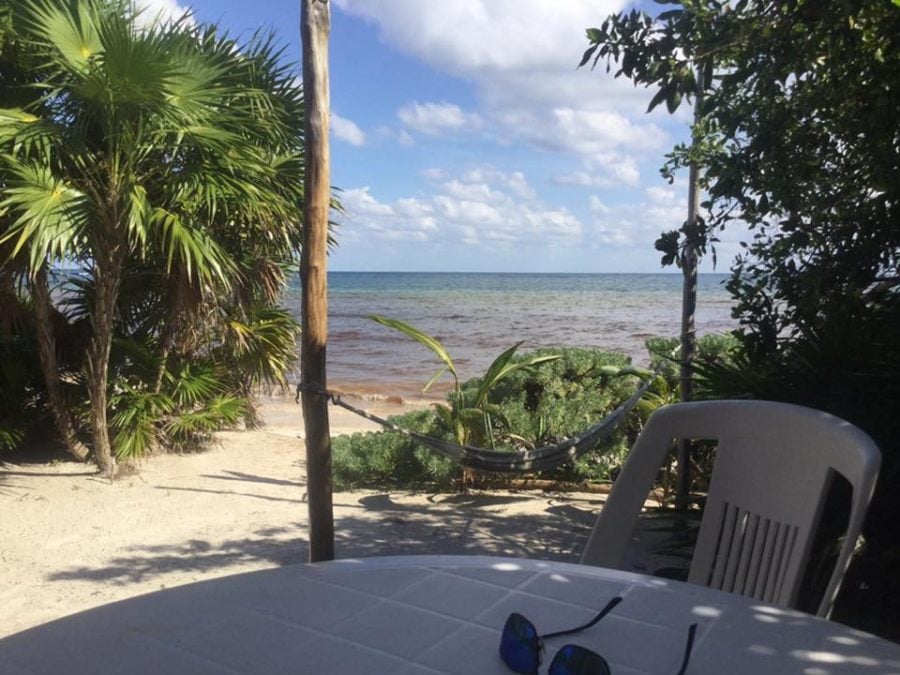
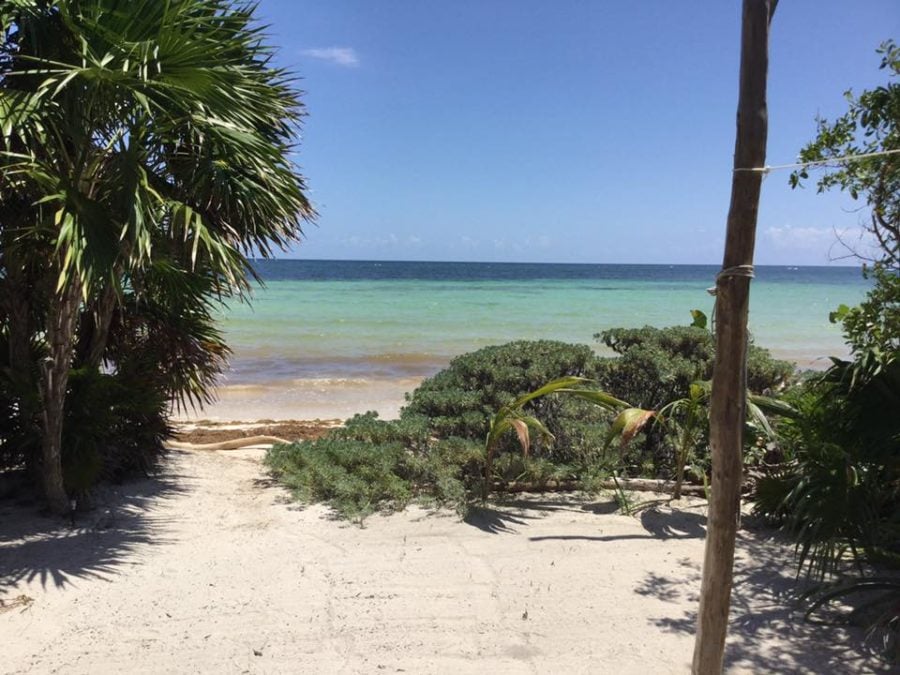
The house faces the water across a strip of sand and beach scrub, with sliding glass doors that open the main room to the breeze. A covered deck runs across the front. The couple rented it to guests in the winter season, from mid-November to mid-April, and moved in for a “mini-vacation” themselves whenever it was empty.
Handmade Hardwood Inside
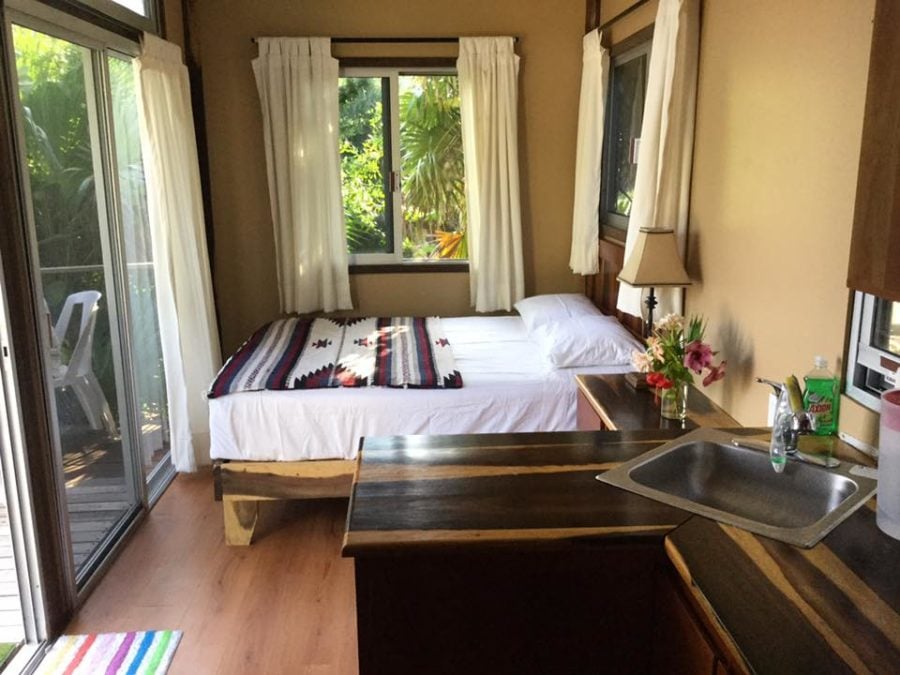
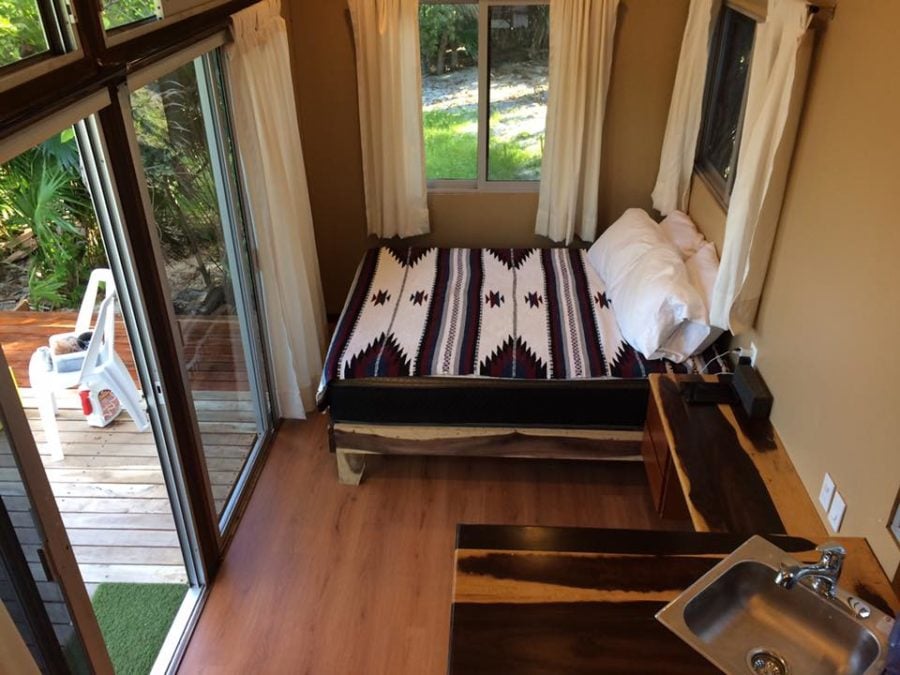
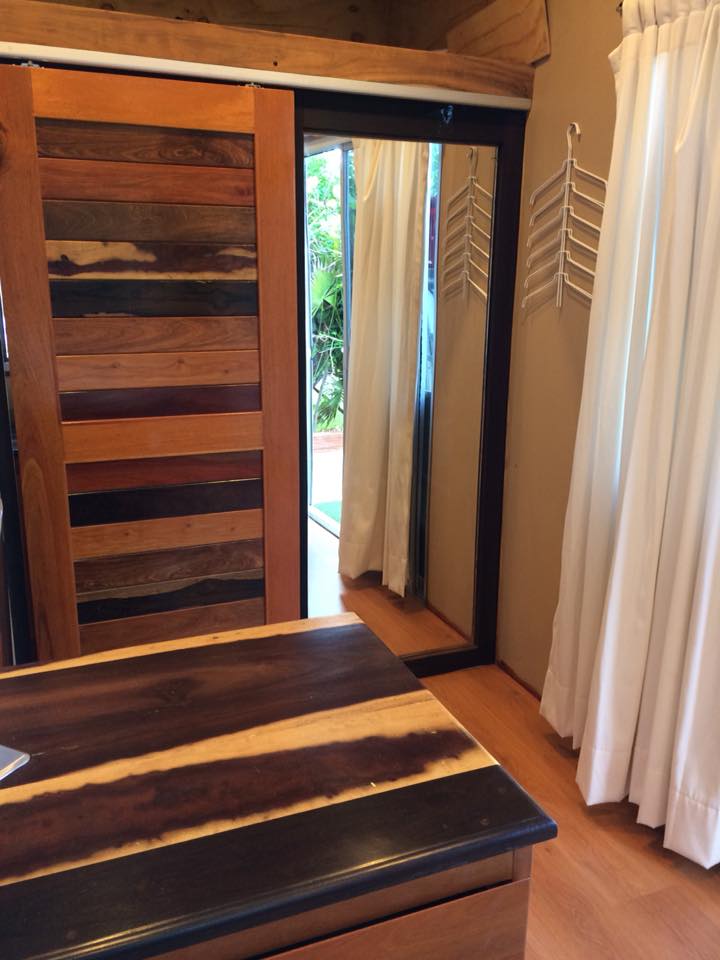
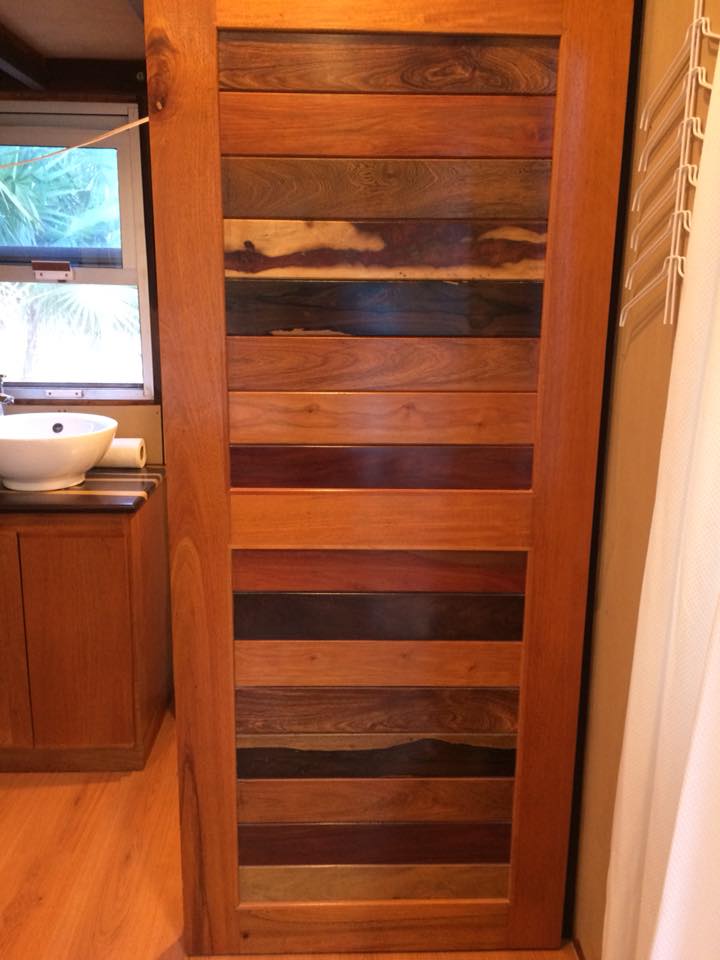
Inside, the walls, doors, cabinets, and counters are almost all solid wood. David told us the woodwork was a salute to his dad, who always had a wood shop downstairs.
I’m not a pro by any means and I had a bunch of re-do’s on this one but very happy with the results. Still a work in progress. I’m working on a really cool swinging ladder in solid mahogany. And still lots of cubbies to make. Fun fun!
Images via David Gauci
Kitchen and Bathroom
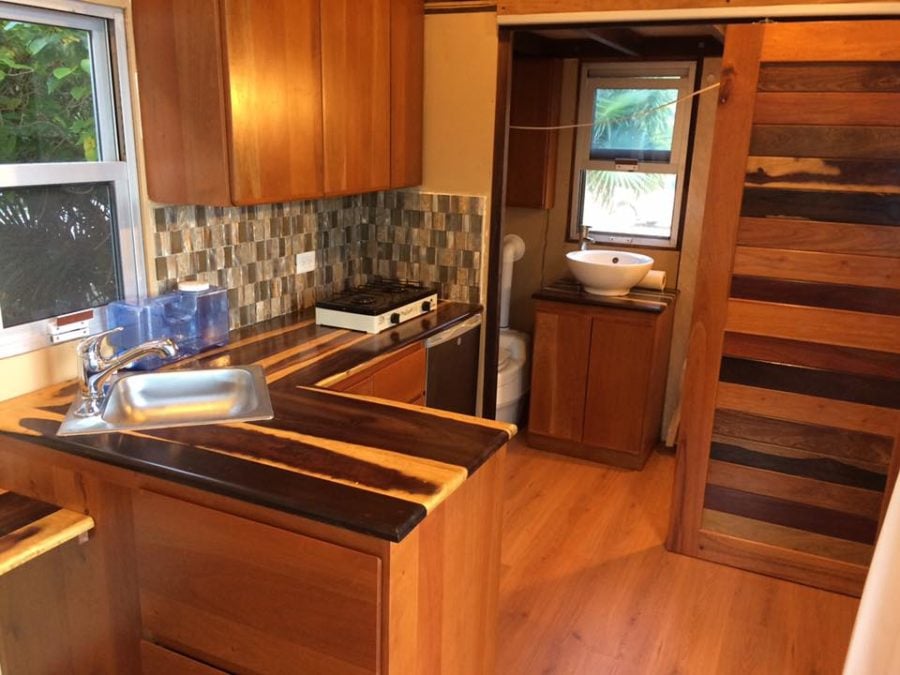
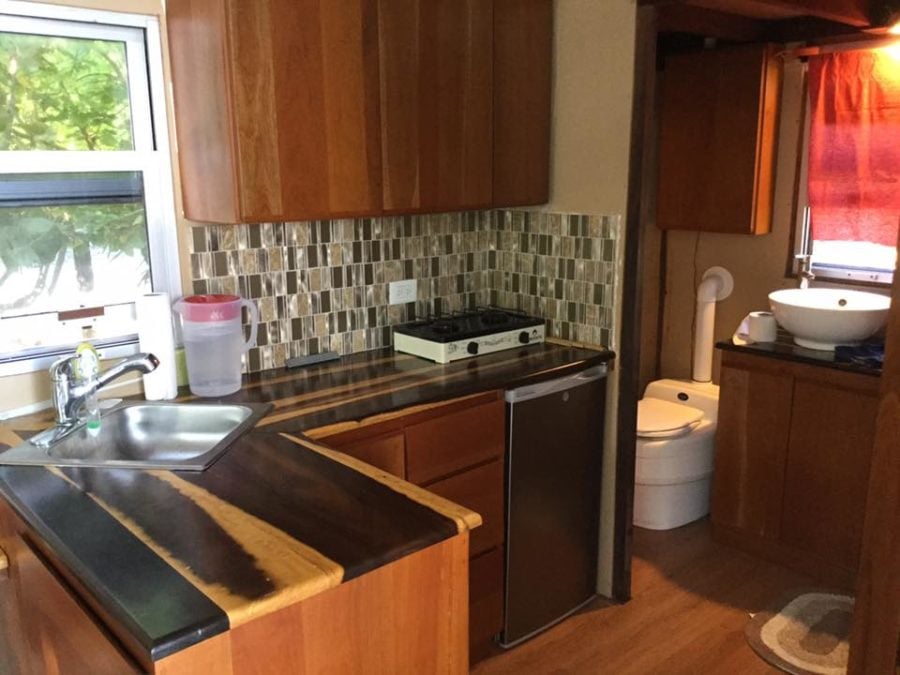
The kitchen packs a cooktop, sink, and cabinets into one corner, with dark hardwood counters and a tile backsplash. The bathroom has a vessel sink, a small shower with a wood floor, and a Separett composting toilet, which avoids the need for a septic system on a remote beach.
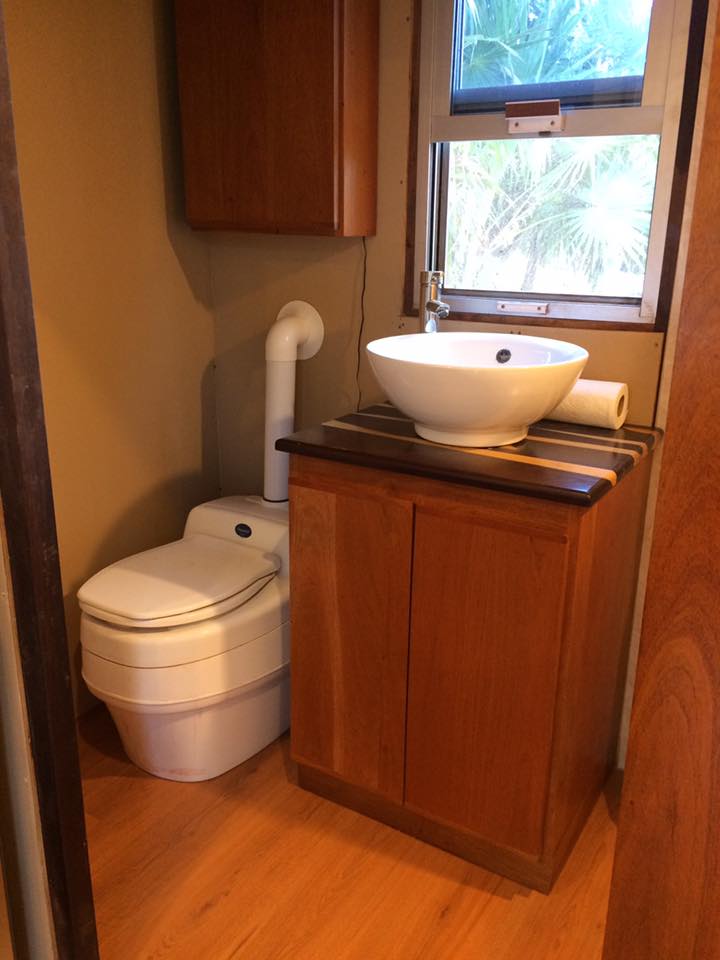
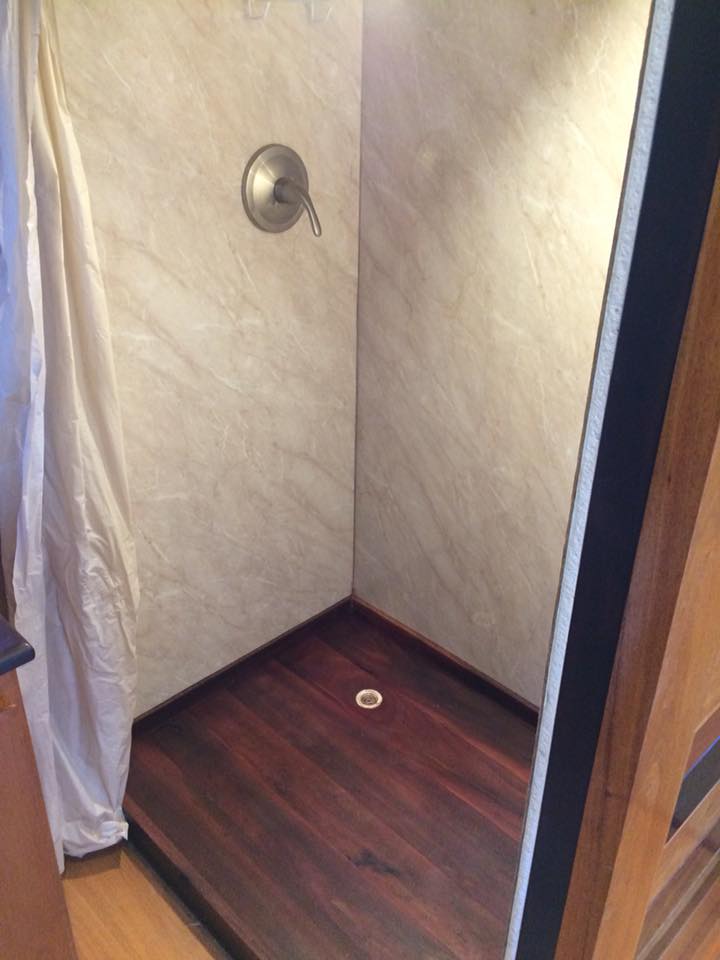
Images via David Gauci
Off-Grid Power and Water
There’s no grid power here, so the house makes its own. David described the setup:
I should also mention that it is also pretty self-sufficient with 3X 300W panels on the roof, a nice little Outback Inverter/controller charging 4 Trojan T-105 batteries running at 48 Volts and a Separett composting toilet. It also collects rainwater to a 450 liter that I can shuttle back into a 2500 liter main cistern as needed.
He also explained how the house handles the region’s storm season:
We take everything off the beach during hurricane season and park it close to 2 big walls. Though, when we don’t have guests in the Tiny Home, we move into it for a mini-vacation. So rentals are only from Mid November to Mid April on Airbnb.
Images via David Gauci
The View From the Deck
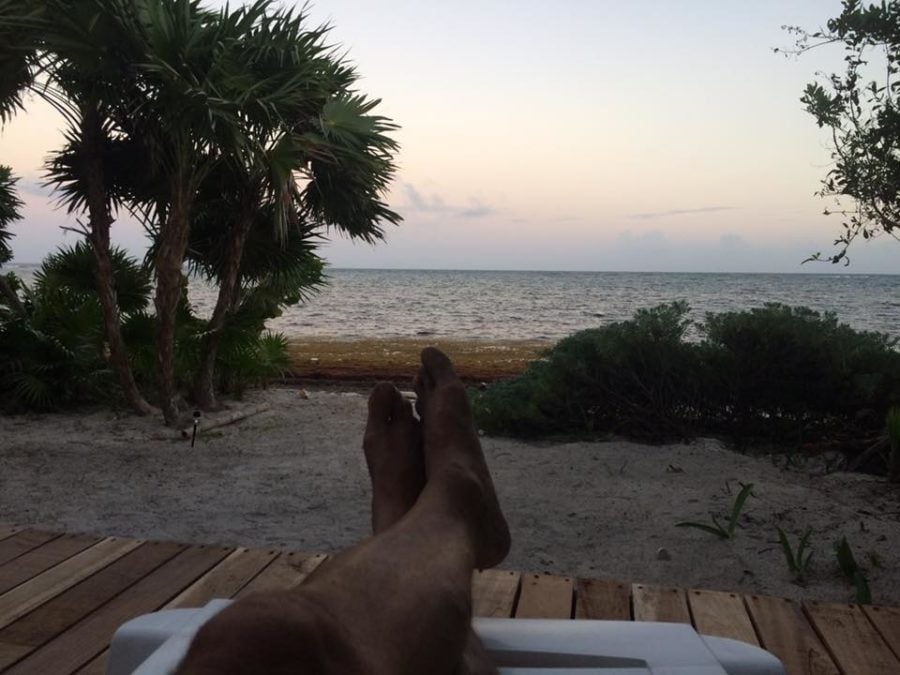
This is what all that work is for: palm trees, white sand, and the Caribbean a few steps from the door.
Images via David Gauci
Building With Zapote, a Wood That Bends Nails
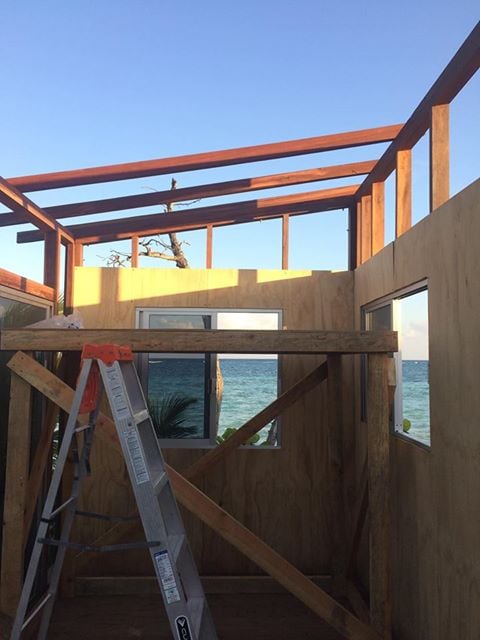
Getting materials was the hardest part. The nearest big hardware store was hours away, so David went to a local mill in Noh-Bec, a Maya community inland, and ordered zapote, a hardwood that resists insects and rot.
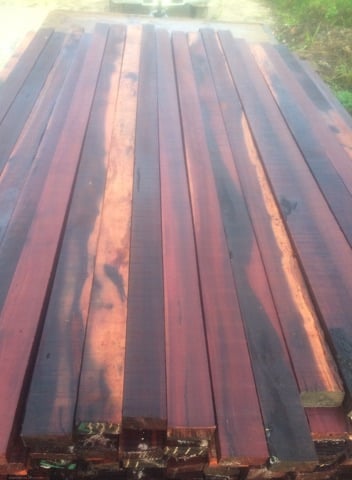
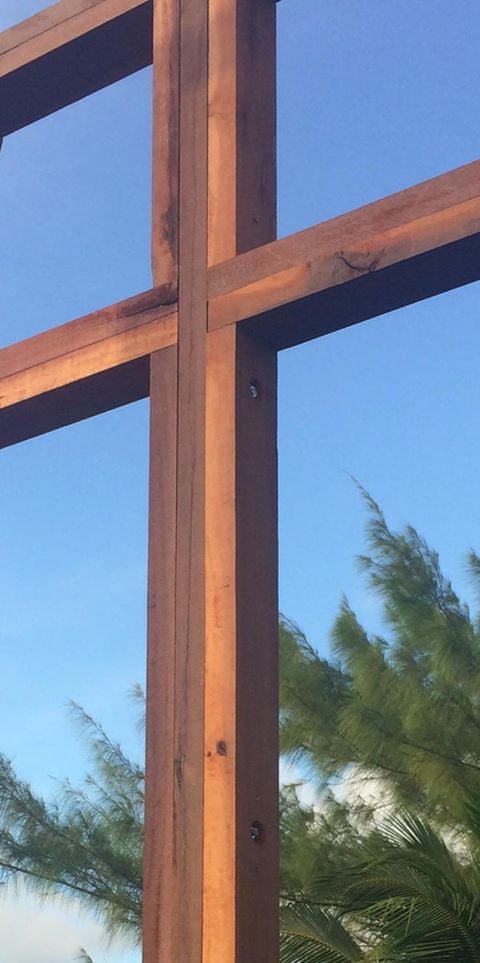
It was my second build off the grid. Tho there is a Home Depot 3 hours away, few materials were bought there. Most wood came from a local mill where you go look at logs and tell them what you want. Problem is, they don’t speak Spanish in Noh-Bec, they speak Mayan. Still we made it happen and ordered a few hundred “2X4’s in Zapote, a very dense hardwood that is impervious to insects and rot. It’s so hard that it bends a nail like a toothpick so every home needs to be tediously pre-drilled and oiled before trying to set a screw.
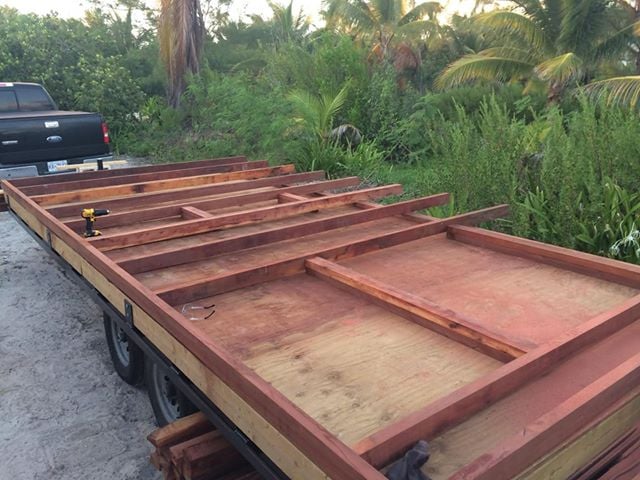
So we go back a week later to pick up the Zapote and it’s not even close to consistent sized 2x4x10’s, in fact, every piece is way over. And OMG, each 10’ piece weighs in at about 60 lbs. it actually sinks like a rock!!! So I end up driving the wood back to Noh-Bec to discuss and they finally got it across to us that they supply the “stock” to make 2×4’s and that w need to take it to the planer to plane to desired dimension. So we do and a week later, this is what I picked up.
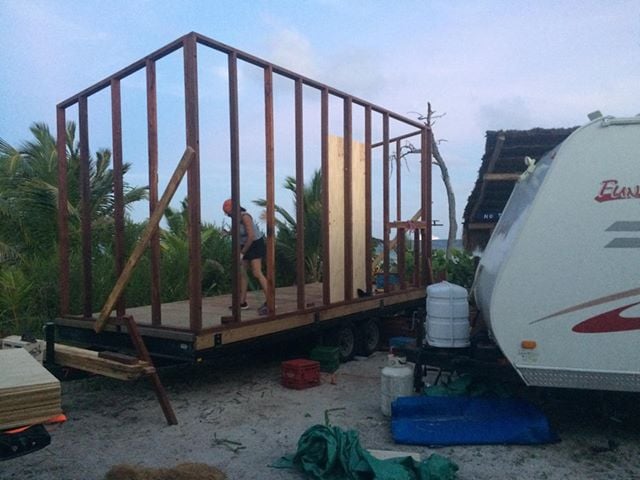
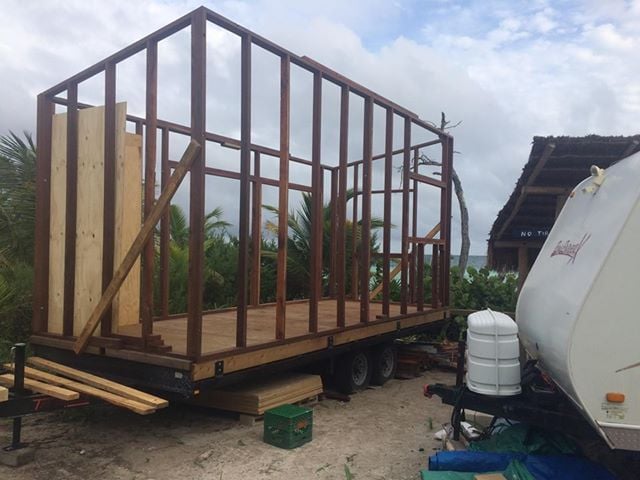
Images via David Gauci
Here’s the shell coming together, from the mill to framing and siding:
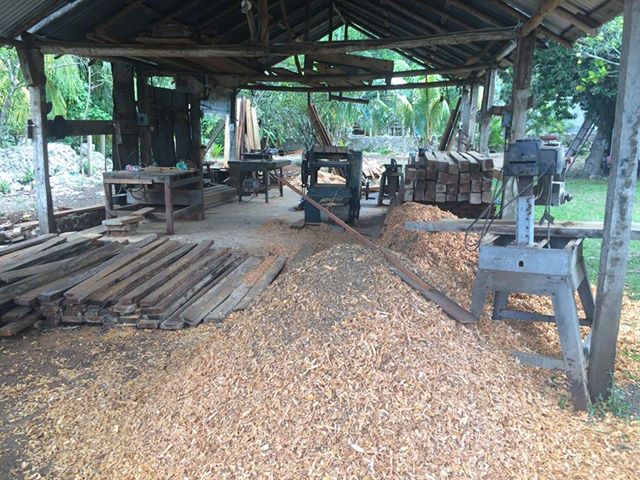
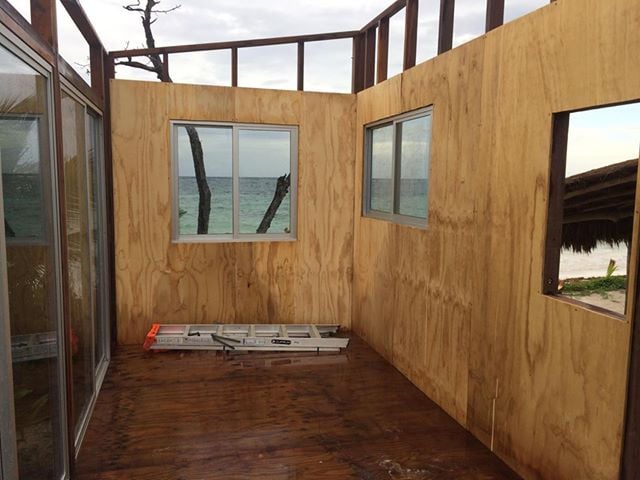
Images via David Gauci
His First Off-Grid Build
This is David’s second off-grid build. When we asked about the first one, he told us:
Yep, first one was a 14’ X 20’ shed kit that we built on 5 acres of oceanfront on Gambier Island just north of Vancouver in Howe Sound. Everything had to be brought over from the mainland by boat, no electricity, no services. First year, I was determined to do it “old school” using hand tools only. That was dumb. Second season, I refused to do more without a generator and things sped up nicely. We eventually added a kitchen and big deck off the front. It was still very basic but had an incredible view of Howe Sound.
The Rest of the Year: Life on a Boat
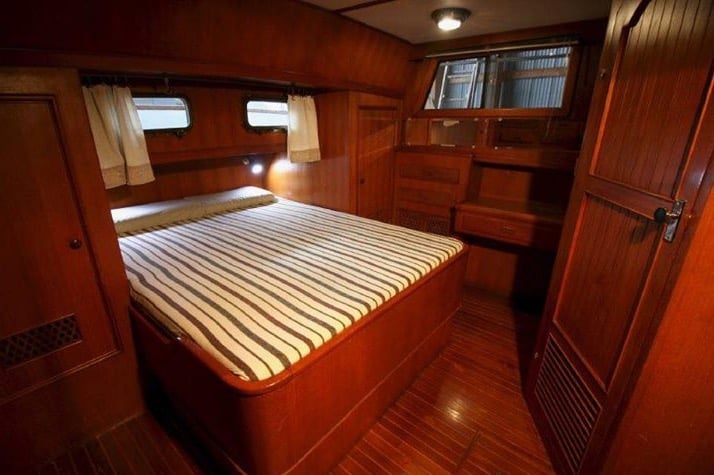
David works summers as a whale-watching boat captain and guide in Campbell River, British Columbia. In Canada, the couple’s home is a 40-foot trawler named Bear Paw, which lets them explore the wilderness of the Pacific Northwest. Here’s a look inside the boat and at the whales David sees at work.
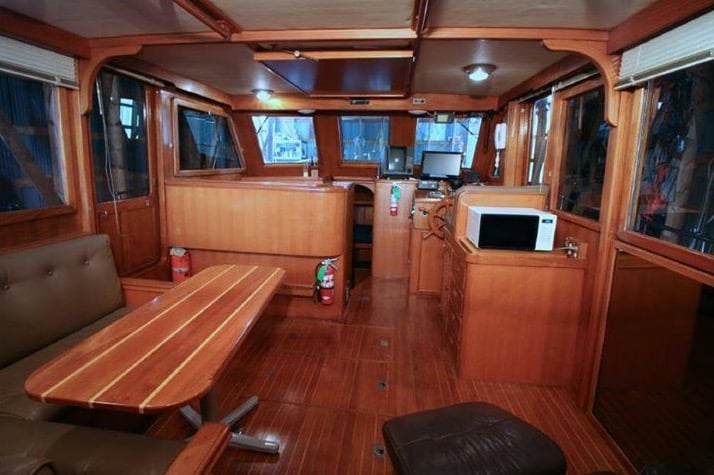
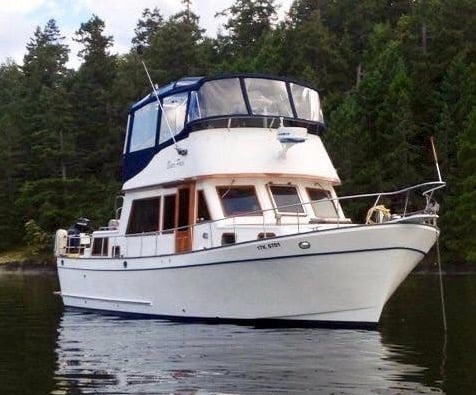
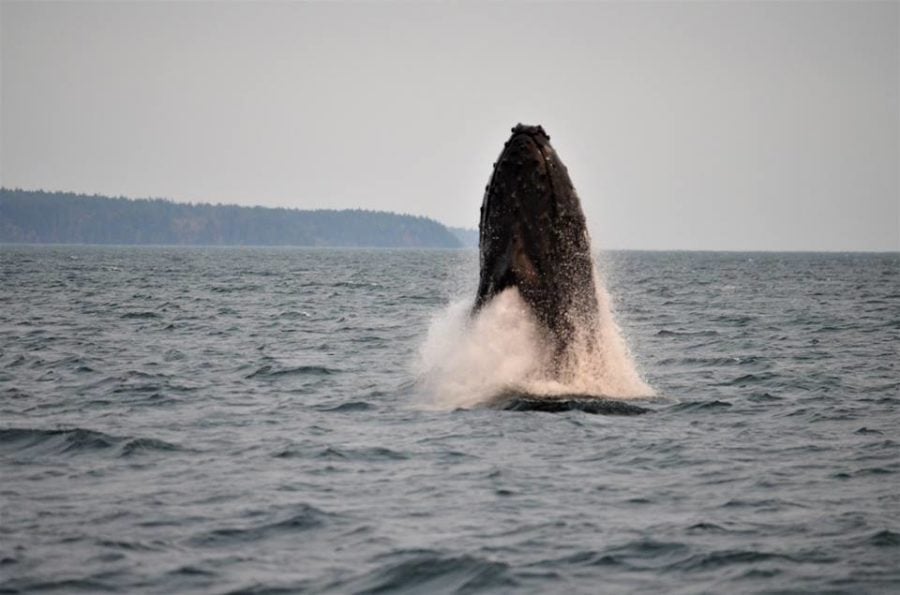
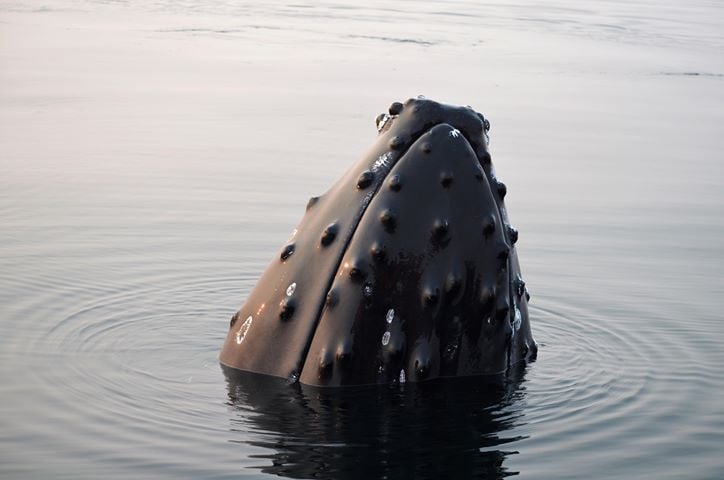
Images via David Gauci
Can You Stay Here?
When David shared his story, the house was rented on Airbnb during the winter season. That listing is no longer active (checked October 24, 2026).
Design Details
- Location: Mahahual, Quintana Roo, Mexico (Caribbean coast)
- Builder: David Gauci (owner-built, his second off-grid build)
- Foundation: trailer frame, so it can be moved off the beach
- Framing and trim: zapote hardwood from a mill in Noh-Bec
- Solar: three 300-watt panels, Outback inverter/charge controller, four Trojan T-105 batteries at 48 volts
- Water: rainwater catchment into a 450-liter tank, transferred to a 2,500-liter cistern
- Toilet: Separett composting toilet
Highlights
- Owner-built tiny house steps from the Caribbean
- Hardwood interior built from local zapote
- 900 watts of solar with a 48-volt battery bank
- Composting toilet and rainwater collection
- Moves off the beach for hurricane season
Related Stories
- Bamboo Tube Vacation Cabin on Mexico Beach
- Playa Viva Beachfront Treehouse in Zihuatanejo, Mexico
- 938 Sq. Ft. Off-Grid Beach Cottage
Our big thanks to David Gauci for sharing his story and photos with us!
Would you build your own little house on the beach if it meant milling your own lumber? Tell us in the comments!
If you enjoyed this you’ll LOVE our Free Daily Tiny House Newsletter with even more!
You can also join our Small House Newsletter!
Also, try our Tiny Houses For Sale Newsletter! Thank you!
More Like This: Tiny Houses | Off-Grid Living | DIY | Interviews & Stories
Disclosure: This post may contain affiliate links. If you purchase through one of our links, we may earn a commission at no additional cost to you.


Alex
Latest posts by Alex (see all)
- He Built a Solar-Powered Tiny House on the Beach in Mahahual, Mexico - November 19, 2026
- Boho Bungalow: A Two-Loft Modern Tiny Home in the Woods of Mentone, Alabama - November 19, 2026
- Designing a Tiny or Small Home for Two (or More) - November 19, 2026






Join the Conversation
No comments yet. Be the first to join the conversation.