
Disclosure: This post may contain affiliate links. If you purchase through one of our links, we may earn a commission at no additional cost to you.
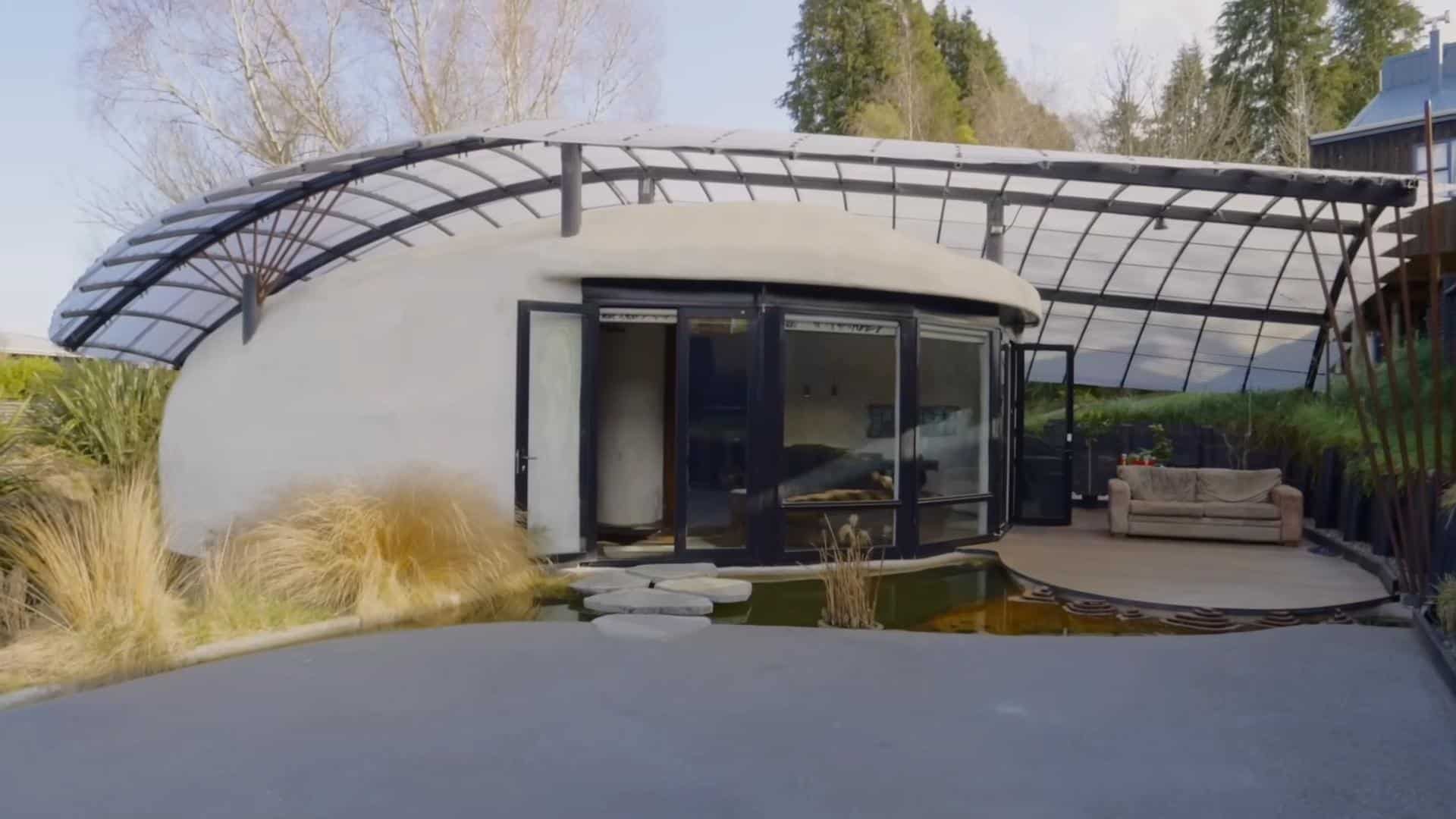
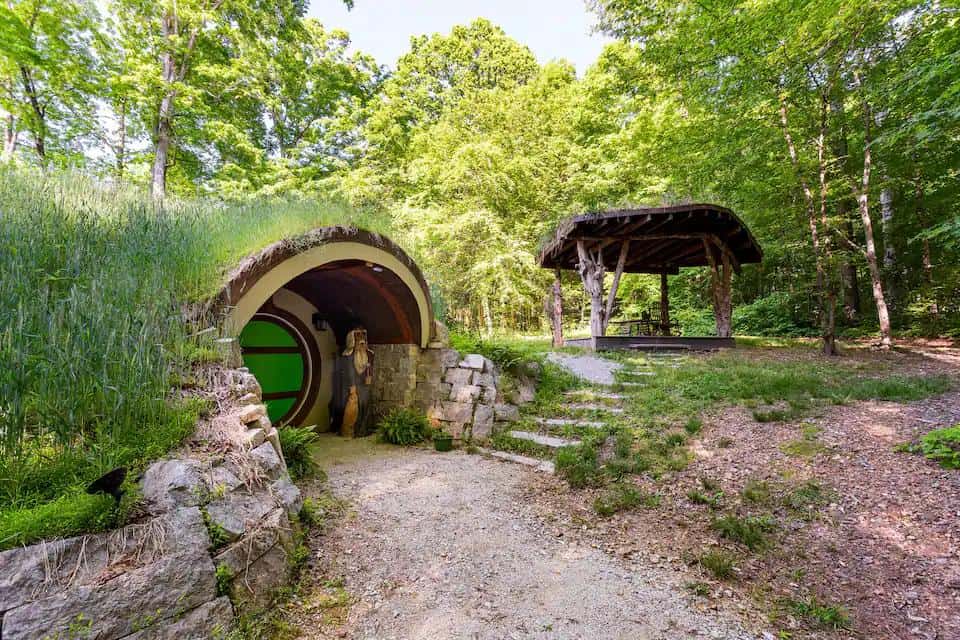
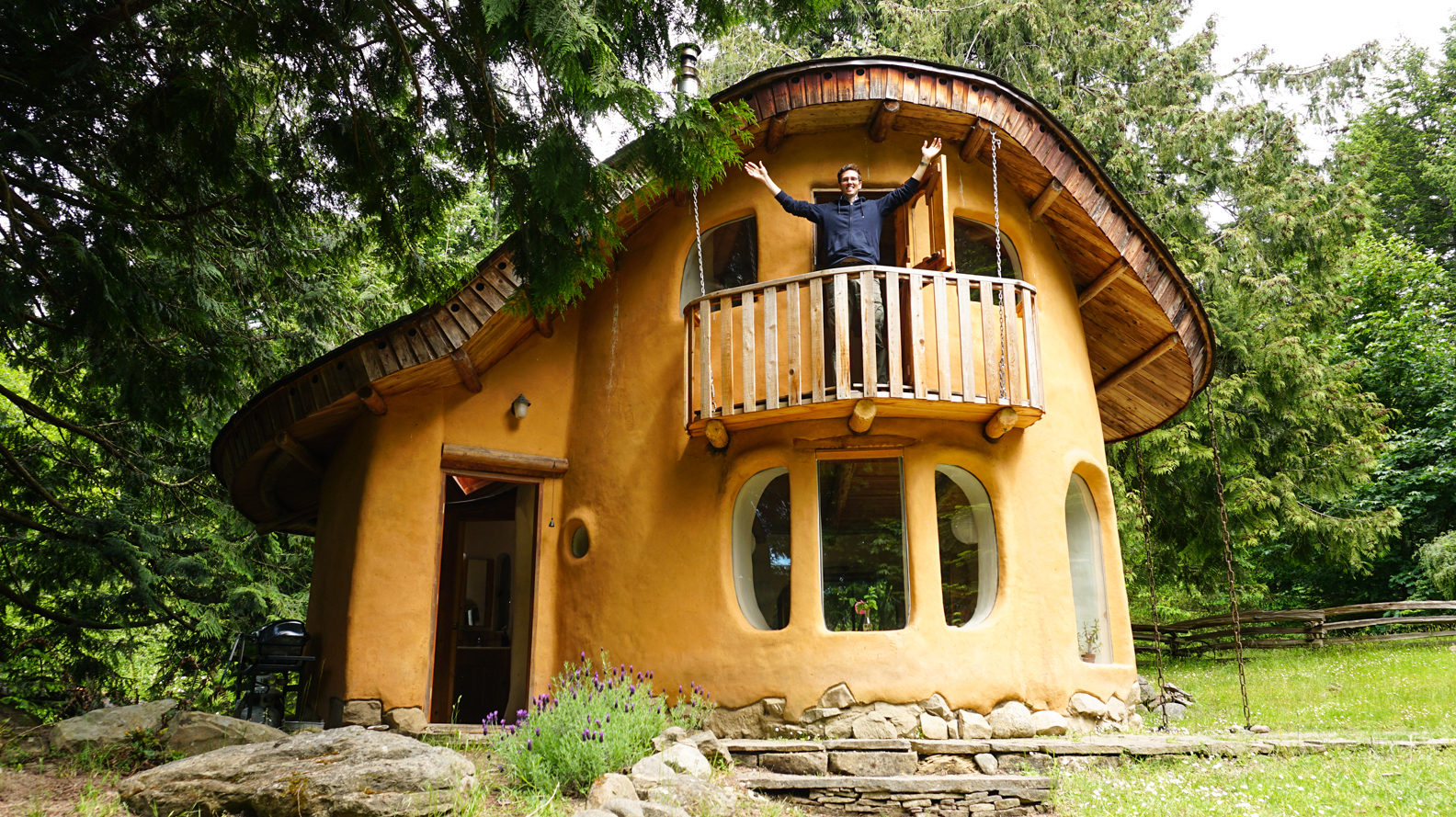
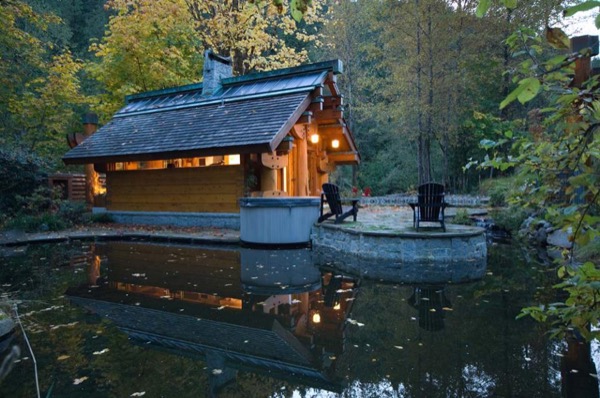
This is the Wobbly Hobbit—a 300-square-foot tiny house studio built by Brent using a mix of cob, stick frame, and ICF (insulated concrete forms). The pentagon-shaped structure features a green roof, masonry wood stove, homemade wine barrel furniture, and a separate shed with shower and composting toilet.
Built in British Columbia, Canada over six years with help from friends and professionals, the total cost came to approximately $50,000 CAD ($35,000 USD) including appliances. The studio also collects rainwater—abundant in the temperate rainforest setting.
Pentagon-Shaped Hybrid Construction
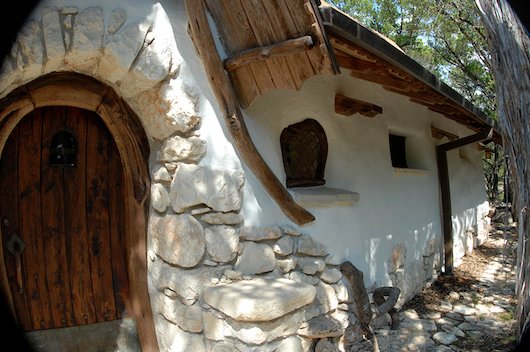
The Wobbly Hobbit combines multiple building techniques: cob (clay, sand, and straw), stick framing, and insulated concrete forms. This hybrid approach allowed Brent to use each method where it works best.

Image © Exploring Alternatives
Built Around Existing Trees
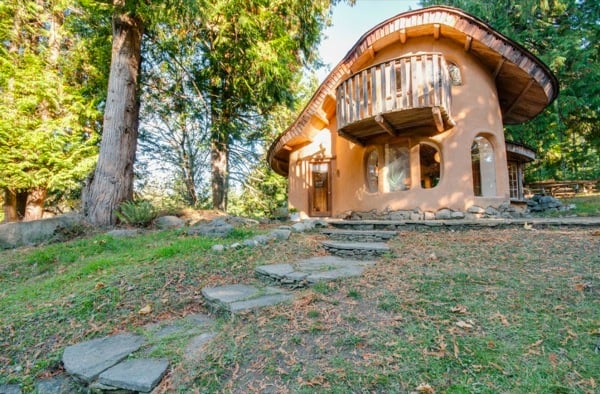
Brent preserved the natural environment by building around a large cedar tree rather than cutting it down. He also transplanted ground plants onto the green roof once construction was complete.
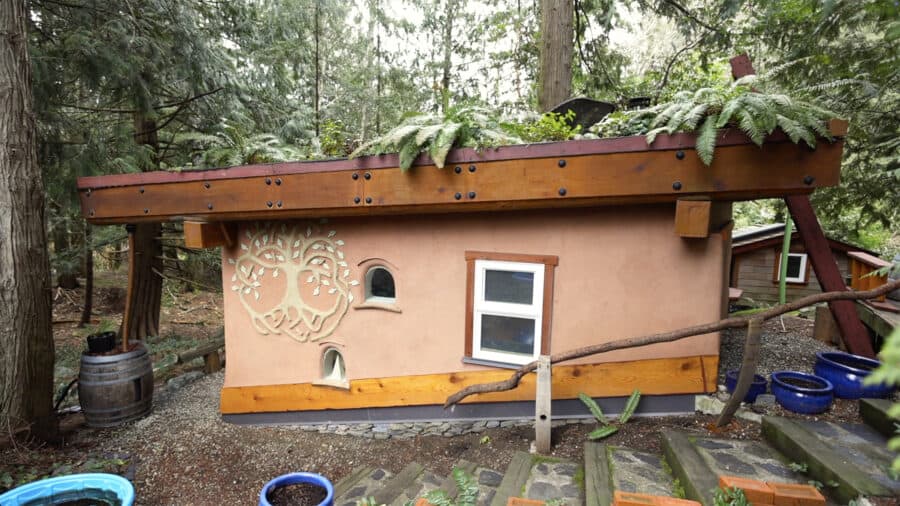
Image © Exploring Alternatives
Green Roof Blends with Rainforest Setting
The living roof helps the structure blend into its rainforest surroundings while providing insulation and managing rainwater. The collected rainwater supplements the studio’s water supply.
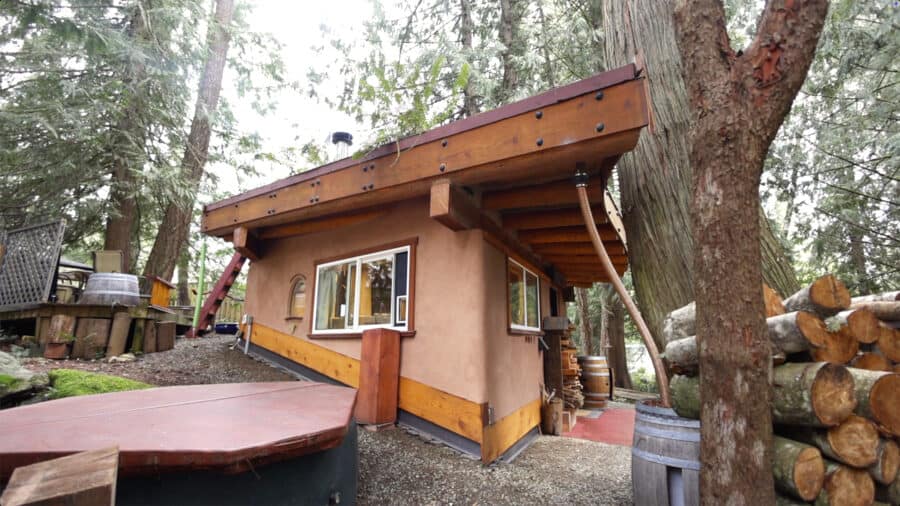
Image © Exploring Alternatives
Kitchen with Wine Barrel Cabinetry
Inside, the kitchen features self-built wine barrel cabinetry, a fridge, toaster oven, sink, and water heater. A masonry stove heats the thermal mass of a cob bench, radiating warmth throughout the space.
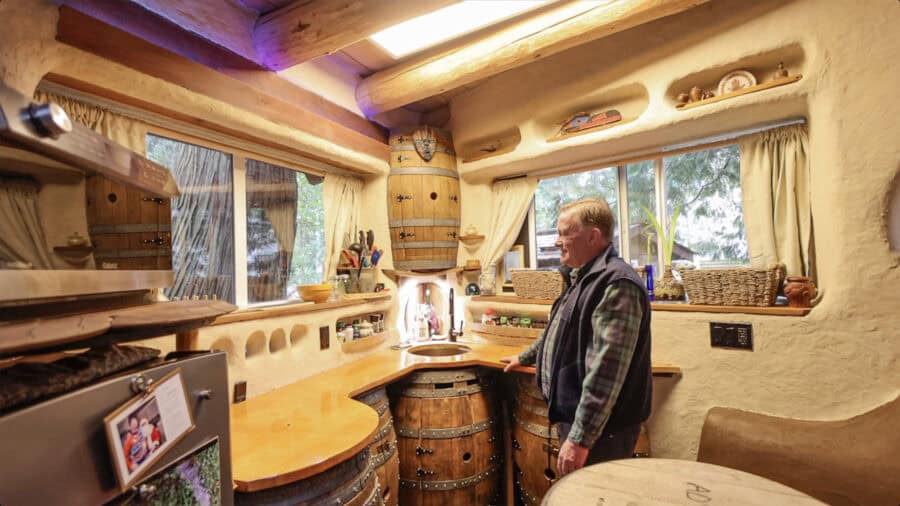
Image © Exploring Alternatives
Living and Sleeping Area
The cozy living room offers ample seating, while the bed features a wine-barrel headboard and transforming standing desk workspace.
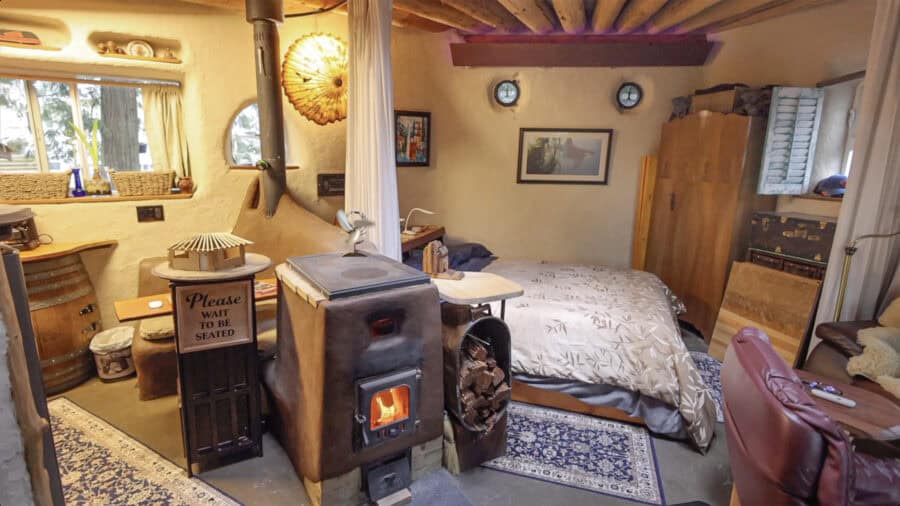
Image © Exploring Alternatives
Video Tour
Watch the full tour from Exploring Alternatives:
Design Details
- Name: Wobbly Hobbit
- Size: 300 square feet
- Shape: Pentagon
- Location: British Columbia, Canada (rainforest setting)
- Cost: $50,000 CAD (~$35,000 USD) including appliances
- Build Time: 6 years
- Construction: Hybrid cob, stick frame, and ICF
- Roof: Living green roof
- Heating: Masonry wood stove with cob bench thermal mass
- Water: Rainwater collection
- Bathroom: Separate shed with shower and composting toilet
- Special Features: Wine barrel furniture, built around existing cedar tree
- Professional Help: Engineer (Tim Krahn) and alternative builder (Pat Amos)
Lessons from This Natural Building Project
The Wobbly Hobbit offers insights for anyone interested in alternative building methods:
- Hybrid construction uses each method where it excels — Combining cob, timber, and ICF allows for creative problem-solving
- Building around trees preserves the landscape — Avoiding tree removal maintains the natural setting
- Transplanting displaced plants to green roofs gives them new life — Ground plants can thrive on living roofs
- Wine barrels make distinctive furniture — Repurposed materials add character and reduce costs
- Masonry stoves with thermal mass radiate heat efficiently — The cob bench stores and slowly releases warmth
- Rainwater collection suits wet climates — Abundant rainfall becomes a water source rather than a problem
- Separate bathroom buildings simplify main structure — Keeping utilities in an outbuilding reduces construction complexity
- Six years is realistic for owner-builder natural homes — Complex builds with learning curves take time
- Professional guidance helps navigate alternative building — Engineers and experienced natural builders provide valuable expertise
Learn More
You can share this using the e-mail and social media re-share buttons below. Thanks!
If you enjoyed this you’ll LOVE our Free Daily Tiny House Newsletter with even more!
You can also join our Small House Newsletter!
Also, try our Tiny Houses For Sale Newsletter! Thank you!
More Like This: Tiny Houses | Cabins | DIY | Video Tours
See The Latest: Go Back Home to See Our Latest Tiny Houses
Disclosure: This post may contain affiliate links. If you purchase through one of our links, we may earn a commission at no additional cost to you.


Alex
Latest posts by Alex (see all)
- A Hotel Designer’s 484 Sq Ft Milan Apartment with a Rotating Room Divider - October 9, 2026
- Hermosa Orchards Village: A Durango Tiny Home Community with Its Own Fruit Orchard - October 9, 2026
- The Sanctuary Minnesota: A Tiny House Village on 80 Acres of Woods - October 9, 2026







This home is beautiful inside. I didn’t know cob could be used in the rainforest. I love the overhanging roof too.