
Disclosure: This post may contain affiliate links. If you purchase through one of our links, we may earn a commission at no additional cost to you.
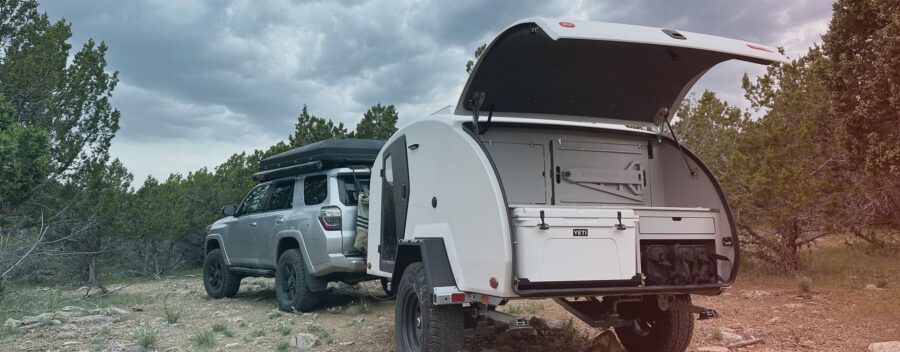
Escapod’s TOPO2 Nomad sits at an interesting intersection in the off-road trailer market: it is built specifically for people who want to go farther off the pavement than a typical camping trailer allows, but who also want something they can grow with over time. The TOPO2 Nomad is a purpose-built overlanding platform that starts at approximately $25,495 for the Base trim and scales up through Basecamp and Summit configurations depending on how equipped you want to be before your first trip.
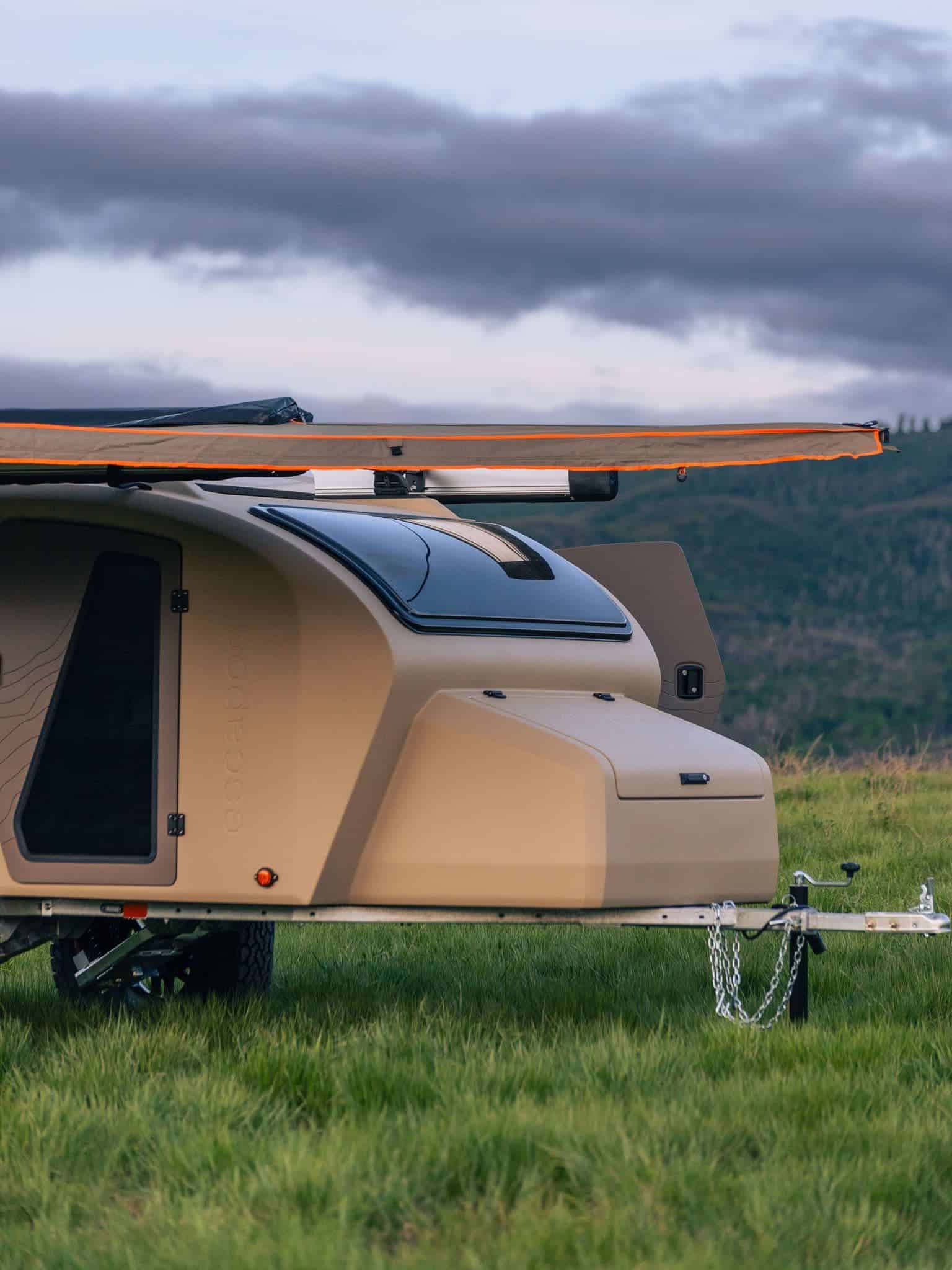
Image courtesy of Escapod Trailers
Composite Fiberglass Shell That Handles Anything
The monocoque construction of the TOPO2 is worth understanding in detail because it directly explains why the trailer performs the way it does in harsh conditions. A conventional trailer frame uses a steel chassis as the primary structural element, with the walls and floor built on top of it. In a monocoque design, the shell itself carries the structural load. There is no inner wood framing to absorb moisture and rot, no metal skeleton to corrode after years of exposure to road salt, stream crossings, and desert heat. The composite fiberglass shell distributes stress across the entire surface rather than concentrating it at frame joints, which is one reason why these trailers tolerate the repeated chassis flex that comes with serious off-road use without developing the squeaks, leaks, and cracks that eventually affect wood-framed competitors. It is also why the TOPO2 weighs what it does — fiberglass monocoque construction achieves structural rigidity at a lower weight than an equivalent steel-framed build.

Image courtesy of Escapod Trailers
Inside the Cabin: Sleeping and Living Space
The interior of the TOPO2 Nomad centers on a queen-size sleeping platform that spans the full width of the cabin. Below the platform is a dedicated gear garage — a pass-through storage area accessible from the rear of the trailer that can hold a complete set of camping gear, a two-burner stove, water containers, recovery boards, and similar overlanding equipment without occupying any of the sleeping space above it. The interior walls use a modular panel system that lets owners configure their storage differently based on how they use the trailer. Rather than a fixed set of cabinets and cubbies, the panel system accepts mounting accessories that can be repositioned or swapped over time as your kit evolves. For a trailer that is meant to serve you for a decade or more, this adaptability matters more than a fixed layout that works perfectly for your current load-out but becomes an obstacle as your needs change.
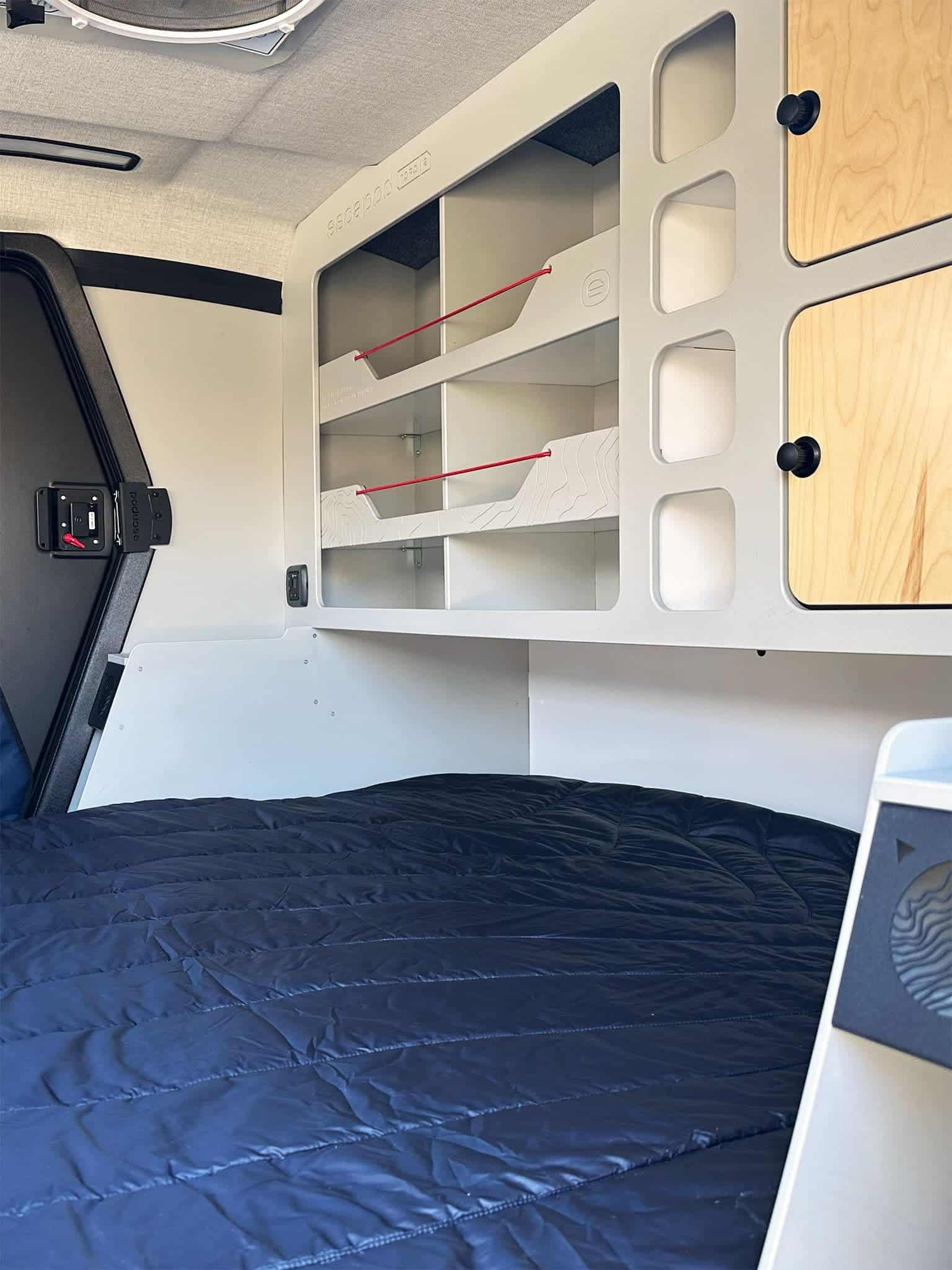
Image courtesy of Escapod Trailers
The Modular Galley Kitchen System
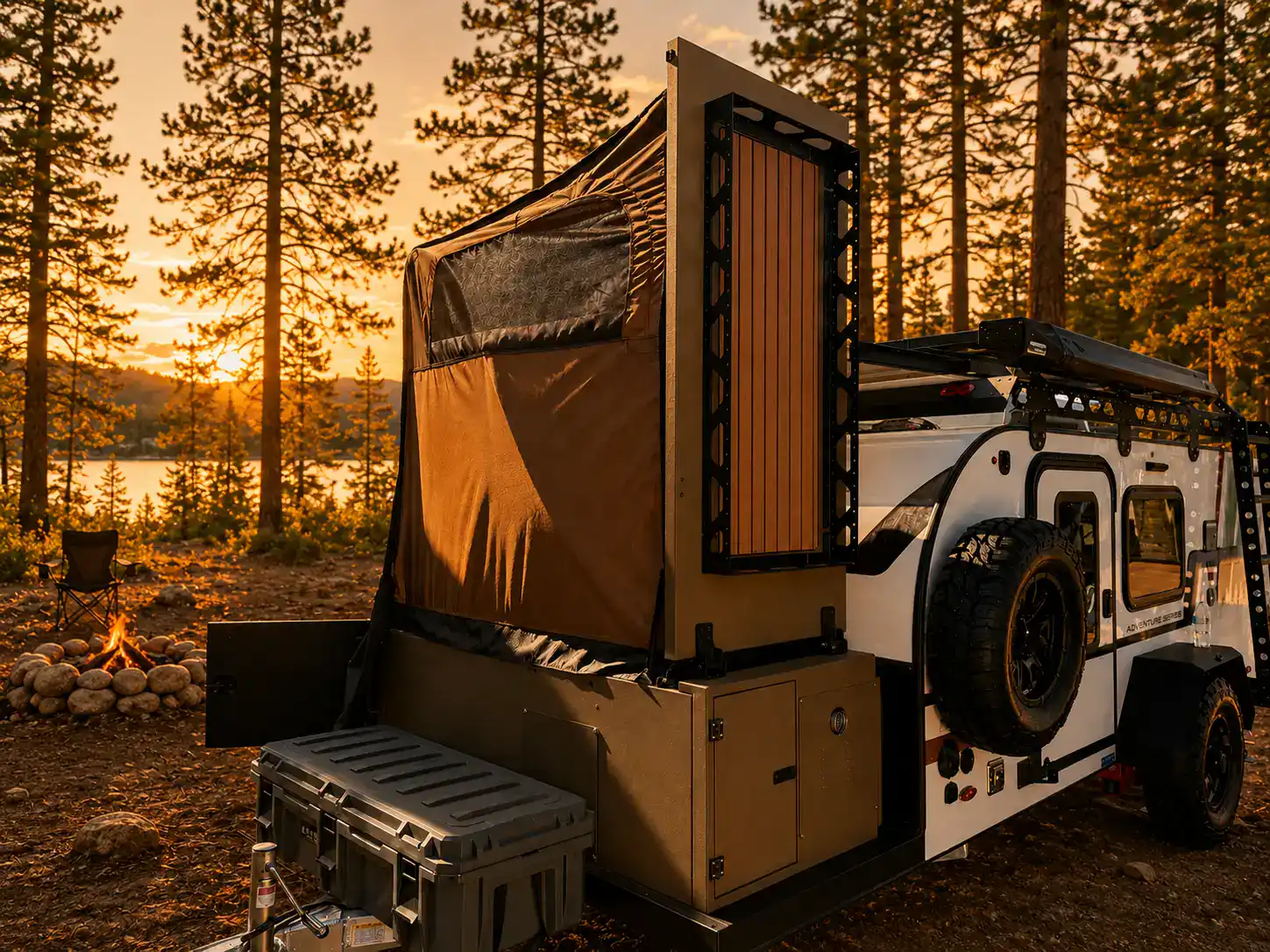
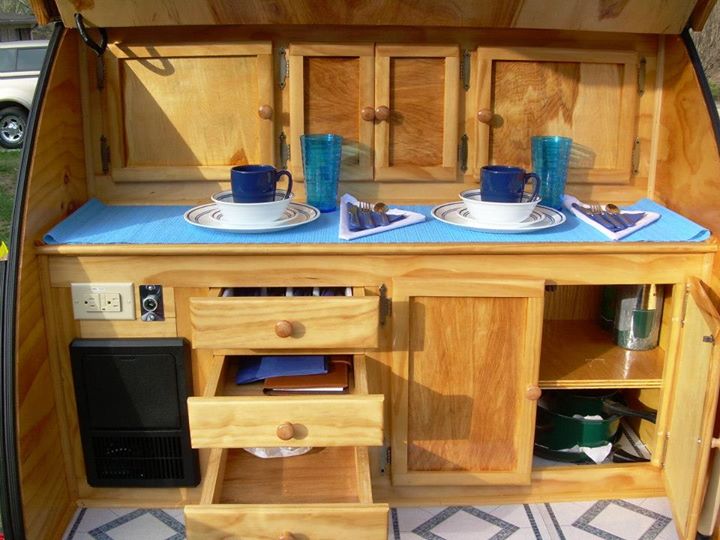
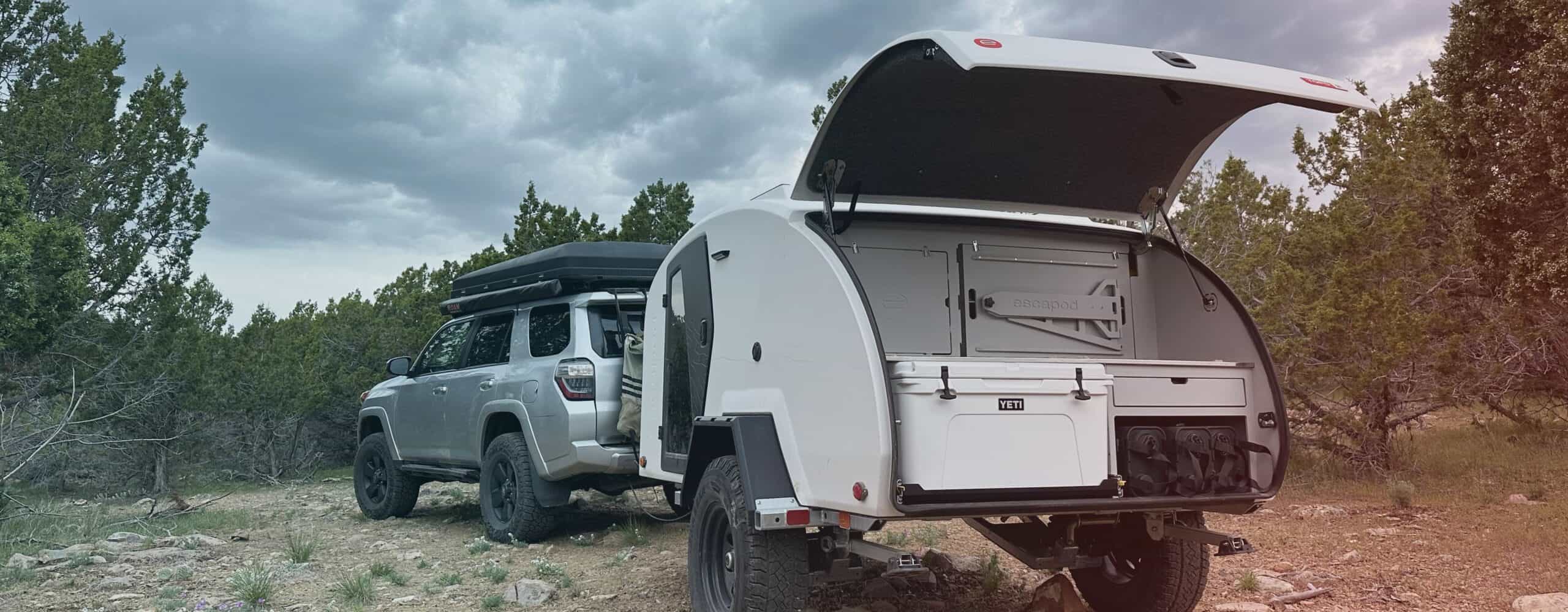
The TOPO2 uses a slide-out galley kitchen that extends from the side of the trailer when you are set up in camp. The outdoor cooking orientation is a deliberate design choice rather than a limitation — it keeps cooking smells, heat, and spills outside the sleeping space, and it orients the cook toward the camp rather than facing into a wall. The galley system is also modular, which means the configuration you get from Escapod on day one can be upgraded over time. A base-level galley might include a simple countertop and storage, while higher trim levels add a two-burner stove, sink, and improved organization. For owners who want to start at the Base price point and upgrade incrementally, the galley is one of the cleaner upgrade paths in the system.
Freeride Independent Suspension
The TOPO2 Nomad uses Escapod’s Freeride independent suspension system with 12 inches of travel. This is a significant departure from the leaf-spring axle setups that most trailers in this segment use, and the distinction becomes apparent once the trailer leaves pavement. Leaf springs connect both wheels to the same axle, which means a bump on one side of the trailer is partially transmitted to the other side. Independent suspension allows each wheel to respond to obstacles independently, which keeps the chassis more level over uneven terrain, reduces the twisting forces transmitted to the trailer body, and improves tracking on sidehill traverses. Twelve inches of travel is a generous specification — it means the suspension can absorb substantial obstacles before the body of the trailer is involved. For a composite fiberglass shell, keeping chassis flex to a minimum is not just a comfort preference; it also protects the structural integrity of the shell over years of off-road use.
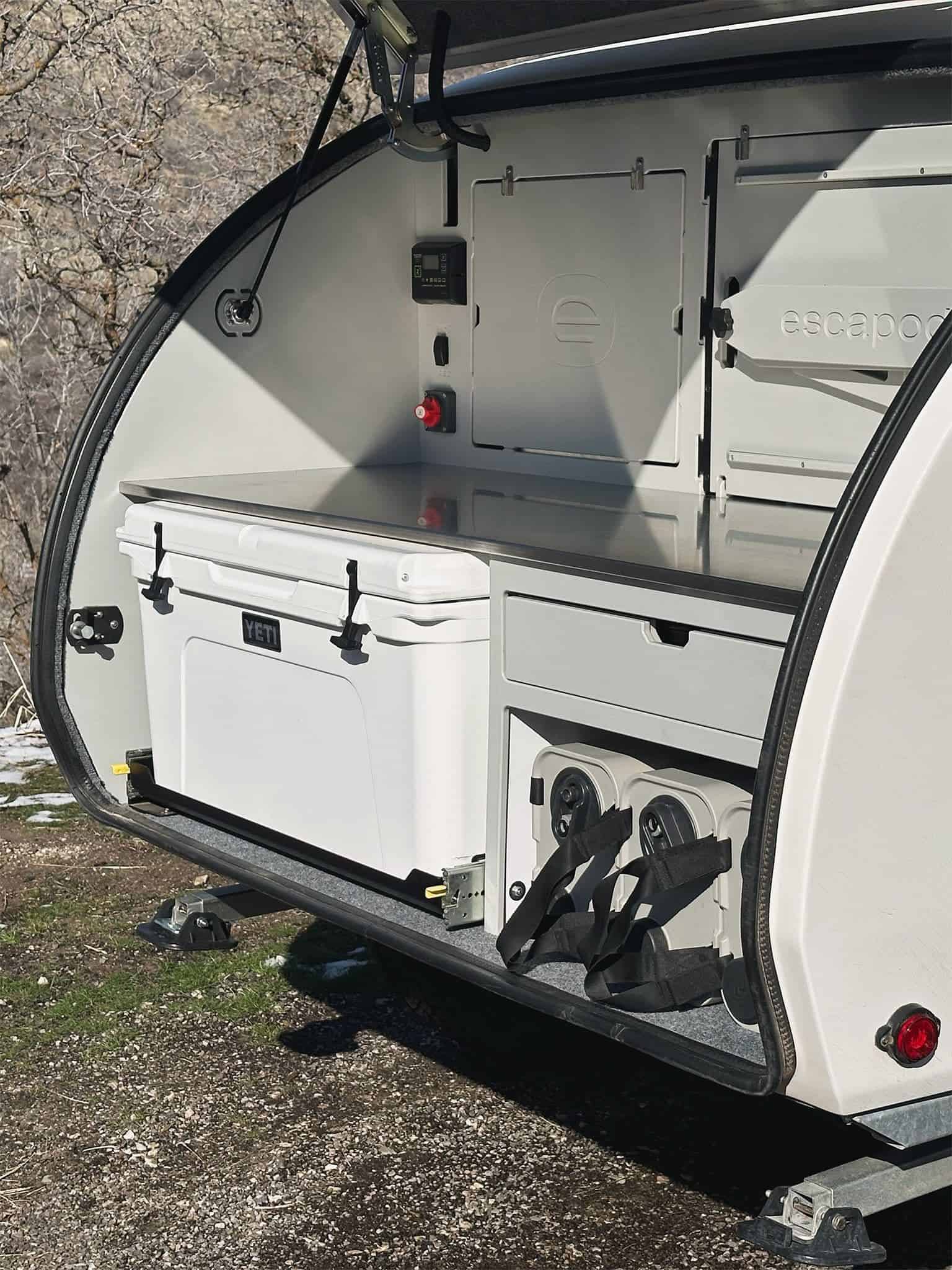
Image courtesy of Escapod Trailers
Electrical System and Off-Grid Power
The TOPO2 comes equipped with a 100Ah lithium battery and is wired for 200W of solar input. A 100Ah lithium battery delivers usable capacity that a conventional AGM battery of the same rated capacity cannot match — lithium chemistry allows discharge to a much lower state of charge without damaging the battery, which means you can realistically use 80-90Ah of that 100Ah rating rather than the 50Ah practical limit of an AGM. The 200W solar-ready wiring means adding panels is a straightforward upgrade rather than a rewiring project. For a trailer that is going to be used in the backcountry for multiple nights at a time, this electrical foundation supports LED lighting, device charging, a 12V compressor fridge, and a CPAP machine without requiring a generator. Higher trim levels and add-on packages can expand the system further for longer off-grid stays.
Customize It Your Way: Trim Levels and Options
The TOPO2 Nomad is available in three trim levels — Base, Basecamp, and Summit — each representing a different starting point on the equipment and price spectrum. The Base configuration starts at approximately $25,495 and includes the core TOPO2 platform: the monocoque shell, Freeride suspension, queen sleeping platform, gear garage, and the basic electrical system. The Basecamp and Summit trims add progressively more equipment including a more complete galley, additional electrical capacity, awning, upgraded suspension components, and other features. The modular approach means that a Base buyer is not locked into the Base configuration permanently — the same panel system and mounting infrastructure that ships with the Summit is present in the Base, and accessories can be added through Escapod or third-party sources over time. This structure lets buyers match their initial investment to their actual current use case rather than paying for equipment they do not need at purchase.
Design Details
- Type: Off-road camping trailer
- Dry weight: 1,650 lbs
- Length: 13’6″ overall
- Shell: Composite fiberglass monocoque
- Suspension: Freeride independent with 12 inches of travel
- Electrical: 100Ah lithium battery, 200W solar-ready
- Sleeping: Queen-size platform
- Kitchen: Modular slide-out galley system
- Storage: Gear garage plus modular interior panels
- Trim levels: Base, Basecamp, Summit
- Starting price: Approximately $25,495 (Base)
What Makes This Build Special
- Composite fiberglass monocoque means no wood rot, no rust, and lower weight than a comparable steel-framed build
- Modular panel and galley system lets owners grow the configuration over time rather than being locked into the original setup
- 1,650 lbs dry weight puts the TOPO2 within the tow capacity of most midsize SUVs without requiring a heavy-duty truck
- Freeride independent suspension with 12 inches of travel handles serious off-road terrain and protects the trailer’s structural shell from chassis flex
- 100Ah lithium electrical foundation is functional as delivered and expandable without rewiring
- Three trim levels create genuine entry points at different budgets while sharing the same core platform
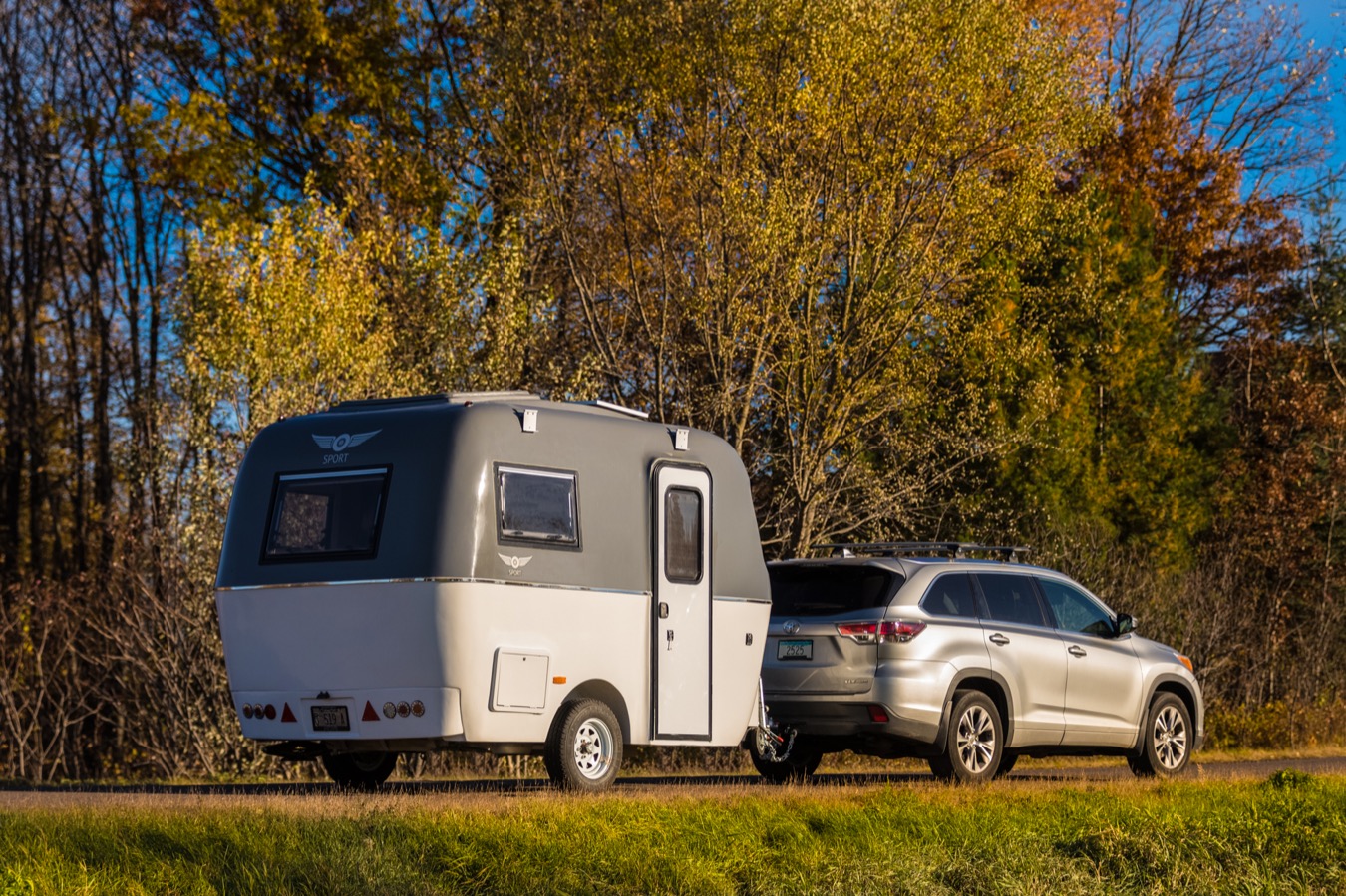
What sets it apart structurally is the composite fiberglass monocoque shell. Where most trailers in this price range use a wood or steel frame wrapped in a skin, the TOPO2 uses a single-piece shell where the outer surface and the structural body are the same component. This construction approach has long-term implications for durability, weight, and repairability. The trailer weighs in at 1,650 lbs dry, which puts it within the tow capacity of most midsize SUVs including the Toyota 4Runner, Ford Bronco, and similar rigs that dominate the overlanding community.
Escapod is based in Utah, which gives the company direct access to some of the most demanding off-road terrain in the country. The TOPO2 design reflects that environment — it is not a light-duty trailer dressed up with off-road aesthetics. The suspension, the ground clearance, and the construction are all built around the assumption that the trailer will be used seriously.
Experience It Yourself
Escapod’s full TOPO2 Nomad configurator — including trim levels, options, and current pricing — is available at escapod.us. The site includes a build and price tool so you can spec out exactly the configuration you want before reaching out. Follow Escapod on Instagram at @escapodtrailers for build updates, owner rigs, and terrain shots from the Utah backcountry and beyond.
Highlights
- Composite fiberglass monocoque construction — no wood framing, no steel skeleton
- 1,650 lbs dry weight — towable by midsize SUVs and trucks
- Freeride independent suspension with 12 inches of travel
- Queen-size sleeping platform with gear garage accessible from the rear
- Modular slide-out galley kitchen designed for outdoor cooking
- 100Ah lithium battery with 200W solar-ready electrical system
- Three trim levels — Base, Basecamp, and Summit
- Modular panel system for personalized interior storage and organization
- Starting at approximately $25,495 for the Base configuration
Disclosure: This post may contain affiliate links. If you purchase through one of our links, we may earn a commission at no additional cost to you.


Alex
Latest posts by Alex (see all)
- A Hotel Designer’s 484 Sq Ft Milan Apartment with a Rotating Room Divider - October 9, 2026
- Hermosa Orchards Village: A Durango Tiny Home Community with Its Own Fruit Orchard - October 9, 2026
- The Sanctuary Minnesota: A Tiny House Village on 80 Acres of Woods - October 9, 2026






Not bad, but mostly for young folks.
Lacking of standing headroom.
A pop up roof a la VW Westfalia is missing.
Not for me, sorry.