
Disclosure: This post may contain affiliate links. If you purchase through one of our links, we may earn a commission at no additional cost to you.
The Going Tiny Series, Part 15 of 45 · Guide 2 of 5: Where Can I Put It?
A free chapter goes up every day. See every part. Rather have it all at once, with printable worksheets? Get the Going Tiny Toolkit.
Here are the most common places people actually live in tiny and small homes, roughly ranked from the most legally secure to the least. Costs and availability vary a lot by region, so treat costs as relative, and verify current rates locally.
“Every show we have seen so far, everyone lives on family or friends’ land. Sad to say we have no friends or family that have the land to park on.”
— Marianne, Tiny House Talk reader
Marianne, you’re not alone, and you have more options than the TV shows suggest.
1. Tiny house communities and pocket neighborhoods
Legality: Usually strong, because the developer did the zoning work. Cost: Lot rent, or a purchase of a lot or home, plus fees.
Planned tiny house communities, small-home villages, and “pocket neighborhoods” (clusters of small homes around a shared green) have grown steadily. Some sell lots, some rent them, some sell home-and-lot packages. Many are designed around park model RVs or small homes on foundations; some accept tiny houses on wheels that meet their standards.
Ask: Is year-round, full-time living allowed? What homes are accepted (certifications, size, appearance)? What does lot rent include, and how much has it gone up in recent years? Is there a written lease or rules document? How long has the community operated, and does it have the proper permits from the county?
Search terms: “tiny house community [state],” “tiny home village [region],” “pocket neighborhood [city].”
A real home from Tiny House Talk
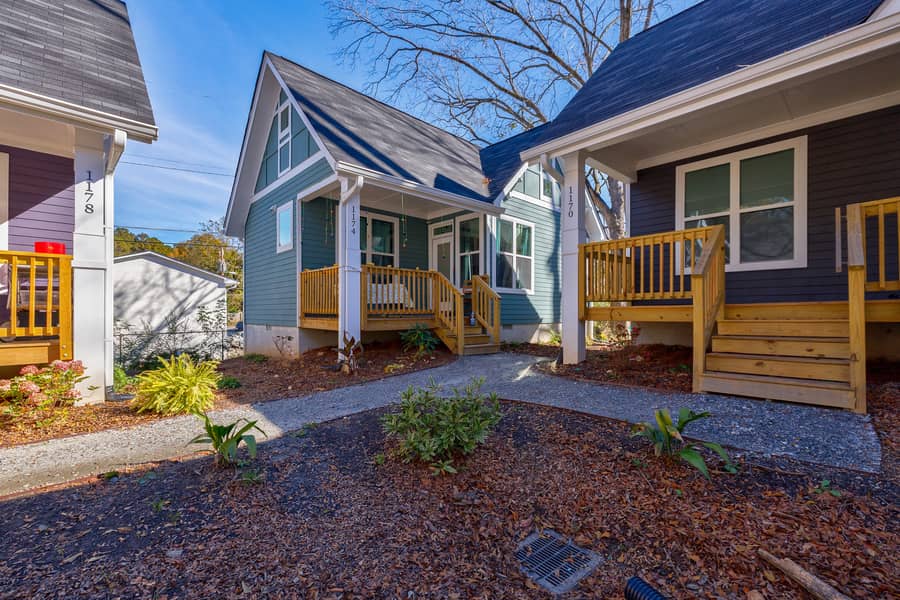
Photo courtesy of MicroLife Institute
Cottages on Vaughn: A Pocket Neighborhood in Clarkston, Georgia
A good picture of a pocket neighborhood: eight cottages of 250 to 550 square feet on a half-acre lot a block from downtown Clarkston, Georgia, sharing a green with edible landscaping. The MicroLife Institute developed it in partnership with the city, so the zoning work was done before anyone moved in.
2. Your own lot (or a family lot) where zoning allows it
Legality: Strong, if you’ve done the research and pulled permits. Cost: Land, site work, utilities, permits.
This is the most independent option, and Part 16 covers buying land carefully. It also includes a small house on a standard residential lot in a town with no or low minimum size, which is more common than many people expect in older towns and small cities.
A real home from Tiny House Talk
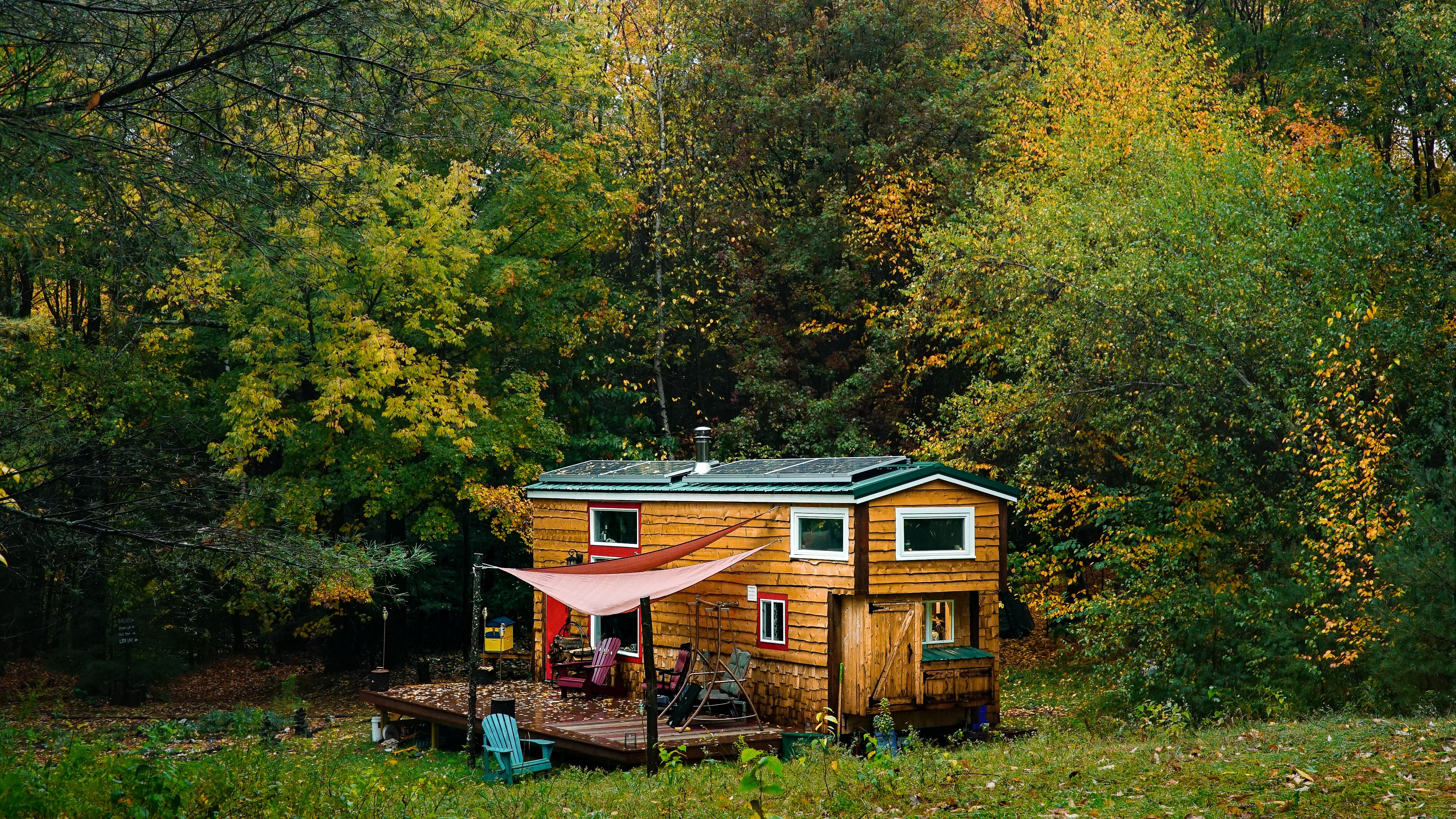
Photo via @anamericanroadstory/Instagram
From Van Life to Their Own 14 Acres in Vermont
Colby and Aria got tired of hunting for places to park, many of them not legal. So they chose a county near Aria's job and searched for affordable land "with a zoning code that would permit our tiny house." After about a dozen visits, they bought 14 wooded acres outside Vernon, Vermont, and moved their DIY home there in 2019.
Want to do this on paper?
The printable PDF of Where Can I Put It? has fill-in worksheets for this step, including:
- Site Comparison Table
- Parking-Spot Agreement Checklist
They come with all five guides in the Going Tiny Toolkit.
3. A backyard ADU on family or friend’s property
Legality: Strong, where ADUs are allowed and permitted. Cost: Varies widely; conversions are often cheapest.
See Part 12. This option offers what many readers want most: being close to family, doctors, and groceries rather than in the middle of nowhere.
4. Manufactured home communities that accept small homes or park models
Legality: Strong for HUD-code homes; varies for park models. Cost: Monthly lot rent.
Some manufactured home communities accept park models or small manufactured homes, and a few now welcome tiny houses. Quality ranges from wonderful, well-kept 55+ communities to places you wouldn’t choose. Visit, talk to residents, and read the lease carefully. Rent increases are an important thing to ask about, since you don’t own the land underneath you.
Resident-owned communities
In some states, residents have bought their manufactured home communities and run them as cooperatives. These “resident-owned communities” can offer more stable lot rents. Search “resident-owned manufactured home community [state].”
5. RV parks, RV resorts, and campgrounds
Legality: Good for RVs and park models while you follow the park’s rules. Cost: Nightly, weekly, monthly, or seasonal rates; monthly is usually much cheaper per night.
RV parks are often the most immediately available legal spot for a tiny house on wheels. Important caveats:
- Many parks don’t accept home-built tiny houses. Some accept only RVIA-certified units, or only units under a certain age, or only “RV-looking” units. Ask before you go.
- Stay limits. Some parks, especially public campgrounds and seasonal resorts, limit how long you can stay or close in winter. Ask whether they allow year-round, long-term residents.
- Local rules. Some counties limit how long anyone can live in an RV park. The park should know.
6. Renting a spot on private land
Legality: Varies. This is where the most risk lives. Cost: Often negotiable; sometimes partly in trade.
Renting a corner of someone’s land is very appealing, and some places allow it with a permit (for example, as an ADU, a temporary dwelling, or a rural RV permit). But in many places, living full-time in an RV or THOW on private residential land isn’t allowed, even with the owner’s blessing. If a neighbor complains, the code enforcement notice often goes to the landowner, and you may be the one who has to move, sometimes on short notice.
If you’re considering this option:
- Do the zoning research yourself (Part 13). Don’t rely on “everyone does it around here.”
- Get a written agreement (Worksheet 6 (Parking-Spot Agreement Checklist)), even with a friend.
- Know your exit plan: where you’d go with 30 days’ notice.
7. Rural land with minimal or no zoning
Legality: Often permissive on zoning, but building codes, septic rules, and covenants may still apply. Cost: Land is often cheaper; utilities and distance cost more.
Some rural counties have little or no zoning. That can be freeing, but as one reader put it:
“The only land I might be able to afford is unrestricted land in the middle of nowhere. Unrestricted sounds nice but middle of nowhere doesn’t.”
— Dave, Tiny House Talk reader
Before buying “unrestricted” land, check: Is there still a state building code or septic permit requirement? (Often yes.) Are there private covenants? How far is the nearest hospital, pharmacy, and grocery store? Will you be able to keep driving those distances in ten or fifteen years? Can you get internet? Part 16’s scorecard keeps these questions front and center.
A note on caretaker and work-trade arrangements
Some people find a legal spot by being a caretaker or on-site manager for a farm, campground, or rural property. Some zoning codes specifically allow a caretaker’s dwelling. Check that the arrangement itself is legal, and get it in writing like any other agreement.
Use Worksheet 4 to compare up to four places side by side.
Your turn
Where are you hoping to put your tiny or small home? Share your state or country in the comments.
Prefer the clean, printable version?
This series is free to read here, and it always will be. If you’d rather have it as five clean, printable PDFs, that’s the Going Tiny Toolkit:
- Where Can I Put It? (the guide this chapter comes from): zoning research in an afternoon, call scripts and email templates, and a land checklist
- The Tiny House Money Plan
- Tiny Without the Ladder
- Bringing Them On Board
- Your First Tiny Steps
Every guide adds printable worksheets and a 30-day action plan, and Tiny Without the Ladder comes with the bonus One-Level Floor Plan Idea Book (18 to-scale floor plans). All five are $47, with a 30-day refund.
← Previous: Part 14: Asking the Zoning Office: Call Scripts and Email Templates
Next (tomorrow): Part 16: Buying Land for a Tiny or Small Home Without Regret
Not sure which part matters most for you? The free 10-minute What’s Really Holding You Back? quiz tells you where to start. And to get a new part (and a new home) in your inbox each day, join the free Tiny House Newsletter.
Disclosure: This post may contain affiliate links. If you purchase through one of our links, we may earn a commission at no additional cost to you.


Alex
Latest posts by Alex (see all)
- Where to Park or Build a Tiny House: Your Options, Ranked - November 2, 2026
- Knitwear Designer Lives and Works in a 280 Sq Ft Oakland Garage ADU - November 1, 2026
- How Do I Get Land for a Tiny House or Camper? 5 Paths That Work - November 1, 2026





Join the Conversation
No comments yet. Be the first to join the conversation.