
Disclosure: This post may contain affiliate links. If you purchase through one of our links, we may earn a commission at no additional cost to you.
The Going Tiny Series, Part 31 of 45 · Guide 4 of 5: Bringing Them On Board
A free chapter goes up every day. See every part. Rather have it all at once, with printable worksheets? Get the Going Tiny Toolkit.
The single most useful thing you can do for a reluctant partner (and for yourself) is to make the next step small, temporary, and reversible. People can say yes to “a weekend” long before they can say yes to “the rest of our lives.”
Trials also work in both directions. Sometimes the reluctant partner discovers they love it. Sometimes the enthusiastic partner discovers they really need a bathtub. Both are wins, because now you know.
Trial 1: Rent a tiny house or small cabin for a weekend
Vacation rental sites list many tiny houses, small cabins, and cottages. Search for “tiny house” or filter for small spaces in an area you’d both enjoy. State park cabins, campground cabins, and tiny house hotels or villages are other options in many regions.
- Choose one similar to what you’re actually considering. If your partner can’t do ladders, don’t rent a loft-only tiny house. If you’re thinking about a 500 sq ft cottage, rent one of those, not a 160 sq ft micro-cabin.
- Let the reluctant partner pick the place. Ownership matters.
- Live normally. Cook a real meal, work for a few hours, have a lazy morning, take a shower each, get dressed at the same time. A weekend that’s all hiking and restaurants won’t tell you much.
- Then try a week. A weekend is a vacation. Around day four or five you learn what daily life might feel like.
Read listings and reviews carefully; check that photos match the description and that the space has what you need (stairs vs. ladder, real bathroom, heat). Worksheet 5 (Trial Stay Plan & Debrief) helps you plan the stay and talk about it afterward.
Trial 2: An RV or camper trip
If one of you dreams of mobile living, rent a camper or RV for a week, or borrow one from a friend. Peer-to-peer RV rental sites and local dealers both rent units in many areas. Pay attention to the unglamorous parts: dumping tanks, finding a site, driving in wind, rainy days stuck inside. If both of you still smile on day six, that’s meaningful.
And if you already own a fifth-wheel or camper that never gets used because one of you won’t go, start even smaller: one night at a campground twenty minutes from home, with an easy exit if it’s miserable.
A real home from Tiny House Talk

Photo via Tiny Home Tours/YouTube
Weekend van life before deciding on full time
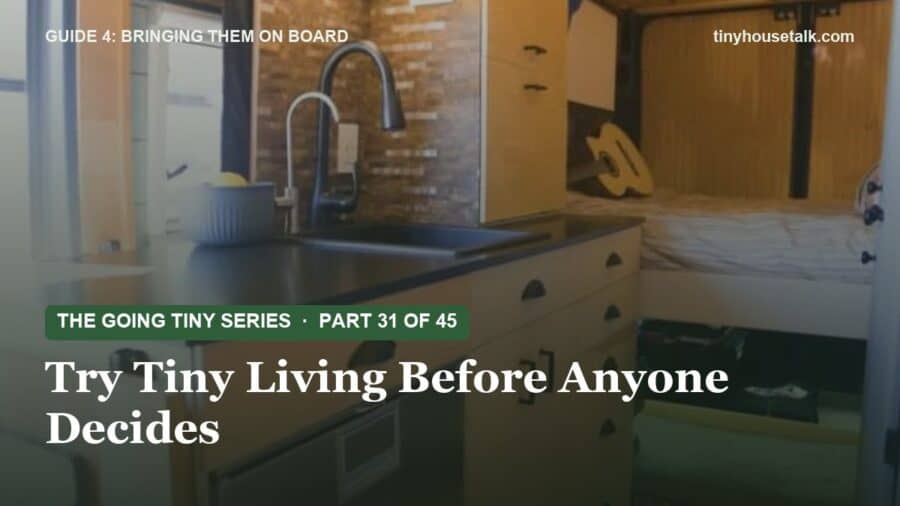
Angie and Tommie haven't sold the house. They use their van for weekend trips and vacations and say they may downsize entirely someday. They built it to work as a full-time home anyway, with a hidden toilet and a bed so comfortable they don't miss the one at home, so every weekend away is a real test run.
Want to do this on paper?
The printable PDF of Bringing Them On Board has fill-in worksheets for this step, including:
- Trial Stay Plan & Debrief
They come with all five guides in the Going Tiny Toolkit.
Trial 3: Live in three rooms
This one is free. For two to four weeks, close off part of your current home and live in a smaller footprint: say the kitchen, one living area, one bedroom, and one bathroom. Don’t use the rest except for storage.
- Notice what you miss and what you don’t.
- Notice when you each needed space and where you went to get it.
- Notice whether cleaning and heating got easier.
Many couples find they already live in about three rooms and just pay for, clean, and heat the rest.
Trial 4: Tape the floor plan on the floor
Use painter’s tape to outline a possible floor plan on a garage floor, driveway, basement, or empty room, full size. Mark the walls, the bed, the kitchen counter, the bathroom. Then stand in it together. Bring in a chair. Pretend to cook dinner while the other person walks past.
Do it together, with the reluctant partner moving the tape. It’s one of the fastest ways to discover “this would work if the bedroom had a door” or “this would never work for my woodshop.” That’s design input, not defeat.
A real home from Tiny House Talk
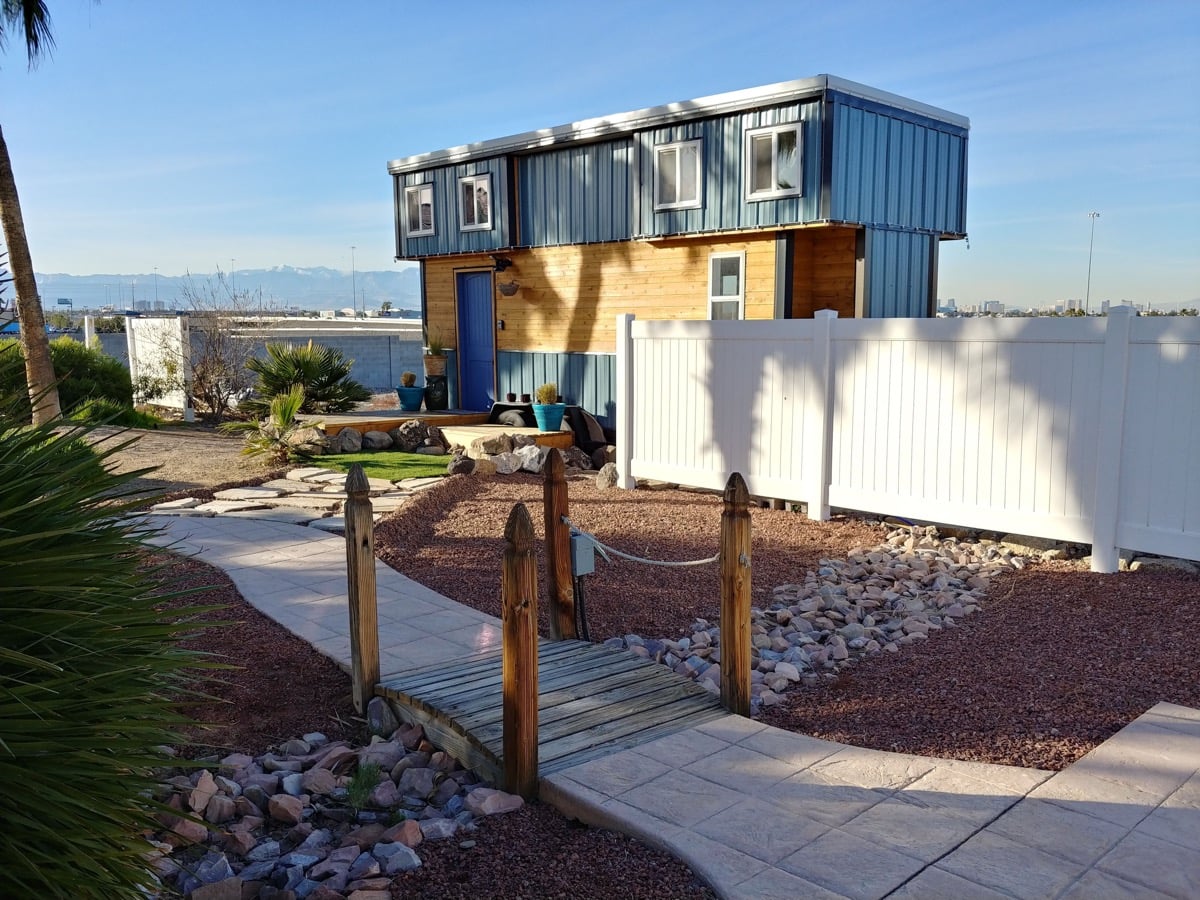
Photo: Far Out Tiny Homes
They taped their tiny house on the living room floor first
Before building anything, Jilan and Josh moved furniture aside in their 2,500-square-foot Kansas City living room and taped the outline of a would-be tiny house on the floor, then played with layouts for hours. A few months later, they, their two kids, and two dogs were living in the tiny house on wheels they built.
Trial 5: A one-month no-shopping or declutter challenge
If possessions are the sticking point, try a month where you each buy only consumables and each clear out one area you choose. Keep it personal and voluntary: you clear your things, they clear theirs (if they want to). Never toss someone else’s belongings.
Our weekend declutter guide, Tidy to Tiny (Or Not), walks through this gently: keep what you love, clear the rest, and decide about tiny later. Many couples find that a lighter house takes the pressure off the whole conversation.
Trial 6: A backyard guest house or getaway cabin first
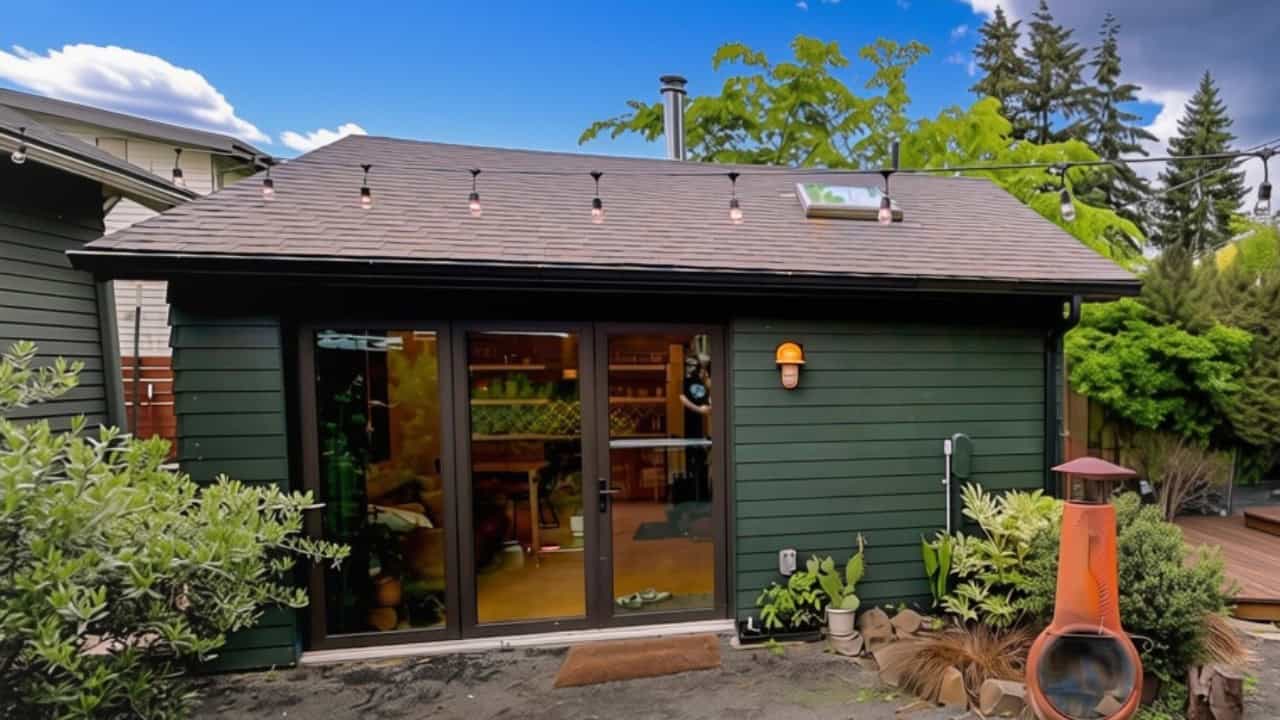
One reader couldn’t convince her husband to move into a tiny home, but he was on board with building a small guest cabin on their property: a getaway for the two of them, and a place for her parents to stay when they visited. That’s a beautiful middle path.
- Nobody gives up the main house.
- You learn what small living feels like, a night or a week at a time.
- It’s useful no matter what you decide: guests, grandkids, a home office, a future caregiver, or eventually a place to downsize into while renting or gifting the main house.
Backyard cottages and ADUs have real rules about size, setbacks, utilities, and whether anyone can live in them full-time. Check before you build; Where Can I Put It? walks you through it, and The Tiny House Money Plan covers costs.
Agree on the debrief before the trial
Before any trial, agree on two things: when you’ll talk about how it went, and that the reluctant partner gets to speak first. That protects the trial from becoming a test they have to pass.
Your turn
Is someone in your life on the fence about living smaller? Share what's worked (or hasn't) in the comments.
Want the whole series in one place?
This series is free to read here, and it always will be. If you’d rather have it as five clean, printable PDFs, that’s the Going Tiny Toolkit:
- Bringing Them On Board (the guide this chapter comes from): conversation starters, low-risk trial ideas, and worksheets for couples and families
- The Tiny House Money Plan
- Where Can I Put It?
- Tiny Without the Ladder
- Your First Tiny Steps
Every guide adds printable worksheets and a 30-day action plan, and Tiny Without the Ladder comes with the bonus One-Level Floor Plan Idea Book (18 to-scale floor plans). All five are $47, with a 30-day refund.
← Previous: Part 30: How to Start the Tiny House Conversation With Your Partner or Family
Next (tomorrow): Part 32: Designing a Tiny or Small Home for Two (or More)
Not sure which part matters most for you? The free 10-minute What’s Really Holding You Back? quiz tells you where to start. And to get a new part (and a new home) in your inbox each day, join the free Tiny House Newsletter.
Disclosure: This post may contain affiliate links. If you purchase through one of our links, we may earn a commission at no additional cost to you.


Alex
Latest posts by Alex (see all)
- Try Tiny Living Before Anyone Decides - November 18, 2026
- 5 Backyard ADUs and Cottage Kits That Publish Their Prices Up Front - November 17, 2026
- Barn-Red Tiny House with a Downstairs Bedroom and Two Standing-Height Lofts in Tennessee - November 17, 2026


Join the Conversation
No comments yet. Be the first to join the conversation.