
Disclosure: This post may contain affiliate links. If you purchase through one of our links, we may earn a commission at no additional cost to you.
The Going Tiny Series, Part 28 of 45 · Guide 4 of 5: Bringing Them On Board
A free chapter goes up every day. See every part. Rather have it all at once, with printable worksheets? Get the Going Tiny Toolkit.
If you’ve been dreaming about a smaller life for a while, it’s easy to slip into thinking of your partner as the obstacle. The one thing between you and the cabin, the van, the little house with the porch.
Here’s the shift that makes everything else in this guide work: the goal isn’t to get a yes. The goal is a decision you make together that both of you can live with, and ideally feel good about.
That might be tiny. It might be “a bit smaller.” It might be “not now, but let’s revisit when the kids graduate.” All of those are real outcomes, and none of them is losing.
Why “winning” backfires
- It makes the other person defend a position. Once someone has said “no” a few times, they’re defending their no, not considering your idea.
- It hides the real concern. People rarely say “I’m afraid I’ll feel trapped” when they feel pushed. They say “it’s impractical.”
- It creates a bad starting point. If you do get a reluctant yes, every leak, cramped morning, and cold night becomes evidence that you were wrong. Small spaces magnify resentment.
- It overlooks that they may be right about something. A partner who worries about stairs, grandkids, or money may be seeing a real problem you’d want to solve anyway.
Want to do this on paper?
The printable PDF of Bringing Them On Board has fill-in worksheets for this step, including:
- Where Are We Each on the Spectrum?
They come with all five guides in the Going Tiny Toolkit.
The Small-Living Spectrum
Most arguments about going tiny are really arguments about two points on a line: “where we live now” versus “a tiny house on wheels.” But there’s a whole spectrum in between. Once you see it, the conversation usually gets easier, because the question changes from “tiny: yes or no?” to “how far along this line feels right for us, and when?”
| Step | What it looks like | Who it often suits |
|---|---|---|
| 1. Simplify in place | Same house. Spend less, buy less, use fewer rooms, change habits. | Anyone. No moving, no permits, fully reversible. |
| 2. Declutter | Same house, far less stuff. Empty a room, garage, or storage unit. | Couples where possessions are the sticking point. |
| 3. Downsize | Move to a smaller house, condo, or apartment, often 800–1,500 sq ft. | Empty nesters, people tired of upkeep, families wanting lower costs. |
| 4. Small house | A purpose-designed small home, often roughly 400–1,000 sq ft, on a foundation. | Couples who want “small” but still want a bedroom door, a real kitchen, and room for guests. |
| 5. ADU or cottage | A backyard cottage or accessory dwelling, on your land or family’s land. | Multigenerational families, people near grandkids, caregivers. |
| 6. Tiny part-time | A tiny house, cabin, or camper as a getaway or guest house, while you keep your main home. | Couples where one wants tiny and the other isn’t sure. |
| 7. Tiny full-time | Living full-time in a tiny house, usually under about 400 sq ft. | People who’ve tested it and love it. |
| 8. Mobile | Van, RV, fifth-wheel, skoolie, or a tiny house that moves often. | Travelers, retirees who want to roam, the truly adventurous. |
Square footage ranges here are rough and for conversation only. What counts as a “small house” or “tiny house” legally depends on your local codes. If you want to know what’s actually allowed where you live, see Where Can I Put It?, Guide 2 in this series.
Where most couples land
In my experience reading thousands of reader stories, couples who end up happy usually meet somewhere in steps 3 through 6: a smaller house, a backyard cottage, or a tiny getaway while they keep a home base. Full-time tiny works wonderfully for some. It isn’t the finish line everyone has to reach.
“I think that 800 sq ft qualifies as a small house, but definitely not tiny… I still enjoy hosting holiday dinners or gatherings and going much smaller than 800 sq ft I think would curtail me from doing so.”
— Deanne, Tiny House Talk reader
Deanne moved from 2,600 square feet down to 1,200 and then to about 800, in steps, over years. She chose where to stop based on what mattered to her: family gatherings. That’s exactly the kind of decision this guide is meant to help you make together.
A real home from Tiny House Talk
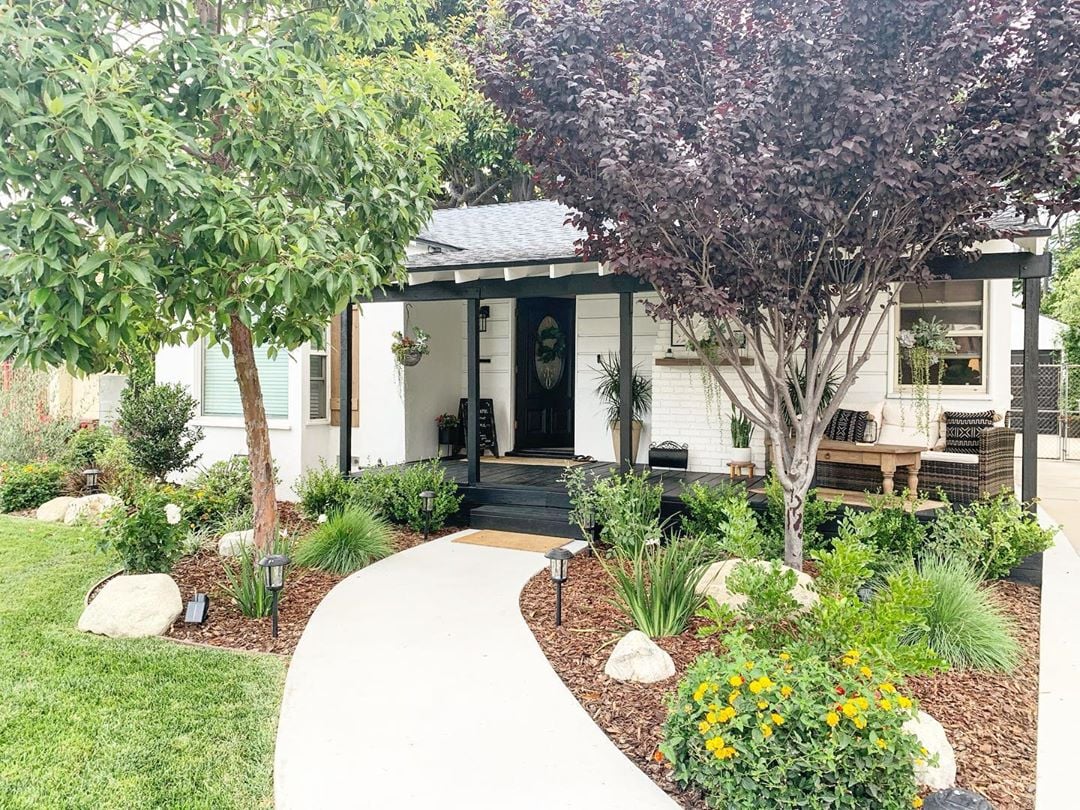
Photo: @reedsindeed/Instagram
A year in an RV, then a little house that feels like a mansion
Tiny doesn't have to be the finish line. The Reed family of six fixed up an RV and lived in it for about a year to get out from under rising rents, then bought an 1,100-square-foot fixer-upper near their church. Their four girls share one bedroom with built-in bunks, and Rachel says the house feels like a mansion.
Try this: each of you put a dot on the line
Worksheet 3 (Where Are We Each on the Spectrum?) asks each person to mark, privately, three things on the spectrum: where you are now, where you’d love to be someday, and the furthest you could comfortably go in the next two years. When you compare, you’ll often find you agree on more than you thought. A partner who says “no to tiny” may happily mark “small house” or “getaway cabin.”
Your turn
Is someone in your life on the fence about living smaller? Share what's worked (or hasn't) in the comments.
Want the whole series in one place?
This series is free to read here, and it always will be. If you’d rather have it as five clean, printable PDFs, that’s the Going Tiny Toolkit:
- Bringing Them On Board (the guide this chapter comes from): conversation starters, low-risk trial ideas, and worksheets for couples and families
- The Tiny House Money Plan
- Where Can I Put It?
- Tiny Without the Ladder
- Your First Tiny Steps
Every guide adds printable worksheets and a 30-day action plan, and Tiny Without the Ladder comes with the bonus One-Level Floor Plan Idea Book (18 to-scale floor plans). All five are $47, with a 30-day refund.
← Previous: Part 27: When You Want Smaller and They Don't: Start Here
Next (tomorrow): Part 29: What's Really Underneath the No to Going Tiny
Not sure which part matters most for you? The free 10-minute What’s Really Holding You Back? quiz tells you where to start. And to get a new part (and a new home) in your inbox each day, join the free Tiny House Newsletter.
Disclosure: This post may contain affiliate links. If you purchase through one of our links, we may earn a commission at no additional cost to you.


Alex
Latest posts by Alex (see all)
- Going Tiny Together: You’re Not Trying to Win - November 15, 2026
- Rosa Has Lived in Her Honda Element for 9 Years and Nearly 300,000 Miles - November 14, 2026
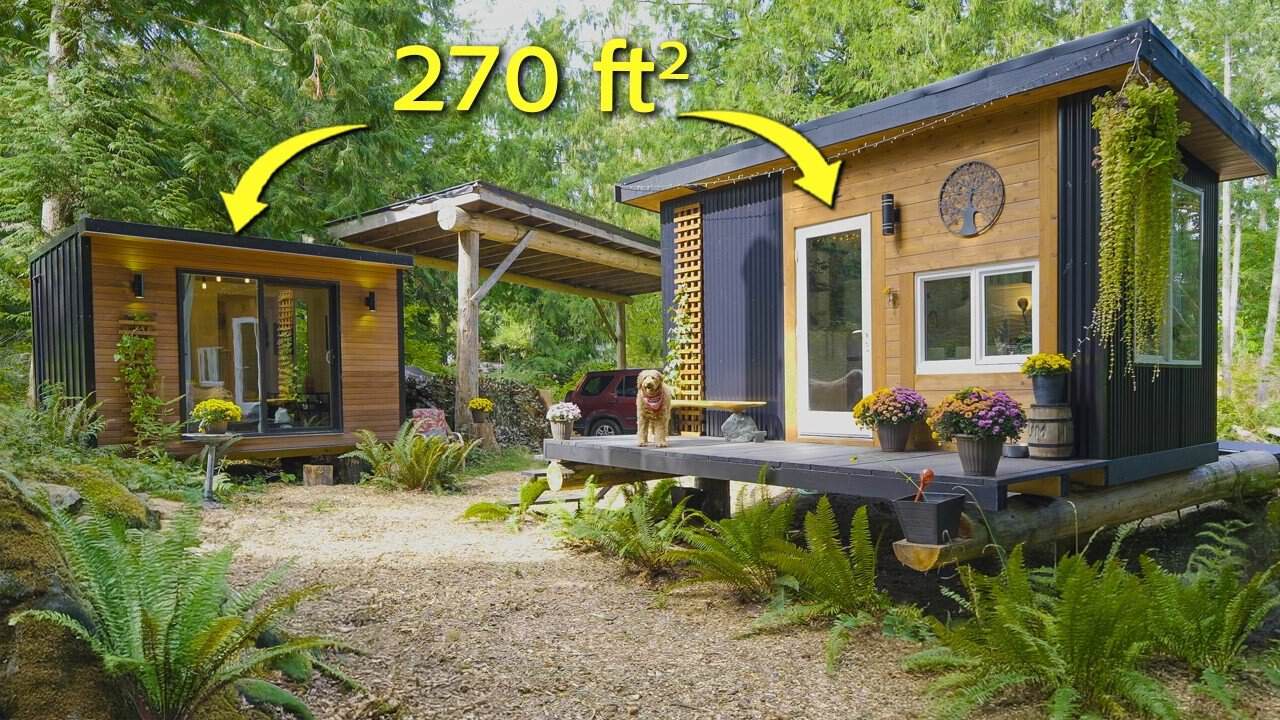
- Why He Lives in Two Side-by-Side Tiny Homes on Vancouver Island - November 14, 2026



Join the Conversation
No comments yet. Be the first to join the conversation.