Disclosure: This post may contain affiliate links. If you purchase through one of our links, we may earn a commission at no additional cost to you.
The Going Tiny Series, Part 7 of 45 · Guide 1 of 5: The Tiny House Money Plan
A free chapter goes up every day. See every part. Rather have it all at once, with printable worksheets? Get the Going Tiny Toolkit.
Here’s the honest truth: financing a tiny house on wheels is harder than financing a regular house. Banks lend on things they can easily value and resell. A one-of-a-kind house on a trailer, built by someone they’ve never heard of, makes lenders nervous. That’s why so many readers hear “no.” It isn’t personal, and it isn’t hopeless. Different kinds of homes fit different kinds of loans, and some people don’t use loans at all.
What we plan on is a trailer model, which would then suggest that we would likely need an auto loan as opposed to a mortgage, but we are not too certain of the details.
— Donald, Tiny House Talk reader
Quick map: which money fits which home
| Home type | Common ways people pay |
|---|---|
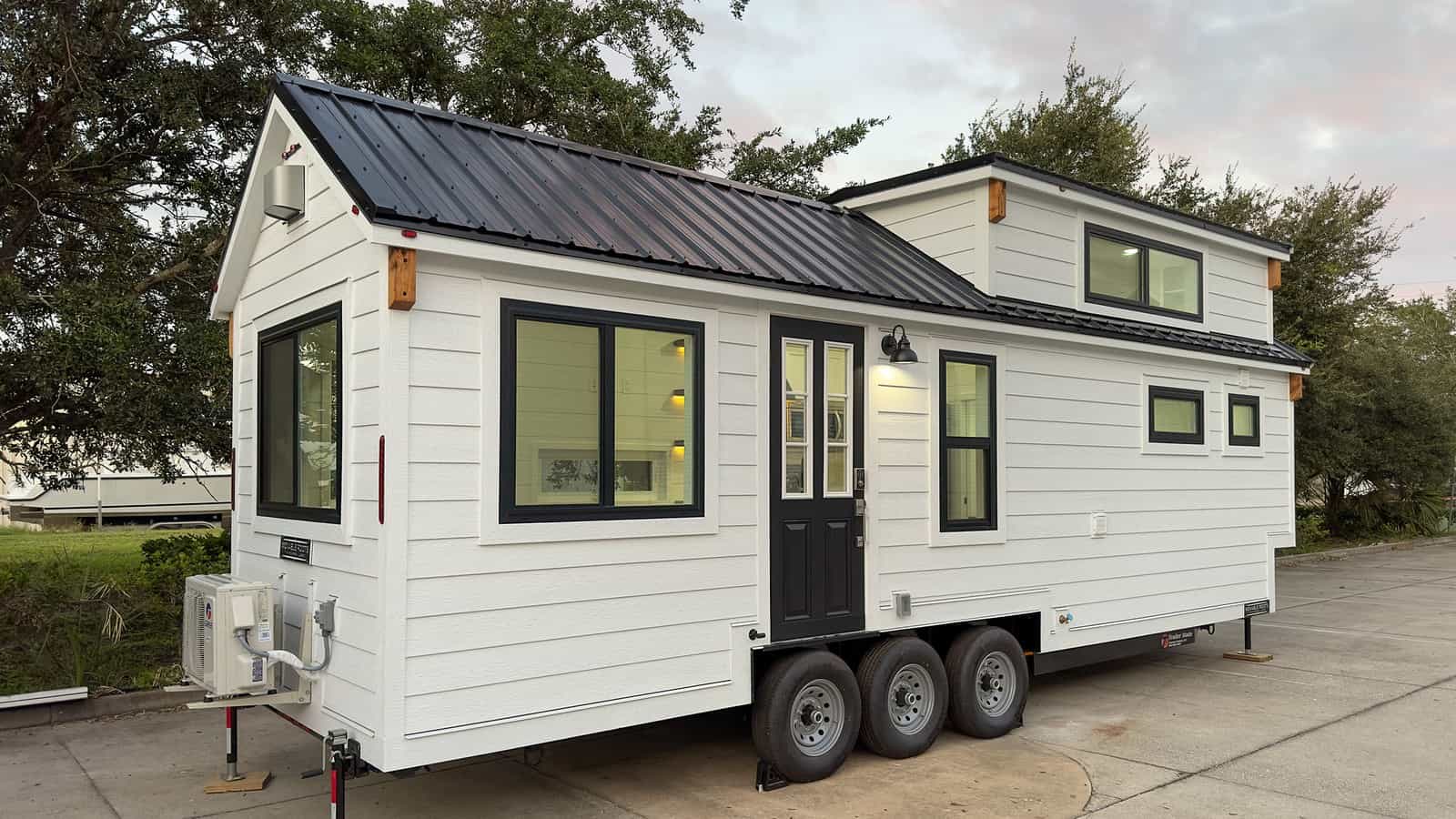
| Certified tiny house on wheels (RVIA or NOAH) | Cash, RV loan, builder-arranged lender, personal loan, HELOC |
| Uncertified or DIY tiny house on wheels | Cash and phased build, personal loan, HELOC, family loan |
| Park model RV | Cash, chattel/RV-style loan from specialty lenders, personal loan |
| Used RV, camper, van | Cash, RV or auto loan, credit union loan |
| Manufactured home (HUD code) | Chattel loan, FHA Title I, mortgage if on owned land as real property |
| Small house on a foundation, ADU | Mortgage, construction loan, HELOC on the main house, cash |
| Land | Cash, land loan, seller financing |
1. Cash and phased building
How it works: You save, sell, and pay as you go. See Part 5.
Good for: Anyone who can be patient, especially those who can’t or don’t want to borrow.
Watch out for: Projects that stall halfway. Plan phases so each one leaves the structure protected.
A real home from Tiny House Talk
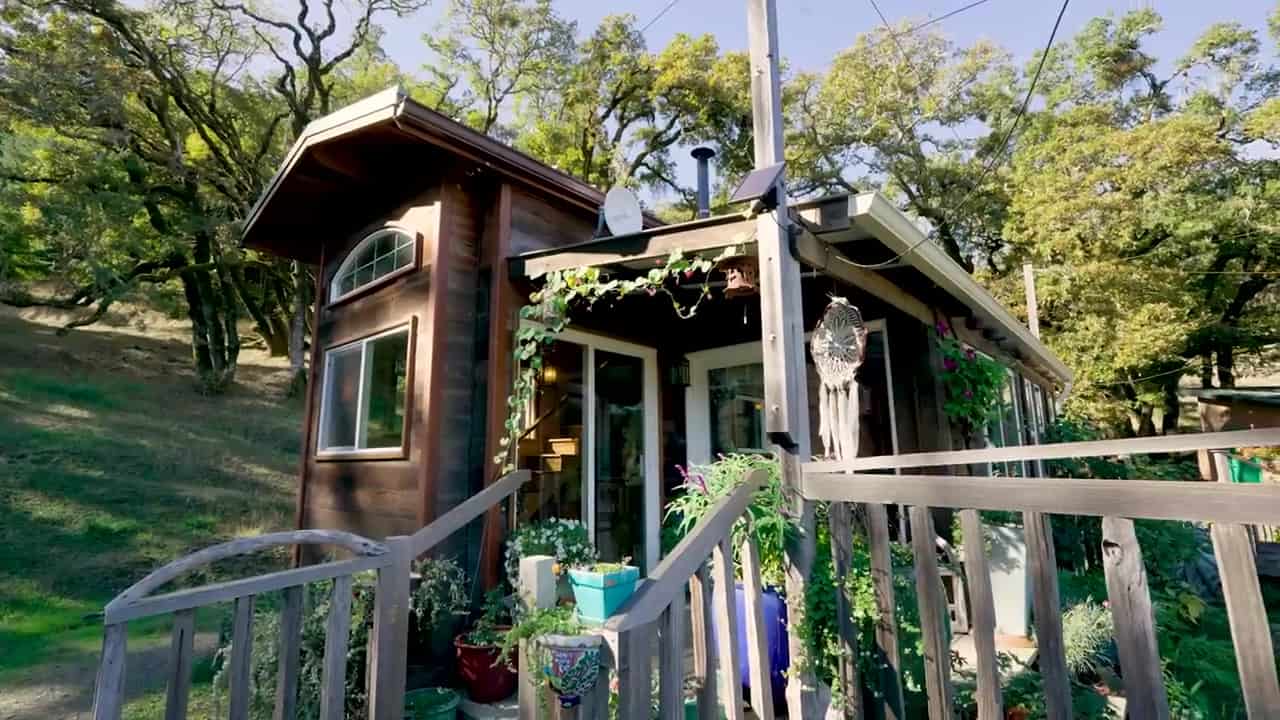
Photo via Tiny House Giant Journey/YouTube
Built with her dad over three years, no house loan
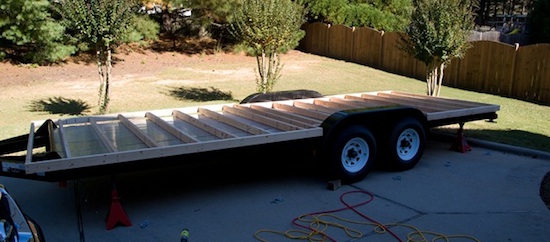
Paying as you go can take a while, and that's fine. Caitlin and her carpenter dad started her off-grid tiny house in 2014 and finished about three years later, gathering materials over time, including used windows and doors. She figures it came to roughly $30,000 to $40,000, with no house loans. Eight years on, she still lives there.
2. RV loans
How it works: A loan secured by the home itself, offered by banks, credit unions, and online lenders. For tiny houses on wheels, most lenders require that the home be certified as an RV, typically through the Recreation Vehicle Industry Association (RVIA), which means it was built to the RV standard (NFPA 1192). Some lenders also accept certification from NOAH (the National Organization of Alternative Housing), which inspects tiny houses using a mix of RV and residential standards. Every lender sets its own rules, so ask each one directly which certifications they accept.
Typical terms (2026): rates often start in the mid-single digits for strong credit and go higher for weaker credit; terms commonly run 10 to 20 years on larger amounts. Lenders usually want a solid credit score and a down payment.
Good for: Buyers of certified homes from established builders, and used RVs and campers.
Watch out for: Long terms mean lower payments but much more total interest. A 20-year loan on a home on wheels can outlast the home’s best years. DIY and uncertified homes usually won’t qualify.
3. Personal (unsecured) loans
How it works: A loan based on your credit and income, not secured by the house. You can use it for nearly anything, including a DIY build.
Typical terms (2026): average rates were a little over 12 percent early in the year, with a wide range depending on credit. Terms are usually 2 to 7 years, so payments are higher.
Good for: A smaller amount to finish a project, or when other loans aren’t available.
Watch out for: High rates for fair or poor credit. Origination fees taken out of the loan. Don’t borrow more than you can repay comfortably while also paying lot rent.
4. Builder financing
How it works: Many builders partner with outside lenders and help you apply. The builder usually isn’t the lender; they’re connecting you to an RV lender, personal loan company, or specialty finance company.
Good for: Convenience when buying a certified home.
Watch out for: Find out exactly who the lender is, what type of loan it is, the APR, and the total cost over the life of the loan. Compare it with your own credit union. Never let a “special financing” offer rush your decision.
5. Home equity loans and HELOCs
How it works: If you own a home with equity, you borrow against it. A home equity loan is a lump sum with a fixed rate. A HELOC (home equity line of credit) works more like a credit card with a variable rate; you draw what you need.
Typical terms (2026): HELOC averages were around 7 to 7.5 percent in mid-2026, lower than most personal loans.
Good for: Homeowners building an ADU on their own property, or building small on land while keeping the main house as a rental or for family.
Watch out for: Your house is the collateral. If you can’t pay, you could lose it. Variable rates can rise. If you plan to sell the house, the HELOC must be paid off at closing.
Want to do this on paper?
The printable PDF of The Tiny House Money Plan has fill-in worksheets for this step, including:
- Debt and Funding Sources Map
They come with all five guides in the Going Tiny Toolkit.
6. Chattel loans (park models and manufactured homes)
How it works: A chattel loan is secured by the home as personal property, not real estate. It’s the common way to finance a manufactured home in a community where you rent the lot, and some specialty lenders offer similar loans for park model RVs.
Typical terms: rates are usually higher than mortgages, often by two to five percentage points. Down payments vary. Some park model lenders treat the unit as a second home and require that you have a primary residence elsewhere, so ask about full-time living specifically.
A government option for manufactured homes: FHA’s Title I program insures loans for HUD-code manufactured homes, including home-only loans. It has loan limits that are adjusted over time; ask an FHA-approved lender for current limits. This applies to manufactured homes built to the HUD code, not to tiny houses on wheels or park models.
Watch out for: Higher rates, shorter terms, and the fact that the home may lose value over time, especially if you don’t own the land under it.
7. Mortgages for small homes on foundations
How it works: A small house on a permanent foundation, on land you own, can qualify for a regular mortgage, including conventional, FHA, VA, or USDA loans if you and the property qualify. For new construction, people often use a construction loan that converts to a mortgage.
Why it can still be hard: Appraisers value homes by comparing them to similar recent sales nearby. If there are no other 500-square-foot homes in the area, the appraisal can come in low. Some lenders also have minimum loan amounts, so a very small loan can be harder to get than a larger one. That’s part of Emily’s frustration in the quote at the start of this guide.
Helpful options for lower-income buyers
- USDA Rural Development offers home loan programs for lower-income buyers in eligible rural areas, including direct loans for modest homes. Ask your local USDA Rural Development office whether your area and income qualify.
- Habitat for Humanity affiliates build and sell modest homes with affordable mortgages to partner families who meet income guidelines and contribute volunteer hours.
- Community land trusts in some areas sell homes at below-market prices while the trust keeps the land.
- HUD-approved housing counselors offer free or low-cost advice on buying and on these programs. Find one through the Consumer Financial Protection Bureau’s counselor search.
8. Seller financing for land
How it works: The person selling you land acts as the bank. You make a down payment and monthly payments to them. Rural land is often sold this way.
Good for: Buyers who can’t get a bank land loan.
Watch out for: Some arrangements, often called a “contract for deed” or “land contract,” keep the title in the seller’s name until you pay in full. In some states, missing payments can mean losing the land and everything you’ve paid. Before you sign, have a real estate attorney or title company review the contract, run a title search, confirm the land is legally buildable and has access, and make sure the agreement is recorded with the county.
9. Credit unions
How it works: Credit unions are member-owned and are often more flexible than big banks on smaller or unusual loans. Many offer RV loans, personal loans, and sometimes land loans. Some offer “credit builder” loans or share-secured loans that help you build or repair credit.
Good for: Almost everyone. Call or email two or three local credit unions and ask plainly: “Do you finance tiny homes, park models, or RVs used as a primary residence? What do you require?” You can find credit unions near you at mycreditunion.gov.
10. Retirement funds (please read the warning)
Talk to a professional before touching retirement money
Retirement money is meant to support you for the rest of your life. Using it for a house can leave you with less income later, and withdrawals can trigger taxes and penalties. Please talk with a fee-only financial planner or tax professional before doing this.
- Traditional 401(k) and IRA withdrawals before age 59½ are generally taxed as income and also hit with a 10 percent early withdrawal penalty, unless an exception applies.
- The IRA first-time homebuyer exception lets you withdraw up to $10,000 (a lifetime limit) from an IRA without the 10 percent penalty to buy, build, or rebuild a principal residence, if you haven’t owned a main home in the past two years. Income tax may still apply on traditional IRA money. Whether a particular tiny house qualifies as a principal residence is a question for a tax professional.
- The “Rule of 55” may allow penalty-free withdrawals from the 401(k) of an employer you leave in or after the year you turn 55. Taxes still apply.
- 401(k) loans are allowed by some plans. You repay yourself, but if you leave your job, the balance may come due quickly.
11. Family loans and family land
How it works: A relative lends you money, or lets you place a home on their property.
Good for: Readers who can’t get a loan elsewhere, and families who want to live closer together.
Watch out for: Money between family members can strain relationships. Protect everyone with a written agreement:
- Amount, interest rate (if any), and monthly payment.
- What happens if a payment is missed or someone loses income.
- For land: who owns the home, who owns the land, who pays which utilities and taxes.
- What happens if the landowner dies, sells, or divorces, or if you want to move.
- Signatures, dates, and copies for everyone.
For larger family loans, IRS rules on minimum interest and gifts can apply. A short consultation with a tax professional or attorney is money well spent.
12. Rent-to-own sheds and cabins
How it works: Many shed and cabin dealers offer rent-to-own: a monthly payment for 24 to 60 months, usually with no credit check, after which you own the building.
The pros: low money up front, no credit check, and you can usually return the building and walk away.
The cons: you pay more in total than paying cash or using a bank loan, often much more. If you stop paying, you typically lose what you’ve paid and the building is picked up. And most important: a shed is sold as a storage building. Turning it into a home may require permits, insulation, plumbing, electrical work, and approvals, and in many places a shed cannot legally be lived in at all. Check local rules before signing.
A real home from Tiny House Talk
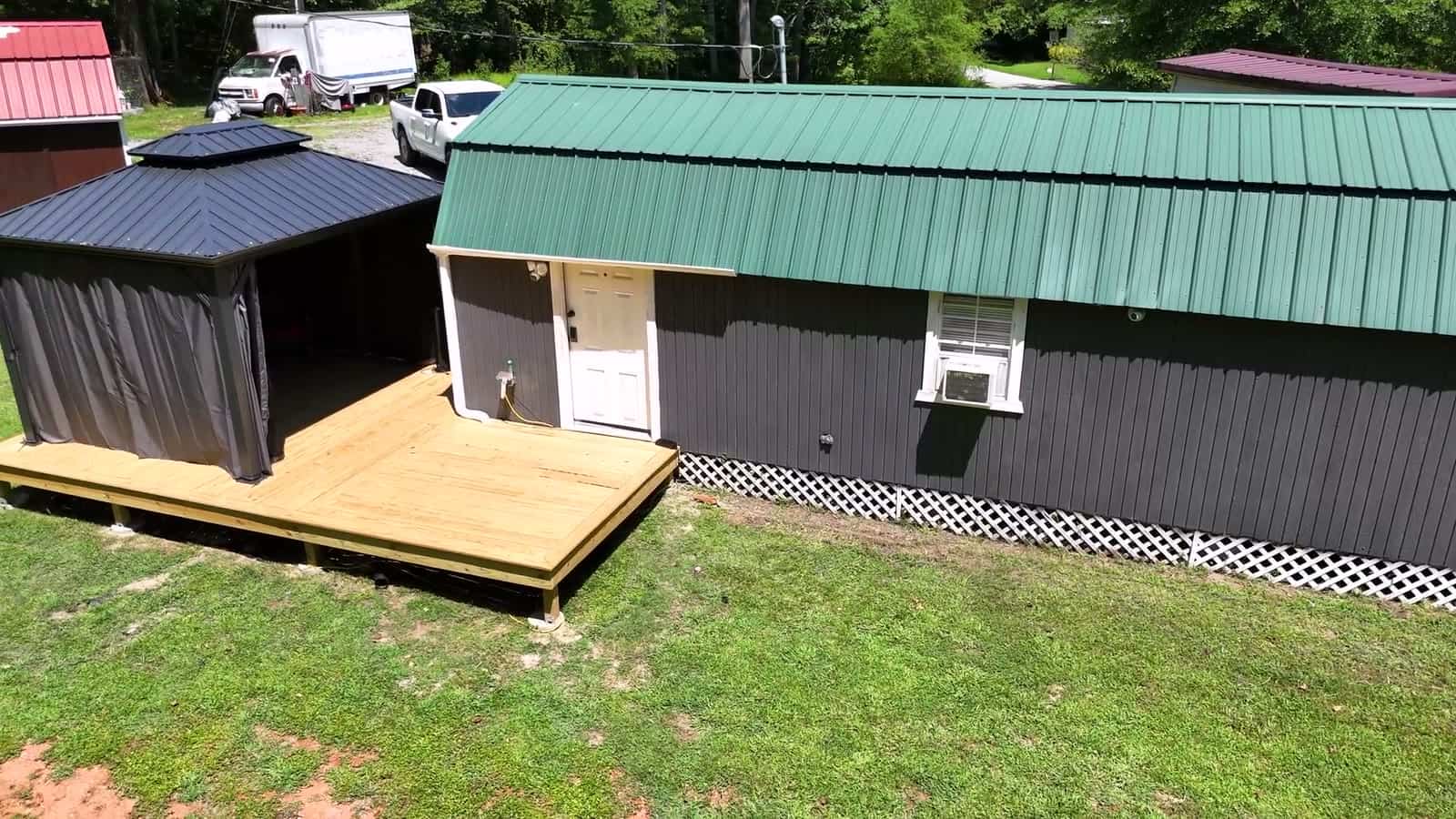
Photo via Tiny House Giant Journey/YouTube
Turning a shed into a home takes more than the shed
Budget for finishing any shed, not just buying it. Stan's family had an unused $12,000 shed on their land. He and his dad added about $4,000 in materials to turn it into a home with a kitchen, a plumbed bathroom, and a bedroom. The video puts the total at $16,000, with bills about $262 a month.
What about grants?
Readers often ask about “tiny house grants.” Honestly, there are very few grants for individuals to build or buy a tiny house, and anyone promising a big grant in exchange for a fee is very likely a scam. Real help usually comes through local housing programs, home repair programs for older homeowners, Habitat for Humanity, USDA Rural Development, or local nonprofits. A HUD-approved housing counselor can help you find what exists where you live.
Fill in your funding map
On Worksheet 4 (Debt and Funding Sources Map) you’ll list every possible source of money: savings, sale proceeds, things to sell, family help, and loan options worth asking about. Seeing them side by side often reveals a combination that works when no single source would.
Your turn
What's the money question you're stuck on right now? Tell me in the comments.
Want the whole series in one place?
This series is free to read here, and it always will be. If you’d rather have it as five clean, printable PDFs, that’s the Going Tiny Toolkit:
- The Tiny House Money Plan (the guide this chapter comes from): real 2026 cost ranges, a savings plan for any income, and every way people pay
- Where Can I Put It?
- Tiny Without the Ladder
- Bringing Them On Board
- Your First Tiny Steps
Every guide adds printable worksheets and a 30-day action plan, and Tiny Without the Ladder comes with the bonus One-Level Floor Plan Idea Book (18 to-scale floor plans). All five are $47, with a 30-day refund.
← Previous: Part 6: Selling the Big House to Downsize: The Real Math
Next (tomorrow): Part 8: Tiny House Insurance, Scams, and Protecting Your Money
Not sure which part matters most for you? The free 10-minute What’s Really Holding You Back? quiz tells you where to start. And to get a new part (and a new home) in your inbox each day, join the free Tiny House Newsletter.
Disclosure: This post may contain affiliate links. If you purchase through one of our links, we may earn a commission at no additional cost to you.


Alex
Latest posts by Alex (see all)
- Gracious Tiny House Park: Waterfront Tiny House Living on Lake Okeechobee - October 25, 2026
- How People Actually Pay for a Tiny House: Every Option - October 25, 2026
- 13 Cozy Cabins Perfect for Fall Nights - October 24, 2026