Disclosure: This post may contain affiliate links. If you purchase through one of our links, we may earn a commission at no additional cost to you.
Right after readers ask whether they can legally live in a tiny house in Florida, they ask the follow-up that decides whether any of it is possible: can I actually finance one?
Yes. But almost certainly not with a mortgage, and that surprises people. The financing world splits tiny houses along exactly the same line Florida law does, and which side you land on changes your interest rate, your loan term, your monthly payment, your tax treatment, and whether the home builds equity or loses value the moment you take delivery.
Here is how tiny house lending actually works in Florida in 2026, what the numbers look like, and the Florida-specific costs that never show up in a builder’s quote.
The short answer
On a permanent foundation: It is real property. Conventional, FHA, USDA, and VA mortgages are all possible. The obstacle is not the loan program, it is finding an appraiser who can locate comparable sales.
On wheels: It is personal property. You are looking at an RV loan, a chattel loan, or a personal loan. Rates run higher than a mortgage, terms are shorter, and the home depreciates rather than appreciates.
Financing Follows the Same Fork as the Law
If you read our guide on whether you can legally live in a tiny house in Florida, this will feel familiar. Foundation-built homes are dwellings. Homes on wheels are vehicles. Lenders sort themselves the same way, because a lender’s entire risk model rests on what happens to the collateral if you stop paying.
A mortgage is secured by land and a structure that generally holds or gains value. An RV loan is secured by a titled vehicle that loses value on a predictable curve. Same house, same buyer, same credit score, completely different loan.
Track 1: Foundation-Built Homes Can Get a Real Mortgage
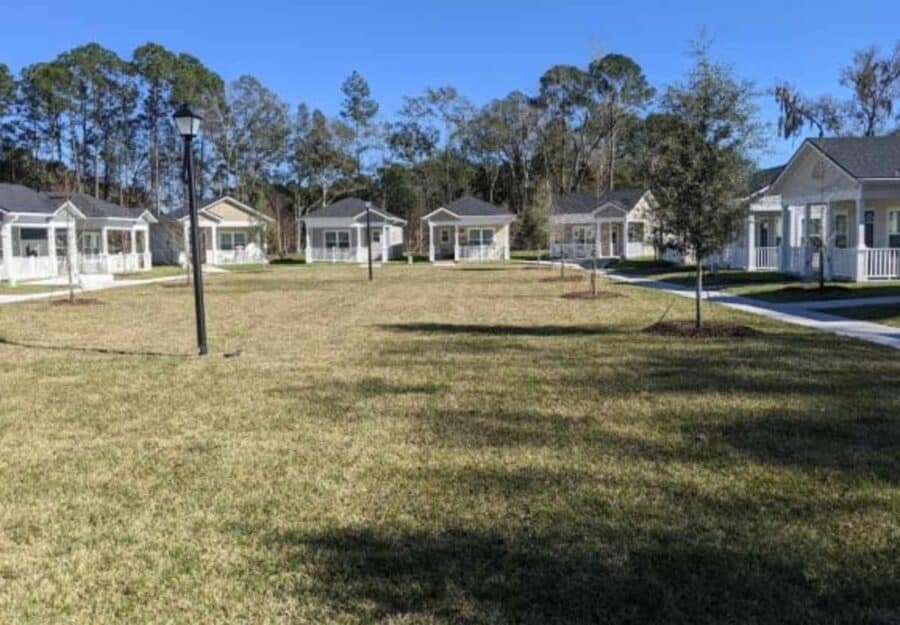
If your tiny house is permanently affixed to land you own, you are in mortgage territory, and the terms are dramatically better: 15 to 30 year amortization, the lowest available rates, and interest that may be deductible.
Conventional financing
Fannie Mae’s current Selling Guide requires a manufactured home to be at least 12 feet wide with a minimum of 400 square feet of above-grade finished area. Worth flagging, because a great many tiny house articles still cite a 600 square foot minimum for conventional loans. That figure is outdated. Site-built small homes have no stated square footage floor at all, only the requirement that the home be acceptable to typical buyers in the market.
FHA
FHA is often the friendliest path for a small home, with lower credit thresholds and down payments as low as 3.5%. FHA also runs the Title I Manufactured Home Loan Program, whose limits were raised in 2024 for the first time since 2008 and are now recalculated annually. As of the most recent update, the caps were $105,532 for a single-section manufactured home loan, $148,909 for a single-section combination home-and-lot loan, and $43,377 for a lot loan. Because these index each year, confirm the current figures with your lender rather than relying on any article, including this one.
USDA
This is the underused option in Florida. USDA Rural Development offers 0% down financing, and a surprising share of Florida sits inside eligible rural boundaries once you leave the metro cores. For 2026, households of one to four must earn under $122,800, and households of five to eight under $162,100. The USDA 502 Direct program goes further for very low income borrowers, with subsidized rates and extended terms. If you are buying rural land and building small, check the USDA eligibility map before you assume you need a conventional loan.
VA
Eligible veterans can use a VA loan on a small foundation-built home with 0% down, subject to the same appraisal reality below.
The appraisal problem is the real obstacle. Every one of these programs requires comparable sales. If no similar small home has sold near your parcel recently, the appraiser has nothing to work from, and the loan stalls no matter how strong your credit is. This is why tiny house mortgages are easier in areas that already have small homes and harder in neighborhoods full of 2,400 square foot houses. Ask your lender about comps before you spend money on plans.
Track 2: Tiny Houses on Wheels Use RV, Chattel, or Personal Loans
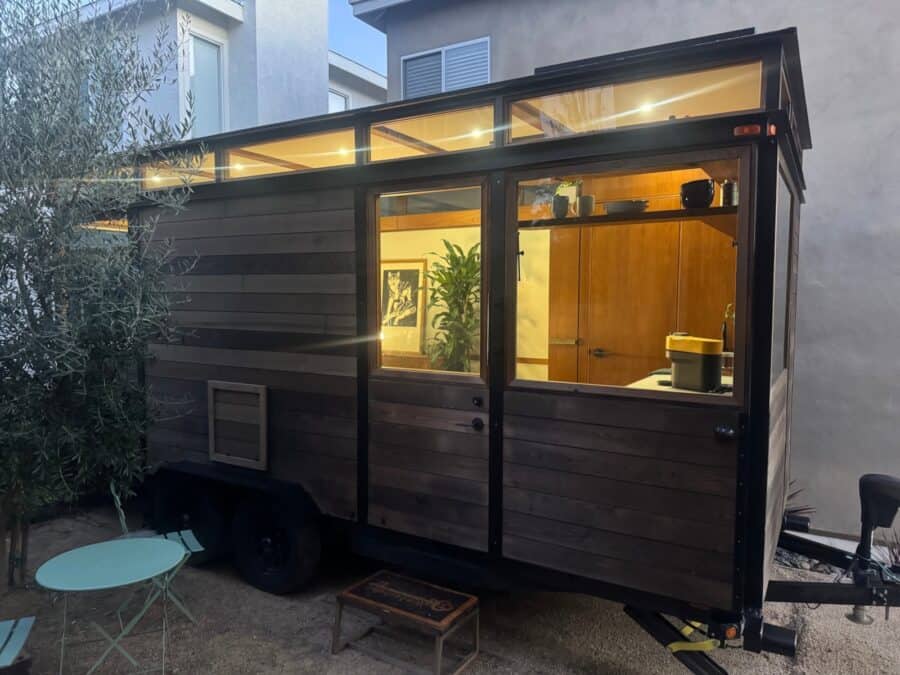
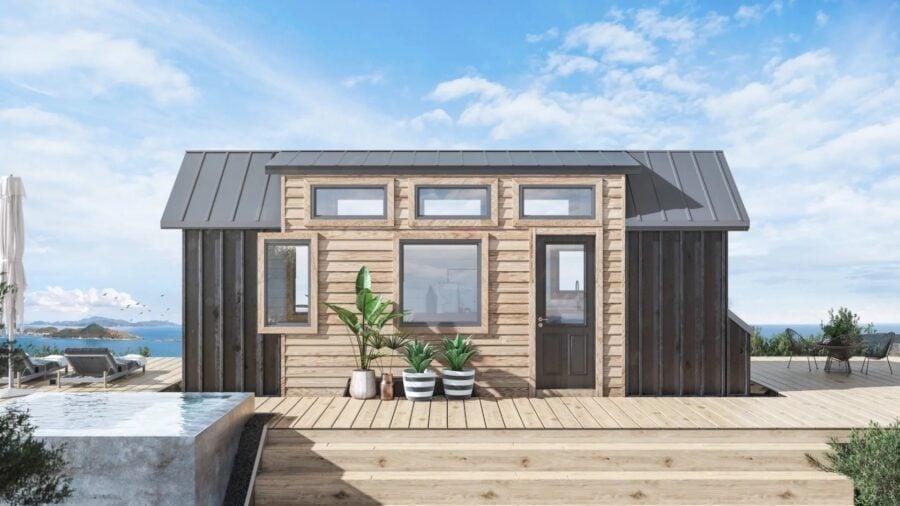
Most Florida tiny house buyers end up here. These loans are real and widely available, but the economics differ meaningfully from a mortgage.
| Loan type | Typical rate | Typical term | Key requirement |
|---|---|---|---|
| RV loan | From roughly 6.5% | 10 to 20 years | RVIA certification, secured by the home |
| Chattel loan | About 6.9% to 9.5% | 5 to 20 years | Covers the structure only, never the land |
| Personal loan | Roughly 7.9% to 14%, sometimes far higher | 2 to 7 years | No collateral, no certification needed |
| HELOC | Varies with prime | Revolving | Requires existing home equity |
Lenders in this space generally want a credit score around 680 or better, a debt-to-income ratio under 45%, and 10% to 20% down, though some specialty lenders go considerably lower on credit. Builders frequently advertise in-house financing, which in practice usually means a referral to a consumer finance partner. That is fine, but compare it against your own credit union before accepting it.
A personal loan deserves a specific warning. The rate looks tolerable, but a five-year term on an $80,000 home produces a punishing monthly payment. Personal loans make sense at the lower end of the market, not the upper end.
Why RVIA Certification Is the Single Most Important Detail
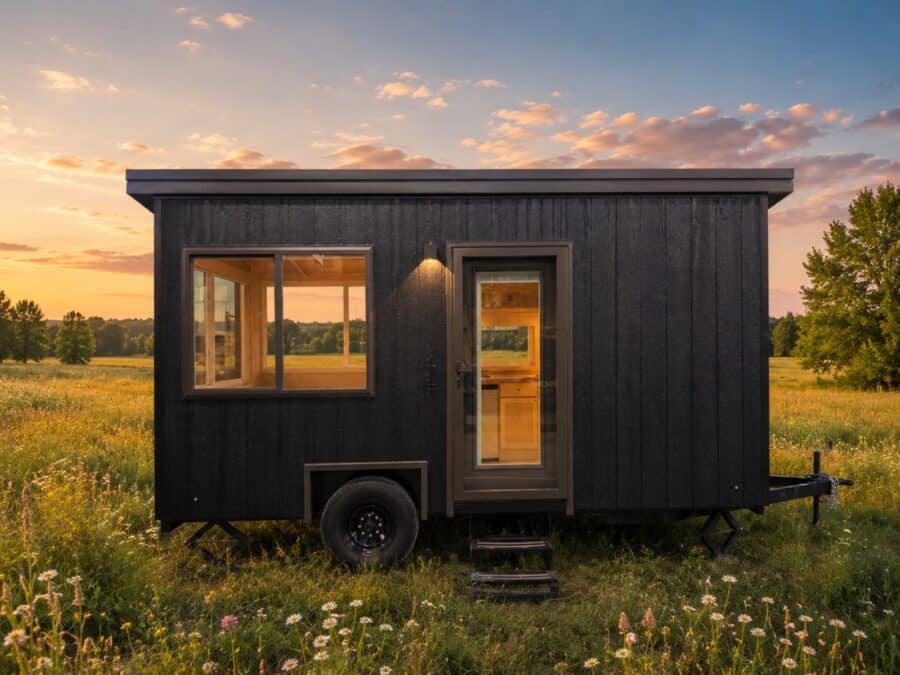
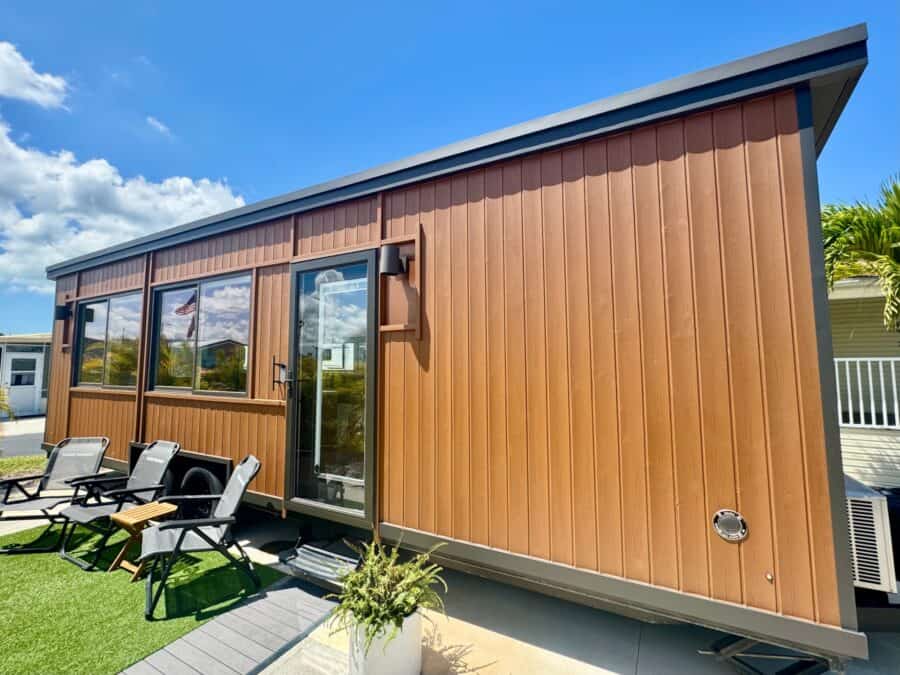
If you take one practical thing from this article, make it this. For a tiny house on wheels, RVIA certification is what makes the home financeable at a reasonable rate. It is the credential RV lenders underwrite against, and without it most of them will not open a file.
An uncertified, owner-built tiny house on wheels is the hardest thing in this market to finance. It is not real property, so no mortgage. It is not a certified RV, so no RV loan. That typically leaves an unsecured personal loan at a higher rate over a much shorter term, which is a materially worse deal.
Certification also affects where you can legally park, where you can insure, and how easily you can resell. If you are buying used, confirm the seal exists rather than taking the seller’s word for it.
The Florida-Specific Costs Nobody Puts in the Quote
Documentary stamp tax and intangible tax. If you finance with a mortgage in Florida, the state charges documentary stamp tax on the promissory note at $0.35 per $100 financed, plus a nonrecurring intangible tax of 2 mills, or $0.20 per $100, on the mortgage itself. On a $200,000 loan that is roughly $700 in doc stamps and $400 in intangible tax before any other closing cost. RV and chattel loans are not mortgages and are not subject to these, which is one of the few places the wheels route is genuinely cheaper.
Insurance. Florida’s property insurance market is difficult, and your lender will require coverage including windstorm. Get a real quote before closing rather than a rough estimate. In some coastal counties this line item changes the affordability math entirely.
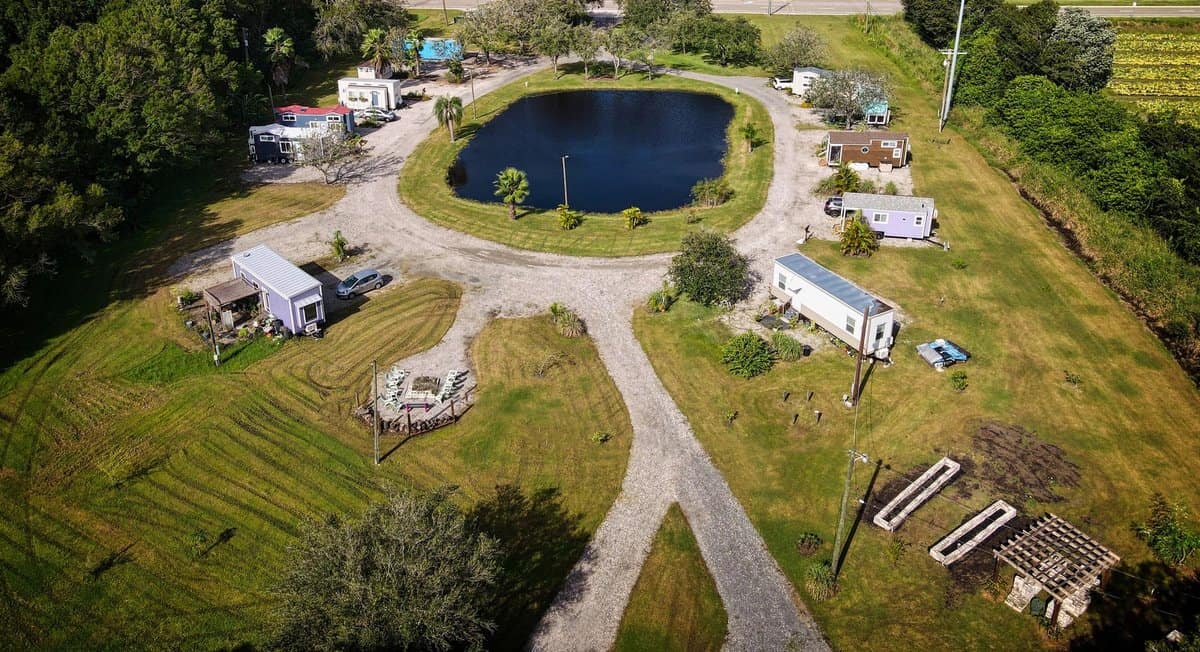
Lot rent. If your home sits in a community, lot rent is a separate monthly obligation that your loan does not cover and that can rise over time. Budget it alongside the payment, not instead of it.
Land. Chattel and RV loans never include land. If you intend to own the parcel, that is a second transaction, usually a land loan with a larger down payment and a shorter term than a mortgage.
Appreciation Versus Depreciation: The Number That Matters Most
This is the part that gets the least attention and deserves the most.
A foundation-built tiny house on owned land behaves like real estate. The land tends to appreciate, you build equity with each payment, you can refinance, and you qualify for Florida’s homestead exemption and the Save Our Homes assessment cap.
A tiny house on wheels behaves like a vehicle. It depreciates. Five years into a 15-year RV loan it is entirely possible to owe more than the home is worth, which makes selling difficult and refinancing nearly impossible. It also does not qualify for the homestead exemption, because it is not real property.
That does not make the wheels route wrong. Lower entry cost, mobility, and no land purchase are real advantages, and for many people the monthly cost still beats Florida rent. But go in understanding that you are buying a lifestyle and a low monthly payment, not an appreciating asset.
One Tax Break Most Owners Miss
IRS Publication 936 defines a qualified home as a house, condominium, cooperative, mobile home, house trailer, boat, or similar property that has sleeping, cooking, and toilet facilities. A tiny house on wheels with all three can qualify as a main or second home for the mortgage interest deduction, as long as the loan is secured by the home itself.
The conditions are real: you have to itemize rather than take the standard deduction, and you cannot already have another property using your second home slot. Talk to a tax professional about your situation, but do not assume that a home on wheels automatically forfeits the deduction. Many owners never claim it simply because nobody told them they could.
How to Make Yourself Financeable
- Decide foundation or wheels first. Every other financial decision follows from it.
- Buy certified if you are going on wheels. RVIA or ANSI A119.5.
- Get pre-approved before you order. Custom builds often require deposits and progress payments that a loan will not release on your schedule.
- Ask about comps early if you are going the mortgage route. It is the most common failure point.
- Shop at least three lenders, including a local credit union. Credit unions are consistently competitive on RV paper.
- Get the lot lease in writing if you are moving into a community. Lenders often want to see it, and you want to know the rent escalation terms.
- Price insurance before closing, not after.
- Compare total interest, not just the rate. A 20-year RV loan at a low rate can cost more overall than a shorter loan at a higher one.
The Bottom Line
You can absolutely finance a tiny house in Florida. The question is which financial product you qualify for, and that is settled by whether the home is permanently attached to land.
Build on a foundation and you get mortgage rates, long terms, equity, the homestead exemption, and a home that participates in Florida’s land values, provided you can clear the appraisal. Buy on wheels and you get a lower entry price, mobility, and a faster approval, at the cost of a higher rate, a shorter term, and an asset that depreciates.
Both are legitimate paths, and plenty of Floridians are happy on each. The buyers who get hurt are the ones who assume a tiny house comes with a small mortgage, discover at the last minute that no such loan exists for their build, and end up signing a short high-rate personal loan for a home they cannot easily resell. Sort out the financing before you fall in love with a floor plan.
Related Reading
- Can You Legally Live in a Tiny House in Florida?
- The Ultimate Guide to Tiny House Living in Florida
- Best Tiny Homes Under $75K
- No Rent, No HOA: 5 Tiny Home Owners Who Cracked the Code on Land
- Retirement Tiny House Guide
- RVIA-Certified Escape One XL in Tampa Bay
- Circle Pond Tiny Home Community in Ruskin, Florida
- Best Tiny House Builders Guide
This article is general information for Florida tiny house shoppers, not financial, tax, or legal advice. Rates, loan limits, and income thresholds change frequently. Confirm current terms with a licensed lender and a tax professional before making a purchase.
Disclosure: This post may contain affiliate links. If you purchase through one of our links, we may earn a commission at no additional cost to you.


Alex
Latest posts by Alex (see all)
- Canoe Bay Village Lakeside Homes in Wisconsin: Tour Them at Escape’s Open House Weekend - October 15, 2026
- The Biblioteque: A Library Treehouse Wrapped Around a Texas Cypress - October 15, 2026
- Kay’s Nest: A Two-Story Hideaway Near Yosemite With a Loft Studio and a Game Room - October 15, 2026