Disclosure: This post may contain affiliate links. If you purchase through one of our links, we may earn a commission at no additional cost to you.
Choosing a tiny house builder could be the single biggest decision you’ll make on your downsizing journey. The right company turns a 200-square-foot trailer into a home you’ll love for a decade; the wrong one can leave you with a leaky, poorly insulated box and a voided warranty. With hundreds of builders now operating across North America, separating the proven craftspeople from the fly-by-night operators takes some homework.
We’ve spent years featuring tiny homes from builders large and small, and this guide gathers the companies we come back to again and again. These are builders with real track records, distinctive design points of view, and the certifications that make financing, insurance, and parking possible. Whether you want an architect-designed showpiece, a four-season home that shrugs off a Canadian winter, or simply a rock-solid trailer to start your own build, there’s a name here for you.
What Makes a Great Tiny House Builder
Before you fall in love with a floor plan, it helps to understand what actually separates a great builder from a risky one. A few things matter more than the Instagram photos:
- Certification. A tiny house on wheels is legally a recreational vehicle, and certification proves it was built to a recognized standard. The big three are RVIA (the RV industry’s standard, which unlocks conventional RV financing and insurance), NOAH (a third-party inspection program many builders favor for its rigor), and PWA / Pacific West Associates (another widely accepted third-party inspection). Park models are typically built to the ANSI A119.5 standard. Builders who certify give you a far easier path to insure, finance, and legally park your home.
- Track record. How many homes has the company actually delivered, and for how long? A builder with 50, 100, or 350 completed homes has worked the bugs out of its process.
- Custom vs. production. Some builders sell fixed, repeatable models (faster, often cheaper, more predictable). Others design every home from scratch (slower and pricier, but yours). Knowing which you want narrows the field fast.
- Climate engineering. If you’re parking somewhere with real winters, insulation values, heating systems, and four-season ratings matter enormously. Not every builder builds for the cold.
- Price transparency. The best builders publish starting prices or give clear, itemized quotes. Vague pricing is a yellow flag.
With that framework in mind, here are the builders worth your attention.
1. Escape (Escape Traveler)
Best for: Architecturally beautiful, light-filled homes with rental potential
Location: Rice Lake, Wisconsin
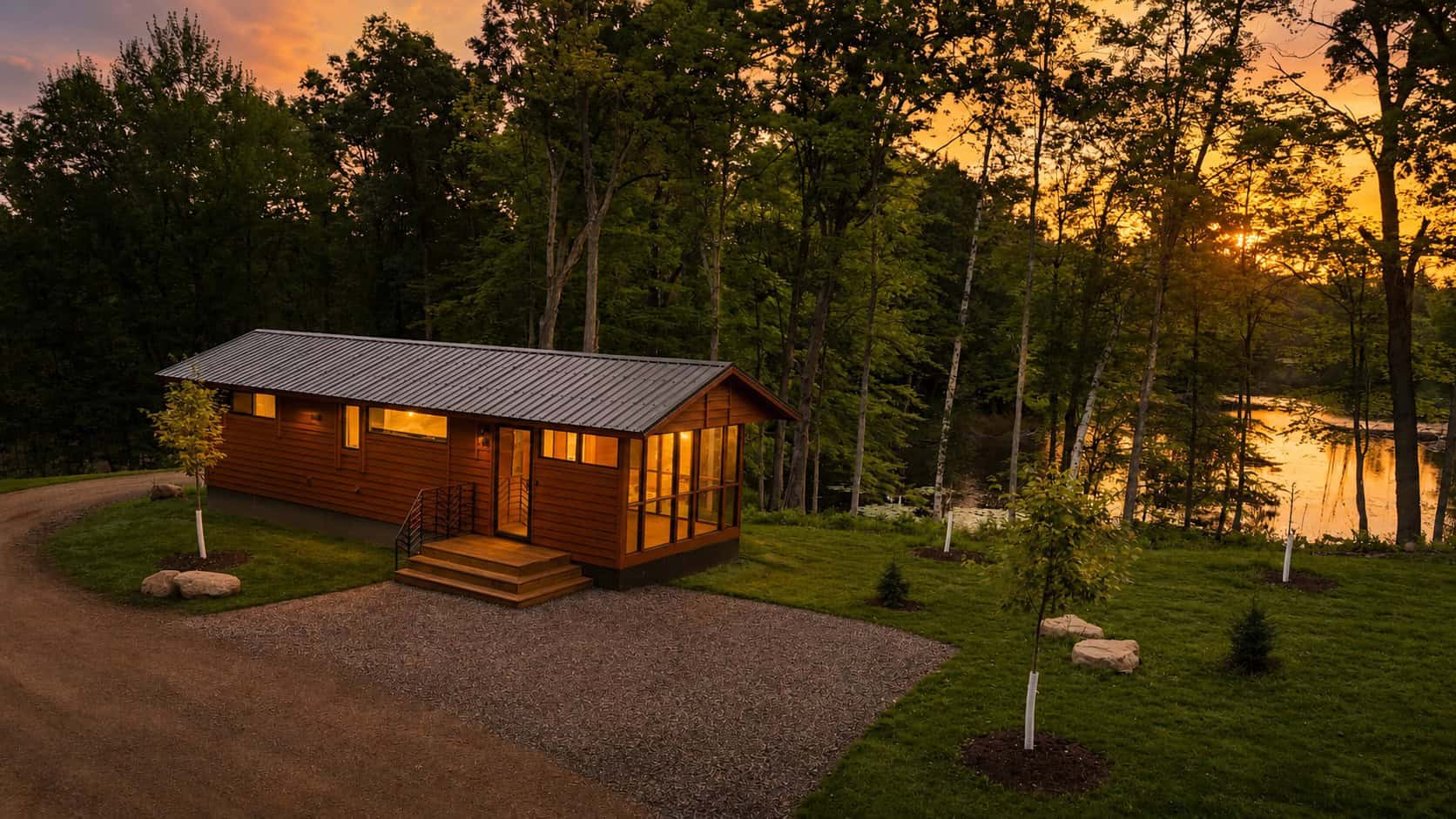
Founded by Frank Lloyd Wright devotee Dan Dobrowolski, Escape has earned a reputation for some of the most beautiful tiny homes in the world — Forbes literally used that phrase. The Wright-inspired aesthetic shows up in wraparound windows, low horizontal lines, and open, light-flooded interiors. The flagship Vista (221 sq. ft.) is the model that launched a thousand screenshots, and the company’s growing e-series of all-electric homes (eVISTA, eONE, eVISTA King) leans into energy efficiency.
Escape is RVIA-certified and sells direct to consumers — no dealer markup. It also operates two of its own communities, Escape Tampa Bay in Florida and Canoe Bay Village in Wisconsin, where you can experience a unit before you buy and where many owners run their homes as short-term rentals. See an Escape One XL we featured or the recent eVista King. Website: escapetraveler.net

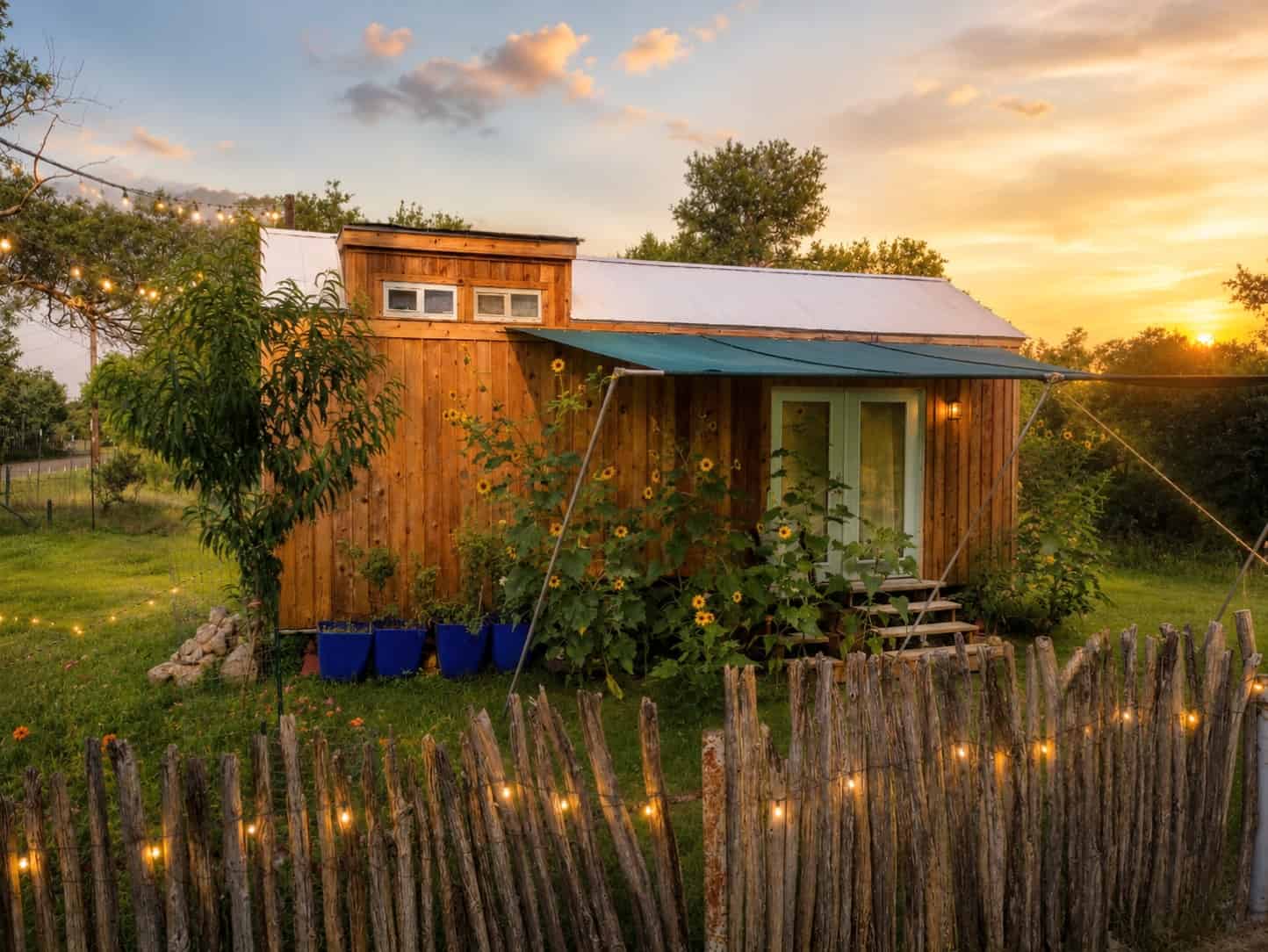
▶ See the full tour: Nancy Yvonne — an Escape vacation tiny house near Austin, Texas
2. Tru Form Tiny
Best for: Single-level luxury living with vaulted ceilings
Location: Eugene, Oregon
Tru Form Tiny has quietly become one of the most polished luxury builders in the country, with more than 350 homes completed in roughly a decade. They work in two design families: Urban (clean lines, modern materials, open plans) and Craftsman (warmer, more traditional finishes). What sets their homes apart is livability — 11-foot vaulted ceilings, king-size main-floor master suites, quartz counters, and French doors that blur the line between inside and out.
The Cascade Max, a Craftsman-style park model under 400 sq. ft., starts around $198,900 and is the model many buyers fall for. Other standouts include the larger Villa Max and the Payette with its space-saving elevating bed. The team cites PHIUS and LEED building backgrounds, and customization is central to their process. Tour the Cascade Max or the Villa Max. Website: truformtiny.com
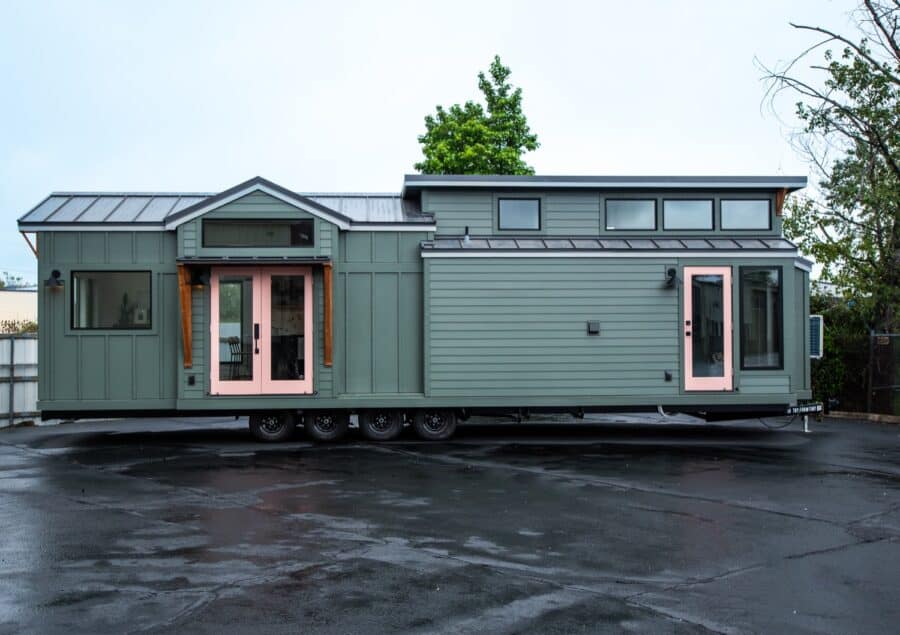
▶ See the full tour: The Cascade Max — a 399 sq. ft. modern mountain park model
3. New Frontier Design
Best for: Award-winning luxury and dramatic, magazine-worthy design
Location: Nashville, Tennessee
If there’s a builder that put luxury tiny homes on the design world’s radar, it’s New Frontier Design (formerly New Frontier Tiny Homes), led by founder David Latimer. Their breakout model, the Alpha, became famous for its glass garage-door wall that opens the entire living space to the outdoors. It’s been covered everywhere from Architectural Digest and Dwell to Good Morning America, and the firm has even built for Disney, Dunkin’, and Le Labo.
This is the high end of the market. The Alpha starts around $225,000 and the family-friendly Escher around $235,000, while the more accessible Luna (a collaboration with Zook Cabins) starts near $150,000. Homes are PWA-certified, with RVIA available for an added fee. You’re paying for genuine architecture — spa-inspired baths, custom cabinetry, and clever multi-functional furniture. Website: newfrontierdesign.com
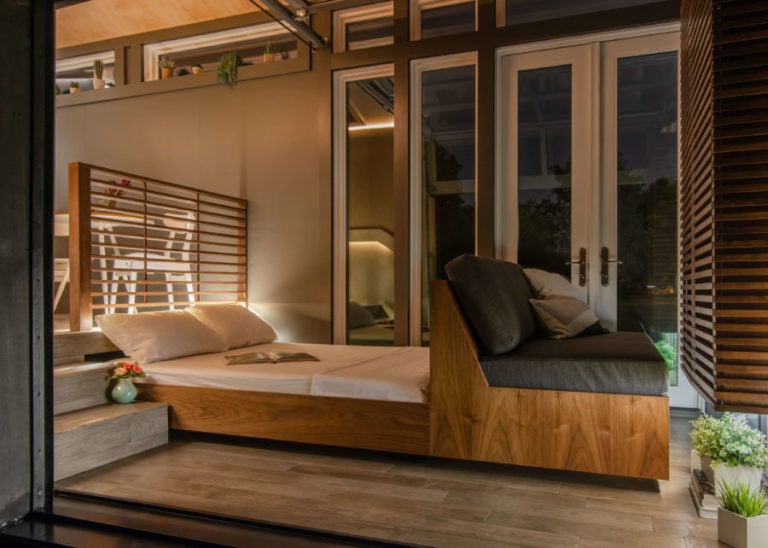
▶ See the full tour: The Orchid — a light-filled THOW with a pull-out bench bed
4. Movable Roots
Best for: No-loft, main-floor master layouts and hurricane-rated builds
Location: Melbourne, Florida
Founded in 2017 by the Cheatham family, Movable Roots carved out a distinctive niche: tiny homes designed around a main-floor master bedroom, so you never have to climb a ladder to bed. That makes them a favorite for older buyers and anyone planning to age in place. Beyond tiny homes on wheels, they build Park Model RVs and — within Florida — modular foundation homes built to the state’s tough building code and wind ratings.
Their lineup spans the compact Casita Studio (312 sq. ft.) and Ellie ADU (432 sq. ft., from $135,000) up to the 36′ Bozeman Park Model. Custom THOWs run roughly $79,999 to $225,000 depending on size and finishes. Off-grid power upgrades, composting and incinerating toilets, and cold- and heat-climate add-ons are all on the menu. Homes are third-party certified through PWA. Website: movableroots.com
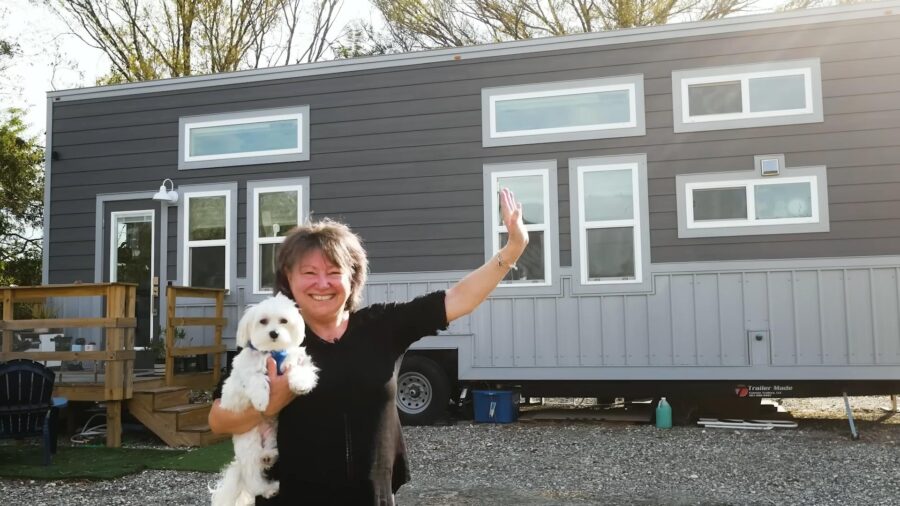
▶ See the full tour: A $160K custom Movable Roots build — a social worker’s tiny retirement home
5. Minimaliste
Best for: Four-season, full-time living in extreme climates
Location: Saint-Pierre-de-l’Île-d’Orléans, Quebec, Canada
If you’re parking somewhere with brutal winters, Minimaliste belongs at the top of your list. Founded in 2015, this Quebec builder engineers homes for genuine four-season, full-time living — rated for roughly −30°C to +30°C thanks to high-performance insulation and efficient heating and cooling. These aren’t fair-weather tiny homes.
The lineup runs from the entry-level Nomad series (from about CAD $119,500) up through family-sized models like the Noyer XL and the flagship Charme, which sleeps six across three bedrooms. Minimaliste carries an impressive certification stack — RVIA, NOAH, NHTSA, and Canadian road-legal standards — and offers solar-ready and off-grid packages plus a three-year structural warranty. It’s one of the most credentialed four-season builders in North America, selling into both Canada and the U.S. Website: minimalistehouses.com

▶ See the full tour: The three-bedroom Charme — Minimaliste’s family flagship
6. Timbercraft Tiny Homes
Best for: Handcrafted luxury and large gooseneck builds
Location: Guntersville, Alabama
Building since 2014, Timbercraft has a “quality over quantity” philosophy and finishes its homes with details “typically found only in the finest homes in America.” Their widely shared Denali XL — a roughly 41-foot gooseneck with 23 wood-clad windows, two exterior doors, a folding rear porch, and an outdoor shower — became one of the most-featured large-format tiny homes on the internet.
The current lineup includes the Denali (gooseneck and park-model versions), Teton, Ridgewood, Big Sky, and more. Towable homes start at $104,000 and park models at $159,000. Timbercraft holds ANSI certification and is affiliated with PWA and the Tiny Home Industry Association, with financing available through 21st Mortgage. For buyers who want a big, beautifully appointed home built to travel and withstand high winds, it’s hard to beat. Website: timbercrafttinyhomes.com
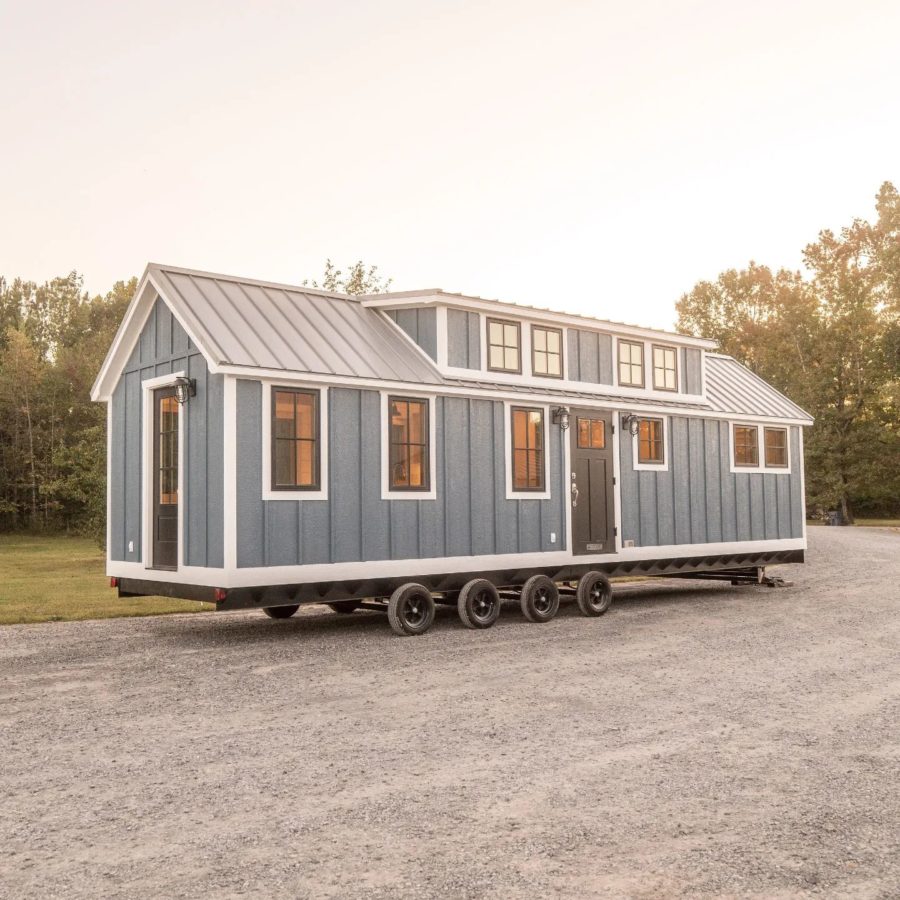
▶ See the full tour: The new Beachy Teton by Timbercraft Tiny Homes
7. Modern Tiny Living
Best for: Modern-rustic THOWs with signature storage staircases
Location: Columbus, Ohio
Born out of the Columbus tiny-home community in 2016, Modern Tiny Living blends natural materials — pine, butcher block — with contemporary touches like concrete counters and painted cabinetry. Their signature is a custom storage staircase on every model, turning the climb to the loft into usable storage. The Mohican earned a Top 25 Tiny Home in the U.S. nod and an HGTV feature, while The Point shows off their sage-and-concrete modern side.
Homes are RVIA-certified and come with a serious full-time-living mechanical package: ductless mini-split, 50-amp service, closed-cell spray foam, and a composting-toilet option. Pricing is quote-based through their online configurator, so you build to your finishes. With nearly a decade in business, they’re an established, dependable choice in the Midwest. We featured their work in a Jacksonville community. Website: moderntinyliving.com
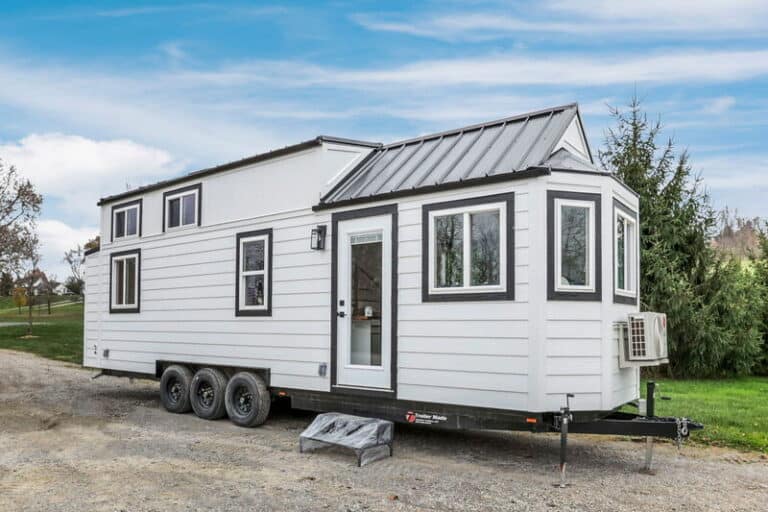
▶ See the full tour: Tink — a 28-ft custom THOW with a private home office
8. Wind River Built
Best for: Right-sized modern living, from THOWs to park models and ADUs
Location: Chattanooga, Tennessee
Wind River Built (formerly Wind River Tiny Homes) started in 2014 when founder Travis Pyke built a craftsman bungalow for himself and his wife. More than a decade later, the company runs a roughly 100,000-square-foot facility and has expanded well beyond tiny houses into luxury park models, foundation modular homes, ADUs, and even saunas. The aesthetic leans sleek and modern — wide windows, glass doors, metal roofs — with craftsman options for traditionalists.
Signature models include the contemporary Pingora (from about $88,400) and the 45-foot single-level Cumberland park model that sleeps six. Published starting prices run roughly $86,900 to $179,000, and the company earns points for genuine price transparency, listing starting figures per model. Builds are off-grid-capable and typically take six to twelve weeks. Website: windriverbuilt.com
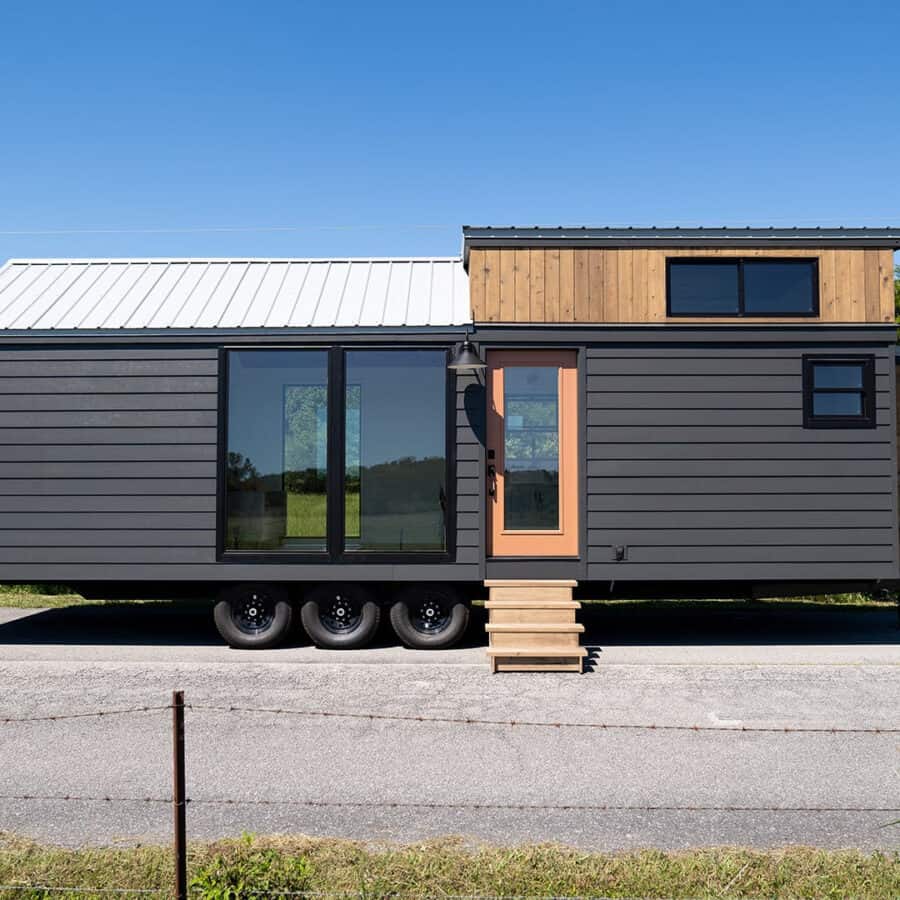
▶ See the full tour: The Etowah — a one-floor tiny home with a walk-around queen bedroom
9. Tumbleweed Tiny House Company
Best for: RV-certified homes from a movement pioneer
Location: Colorado Springs, Colorado
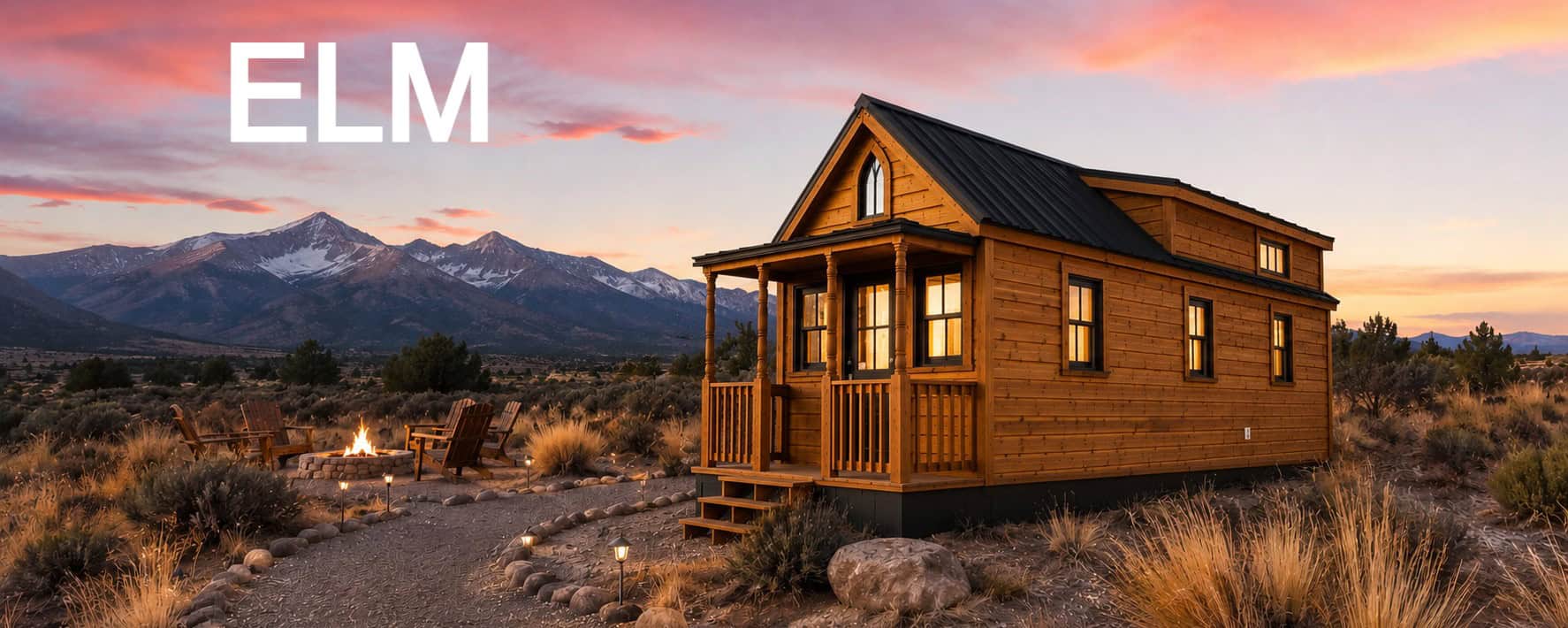
No builder list is complete without Tumbleweed. Founded in 1999 by Jay Shafer — one of the founding figures of the entire modern tiny house movement — Tumbleweed has been building and certifying tiny houses as RVs longer than almost anyone. That RVIA certification matters: it unlocks the conventional RV financing, insurance, and registration that many smaller builders simply can’t offer.
The lineup spans classic cottage silhouettes like the Elm and Cypress, the Scandinavian-inflected Farallon, and the contemporary Roanoke, each available in multiple sizes. Starting prices begin around $92,959, with RV-style financing available. For buyers who prioritize a long-established name and the easy path to insure and finance that RVIA brings, Tumbleweed remains a benchmark. Website: tumbleweedhouses.com

▶ See the full tour: A fully upgraded 2015 Tumbleweed Mica 20′ tiny house on wheels
10. Mint Tiny House Company
Best for: Dual-country (Canada + U.S.) certification and eco-friendly builds
Location: Delta, British Columbia, Canada
One of North America’s largest tiny home and park model manufacturers, Mint has built well over 100 homes in about a decade. Its calling card is a remarkable breadth of certification — CSA Z240 (RV), CSA Z241 (park model), and CSA A277 (modular) in Canada, plus RVIA and NOAH+ in the U.S. That dual-country credentialing makes Mint a smart choice for buyers who want maximum flexibility in where they can legally place a home.
The nature-inspired, sustainability-focused lineup runs from the value-priced Napa Edition (from about $105,400) to the flagship Onyx 2630 (~$149,900 CAD turn-key) and the park-model-style Ruby with its main-floor bedroom and twin lofts. Builds take roughly six to eight weeks with weekly photo updates, and pricing locks in once you contract. Website: minttinyhouse.com

▶ See the full tour: The Loft Ruby Edition by Mint Tiny House Company
11. Rocky Mountain Tiny Houses
Best for: Fully off-grid, custom mountain builds
Location: Durango, Colorado
Greg Parham started Rocky Mountain Tiny Houses in 2013 and has built 60-plus homes since, making it one of Colorado’s longest-running builders. This is a custom, from-scratch shop with a deep off-grid specialty — think solar arrays, freshwater cisterns, and signature engineering like elevator beds and fold-down decks. The rustic mountain aesthetic leans on reclaimed materials: corrugated wainscot, barn wood, and cedar shakes.
Standout builds include the fully off-grid San Juan (featured in Dwell), with solar panels that double as a porch awning and a 100-gallon freshwater tank, and the compact Boulder at just 120 sq. ft. Pricing is quote-based and ranges widely depending on how much you finish yourself — roughly $23,000 for a partial build up past $100,000 turnkey. Lead times can be long, so plan ahead. Website: rockymountaintinyhouses.com
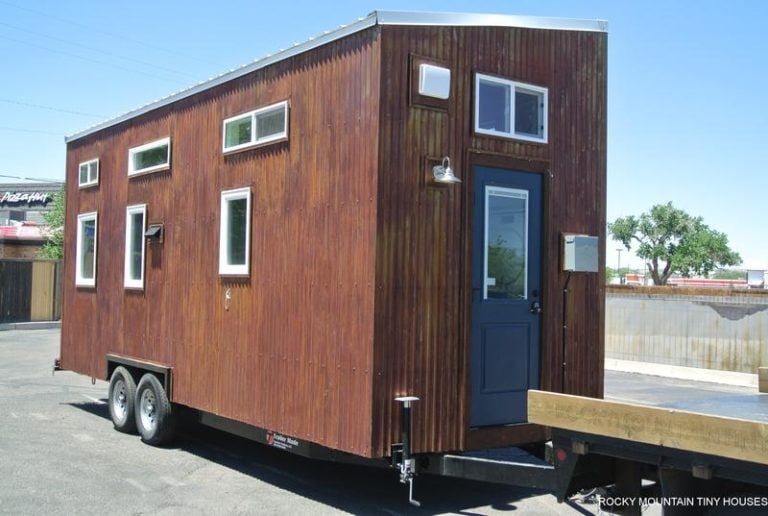
▶ See the full tour: The San Mateo — a 24-ft THOW by Rocky Mountain Tiny Houses
12. Tiny House Basics
Best for: DIY builders who need a rock-solid foundation
Location: Clayton, California
Not everyone wants a finished home — some of us want to build our own. That’s where Joshua and Shelley Engberg come in. The couple behind Tiny House Basics started by building their own 28-foot tiny house to escape Bay Area housing costs, documented the whole thing on a popular YouTube channel, and co-authored the best-selling book Tiny House Basics: Living the Good Life in Small Spaces.
Today their specialty is purpose-built tiny house trailers — the most important and most-often-botched part of any DIY build. Their trailers feature box-tube construction with dual frame rails, fully insulated floors to prevent mold, threaded-rod wall attachment, and electric brakes, in bumper-pull and gooseneck configurations up to around 48 feet. Every trailer includes lifetime building consultation, and they also offer shells, floor plans, and design help. See why their trailers are a smart DIY foundation. Website: tinyhousebasics.com
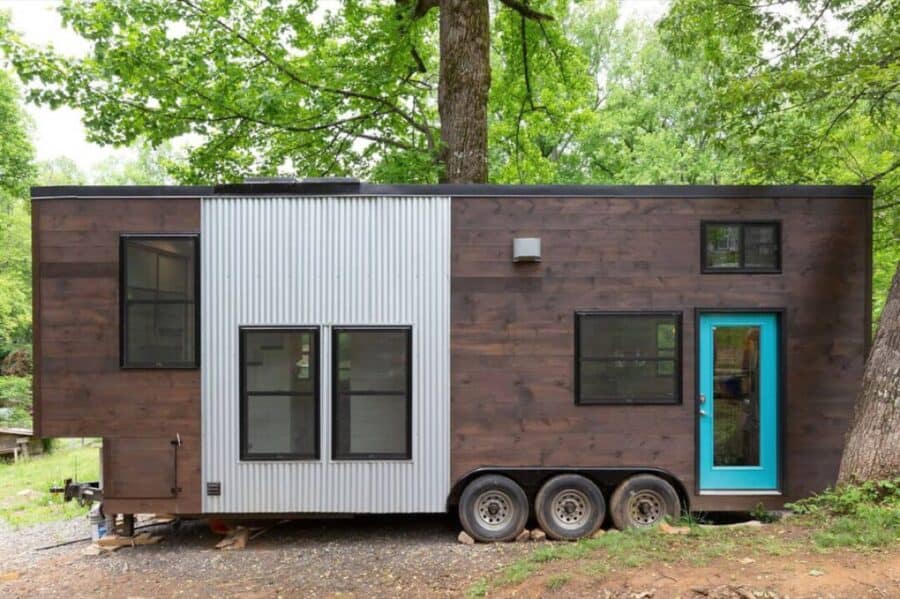
▶ See the full tour: The Engbergs’ own 28-ft dual-loft tiny house on wheels
Quick Comparison: Tiny House Builders at a Glance
| Builder | Location | Best For | Starting Price* | Certification |
|---|---|---|---|---|
| Escape | Rice Lake, WI | Light-filled design + rentals | Quote-based | RVIA |
| Tru Form Tiny | Eugene, OR | Single-level luxury | ~$198,900 | RVIA |
| New Frontier Design | Nashville, TN | Award-winning luxury | ~$150,000 | PWA (RVIA optional) |
| Movable Roots | Melbourne, FL | No-loft main-floor master | ~$79,999 | PWA |
| Minimaliste | Quebec, Canada | Four-season living | ~CAD $119,500 | RVIA + NOAH |
| Timbercraft | Guntersville, AL | Handcrafted luxury / large | ~$104,000 | ANSI / PWA |
| Modern Tiny Living | Columbus, OH | Modern-rustic THOWs | Quote-based | RVIA |
| Wind River Built | Chattanooga, TN | Right-sized modern | ~$86,900 | RV-certified |
| Tumbleweed | Colorado Springs, CO | RV-certified pioneer | ~$92,959 | RVIA |
| Mint | Delta, BC, Canada | Dual-country certification | ~$105,400 | CSA + RVIA + NOAH |
| Rocky Mountain | Durango, CO | Off-grid custom | Quote-based | NOAH (on request) |
| Tiny House Basics | Clayton, CA | DIY trailers & shells | Quote-based | Trailer builder |
*Starting prices are approximate and change frequently. Always confirm current pricing, lead times, and certification directly with the builder before signing a contract.
How to Choose the Right Builder for You
With so many strong options, narrowing the field comes down to your priorities:
- Want a design showpiece? Look at New Frontier Design, Tru Form Tiny, and Escape.
- Living somewhere cold, year-round? Minimaliste and Mint are built for it.
- Need to avoid loft ladders? Movable Roots specializes in main-floor master layouts.
- Going off-grid? Rocky Mountain Tiny Houses and Movable Roots offer serious off-grid packages.
- On a tighter budget? Wind River’s smaller models and Tumbleweed’s compact cottages are among the most accessible certified builds.
- Building it yourself? Start with a Tiny House Basics trailer.
- Want a big, full-featured home? Timbercraft’s gooseneck builds and Wind River’s park models deliver the most space.
Whichever direction you lean, do the same homework: ask how many homes the company has delivered, confirm its certification, get an itemized quote, and — if you can — tour a finished home or arrange a test stay. The builders above have earned their reputations the hard way, one well-built home at a time.
Explore More
Hungry for more inspiration? Browse our coverage of tiny house builders, tiny houses for sale, tiny houses on wheels, and tiny house communities.
Which of these builders is your favorite? And who did we miss? Let us know in the comments — we’re always discovering great new builders to feature.
Disclosure: This post may contain affiliate links. If you purchase through one of our links, we may earn a commission at no additional cost to you.


Alex
Latest posts by Alex (see all)
- Nicky and Judy’s Cape Breton Tiny House With a Dog Elevator Is Now for Sale - October 15, 2026
- Canoe Bay Village Lakeside Homes in Wisconsin: Tour Them at Escape’s Open House Weekend - October 15, 2026
- The Biblioteque: A Library Treehouse Wrapped Around a Texas Cypress - October 15, 2026