
Disclosure: This post may contain affiliate links. If you purchase through one of our links, we may earn a commission at no additional cost to you.
The Going Tiny Series, Part 18 of 45 · Guide 2 of 5: Where Can I Put It?
A free chapter goes up every day. See every part. Rather have it all at once, with printable worksheets? Get the Going Tiny Toolkit.
Tiny House Talk has wonderful readers around the world, and several wrote about this exact problem.
“Building regulations and land laws are very complicated, and unless you own your own land it is difficult to find someone to put up with it, especially in the UK.”
— Hannah, Tiny House Talk reader
Every country’s system is different, and I can’t cover them in detail, but the core approach in this guide works everywhere: figure out what your home is legally, find out which office controls land use where you want to live, read the rules, and ask in writing. Here’s where to start.
United Kingdom
Land use is controlled through the planning system, run by your local planning authority (usually your local council). A tiny house on wheels is generally treated as a “caravan,” and stationing a caravan for residential use typically needs planning permission for that use of the land. Residential caravan and mobile home sites also generally need a site licence from the local authority, which can only be granted once planning permission is in place. Building regulations apply separately to permanent buildings. Many councils offer pre-application advice. England, Scotland, Wales, and Northern Ireland have their own rules, so check the right one.
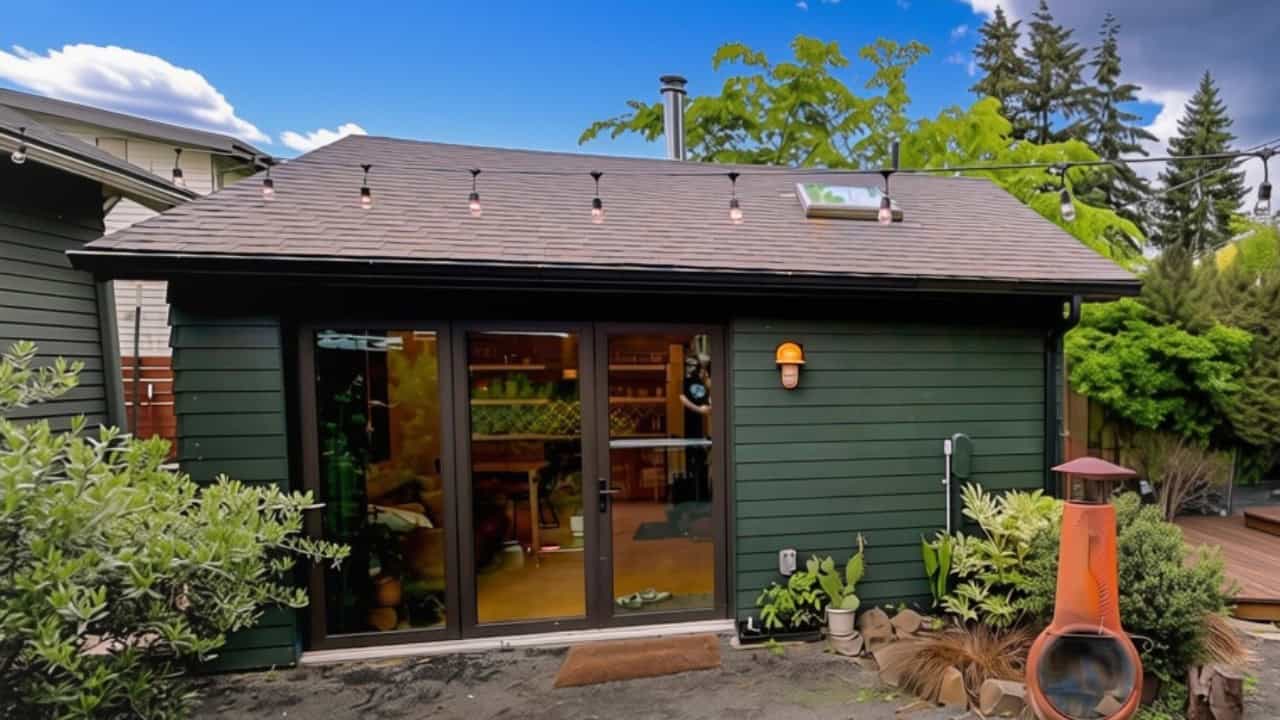
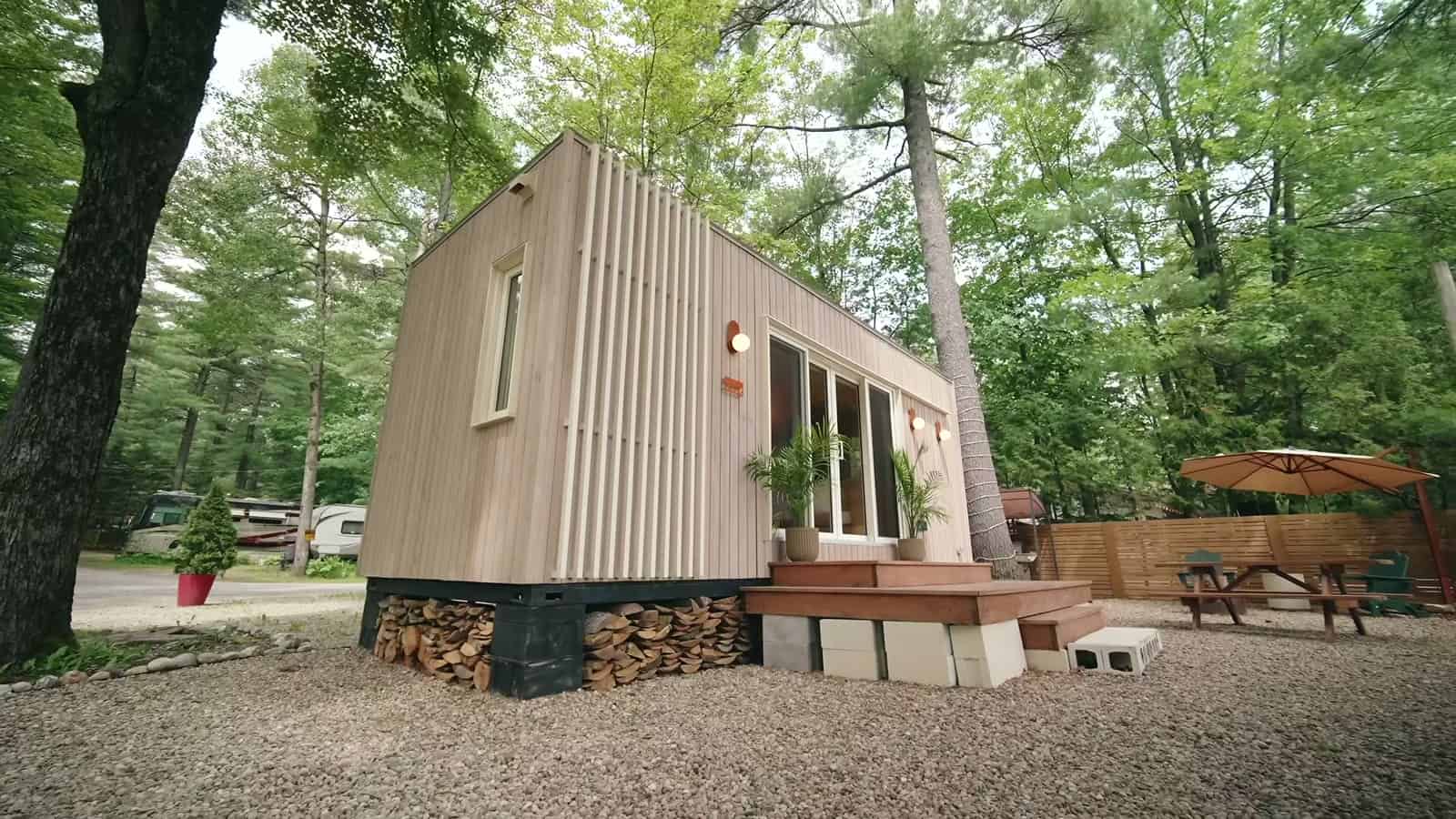
A real home from Tiny House Talk
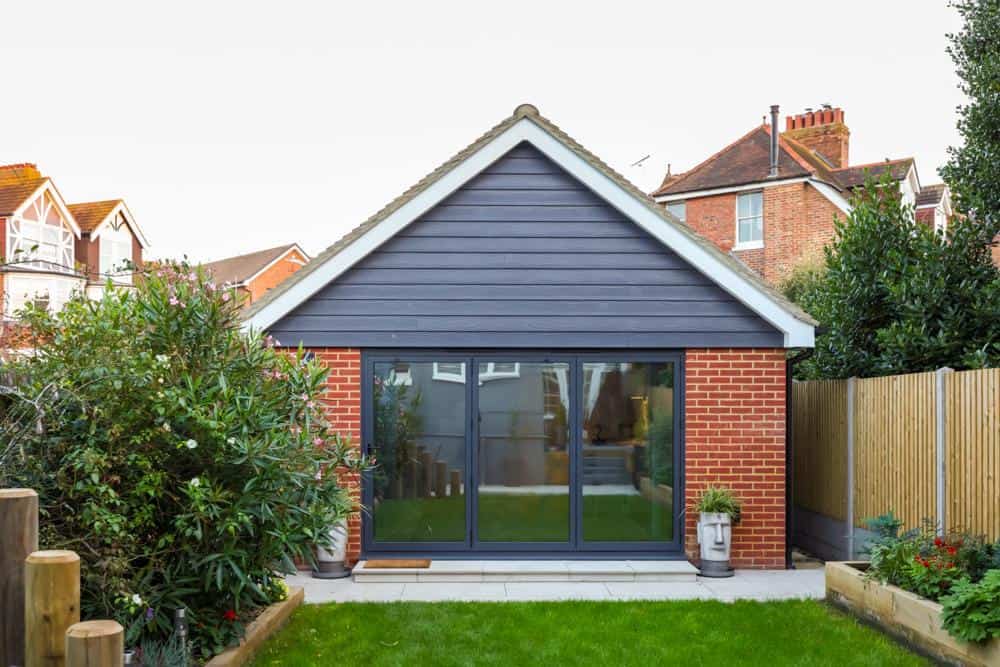
Photo via Living Big In A Tiny House/YouTube
Cairo's Garden Studio Behind His Parents' Home in the UK
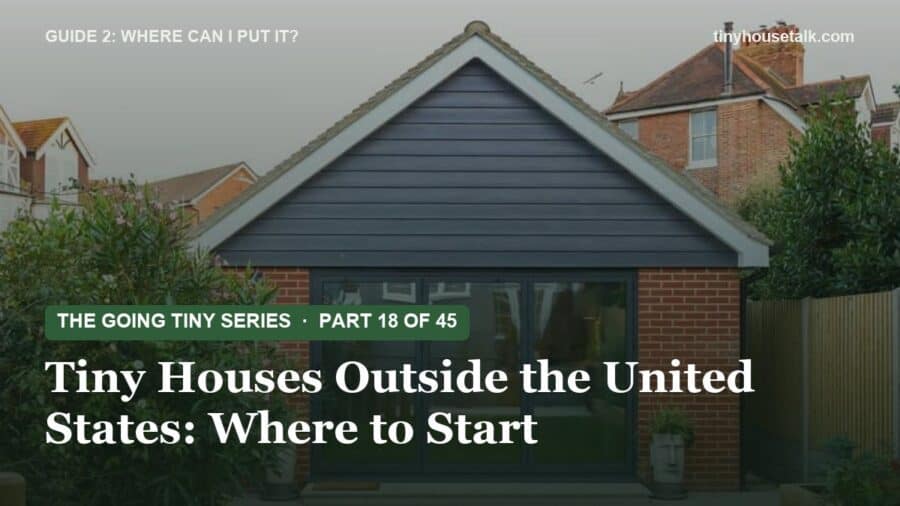
Cairo was inspired by tiny houses but struggled to find somewhere to put one. He and his parents built a studio annex in their urban back garden instead. The council required the exterior to fit in with the surrounding buildings, which is why it looks the way it does. He loves living close to family.
Want to do this on paper?
The printable PDF of Where Can I Put It? has fill-in worksheets for this step, including:
- Jurisdiction Finder
- Zoning Code Search Log
- Call and Email Script Builder
They come with all five guides in the Going Tiny Toolkit.
Canada
Land use is mainly controlled by your municipality through its zoning bylaw, while building codes are set at the provincial or territorial level (largely based on the National Building Code of Canada). Rules for RVs, park models, and secondary suites or garden suites vary widely by municipality and province, and several provinces and cities have been encouraging secondary units. Start with your municipal planning department; in rural areas, it may be a regional district or county.
Australia
Land use is controlled by your local council under state or territory planning laws. Tiny houses on wheels are often treated as caravans, and councils commonly limit how long one can be lived in on private land without approval. Permanent buildings fall under the National Construction Code. Several states and councils have published fact sheets on tiny houses and secondary dwellings (“granny flats”). Search your council’s website for “tiny house” or “secondary dwelling.”
Everywhere else
Look for the office that handles planning, zoning, or land use for your town or district, and the office that handles building permits. The vocabulary will differ, but the questions in Part 14 translate well. Many readers outside the U.S. have also found local tiny house associations and online groups helpful for learning what has actually worked in their area.
Resources for Where Can I Put It?: Resources
These resources are general and durable. Websites change, so if a link moves, search for the name.
Offices to contact (U.S.)
- City or county planning / zoning department (sometimes “community development” or “land use”): zoning questions, ADUs, variances, conditional use permits, zoning verification letters.
- Building department: permits, inspections, which building code edition and appendices are adopted.
- County or district environmental health department: septic, perc tests, wells, composting toilets.
- County recorder or register of deeds: recorded deeds, covenants, easements.
- County assessor / GIS office: parcel maps, zoning layers, ownership.
- Floodplain administrator (often within planning): flood zone questions.
- Your state’s manufactured housing office: installation and titling of manufactured homes.
- Local land-use or real estate attorney: contracts, land purchases, variances, and compliance questions.
Online tools
- Municode, eCode360 (General Code), and American Legal Publishing: free online libraries of thousands of local codes.
- FEMA Flood Map Service Center (msc.fema.gov): flood maps by address.
- Your county’s GIS or parcel viewer: search “[county name] GIS parcel map.”
- 711 relay services: text-to-voice and video relay for calling offices that only answer the phone.
Search terms that work
- “[county] zoning ordinance minimum dwelling size”
- “[city] accessory dwelling unit ordinance”
- “[state] ADU law”
- “[county] recreational vehicle permanent residence”
- “[county] temporary dwelling permit” or “medical hardship dwelling”
- “tiny house community [state]” or “pocket neighborhood [region]”
- “resident-owned manufactured home community [state]”
- “[county] environmental health septic permit”
Standards and terms to know
- International Residential Code (IRC), and its tiny house appendix: Appendix Q (2018), AQ (2021), BB (2024), for houses of 400 square feet or less.
- NFPA 1192: the standard for recreational vehicles. RVIA: the RV Industry Association, whose seal indicates RV-standard construction.
- ANSI A119.5: the standard for park model RVs (400 square feet or less in set-up mode).
- HUD code: the federal standard for manufactured homes. Note the July 2026 ROAD to Housing Act changes allowing homes built without a permanent chassis, with HUD standards to follow.
- NOAH: a third-party inspection program for tiny houses on wheels.
- ADU, variance, conditional use permit, zoning verification letter, perc test, easement, covenant: all explained in this guide.
From Tiny House Talk
- Browse tiny house communities, ADUs, park models, and small homes for sale at tinyhousetalk.com.
- Guide 1, The Tiny House Money Plan: price your full path, including land and site work.
- Guide 3, Tiny Without the Ladder: plan a one-level, age-friendly small home.
- Guide 4, Bringing Them On Board: talk with family about backyard and shared-land arrangements.
- Guide 5, Your First Tiny Steps: decide what size, type, and path fits you.
One last thing
If you’ve read this far, you know more about zoning than most people ever will. The rules can be frustrating, but they are knowable, and they’re changing. Take it one office, one email, one afternoon at a time. And remember: a legal, comfortable small home near the people you love is a wonderful outcome, whatever its square footage. I’m cheering for you.
— Alex
More to read on Tiny House Talk
- Best Tiny House Communities in the US: 15 Real Places You Can Live Tiny Right Now: A starting list of real communities to research and call about full-time living.
- Where to Park Your Tiny Home: Communities and Land Across the U.S. and Beyond: More places to look when you need a legal spot to park.
- Tiny House Communities in Georgia: Where to Live Small in the Peach State: One of our state community roundups; a model for researching your own state.
- No Rent, No HOA: 5 Tiny Home Owners Who Cracked the Code on Land: Five owners who bought land, including one who searched for no minimum size and no HOA.
- Virginia's New ADU Law: Backyard Tiny Houses Get Easier to Build in 2027: A recent state ADU law explained, showing how backyard rules are loosening.
- Can You Legally Live in a Tiny House in Florida?: A state-level walk-through of the legal questions this guide teaches you to ask.
Your turn
Where are you hoping to put your tiny or small home? Share your state or country in the comments.
Prefer the clean, printable version?
This series is free to read here, and it always will be. If you’d rather have it as five clean, printable PDFs, that’s the Going Tiny Toolkit:
- Where Can I Put It? (the guide this chapter comes from): zoning research in an afternoon, call scripts and email templates, and a land checklist
- The Tiny House Money Plan
- Tiny Without the Ladder
- Bringing Them On Board
- Your First Tiny Steps
Every guide adds printable worksheets and a 30-day action plan, and Tiny Without the Ladder comes with the bonus One-Level Floor Plan Idea Book (18 to-scale floor plans). All five are $47, with a 30-day refund.
← Previous: Part 17: When the Zoning Answer Is No: What to Do Next
Next (tomorrow): Part 19: Tiny Without the Ladder: A Small Home You Can Grow Old In
Not sure which part matters most for you? The free 10-minute What’s Really Holding You Back? quiz tells you where to start. And to get a new part (and a new home) in your inbox each day, join the free Tiny House Newsletter.
Disclosure: This post may contain affiliate links. If you purchase through one of our links, we may earn a commission at no additional cost to you.


Alex
Latest posts by Alex (see all)
- Tiny Houses Outside the United States: Where to Start - November 5, 2026
- The Grand Tiki: A Thatched Floating Bungalow Anchored Off Key West - November 4, 2026
- Grande S1: A Folding Tiny House on Wheels That Expands to 22 Feet Wide - November 4, 2026




Join the Conversation
No comments yet. Be the first to join the conversation.