
Disclosure: This post may contain affiliate links. If you purchase through one of our links, we may earn a commission at no additional cost to you.
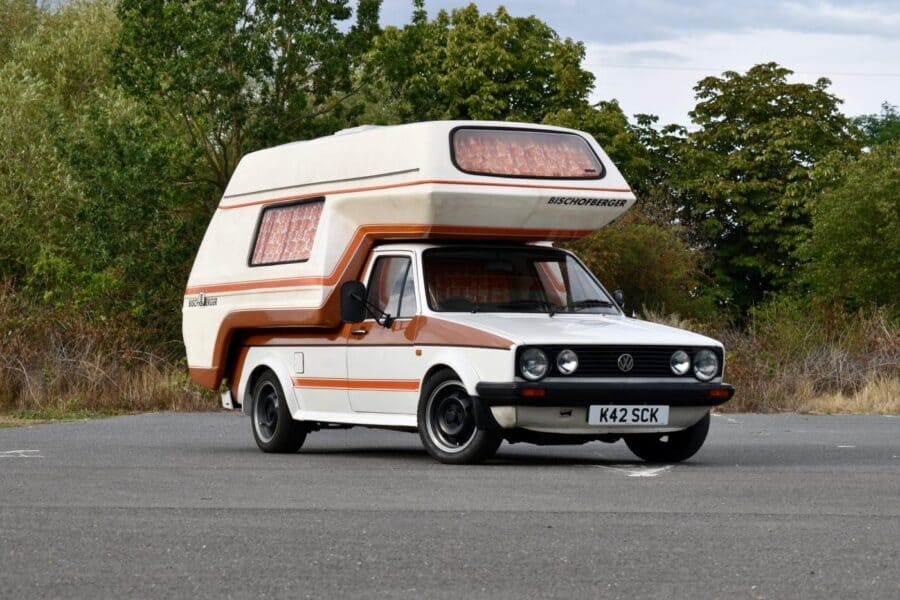
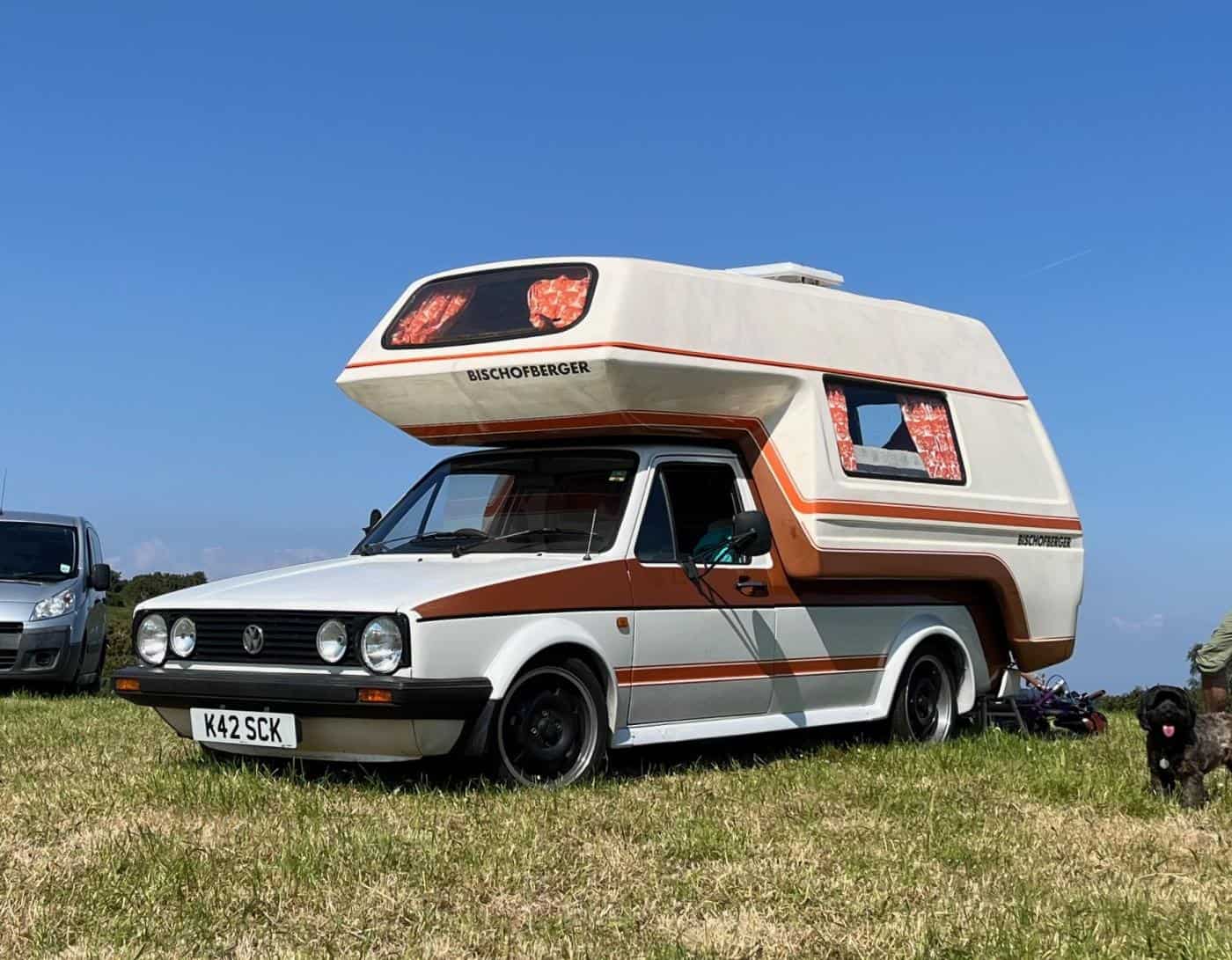
Before there were pop-top Tacomas and slide-in campers for every mid-size truck, a small German company was bolting full camper bodies onto the Volkswagen Caddy, the little pickup version of the Mk1 Golf (the Rabbit pickup in the U.S.). This one is a Bischofberger Family Hochdach (“high roof”), a fiberglass camper on a tubular steel frame that turns a compact front-wheel-drive pickup into a two-room micro motorhome with a dinette, a kitchen, and a bed over the cab.
It came up for auction on Bring a Trailer from a private seller in London, and it sold for £13,000 on September 24, 2026. We spotted it on Instagram via @highuptransporters, a page devoted to lifted and high-roof VW transporters.
A Full Camper on a Pickup the Size of a Golf
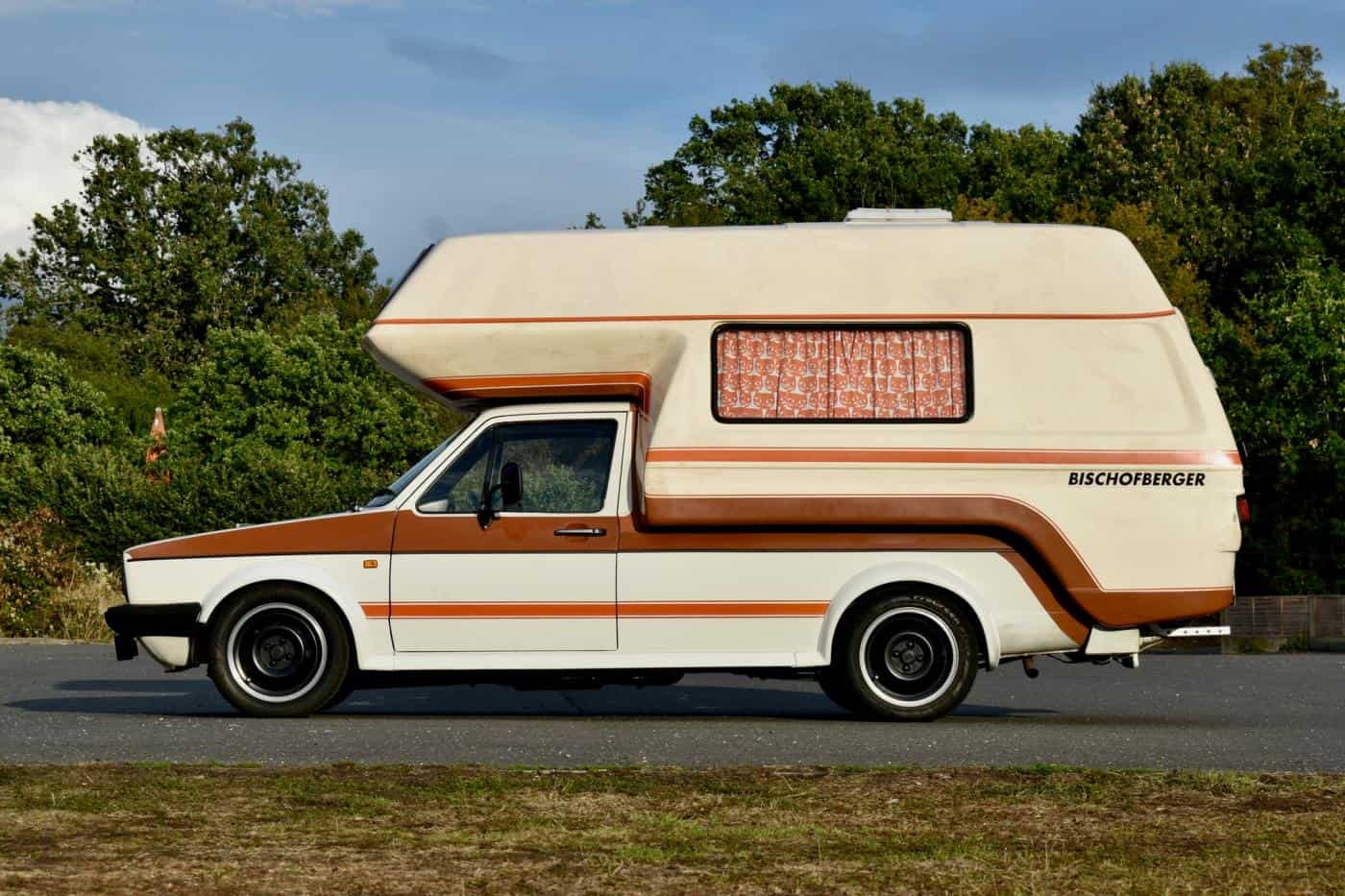
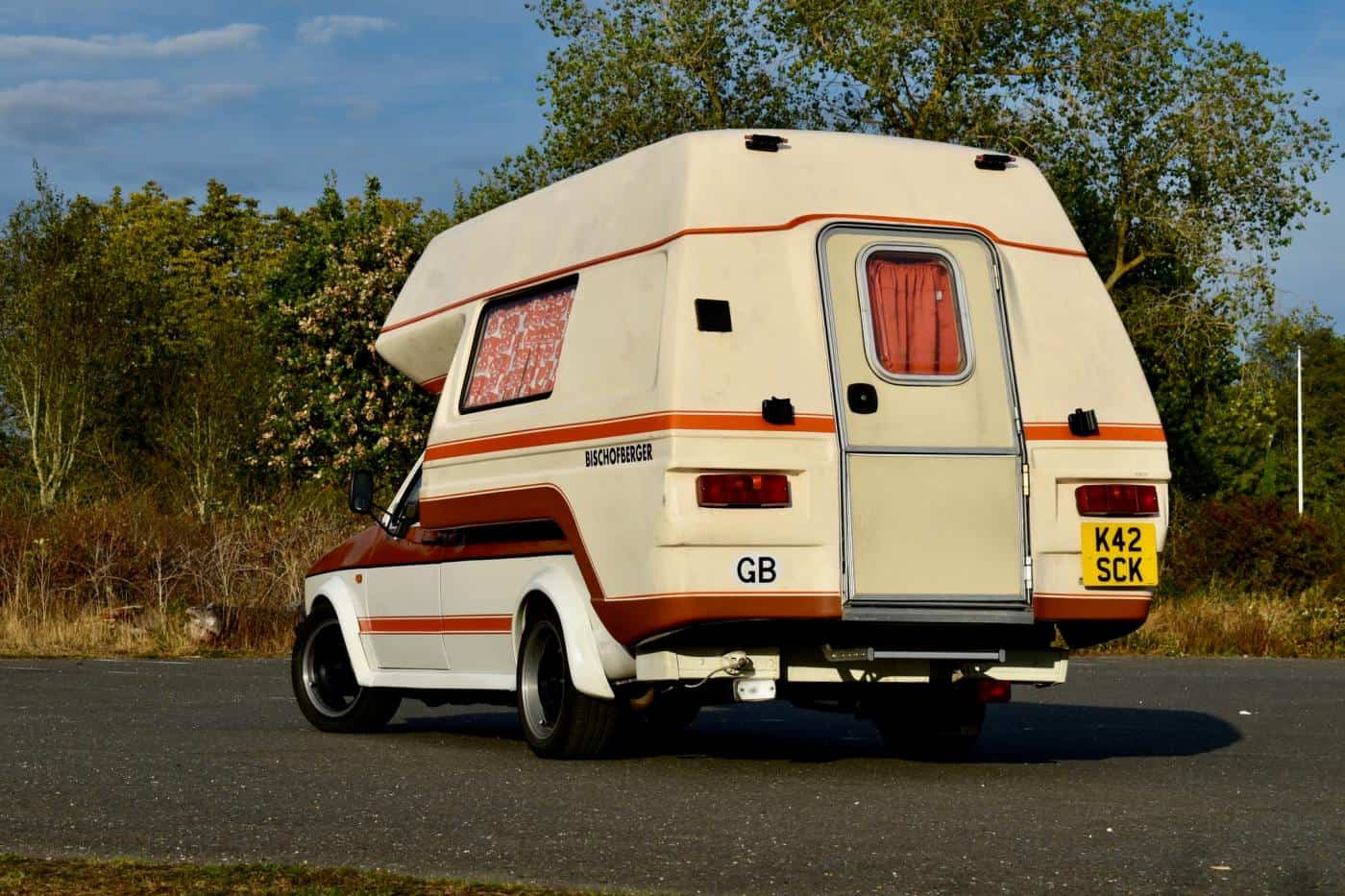
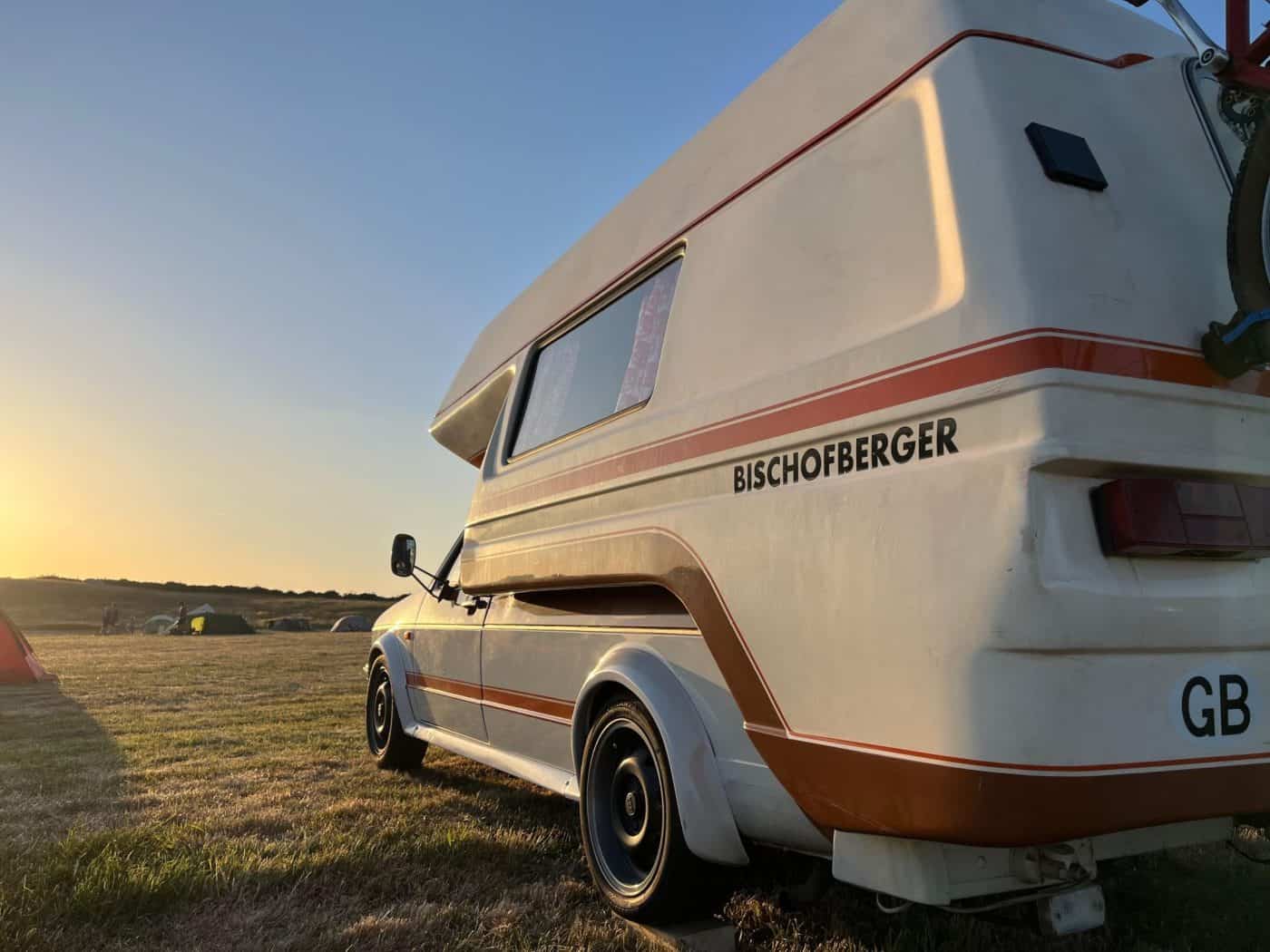
The Caddy’s cab stays a normal VW cab, with gray cloth bucket seats and a pass-through behind them into the camper. Everything from the B-pillar back is Bischofberger: a cream fiberglass shell that cantilevers over the roof of the cab, flared wheel arches, side skirts, a widened rear track, extended mirrors, and the original painted brown and orange stripe package over Alpine White paint. The Autopian estimated the whole rig at roughly 15.5 feet long and about 2,860 pounds, which means it fits in an ordinary parking space.
That’s the appeal of this kind of build for anyone thinking small. Instead of a big Class C, you get sleeping, cooking, and sitting space on a chassis built to commute, and you park it like a car.
Who Was Bischofberger?
Bischofberger Motorcaravan GmbH was a German converter founded by Helmut Bischofberger, who also ran a VW and Audi dealership. According to The Autopian’s deep dive, the “Family” line was built on the VW Caddy and on Audi sedans, and only around 40 of these motorhomes were reportedly made before the company folded in 1990. Because so few were built, they rarely come up for sale.
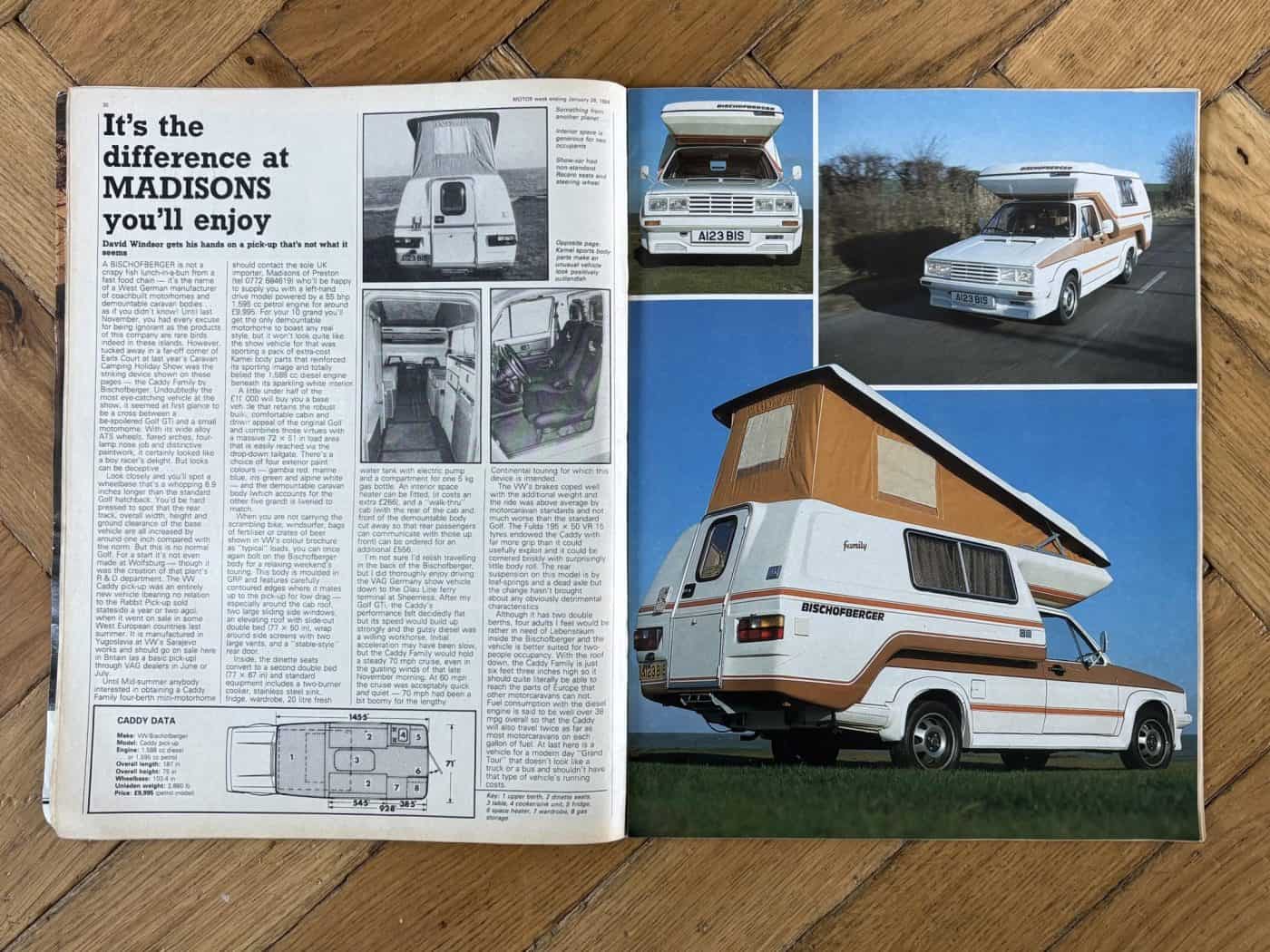
The UK registration lists this example as a 1992, though The Autopian points out that the VIN suggests a 1989 build. Either way, it’s believed to have been converted when new, and The Autopian reports it was imported to the UK by Madisons of Preston. A period magazine feature on Madisons and the Bischofberger Caddy comes with the camper (photo near the end of this post).

Stepping Inside Through the Back Door
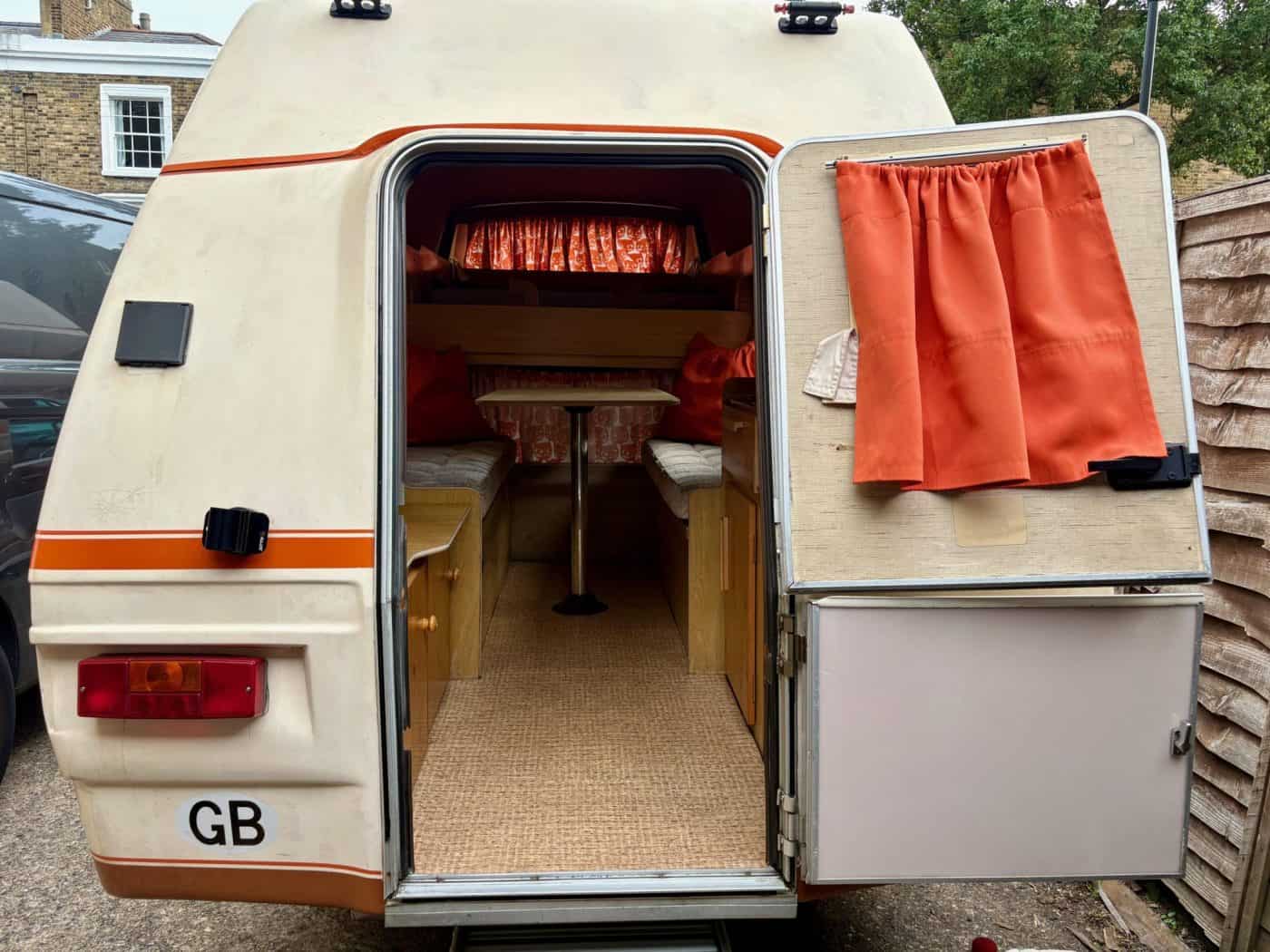
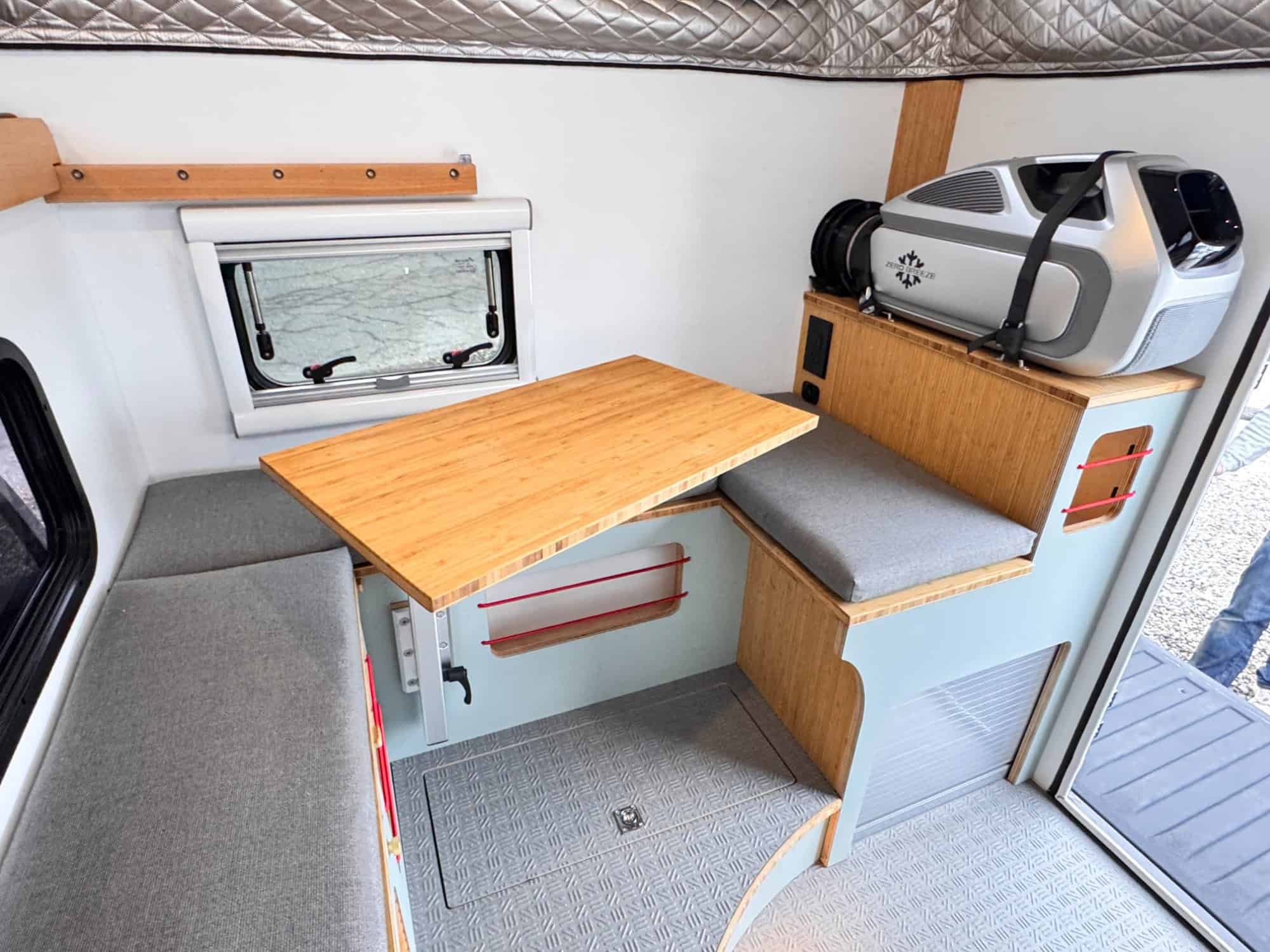
You enter through a two-piece rear door with a folding step. Inside, the layout is classic small-camper: two facing bench seats with a removable pedestal table between them, and a bed platform over the cab. The listing describes a collapsible double bed plus a children’s sleeping configuration, so a family could squeeze in the way the “Family” name suggests.
The pine-look cabinetry, orange curtains with a retro print, and orange throw pillows are very much of the era, and the seller kept that character while updating the systems underneath.
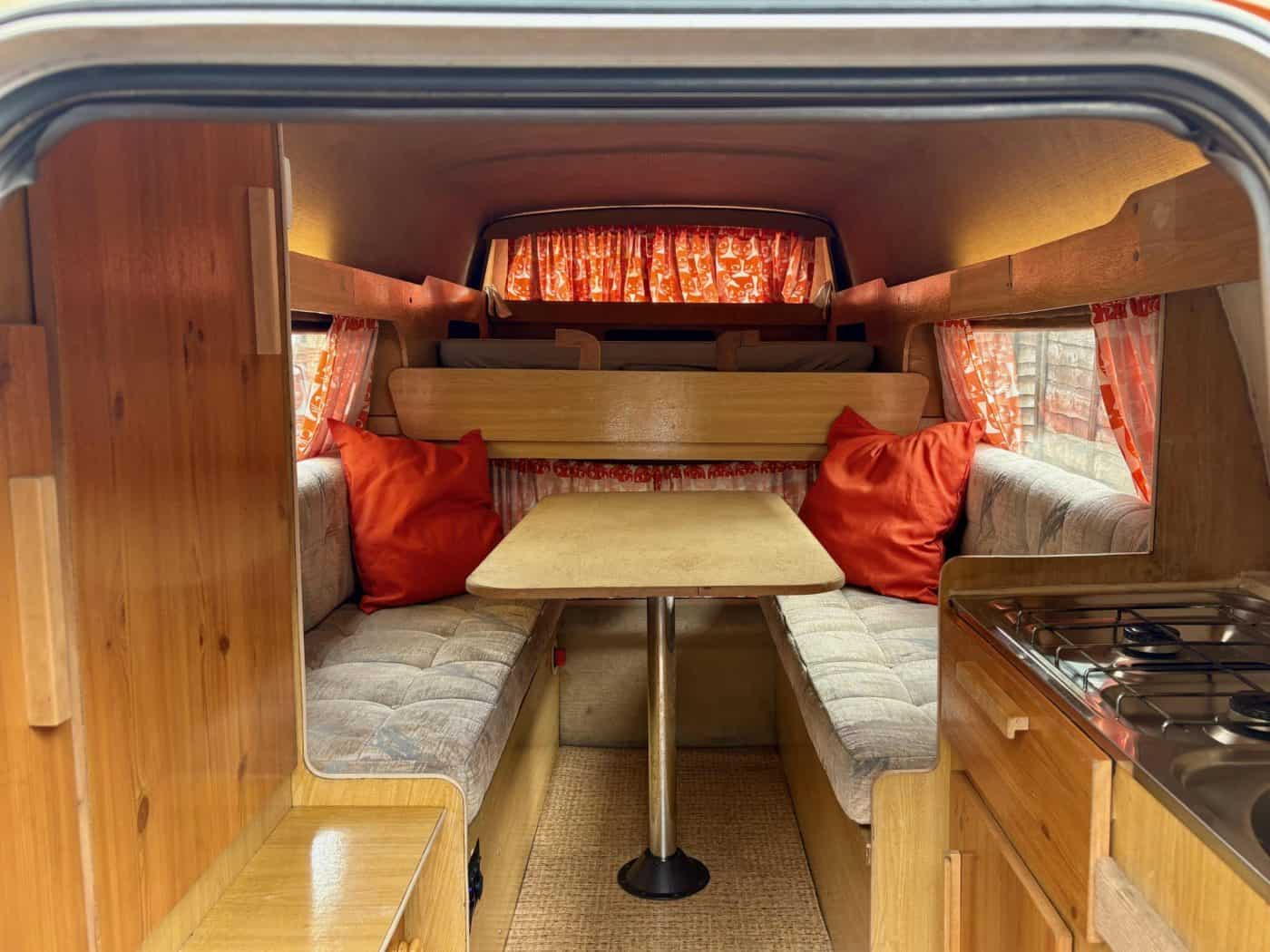
Turning the Dinette Into a Bed
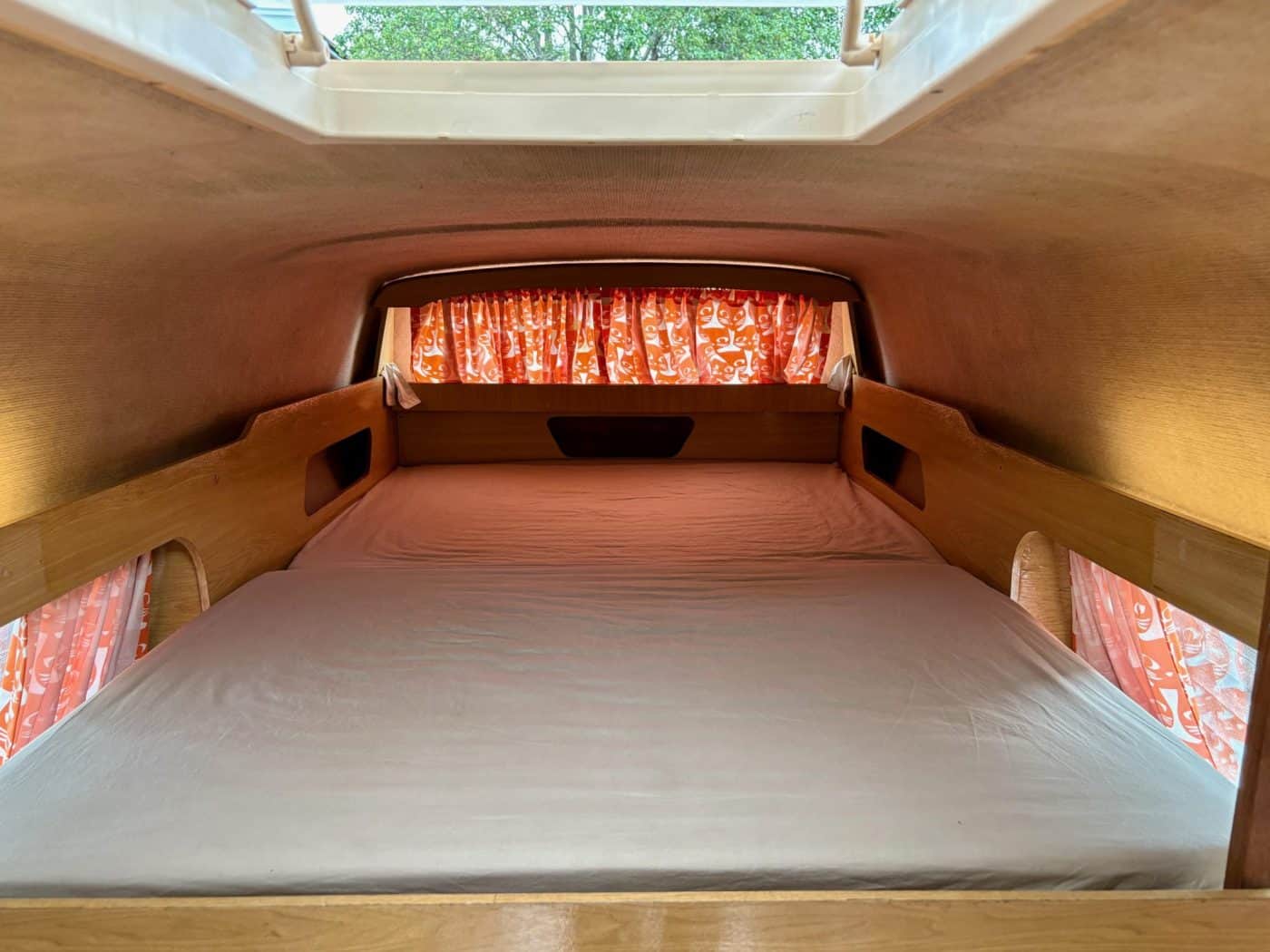
When the table comes down, the benches and cushions make up a bed that runs the width of the camper. A roof vent overhead adds light and airflow, and double-layer plastic windows on each side keep it from feeling like a box.
A Two-Burner Kitchen and a Compressor Fridge
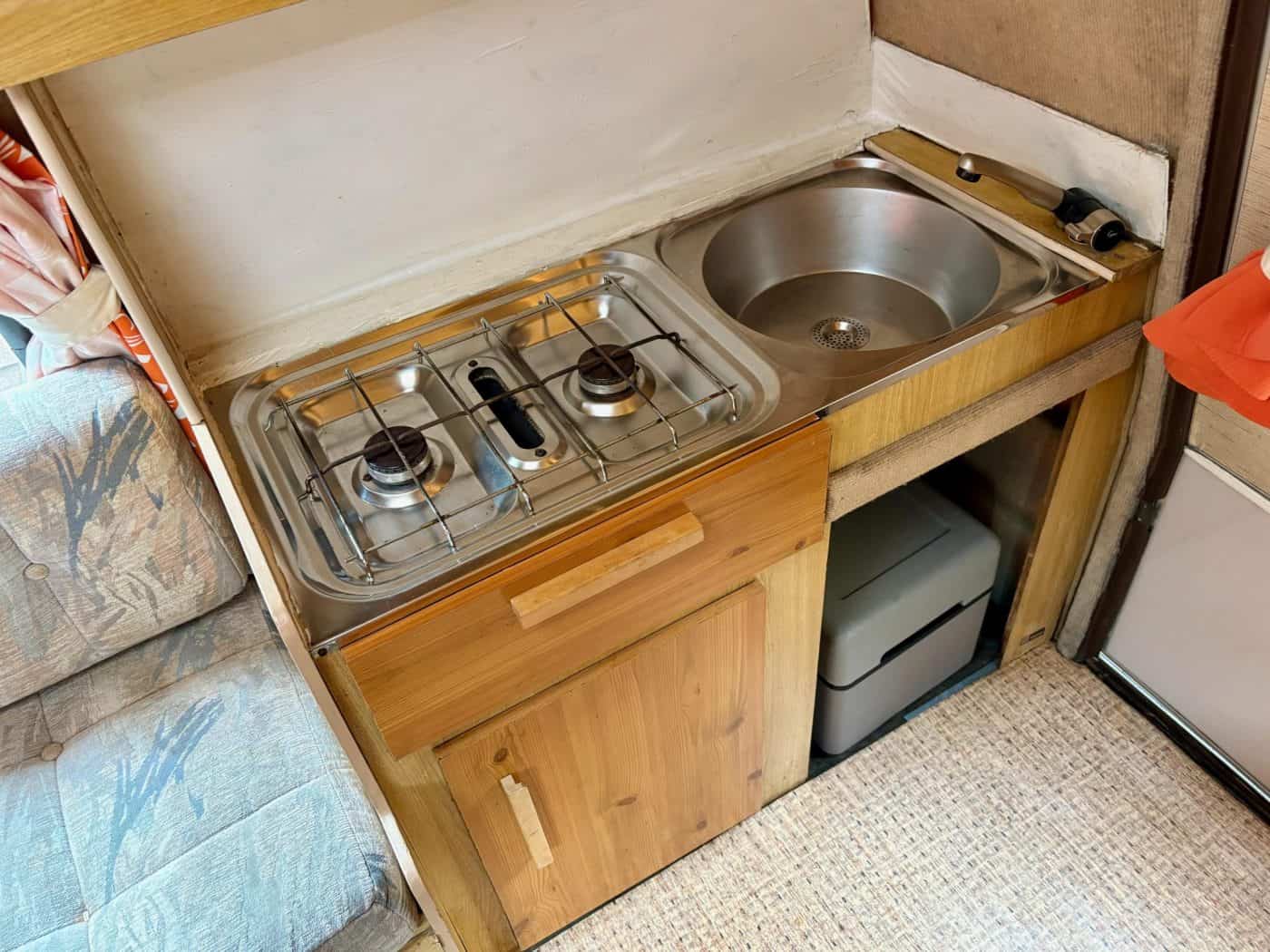
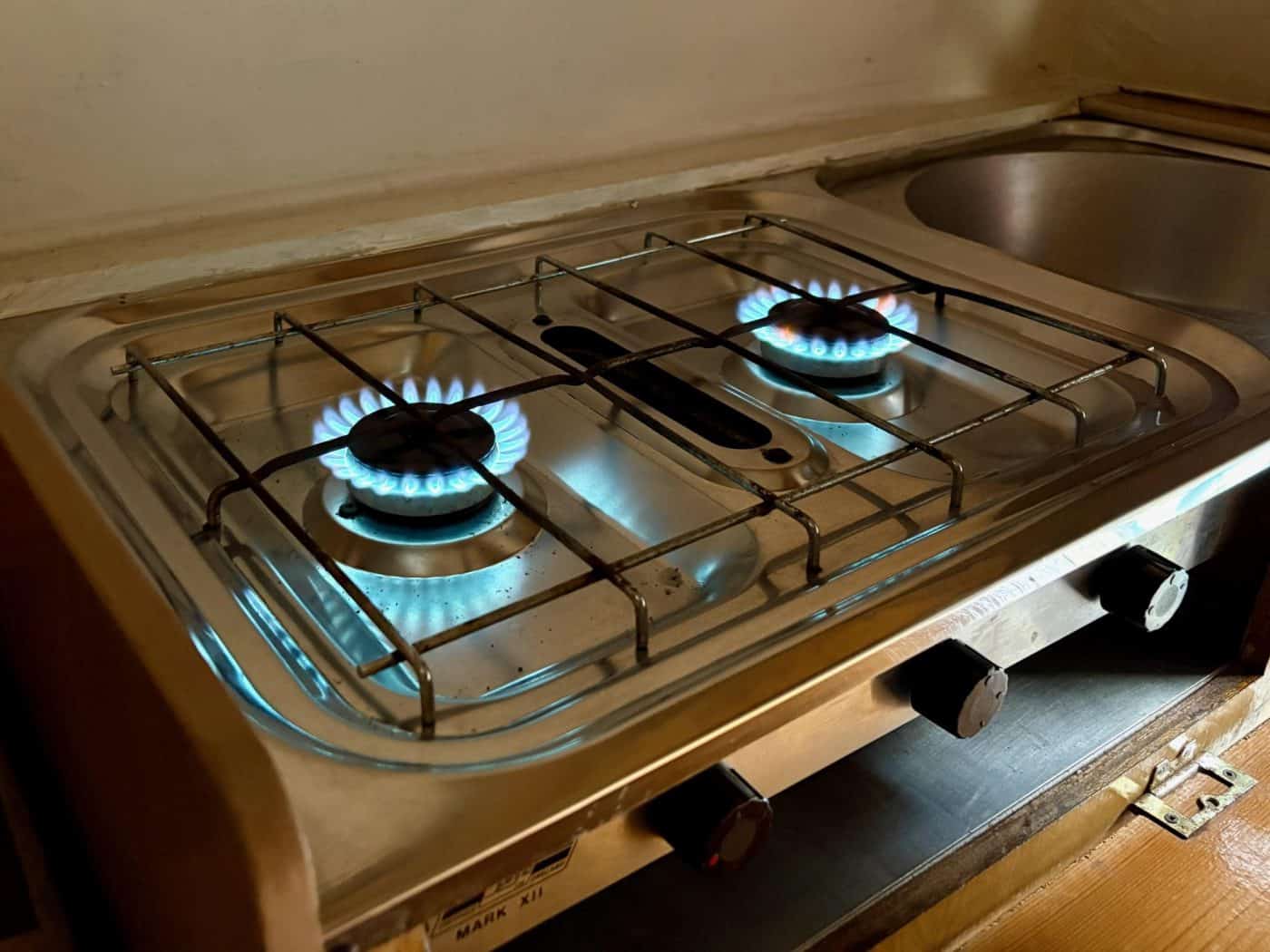
The galley sits just inside the door: a stainless sink with an electric faucet and a two-burner gas cooktop that also has a grill underneath. It draws from dual 40-liter fresh-water tanks added by the current owner. A small gas canister comes with the camper.
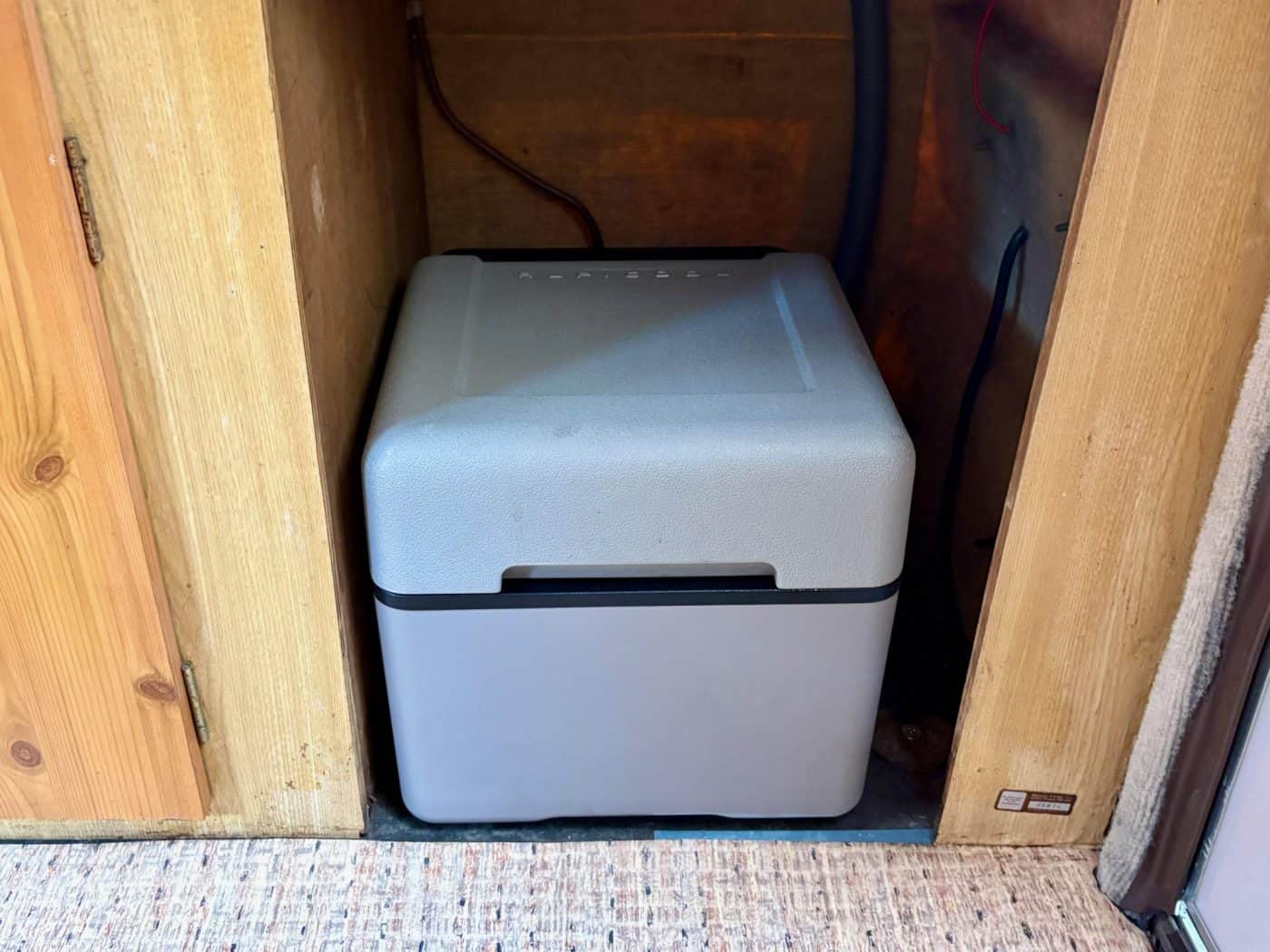
The seller also added a 12-volt Alpicool compressor fridge in a lower cabinet. Compressor fridges are a smart upgrade in a camper this small because they run off the house batteries and don’t need to stay level the way old absorption fridges do.
Updated Electrics for Modern Camping
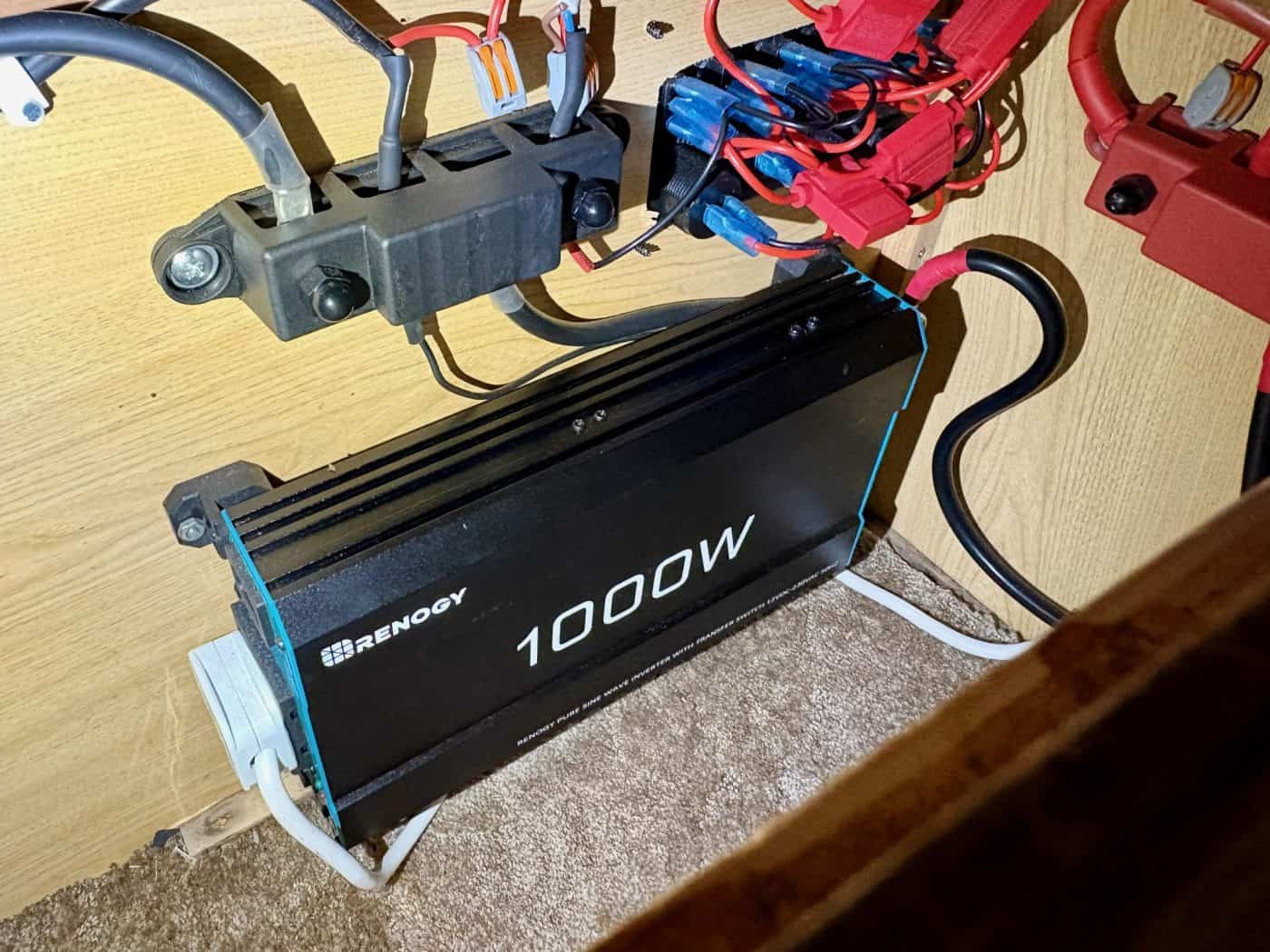
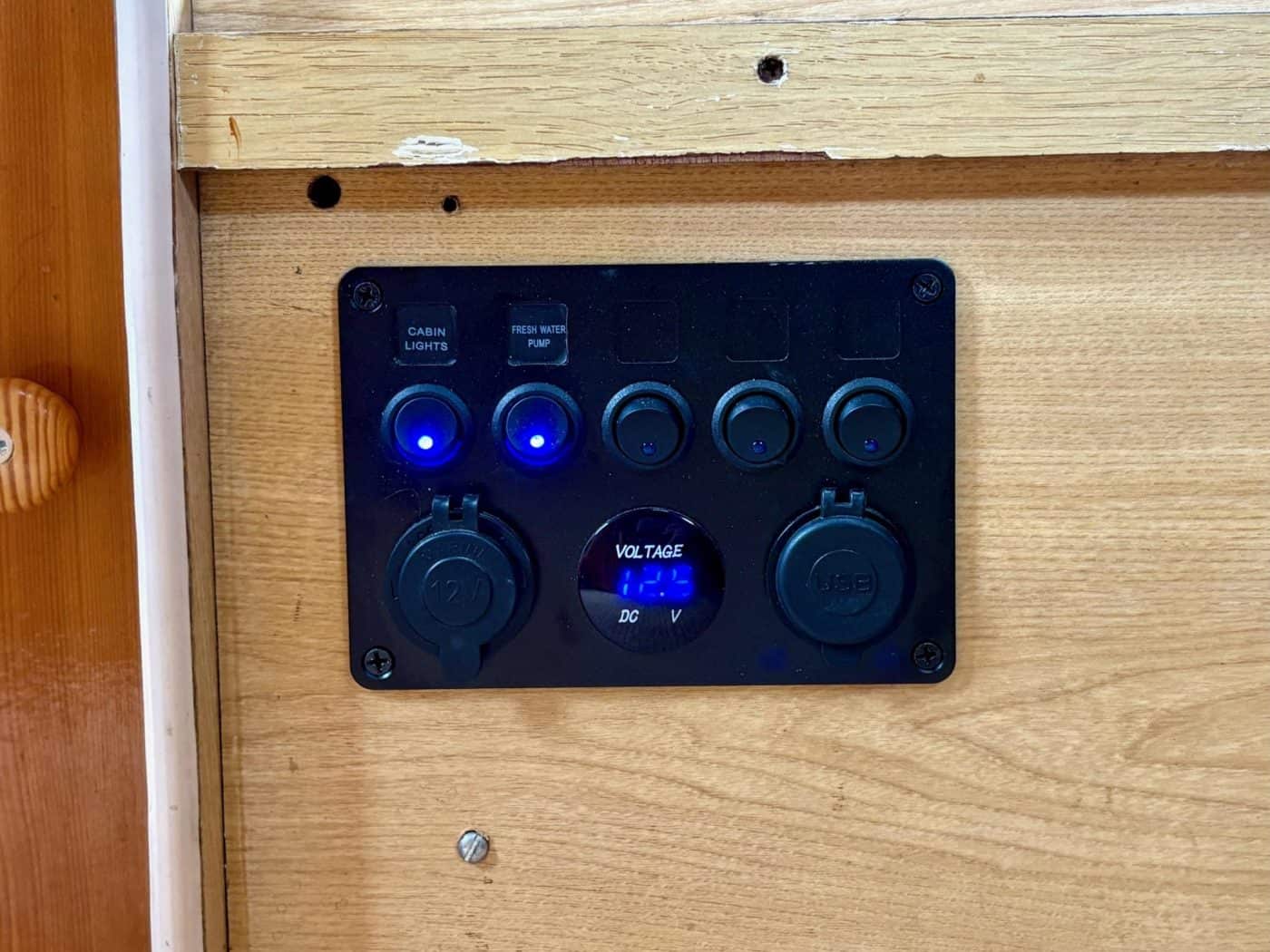
Most of the work under current ownership went into power. The battery system was moved to dual Hankook XL31 130Ah deep-cycle batteries behind the front seats, the wiring and fuse panels were updated, and a Renogy 1,000-watt inverter, USB charging outlets, dimmable LED lighting, and a rear cabin power cutoff switch were installed. There’s shore-power capability too, so you can plug in at a campground.
A Turbodiesel Swap Under the Hood
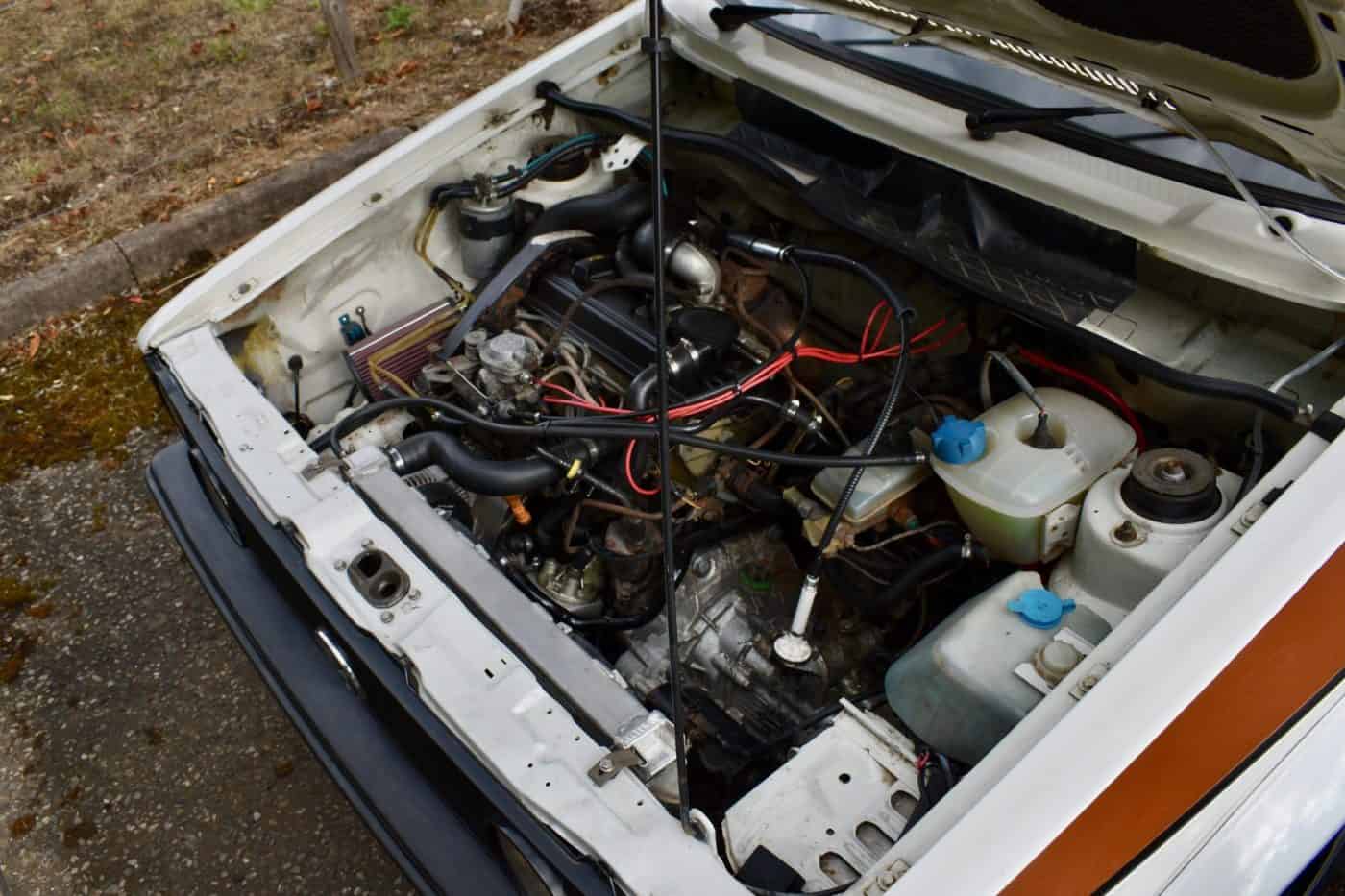
The Caddy left the factory with a 1.6-liter gasoline engine. Around 2010, a previous owner swapped in a 1.9-liter AAZ turbodiesel four-cylinder, sending power to the front wheels through a five-speed 020 manual gearbox. The current owner added a larger Radtec aluminum radiator, dual electric cooling fans, a 90-amp alternator, a K&N air filter, welded skid plates, and a GPS tracker/immobilizer. They also replaced the clutch cable, engine and transmission mounts, rear brake shoes and wheel cylinders, and a rear wheel bearing.
The suspension was reworked with adjustable front coilovers, height-adjustable rear shocks, a rear axle flip, and rear wheel spacers under ATS Cup wheels. The odometer shows about 98,000 miles, around 3,500 of them added by the current owner.
Honest About the Flaws
It isn’t perfect, and the seller said so. The listing notes crazing and scratches in the fiberglass shell, corrosion under the rear bumper, fog lamps that don’t work, play in a door hinge, and a steering wheel that sits slightly off-center. Both doors and the right-front fender were replaced and repainted under an earlier owner. That’s typical for a camper that’s been on the road for more than three decades, and its MOT (UK safety inspection) was valid through June 2027.
Design Details
- Base vehicle: Volkswagen Caddy (Mk1) pickup, right-hand drive; registered as a 1992, VIN suggests 1989
- Conversion: Bischofberger Family Hochdach fiberglass high-roof camper on a tubular steel frame
- Size: about 15.5 ft long and roughly 2,860 lb (The Autopian’s estimate)
- Engine: 1.9-liter AAZ turbodiesel (swapped in around 2010), five-speed manual, front-wheel drive
- Sleeping: collapsible double bed plus a children’s sleeping setup
- Kitchen: stainless sink with electric faucet, two-burner gas cooktop with grill, 12V Alpicool compressor fridge
- Water: dual 40-liter fresh-water tanks
- Power: dual 130Ah deep-cycle batteries, Renogy 1,000W inverter, USB outlets, LED lighting, shore power
- Storage: under-seat compartments, wardrobe, overhead cabinets, two fork-mount bike carriers
- Sale: £13,000 on Bring a Trailer, September 24, 2026, from London, UK
What Makes This Build Special
- It’s rare. Only around 40 Bischofberger motorhomes were reportedly built across Caddy and Audi chassis.
- The cab-over shell fits a full camper (dinette, kitchen, bed) on a pickup that’s about the size of a Golf.
- The current owner modernized the systems (compressor fridge, inverter, deep-cycle batteries, LED lighting) and kept the period interior.
- A diesel swap and a five-speed manual give it a frugal drivetrain for long trips.
- It’s a good reminder that a tiny camper doesn’t need a big truck. Lightweight fiberglass and a careful layout do most of the work.
Learn More
Where to see more
Bring a Trailer listing (full gallery and comments): bringatrailer.com
The Autopian feature on Bischofberger: theautopian.com
Instagram post: @highuptransporters
Images via Bring a Trailer.
Highlights
- Rare Bischofberger Family Hochdach fiberglass camper on a VW Caddy pickup
- Only around 40 Bischofberger motorhomes reportedly built before the company closed in 1990
- Dinette, collapsible double bed, two-burner kitchen, and compressor fridge
- 1.9-liter turbodiesel swap with a five-speed manual; about 98,000 miles
- Sold for £13,000 on Bring a Trailer in September 2026
Explore More
- A Sage Green 1976 VW Westfalia “Berlin Deluxe” With a New Pop-Top Canvas in Nevada
- A 1977 Dodge B200 Tradesman Xplorer 212 Camper Van in Encinitas, California
- More vintage tiny homes and vehicles
- Van life
Would you travel in a camper this small?
If you enjoyed this you’ll LOVE our Free Daily Tiny House Newsletter with even more!
You can also join our Small House Newsletter!
Also, try our Tiny Houses For Sale Newsletter! Thank you!
More Like This: Vintage | Van Life
Disclosure: This post may contain affiliate links. If you purchase through one of our links, we may earn a commission at no additional cost to you.


Alex
Latest posts by Alex (see all)
- The Hardest Part of Going Tiny: 21 Honest Answers - November 25, 2026
- A Rare Bischofberger Fiberglass Camper Built on a Tiny VW Caddy Pickup - November 25, 2026
- A Solar-Powered Geodesic Dome on a Tennessee Mountainside with a Stargazing Loft - November 25, 2026







Join the Conversation
No comments yet. Be the first to join the conversation.