

Disclosure: This post may contain affiliate links. If you purchase through one of our links, we may earn a commission at no additional cost to you.
Most people look at a worn white box van and see deliveries. Maxwell Peters looked at a 25-year-old Ford E-350 moving van and saw a finished off-grid home — tall enough to stand in, tough enough for the road, and quiet enough to park under the trees. In his full tour on YouTube, he walks the solar roof, the rear garage, a bright wood-and-white interior, and a galley that actually feels like a kitchen. About 26 minutes of lived-in proof that a work truck can become a tiny house.

Why a Moving Van Instead of a Sprinter
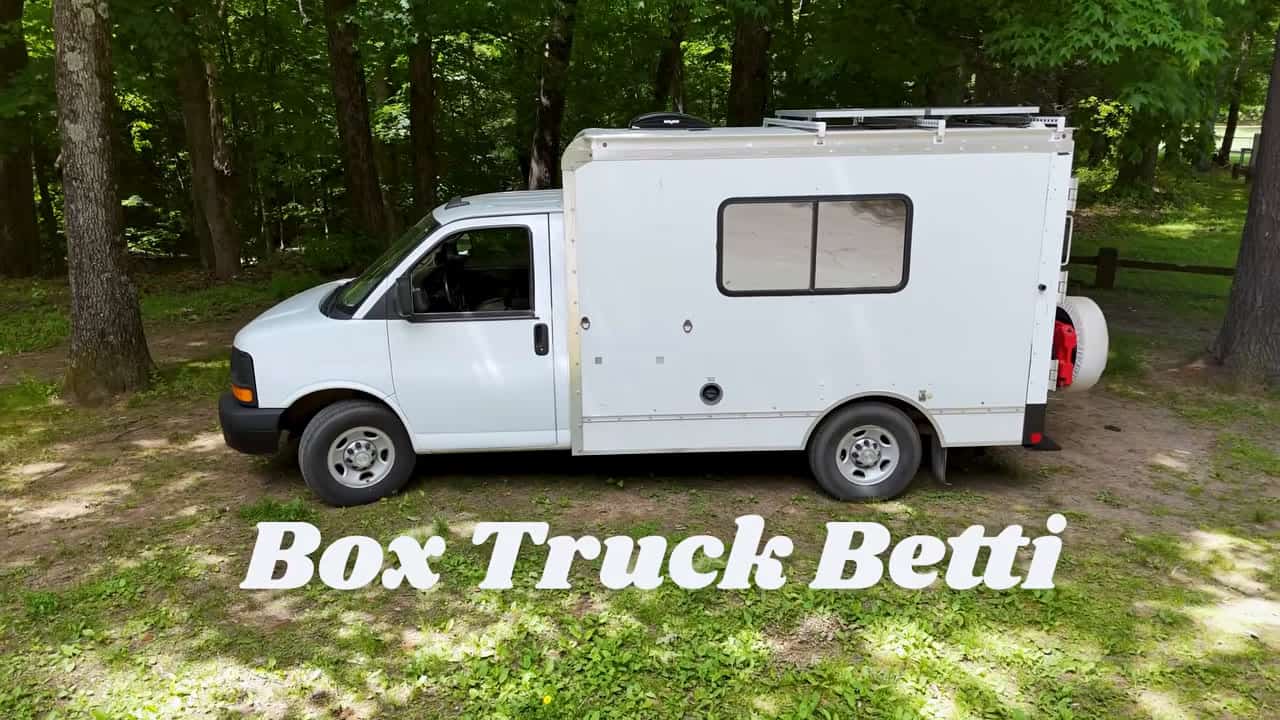
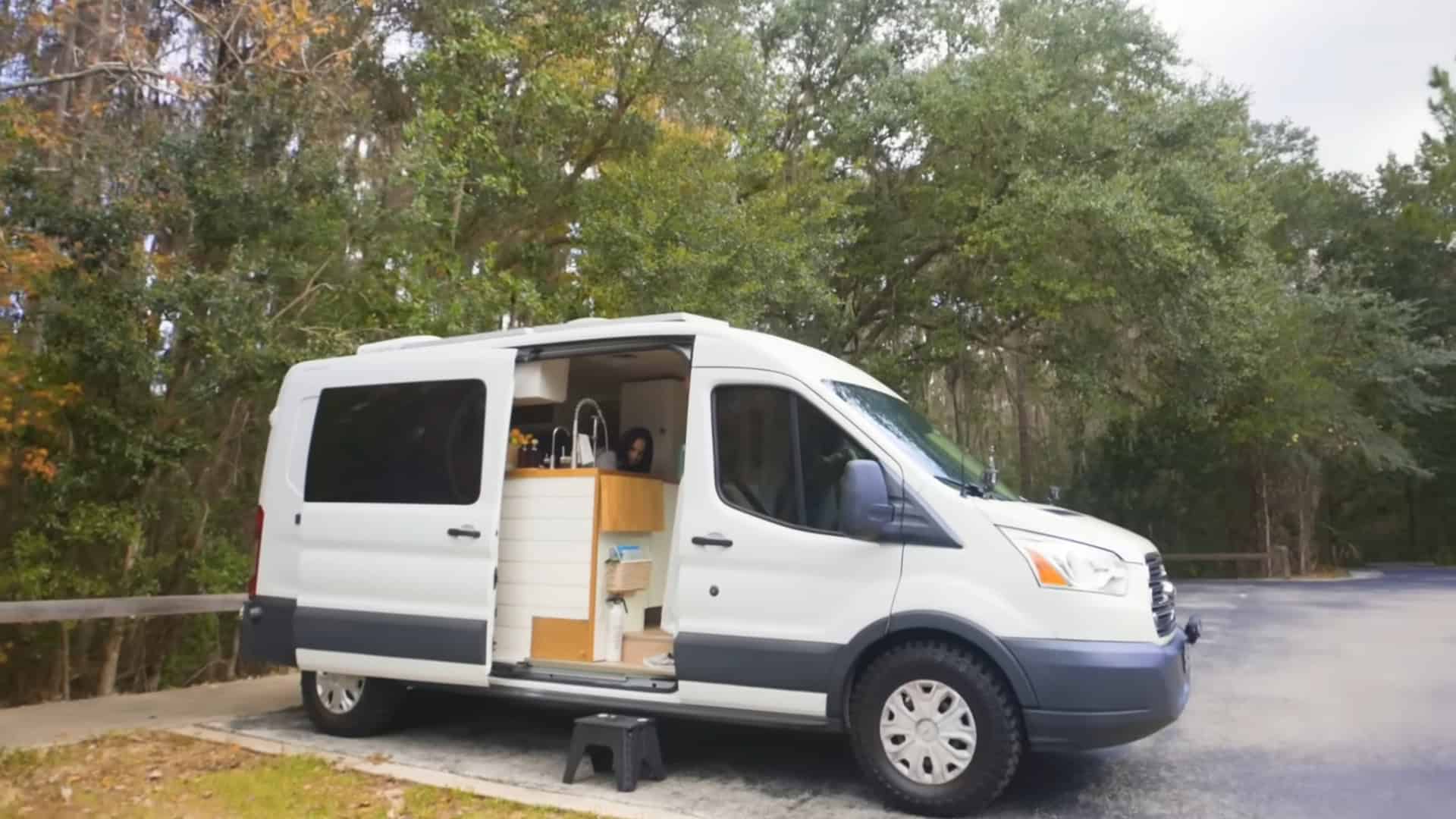
Maxwell’s base is a cutaway-style Ford E-350 Super Duty with a full cargo box behind the cab — the same silhouette as a small moving truck. That height is the whole point: walk-in headroom, a fixed bed that doesn’t force a climb into a cramped loft every night, and enough wall space for real cabinets. Outside he kept it stealthy and white, with black trim, all-terrain rubber, and a clean side door into the living space. Up top, solar panels ride a roof-rail setup alongside a low-profile antenna mount; out back, a mini-split condenser handles climate without gobbling interior volume.

Outside Storage That Earns Its Keep
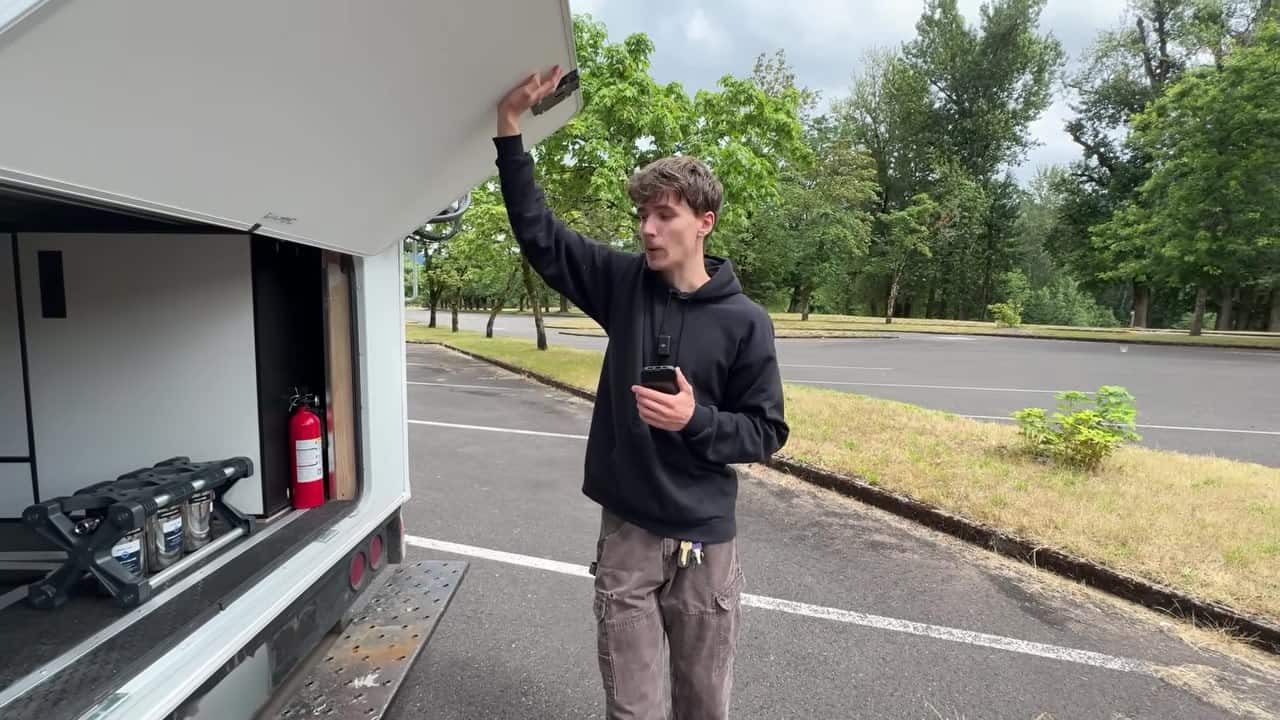
The back of the box isn’t just a wall — it’s a utility zone. Maxwell opens a large rear hatch into a deep “garage” packed with clear bins, a fire extinguisher, and tank storage. A side hatch flips up for more external gear, so propane, tools, and messy kits stay out of the living area. Inside that rear bay he also runs a Milwaukee Packout stack and adventure gear — hiking pack, camp stuff, modular toolboxes — the kind of organization that makes a mobile home feel like a workshop and a basecamp at once.
Step Inside: Wood Ceiling, White Cabinets, Instant Calm
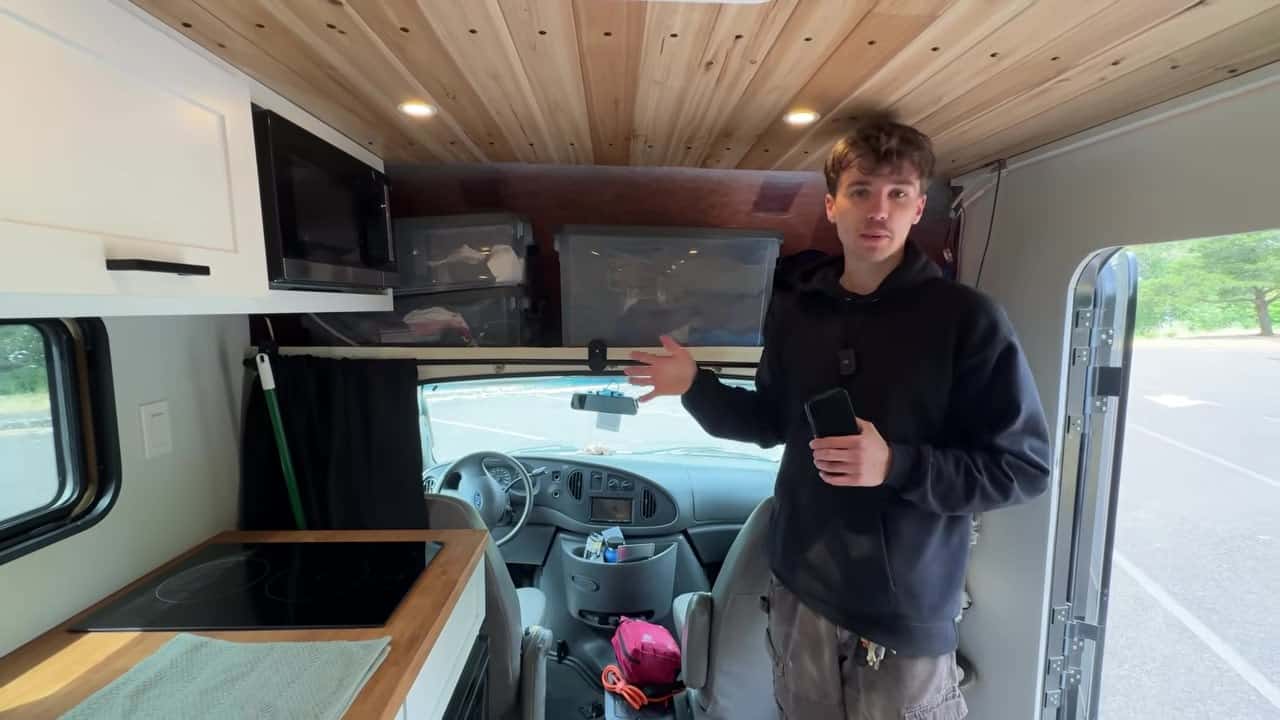
Cross the side door and the industrial box disappears. Light wood plank ceiling with recessed LED pucks, crisp white walls, and a Maxxair-style roof fan set a cabin mood. Looking forward you see the Ford cab, privacy curtains ready to close off the windshield, and a deep over-cab shelf loaded with clear bins. On the left, a warm butcher-block counter holds a black induction cooktop with a microwave tucked into the upper cabinetry — the first hint that this kitchen is built for real cooking, not just camping meals.
A Galley Worth Cooking In
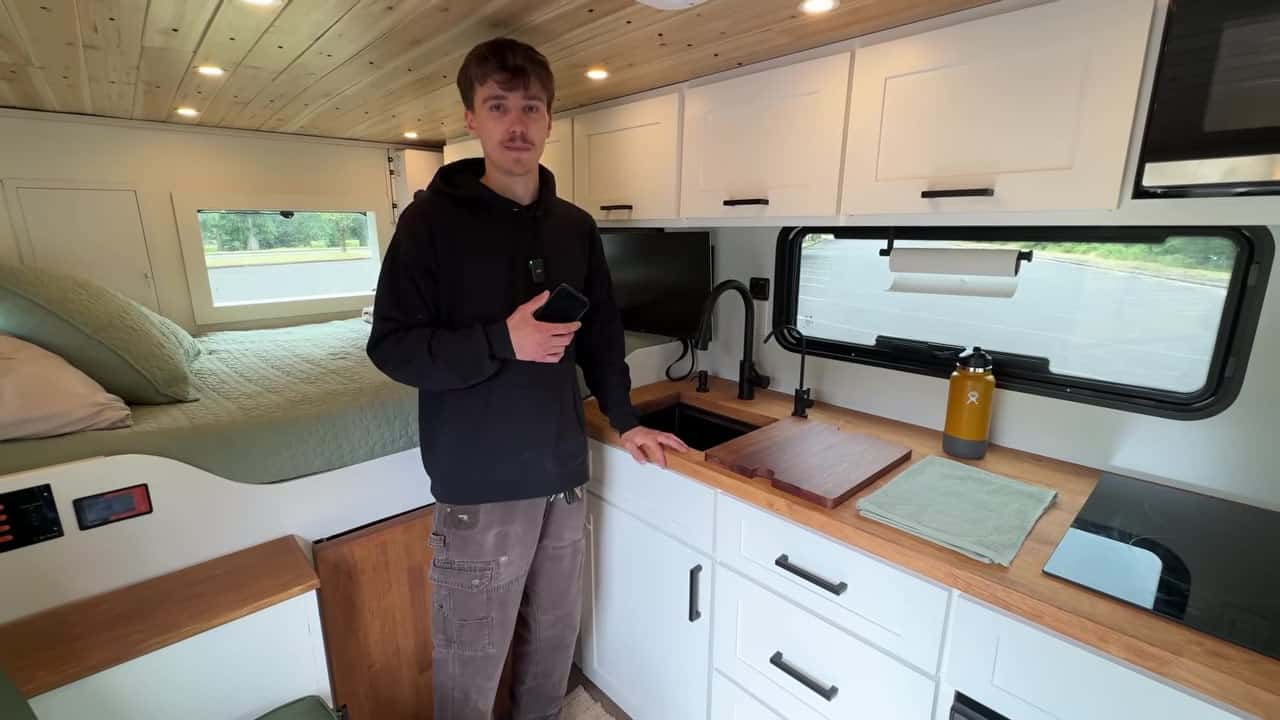
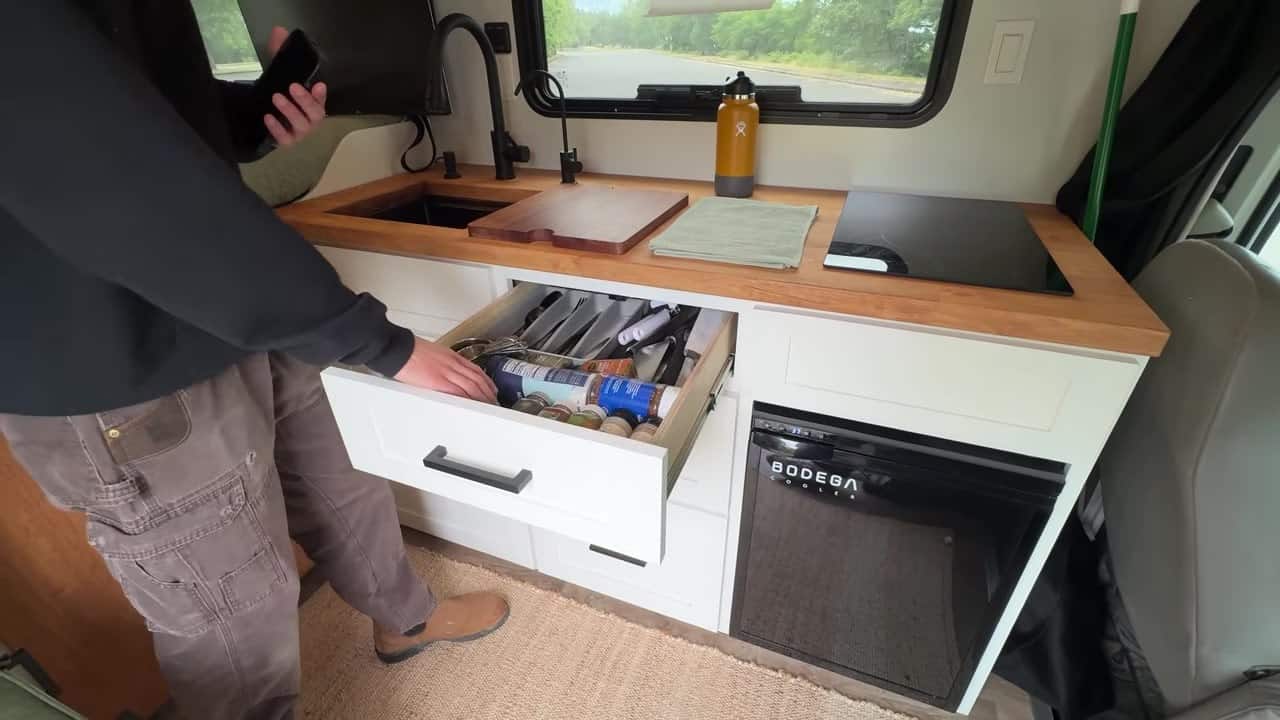
The kitchen run is the heart of the build. Thick wood counters, white shaker cabinets with matte black pulls, a deep black undermount sink with a matching wood cover for extra prep space, and dual black faucets — a tall gooseneck plus a smaller filtered-water tap. Drawers open into organized utensil trays and spice jars; a built-in Bodega cooler fridge keeps food cold without eating the whole aisle. Under the sink, big water jugs and plumbing make the off-grid water story obvious. A sage-green bed sits just beyond the galley, so dinner, dishes, and sleep all share one bright room without feeling cramped.
Bed, Dinette, and a Desk That Travels With Him
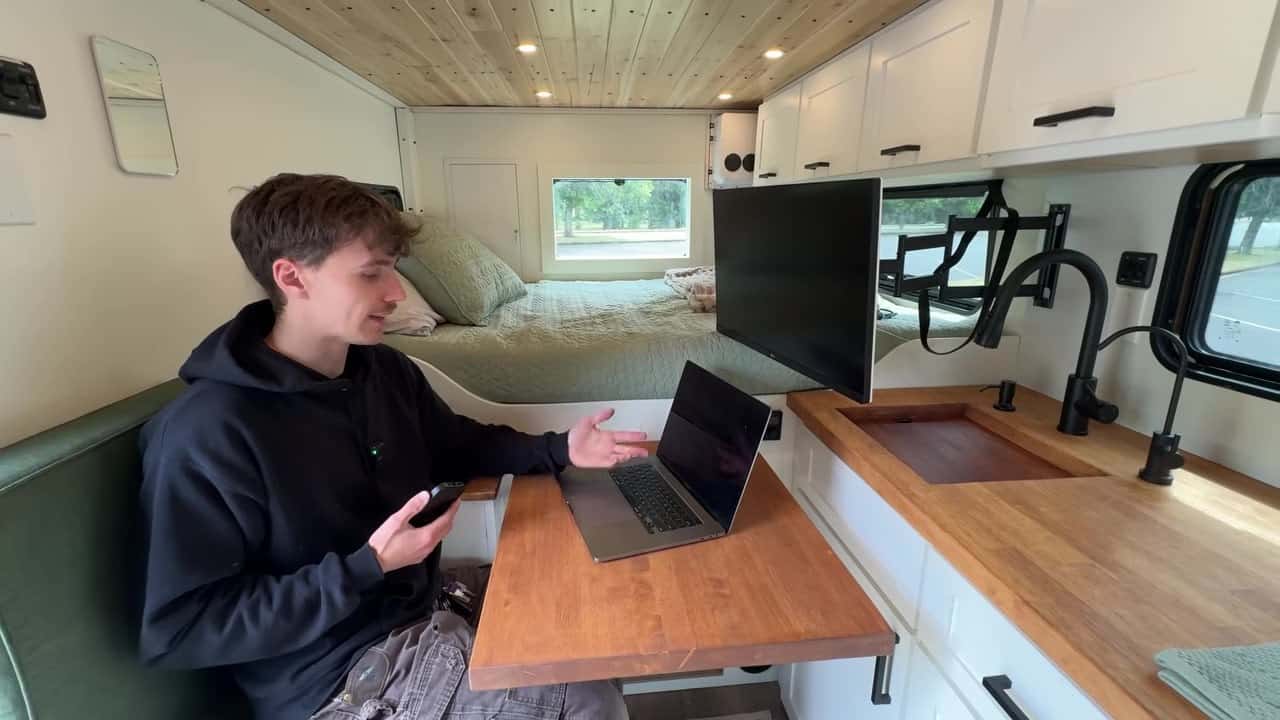
The rear platform bed is dressed in sage green with windows at the head and side — morning light without leaving the mattress. Built into the bed base are the power brains of the house: battery/inverter remotes and monitoring screens (including LiTime and Victron-style panels) so Maxwell can see what’s going on with the off-grid system at a glance. Across from the kitchen, a green-cushioned dinette and wood table become a laptop desk; a heavy-duty swivel monitor swings between workspace and bed. Under the folding table, more bins stash everyday essentials. It’s a layout for someone who lives and works from the road — not a weekend camper pretending to be a house.
Off-Grid Pieces You Notice on the Tour
Maxwell’s video doesn’t just show pretty cabinets. You see rooftop solar on rails, electrical monitoring under the bed, a portable power station in the mix, the mini-split on the exterior, roof ventilation, and water storage under the galley. The whole van is wired for parking away from hookups — which is the promise in the title: an ultimate off-grid tiny home built inside a working truck shell.
If you want the step-by-step build context, Maxwell also links his Box Van Build Series playlist — this tour is the finished-home chapter.
Watch the Full Tour
Maxwell Peters walks his completed moving-van tiny home — exterior, solar roof, garage storage, galley, bed, workspace, and the systems that keep it off-grid.
Learn More
Maxwell Peters — Moving Van Tiny Home
Video tour: I Turned a 25-Year Old Moving Van into the Ultimate Off-Grid Tiny Home on YouTube
Channel: Maxwell Peters on YouTube
Build series: Box Van Build Series playlist
Patreon: patreon.com/maxwellpeters
Instagram: @maxapeters
Highlights
- 25-year-old Ford E-350 Super Duty moving / box van converted into a full-time tiny home
- Rooftop solar array on rails; mini-split AC on the rear exterior
- Rear garage + exterior hatches for tanks, tools, Milwaukee Packout, and adventure gear
- Bright interior: wood-slat ceiling, white shaker cabinets, butcher-block counters
- Galley with induction cooktop, microwave, Bodega cooler fridge, dual black faucets, wood sink cover
- Raised rear bed in sage green; battery/inverter monitors built into the bed base
- Dinette / desk with swivel monitor for working from the road
- Built and toured by Maxwell Peters — credit + links in Learn More
Explore More
Subscribe to our Newsletters:
Join the Tiny House Newsletter => https://tinyhousetalk.com/tinyhousenewsletter
Join The Small House Newsletter => https://tinyhousetalk.com/small-house-newsletter/
Join Our Tiny Houses For Sale Newsletter => http://tinyhousetalk.com/tiny-houses-for-sale-newsletter
Disclosure: This post may contain affiliate links. If you purchase through one of our links, we may earn a commission at no additional cost to you.


Alex
Latest posts by Alex (see all)
- Tee’s Stealth Nissan Maxima: A Sedan Turned Home on Wheels with a Hidden Fridge - October 14, 2026
- Ryan Mitchell of The Tiny Life Is Selling the Tiny House He Built and Lived In for Nearly a Decade - October 13, 2026
- Dragon Avalon 24′: A Move-In Ready Tiny House With a First-Floor Bedroom and Two Lofts - October 13, 2026




Great build and a well thought use of the limited space to fit his needs.