Disclosure: This post may contain affiliate links. If you purchase through one of our links, we may earn a commission at no additional cost to you.
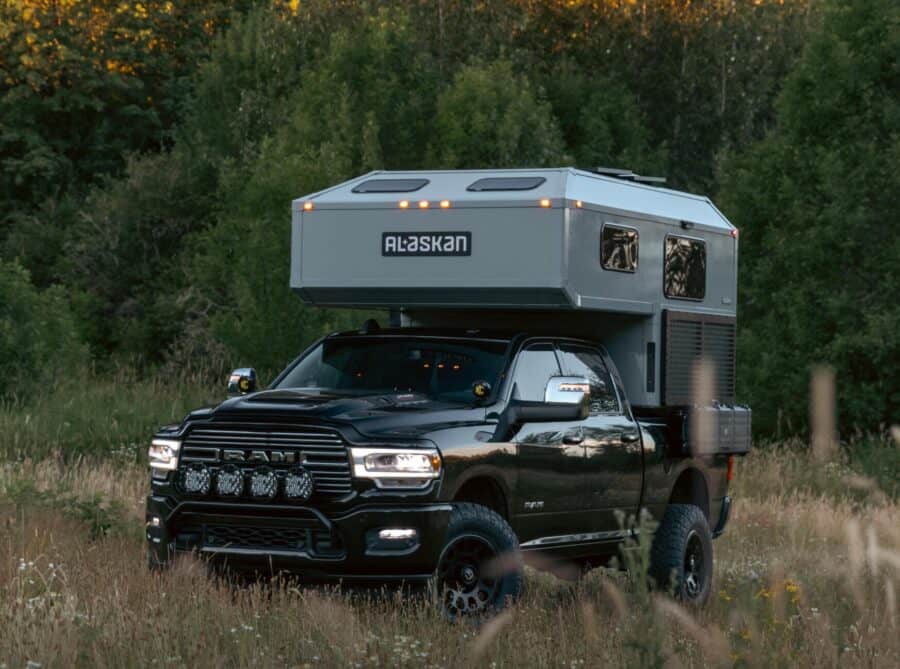
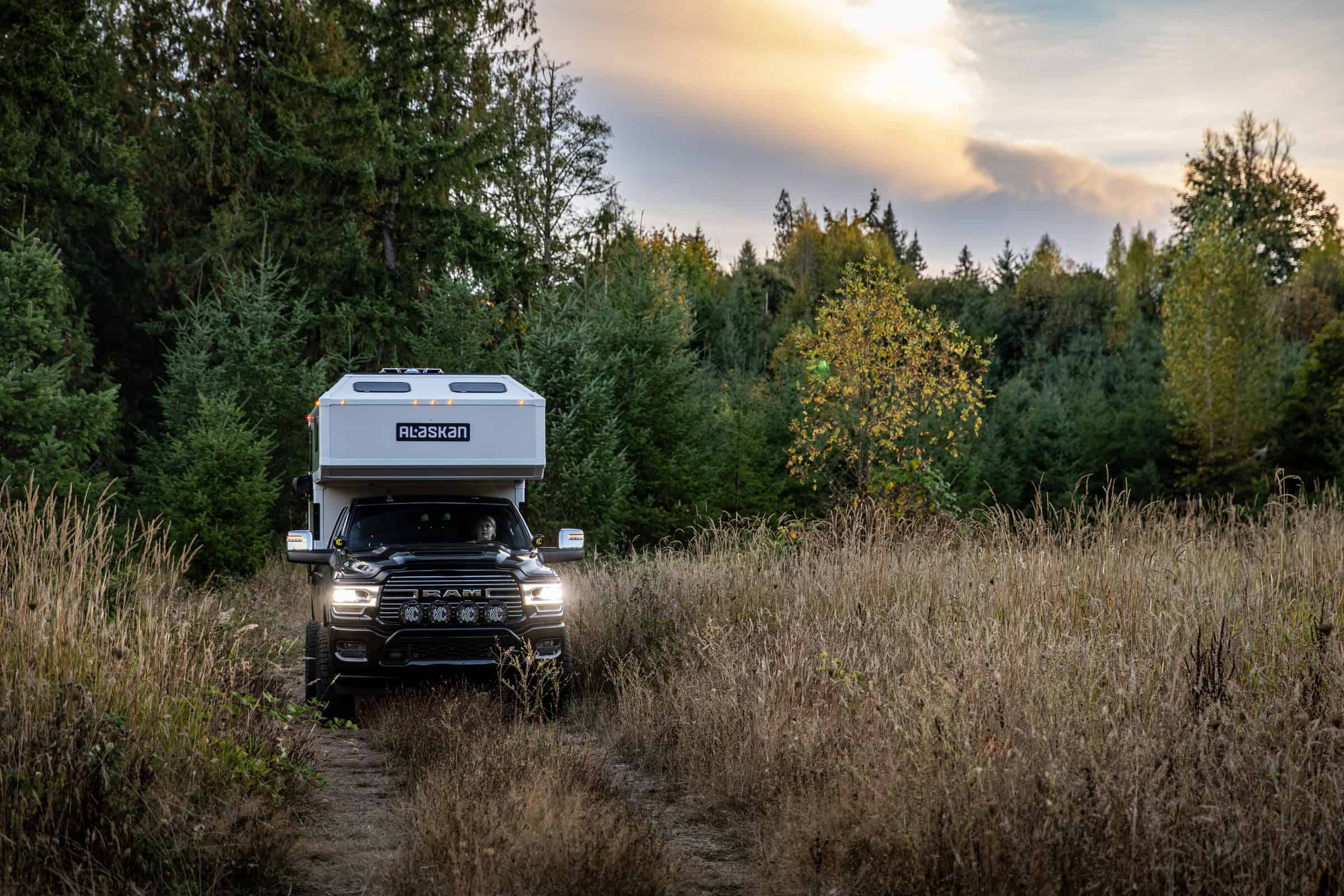
Alaskan Campers has been building truck campers in Winlock, Washington, since the late 1950s, and for most of that time the name has meant one thing: the hard-sided pop-up, with solid walls that crank up at camp and drop down for the drive. The HS 640 breaks from that formula. It’s a fixed hard-side camper, the company’s first in decades, and its first built from composite panels. The goal was simple: make an Alaskan light enough for the many half-ton truck owners the company used to turn away.
The result is a 6.4-foot, roughly 1,500-pound (dry) camper with rot-proof insulated walls, a frame designed to fight condensation, a propane-free all-electric setup with lithium batteries and solar, and a diesel heater for cold nights. Alaskan positions it as a complement to its classic pop-ups, not a replacement.
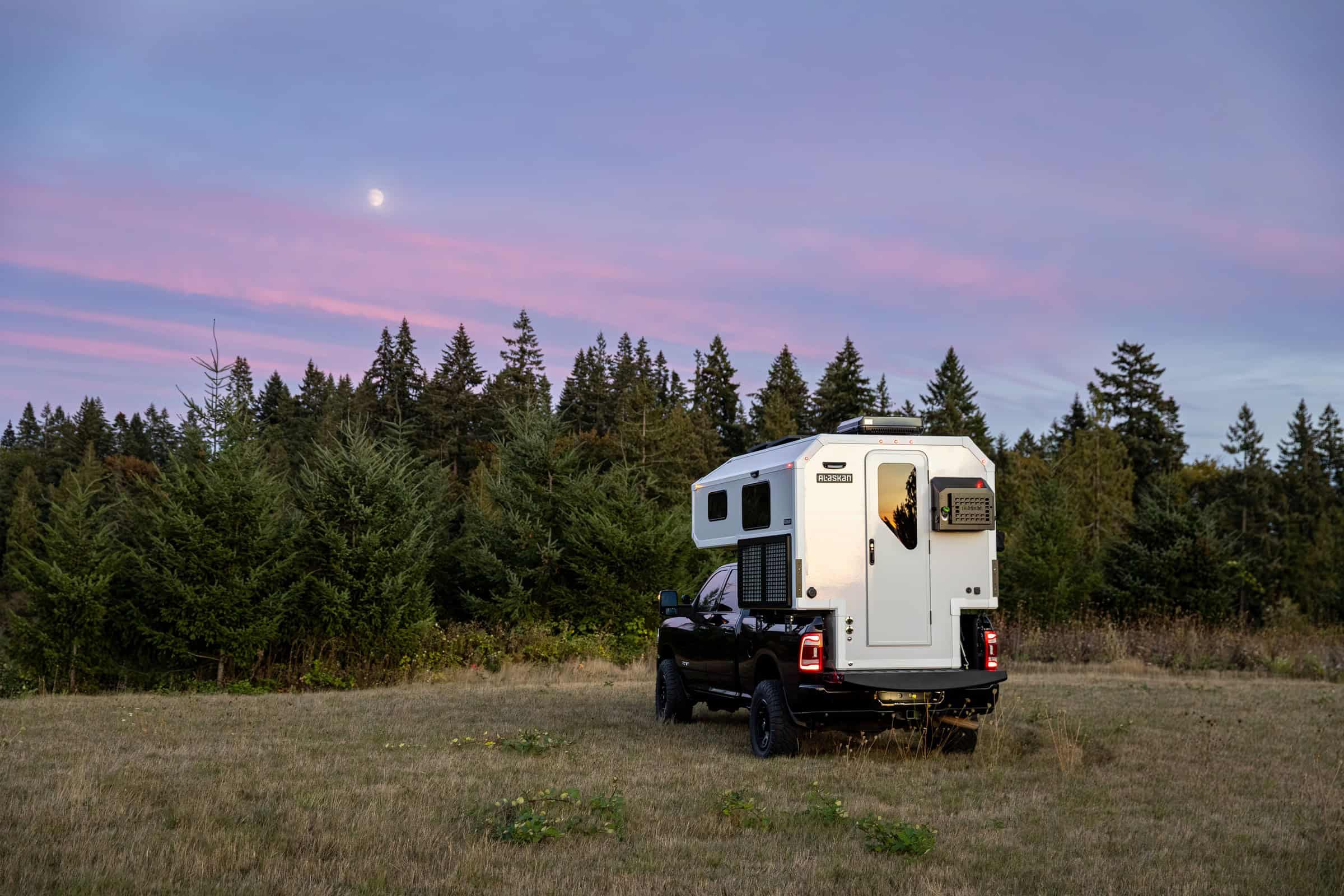
A New Kind of Alaskan, Designed from a Clean Sheet
The HS 640 wasn’t adapted from an older model. In an interview with Truck Camper Magazine, Alaskan’s leadership explained that the company kept getting calls from half-ton owners who loved the brand but didn’t have the payload for a traditional Alaskan. Engineers first tried an all-aluminum frame and built a full prototype, but it only saved a few hundred pounds. That pushed them toward composite panels, and toward a new 15,000-square-foot facility across the street dedicated to composite construction, while the original shop keeps building the wood-framed pop-ups.
Customer feedback shaped the details too. Owners asked for a diesel heater, a tankless water heater, acrylic windows, and internal tie-downs, and all of them made the production model. Four floor plan concepts were trimmed to two: Layout 1 favors seating, while Layout 2 adds a full-height cabinet for storage.
Composite Walls That Can’t Rot
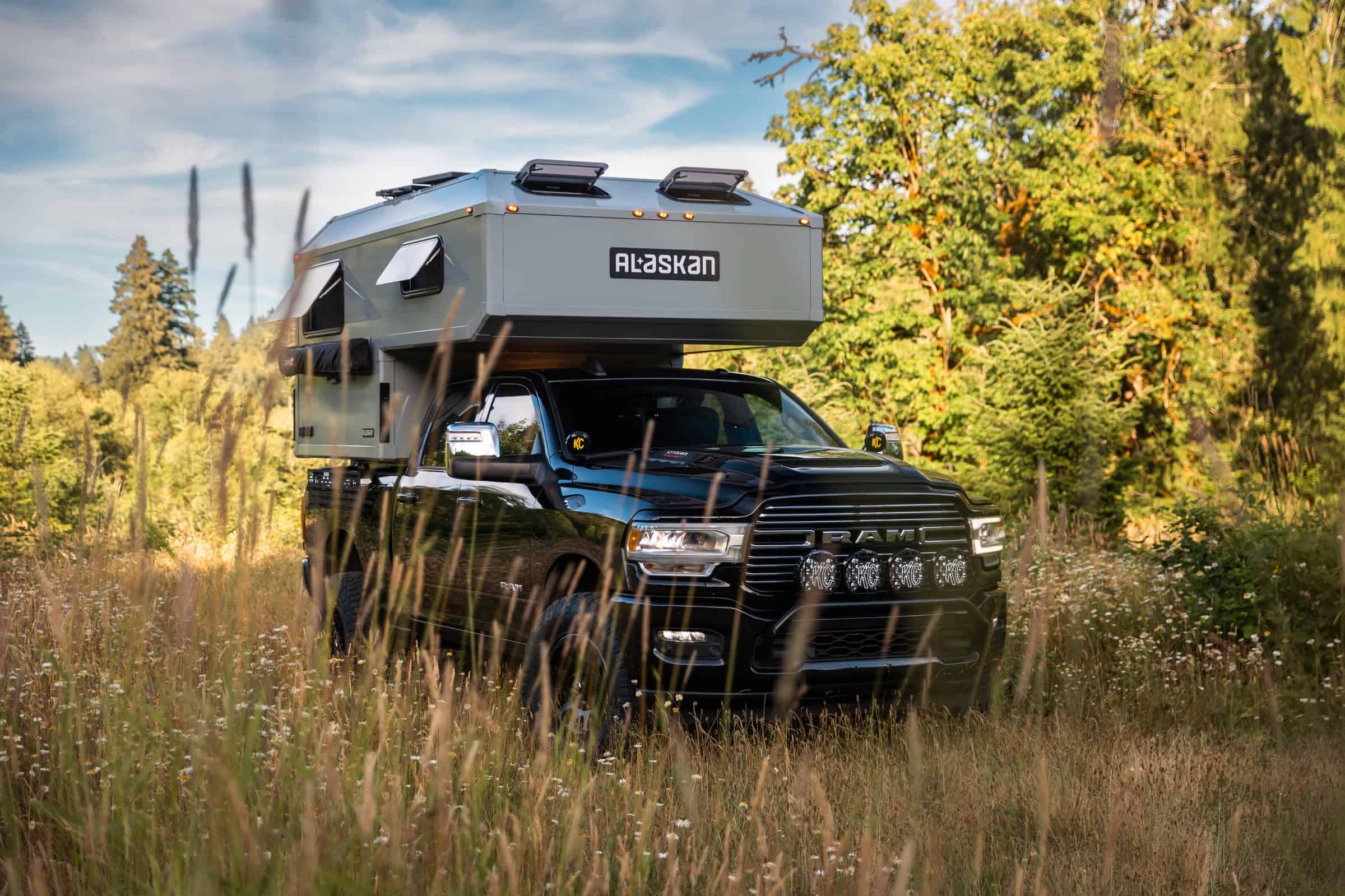
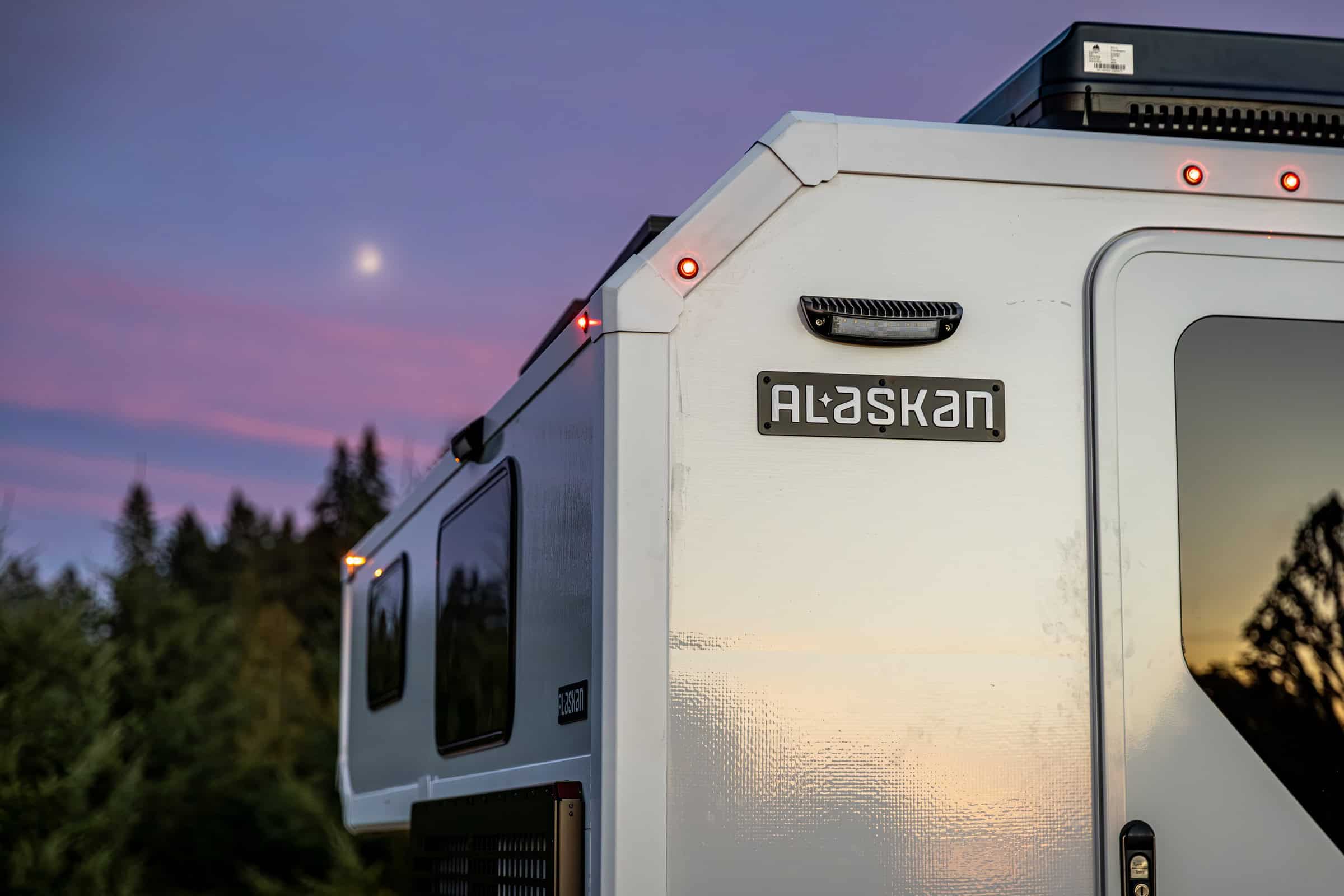
The walls are 1.5-inch structural insulated panels: high-density PIR foam sandwiched between fiberglass skins. That construction does three jobs at once. It’s the structure, so there’s no separate frame-and-skin assembly adding weight. It’s the insulation, rated R-11, which is strong for a wall this thin. And because there’s no wood to soak up water, a leak at a seam can’t quietly rot the camper from the inside, which is the failure that ends the life of many older truck campers.
The trade-off is that a fixed hard side doesn’t drop down on the highway the way an Alaskan pop-up does, so you carry the full 86.5-inch height everywhere. In exchange you get standing room the moment you open the door, with no lift mechanism or folding seals to maintain.
A Thermal-Break Frame That Fights Condensation
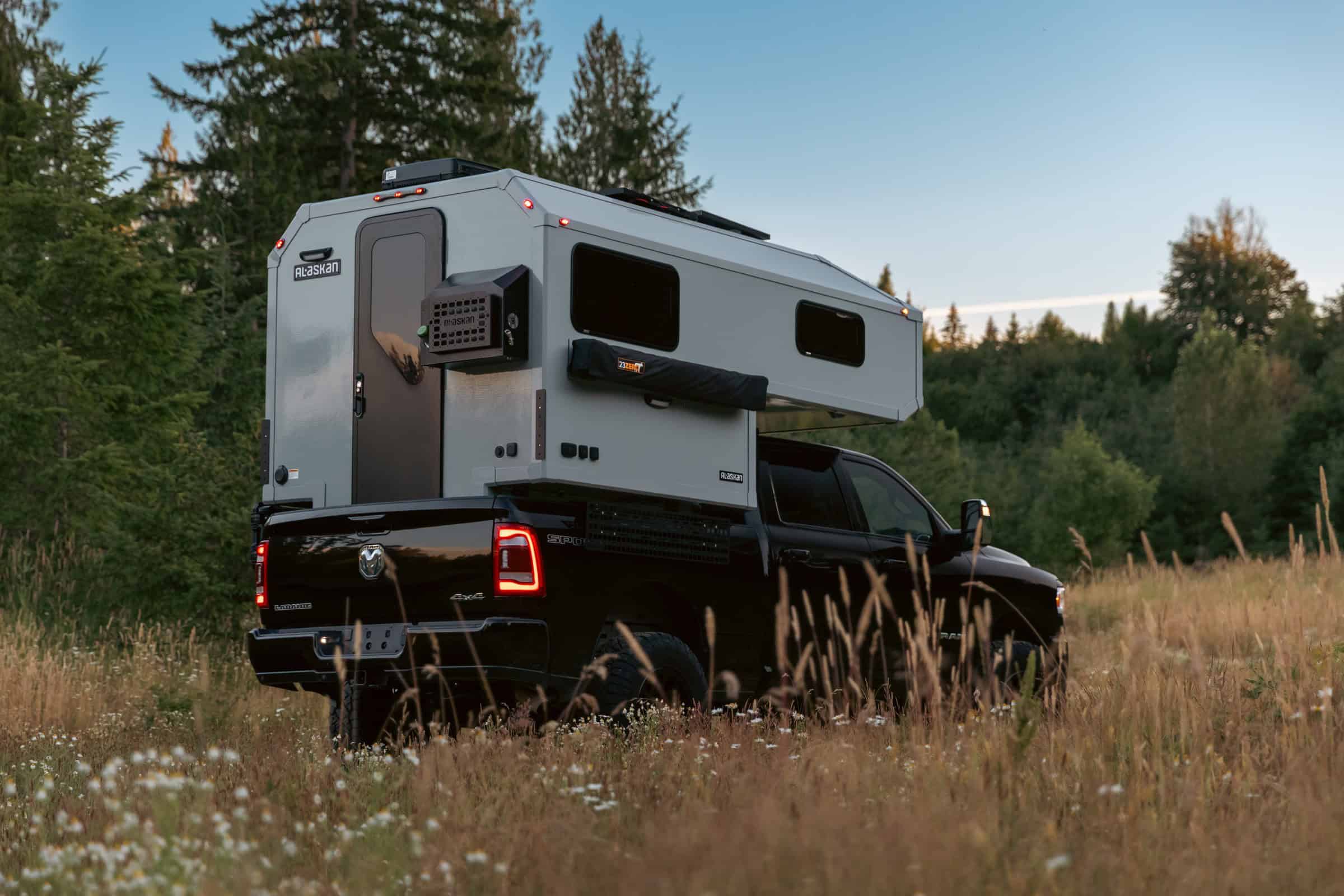
Aluminum is light and strong, but it moves heat very well. In an ordinary aluminum-framed camper, the frame carries cold from outside straight to the interior corners, and that’s where condensation and mildew show up on chilly mornings. The HS 640 uses a patent-pending hybrid frame that pairs aluminum with PVC to interrupt that path. Alaskan says it means less condensation at the corners and joints and a steadier interior temperature, which matters most for four-season campers and anyone sleeping in a small, warm space surrounded by cold air.
Why the Weight Is the Whole Story
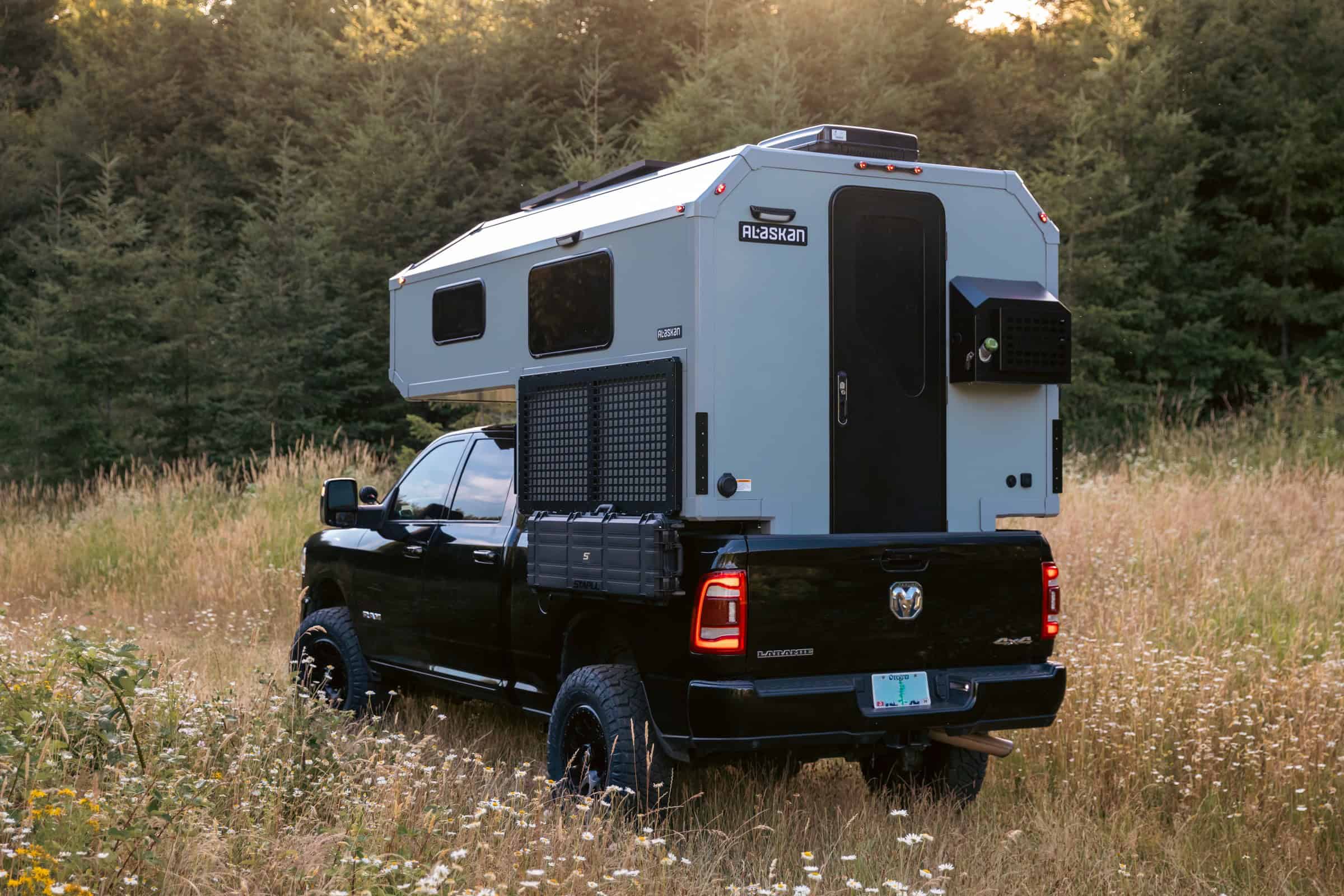
For a truck camper, weight decides almost everything: which truck you need, how the rig handles, how hard your brakes and suspension work, and how much you spend on fuel and upgrades. At about 1,500 pounds dry, Alaskan says the HS 640 fits a wider range of trucks, including many half-ton pickups, so a lot of buyers can start truck camping with the truck they already own.
Dry weight is only the starting point, though. Truck Camper Magazine reported a loaded weight of 1,976 pounds for Layout 2, before you add people, gear, water, and food. Before you buy, check the payload figure on the sticker inside your driver’s door, and weigh the loaded truck at a CAT scale once you’re set up.
Off-Grid Power That Comes Standard
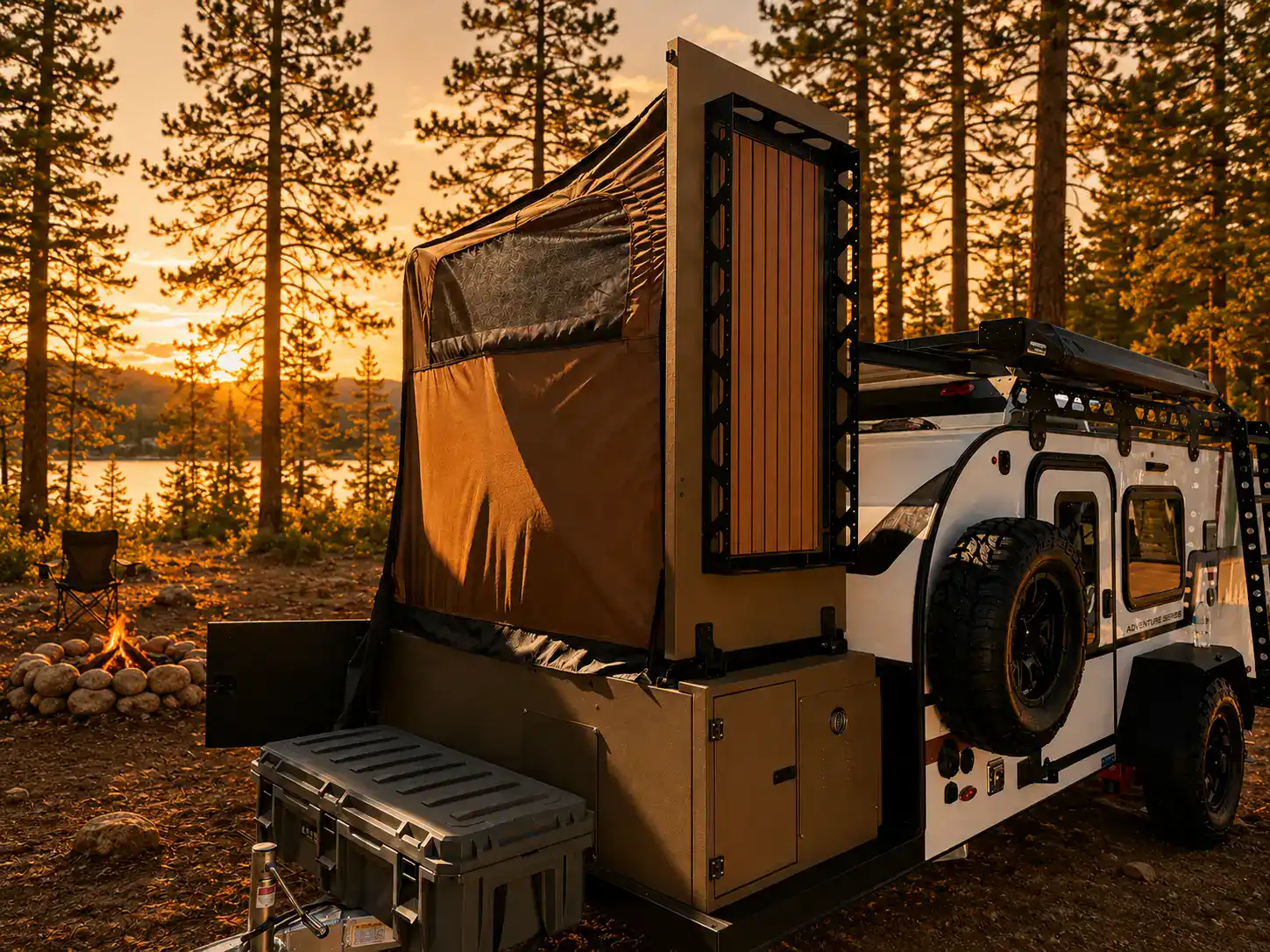
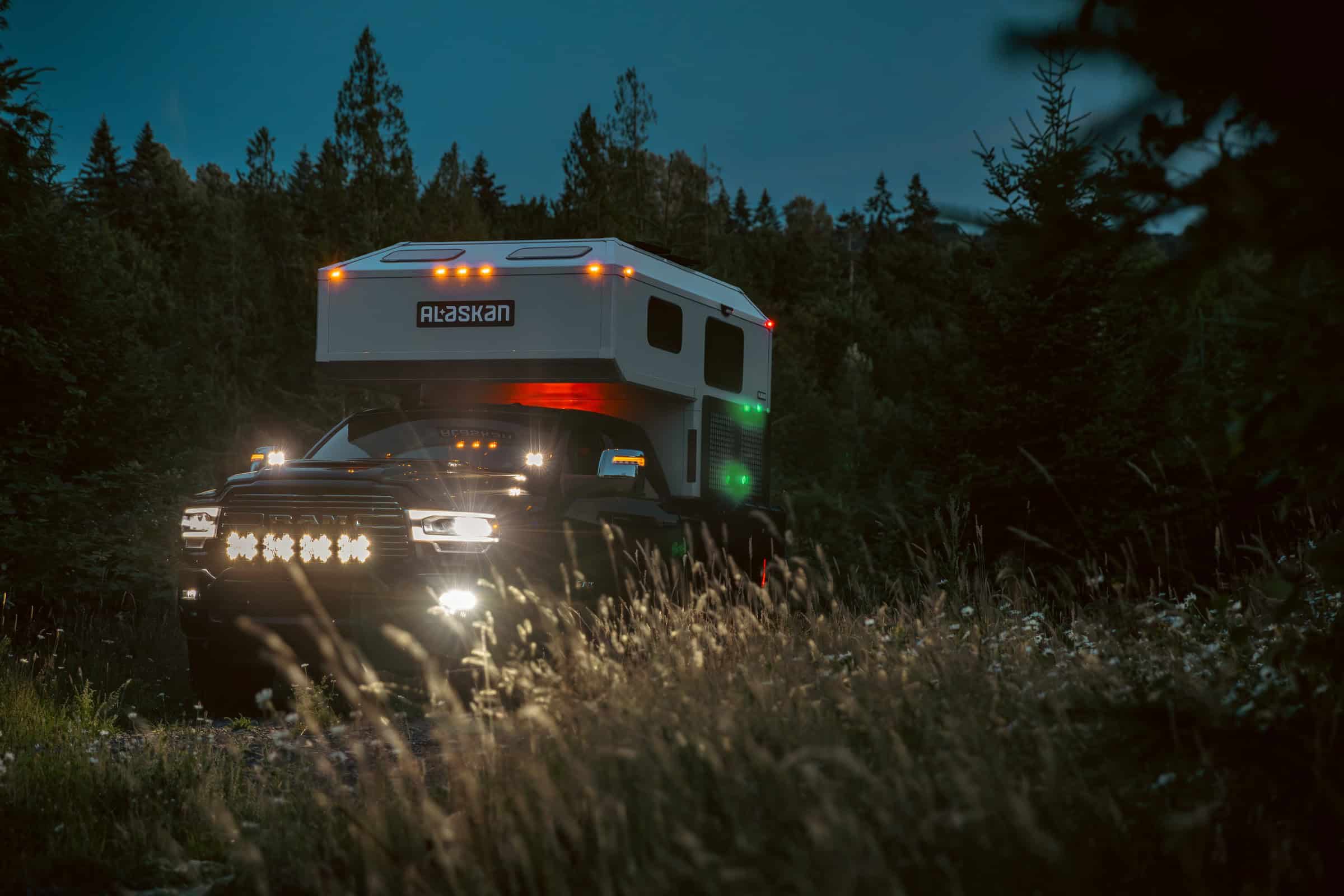
The HS 640 skips propane entirely, which keeps the systems simple. The standard power package is big for a camper this size: two Expion360 lithium batteries totaling 324Ah, a 200-watt roof solar panel with a Victron MPPT charge controller, a Victron Orion DC-DC charger that tops up the batteries while you drive, and a Victron touchscreen to monitor it all. There’s 30-amp shore power, external ports for Starlink and portable solar, and outside USB-C, 12-volt, and 110-volt outlets. Layout 2 adds a 3,000-watt Victron inverter.
A MaxxAir roof fan and a diesel heater are standard, and the camper is pre-wired for air conditioning. Add-ons include a second roof panel, a folding portable panel, up to six batteries total, and a Nomadic X2 rooftop AC.
A Compact Galley with a Real Fridge
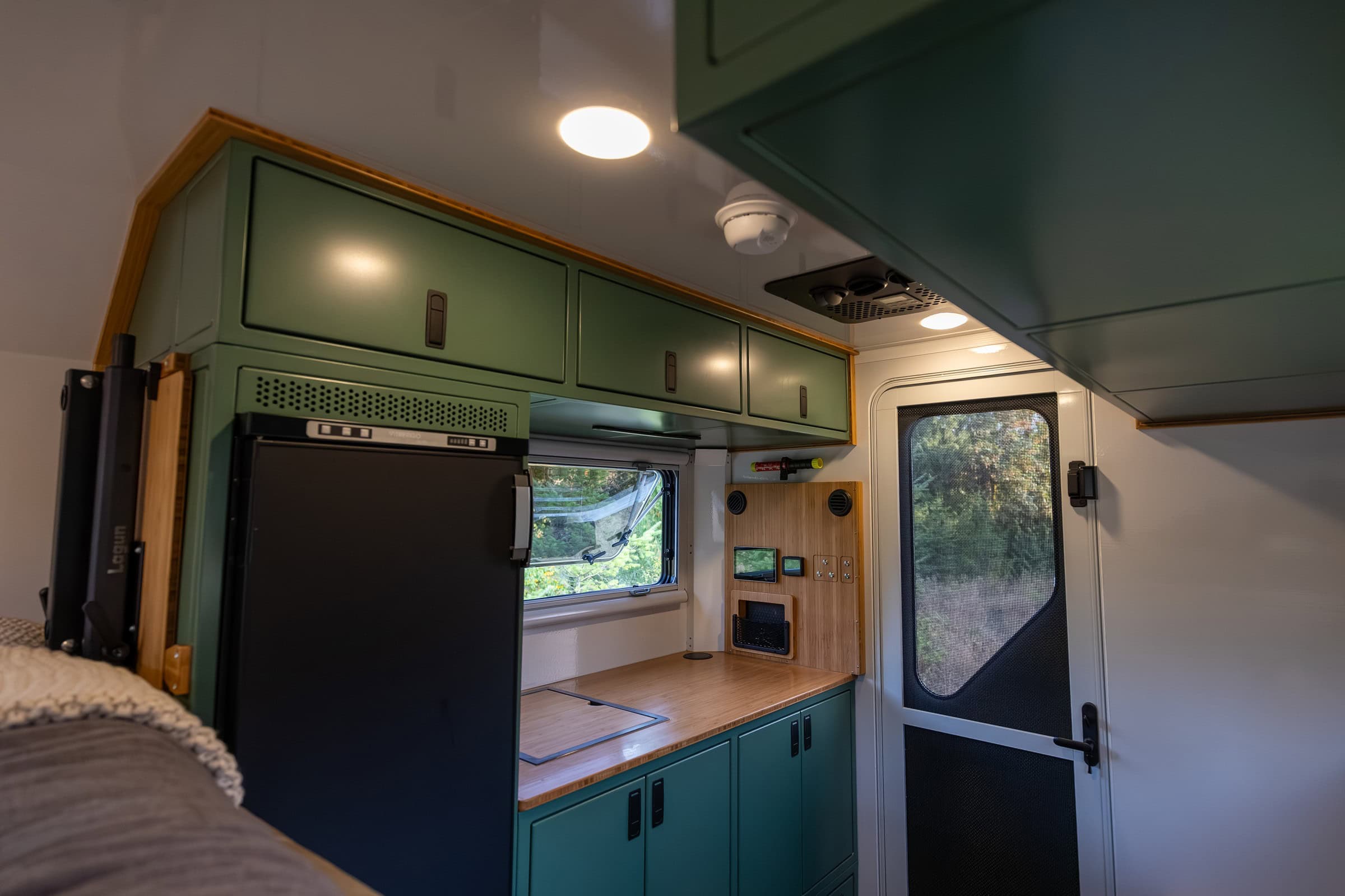
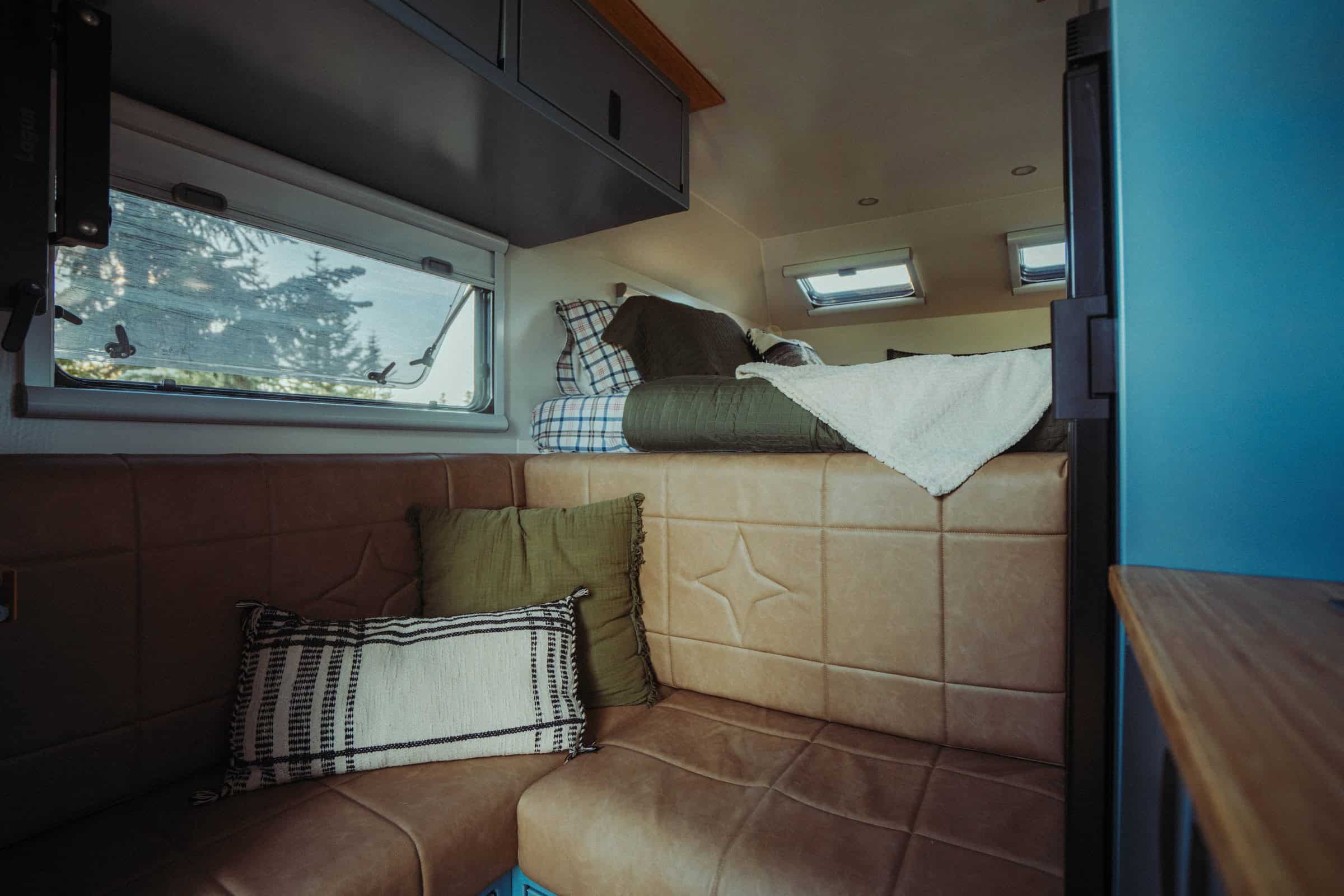
The galley uses powder-coated aluminum cabinets, offered in blue, gray, green, or beige at no extra cost, along with bamboo countertops. Aluminum cabinets are lighter than plywood and won’t swell if they get wet, which suits a composite camper. A 90-liter fridge with a freezer, an instant water heater, a built-in water filter, and an indoor/outdoor shower hookup are all standard, along with a 21-gallon fresh tank. An induction cooktop is an inexpensive option, a good match for the big lithium bank and the propane-free design.
Dinette, Queen Bed, and Plenty of Windows
The bed area holds an RV queen mattress over the cab, plus a dinette with a Lagun table. Dual-pane acrylic awning windows with built-in blinds and screens bring in light and air without the weight of glass, and under-floor storage keeps heavy items low. For a bathroom, you can add a Trelino EVO S composting toilet and an Alaskan pop-up shower enclosure.
Options, Layouts, and Price
The base configuration is simple, and most of the options are practical upgrades rather than luxury trim: an awning, MOLLE panels for mounting gear outside, a ladder, more solar, and more batteries. The exterior comes in white or gray, or you can pay extra to have it paint-matched to your truck. Financing is available through Elite Recreational Finance, and sales go through Alaskan’s dealers.
Design Details
- Builder: Alaskan Campers, Winlock, Washington
- Model: HS 640 composite hard-side truck camper (non-slide, fixed height)
- Length: 6.4 ft (Truck Camper Magazine lists the interior floor length as 5’8″)
- Height: 86.5″
- Weight: about 1,500 lbs dry (builder); 1,976 lbs loaded for Layout 2 (as reported by Truck Camper Magazine)
- Walls: 1.5″ composite SIPs with PIR foam and fiberglass skins, R-11
- Frame: patent-pending aluminum and PVC thermal-break hybrid
- Power: 324Ah lithium (2 x 162Ah), 200W solar, Victron MPPT, Victron Orion DC-DC charger, Victron GX touchscreen, 30A shore power; 3,000W inverter in Layout 2
- Climate: diesel heater, MaxxAir fan, wired for AC (Nomadic X2 optional)
- Kitchen: 90L fridge/freezer, bamboo counters, aluminum cabinets; induction cooktop optional
- Water: 21 gallons fresh, instant water heater, filtration, indoor/outdoor shower hookup
- Sleeping: RV queen mattress
- Fuel: propane-free
- Layouts: 2 (Layout 1 favors seating; Layout 2 adds a full-height cabinet)
- Price: starting at $54,495 (Layout 1) and $55,995 (Layout 2) on the Alaskan Campers configurator, October 2026
What Makes This Camper Special
- A legacy brand chasing lighter trucks. Alaskan built a new construction method and a new factory to serve half-ton owners it used to turn away.
- No wood in the walls. Composite SIPs remove the rot risk that ends the life of many older campers.
- Condensation control built into the frame. A thermal break targets the cold corners where moisture collects.
- Propane-free and simple. Lithium, solar, induction, and diesel heat mean no propane tanks to fill, inspect, or find room for.
- Customer-driven details. The diesel heater, tankless water heater, acrylic windows, and tie-downs came directly from owner requests.
Lessons for Truck Camper Shoppers
- Shop by payload, not by truck class. “Half-ton compatible” depends on your exact truck. Compare the door-sticker payload to the camper’s realistic loaded weight, not just its dry weight.
- Hard side or pop-up is a real trade-off. Hard sides give instant standing room and better weather sealing. Pop-ups ride lower and cut wind drag on the highway.
- Insulation and thermal breaks matter more than square footage if you camp in shoulder seasons or winter.
- Going all-electric pairs well with a large battery bank. Induction cooking and an electric water heater only make sense with enough lithium and charging to back them up.
Helpful Resources
- Truck Camper Magazine: Alaskan HS 640 Production Model Debuts: the most detailed coverage of the HS 640, including an interview with Alaskan on why and how it was built.
- The Ultimate Truck Camper Payload Match Challenge: a clear, step-by-step guide to working out whether a camper truly fits your truck.
- Alaskan Hard Side Buyer’s Guide: Truck Camper Magazine’s overview of Alaskan’s hard-side lineup.
Learn More
Alaskan Campers HS 640
Model page and configurator: alaskancampers.com
Contact: alaskancampers.com/contact-us · info@alaskancampers.com · 360.767.9271
Instagram: @alaskan.campers
Photos: Alaskan Campers. Specs and pricing as listed on alaskancampers.com in October 2026.
Highlights
- Alaskan’s first composite-panel camper and first fixed hard side in decades
- About 1,500 lbs dry; Alaskan says it fits many half-ton pickups
- Rot-proof R-11 composite walls and a thermal-break frame
- Propane-free: 324Ah lithium, 200W solar, diesel heat standard
- 90L fridge, instant hot water, and an RV queen bed
- Two layouts, starting at $54,495
Explore More
- OEV Back Country 6.85′: An All-Composite Slide-In Pop-Up Truck Camper
- This Pop-Up Truck Camper Gives You Sit-Up Room
- Kimbo 6: A Hard-Side Truck Camper
- An In-Cab Bed in a Toyota Tundra
- Truck Campers
Hard side or pop-up: which would you put on your truck? Tell us in the comments.
If you enjoyed this you’ll LOVE our Free Daily Tiny House Newsletter with even more!
You can also join our Small House Newsletter!
Also, try our Tiny Houses For Sale Newsletter! Thank you!
More Like This: Tiny Houses | Tours & Features | Tiny Houses For Sale | Travel Trailers | Tiny House Interiors | Tiny House Living | Truck Campers
Disclosure: This post may contain affiliate links. If you purchase through one of our links, we may earn a commission at no additional cost to you.


Alex
Latest posts by Alex (see all)
- Shipping Container Cabins on Fish Creek: A Tiny Hotel Near Saratoga, New York - October 21, 2026
- Belle Tout Keeper’s Loft: Sleep in the Tower of an 1832 Clifftop Lighthouse - October 21, 2026
- Attrap’Rêves: Stargazing from Bed in a Clear Bubble Near Marseille - October 21, 2026