Disclosure: This post may contain affiliate links. If you purchase through one of our links, we may earn a commission at no additional cost to you.
The Going Tiny Series, Part 3 of 45 · Guide 1 of 5: The Tiny House Money Plan
A free chapter goes up every day. See every part. Rather have it all at once, with printable worksheets? Get the Going Tiny Toolkit.
Here’s a question that changes the conversation: not “What’s the cheapest tiny house?” but “What’s the cheapest legal, livable way for me to live smaller?”
The cheapest house in the world is expensive if you can’t legally live in it. A free shed on land where dwellings aren’t allowed can cost you fines, a forced move, or a neighbor dispute. Meanwhile, a slightly pricier option in a place that welcomes it can be the bargain.
Four questions that decide your path
1. What do you already have?
Inventory your assets, even small ones. Land you own. A family member with a big yard. Equity in a house. A truck. Building skills. A friend who’s a carpenter. A paid-off car you could sell. Each of these can open or close a path.
2. What’s legal where you want to live?
Some areas welcome tiny houses on foundations under the International Residential Code’s tiny house appendix (Appendix Q in the 2018 edition, Appendix AQ in 2021, and Appendix BB in 2024), which covers homes of 400 square feet or less. Some allow ADUs in backyards. Some only allow RVs and park models in RV parks. Some allow none of it full time. You don’t have to become a zoning expert tonight, but you do need a rough answer before you spend serious money.
3. How much cash can you reach, and how fast?
Not just savings. Think about sale proceeds, what your stuff could sell for, whether anyone might lend to you, and what you could save each month (Part 5).
4. What does your body and life need?
Do you need one-level living? To stay near a dialysis center, a hospital, or grandkids? Room for a wheelchair, a hobby, or a dog? A path that saves money but doesn’t fit your body or your life isn’t really cheaper. Guide 3 (it starts with Part 19 on November 6), Tiny Without the Ladder, covers one-level and accessible designs.
Common situations and the paths that often fit
These aren’t rules. They’re patterns I’ve seen many times among readers.
| Your situation | Paths that often fit | Paths to be careful with |
|---|---|---|
| Fixed or very low income, renting, little savings | Renting a smaller place; a used park model or RV in a reasonably priced, legal community; an ADU or room arrangement with family; senior or income-based housing | Buying raw land; starting a DIY build you can’t afford to finish |
| Homeowner with equity, wants to downsize | Selling and buying a small home or condo outright; buying a park model in a community; building a small foundation home on a lot that allows it | Borrowing against the big house to build tiny before it sells |
| Family with land or a big yard willing to host | ADU, park model, or certified tiny house where local rules allow; a written agreement | Handshake deals; placing a home where it isn’t permitted |
| Younger, working, some debt, no land | Renting small while paying down debt; used camper or tiny house for a few years; saving for a certified home | Large personal loans at high rates; building before you have a place |
| Own rural land already | Small foundation home or cabin built in phases; park model; certified tiny house if allowed | Underestimating septic, well, power, and road costs |
Want to do this on paper?
The printable PDF of The Tiny House Money Plan has fill-in worksheets for this step, including:
- Your Current Monthly Cost of Living
- Path Cost Estimator
- Your Savings Timeline
They come with all five guides in the Going Tiny Toolkit.
“I’d need to sell my house first, and then where would I live?”
I will need to sell my house first for any extra money and then where would I live!
— Renee, Tiny House Talk reader
This is one of the most common worries, and it has workable answers. People rent a small apartment or a furnished short-term rental for a few months. Some negotiate a “rent-back” with the buyer so they can stay in the house for a short time after closing. Some stay with family. Some buy a used camper and live in it at a campground during the transition. Part 6 walks through the money side.
The “defeats the purpose” test
Before you commit to any path, ask yourself honestly:
- Will my monthly housing cost go down, or at least stay the same?
- Will I have less debt than I have now, or a clear plan to pay it off?
- Can I legally live there long term?
- Can I physically live there as I get older?
- If something goes wrong, can I get out without losing everything?
If you can check most of these, you’re on a good path. If you can’t, that’s a signal to adjust: a smaller version, a different location, renting first, or waiting a year while you save. None of those are failures.
Rent before you buy
Many readers find it helpful to spend a weekend or a week in a tiny house rental before committing. A few hundred dollars spent testing small living can save you tens of thousands if you discover you need more space, or a different layout, or one level.
A real home from Tiny House Talk
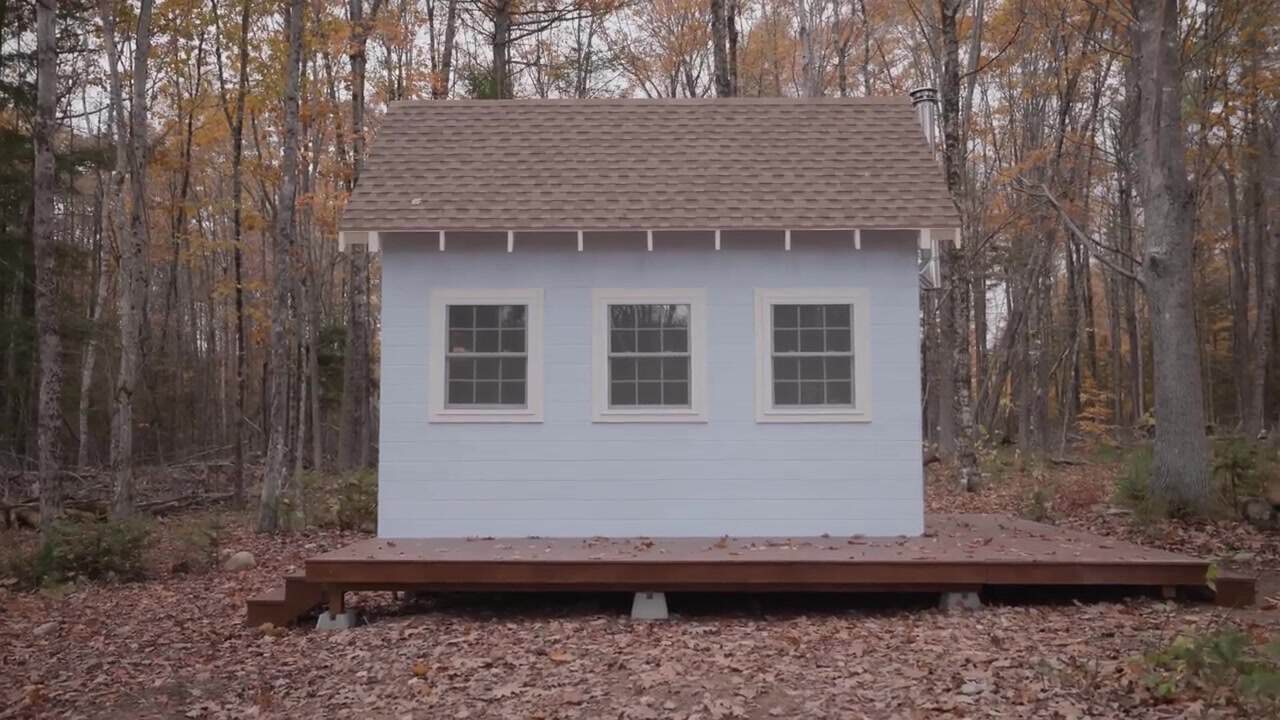
Photo via Tiny Home Tours/YouTube
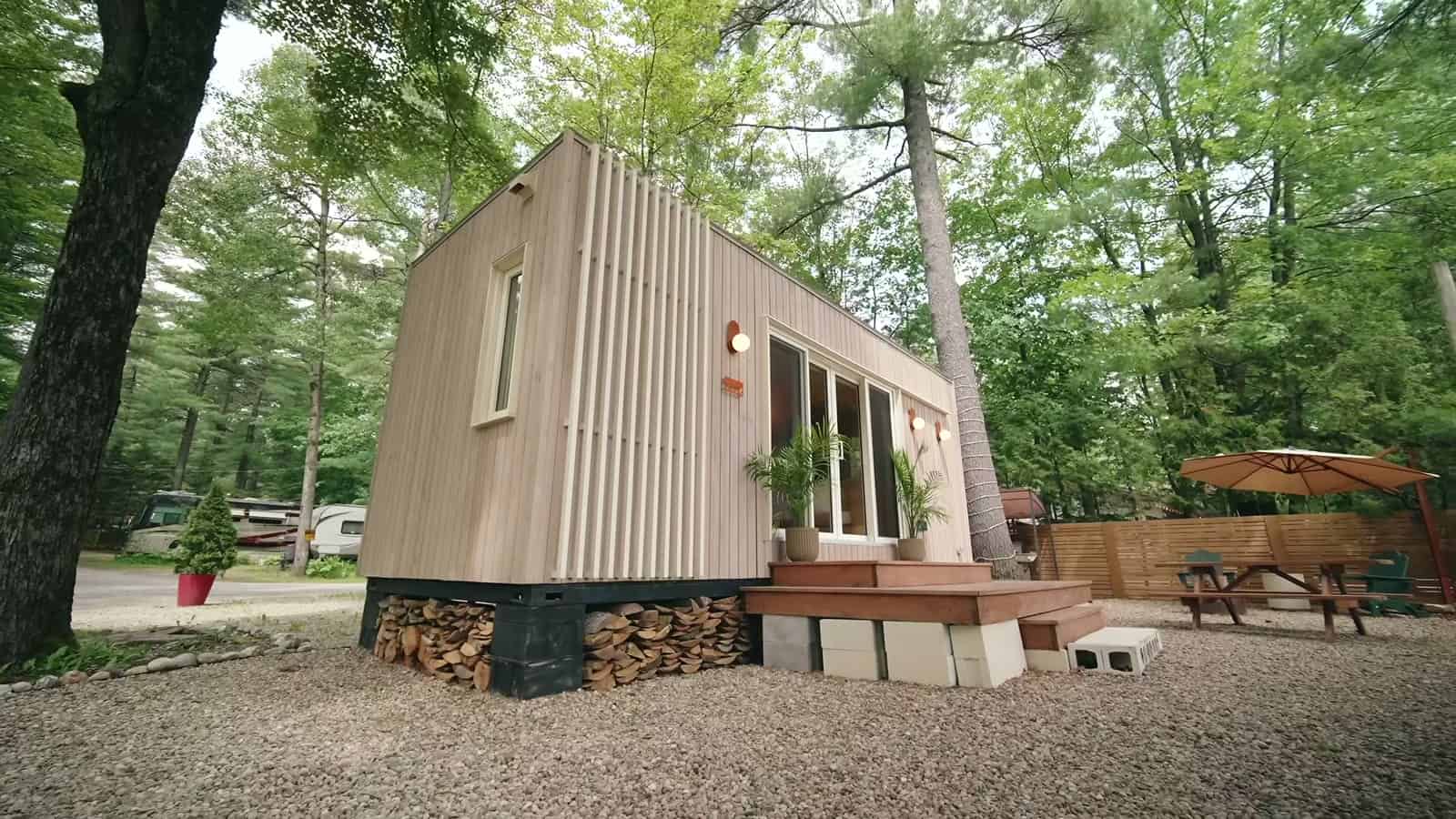
She lived in a camper and saved, then built a small cabin
Waiting while you save is not a failure. Bree lived in a camper on a friend's off-grid land in Maine and saved before building her 144 sq ft cabin. She says it came to about $10,700 with the deck, less than a year of rent, and her monthly bills run about $300 to $400.
Your turn
What's the money question you're stuck on right now? Tell me in the comments.
Prefer the clean, printable version?
This series is free to read here, and it always will be. If you’d rather have it as five clean, printable PDFs, that’s the Going Tiny Toolkit:
- The Tiny House Money Plan (the guide this chapter comes from): real 2026 cost ranges, a savings plan for any income, and every way people pay
- Where Can I Put It?
- Tiny Without the Ladder
- Bringing Them On Board
- Your First Tiny Steps
Every guide adds printable worksheets and a 30-day action plan, and Tiny Without the Ladder comes with the bonus One-Level Floor Plan Idea Book (18 to-scale floor plans). All five are $47, with a 30-day refund.
← Previous: Part 2: What Going Smaller Really Costs: Tiny House, Park Model, ADU, and More
Next (tomorrow): Part 4: Your Monthly Number: What You Spend Now vs. Living Smaller
Not sure which part matters most for you? The free 10-minute What’s Really Holding You Back? quiz tells you where to start. And to get a new part (and a new home) in your inbox each day, join the free Tiny House Newsletter.
Disclosure: This post may contain affiliate links. If you purchase through one of our links, we may earn a commission at no additional cost to you.


Alex
Latest posts by Alex (see all)
- The Cheapest Legal Way to Live Smaller, Based on Your Situation - October 21, 2026
- A 14-Foot Cargo Trailer Tiny Home with a Lift Bed, Real Shower, and Ramp Patio - October 20, 2026
- NOAH-Certified Tiny House with a Main-Floor Queen Bed and Slide-Out Near Asheville - October 20, 2026