Disclosure: This post may contain affiliate links. If you purchase through one of our links, we may earn a commission at no additional cost to you.
The Going Tiny Series, Part 2 of 45 · Guide 1 of 5: The Tiny House Money Plan
A free chapter goes up every day. See every part. Rather have it all at once, with printable worksheets? Get the Going Tiny Toolkit.
When people look at tiny houses online, they usually see one number: the price of the house. That number is real, but it’s almost never the whole story. The total cost of a smaller home has three parts:
- The home itself (built, bought, or converted).
- Getting it set up somewhere legal: land or a lot, site work, utilities, permits, delivery.
- Living there each month: lot rent or taxes, insurance, utilities, upkeep.
A $45,000 tiny house that needs $40,000 of land, septic, well, and electric is an $85,000 project. A $70,000 park model in a community with $650 lot rent is a very different deal from a $70,000 park model on family land with no lot rent. Same house, different path, different money.
The paths, side by side
Here are the most common ways readers go smaller, with typical 2026 price ranges for the home itself. These do not include land unless noted. Treat them as a starting point, not a quote.
| Path | Typical home cost (2026) | What to know |
|---|---|---|
| Rent tiny or small first | Deposit and first month; rent varies widely by area | Lowest risk. Lets you test small living and keep saving. No resale worries. |
| Used RV, camper, or travel trailer | Roughly $5,000–$35,000 for many used units | Cheapest way to own something you can live in. Wears out faster; check for water damage. Where you can legally live in it full time is the hard part. |
| Van, bus, or skoolie conversion | DIY often $15,000–$60,000 including the vehicle; professional builds often $80,000 and up | Mechanical repairs are a real ongoing cost. Fuel and vehicle insurance add up. |
| Used tiny house on wheels | Commonly $25,000–$90,000 | Can be a bargain. Can also be a lemon. Have it inspected; ask about certification. |
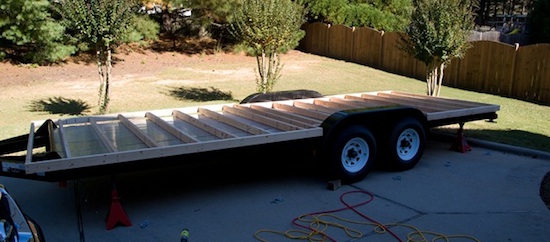
| DIY tiny house on wheels | Often $25,000–$70,000 in materials, trailer, and systems | Saves labor cost, costs time. A purpose-built trailer alone is often several thousand dollars up to $15,000 or so. Hard to finance and insure without certification. |
| Shell or partial build | Shells often $20,000–$60,000, plus $15,000–$50,000 or more to finish | Middle ground: a pro builds the structure, you finish inside. Know exactly what “shell” includes. |
| Builder-made tiny house on wheels | Most buyers pay roughly $80,000–$130,000; the full range runs about $70,000–$150,000+ | Easier to finance and insure if RVIA or NOAH certified. Delivery is extra. |
| Park model RV | New often $40,000–$120,000 set up; used units can be much less | Built to a recognized standard (ANSI A119.5), usually 400 sq ft or less. Often welcome in RV resorts and some tiny home communities. |
| Shed or cabin conversion | Often $15,000–$60,000 depending on the shed and how far you finish it | A shed is not automatically a legal dwelling. Check before you buy. |
| Small house on a foundation (roughly 400–1,000 sq ft) | Often $150,000–$350,000+ to build, not counting land | Can get a regular mortgage, holds value better, but small homes are expensive per square foot. |
| ADU in a family member’s yard | Detached ADUs commonly $100,000–$300,000+; small prefab units can be less | No land to buy, but permits, utility connections, and impact fees can be large. Get the family agreement in writing. |
Where these ranges come from
These are typical ranges reported by builders, cost guides, and market data in 2026. Your area could be higher or lower. The point of the table is to show the shape of each path, not to give you a quote.
Want to do this on paper?
The printable PDF of The Tiny House Money Plan has fill-in worksheets for this step, including:
- Path Cost Estimator
They come with all five guides in the Going Tiny Toolkit.
Hidden costs: the list nobody shows you
This is where most budgets break. Go through each line for your path. Some won’t apply. The ones that do can easily double what you planned.
Land and a place to be
- Buying land. Prices vary enormously. Cheap land is often cheap because it lacks road access, utilities, or legal permission to live on it.
- Lot rent. In RV parks and tiny home communities, monthly site rent commonly runs from about $250 to $1,500, with many communities in the $500–$900 range. Ask what’s included (water, sewer, trash, electric).
- Land lease on someone’s property. Even with family, put it in writing and include what happens if the property is sold.
Getting the site ready
- Site prep: clearing, grading, a gravel pad or driveway. Often a few thousand dollars, sometimes much more on steep or wooded land.
- Foundation or piers if the home isn’t on wheels.
- Septic system: commonly about $6,000–$20,000, more with poor soil.
- Well: a basic residential well commonly runs about $5,500–$15,000, and deep wells can cost far more.
- Utility connections to raw land: bringing power, water, and sewer to a site often costs $10,000–$35,000, and long distances can push it much higher.
- Permits and fees: building permits, inspections, and sometimes impact fees. A few hundred dollars to many thousands depending on the place.
Moving it
- Delivery: builders and haulers usually charge by the mile. Get it quoted before you sign.
- Tow vehicle: towing a heavy tiny house takes a truck rated for it. If you don’t already own one, hiring a professional mover for the rare move is usually cheaper than buying a truck.
- Permits for oversize loads if your house is extra wide.
Living there
- Insurance (more on this in Part 8). Some homes are hard to insure at all.
- Property taxes, or vehicle registration for homes on wheels. Some places tax tiny homes as personal property.
- Utilities: propane, electric, internet, water hauling if needed.
- Storage for what you’re not ready to part with. A storage unit can quietly eat your savings.
- Maintenance: roofs, seals, tires, water heaters. Small homes still need repairs.
- Furniture and appliances that fit small spaces, which can cost more than standard ones.
The most expensive mistake
Building or buying a tiny house before you know where it can legally go. Readers have ended up paying storage fees on a finished house for months, or moving it twice. Before you spend real money on a home, have a realistic answer to “Where will it sit, and is that legal?” Guide 2 (it starts with Part 9 on October 27) in this series, Where Can I Put It?, walks through that research step by step.
A real home from Tiny House Talk
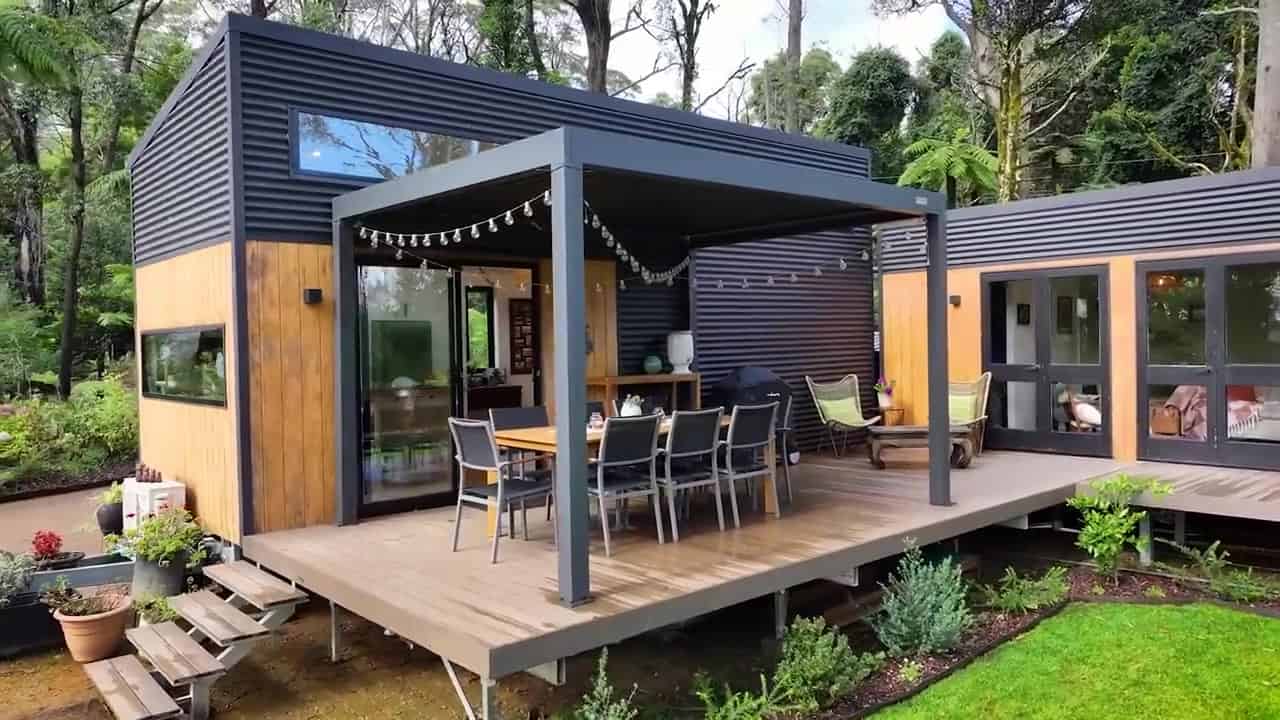
Photo via Living Big In A Tiny House/YouTube
She sold her city studio and built mortgage-free
The house is only part of the bill. When Joanne sold her Sydney studio and moved onto her daughter's Blue Mountains land, her two tiny homes came to about AU$250,000, plus about AU$35,000 of groundwork and a AU$20,000 deck. Two years in, she lives mortgage-free, but those extras were real money.
A quick example
Marta wants a 24-foot tiny house on wheels from a builder. The listed price is $92,000. Here’s what her real number looks like in a tiny home community:
| Item | Estimate |
|---|---|
| Tiny house (RVIA certified) | $92,000 |
| Delivery (about 300 miles) | $1,800 |
| Setup at the community: leveling, skirting, steps, hookups | $3,500 |
| Furniture and small appliances that fit | $2,500 |
| First and last month’s lot rent plus deposit | $1,900 |
| Moving her belongings and a short-term storage unit | $1,200 |
| Real starting cost | $102,900 |
That’s about 12 percent more than the sticker price, and Marta’s situation is fairly simple. On raw land with a new septic system and well, the gap would be far bigger. You’ll do this same exercise for your path on Worksheet 2 (Path Cost Estimator).
Your turn
What's the money question you're stuck on right now? Tell me in the comments.
Like to print things out and write on them?
This series is free to read here, and it always will be. If you’d rather have it as five clean, printable PDFs, that’s the Going Tiny Toolkit:
- The Tiny House Money Plan (the guide this chapter comes from): real 2026 cost ranges, a savings plan for any income, and every way people pay
- Where Can I Put It?
- Tiny Without the Ladder
- Bringing Them On Board
- Your First Tiny Steps
Every guide adds printable worksheets and a 30-day action plan, and Tiny Without the Ladder comes with the bonus One-Level Floor Plan Idea Book (18 to-scale floor plans). All five are $47, with a 30-day refund.
← Previous: Part 1: Can You Afford to Go Tiny? Start Here With the Money
→ Next: Part 3: The Cheapest Legal Way to Live Smaller, Based on Your Situation
Not sure which part matters most for you? The free 10-minute What’s Really Holding You Back? quiz tells you where to start. And to get a new part (and a new home) in your inbox each day, join the free Tiny House Newsletter.
Disclosure: This post may contain affiliate links. If you purchase through one of our links, we may earn a commission at no additional cost to you.


Alex
Latest posts by Alex (see all)
- Shipping Container Cabins on Fish Creek: A Tiny Hotel Near Saratoga, New York - October 21, 2026
- Belle Tout Keeper’s Loft: Sleep in the Tower of an 1832 Clifftop Lighthouse - October 21, 2026
- Attrap’Rêves: Stargazing from Bed in a Clear Bubble Near Marseille - October 21, 2026