Disclosure: This post may contain affiliate links. If you purchase through one of our links, we may earn a commission at no additional cost to you.
The Going Tiny Series, Part 11 of 45 · Guide 2 of 5: Where Can I Put It?
A free chapter goes up every day. See every part. Rather have it all at once, with printable worksheets? Get the Going Tiny Toolkit.
One reason this topic feels impossible is that four or five different sets of rules all apply at once, and they’re managed by different people. Once you see who controls what, the fog lifts.
The five gatekeepers
| Gatekeeper | What they decide | Where to find them |
|---|---|---|
| Zoning | What uses are allowed on a piece of land: how many homes, what kinds, minimum house size, setbacks from property lines, whether RVs can be lived in, whether ADUs are allowed | City or county planning department, zoning office, or “community development” |
| Building codes | How a structure must be built to be safe: framing, electrical, plumbing, egress, insulation; permits and inspections | City or county building department; in some rural areas the state handles it |
| Private restrictions | HOA (homeowners association) or POA (property owners association) rules and deed restrictions (covenants): often minimum square footage, no RVs, approved materials | The deed, the subdivision’s recorded covenants, the HOA or POA board |
| Health department | Septic systems, wells, and sometimes composting toilets and graywater; perc tests | County or district environmental health office |
| Other | Floodplain rules, road access and driveway permits, fire district rules, state agencies for manufactured homes | Floodplain administrator (often in planning), road department, fire marshal |
Want to do this on paper?
The printable PDF of Where Can I Put It? has fill-in worksheets for this step, including:
- Site Comparison Table
They come with all five guides in the Going Tiny Toolkit.
Zoning: the big one
Zoning divides land into districts, such as residential, agricultural, rural residential, and commercial, and lists what’s allowed in each. When readers say “the county won’t allow anything under 800 square feet” or “no living in RVs,” that’s almost always a zoning rule.
Zoning answers come in three flavors:
- Permitted (or “by right”): Allowed as long as you meet the written standards. You just apply for the permits.
- Conditional (or “special use”): Possibly allowed, but you have to apply, there may be a public hearing, and the board can say yes, no, or yes-with-conditions.
- Not permitted: Not allowed in that district. Changing that means a variance, a rezoning, or changing the code itself (Part 17).
Building codes: how, not where
Building codes are about safety and are mostly the same from place to place within a state. If your home is a house on a foundation, the building department will review plans and inspect it. If your home is an RV, park model, or HUD-code home, it was certified at the factory, and the local building department typically handles only the setup: foundation or piers, tie-downs, and utility hookups.
HOAs, POAs, and deed restrictions: the quiet deal-breakers
Private restrictions can be stricter than zoning and are enforced by your neighbors, not the government. A county might allow a 500-square-foot house, while the subdivision’s recorded covenants require 1,200 square feet and ban RVs and outbuildings. Covenants often run with the land for decades.
If you’re looking at a lot in any subdivision, even an old rural one, get the recorded covenants and read them before you fall in love. A title company or the county recorder’s office can pull them. Look for: minimum square footage, prohibited structures (mobile homes, RVs, “temporary structures”), rules about living in an RV while building, architectural review requirements, and how the covenants can be amended.
The health department: where your water goes
If the land isn’t on city sewer, you’ll need a septic system or another approved method. The health department decides what’s allowed, and it often requires a perc test (percolation test, which shows how well the soil absorbs water) before it will approve a septic design. Some states and counties allow composting toilets; others still require a full septic system for graywater anyway, which surprises many people. Ask early, because septic can be one of the biggest single costs on raw land.
“Living ‘under the radar’ means living with the threat of having to move hanging over your head constantly.”
— Shelley, Tiny House Talk reader
Why this matters before you call anyone
When you research a place, you’ll check each gatekeeper in turn. A “yes” from zoning doesn’t help if the HOA says no. A “yes” from the HOA doesn’t help if the land won’t perc. Worksheet 4 (Site Comparison Table) (Site Comparison) has a column for each one, so nothing slips through.
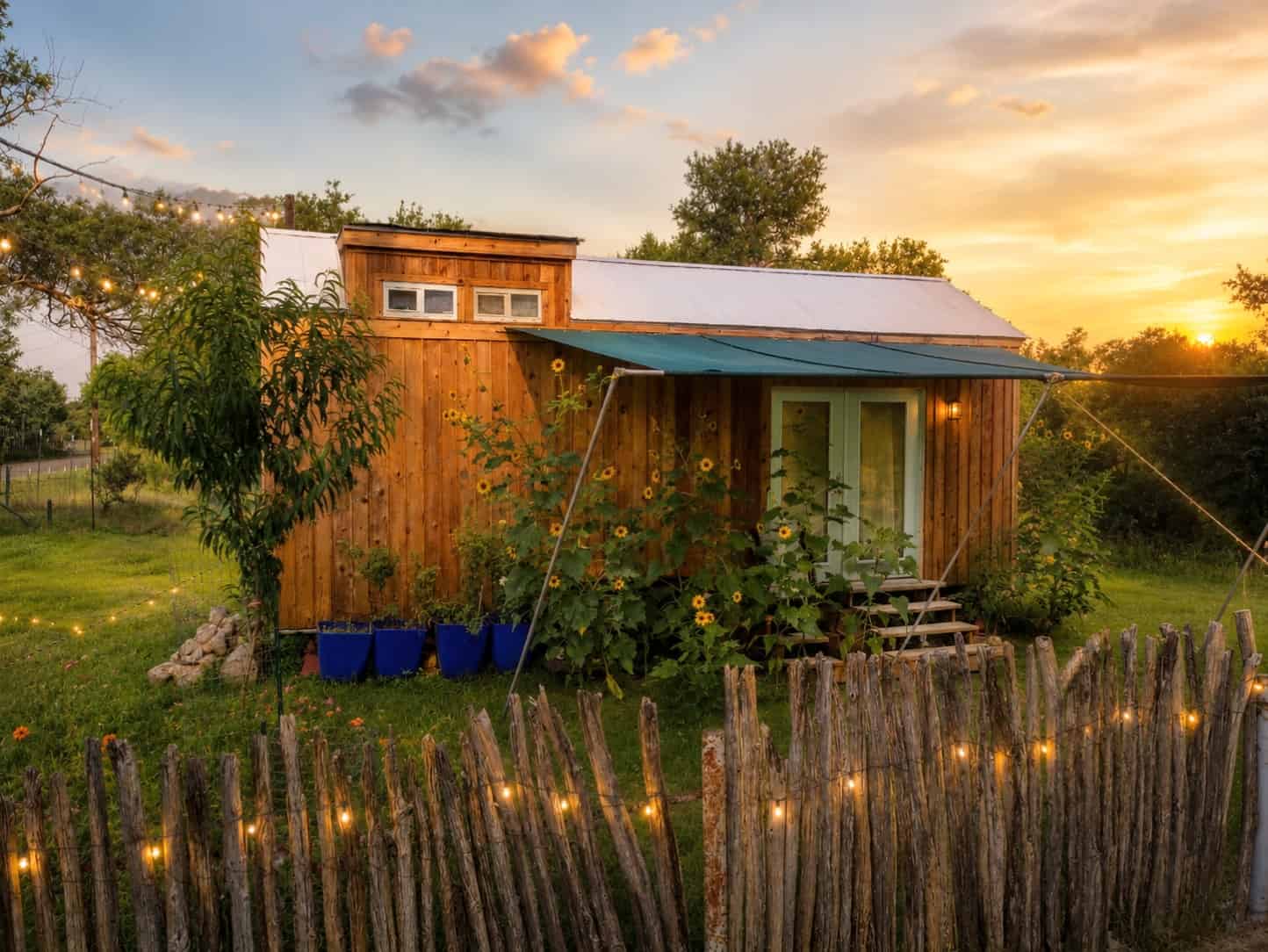
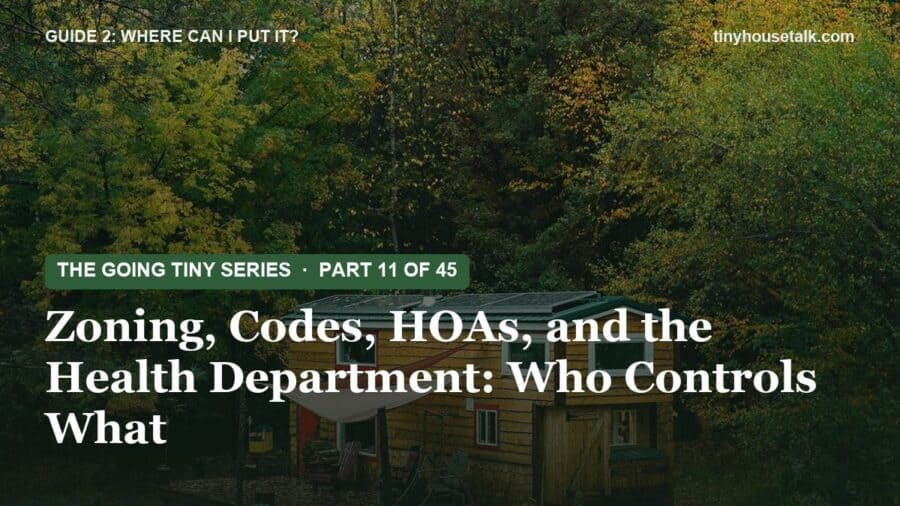
Top photo: From Van Life to Their Own 14 Acres in Vermont. Photo via @anamericanroadstory/Instagram. See their story.
Your turn
Where are you hoping to put your tiny or small home? Share your state or country in the comments.
Like to print things out and write on them?
This series is free to read here, and it always will be. If you’d rather have it as five clean, printable PDFs, that’s the Going Tiny Toolkit:
- Where Can I Put It? (the guide this chapter comes from): zoning research in an afternoon, call scripts and email templates, and a land checklist
- The Tiny House Money Plan
- Tiny Without the Ladder
- Bringing Them On Board
- Your First Tiny Steps
Every guide adds printable worksheets and a 30-day action plan, and Tiny Without the Ladder comes with the bonus One-Level Floor Plan Idea Book (18 to-scale floor plans). All five are $47, with a 30-day refund.
← Previous: Part 10: Is Your Tiny House an RV or a House? Why It Decides Everything
Next (tomorrow): Part 12: The Backyard Opportunity: Tiny Houses as ADUs and on Family Land
Not sure which part matters most for you? The free 10-minute What’s Really Holding You Back? quiz tells you where to start. And to get a new part (and a new home) in your inbox each day, join the free Tiny House Newsletter.
Disclosure: This post may contain affiliate links. If you purchase through one of our links, we may earn a commission at no additional cost to you.


Alex
Latest posts by Alex (see all)
- Zoning, Codes, HOAs, and the Health Department: Who Controls What - October 29, 2026
- A Family of Four Lives Mortgage-Free in a 20-Ft Shipping Container in Queensland - October 28, 2026
- Sleeping Barrel: A Wooden Barrel Cabin in a Sheep Pasture in Germany - October 28, 2026