Disclosure: This post may contain affiliate links. If you purchase through one of our links, we may earn a commission at no additional cost to you.
Kayla was 21 when she bought 25 acres in the Tasmanian wilderness. Eighteen months later a bushfire took her first home. What stands there now is a little off-grid cabin she made from what survived — salvaged materials, about AU$7–10k — and she’s been living in it nearly nine years, just her and her dog Jemba.
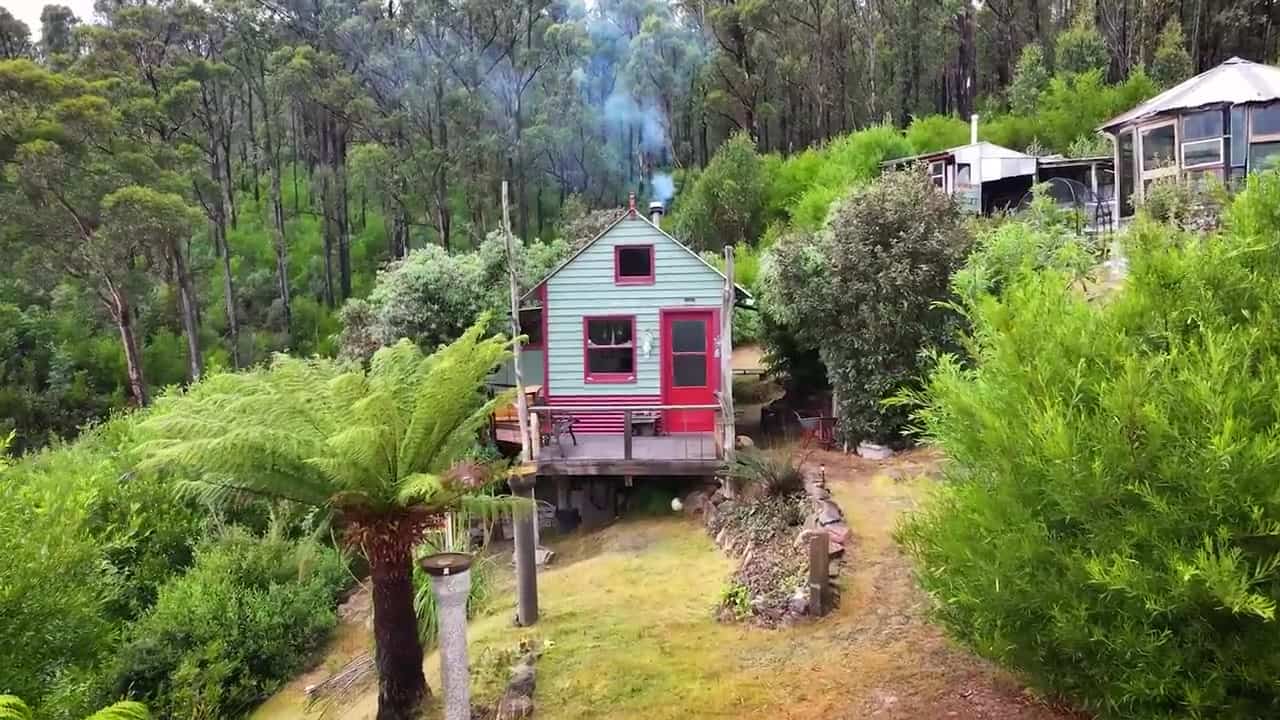
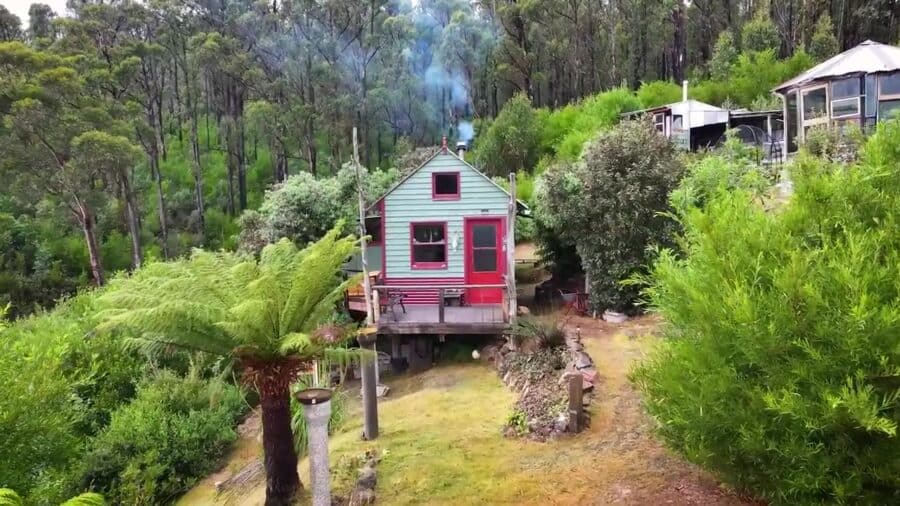
Bryce Langston from Living Big In A Tiny House walks the land on a misty day. I keep coming back to that opening: 21 years old, 25 wild acres, then a fire, then this cabin. Not a kit. Not a spec sheet. A home she pulled together from salvage, with her family, friends, and neighbors stepping in when she needed them.
25 Acres, a Berry Farm, and a Fire
When Kayla bought the land it was buried in bracken. Native bush had come right up between the old buildings. Clearing it felt like uncovering a hidden world — fruit trees, rock piles, traces of the property’s past. Historically it was a berry farm, one of the first parcels cut out in settlement back in the 1830s. The previous owner had built in an eclectic, recycled-materials way. A lot of what he’d done was destroyed in the fire.
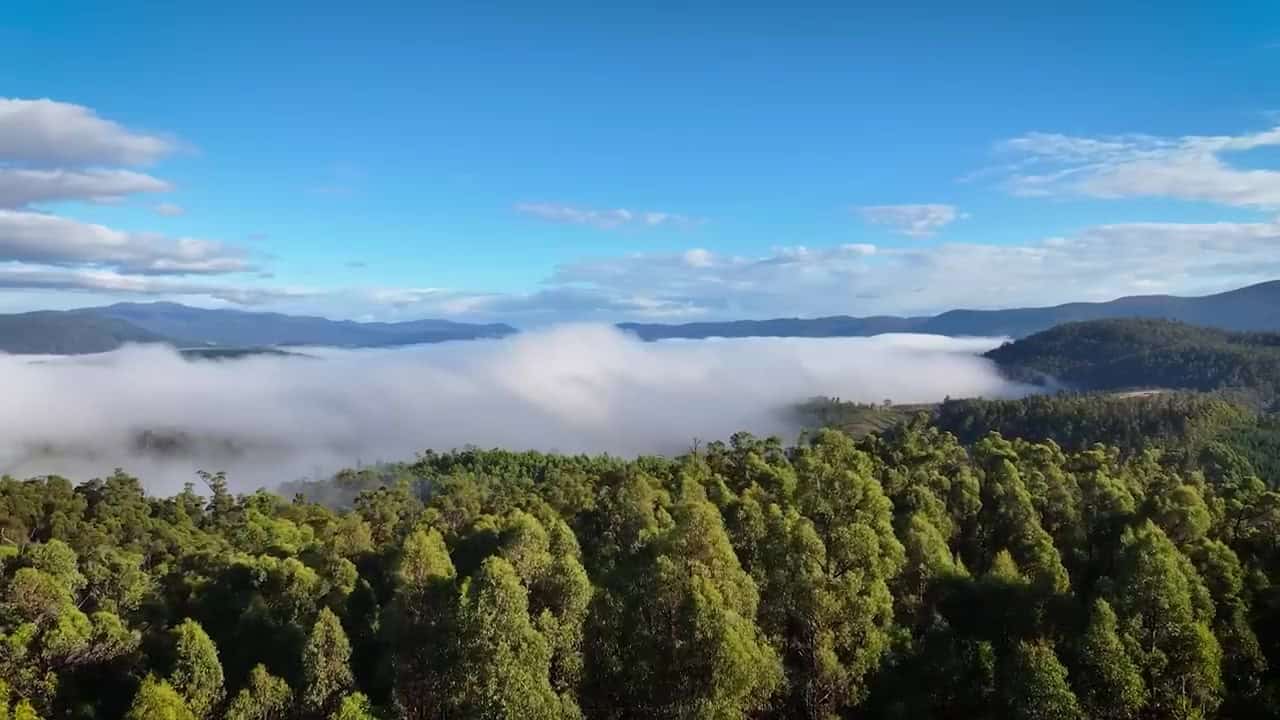
She’d only been there about 18 months. She was still adjusting to being alone in a place this remote. After the fire she slept in an old van her father dragged up, because everything stank of ash, and she cooked on an open fire outside. Community, she says, pulled her out from the ashes.
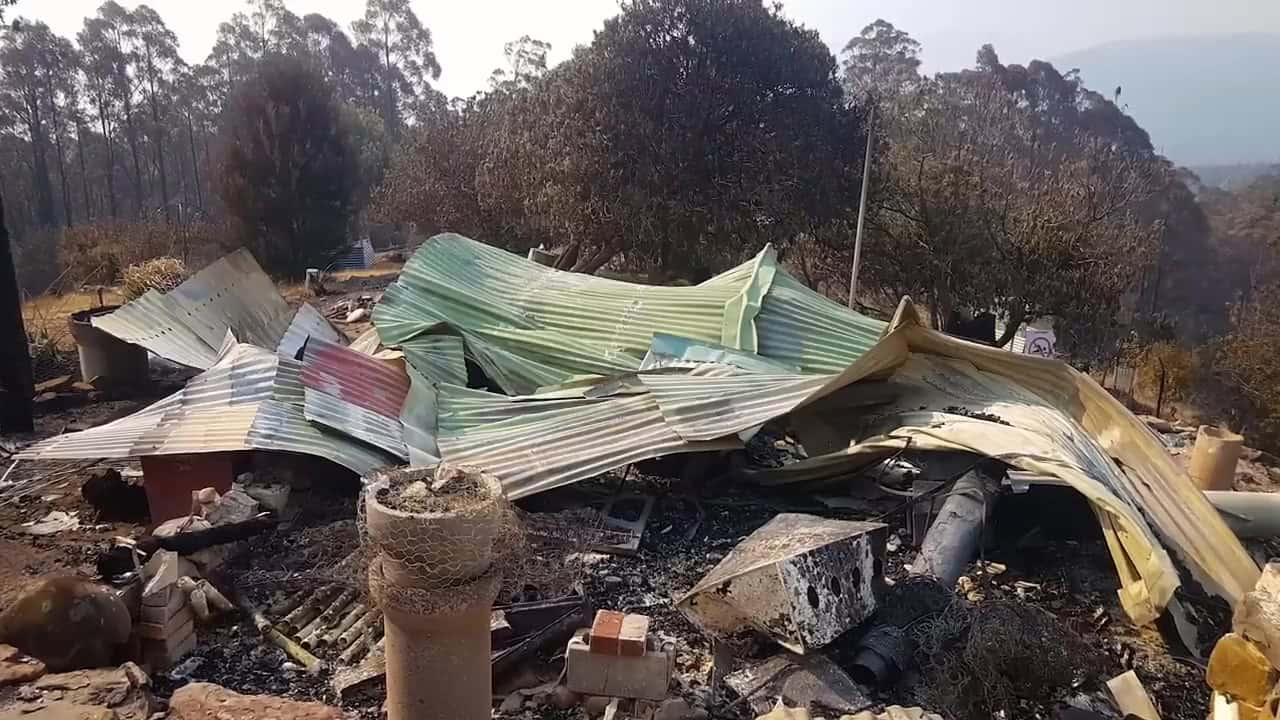
The bush came back fast. First fern fronds against the black. She talks about it as the natural cycle of life — and as the reason she stayed.
A Toilet Shed, Then a Home
The cabin she’s in now started as one of the surviving outbuildings. The structure was already here, and some of the cladding. The previous owner had used it as a flushing toilet. That’s all. Hardwood timber, bridge timbers, a solid foundation. Everything added on is Kayla’s — about three layers of renovation, she says, trying to make recycled pieces of different lengths and textures look like they belong together.
Build cost: somewhere between AU$7 and $10k, because almost everything was salvaged. That’s also why it took so long. She was 21 with no idea what she was doing, and she just kept going anyway.
3 × 4 Meters, With the Bed Pushed Out of the Wall
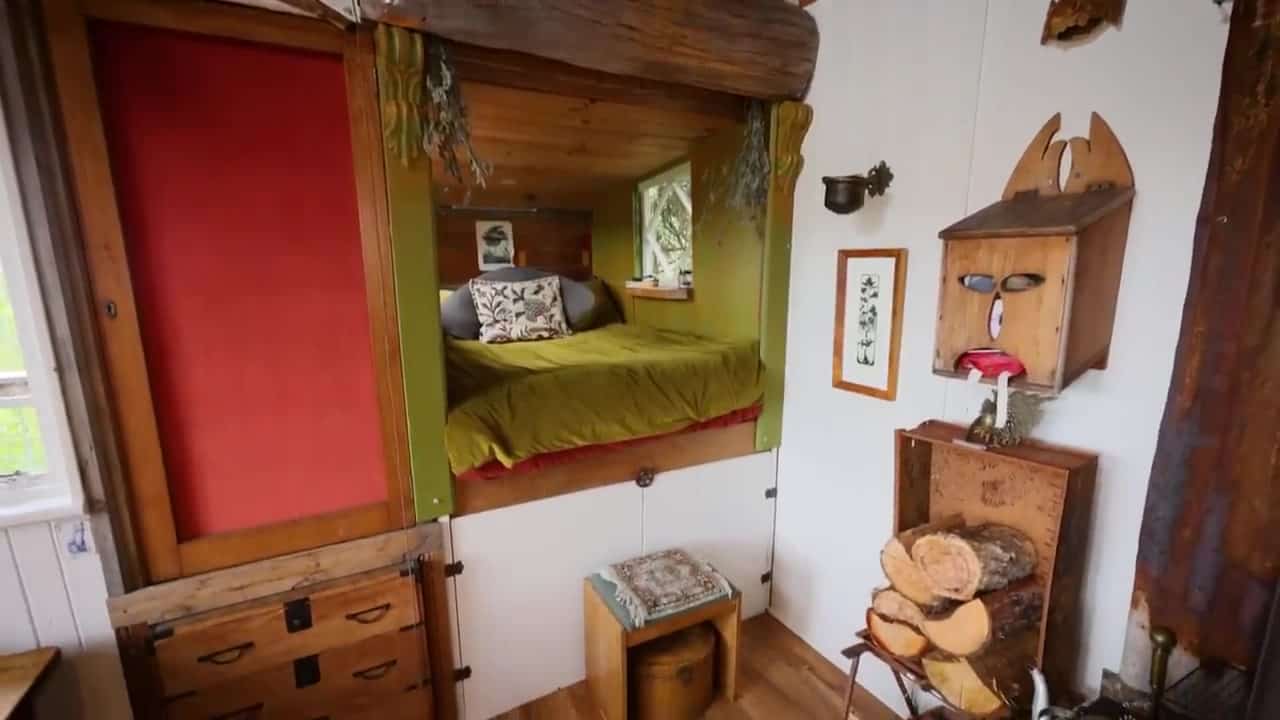
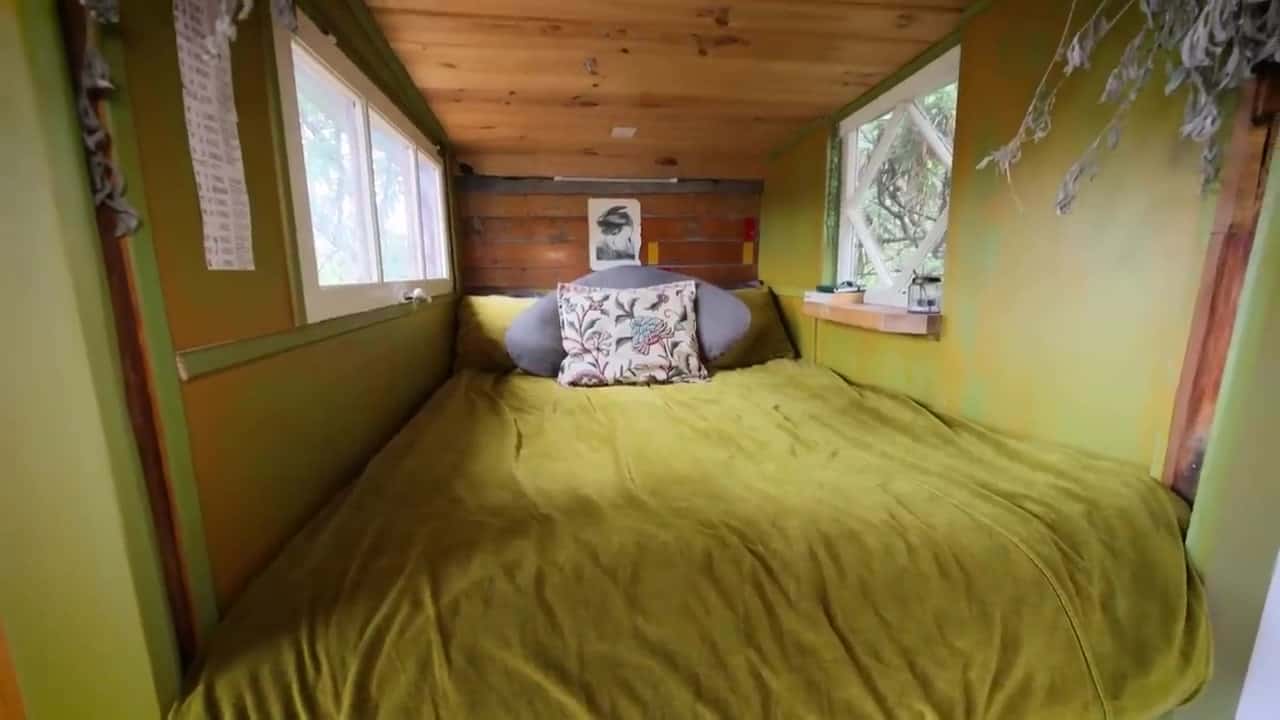
The main room is 3 by 4 meters. The kitchen is about 2 by 2. Storage is popped out of the walls — the bed, a cupboard, the fridge — so the little floor plate isn’t eaten by furniture. When the weather’s good she spends most of her time outside. Inside is for rain, for work, for the fire.
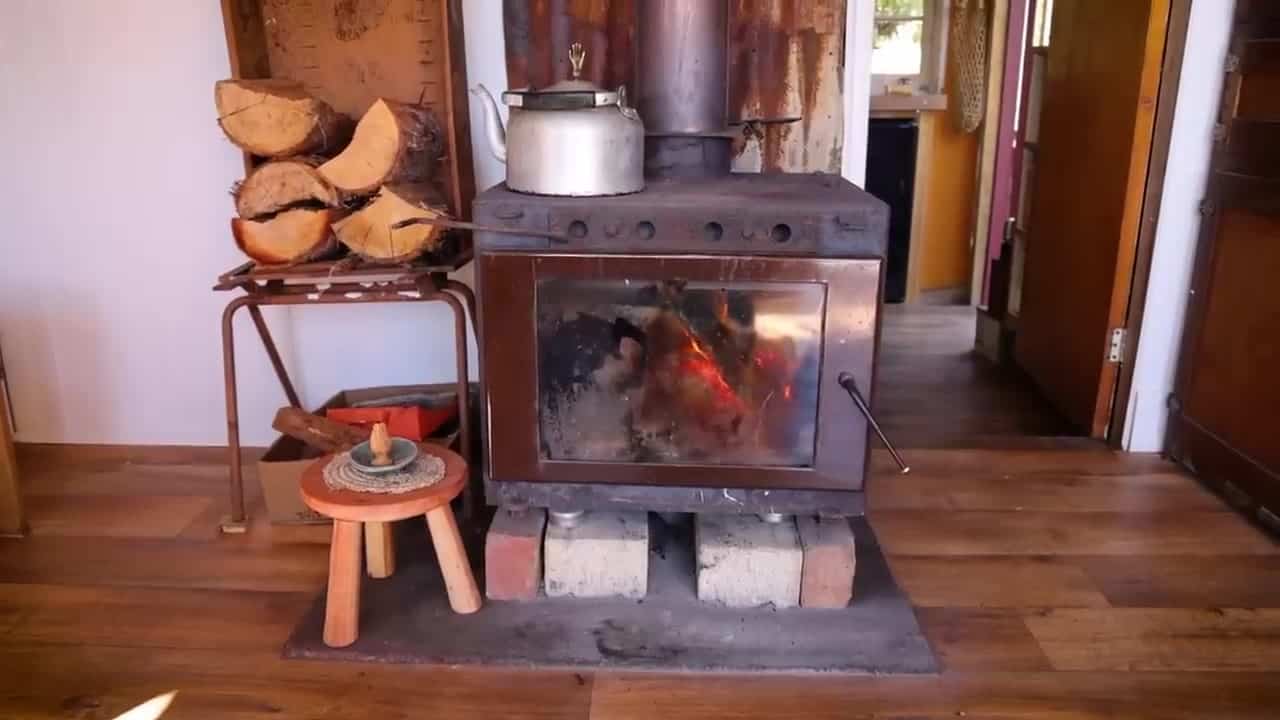
A fire is the centerpiece. The rusty corrugated steel behind the stove is from a shed lost in the bushfire. Kayla has a thing for rusty steel, and the fire has brought the color out of it. She cooks on it and heats water on it. There are trees down everywhere; it’s a matter of chopping lots of wood.
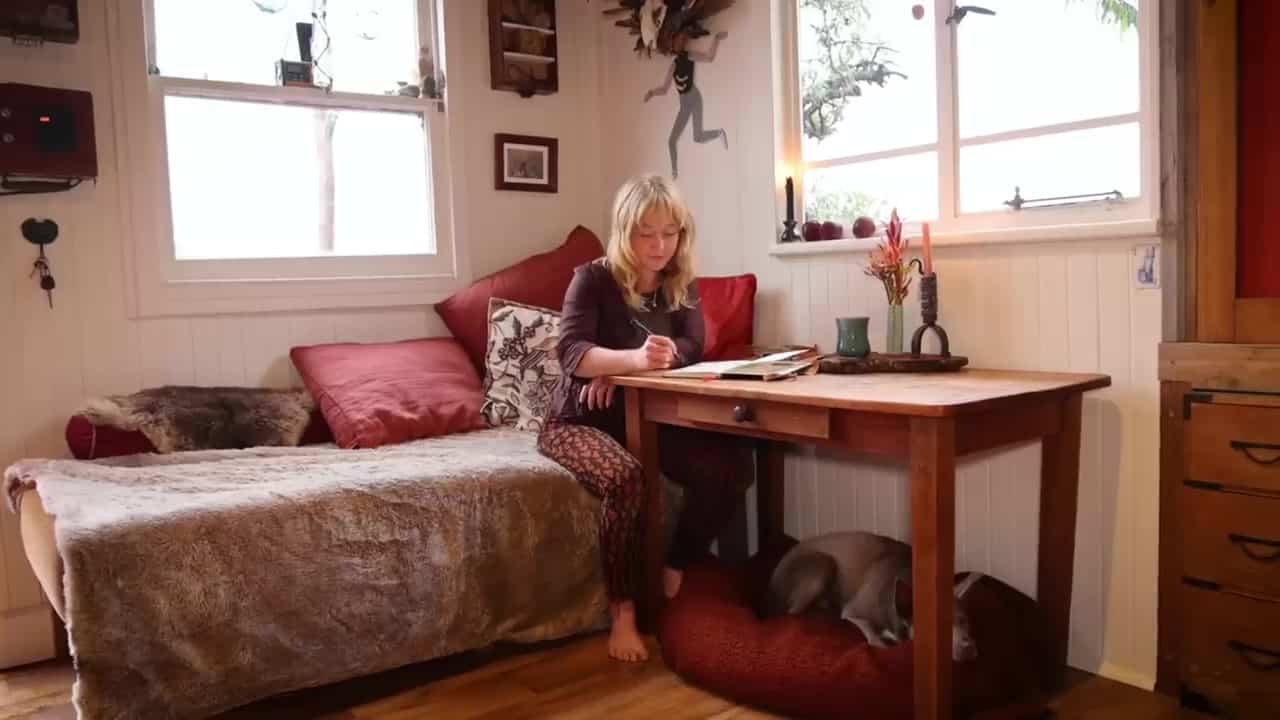
People asked her what she wanted to be when she grew up. She said an artist living in a treehouse with her dog. “And that’s exactly what I did.”
A 2 × 2 Kitchen, No Plumbing
The kitchen is orange — her favorite color — with open shelves like a walk-in pantry she couldn’t quite fit. Cast iron from an op shop and from her father. A small gas cooktop and a little gas oven she can bake soda bread in. She mills her own oats every morning.
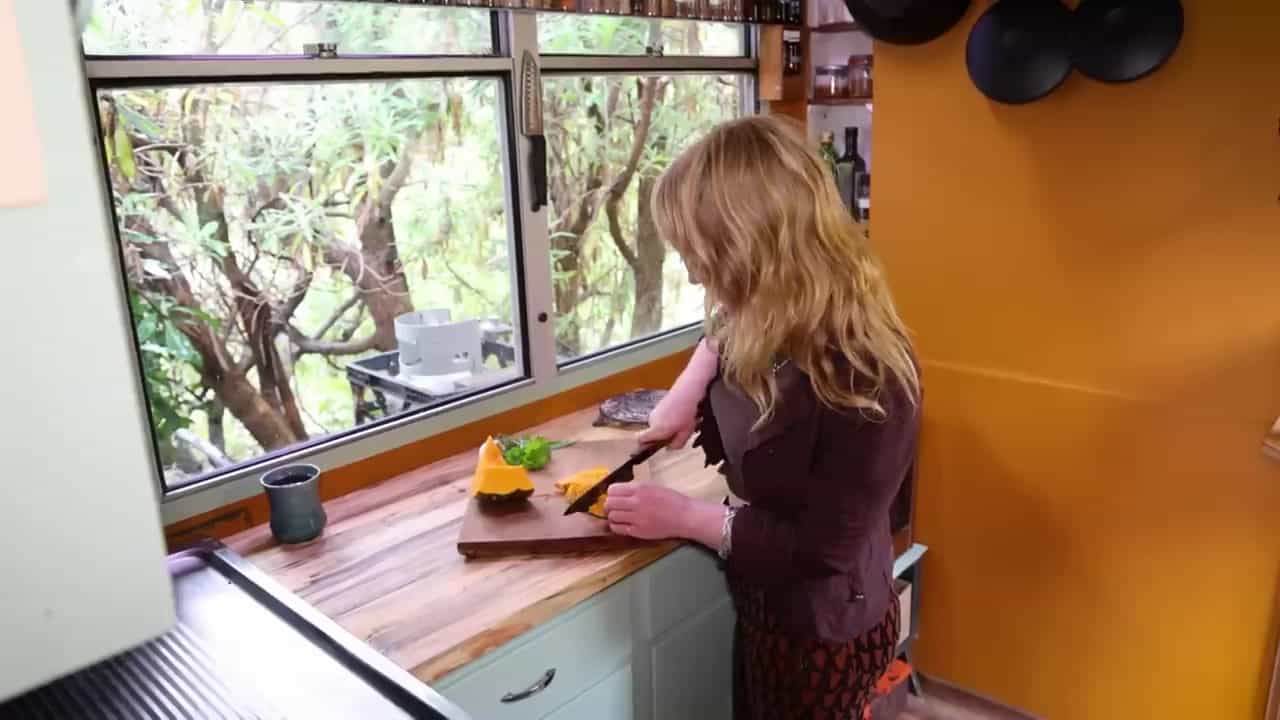
There is no running water in the cabin. A stainless-steel tank sits just outside. She brings drinking water in by hand, drinks the rain straight (a cloth on the tank, clean roof, clean gutters), and puts dishwater on the plants in summer. She meant to plumb it eventually. She’s used to living without it.
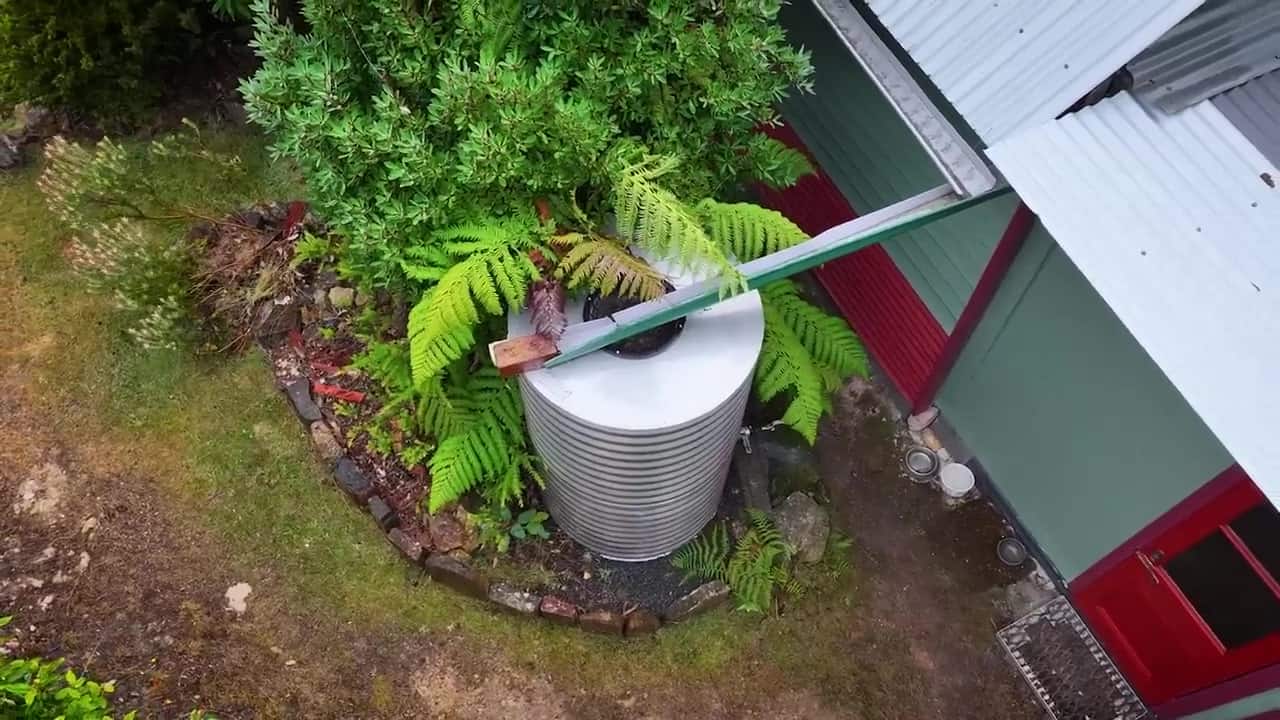
She didn’t have proper power until about two years ago, when the fridge started. Before that it was a car battery she recharged when she drove out, running lights. A small off-grid system. She lives inside the natural cycles on purpose.
Greenhouse Shower, Composting Outhouse, No Internet
The greenhouse is recycled windows, many iterations, garden beds inside — and it’s her shower now. Nestled in the trees. The composting outhouse has the classic moon on the door. The shingles came off a 150-year-old house: original hand-split taslock, handmade nails still in them. She painted a “skylight” on the ceiling in there.
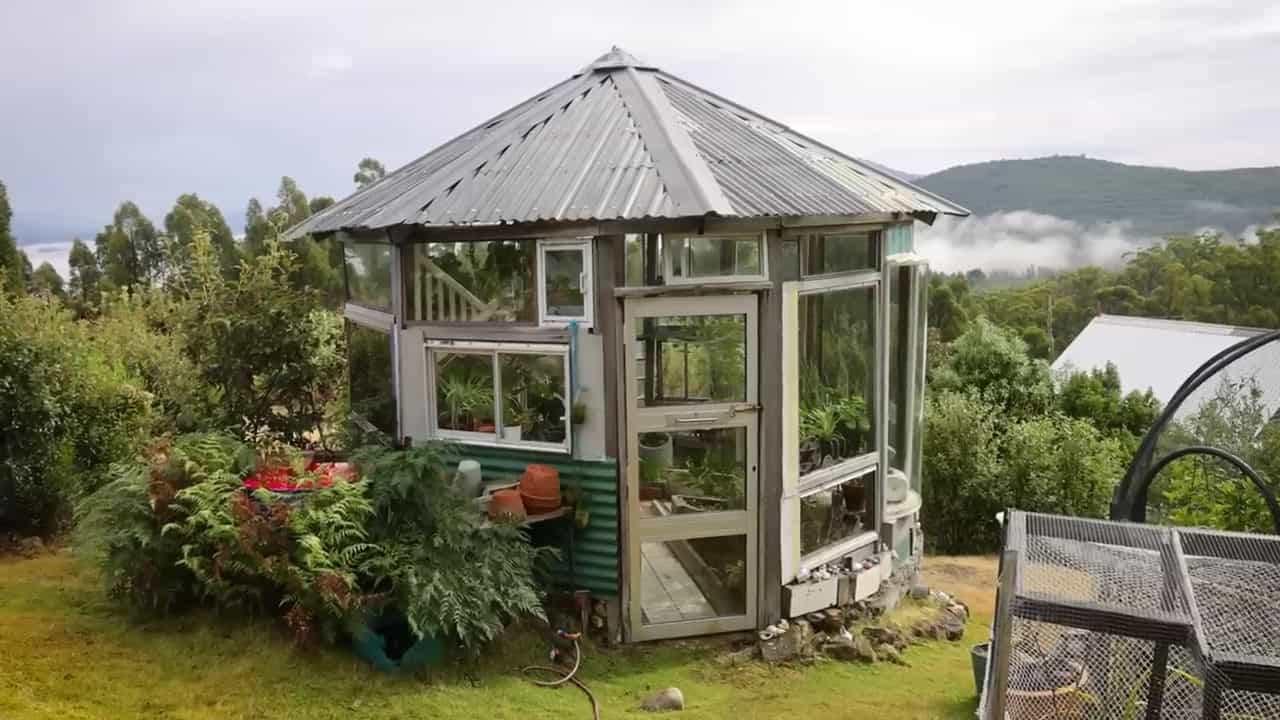
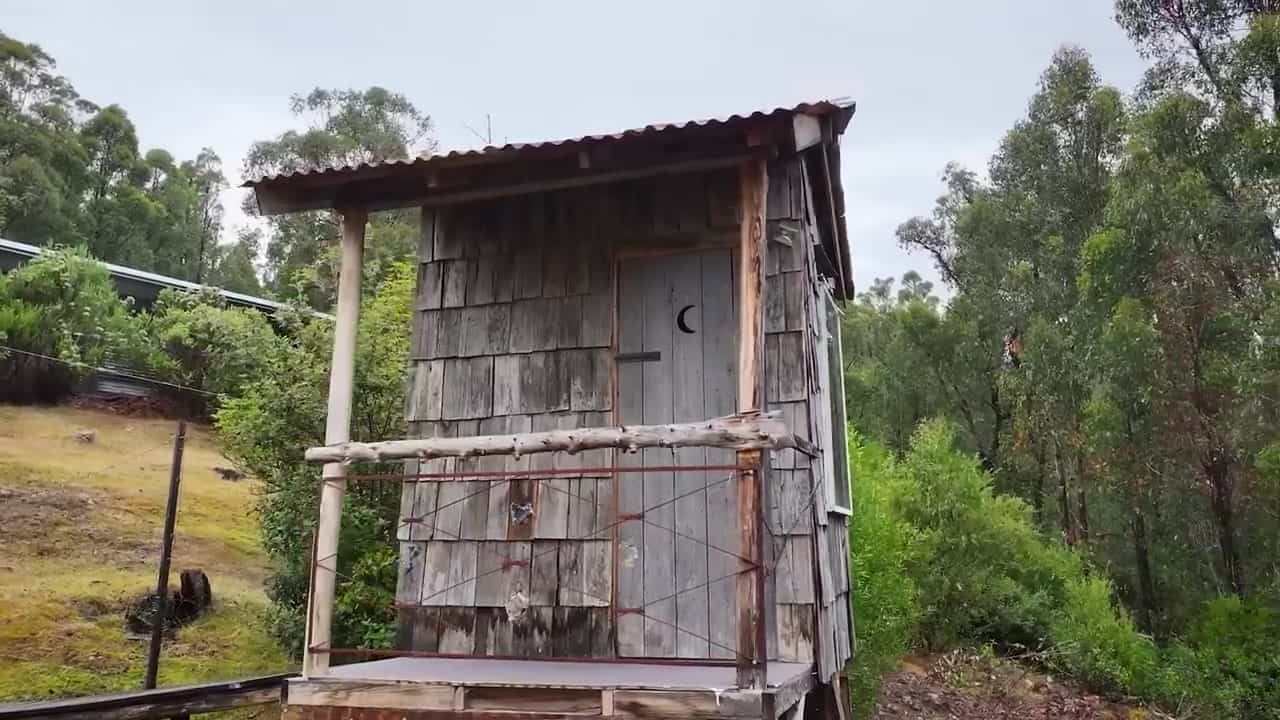
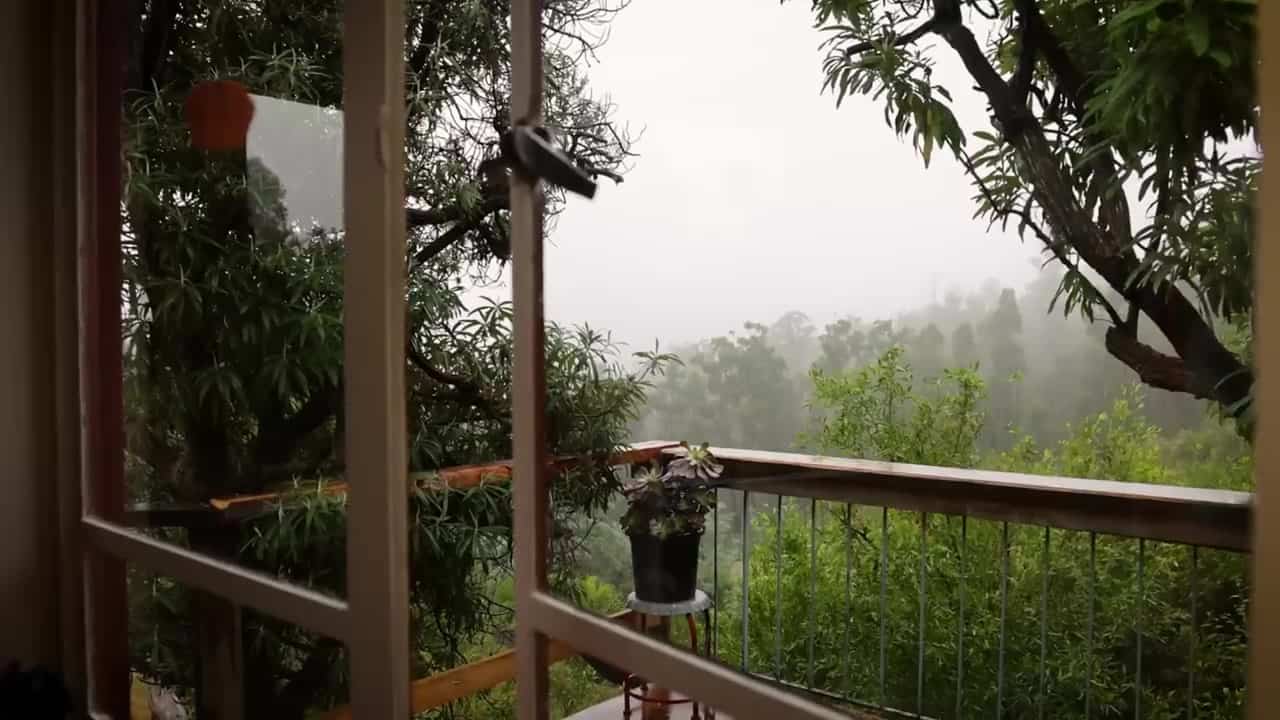
Barely any cell service. No internet at home. She wakes up to classical music on the radio. In winter she sits by the fire and makes things — spoon carving, drawing, painting, sewing, whatever’s closest. She runs Wilderway from here: handmade hats in recycled materials, every step by hand. Logistically, no internet can be a pain. The freedom, she says, is why she has time to make anything at all.
The 25 acres are exhausting. Trees too big here, bracken there, wildlife eating the fruit trees, invasive species, always something. She’s learned her limits. Isolation was hard in her early twenties; it took about two years to stop feeling afraid, and she did it anyway. She also has neighbors, a community, and small towns that aren’t that far. Her mom helped paint and renovate every step of the way.
Land was obtainable when she bought. She doesn’t think she could get into the market now. Future plans: more of the same, other buildings, maybe WWOOFing. Travel: Mongolia on horseback, or cycling in Europe. Either way.
Watch the Full Tour
Bryce spends a misty day with Kayla on the land — the fire story, the popped-out bed, the unplumbed kitchen, the greenhouse shower, Jemba under the table. The video, She Lives Alone in a Remote Wilderness Cabin, went up April 17, 2026, and runs about 28 minutes.
Learn More
Kayla’s Off-Grid Wilderness Cabin, Tasmania
Video: She Lives Alone in a Remote Wilderness Cabin on YouTube
Channel: Living Big In A Tiny House (Bryce Langston)
Episode page: Young Artist Builds a Magical Off-Grid Cabin in the Wilderness
Hats: Wilderway on Instagram
Uploaded: April 17, 2026 · ~28 minutes
Location: remote property in Tasmania, Australia (no town named)
Our big thanks to Bryce and Kayla for sharing.
Highlights
- Kayla bought 25 acres in the Tasmanian wilderness at 21; she’s been in this cabin nearly 9 years
- First home lost to a bushfire after about 18 months; slept in a van and cooked on an open fire afterward
- This cabin is a surviving outbuilding (it was a flushing toilet) — original structure and some cladding, everything added on is hers
- Built from salvaged and reclaimed materials for about AU$7–10k
- Main room 3 × 4 m; kitchen about 2 × 2 m; bed, cupboard, and fridge popped out of the walls
- Wood stove with rusty corrugated steel salvaged from a shed lost in the fire; cooks and heats water on it
- No running water — rainwater from a stainless tank hauled in by hand; dishwater onto plants in summer
- Composting outhouse with a moon on the door; shingles from a 150-year-old house (hand-split taslock)
- Greenhouse of recycled windows doubles as her shower
- No home internet, barely any cell service; radio in the morning; sits by the fire and makes things
- Artist; handmade-hat business Wilderway from recycled materials
- Lives alone with her dog Jemba; community, family, and her mom helped rebuild
- Tour by Living Big In A Tiny House / Bryce Langston (uploaded April 17, 2026)
Explore More
Subscribe to our Newsletters:
Join the Tiny House Newsletter => https://tinyhousetalk.com/tinyhousenewsletter
Join The Small House Newsletter => https://tinyhousetalk.com/small-house-newsletter/
Join Our Tiny Houses For Sale Newsletter => http://tinyhousetalk.com/tiny-houses-for-sale-newsletter
Disclosure: This post may contain affiliate links. If you purchase through one of our links, we may earn a commission at no additional cost to you.


Alex
Latest posts by Alex (see all)
- Forestville Cabin: A Restored 1964 Redwood Cabin on an Acre of Redwoods - October 8, 2026
- El Capitan Canyon’s Safari Cabin: A Hilltop Two-Bedroom Cabin With Ocean Views and an Outdoor Shower - October 8, 2026
- High Camp Teardrop: A Portland-Built Aluminum Camper with a Slide-Out Kitchen - October 8, 2026