

Disclosure: This post may contain affiliate links. If you purchase through one of our links, we may earn a commission at no additional cost to you.
This is a Guest Story. Share your tiny house photos and story too.
Allen Davis lives in Alaska, but his tiny cabin is more than 2,000 miles away on 35 acres of open grazing land in Colorado. By the time he wrote to us, he and his family had built this 8 x 12 foot cabin in two trips totaling about 15 days of work, which makes it a great case study for anyone who owns land far from home and wonders whether they can actually build on it.
The cabin is simple: a pier foundation, a small sleeping loft, a little front deck, and windows placed for sun and big mountain views. Here’s how it came together, in Allen’s own words and photos.
Starting With a Platform on the Prairie
Every build starts with a level platform. On a sloped, open hillside like this one, a pier foundation is the practical choice: it needs far less excavation than a slab, it keeps the floor up out of the snow and runoff, and it can be built with hand tools and a few bags of concrete.

Photo courtesy of Allen Davis
Framing the Walls and Roof
With the deck down, the walls went up fast. An 8 x 12 footprint is about as simple as framing gets: standard lumber lengths, no interior bearing walls. The cabin is tall enough to fit a small loft.


Photos courtesy of Allen Davis
Getting the Shell Dried In
On a long-distance build, the most important milestone is getting the shell “dried in” so the weather can’t ruin your work while you’re away. Sheathing, a roof, and house wrap protect the framing between trips, which is exactly the order Allen followed.


Photos courtesy of Allen Davis
Siding, Paint, and a Fence for the Cattle
The land is open-range grazing country, so the cabin got a small fence to keep the cattle out. Siding, a red metal roof, and a cheerful green paint job finished the outside.


Photos courtesy of Allen Davis
The Builder’s Story
“Hi Alex, not sure this will fit into your site mainly because it’s an ongoing project and is unfinished. We bought 35 acres in Colorado in an area that does not have building codes. They do require septic when inhabiting a structure. This was all started in June 2013. I have not included interior photos because only one wall is done.
I became interested in tiny houses a few years ago after reading Lloyd Kahn’s Tiny Homes. I can do a little cowboy carpentry, so I decided to buy some land and give it a whirl. Our tiny house is 8 x 12 feet built on a 6 x 6 treated pier foundation. It is tall enough for a small loft. I lowered the ceiling height to 7 feet below the loft to give it an extra foot of head space. It has a small deck in front and a small troll bridge across the gulley in front—kind of hard to see. Yeah, I said troll, not toll. We put the windows in to both take advantage of the sun and the view.
We built a small fence around it to keep the cattle out, as this is all open grazing area. Oh yeah, we live in Alaska and this has so far been done in two trips totaling about 15 days of work. I mainly say this to let folks know you can do something long distance if you want it bad enough. That is where the internet really helps. Anyways, here are a few photos too. Thanks, Allen Davis”
Lessons From a Long-Distance Build
- Keep the footprint simple: an 8 x 12 box uses standard lumber lengths and goes up quickly, which matters when every work day costs a plane ticket.
- Dry it in first: get the roof, sheathing, and wrap on before you leave, then finish the details on later trips.
- Plan for the neighbors, including the four-legged ones: on open range, a simple fence protects the cabin from cattle.
- Use small tricks to gain space: lowering the ceiling under the loft to 7 feet gave the loft an extra foot of headroom.
Design Details
- Footprint: 8 x 12 feet (96 sq ft, plus a small loft)
- Foundation: 6 x 6 treated pier foundation
- Loft: small sleeping loft, with a 7-foot ceiling below
- Outdoor space: small front deck and a “troll bridge” over a gully
- Site: 35 acres of open grazing land in Colorado
- Build time: about 15 days of work over two trips (started June 2013)
- Builders: Allen Davis and family, working long-distance from Alaska
Highlights
- A 96-square-foot cabin built in about 15 days on site
- Pier foundation on a sloped, open hillside
- Small loft with extra headroom
- Windows placed for sun and mountain views
- Proof that you can build on faraway land if you plan your trips well
Related Stories
- Tiny on the Tundra: 399 sq. ft. on 35 Acres
- He Built an Off-Grid Cabin with Hand Tools
- Tiny Round Cabin in Hotchkiss, Colorado: The Solargon
Allen, thank you for sharing your story with us. Would you ever try building a cabin on land hundreds or thousands of miles from home? Tell us in the comments!
If you enjoyed this you’ll LOVE our Free Daily Tiny House Newsletter with even more!
You can also join our Small House Newsletter!
Also, try our Tiny Houses For Sale Newsletter! Thank you!
More Like This: Tiny Cabins | Cabins | Your Stories | DIY
Disclosure: This post may contain affiliate links. If you purchase through one of our links, we may earn a commission at no additional cost to you.


Alex
Latest posts by Alex (see all)
- Win a Free Spot in a Wild Abundance Basic Carpentry Class Near Asheville (Enter by Nov. 30) - November 18, 2026
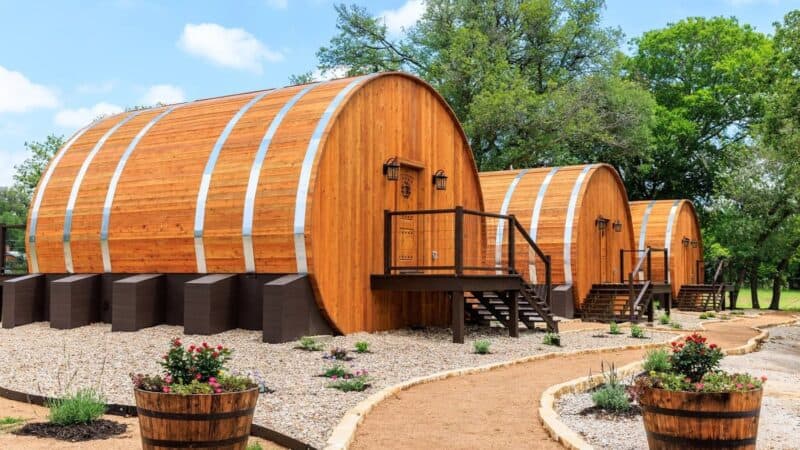
- Wine Barrel Cabins: Four Cedar Barrels You Can Sleep In, in the Texas Hill Country - November 18, 2026
- Concrete Small Homes: Why 750–1,200 Sq Ft ICF Houses Could Be the Next Step After Tiny - November 18, 2026


Join the Conversation
30 comments