Disclosure: This post may contain affiliate links. If you purchase through one of our links, we may earn a commission at no additional cost to you.
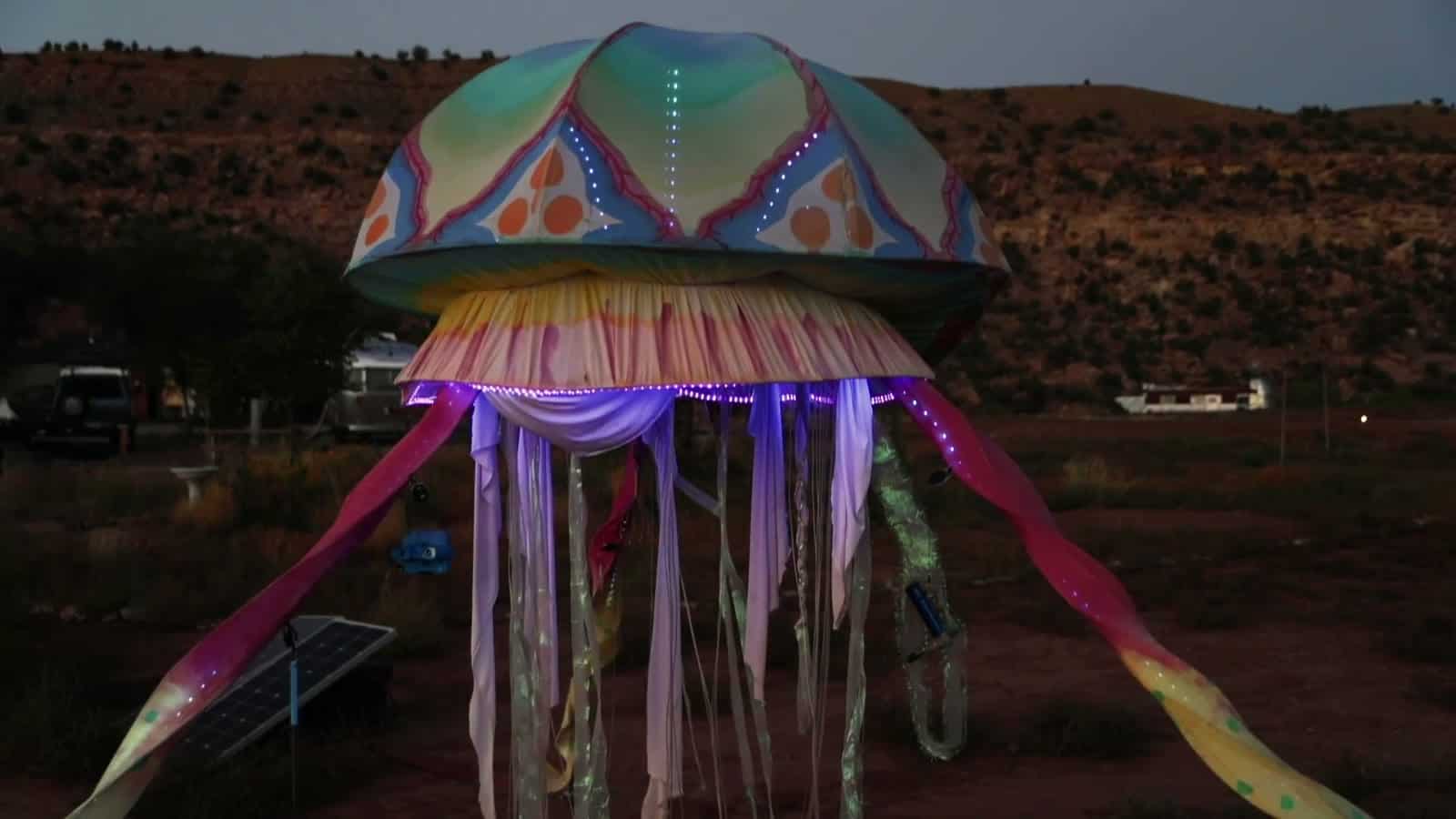
Out in Colorado’s remote West End, in the old mining town of Naturita, there’s a getaway that feels like a kid’s summer camp, an artists’ retreat, and a boutique hotel all rolled into one. It’s called Camp V. Its cozy cabins started life in 1942 as housing for uranium mill engineers, and today they sit among Burning Man art, a chapel made of windmills and organ pipes, a yoga studio inside an old water tank, and a bus turned into a speakeasy that’s covered in guest drawings. Even the grounds glow after dark, including a glowing jellyfish sculpture.
David Rule visited back in 2021 for his very first property tour video. You may know David from his 22 sq. ft. micro home and his DIY truck bed camper. This video is one of his lesser-watched ones, and it deserves far more views. Founder Natalie Binder walked him through the property, and David summed it up well: Camp V is “weird in the absolute best sense of the word.”
A 1940s Mining Camp With a Second Life
The property was built in 1942 by the Vanadium Corporation of America to house the engineers who worked at the nearby uranium mill. Because the bosses lived up here, locals called it “Snob Hill.” The mill closed in the 1970s. After that the cabins became a year-round rental community, and in 2017 a new team bought the property. That team was Natalie Binder, plus architects Jodie and Bruce Wright of Telluride’s One Architects, with investment from a rural Colorado Opportunity Zone fund.
The old company town was called Vancorum, short for Vanadium Corporation of America. The new owners kept the history and reworked the name into VANcoreOM, or Camp V for short. Their goal goes beyond a place to sleep. They want to bring art, events, and visitors back to a rural mining community that lost its economic engine decades ago. They also hope it becomes a model other small towns can copy.
A Cabin Sided With Its Neighbors’ Old Doors
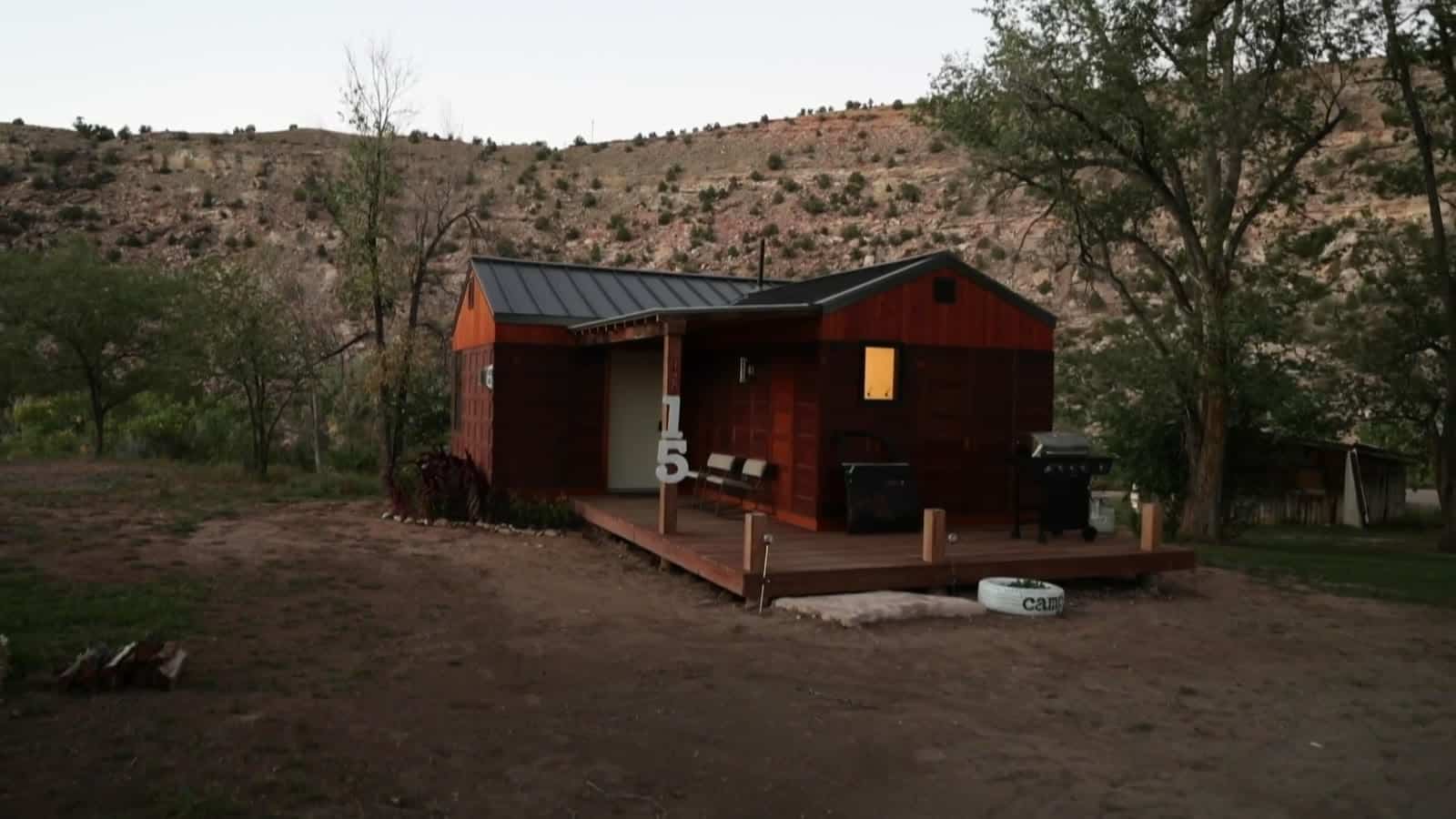
David stayed in Cabin 15, and the outside alone stops you in your tracks. When the team turned the old one-bedroom cabins into open-concept studios, they took out interior walls and ended up with a pile of extra doors. Jodie Wright came up with a clever fix: use those salvaged doors as siding. The result is a cabin clad in rows of warm wooden door panels, with old recessed panels and hinges showing. It’s a beautiful example of a reclaimed material becoming the main design feature instead of waste.
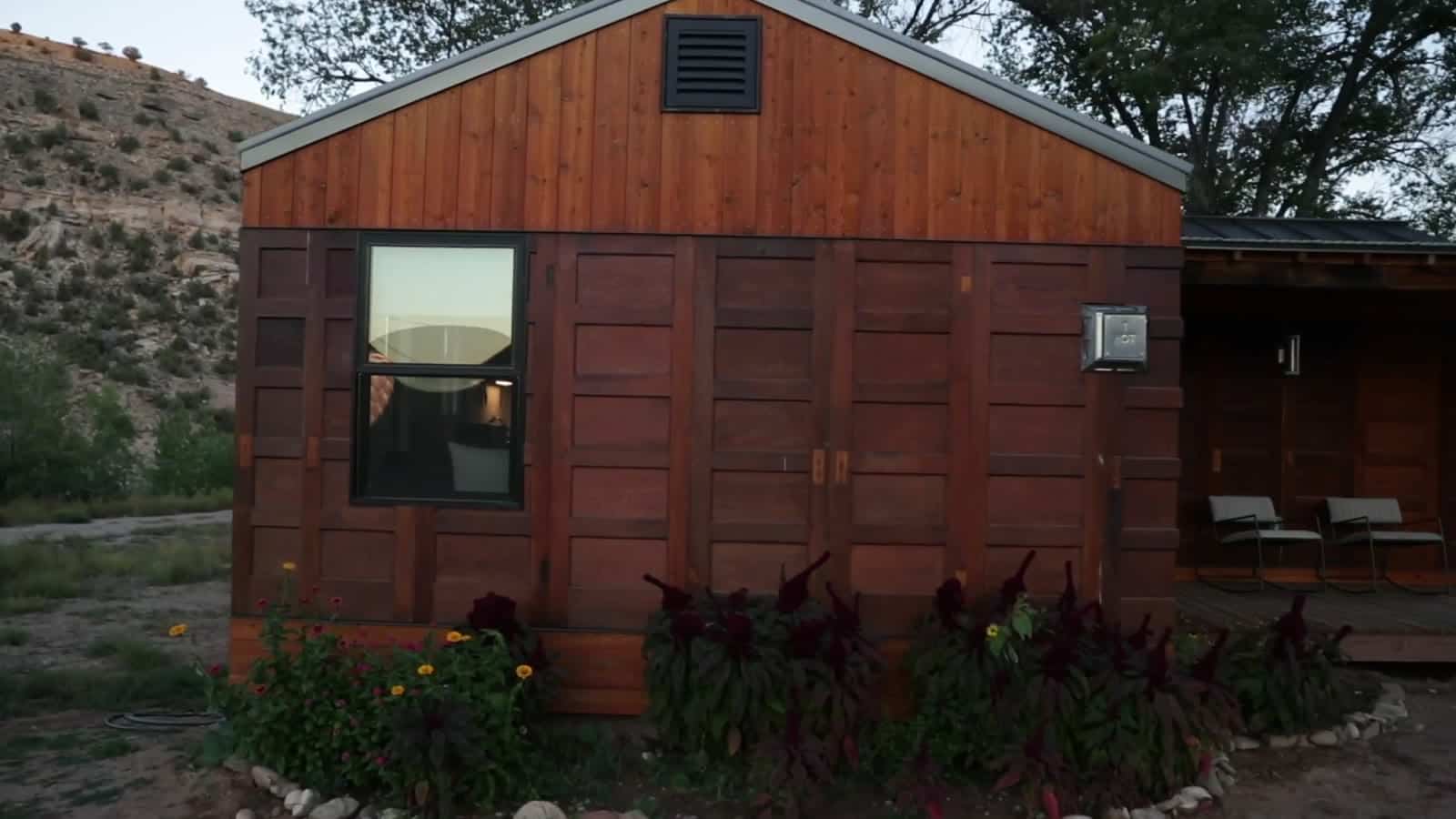
At roughly 500 square feet, the cabin isn’t technically tiny. Still, David notes it feels like a mansion compared to his own tiny house. The covered porch and wood deck give you a second living room outdoors, which matters in a high-desert climate where most of the good hours are spent outside.
Modern, Minimal Interiors Inside the Historic Shells
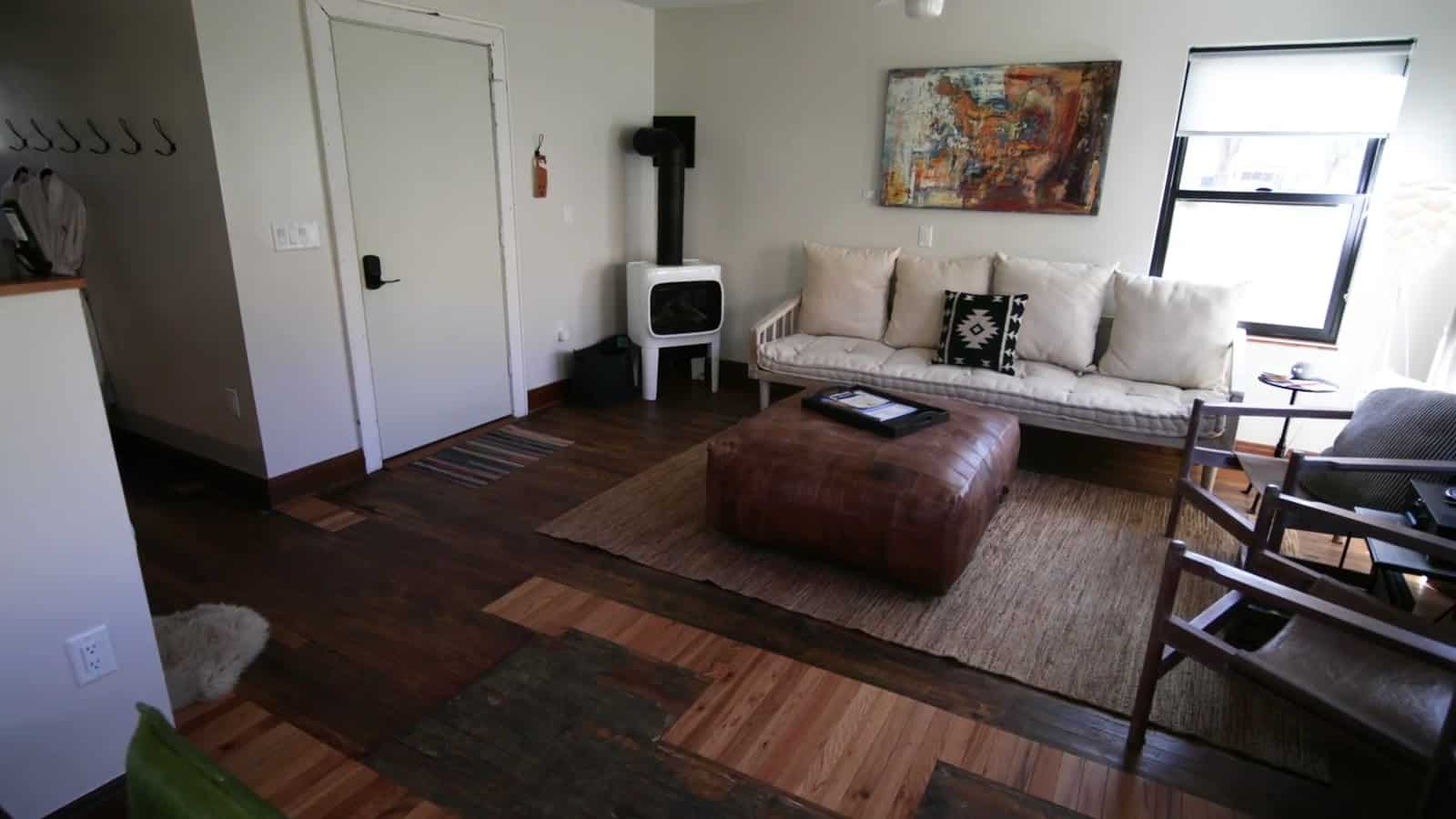
Inside, the cabins are a sharp contrast to their weathered exteriors. Opening up the old floor plans made a modest footprint feel bright and spacious. There’s a white-walled living area with a custom daybed-style sofa, a leather ottoman, a small fireplace, and a record player with a stack of vinyl. David admitted he had never used a record player before this trip.
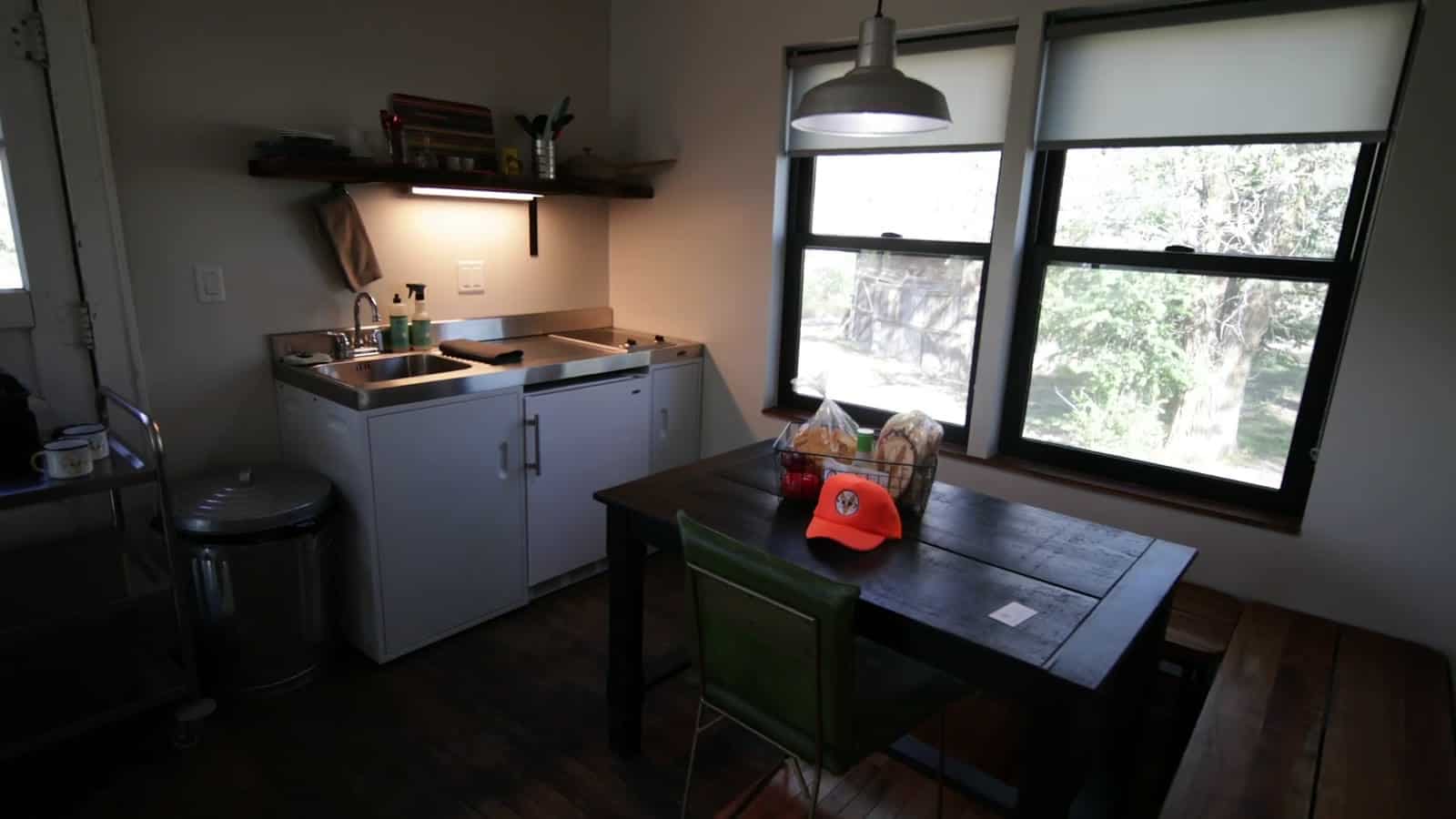
The kitchenette is simple but well laid out, with a sink, open shelving, and a dining table under the windows. During David’s stay it came stocked with groceries for a meal. Today Camp V’s cabin listings include Nespresso coffee, cooking essentials, and a BBQ grill.
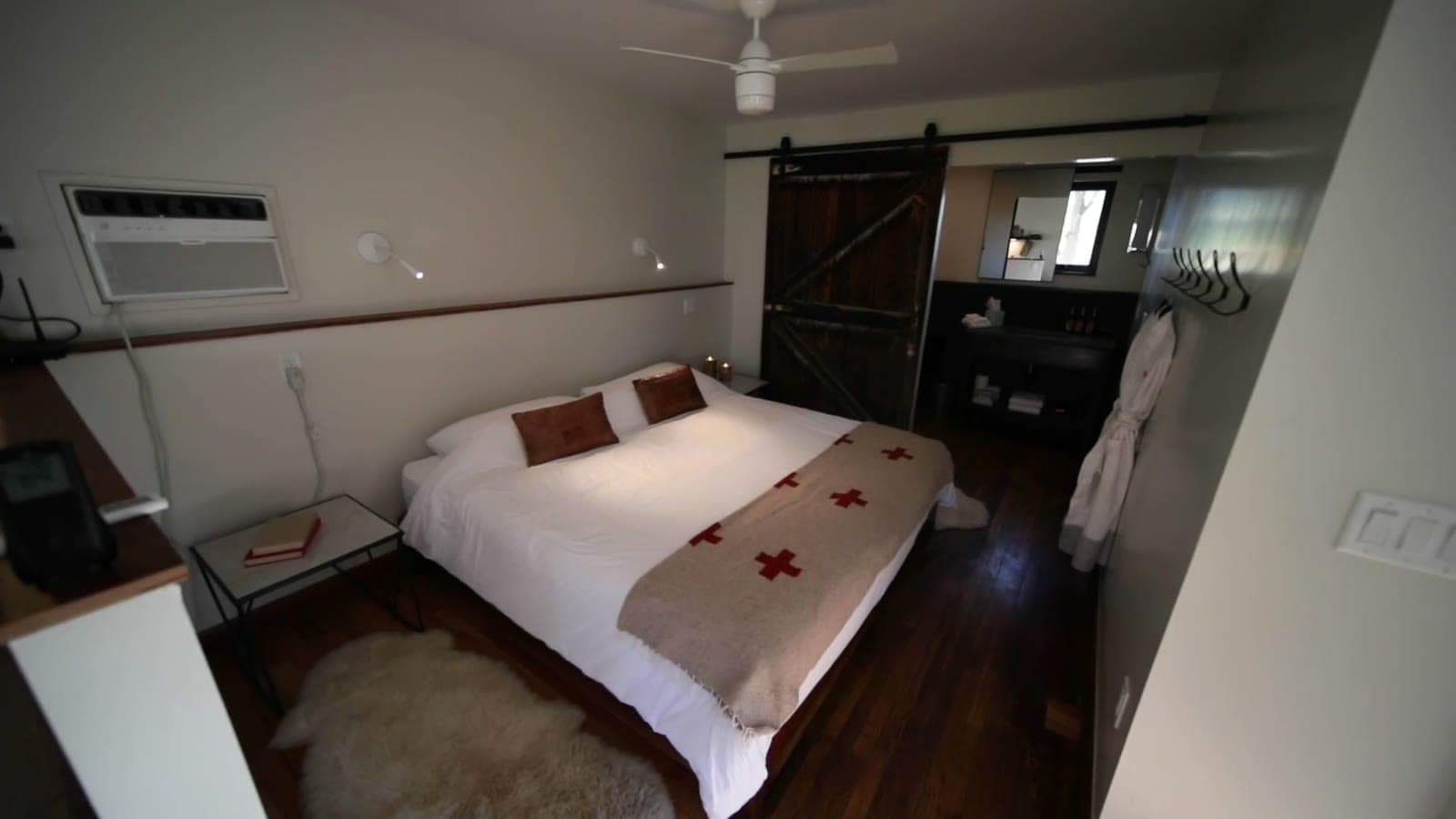
The bedroom was David’s favorite part. It sits right inside the open plan, with a king bed, soft linens, a sheepskin rug, and a sliding barn door reclaimed from the original property that closes off the bathroom. The bathroom draws from the camp’s own water tower and heater, so there’s plenty of hot water.
The Prairie Wind Chapel
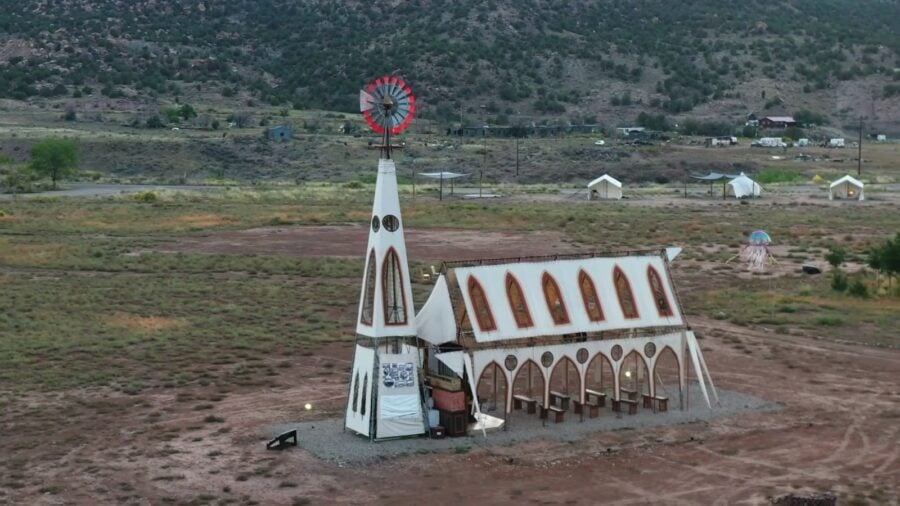
The first thing you notice at Camp V is a towering, windmill-topped structure that looks a bit like a pipe organ crossed with a country church. This is the Prairie Wind Chapel by sound artist Robert Hoehn. It appeared at Burning Man in 2015 and 2016, and it was sitting in storage when Hoehn decided Camp V should be its permanent home. Natalie explained the symbolism: when frontier communities were founded, a chapel was usually one of the first things built, as a gathering place. The chapel is open around the clock for reflection, and it has even hosted a Halloween wedding.
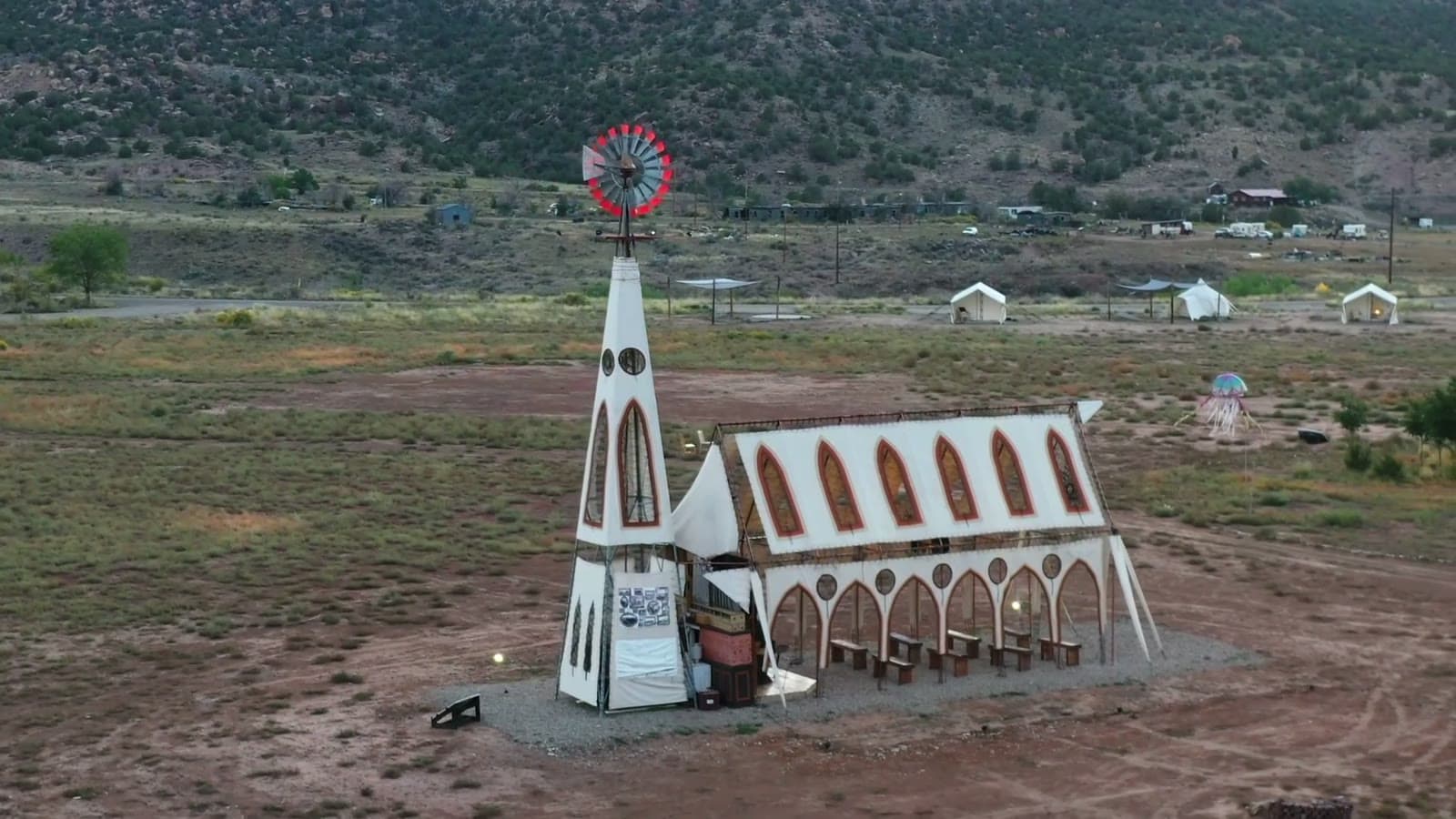
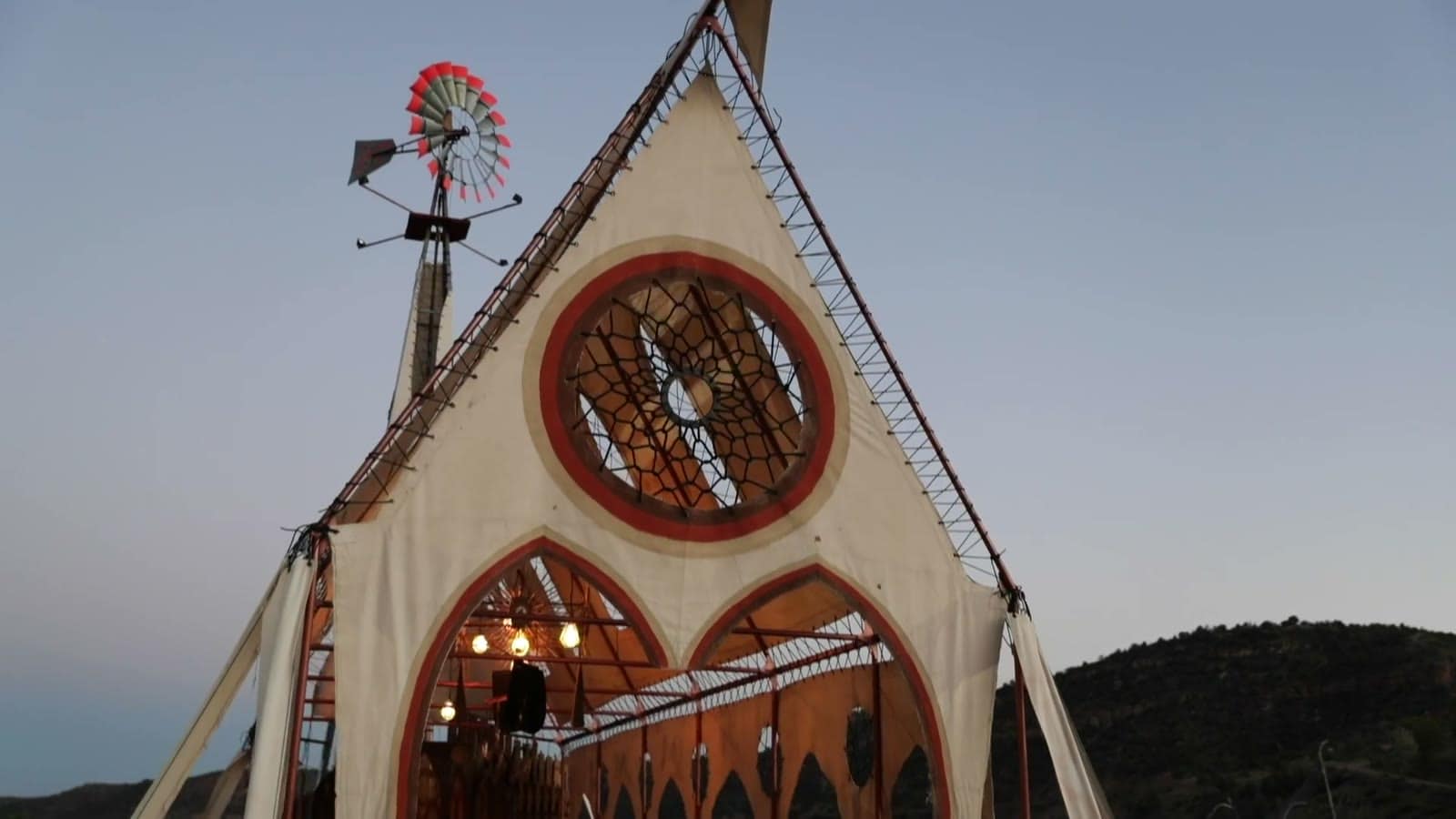
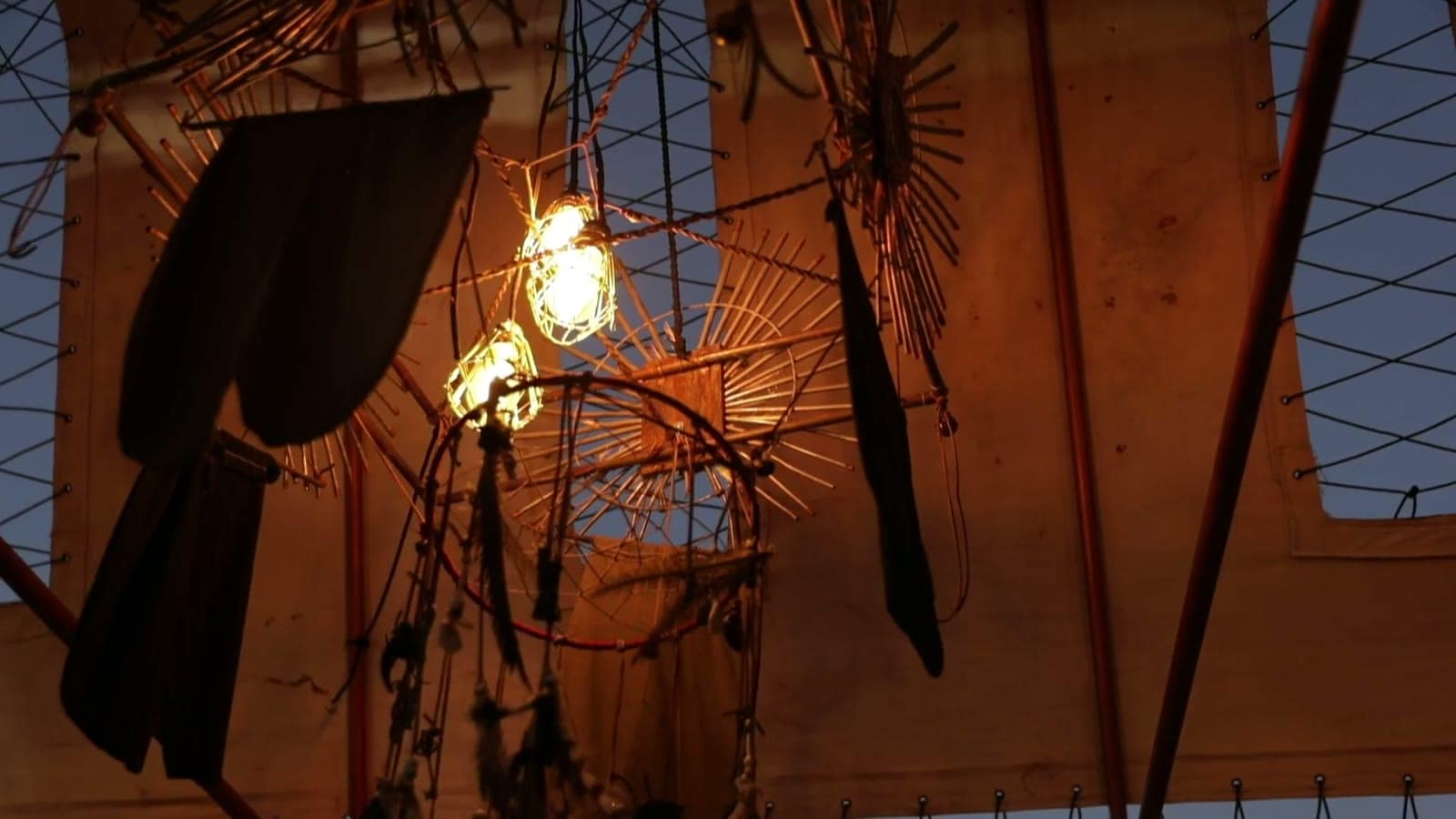
By day it’s whimsical. At night, lit from within with hanging lights and found-object sculptures, David found it “pretty spooky,” part family attraction and part haunted house.
Burning Man Art Scattered Across the Desert
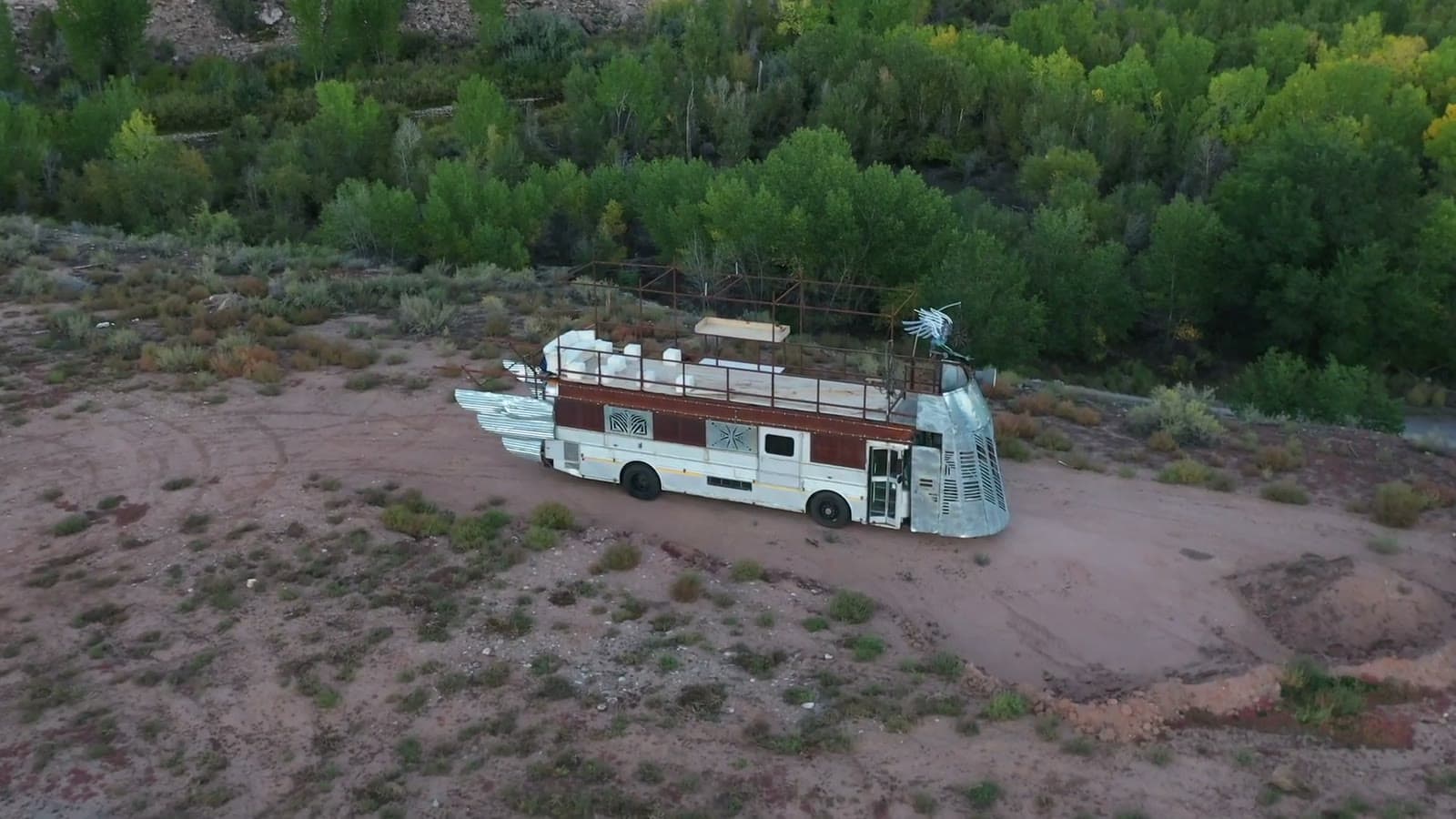
Walk the grounds and you’ll keep running into large-scale art. The Pariah Express is a Burning Man “mutant vehicle” built by Howard Moffat and his family of Park City, Utah. Like many Burning Man pieces, it would otherwise sit in storage most of the year, so Camp V gives it an off-season home where guests can enjoy it.
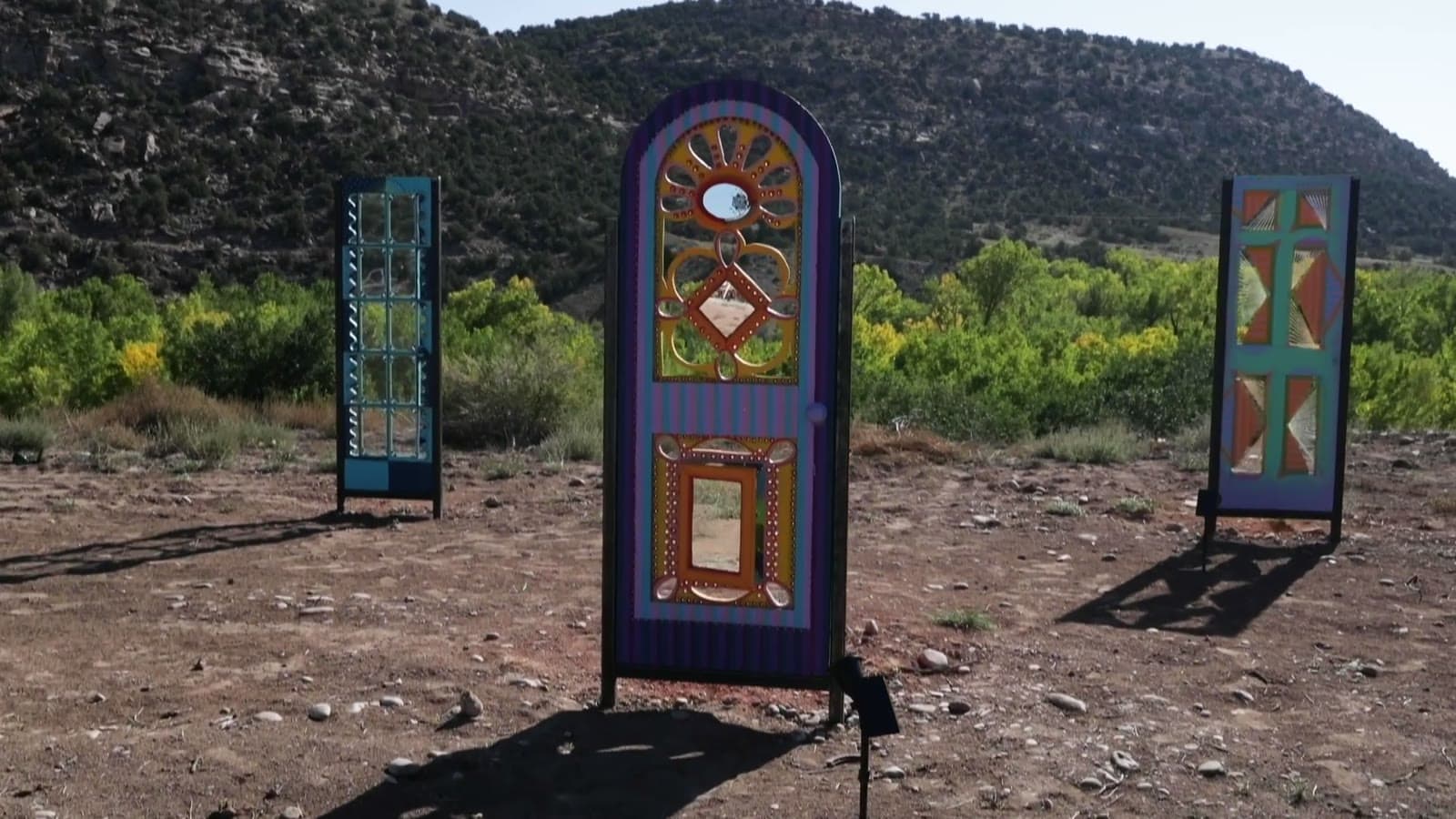
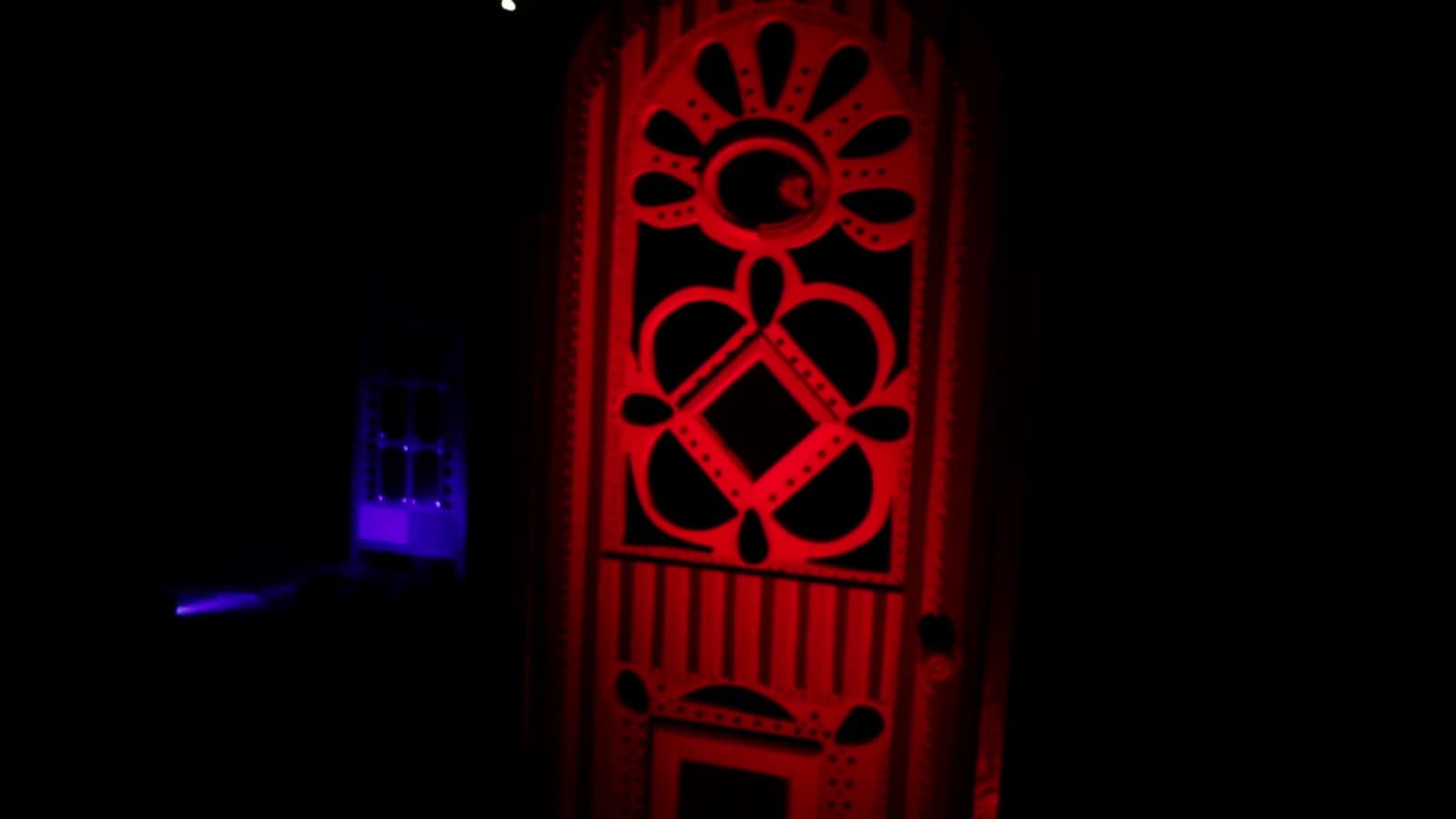
Then there’s The Unknown Zone, a series of brightly painted freestanding doors by a Telluride artist. Early in the pandemic, she put out a call on Facebook for old doors. They arrived with stories attached, and she turned them into a piece about portals and the unknown, made at a time when everyone was stuck behind doors. After dark, some of the doors glow.
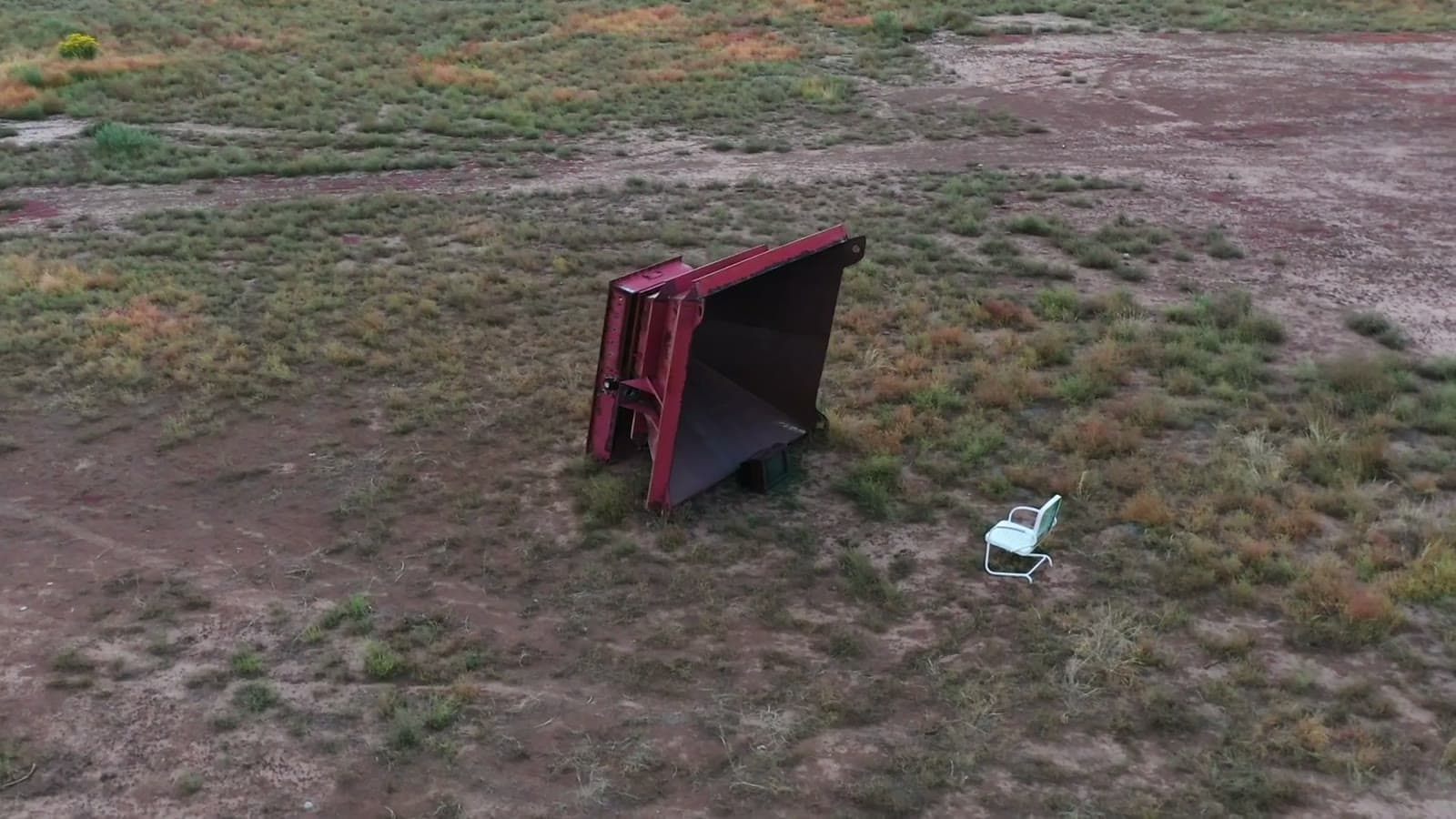
Some of the art came out of the town’s industrial past. “Francis” is a big rust-red steel piece salvaged from the old power plant, a crusher component. It was placed deliberately so that sitting in the chair in front of it frames the camp’s water tank. It also makes a pretty good jungle gym.
Fuega, a Fire Pit Made From Mill Machinery
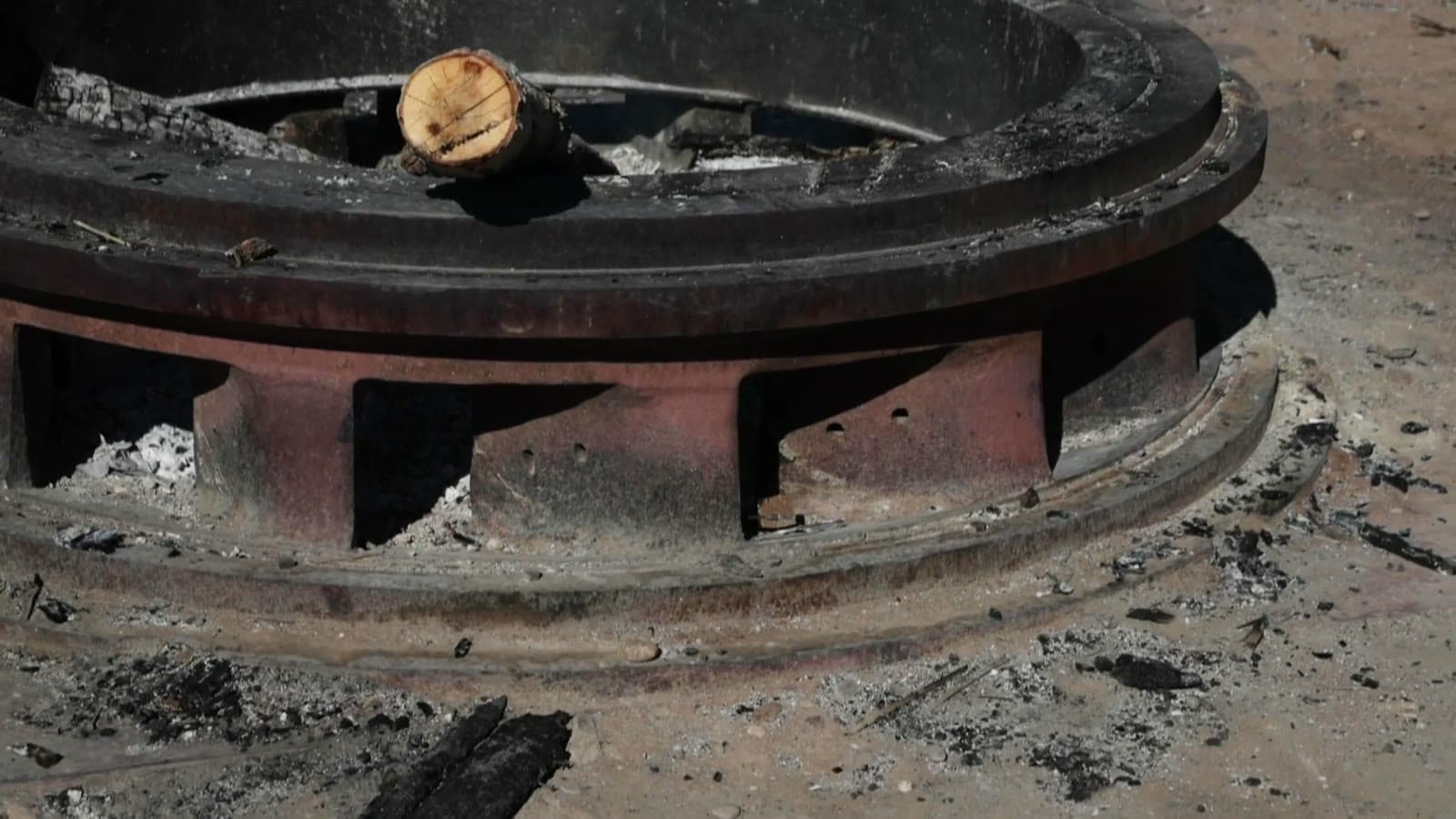
The communal fire pit, named Fuega, is another rescued piece of the old power plant. The team found it in the boneyard still wrapped in plastic, never used. They were told a piece like this once took almost a year to weld. Now it’s the center of evening gatherings, which is a good example of the Camp V approach: keep the heavy industrial history and give it a friendlier job.
A Yoga Studio Inside an Old Water Tank
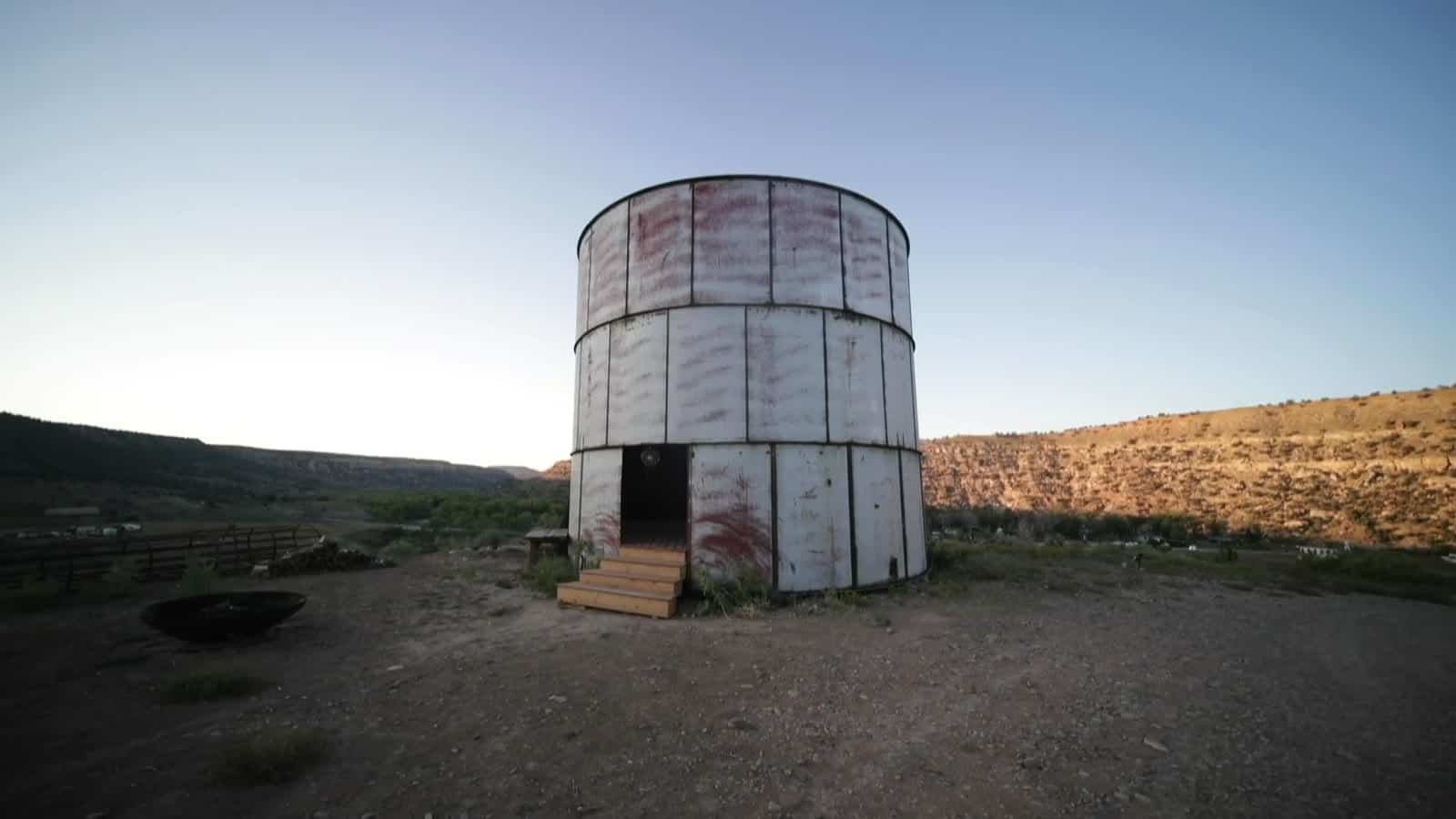
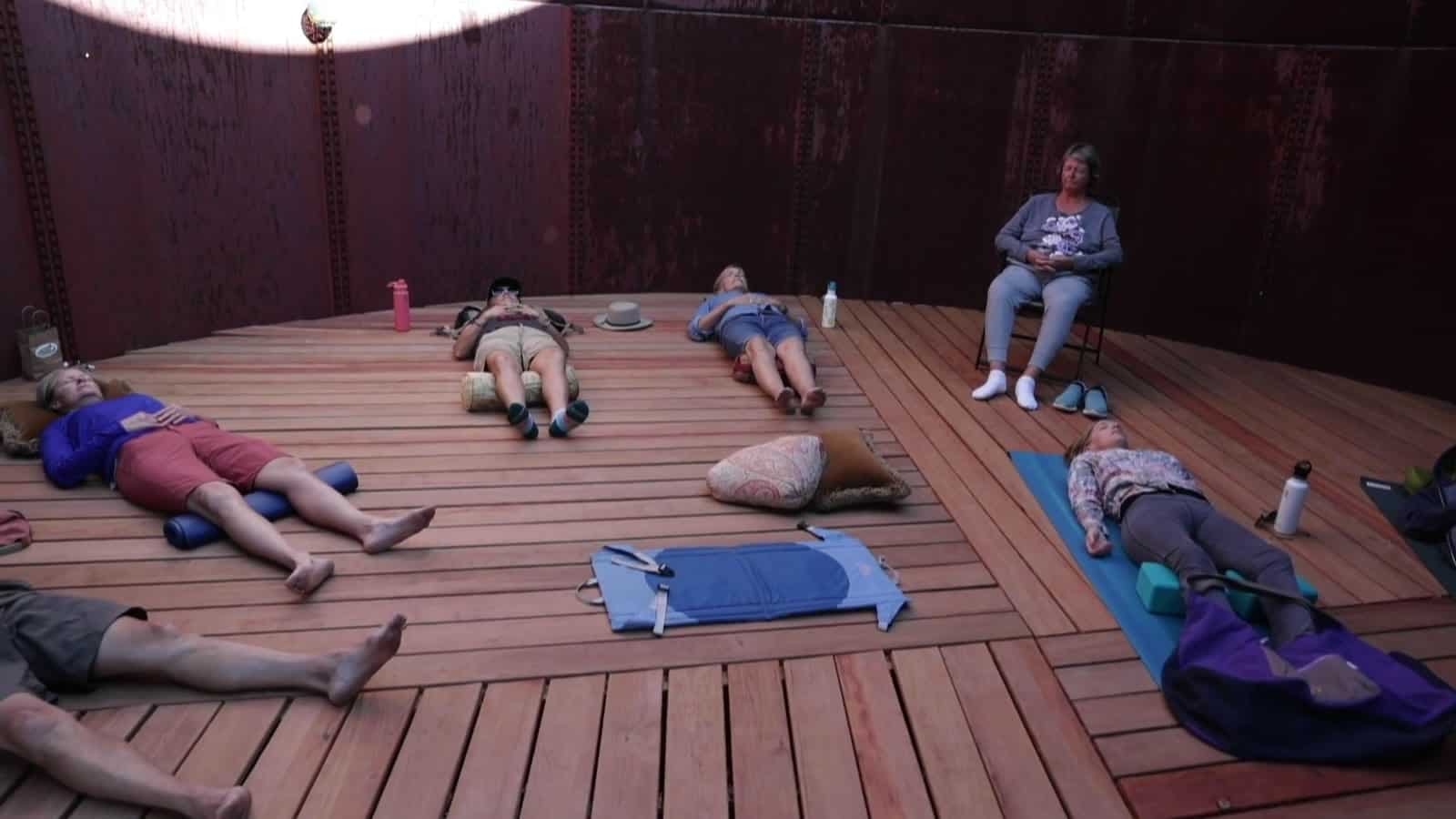
Above the main area, a big steel water tank has been turned into a yoga and meditation studio with a new wood deck inside. The best thing to do here is a sound bath. A gong is played so the sound echoes around the round metal walls and washes over everyone lying on the floor. David found it really relaxing. Next to it, the working water tower supplies the camp with filtered water, and wind harps nearby hum on breezy days.
The Magic Bus Speakeasy
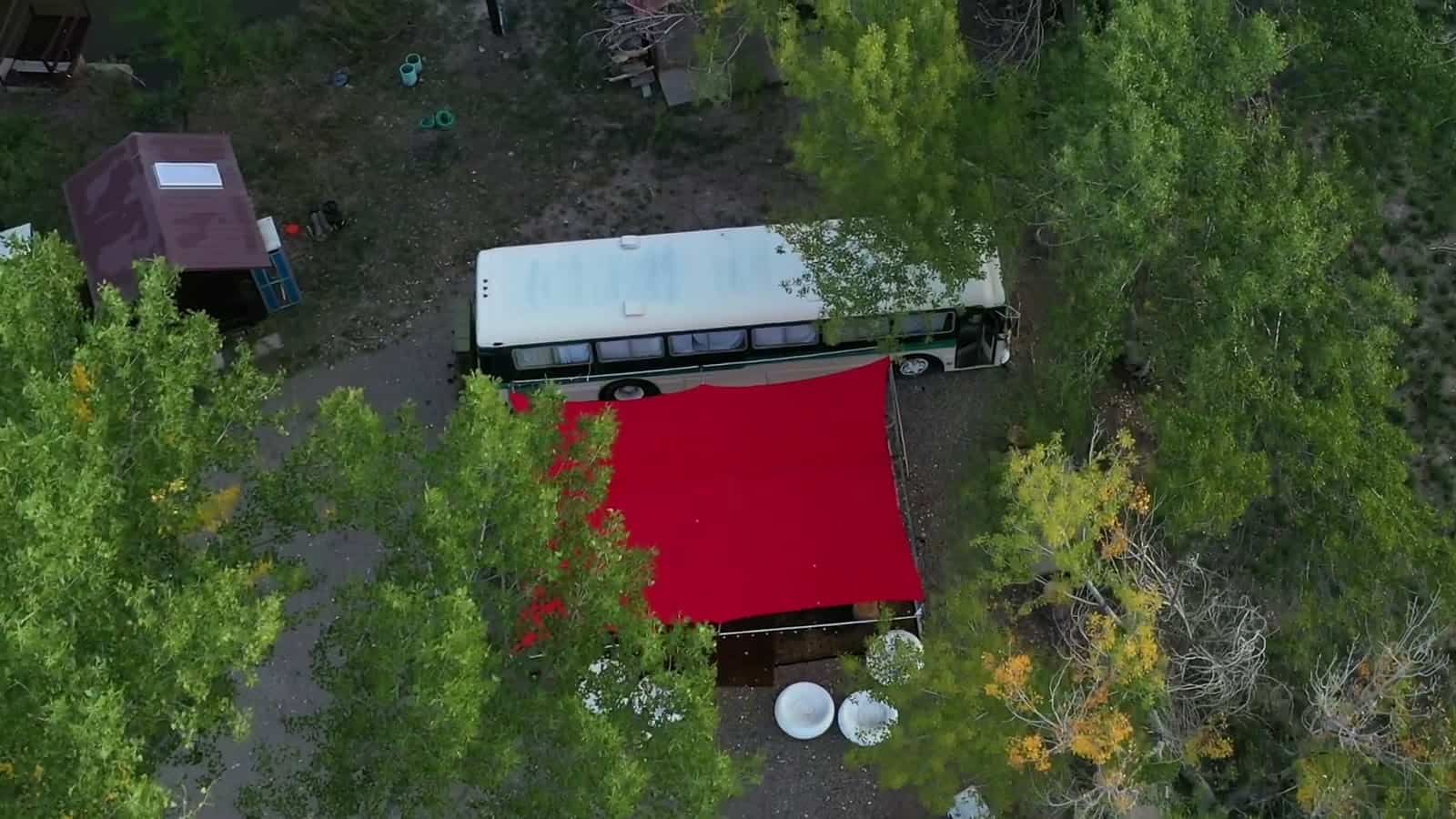
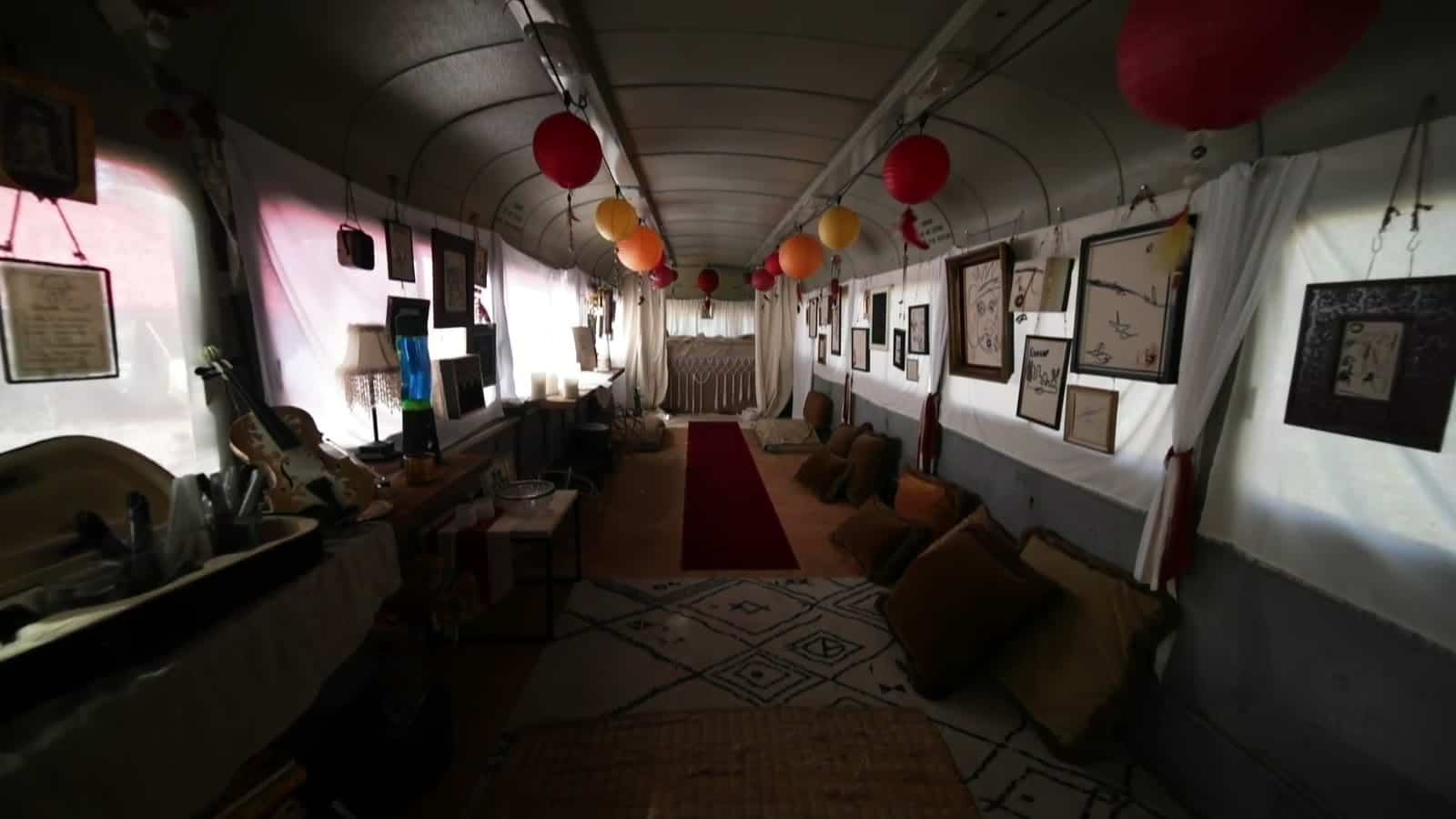
Down on the lower level, a school bus that came with the property has been reborn as the Magic Bus. The previous owner bought it to travel in but never did, and it was full of firewood when the new team found it. They cleaned it out, towed it down by the pond, and artist Heidi Sprague turned it into a cozy speakeasy, with a red shade canopy outside and paper lanterns and curtains inside.
The walls are a growing gallery of continuous-line drawings, where you can’t lift the pen off the paper. Every guest is invited to add one, which makes the visitors part of the art. David tried a self-portrait. The founder said it looked like David “in ten years.”
Lake V and the River Below
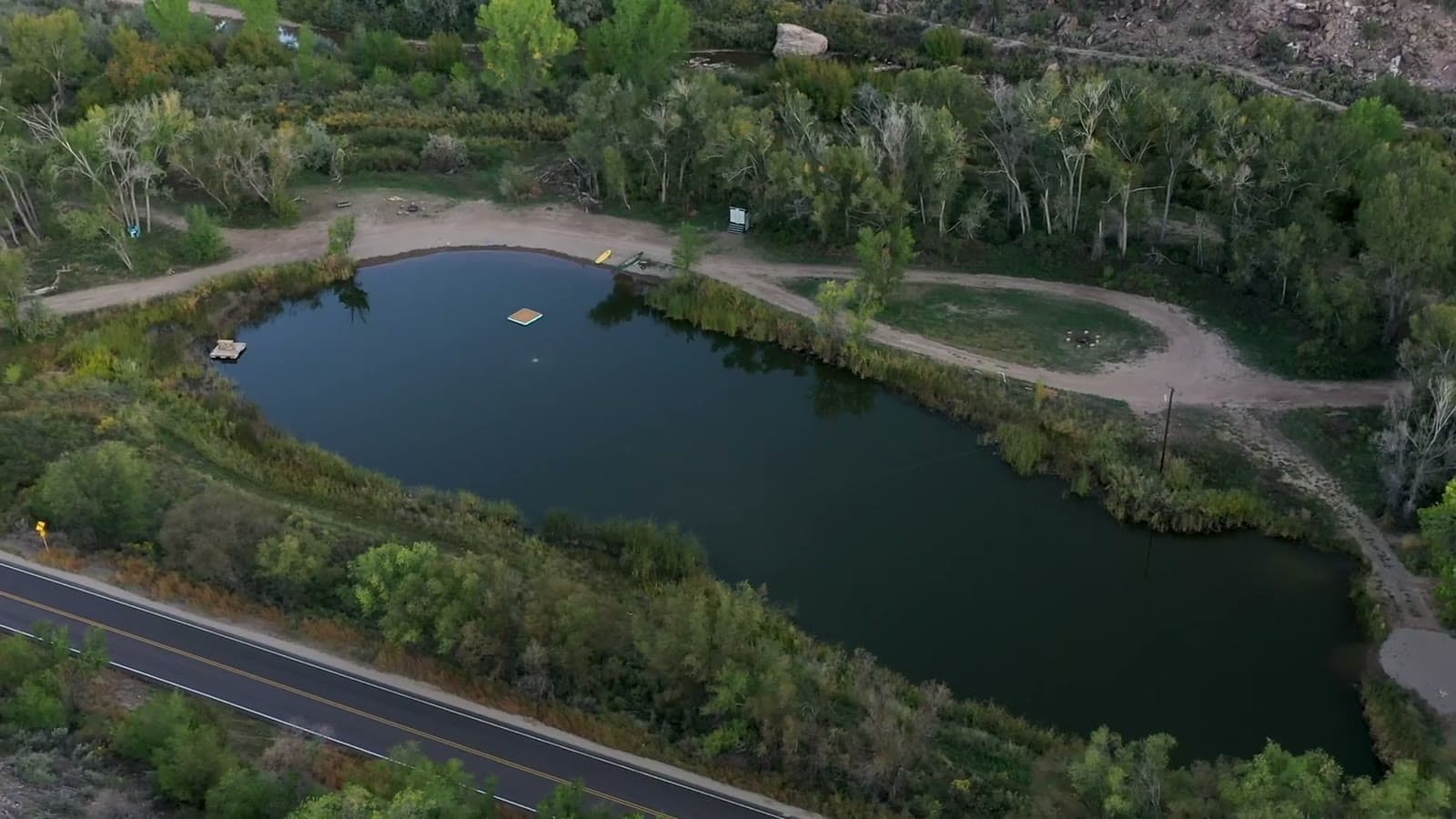
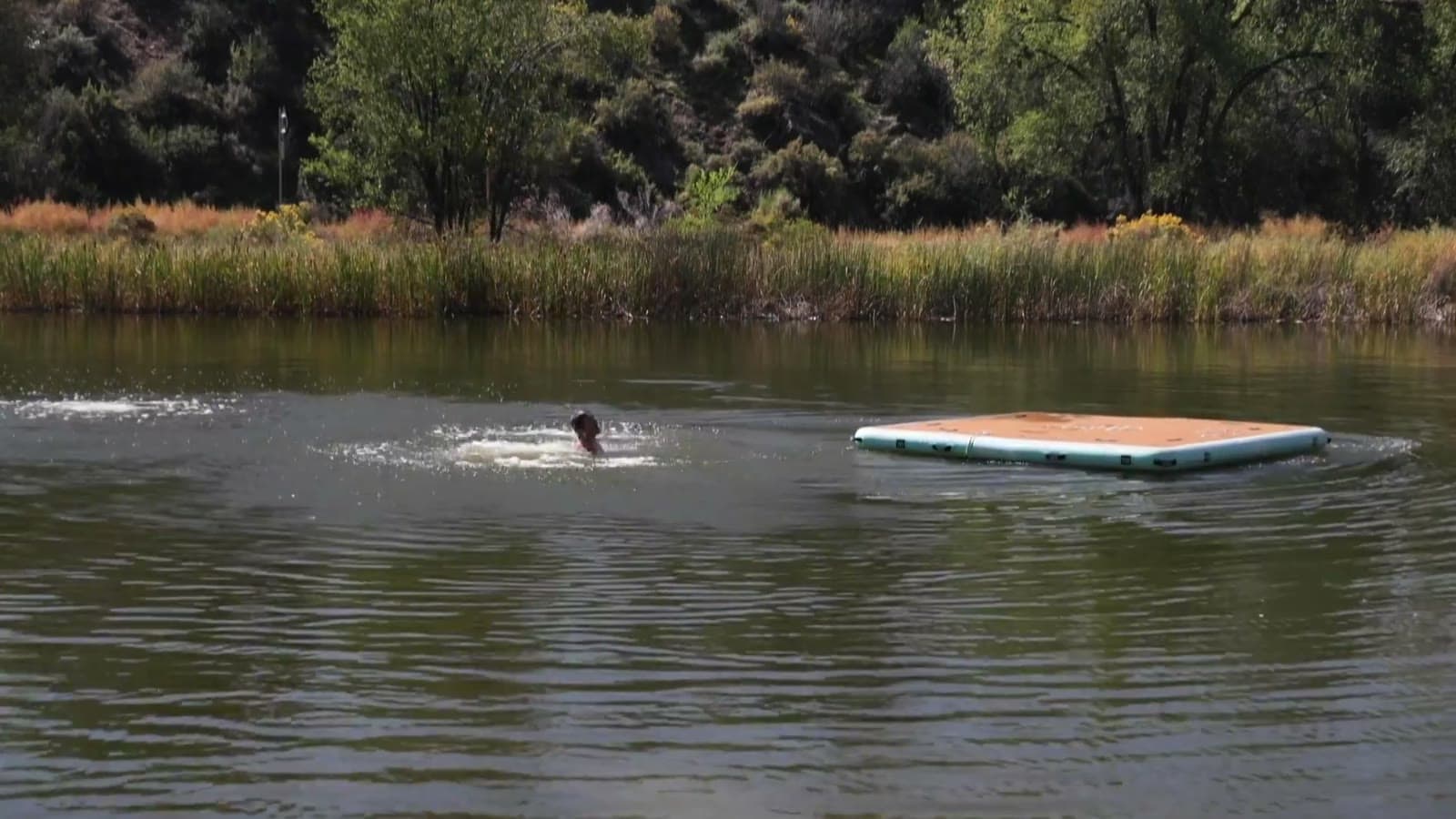
Next to the bus is Lake V, a pond with a floating dock in the middle. You can swim, fish, take out a canoe, or try a stand-up paddleboard. Camp V’s website mentions you might spot ducks and the occasional river otter. Just past it runs the San Miguel River, with riverside camping along the bank. After his swim, David rinsed off in “The Green Thing,” a vintage green steel shower enclosure found at a roadside antique shop that is now one of the most memorable outdoor showers we’ve seen.
Staying at Camp V
Lodging Options
- Historic cabins: studio cabins with a king bed, and two-bedroom cabins with two queens. All have a full bath, fireplace, kitchenette, record player with vinyl, Wi-Fi, A/C, robes, and a covered porch.
- Airstreams: modern Airstream trailers with queen or king beds, a kitchenette, and an outdoor fire pit.
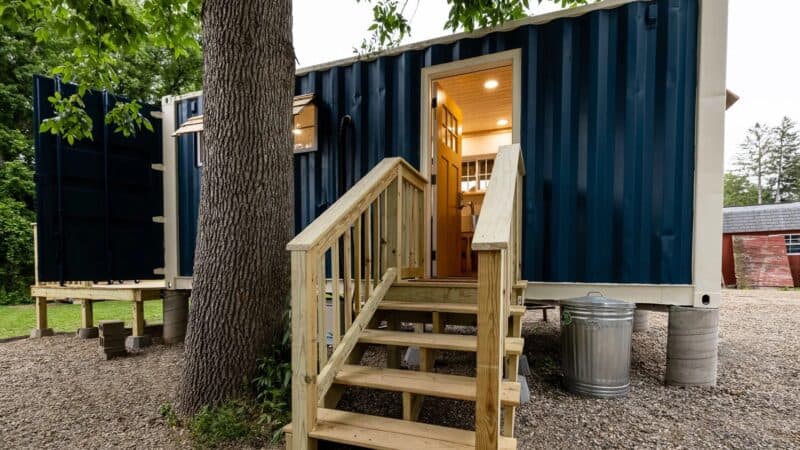
- Tiny homes and containers: compact units with a kitchenette and private or semi-private bath facilities, a good choice for tiny house fans who want to try one out.
- RV sites: 7 full-hookup sites (electric, water, sewer) with access to a modern bathhouse.
- Riverside camping: tent sites along the San Miguel River, good for tent campers and van lifers.
- Private events: Camp V hosts retreats, small weddings, and milestone gatherings.
Good to Know Before You Go
- Check-in/out: check-in is 4 p.m. for cabins, Airstreams, and tiny homes (2 p.m. for RV sites). Check-out is noon.
- Getting there: Montrose Regional Airport is just under 2 hours away, and Telluride Regional Airport is about 1 hour 15 minutes. Book rental cars early in Montrose, and download your directions ahead of time because cell service drops out on the way.
- Things to do: there are 3 miles of hiking and biking trails on the property, plus paddling on Lake V and swimming in the San Miguel. The Shamrock Trail along the river is nearby, and Telluride and Moab are both within day-trip range.
Design Details
- Location: Naturita, in Colorado’s West End (Montrose County)
- Property: 120+ acres on three levels, from the river bottom to “Snob Hill”
- History: built in 1942 by the Vanadium Corporation of America for uranium mill engineers, and restored after the 2017 purchase
- Cabins: 14 historic cabins, with 12 restored as six studios and six two-bedrooms (Cabin 15 is about 500 sq. ft.)
- Founders: Natalie Binder with architects Jodie and Bruce Wright of One Architects
- Signature features: reclaimed-door siding, a water-tank yoga studio, the Magic Bus speakeasy, and Lake V
- Art: the Prairie Wind Chapel (Robert Hoehn), the Pariah Express (Howard Moffat), The Unknown Zone, Francis, and Fuega
What Makes This Place Special
- Salvage as design: extra interior doors became siding, and leftover mill machinery became a fire pit and sculpture. Reuse here is the look, not a compromise.
- Old shells, new insides: opening up the cramped 1940s floor plans made modest cabins feel big without adding a single square foot. It’s a useful lesson for anyone renovating a small house.
- Art gives the place a story: giving Burning Man pieces a permanent home turns an ordinary camp into a destination people drive hours to see.
- Revitalizing a rural town: Camp V shows how lodging, art, and events can bring life back to a mining community that lost its main industry.
- Something for every budget: riverside tent sites, RV hookups, tiny homes, Airstreams, and cabins all share the same grounds and amenities.
Watch the Full Video Tour
David’s tour includes the sounds you can’t get from photos, from the gong echoing in the water tank to his plunge into Lake V and the reveal of his continuous-line self-portrait.
Learn More
- Camp V website and booking · stay@campv.com · 970-369-9520
- Camp V’s history and story
- Camp V FAQs
- Watch the video on YouTube
- Follow David Rule on Instagram
Highlights
- A 1942 uranium-mill engineers’ camp reborn as an art-filled getaway in Naturita, Colorado
- A cabin sided in salvaged interior doors from the other cabins
- Bright, minimal cabin interiors with a king bed, kitchenette, and record player
- Burning Man art, including the Prairie Wind Chapel and the Pariah Express
- A yoga studio and sound baths inside an old water tank
- The Magic Bus speakeasy, filled with guest drawings
- Lake V for swimming, paddling, and fishing, plus riverside camping on the San Miguel
Explore More
- His $3300 DIY Truck Bed Camper
- He Built a 22 sq. Ft. Micro Home for $1,470
- He Built a $15K Tiny House with No Experience
- El Capitan Canyon’s Safari Cabin with Ocean Views
Which would you try first: a door-sided cabin, an Airstream, or a tent by the river? Tell us in the comments.
If you enjoyed this you’ll LOVE our Free Daily Tiny House Newsletter with even more!
You can also join our Small House Newsletter!
Also, try our Tiny Houses For Sale Newsletter! Thank you!
More Like This: Vacations | Airbnb & Rentals | Video Tours
Disclosure: This post may contain affiliate links. If you purchase through one of our links, we may earn a commission at no additional cost to you.


Alex
Latest posts by Alex (see all)
- Camp V: A 1940s Mining Camp in Colorado Reborn as an Art-Filled Getaway - October 25, 2026
- Creek Walk Cottages: A Wooded Tiny Home Community on South Carolina’s Swamp Rabbit Trail - October 25, 2026
- Nestadu’s Nest Series: Four Prefab ADUs Delivered Fully Assembled to California Backyards - October 25, 2026