
Disclosure: This post may contain affiliate links. If you purchase through one of our links, we may earn a commission at no additional cost to you.
The Going Tiny Series, Part 35 of 45 · Guide 4 of 5: Bringing Them On Board
A free chapter goes up every day. See every part. Rather have it all at once, with printable worksheets? Get the Going Tiny Toolkit.
You listened. You asked good questions. You rented a cabin. And your partner still doesn’t want to live in a tiny house. Now what?
First, take a breath. This is common, and it doesn’t mean you failed. It means you now know more clearly where each of you stands. Here are some ways forward.
Climb the compromise ladder
Start from where you each are on the Small-Living Spectrum and look for the highest rung you both feel good about. Each rung below is a complete, worthwhile result on its own.
- We’ll simplify in place: spend less, buy less, use the rooms we have better.
- We’ll declutter together, each person deciding about their own things.
- We’ll take regular trips in small spaces: rented cabins, campers, tiny house stays.
- We’ll build or buy a small getaway or guest cabin and keep our home.
- We’ll downsize to a smaller house or apartment that still fits our must-haves.
- We’ll design and move to a small house together, on a timeline we both agree to.
- We’ll try tiny full-time for a set period, with a clear plan for if it doesn’t work.
Make a timeline agreement
“Not now” is often more acceptable than “never,” and it can be honest for both of you. A timeline agreement turns an argument into a plan. For example:
Sample timeline agreement
“For the next 12 months, we’ll declutter our own things, take two trial stays in small homes, and each save $___ a month toward ‘whatever comes next.’ Next October, we’ll sit down with these worksheets again and decide whether to look at smaller houses, build a guest cabin, or stay put. Either of us can ask to talk about it sooner, and either of us can say ‘not yet’ without it being a fight.”
Write it down. Put the revisit date on the calendar. Then honor the agreement, including not bringing it up every week in between.
Know your non-negotiables and your flex points
Worksheet 4 (Non-Negotiables & Flex Points) asks each of you to list, separately:
- Non-negotiables: things you truly need in any future home or plan. (“A bedroom door.” “Staying within 30 minutes of the grandkids.” “No ladders.” “A place for my tools.”)
- Strong preferences: things you’d really like but could give up for the right trade.
- Flex points: things you care less about than you thought.
Keep non-negotiables short and real, three to five each. When you compare, you’ll often find the lists don’t actually conflict. A small house with a door, near the grandkids, with a shed, may meet both of your lists.
Want to do this on paper?
The printable PDF of Bringing Them On Board has fill-in worksheets for this step, including:
- Non-Negotiables & Flex Points
They come with all five guides in the Going Tiny Toolkit.
Accepting “not now,” gracefully
Sometimes the kindest and wisest choice is to accept that your partner doesn’t want this, at least not now, and to keep loving your life together anyway.
“While our house is not big by most standards, I would be happy going smaller. My hubby sees his collection as a link to the past… He is starting to understand the concept of working within your space, however, so perhaps one day we can go smaller. In the meantime, I cull my things and do my best not to accumulate the unnecessary items, so he can enjoy the space and see the possibilities.”
— Bev, Tiny House Talk reader
Bev isn’t waiting resentfully. She’s living her values in her own corner of the house and leaving the door open. That’s not giving up. That’s grace.
If you’ve accepted “not now,” some things that can keep the dream alive without pressure:
- Simplify your own life and your own belongings.
- Take a small-space vacation now and then, alone or with a friend if your partner doesn’t want to go.
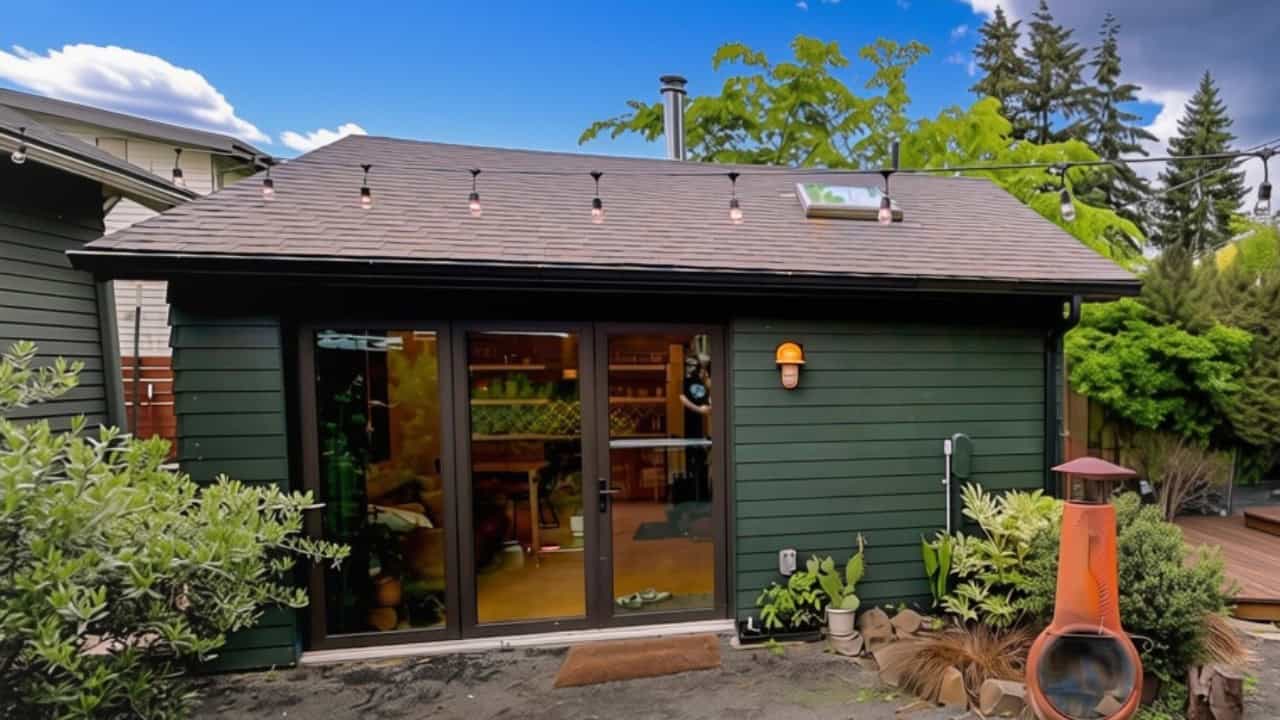
- Make one corner of your current home your “tiny” space: a reading nook, a she-shed or he-shed, a tidy little studio.
- Keep learning, reading, and saving, quietly, without making it a campaign.
- Let it be okay that your partner’s dream is different from yours.
Never do these
- Make a big financial commitment (land, a trailer, a deposit) without your partner’s real agreement.
- Get rid of someone else’s belongings to “help.”
- Use kids, relatives, or friends to pressure your partner.
- Treat a reluctant yes as a full yes.
- Keep score with “I told you so” after the decision.
When a long-term disagreement is hurting the relationship
Some couples discover that the disagreement about home is really about something bigger: how you’ll spend retirement, how money decisions get made, who gets to dream. If that’s where you are, a couples counselor can help you sort it out. A housing decision is too important to make while either of you is hurting, and your relationship matters more than any house, of any size.
A last word before the worksheets
Living smaller is supposed to make life better, lighter, more focused on what matters. If the road there costs you peace with the person you love, it isn’t worth it. If you can find a version of small you both say yes to, even a modest one, you’ve already got the best part.
Take your time. Be kind. Try things. And remember: you do not have to go tiny.
— Alex
Resources for Bringing Them On Board: Where to Learn More
Within this series
- The Tiny House Money Plan (Guide 1): for when the objection is about money. Run real numbers together.
- Where Can I Put It? (Guide 2): zoning, ADUs, backyard cottages, and where a small home is allowed.
- Tiny Without the Ladder (Guide 3): one-level, age-friendly, and accessible small homes. Helpful when health or aging is part of the worry.
- Your First Tiny Steps (Guide 5): once you agree on a direction, decide on size, type, build or buy, and systems.
- Tidy to Tiny (Or Not): our weekend declutter guide, for when possessions are the sticking point.
Finding a counselor
- Search terms: “licensed marriage and family therapist near me,” “couples counselor,” “LMFT,” “family therapist video sessions.”
- Ask your health insurer or an employee assistance program (EAP), if you have one, about covered counseling sessions.
- Many faith communities and community mental health centers offer counseling or referrals, sometimes on a sliding scale.
- If phone calls are hard for you, ask about video, text, or chat-based sessions.
If you don’t feel safe
National Domestic Violence Hotline (U.S.): 1-800-799-7233, text START to 88788, or chat at thehotline.org. Free, confidential, 24/7.
Finding trial stays
- Vacation rental sites: search “tiny house,” “small cabin,” “cottage,” or filter by size and amenities.
- Your state park system: many rent cabins, from rustic to fully equipped.
- Search “tiny house hotel,” “tiny house village rental,” or “glamping cabin” plus your region.
- RVs and campers: local RV dealers, peer-to-peer RV rental sites, or friends who’ll lend one.
Things to look up locally before adding a second structure
- Your city or county’s rules for accessory dwelling units (ADUs), guest houses, and sheds.
- Whether a guest cabin can have a bathroom or kitchen, and whether anyone may live in it full-time.
- Rules on parking or occupying an RV or camper on residential property.
- HOA covenants, if you have an HOA.
On Tiny House Talk
Search tinyhousetalk.com for “small house,” “cottage,” “ADU,” “family,” and “couple” to see real homes shared by readers and builders, including families who downsized in steps. Looking at a few together, side by side, can be a nice low-pressure way to see what each of you is drawn to.
More to read on Tiny House Talk
- Tiny Homes for Families: 40+ Multi-Bedroom, Bunk-Room & Kid-Friendly Tiny Houses: Layouts with real bedrooms, bunk rooms, and kid spaces to look at together as a family.
- Family Tiny House Living: Real families with kids living tiny or small, in their own words.
- Fish Brook Farm: A Tiny Cottage Retreat on an Alpaca Farm in the Catskills: A simple one-room Airbnb cottage, the kind of place to try a weekend of small living.
- His & Hers Vintage Campers: Two side-by-side campers sharing a common room: a fun way to test having your own space.
- 9 Romantic Tiny Getaways for Couples: Ideas for a low-pressure trial stay for two.
- Tiny House Vacations: Hundreds of tiny houses, cabins, and campers you can rent for a trial weekend.
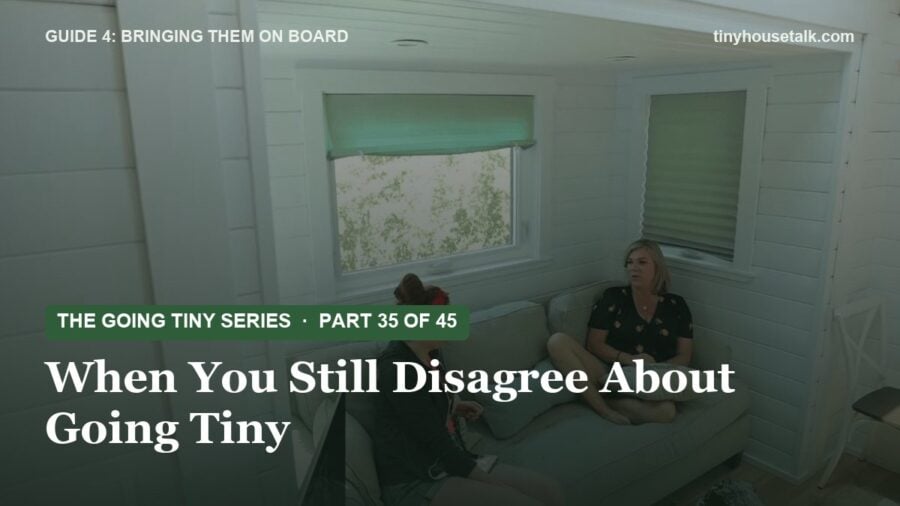
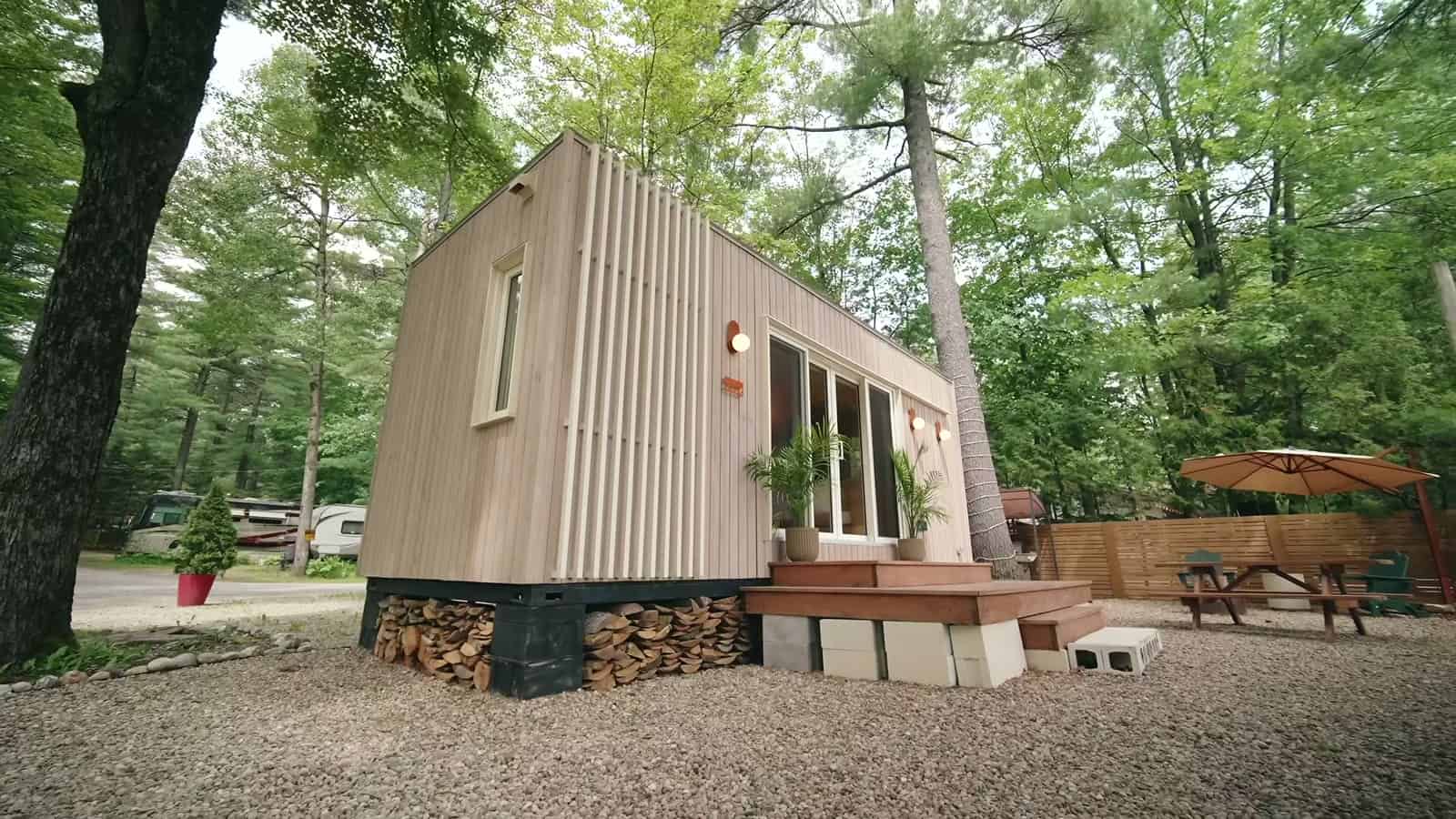
Top photo: A mom and her teen daughter in a tiny house her friends love. Photo via Tiny House Expedition/YouTube. See their story.
Your turn
Is someone in your life on the fence about living smaller? Share what's worked (or hasn't) in the comments.
Like to print things out and write on them?
This series is free to read here, and it always will be. If you’d rather have it as five clean, printable PDFs, that’s the Going Tiny Toolkit:
- Bringing Them On Board (the guide this chapter comes from): conversation starters, low-risk trial ideas, and worksheets for couples and families
- The Tiny House Money Plan
- Where Can I Put It?
- Tiny Without the Ladder
- Your First Tiny Steps
Every guide adds printable worksheets and a 30-day action plan, and Tiny Without the Ladder comes with the bonus One-Level Floor Plan Idea Book (18 to-scale floor plans). All five are $47, with a 30-day refund.
← Previous: Part 34: Small Homes for Extended Family, Friends, and Caregiving
Next (tomorrow): Part 36: Where to Start With a Tiny House: You Don't Need All the Answers
Not sure which part matters most for you? The free 10-minute What’s Really Holding You Back? quiz tells you where to start. And to get a new part (and a new home) in your inbox each day, join the free Tiny House Newsletter.
Disclosure: This post may contain affiliate links. If you purchase through one of our links, we may earn a commission at no additional cost to you.


Alex
Latest posts by Alex (see all)
- When You Still Disagree About Going Tiny - November 22, 2026
- Black-and-White Escape eVista King XL: A 42-Foot Wide-and-Tall Tiny House on Wheels - November 21, 2026
- Down2Mob’s Jeep Gladiator Overland Camper on a Custom Flatbed - November 21, 2026




Join the Conversation
No comments yet. Be the first to join the conversation.