Disclosure: This post may contain affiliate links. If you purchase through one of our links, we may earn a commission at no additional cost to you.
The Going Tiny Series, Part 8 of 45 · Guide 1 of 5: The Tiny House Money Plan
A free chapter goes up every day. See every part. Rather have it all at once, with printable worksheets? Get the Going Tiny Toolkit.
You’ve worked hard for every dollar in your house fund. This chapter is about keeping it safe: insuring what you buy, recognizing scams, and avoiding the quiet ways people overpay.
Insurance: the question to ask before you buy
How to insure it?
— Jules, Tiny House Talk reader, listing her biggest questions
One reader told us she couldn’t get her tiny house insured at all. She’s not alone. Insurers like homes they understand. A one-of-a-kind house on a trailer, especially one built by its owner, doesn’t fit their usual categories.
Why tiny houses on wheels are hard to insure
- They aren’t regular houses or regular RVs, so they fall between policy types.
- DIY builds have no third-party proof of how they were built.
- Homes that move have more ways to be damaged.
What helps
- Certification. RVIA or NOAH certification makes insurers far more willing, though it doesn’t guarantee coverage.
- Records. Photos of every build stage, receipts, and any electrical or plumbing inspections.
- The right agent. Independent insurance agents can shop several companies. Some specialty insurers now write policies for tiny homes.
- The right category. A park model may be insured like an RV or a mobile home; a foundation home like a house; a certified tiny house on wheels usually under an RV policy. Ask whether the policy covers full-time living, not just recreational use. That difference matters.
Get a quote before you buy
Before you put down a deposit, ask two or three insurers or agents whether they’d cover that exact home, where it will sit, and for full-time living. Get it in writing or by email. If no one will insure it, a lender probably won’t finance it either, and a community may not accept it.
Scams: how they work in 2026
Tiny house scams have grown as housing costs have climbed. News outlets and state attorneys general have reported cases in 2025 and 2026 of fake builders, cloned websites, and contractors who collect big deposits and vanish. Some scammers steal photos and names from real, honest builders.
Common patterns
- Too-good prices. A finished, beautiful tiny house for a fraction of what similar homes cost, often with an “add to cart” button.
- Cloned pages. A Facebook page or website using a real builder’s name and photos, with slightly different contact information.
- Pressure. “Only one left,” “price goes up tomorrow,” “don’t bother getting other quotes.”
- Hard-to-trace payments. Requests for wire transfers, payment apps like Zelle, cryptocurrency, or gift cards.
- Vague paperwork. No written contract, or claims that permits are “already in process” with nothing to show.
- Grant and loan bait. “Guaranteed approval,” “free government grant,” or “pay a fee to unlock your loan.”
How to protect yourself
- Find the builder’s contact information independently, not from the ad, and contact them that way to confirm the listing is real.
- Visit the shop or a completed home in person or by live video if you can.
- Ask for references from past buyers and actually contact two or three.
- Check your state’s contractor licensing (for foundation homes) and business registration.
- Search the builder’s name plus “scam,” “complaint,” and “lawsuit.”
- Get a written contract with a payment schedule tied to completed stages.
- Pay deposits with a credit card where possible, which can offer dispute protection. Never pay with gift cards, crypto, or wire to an individual.
- Take 24 hours before signing anything. A real builder will wait.
If you think you’ve been scammed
Stop sending money. Contact your bank or card company right away. Report it to the Federal Trade Commission at reportfraud.ftc.gov and to your state attorney general’s consumer protection office. Keep every message, receipt, and screenshot.
Want to do this on paper?
The printable PDF of The Tiny House Money Plan has fill-in worksheets for this step, including:
- Debt and Funding Sources Map
They come with all five guides in the Going Tiny Toolkit.
Predatory lending
When banks keep saying no, offers that say yes can feel like a relief. Be careful. Signs of a bad loan:
- Very high APR, or the lender won’t clearly state it.
- Large fees taken out of the loan before you receive it.
- Prepayment penalties that punish you for paying early.
- Pressure to borrow more than you asked for.
- Up-front fees required before the loan is approved.
- A lender that isn’t licensed. Mortgage lenders and loan officers can be looked up on the NMLS Consumer Access website (nmlsconsumeraccess.org).
A useful habit: ask every lender for the APR, the monthly payment, the number of payments, and the total amount you’ll pay over the life of the loan. Write those four numbers down for each offer and compare them on Worksheet 4 (Debt and Funding Sources Map).
Overpaying: the quiet money leak
- Compare at least three options for any big purchase: builders, used units, lenders, insurers, haulers.
- Know what’s included. “Starting at” prices often leave out appliances, delivery, upgrades, and taxes. Ask for an itemized quote.
- Get used homes inspected. An RV technician or home inspector can find water damage, bad wiring, and trailer problems before you pay.
- Watch upgrades. Each one seems small. Together they can add tens of thousands.
- Resale matters. Certified homes, standard sizes, and simple designs are usually easier to sell later if your life changes.
It can be hard enough to sell a “normal” size home, let alone a tiny home.
— Jlb, Tiny House Talk reader
A real home from Tiny House Talk

Photo via Tiny Home Tours/YouTube
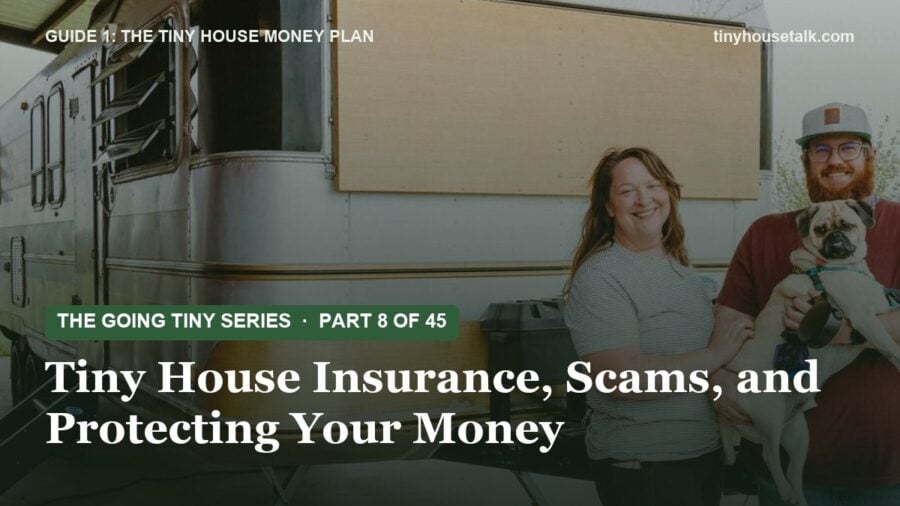
The vintage camper with water damage they didn't expect
Why a used home deserves an inspection: Adam and Janelle sold their house to travel and later bought a 1982 Silver Streak camper, knowing it would be a project. They didn't expect how far the water damage had spread. They had to peel it back to the studs and rebuild everything before it felt like home.
You don’t have to do this alone
One reader wrote that what they needed most was “a plan and a trusted person.” The plan is what the worksheets are for. For the trusted person, consider:
- A HUD-approved housing counselor: free or low cost, and trained to help with buying, budgeting, and avoiding scams.
- A nonprofit credit counselor if debt is the main obstacle.
- A fee-only financial planner (paid by you, not by commissions on products) for big decisions like selling a house or using retirement funds.
- A real estate attorney for land contracts and family agreements.
- A benefits counselor if you receive SSI, Medicaid, or other means-tested benefits.
Most of these professionals can communicate by email or in writing if phone calls are hard for you. Just ask.
Resources for The Tiny House Money Plan: Where to Get Reliable Help
These are durable, public resources. Most offer written or online contact options if phone calls are difficult. Programs and rules change, so always confirm current details directly.
Money, debt, and housing counseling
- HUD-approved housing counselors: search by location through the Consumer Financial Protection Bureau at consumerfinance.gov/find-a-housing-counselor.
- Nonprofit credit counseling: National Foundation for Credit Counseling, nfcc.org.
- Federal student loans: studentaid.gov, the official site for repayment plans and getting out of default.
- Credit unions near you: mycreditunion.gov.
- Lender licensing lookup: nmlsconsumeraccess.org.
Benefits and disability
- Social Security and SSI: ssa.gov, or your local Social Security office. Ask about resource limits and how a home or vehicle counts.
- ABLE accounts: ABLE National Resource Center, ablenrc.org.
- Benefits counseling: ask a Center for Independent Living or your state’s disability rights organization for a free benefits planner.
Retirement and taxes
- IRS Publication 590-B (Distributions from IRAs), at irs.gov, covers early withdrawal rules and the first-time homebuyer exception.
- IRS Publication 523 (Selling Your Home) covers the home sale gain exclusion.
- A fee-only financial planner or enrolled agent/CPA for your specific situation.
Standards to look up
- RVIA (Recreation Vehicle Industry Association), rvia.org: RV certification; RVs are built to NFPA 1192.
- NOAH (National Organization of Alternative Housing): third-party inspection and certification for tiny houses.
- ANSI A119.5: the standard for park model RVs.
- HUD Code: the federal standard for manufactured homes; see HUD’s Office of Manufactured Housing Programs at hud.gov.
- IRC Appendix AQ, “Tiny Houses” (called Appendix Q in the 2018 code): building code provisions for houses of 400 sq ft or less on foundations, where your jurisdiction has adopted it.
Fraud reporting
- Federal Trade Commission: reportfraud.ftc.gov.
- Your state attorney general, consumer protection division.
- Better Business Bureau, bbb.org, for complaint histories (one source among several, not a guarantee).
Search terms that help
- “[your county] accessory dwelling unit permit”
- “[your state] tiny house community lot rent”
- “RVIA certified tiny house builder [your region]”
- “park model RV financing full time residence”
- “USDA Rural Development home loan [your state]”
- “[builder name] reviews complaints”
Other guides in this series
- Where Can I Put It? for zoning, land, and legal places to park or build.
- Tiny Without the Ladder for one-level and accessible designs.
- Bringing Them On Board for conversations with a partner or family.
- Your First Tiny Steps for deciding size, type, and build vs. buy.
Thank you for reading. Wherever your numbers lead you, whether that’s tiny, small, a bit smaller, or staying put and spending less, I hope you feel a little more in control than when you started. That’s the real goal.
— Alex
More to read on Tiny House Talk
- Tiny House Scams Are Surging: How to Spot a Fake Listing Before You Lose Your Deposit: Real scam patterns and red flags to check before sending any deposit.
- Can I Finance a Tiny House in Florida?: How RV loans, chattel loans, and mortgages actually work for tiny houses, with costs quotes leave out.
- RV Life vs. Tiny House Life: An Honest Comparison: Side-by-side look at two of the cheapest paths before you choose.
- Retirement Tiny House Guide: For readers planning a smaller home around retirement income.
- Best Tiny Homes Under $75K: Builder homes at the lower end of the price range, to compare real quotes.
- Interview with Lee Crockett and His $10K Tiny A-Frame Cabin: A low-cost DIY cabin story with the owner explaining his choices.
Your turn
What's the money question you're stuck on right now? Tell me in the comments.
Like to print things out and write on them?
This series is free to read here, and it always will be. If you’d rather have it as five clean, printable PDFs, that’s the Going Tiny Toolkit:
- The Tiny House Money Plan (the guide this chapter comes from): real 2026 cost ranges, a savings plan for any income, and every way people pay
- Where Can I Put It?
- Tiny Without the Ladder
- Bringing Them On Board
- Your First Tiny Steps
Every guide adds printable worksheets and a 30-day action plan, and Tiny Without the Ladder comes with the bonus One-Level Floor Plan Idea Book (18 to-scale floor plans). All five are $47, with a 30-day refund.
← Previous: Part 7: How People Actually Pay for a Tiny House: Every Option
Next (tomorrow): Part 9: Where Can I Put a Tiny House? The Hardest Part, Made Manageable
Not sure which part matters most for you? The free 10-minute What’s Really Holding You Back? quiz tells you where to start. And to get a new part (and a new home) in your inbox each day, join the free Tiny House Newsletter.
Disclosure: This post may contain affiliate links. If you purchase through one of our links, we may earn a commission at no additional cost to you.


Alex
Latest posts by Alex (see all)
- California Tiny House Element 20: A Modular 8×18 Shell You Build Up From - October 26, 2026
- Wheelhaus Wedge: A 400 Sq Ft Rolling Cabin Clad in Reclaimed Wyoming Snow Fencing - October 26, 2026
- Tiny House Insurance, Scams, and Protecting Your Money - October 26, 2026