
Disclosure: This post may contain affiliate links. If you purchase through one of our links, we may earn a commission at no additional cost to you.
Innovative building methods always catch my attention, and this unique tiny home in New Zealand is a perfect example of how creativity and sustainability can come together.
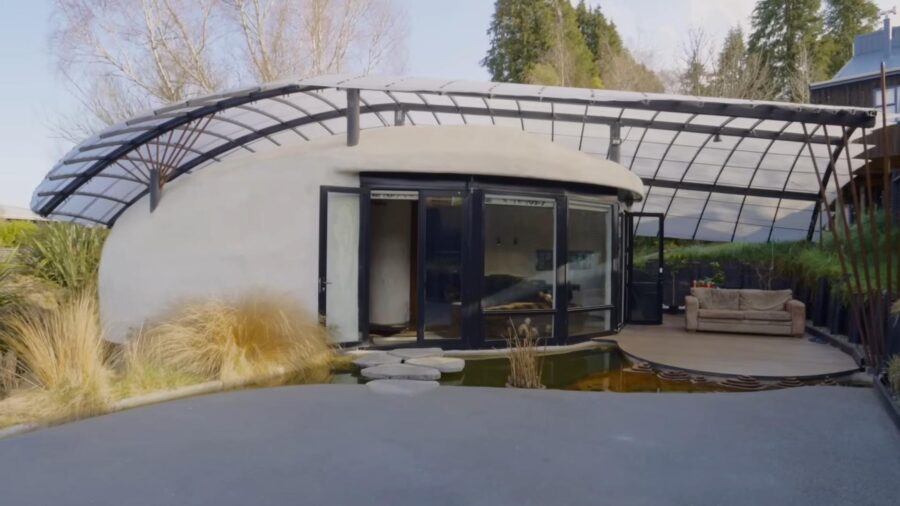
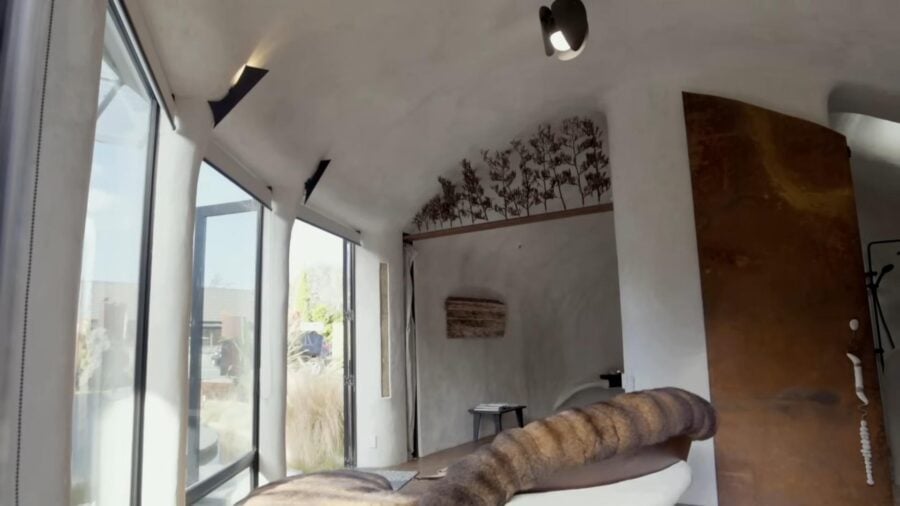
Known as the Pumice House, this sculptural straw bale tiny home was built using around 200 bales of barley straw—a recycled agricultural byproduct—and finished with a lime-based plaster that gives it a soft, organic look. Inside, you’ll find a thoughtfully designed layout that includes a first-floor bedroom, a roll-away TV, and a beautifully sculpted bathroom and shower.
It’s an inspiring reminder that tiny homes don’t have to follow the same formula—sometimes the most interesting designs come from rethinking materials entirely. Take a look and let me know what you think.
Don’t miss other amazing stories like this – join our FREE Tiny House Newsletter for more!
Eco-Built Strawbale Tiny Home with Pumice and Lime Plaster
Images via Tiny Home Tours
Built with Straw, Pumice, and Lime Plaster
Images via Tiny Home Tours
Every Surface Was Shaped by Hand

Images via Tiny Home Tours
Organic Design with Natural Forms

Images via Tiny Home Tours
Video Tour: Straw Bale and Plaster Tiny Home
Design Details
- Name: The Pumice House
- Location: New Zealand
- Construction: Straw bale with lime-based plaster
- Materials: 200 bales of barley straw (recycled agricultural byproduct)
- Bedroom: First-floor bedroom (no loft climbing)
- Bathroom: Sculpted shower stall
- Kitchen: Custom sculpted countertop
- Entertainment: Roll-away TV
- Exterior: Lime-based plaster finish with organic curves
- Style: Sculptural, hand-shaped surfaces throughout
- Availability: Available for booking on Airbnb
Lessons from This Build
- Agricultural Waste Becomes Building Material: 200 bales of barley straw—a waste product from farming—form the core of this home, showing how “waste” can become valuable building material
- Lime Plaster Creates Organic Forms: Unlike rigid conventional materials, lime plaster can be sculpted by hand to create flowing, organic shapes that feel alive
- Pumice Replaces Concrete: Using pumice instead of concrete reduces environmental impact while still providing structural integrity
- Hand-Shaping Adds Character: Every surface shaped by hand gives the home a unique, artisanal quality that mass-produced buildings can’t replicate
- Alternative Materials Can Be Beautiful: This build proves that sustainable materials don’t mean sacrificing aesthetics—the sculptural forms are stunning
Learn More
- Book a Stay in the Pumice House on Airbnb
- Follow the Pumice House on Instagram
- Subscribe to Tiny Home Tours on YouTube
Related Stories
- 927-sq.-ft. Strawbale Home w/ 3 Bedrooms, 2 Baths, and a Mudroom!
- Jordana’s Straw bale and Cob Cabins in Oregon!
- Julia & John’s Solar-Powered Straw Bale Home in Central New York
You can share this using the e-mail and social media re-share buttons below. Thanks!
If you enjoyed this you’ll LOVE our Free Daily Tiny House Newsletter with even more!
You can also join our Small House Newsletter!
Also, try our Tiny Houses For Sale Newsletter! Thank you!
More Like This: Tiny Houses | Airbnb | Tiny House Vacation | Cob Homes
See The Latest: Go Back Home to See Our Latest Tiny Houses
Disclosure: This post may contain affiliate links. If you purchase through one of our links, we may earn a commission at no additional cost to you.


Alex
Latest posts by Alex (see all)
- 5 Backyard ADUs and Cottage Kits That Publish Their Prices Up Front - November 17, 2026
- Barn-Red Tiny House with a Downstairs Bedroom and Two Standing-Height Lofts in Tennessee - November 17, 2026
- A 40-Foot Shipping Container Home with a Rooftop Deck in Conway, South Carolina - November 17, 2026








Join the Conversation
7 comments