
Disclosure: This post may contain affiliate links. If you purchase through one of our links, we may earn a commission at no additional cost to you.
Heads up: this post contains an affiliate link. If you buy through it, we may earn a small commission at no extra cost to you — it helps keep Tiny House Talk running. We only share gear we think is genuinely worth a look.
Climate control is one of the quietest struggles in small-space living. When you only have 200 to 700 square feet, a hot afternoon or a cold snap fills the whole place fast — there’s no spare room to retreat into. And the usual fixes all come with baggage. Window units are loud, ugly, and eat a chunk of your precious wall or window space. Rooftop RV air conditioners are power-hungry and can only cool. Portable ACs dump heat through a hose and hog floor space you don’t have.
That’s why so many tiny house builders, park model owners, and van and skoolie converters keep landing on the same answer: a ductless mini split. And a compact, 110-volt, DIY-friendly unit like the Mountman 12,000 BTU mini split is built almost perfectly for the way small-space folks actually live. Let’s walk through why a system like this fits alternative living so well — and where it might not be the right call.
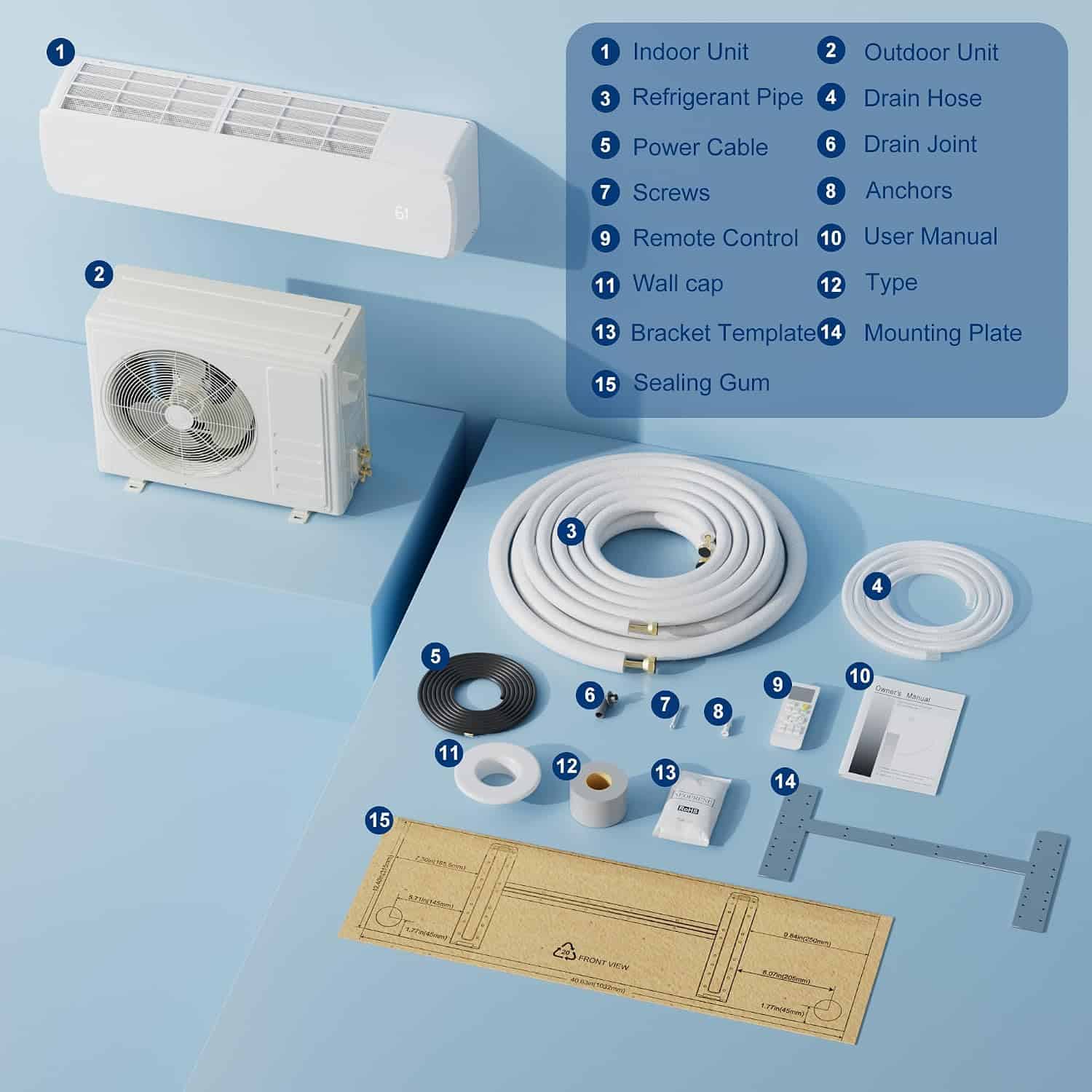
Images courtesy of Mountman
What Exactly Is a Mini Split?
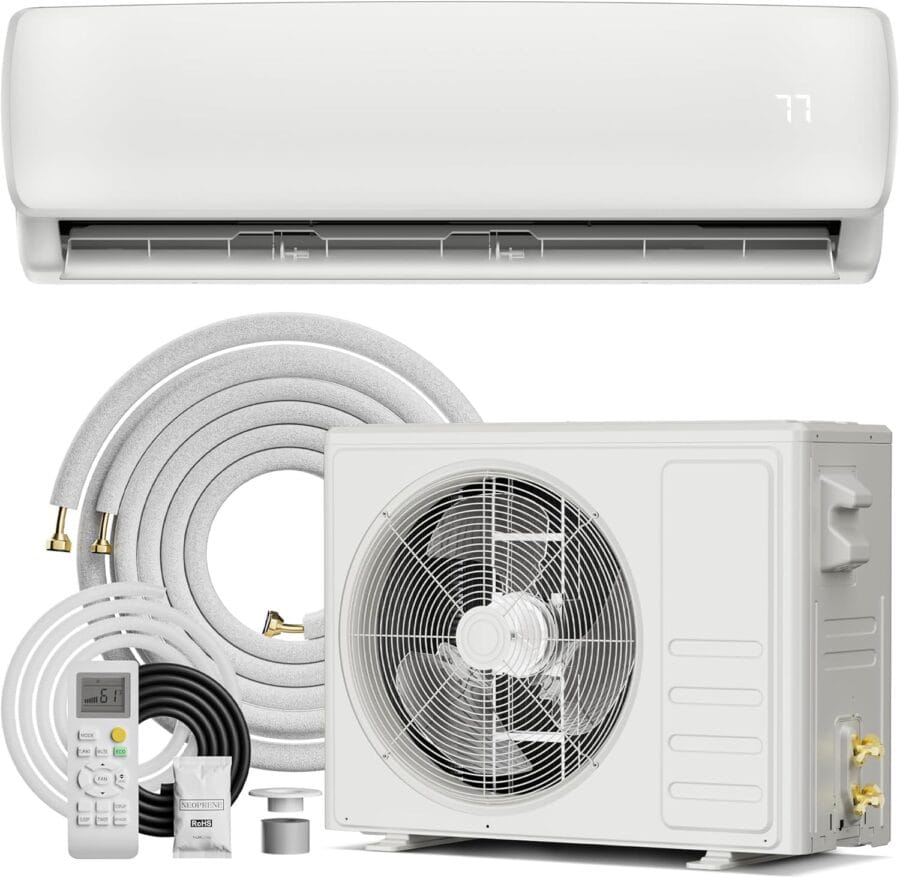
A ductless mini split has two parts connected by a thin line set (refrigerant tubing plus a cable and drain). The indoor head mounts high on an interior wall and blows conditioned air directly into the room — no ductwork required. The outdoor condenser sits outside and does the heavy lifting of moving heat in or out. Because the compressor lives outside, the part you hear inside is remarkably quiet, closer to a soft fan than the rattle of a window unit.
The Mountman is a 12,000 BTU (one-ton) system rated to cool and heat spaces up to about 750 square feet. That’s actually more capacity than a typical tiny house needs, which is a good thing: it means the unit rarely has to work at full tilt, so it runs quietly, sips less power, and holds a steady temperature instead of blasting and stalling.
The 110-Volt Advantage (This Is the Big One)
Here’s the feature that makes this style of unit click for small-space living: it runs on standard 110/120-volt household power. Most residential mini splits need a dedicated 220/240-volt circuit, which means an electrician, a breaker, and infrastructure a tiny home or van often simply doesn’t have.
A 110V unit, by contrast, plugs into the same kind of power you already use for everything else. For different living setups that means:
- Tiny homes on wheels & park models: Works off a standard 30-amp RV pedestal or shore power without a special hookup.
- ADUs and small cabins: No panel upgrade required — it ties into ordinary household wiring.
- Skoolies & converted spaces: Runs on shore power at a campground or a properly sized generator.
- Solar setups: A 110V load is far easier to run off an inverter and battery bank than a 220V one, especially with the efficient inverter compressor (more on that below).
Not needing to reengineer your electrical system removes the single biggest hurdle to adding real air conditioning to a small build.
Year-Round Comfort From One Box
This isn’t just an air conditioner — it’s a heat pump, which means it heats as efficiently as it cools by reversing the same process. In milder climates, one heat pump can often replace a separate heater.
For tiny living, that’s a meaningful simplification. One unit doing both jobs means you may not need a propane heater, a wood stove, or space-hungry electric heaters taking up your limited square footage. It also means fewer combustion sources indoors — a genuine safety and air-quality win in a tightly sealed small space. Four operating modes (Cool, Heat, Dry, and Fan) plus a dehumidify function make it a legitimate all-season climate tool, and the “Dry” mode alone is worth having in humid regions where moisture is the real enemy of a small home.
Why Efficiency Matters More When You’re Small
The Mountman carries a 19 SEER2 efficiency rating and uses an inverter-driven compressor with modern R32 refrigerant. In a big house, efficiency is mostly about the power bill. In a tiny home, van, or off-grid cabin, efficiency is about whether the thing can run at all.
A traditional AC compressor is on-or-off: it slams to full power, cools, shuts off, and repeats — a brutal cycle for a battery bank or a small generator. An inverter compressor instead ramps up and down smoothly, running at just the level needed to hold your set temperature. That translates to lower, steadier power draw, less wear, quieter operation, and far better compatibility with solar and battery systems. If you’re trying to cool a space without a grid connection, an inverter mini split is one of the few AC types that makes it realistic.
The DIY Part: What Pre-Charged Really Means
Traditionally, installing a mini split meant hiring an HVAC tech. The Mountman makes it easier, but it is not a plug-and-play unit. The outdoor condenser ships pre-charged with R32 refrigerant, and the kit includes the line set, drain hose, power cable, wall plate, bracket template, and mounting hardware. The line set connects with flare fittings, though, and the manual walks you through pulling a vacuum on the lines before you open the valves and release the refrigerant.
In practice, that means you’ll mount the indoor bracket, set the condenser on a stable pad or wall bracket, drill a pass-through for the lines, tighten the flare nuts to the specified torque, vacuum the lines, and run the condensate drain. Buyers who’ve done it describe the manual as detailed and the job as doable for anyone handy. Several bought a vacuum pump and gauges, which they said cost less than hiring someone; others paid an HVAC tech for the install. Take your time with the flares, the wall pass-through, and the drain, because those are where rushed installs go wrong.
Living-With-It Features
Beyond the core specs, a few everyday touches make a small space more livable:
- Sleep Mode (rated at 26 dB on the indoor unit) gradually eases the temperature overnight so you’re not woken by a cold blast — nice when your bed is ten feet from the unit.
- ECO Mode trims power draw for long, gentle runs — ideal on solar or a metered pedestal.
- Turbo Boost cools or heats the room quickly when you first walk in.
- Self-cleaning, auto-defrost, and a washable anti-dust filter cut down on maintenance — welcome when you don’t have a garage full of tools.
- A remote with a 24-hour timer lets you schedule around your day or your battery state.
What It Costs
When we checked on October 24, 2026, the Mountman 12,000 BTU 110/120V system was $429.98 on Amazon (list price $549.99), sold and shipped by Mountman, with a 4.5-star average from 374 ratings. Prices on Amazon move often, so check the current price before you buy.
Where a Mini Split Might Not Be the Answer
No single product fits every setup, so a few honest caveats:
- You need space for two components. The indoor head wants clear high wall space, and the outdoor condenser needs a solid mounting spot outside. On a very small van, finding a good exterior location can be tricky.
- It’s built for a parked lifestyle. A mini split is ideal for a tiny house, park model, ADU, cabin, or a van/skoolie that stays put with shore power. It is not a drive-and-cool solution the way a rooftop RV unit is — the condenser isn’t made to operate down the highway.
- True off-grid cooling still needs power. Even an efficient inverter unit draws real wattage. Running it off solar means a genuinely capable battery bank and inverter, not a single portable panel.
- Plan your condensate drain. In cooling mode it produces water that has to go somewhere — a small but important detail in a build.
Who It’s Best For
If you have a stationary or mostly-stationary small space — a tiny house on a leased lot, a park model in a community, a backyard ADU, a small cabin, or a converted bus parked with power — a 110V heat-pump mini split is arguably the single best comfort upgrade you can make. It’s quieter than a window unit, more efficient than a portable, handles both summer and winter, and installs without tearing your electrical system apart.
The Mountman 12,000 BTU mini split packages that whole value proposition — standard household voltage, a year-round heat pump, inverter efficiency, and a pre-charged condenser you can install yourself if you’re handy — into one system aimed squarely at people building and living small. If climate control has been the missing piece in your tiny space, it’s well worth a closer look. As always, measure your square footage, plan your power, and think through where both units will physically live before you buy.
Have you added a mini split to your tiny home, park model, or conversion? We’d love to hear how it went — drop a comment and let the community learn from your build.
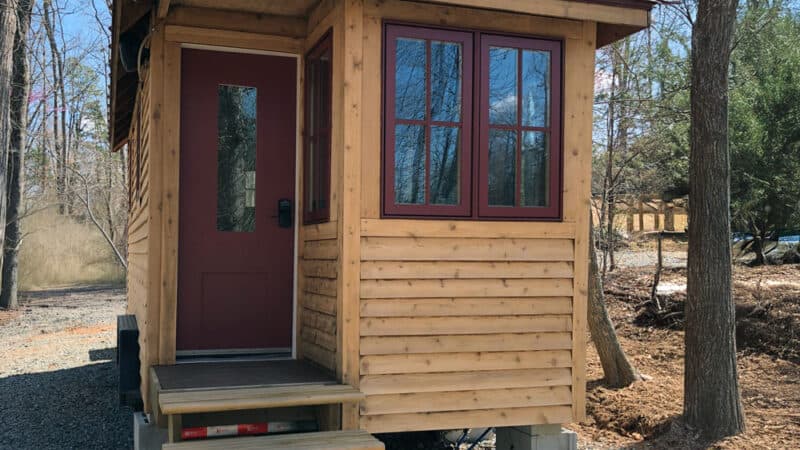
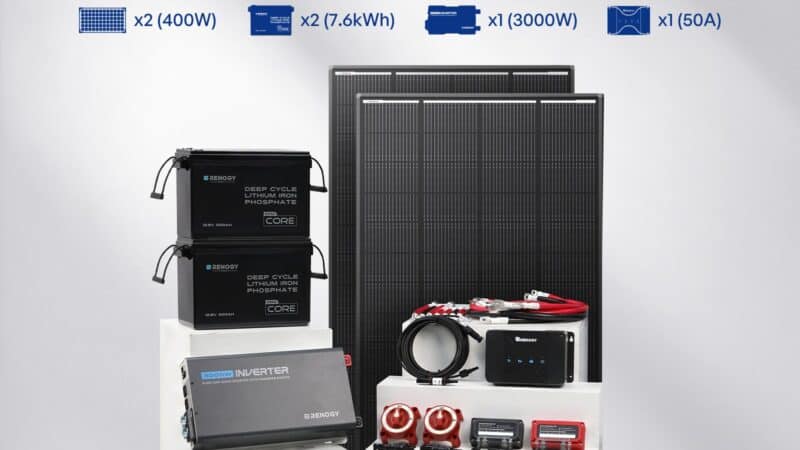
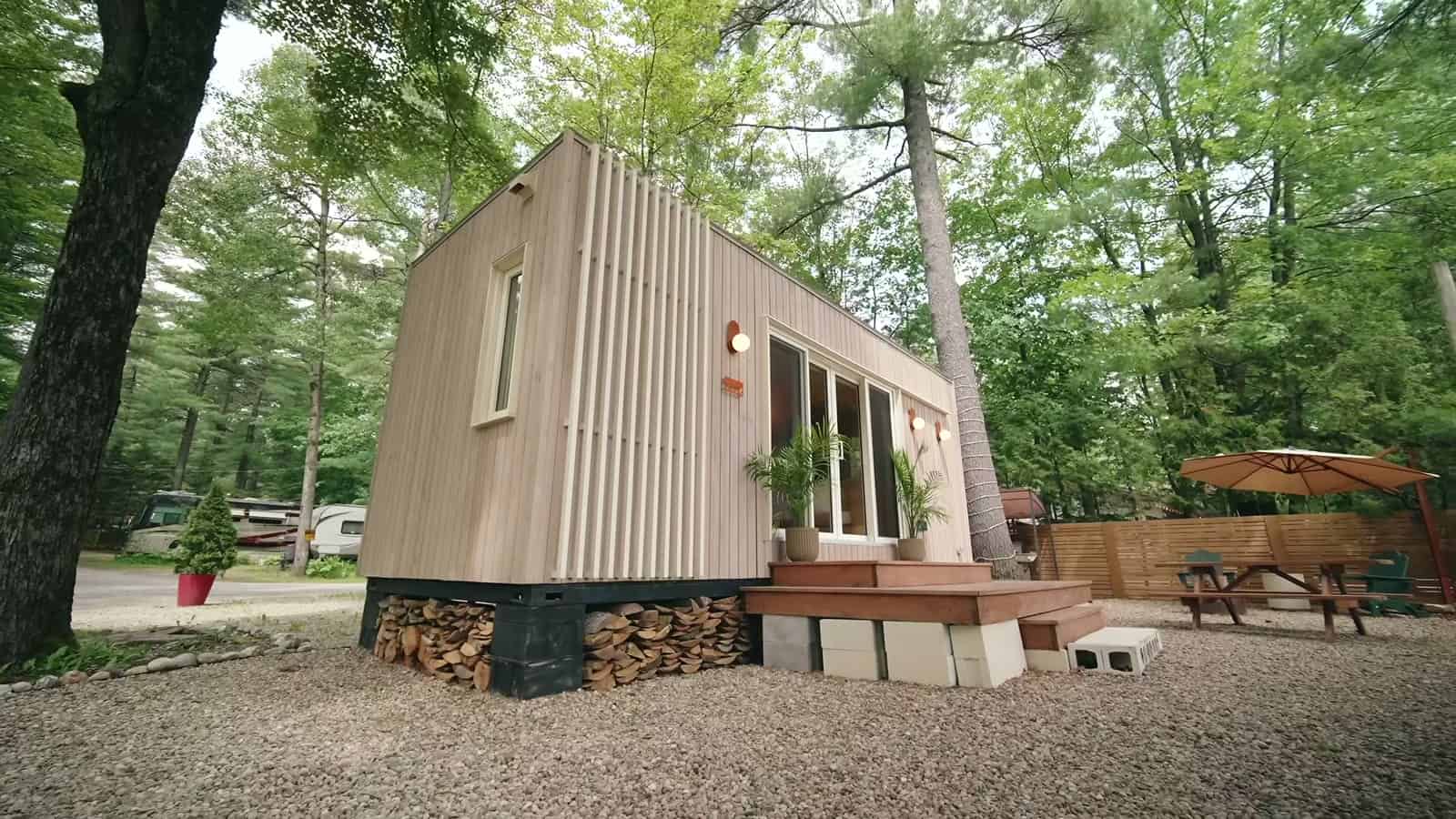
For the rest of your power setup, see our guide to powering a van or tiny house off-grid with a Renogy solar kit. Many of the tiny homes we feature use mini-splits for year-round comfort, including the Maverick Quantum and the Great Lakes Modern Twilight.
Highlights
- Ductless mini splits are quiet, efficient, and heat as well as cool
- The Mountman runs on 110/120V household or RV shore power, with no 240V circuit needed
- 12,000 BTU, rated for spaces up to about 750 sq ft, 19 SEER2, R32 refrigerant
- An inverter compressor makes it friendlier to solar and battery setups
- The condenser comes pre-charged, but the line set uses flare fittings and needs to be vacuumed
- $429.98 on Amazon when we checked October 24, 2026
- Best for parked tiny homes, park models, ADUs, cabins, and stationary conversions
Explore More
- How to Power Your Van or Tiny House Off-Grid: The Renogy Solar Setup
- Maverick Quantum: A 14-Foot Pine-Lined Tiny House
- Great Lakes Modern Twilight: Two Main-Floor Bedrooms
- Building a Camper Van With Zero Experience
- Off Grid
If you enjoyed this you’ll LOVE our Free Daily Tiny House Newsletter with even more!
You can also join our Small House Newsletter!
Also, try our Tiny Houses For Sale Newsletter! Thank you!
More Like This: Products | Appliances | Off Grid
Disclosure: This post may contain affiliate links. If you purchase through one of our links, we may earn a commission at no additional cost to you.


Alex
Latest posts by Alex (see all)
- Grande S1: A Folding Tiny House on Wheels That Expands to 22 Feet Wide - November 4, 2026
- Tiny House Magazine Issue #166: A Ridge-Top Cabin Near Asheville, Sears Kit Homes, and the Tiny House Fridge Problem - November 4, 2026
- Shipping Container Homes: 50+ Affordable, Modern, Off-Grid & Family Container Builds - November 4, 2026






Join the Conversation
No comments yet. Be the first to join the conversation.