Disclosure: This post may contain affiliate links. If you purchase through one of our links, we may earn a commission at no additional cost to you.
This post contains affiliate links. If you buy through them, Tiny House Talk may earn a small commission at no extra cost to you. We only recommend gear we’d put in our own build.
You can frame the walls, hang the cedar, and build the dreamiest little kitchen on wheels (or on a foundation) — but the moment the sun goes down, none of it matters if you can’t turn on a light, charge your laptop, or keep the fridge cold. Power is the part of a van conversion or tiny house build that quietly makes or breaks the whole project.
And it’s also the part that scares people the most. Volts, amps, watt-hours, charge controllers, “will this thing catch fire?” — the electrical system is where a lot of first-time builders freeze up, overspend, or end up with a Frankenstein setup of mismatched parts that never quite works.

Images courtesy of Renogy
Here’s the good news: you don’t have to be an electrician to get this right. You just need a system that’s designed to work together — and that’s exactly the gap Renogy fills. Below, we’ll break down the off-grid power setup we’d recommend to anyone building out a van or a tiny home, what each piece actually does in plain English, and how to skip months of YouTube rabbit holes.
See Renogy’s Complete Van & Tiny House Kits →
Why an All-in-One Kit Beats Piecing It Together
Images courtesy of Renogy
When you buy components one at a time from five different brands, you become the one responsible for making them play nicely. Wrong wire gauge, a charge controller that doesn’t match your battery chemistry, an inverter that can’t handle your coffee maker — these are the headaches that turn a fun weekend project into a three-week troubleshooting nightmare.
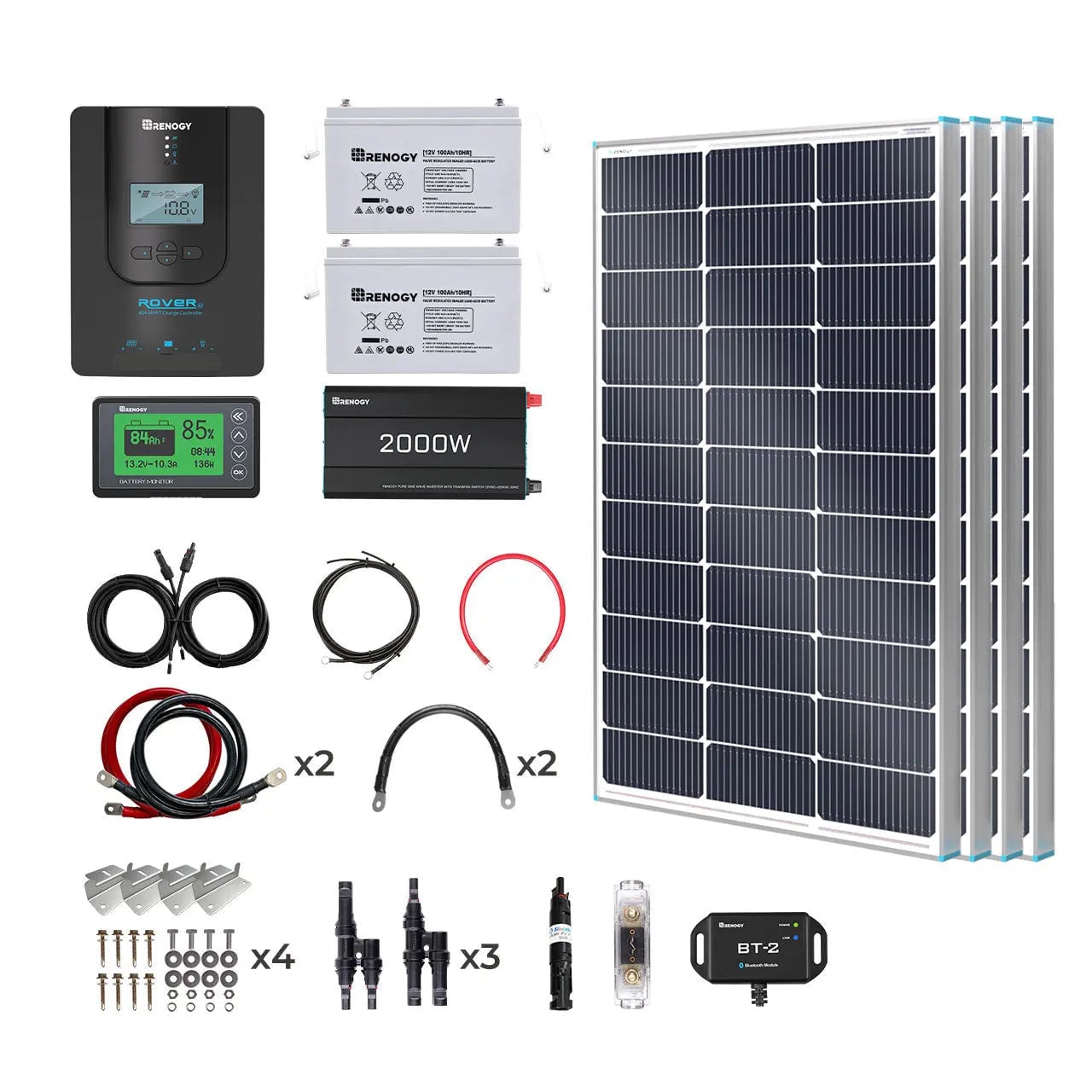
A complete Renogy solar kit ships as a matched system: the panels, charge controller, wiring, and connectors are spec’d to work together right out of the box. For a van or tiny house, that means fewer parts to research, fewer compatibility gambles, and a build you can actually trust to run your life. Renogy’s lineup scales from a single-panel starter kit all the way up to whole-cabin systems, so you’re not locked into one size.
The 4 Pieces Every Off-Grid Build Needs
Strip away the jargon and an off-grid power system is just four jobs: collect the energy, manage it, store it, and convert it into the kind of power your devices actually use. Here’s how the Renogy ecosystem handles each one.
1. Solar Panels — Your Free Fuel Source
Images courtesy of Renogy
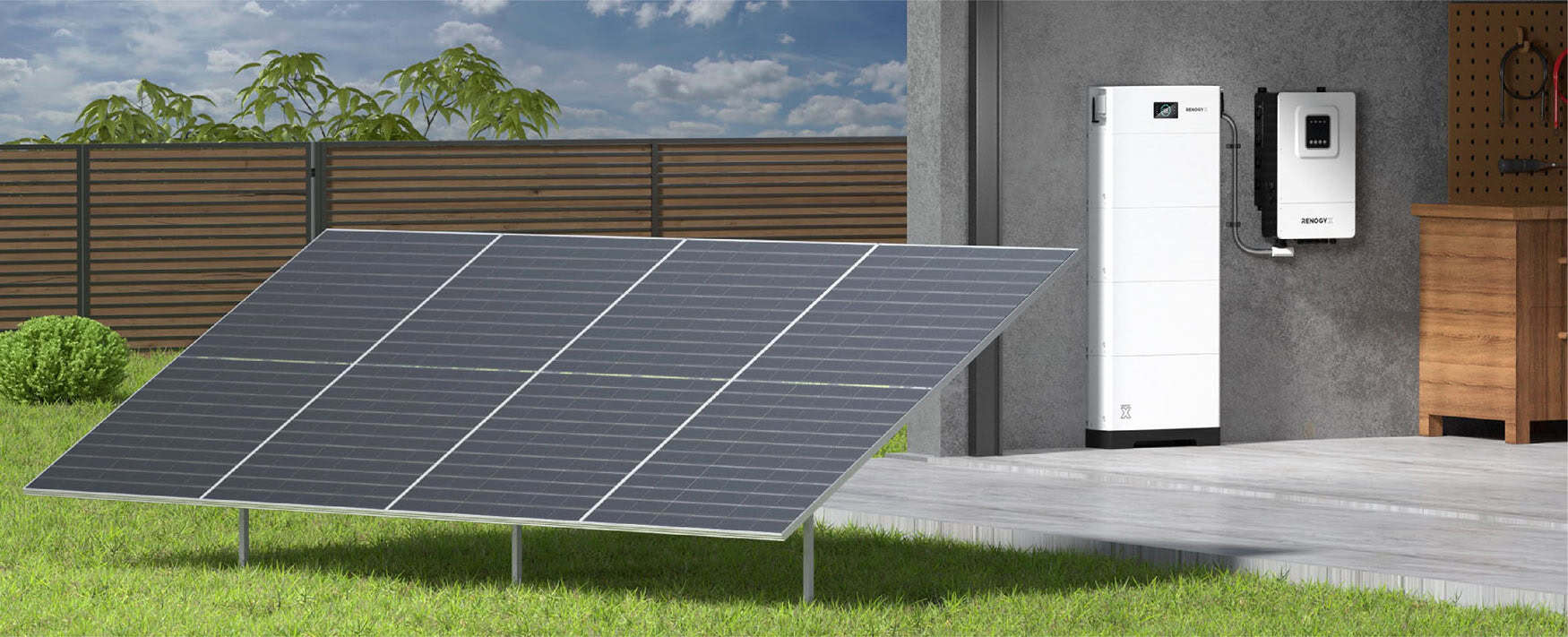
This is where the magic starts. Renogy’s newer N-Type panels push around 25% cell efficiency with anti-shading technology — which is a fancy way of saying they squeeze more watts out of every inch of your roof, and they don’t completely give up the second a tree branch throws a shadow across them. On a van roof, where space is precious, that efficiency is everything.
Going on a tiny house roof or a ground rack? You’ve got room to add panels and bank serious daytime power. The point is the same either way: once they’re bolted down, your fuel is free for the next 25+ years.
2. Charge Controller — The Brain That Protects Your Battery
Images courtesy of Renogy
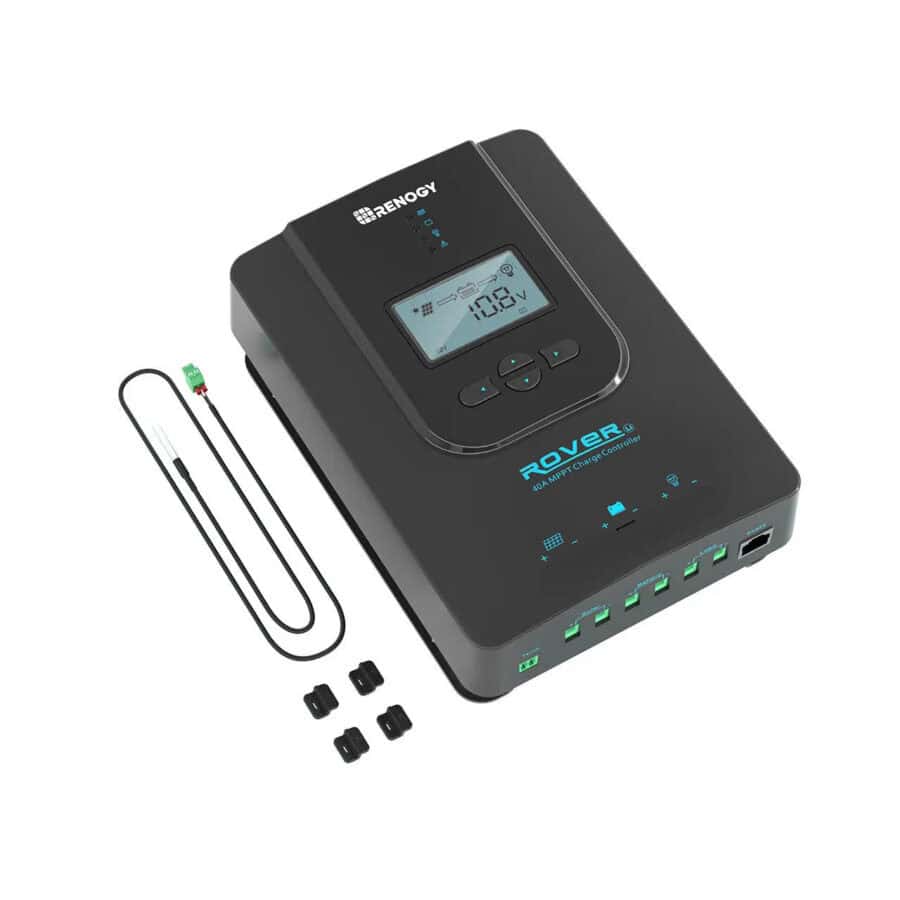
Raw power from your panels is messy — feed it straight into a battery and you’ll cook it. Renogy’s Rover MPPT charge controller is the brain in the middle, with up to 99% tracking efficiency, pulling the maximum possible energy from your panels while feeding your battery exactly what it wants. MPPT (the good kind of controller) can deliver up to 30% more harvest than the cheaper PWM controllers you’ll see in budget kits.
Building a van? This is where Renogy gets clever. Their DC-DC chargers let you top off your house battery from your engine’s alternator while you drive — and the smartest models pull from solar AND the alternator at the same time. Park in the shade for a week and your battery still fills up every time you move the van.
3. Battery — Where the Lights-On Confidence Lives
Images courtesy of Renogy
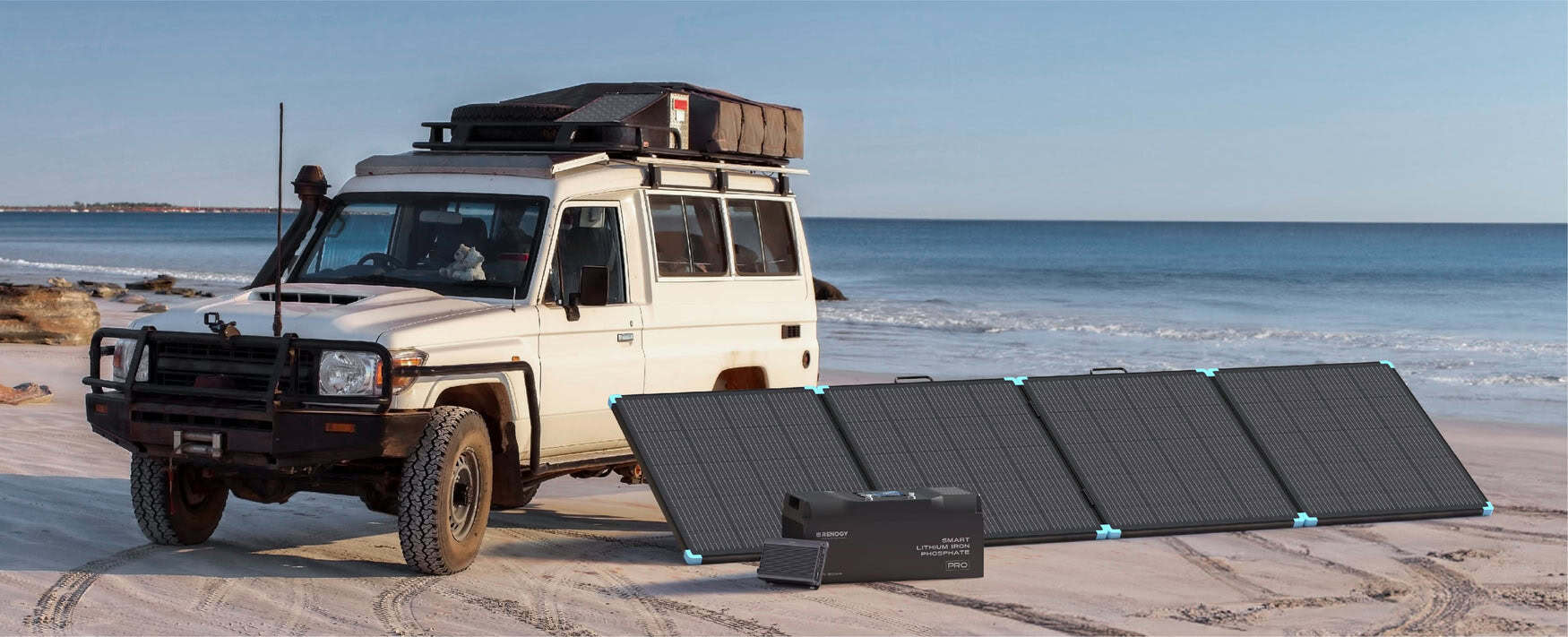
If the panels are the fuel, the battery is the tank — and this is the upgrade that changes how you actually live in the space. Renogy’s LiFePO4 (lithium) batteries blow past old AGM batteries in every way that matters: they’re lighter, last thousands of cycles, and you can safely use almost all of their capacity instead of just half.
The Smart models add Bluetooth monitoring (check your exact charge level from your phone, in bed, without getting up) and self-heating so they keep charging in freezing weather — a genuine dealbreaker if you’re parked somewhere cold or building a four-season cabin. Need more runway? The system is expandable, so you start with what you need and add capacity as your power habits grow.
Build Your Renogy Power System →
4. Inverter — Real Outlets for Real Appliances
Images courtesy of Renogy
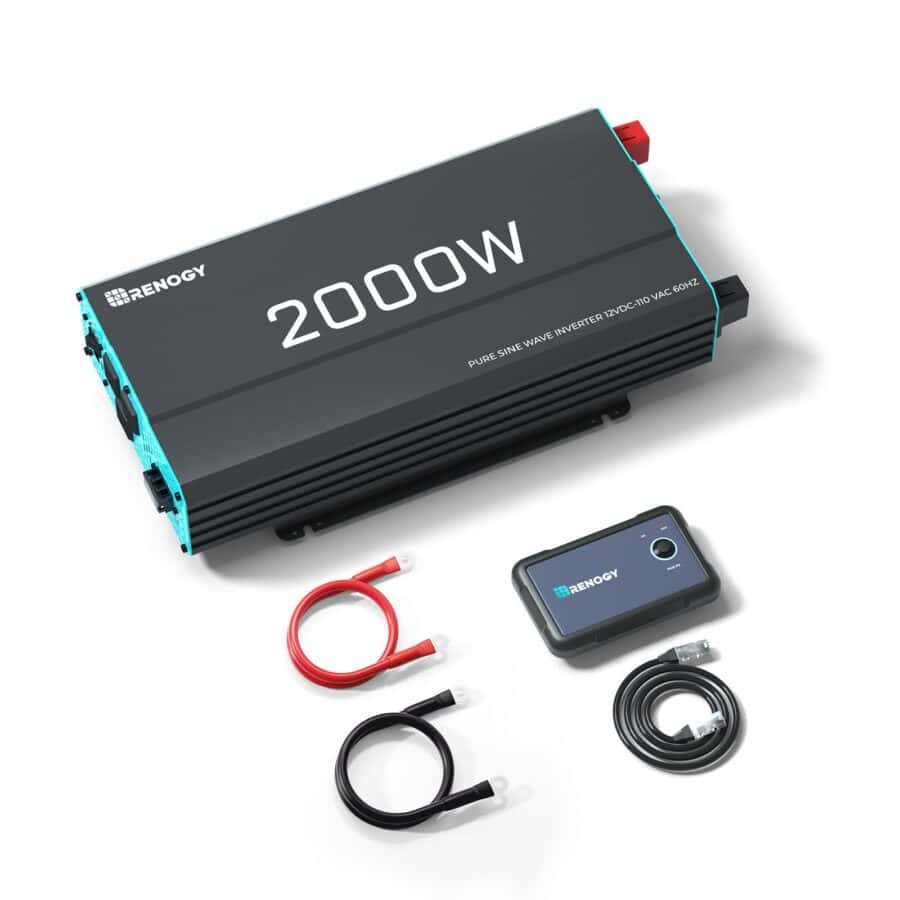
Your battery stores 12V DC power. Your blender, laptop charger, Instant Pot, and induction cooktop want 120V AC from a wall outlet. The inverter is the translator. Renogy’s pure sine wave inverters (the kind you want — not the cheap “modified” ones that buzz and fry sensitive electronics) deliver clean, grid-quality power at over 90% efficiency.
A 2000W unit comfortably runs the everyday stuff — coffee maker, laptop, TV, power tools — and the Bluetooth-enabled models let you watch your power use in real time so you never get surprised by a dead battery. This is the piece that makes your tiny home feel like a normal home.
Two Starting Points: Pick Your Build
For Van Conversions & Smaller Rigs
Images courtesy of Renogy
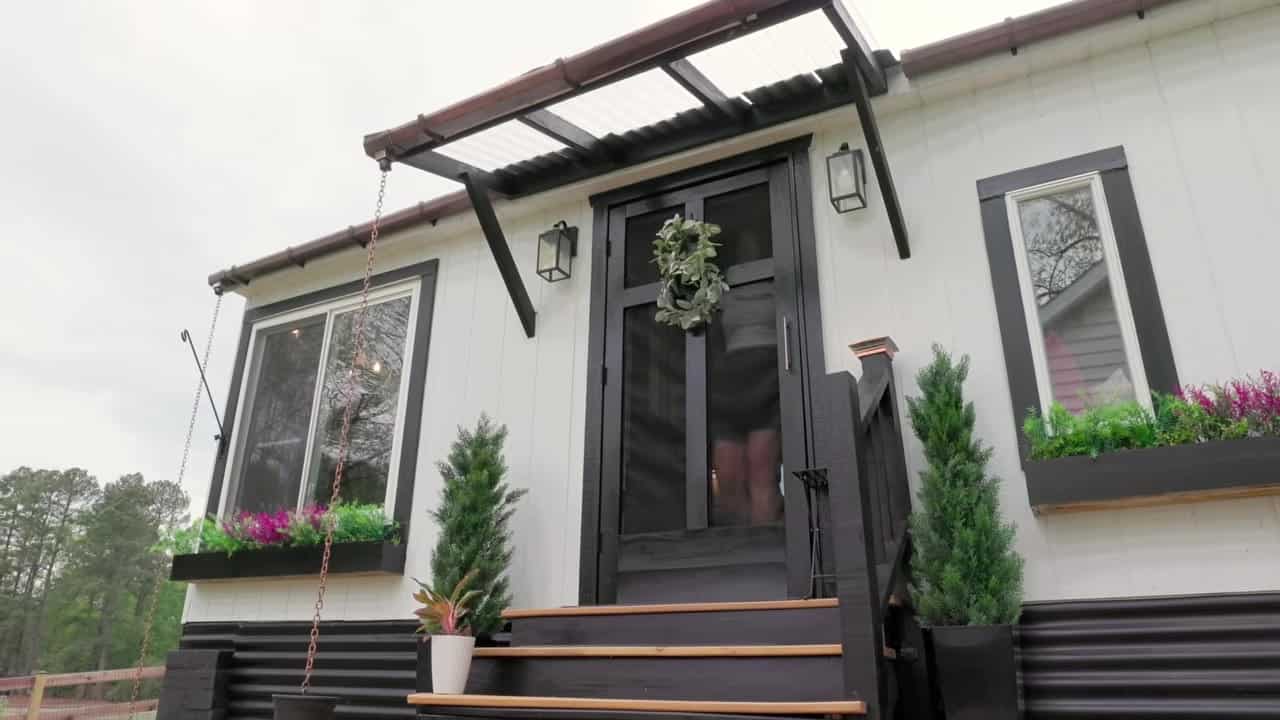
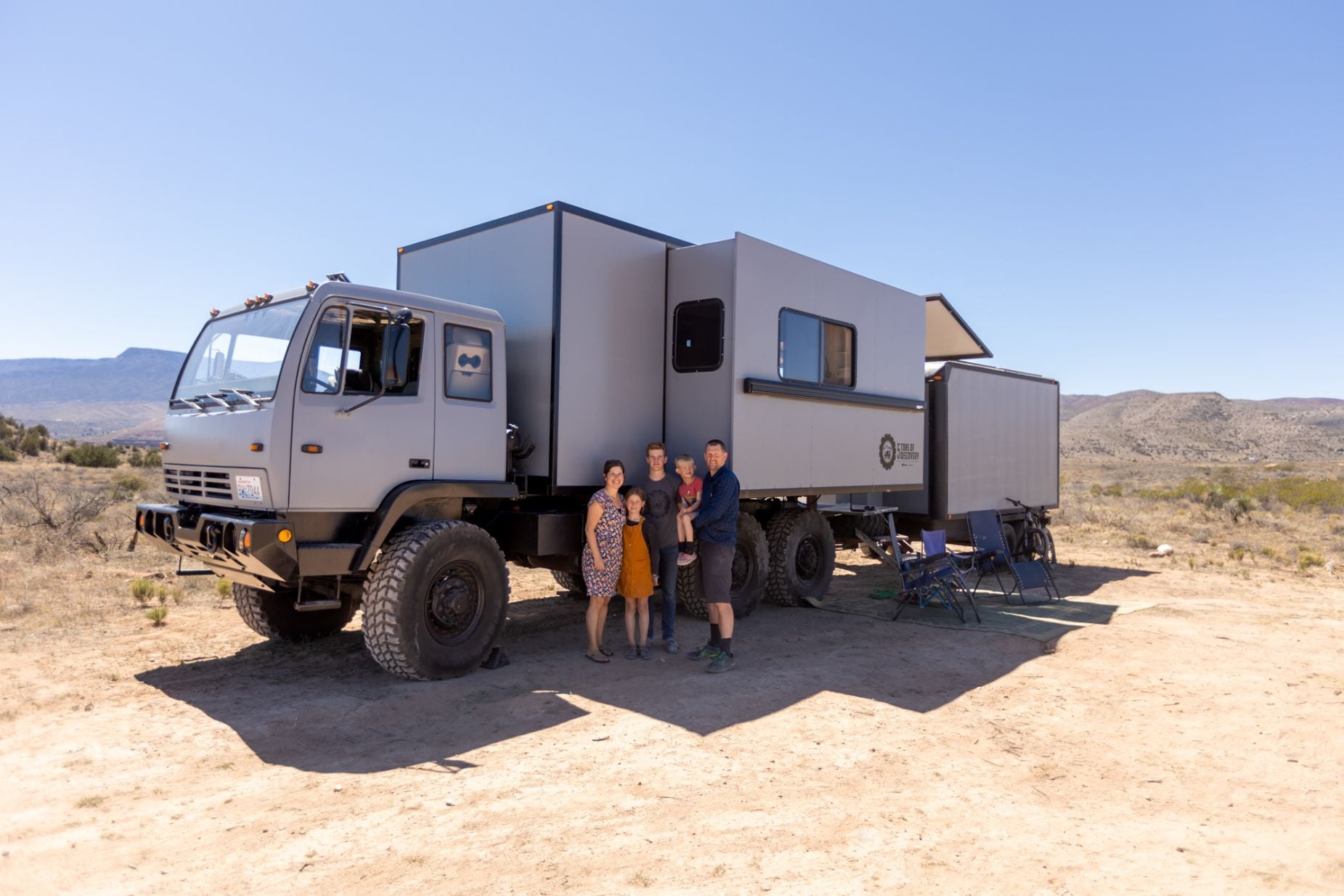
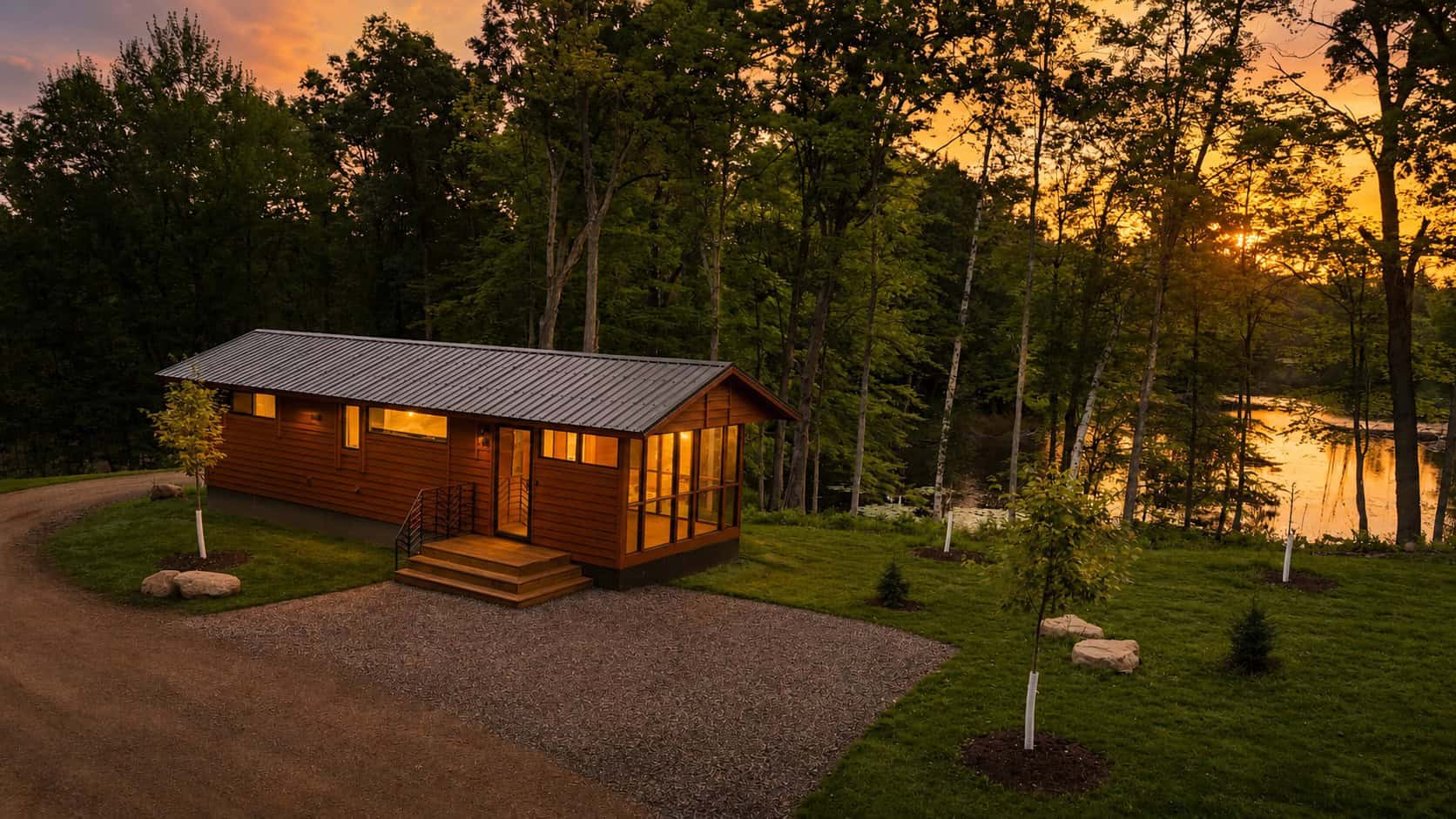
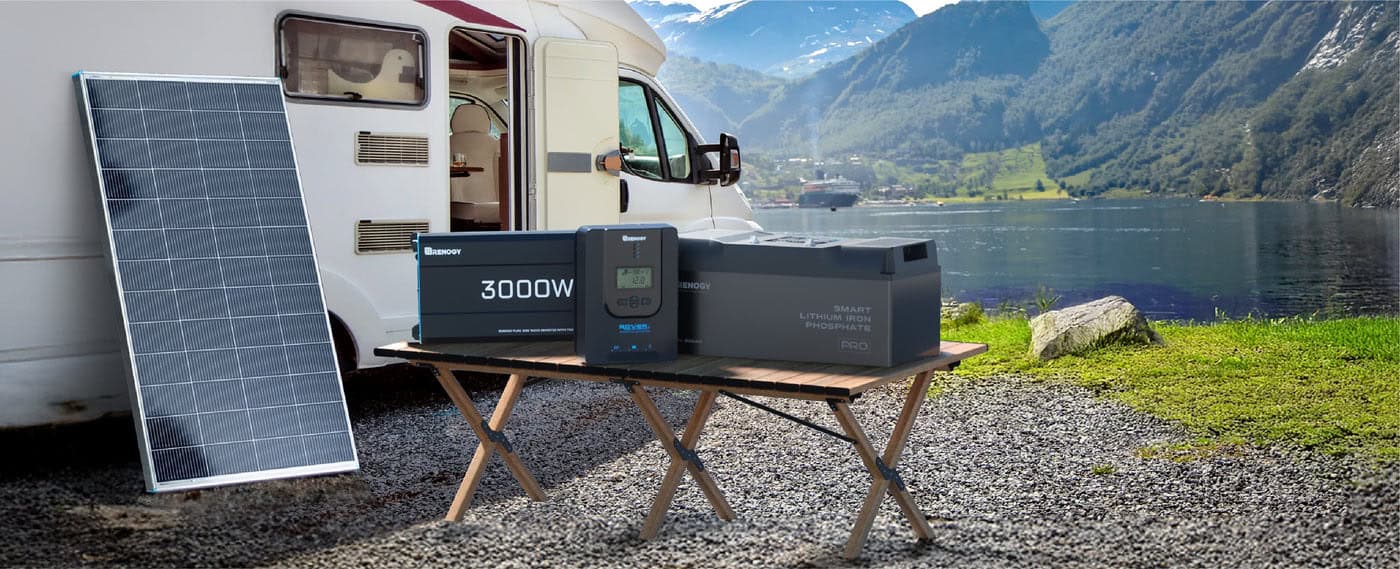
If you’re outfitting a van, a teardrop, or a small THOW, a complete 200W–400W kit is the sweet spot to start. Renogy’s essential RV kits bundle the panel, MPPT controller, wiring, and mounts in one box for a price that won’t blow your build budget — starter kits begin around the cost of a nice cordless tool set. Pair it with a 100–200Ah lithium battery and a 2000W inverter and you’ve got a setup that runs lights, a fridge, fans, and all your devices indefinitely.
Shop Renogy Van & RV Solar Kits →
For Tiny Houses & Cabins
Images courtesy of Renogy
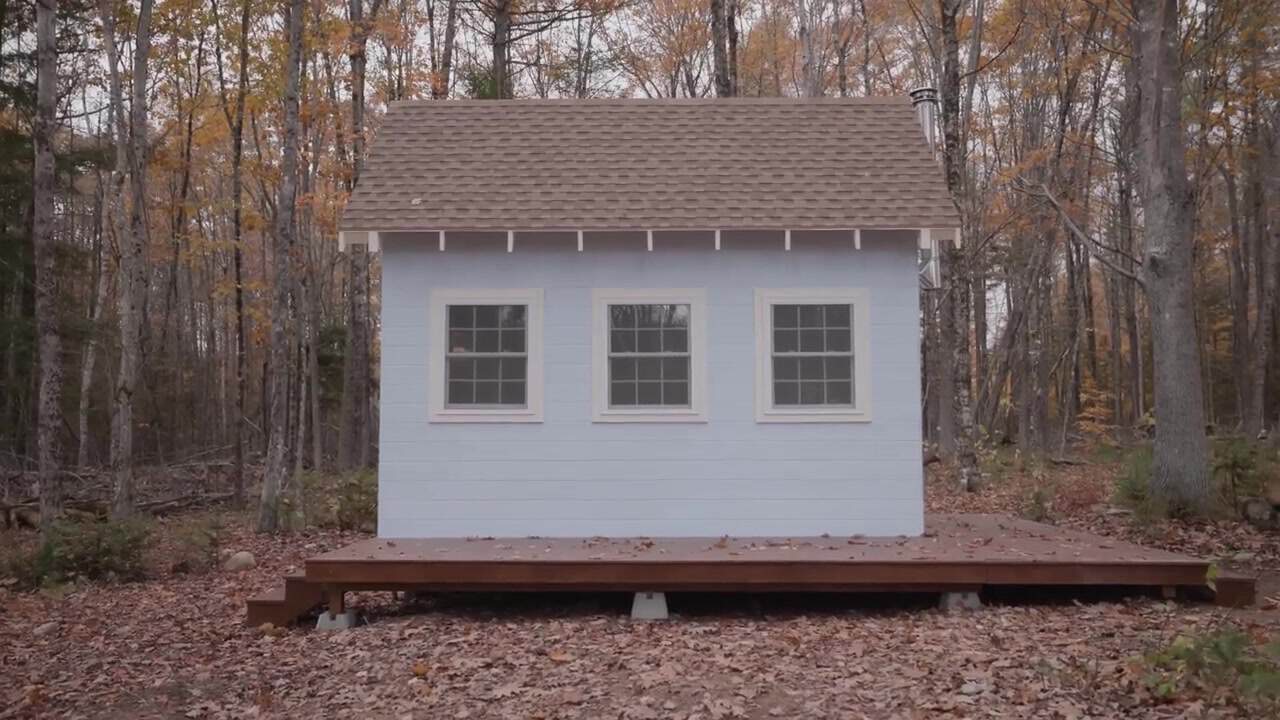
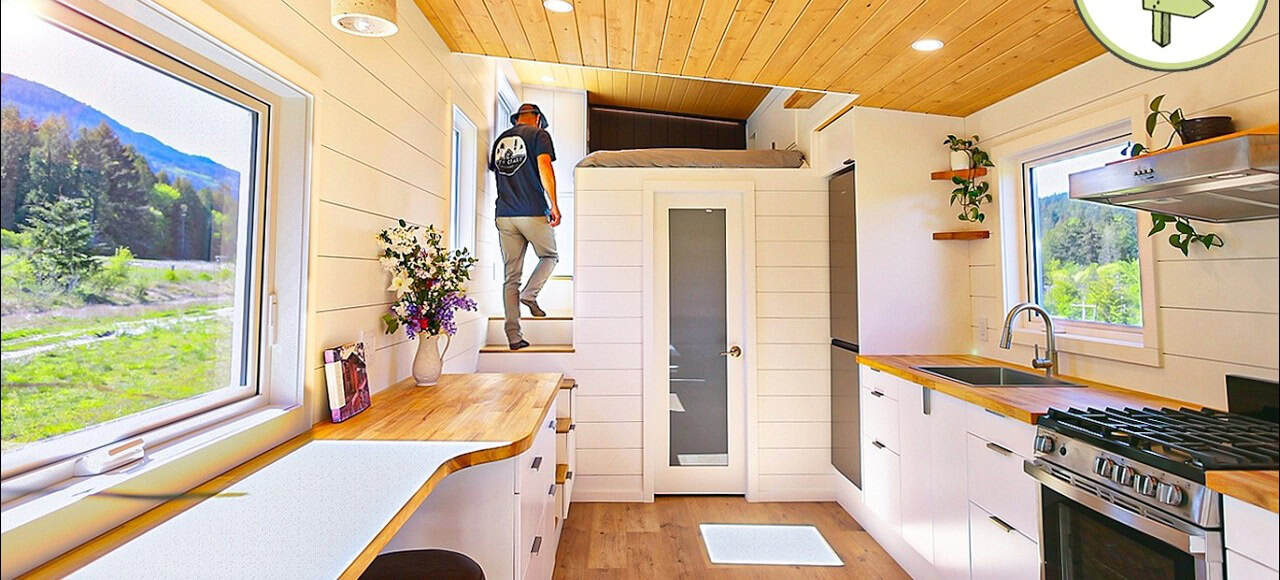
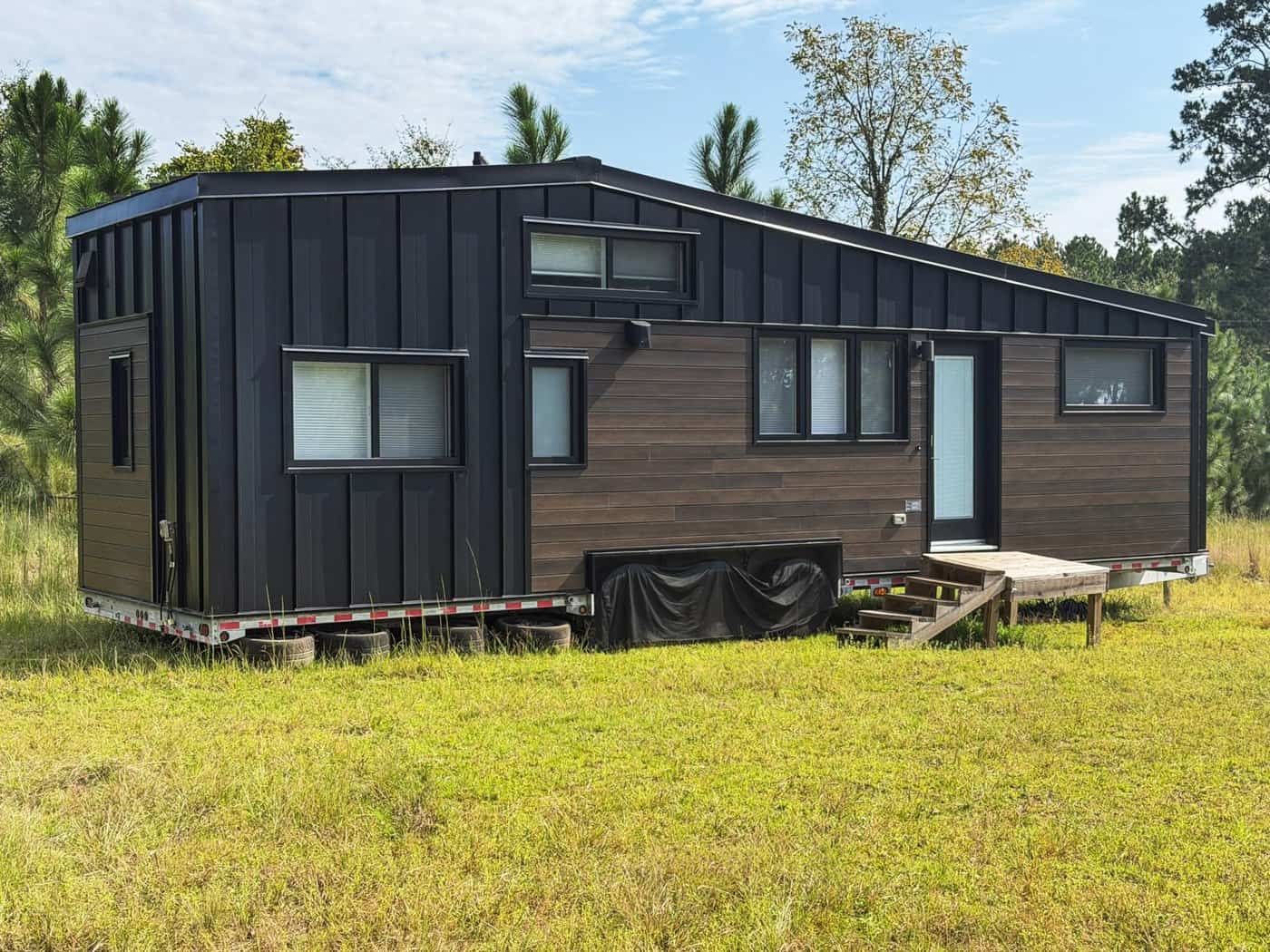
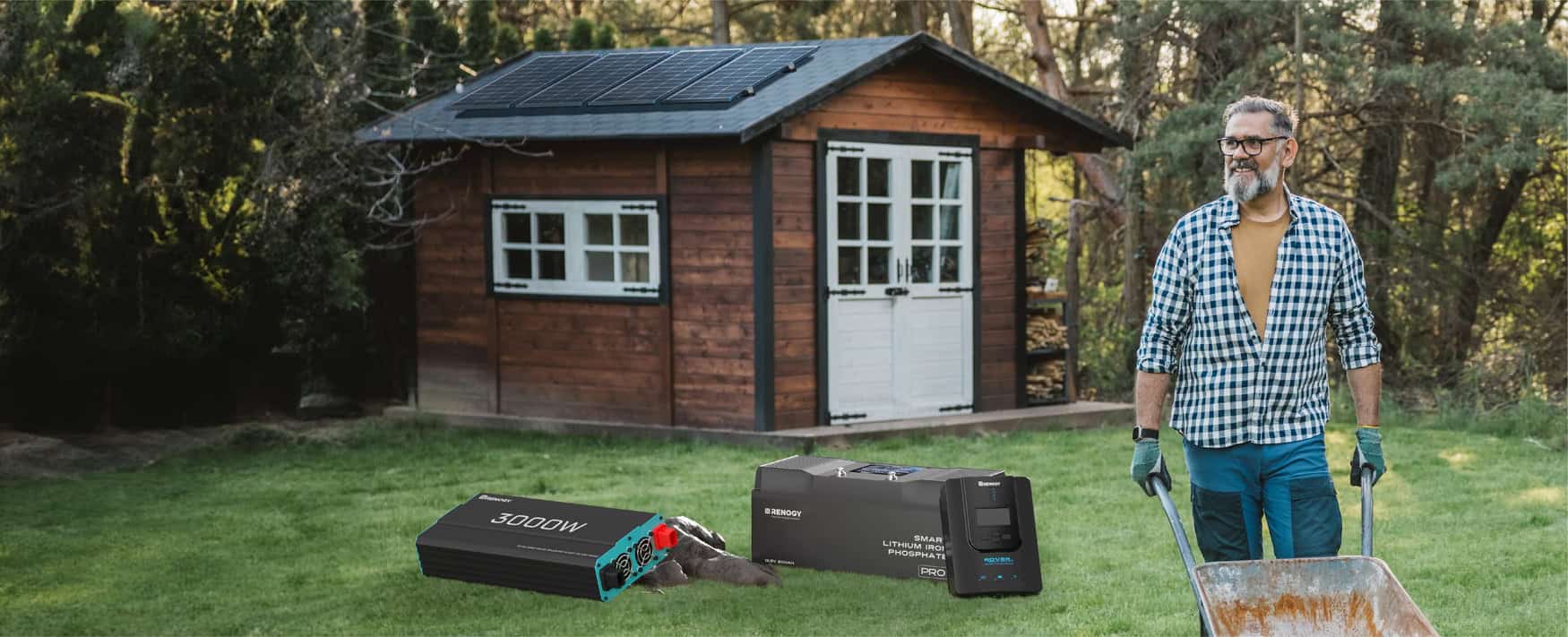
Living full-time in a tiny house or off-grid cabin means you need real headroom. Renogy’s complete home/cabin kits scale up to 1200W–2500W of panels and 9.6kWh+ of lithium storage — enough to run a full-size fridge, water pump, mini-split, and everyday appliances without thinking about it. These all-in-one bundles take the single hardest part of going off-grid — sizing the system correctly — and solve it for you.
Find the Right Tiny House & Cabin Kit →
Why We Point Builders to Renogy
- It’s an ecosystem, not a grab-bag. Every part is designed to connect to the next, so you’re not gambling on compatibility.
- It grows with you. Start small, then add panels and batteries as your needs (and budget) expand — no rip-and-replace.
- One app to rule it all. Bluetooth monitoring across batteries, inverters, and controllers means you see exactly what your system is doing from your phone.
- It’s the trusted name in DIY off-grid. Renogy has powered a huge share of the van and tiny house builds you’ve seen online — the support docs, wiring diagrams, and community knowledge are everywhere.
- Real warranties. Solar gear you can lean on for the long haul, not no-name kit you’ll be replacing in two years.
The Bottom Line
The electrical system doesn’t have to be the scary part of your build. With a matched Renogy kit, you skip the analysis paralysis, the mismatched parts, and the “I hope this works” wiring sessions — and you go straight to the good part: flipping a switch in your finished space and watching the lights come on, completely off the grid.
Whether you’re powering a weekend van or a full-time tiny home, this is the foundation we’d build on.
Start Your Off-Grid Build with Renogy →
Prices and configurations change — click through for the current lineup and any active sales.
Disclosure: This post may contain affiliate links. If you purchase through one of our links, we may earn a commission at no additional cost to you.


Alex
Latest posts by Alex (see all)
- Forestville Cabin: A Restored 1964 Redwood Cabin on an Acre of Redwoods - October 8, 2026
- El Capitan Canyon’s Safari Cabin: A Hilltop Two-Bedroom Cabin With Ocean Views and an Outdoor Shower - October 8, 2026
- High Camp Teardrop: A Portland-Built Aluminum Camper with a Slide-Out Kitchen - October 8, 2026