
Disclosure: This post may contain affiliate links. If you purchase through one of our links, we may earn a commission at no additional cost to you.
The Going Tiny Series, Part 39 of 45 · Guide 5 of 5: Your First Tiny Steps
A free chapter goes up every day. See every part. Rather have it all at once, with printable worksheets? Get the Going Tiny Toolkit.
Once you know how you’ll live, where you can go, and roughly how much space you need, choosing a type gets much easier. Here are the main options, with honest pros and cons.
| Type | Typical size | Good for | Watch out for |
|---|---|---|---|
| House on wheels (THOW), 8.5′ wide | Often 16–30 ft long; roughly 120–250 sq ft main floor, plus lofts | People who may move it; places that allow movable tiny homes; renting land | Narrow inside; height limits push you toward lofts; heavy trailer; often classified as an RV; financing and insurance easier if third-party certified |
| Wide THOW, 10’–12′ wide | Often 250–400 sq ft | A roomier, more “house-like” feel that still sits on a chassis | Wider than 8.5 ft generally needs oversize-load permits each time it moves, often a professional hauler; fewer places to park |
| Foundation tiny house | Commonly up to 400 sq ft | Staying put; places that have adopted the IRC tiny house appendix | Needs permits and inspections; local minimum house sizes may apply |
| Small house | About 400–900 sq ft | Full-time living, couples, one-level living, aging in place | Higher cost than tiny; still subject to local zoning; but usually the easiest to finance as a regular home |
| Park model RV | Up to 400 sq ft in setup mode (ANSI A119.5) | RV parks and park-model communities; seasonal or retirement living where allowed | Legally an RV in most places; full-time residency rules vary; depreciates more like a vehicle |
| ADU / backyard cottage | Varies; local caps often a few hundred to 1,000+ sq ft | Living near family; aging parents; caregivers; downsizing on your own lot | Each city sets its own size, setback, parking, and occupancy rules |
| Manufactured home (HUD code) | Single-wides often around 500–1,000+ sq ft | An affordable, factory-built small house on land or in a community | Some areas restrict where they can go; quality and condition vary, especially used |
| Van, skoolie, RV, or camper conversion | About 40–300 sq ft | Travel, seasonal living, trying small before committing | Not a house in the eyes of most zoning; home-built conversions are not RV-certified; insurance can be tricky |
| Shed or cabin conversion | Often 100–400 sq ft | Budget builds, studios, getaways, a starting shell you finish | Many sheds aren’t built for living (floor structure, insulation, windows for emergency escape); permits for habitation may be required |
| Shipping container | One 20′ is about 160 sq ft; one 40′ about 320 sq ft | Modern looks, stacking or combining units | Steel needs careful insulation to avoid condensation; cutting openings weakens it and may need engineering; delivery needs a crane or tilt truck |
Sizes are typical ranges, not rules. Always check what your location allows, and how it classifies each type.
The 8-foot vs. 10-foot (and wider) question
This came up again and again. Here’s what you need to know:
- 8.5 feet (102 inches) is the usual maximum width for towing on U.S. roads without a special oversize permit. That measurement includes everything that sticks out: eaves, lights, trim.
- Height is limited too, commonly around 13.5 feet from the road in many states, and length limits apply to the house plus tow vehicle. Check your state’s department of transportation for exact numbers.
- Inside, an 8.5-foot house is narrower than you think, often around 7 to 7.5 feet once walls are built. That’s enough for a galley kitchen and a walkway, but not for furniture on both sides.
- A 10- or 12-foot-wide home feels dramatically roomier, especially for a main-floor bedroom, a wider bathroom, or wheelchair clearance. In exchange, each move usually needs permits, and you’ll likely hire a professional hauler.
A simple rule of thumb
If you expect to move more than once every year or two, 8.5 feet usually makes life easier. If you expect to park it and stay, a wider home or a foundation home gives you more livable space for the money.
A real home from Tiny House Talk
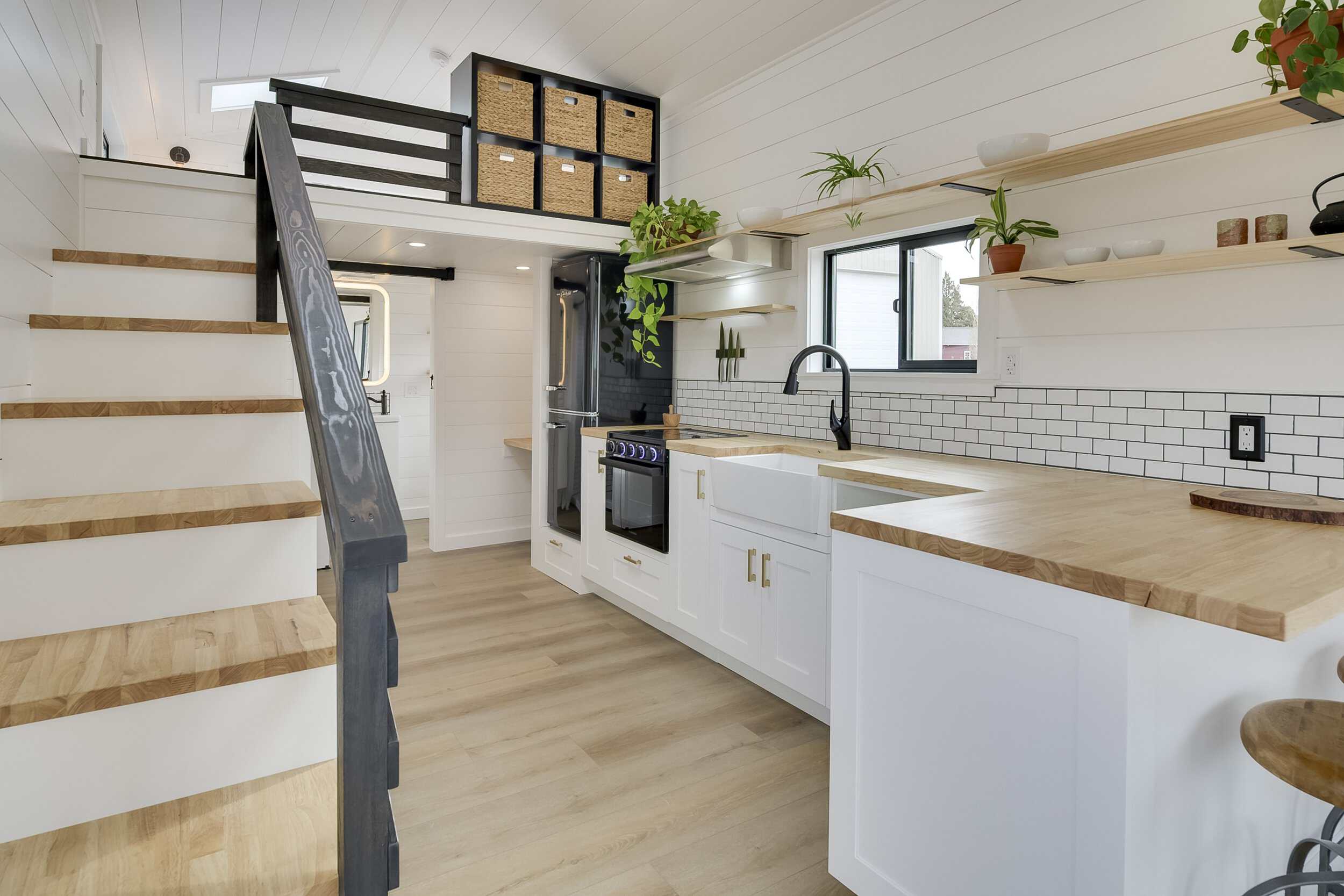
Photo courtesy of Spindrift Homes
The Ochoco: the same house, built 18 inches wider
A clear lesson in width. Spindrift Homes in Bend, Oregon, describes the 10-foot Ochoco as a wider take on its Sonoma model. Those extra 18 inches over the usual 8.5 feet made room for a peninsula with bar seating, a full sectional sofa, and clear walking paths on both sides. It rides on a 30-foot triple-axle trailer.
Conversions: campers, buses, office trailers, and sheds
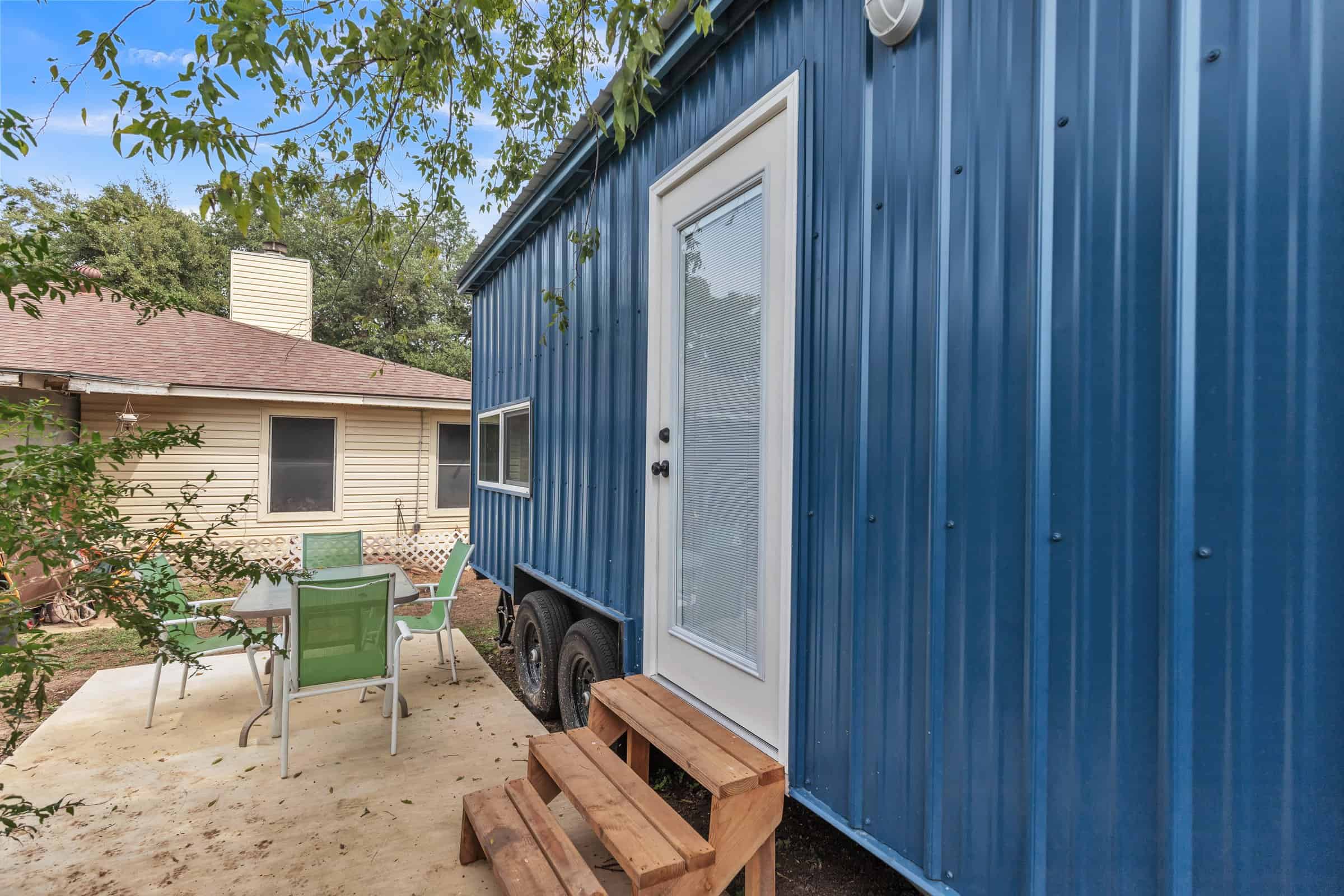
Several readers considered converting something that already exists. One couple bought a 12 × 32 foot office trailer, repaired it, and moved in off-grid. Another reader bought an 8 × 20 shed on a trailer to make a studio. Conversions can save money, but go in with clear eyes:
- Check the bones first. Constance discovered her shed sat on two trailer rails with plywood and no floor joists. A structure built to be storage often needs a new floor system, insulation, ventilation, and egress windows before it’s a safe home.
- Used RVs and campers can be a terrific, affordable way to try small living. Inspect closely for water damage and soft floors (press on the floor near the walls, the bathroom, and under windows). Older RVs can hide rot behind good-looking paneling.
- Buses and vans are vehicles first. Mechanical condition matters as much as the build. Get a mechanic’s inspection before you buy.
- Find out how your area classifies it. A converted bus might be welcome in one county and treated as an “inhabited vehicle” problem in another. Back to Decision 2.
Use Worksheet 3 (free download): Type and Size Decision Matrix to score your top two or three options side by side.
A real home from Tiny House Talk
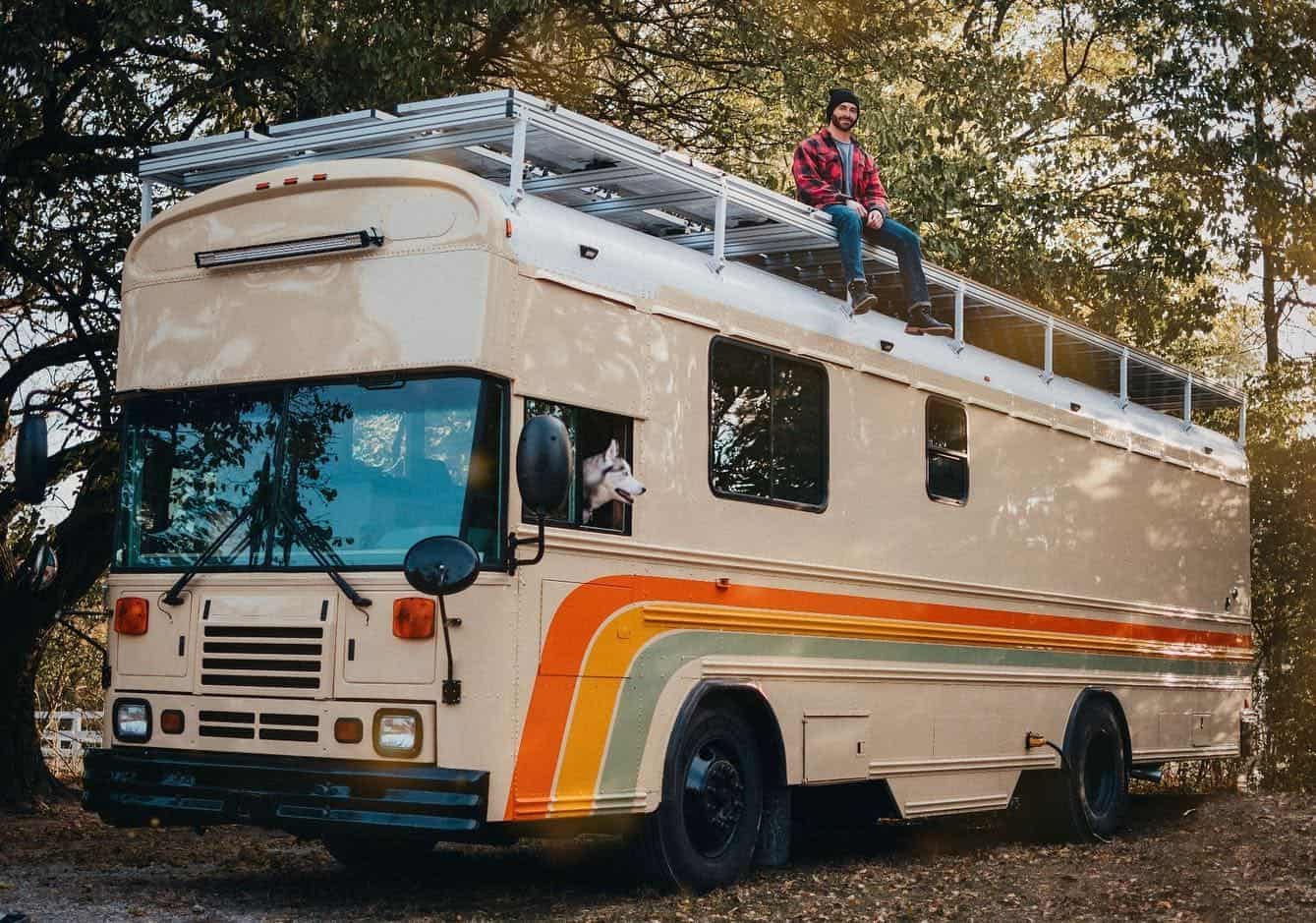
Photo courtesy of Jonathan Perera
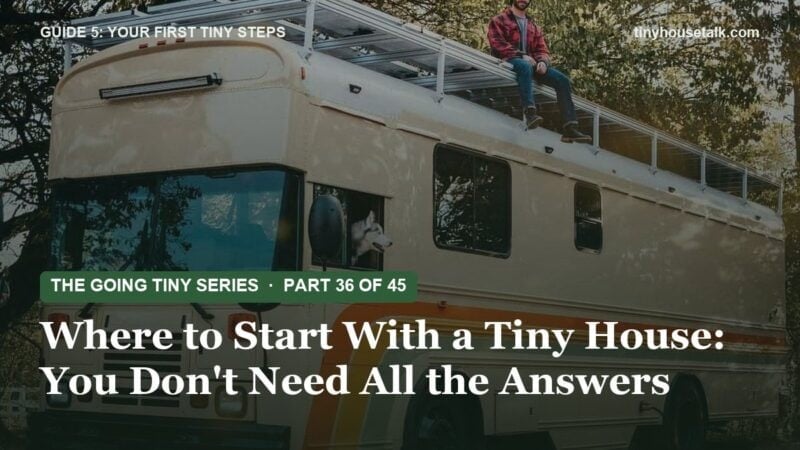
Jonathan's school bus became a four-season home
A bus conversion done with clear eyes about the bones. Jonathan chose a 36-foot Bluebird for its minimal rust, then worked with Skoolie.com in North Carolina, where the crew stripped the interior, raised the roof 20 inches, and rebuilt the walls. He has since driven it roughly 25,000 miles with his husky.
Want to do this on paper?
Download and print the worksheets for this step, free:
- Worksheet 3: Type and Size Decision Matrix (free printable PDF)
The full set of worksheets, plus the clean printable guides, comes with all five guides in the Going Tiny Toolkit.
Your turn
What's the very first step you're taking? Tell me in the comments so I can cheer you on.
Prefer the clean, printable version?
This series is free to read here, and it always will be. If you’d rather have it as five clean, printable PDFs, that’s the Going Tiny Toolkit:
- Your First Tiny Steps (the guide this chapter comes from): the five big decisions in order, a space-needs calculator, builder vetting, and a 90-day roadmap
- The Tiny House Money Plan
- Where Can I Put It?
- Tiny Without the Ladder
- Bringing Them On Board
Every guide adds printable worksheets and a 30-day action plan, and Tiny Without the Ladder comes with the bonus One-Level Floor Plan Idea Book (18 to-scale floor plans). All five are $47, with a 30-day refund.
← Previous: Part 38: How Much Space Do You Really Need?
Next (tomorrow): Part 40: From Scraps of Paper to a Real Tiny House Plan
Not sure which part matters most for you? The free 10-minute What’s Really Holding You Back? quiz tells you where to start. And to get a new part (and a new home) in your inbox each day, join the free Tiny House Newsletter.
Disclosure: This post may contain affiliate links. If you purchase through one of our links, we may earn a commission at no additional cost to you.


Alex
Latest posts by Alex (see all)
- Tiny House, Park Model, Cabin, or ADU? Picking Your Kind of Small - November 26, 2026
- The Hardest Part of Going Tiny: 21 Honest Answers - November 25, 2026
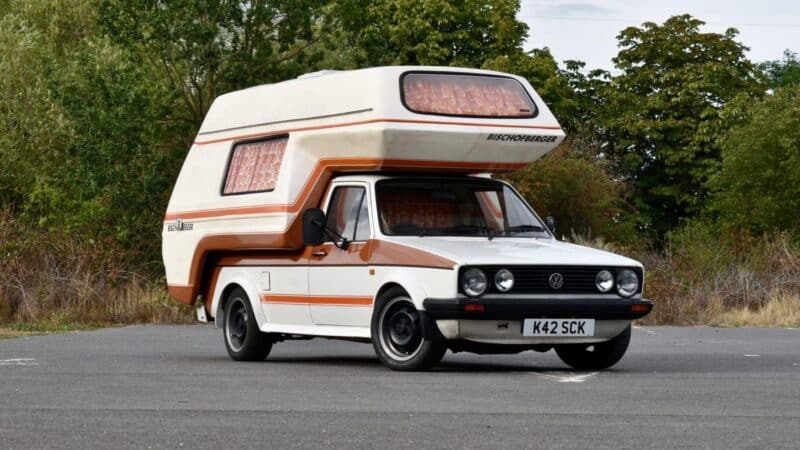
- A Rare Bischofberger Fiberglass Camper Built on a Tiny VW Caddy Pickup - November 25, 2026



Join the Conversation
No comments yet. Be the first to join the conversation.