
Disclosure: This post may contain affiliate links. If you purchase through one of our links, we may earn a commission at no additional cost to you.
The Going Tiny Series, Part 29 of 45 · Guide 4 of 5: Bringing Them On Board
A free chapter goes up every day. See every part. Rather have it all at once, with printable worksheets? Get the Going Tiny Toolkit.
“It’s too small.” “That’s crazy.” “Where would we put everything?” “What would people think?”
These are real objections, but they’re usually the top layer. Underneath most objections to living smaller is a need: for privacy, for safety, for identity, for a connection to family, for not making a mistake you can’t undo. When you understand the need, you can often find a way to meet it in a smaller home, or you find out it can’t be met right now, which is just as useful.
“I fear [moving] to a smaller place [could] damage my relationship with my partner due to feeling trapped! How does one deal with the need to be apart (while one reads and the other strums on the guitar / watches TV) within the confines of the home, especially in colder climes?”
— Matt, Tiny House Talk reader
Matt is the one who wants to downsize, and even he names the fear his partner might have. That fear is reasonable. It’s also solvable, as you’ll see in Part 32.
The Objection Decoder
Use this table as a starting point, not a diagnosis. Never tell your partner “what you really mean is…” Instead, use the questions in the right-hand column to find out.
| What you might hear | What may be underneath | Questions to ask (gently) | Ideas that might help |
|---|---|---|---|
| “We’d drive each other crazy.” | Need for privacy, alone time, quiet, a door that closes. | “What does a good day alone look like for you? Where would you want to be?” | Separate retreat spaces, a second small structure, a bedroom with a real door (Ch. 5). |
| “What would people think?” | Identity, respect, belonging, not wanting to look like you’re struggling. | “Whose opinion matters most to you here? What would you want them to see?” | A well-designed small house or cottage, starting with a “guest house,” inviting family to visit (Ch. 7). |
| “Where would my stuff go?” | Hobbies, memories, collections, a sense of who they are. | “Which of your things would you want in any home we ever had?” | Hobby storage plan, a shed or studio, keeping the collection and shrinking elsewhere. |
| “It’s not safe.” | Physical safety, weather, security when away, theft. | “What’s the scenario that worries you most?” | Foundation-built small house, lock-up design, researching storms and anchoring. |
| “We can’t afford a mistake.” | Money fear, retirement security, losing equity. | “What would have to be true about money for you to feel okay?” | Run real numbers together (see The Tiny House Money Plan), try before buying. |
| “The kids would hate it.” | Protecting kids’ schools, friends, stability; guilt. | “What would the kids need to keep for this to be fair to them?” | Waiting until graduation, involving kids in design, private kid spaces (Ch. 6). |
| “I can’t climb a ladder.” | Health, aging, mobility, staying in a home for decades. | “What do you want our home to handle in 10 or 20 years?” | One-level design, no lofts (see Tiny Without the Ladder). |
| “My job is here.” | Career, income, identity at work, pension timelines. | “What’s your timeline at work? What would you want after?” | Downsize locally now, plan the bigger move for later. |
| “We’ve lived here 30 years.” | Roots, memories, grief, fear of regret. | “What would you miss most? What would you never want to lose?” | Simplify in place, a getaway, or a phased move that keeps ties. |
| “It’s just a phase.” | Doubt that you’ve thought it through; past projects that stalled. | “What would show you I’m serious, without us committing to anything big?” | A trial stay, a declutter challenge, a written plan (Ch. 4). |
A real home from Tiny House Talk
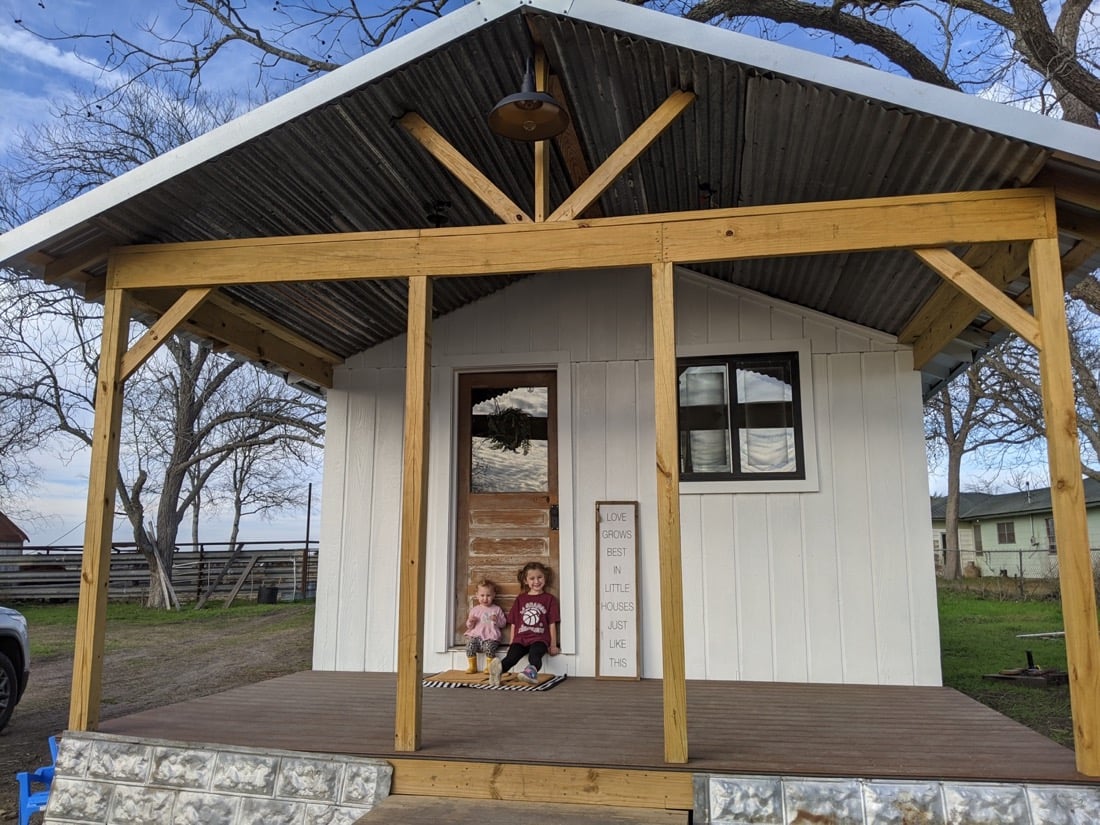
Photo: Katy Zientek
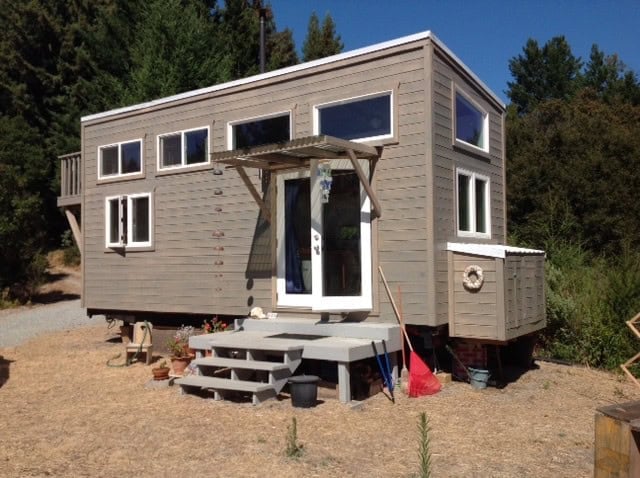
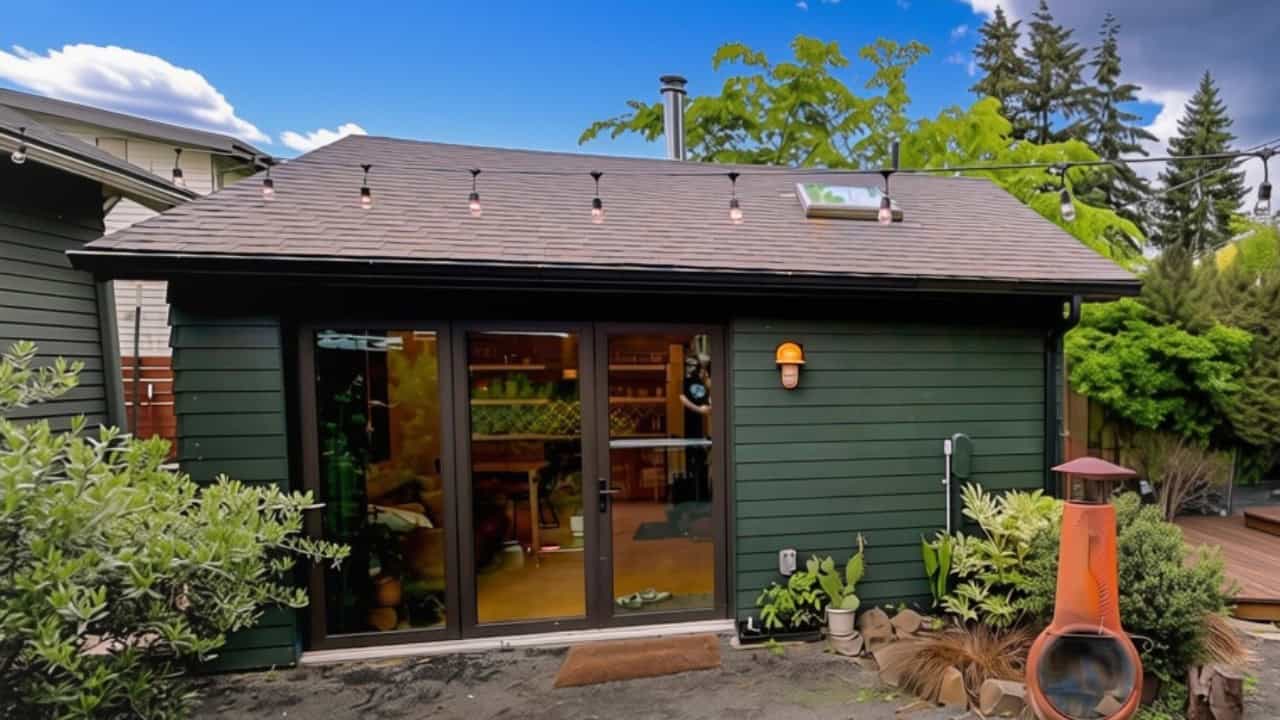
He was skeptical. Now their family of four lives in a shed cottage
A "no" can turn into "let's try it." Katy Zientek's husband Michael was skeptical at first, but her research won him over. They turned an unused shed on their Texas property into a 280-square-foot cottage with a private downstairs bedroom for their family of four, and plan to build larger on the same land later.
Want to do this on paper?
The printable PDF of Bringing Them On Board has fill-in worksheets for this step, including:
- Our Values & Dreams
- The Objection Decoder
- Where Are We Each on the Spectrum?
They come with all five guides in the Going Tiny Toolkit.
Your objections count too
It’s worth running the decoder on yourself. Why do you want to live smaller? Lower costs? Less cleaning? Freedom to travel? A fresh start after a hard season? Getting out of a neighborhood that no longer feels right? Wanting to prove to yourself that you can build something?
When you can name your own underlying needs, you’ll often discover your partner shares some of them. A partner who says no to a tiny house may say yes to “spending less on the house so we can travel.” That shared need is where the real conversation begins.
Notice the “and”
A reluctant partner is rarely saying “I want nothing to change.” They’re often saying “I want to keep X.” Your job is to find out what X is, and see whether a smaller life can keep X and give you what you want.
When the objection is about you
Sometimes the honest answer underneath is “I’m not sure you’ll follow through” or “the last big idea cost us.” That stings, but it’s useful information. Rather than arguing the point, show it with small, low-cost actions over months: a cleared-out room, a savings account that grows, a trial weekend you planned well. Trust tends to come back the way it left: gradually.
Your turn
Is someone in your life on the fence about living smaller? Share what's worked (or hasn't) in the comments.
Like to print things out and write on them?
This series is free to read here, and it always will be. If you’d rather have it as five clean, printable PDFs, that’s the Going Tiny Toolkit:
- Bringing Them On Board (the guide this chapter comes from): conversation starters, low-risk trial ideas, and worksheets for couples and families
- The Tiny House Money Plan
- Where Can I Put It?
- Tiny Without the Ladder
- Your First Tiny Steps
Every guide adds printable worksheets and a 30-day action plan, and Tiny Without the Ladder comes with the bonus One-Level Floor Plan Idea Book (18 to-scale floor plans). All five are $47, with a 30-day refund.
← Previous: Part 28: Going Tiny Together: You're Not Trying to Win
Next (tomorrow): Part 30: How to Start the Tiny House Conversation With Your Partner or Family
Not sure which part matters most for you? The free 10-minute What’s Really Holding You Back? quiz tells you where to start. And to get a new part (and a new home) in your inbox each day, join the free Tiny House Newsletter.
Disclosure: This post may contain affiliate links. If you purchase through one of our links, we may earn a commission at no additional cost to you.


Alex
Latest posts by Alex (see all)
- What’s Really Underneath the No to Going Tiny - November 16, 2026
- Cozy Acre Tiny Home Community: Shaded Lots, a Dog Park and Free Laundry in Poolville, Texas - November 15, 2026
- Peaceful Meadows: A Gated Park Model Village Near Franklin, NC - November 15, 2026




Join the Conversation
No comments yet. Be the first to join the conversation.