
Disclosure: This post may contain affiliate links. If you purchase through one of our links, we may earn a commission at no additional cost to you.
If you’ve watched more than a couple of skoolie tours on YouTube, you’ve probably run into Chuck Cassady. He has spent years building school bus conversions for other people, consulting on hundreds more, and teaching DIYers how to avoid the expensive mistakes. This bus is different: it’s the one he built for himself, worked on, on and off, for about five years before finally calling it done.
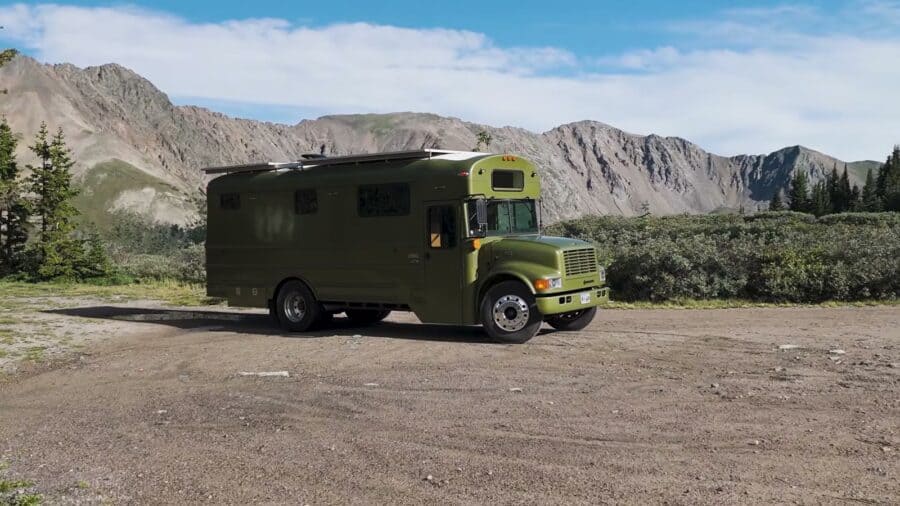
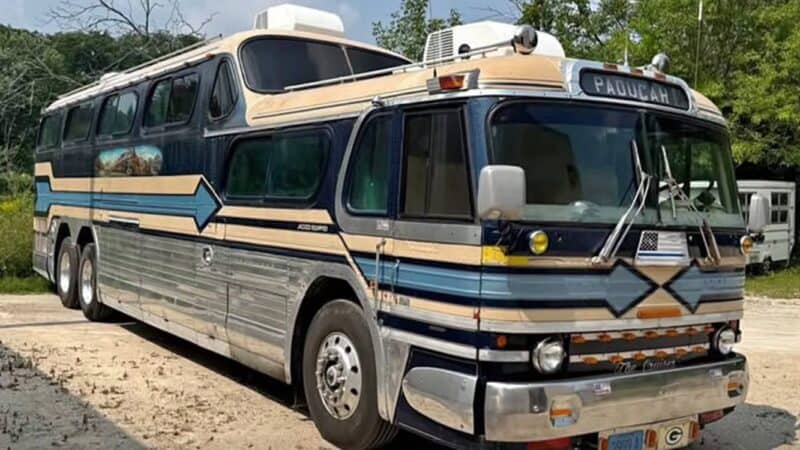
It’s a 1996 Thomas on an International 3800 chassis, about 27½ feet bumper to bumper, with a 12-inch roof raise, a metallic green paint job and an all-electric interior designed to stay off-grid for weeks at a time. Because it’s a bus builder’s own bus, nearly every choice is deliberate, and a lot of them are lessons you can borrow for your own build.
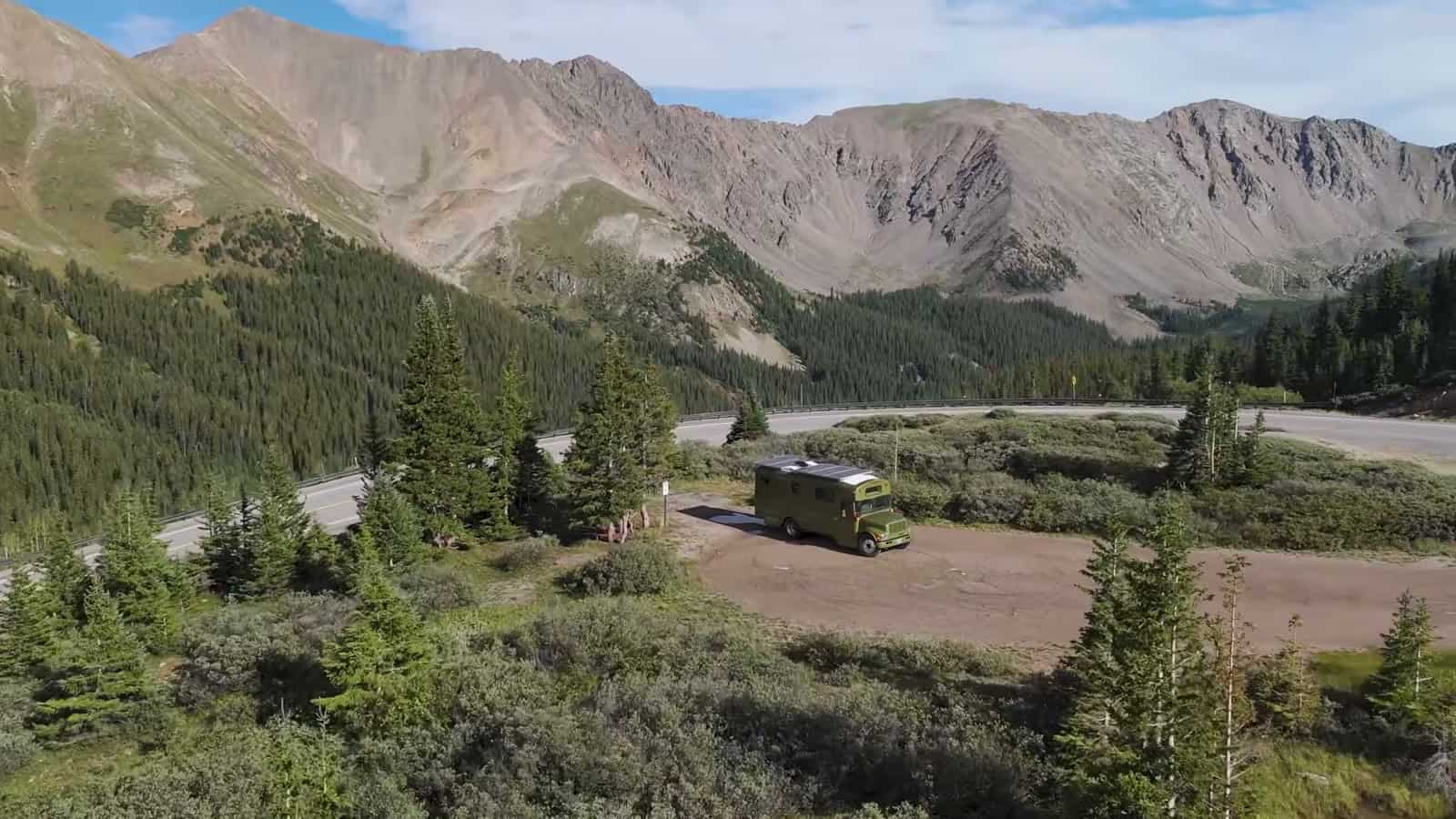
Image via Chuck Cassady/YouTube
Why He Bought This Bus: A Computer-Free DT466
Chuck bought this bus in New Mexico before he was even ready for another project, and the reason was what’s under the hood. It has the last generation of the all-mechanical International DT466, fed by a Bosch inline P-pump for mechanical fuel injection. There’s no engine computer, so it really only needs one wire to run, the one to the starter. The engine had been replaced about two years before he bought it, so it had only around 20,000 miles when he got it.
A DT466 usually shows up in much bigger buses, so this one has a big engine in a small body. That’s exactly what Chuck wanted for living in the Colorado mountains. He then added a full-size radiator taken from a heavier-duty version of the same platform, which roughly doubles the cooling over the stock split radiator.
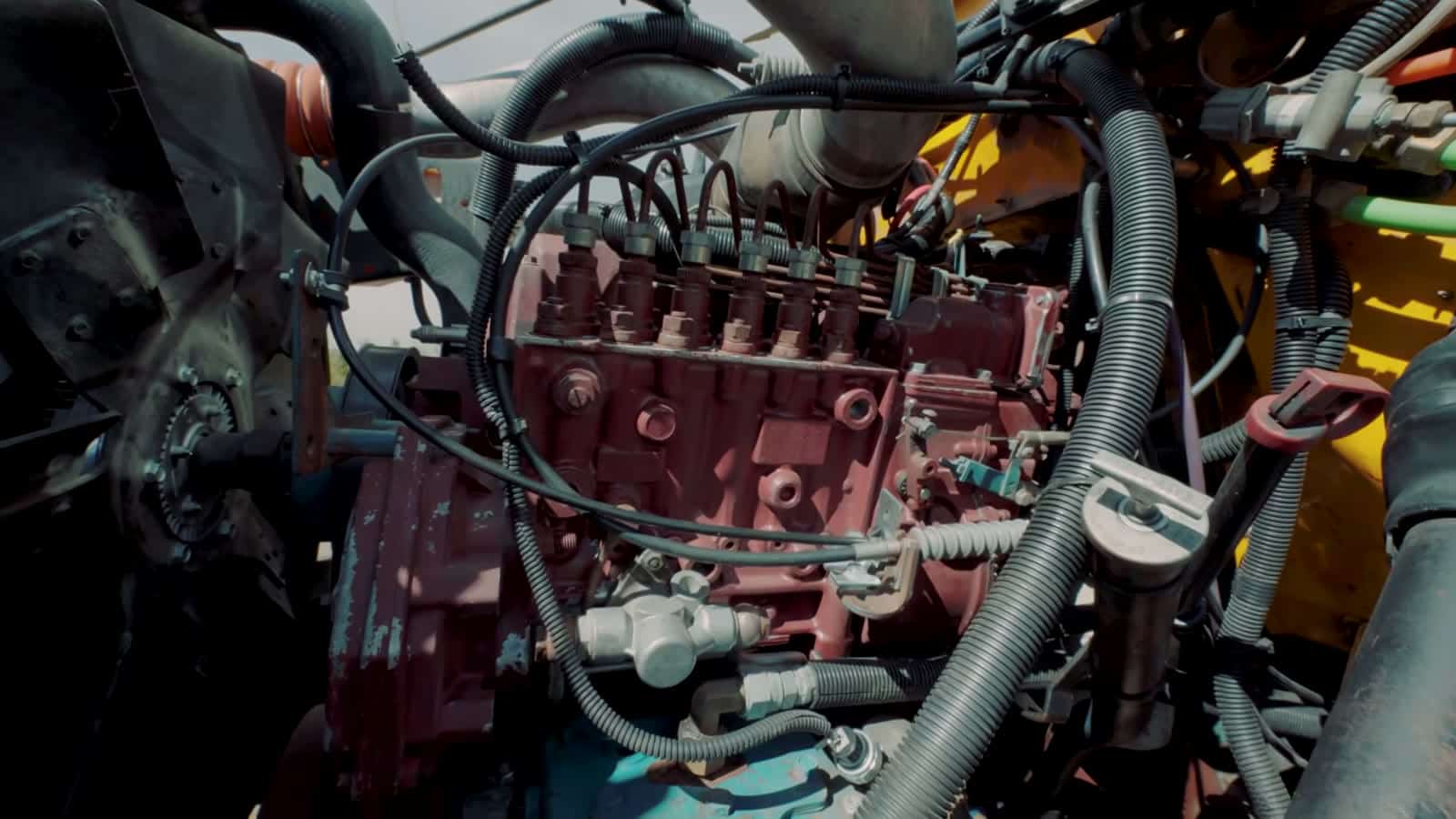
Image via Chuck Cassady/YouTube
Drivetrain Upgrades That Make It Highway-Friendly
The original transmission wasn’t what he wanted, so it was swapped for an Allison MT643, an all-mechanical four-speed. The bus also got Alcoa aluminum wheels, Toyo all-terrain, all-season tires and a new rear-end gear ratio. Stock top speed was around 60 to 62 mph. Now it can go much faster than that, but the more important gain is lower RPMs at cruising speed. That means better fuel economy and less wear on the engine, which Chuck calls the single most expensive part of the bus.
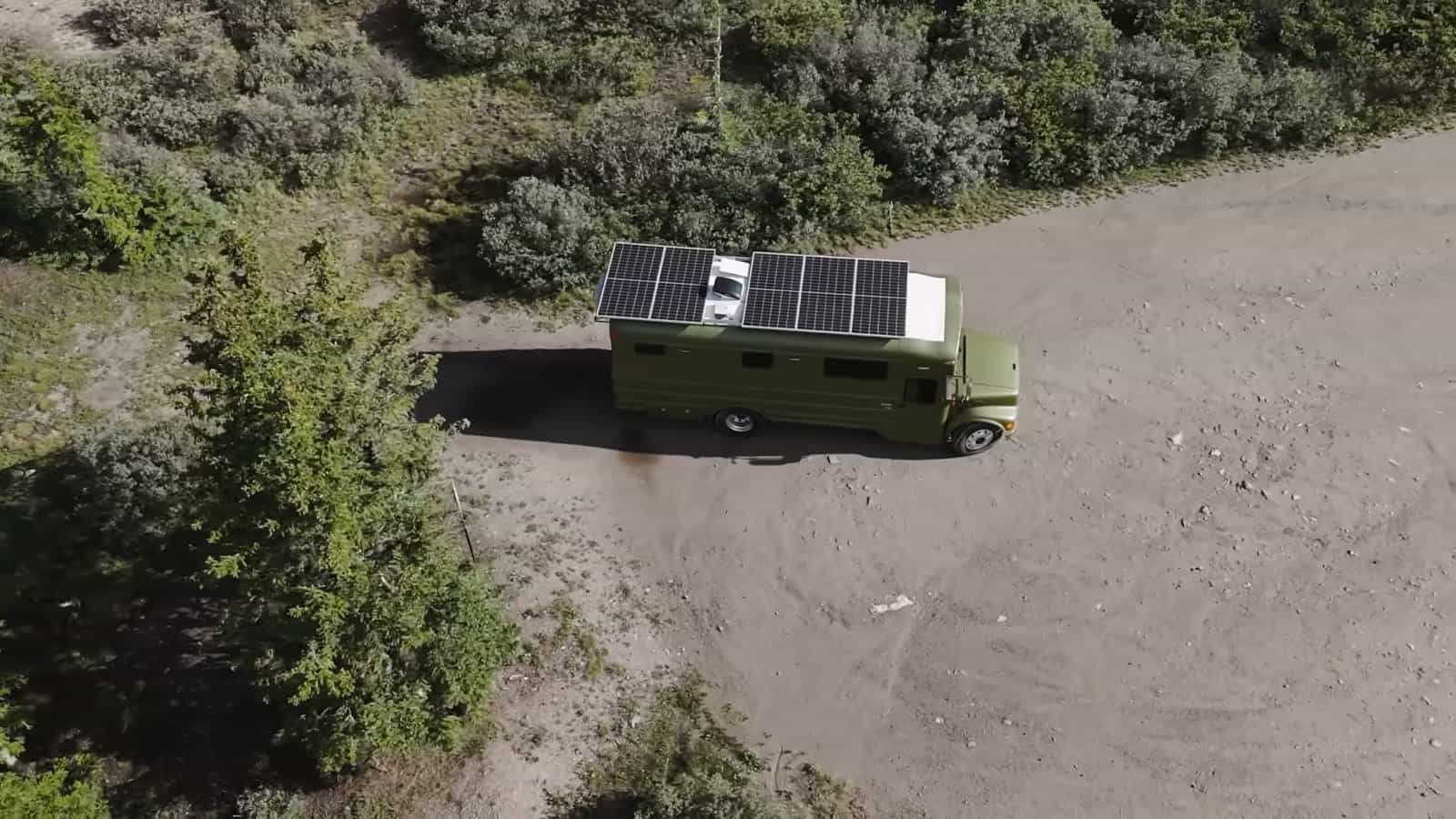
Image via Chuck Cassady/YouTube
A Roof Raise, an Upper Windshield and Real RV Windows
Outside, the roof was cut off and raised 12 inches, which you can spot as the stripe along the side. He also added an upper windshield so a tall driver can actually see the horizon past the bus’s rounded roof shoulders. And he re-clocked the wipers so they don’t park right in the driver’s line of sight. The paint is the original paint code from his 1973 International Scout, a metallic green with aluminum flake.
All of the stock bus windows came out. Chuck admits he loves how they look, but they turn a bus into a greenhouse that’s hard to heat and cool off-grid. They were replaced with dual-pane RV windows with screens, which also serve as emergency exits. The roof carries the solar array, and all exterior lighting was switched to LED, with rock lights added.
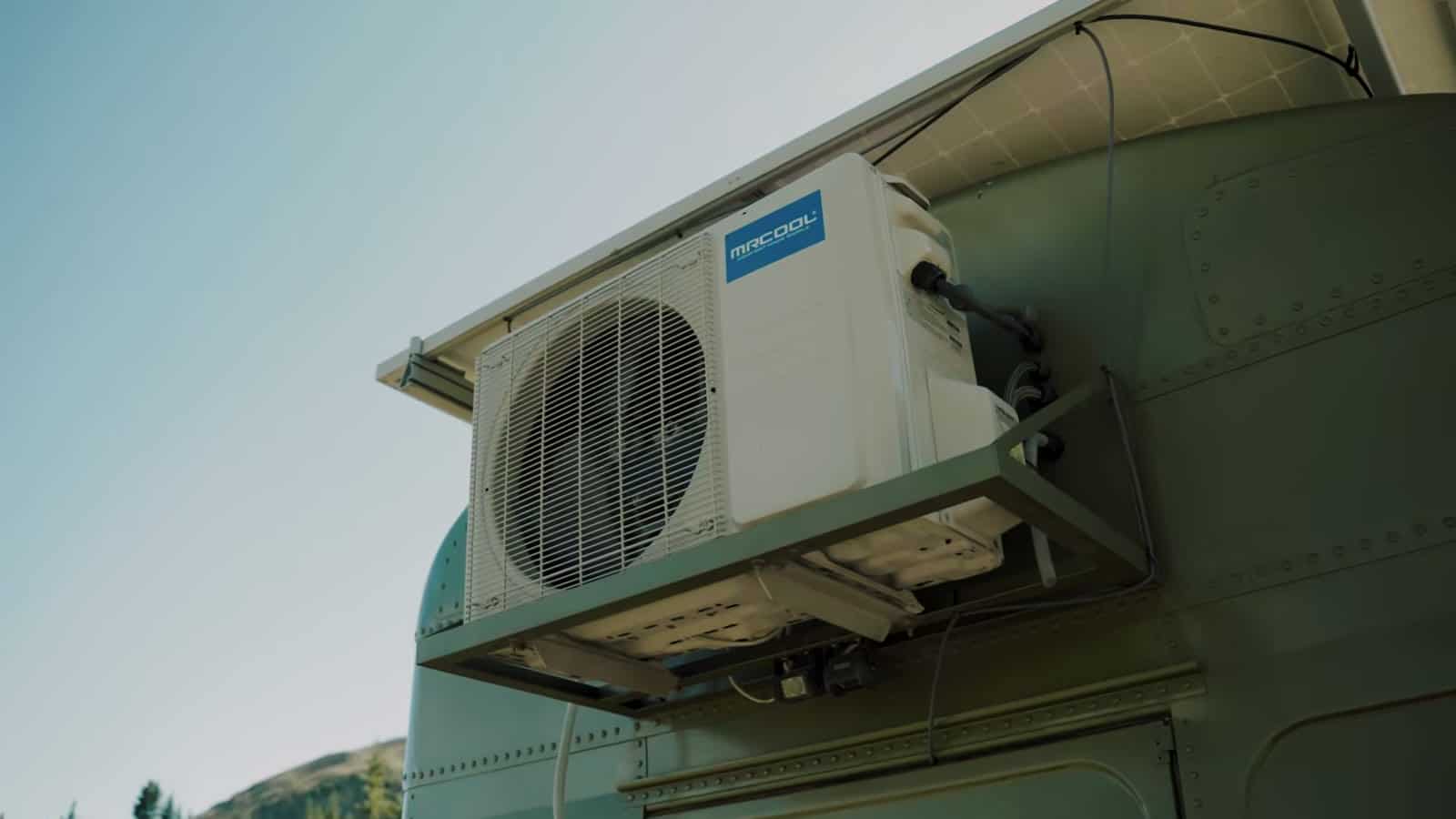
Image via Chuck Cassady/YouTube
Storage Boxes, a 65-Gallon Gray Tank and Fewer Leak Points
Both sides get painted-to-match underbelly storage boxes. His pro tip: these are often only 14 or 18 inches deep, but his are 23 inches deep for the same amount of work. A much larger battery box holds tools and gear, and a propane tank runs a portable fire pit and a backup propane generator for cloudy stretches. The bus itself is all electric.
Between the frame rails sits a 65-gallon gray tank, centered for weight distribution, with a remote dump valve so he can empty gray water while driving. Hookups are kept to a minimum: only the fresh water fill and shore power are on the side, because every extra fitting is another place for a leak. Around back there’s a Class IV 2-inch receiver, a 7-pin connection, an air-brake hookup for towing, and dual backup cameras, one aimed at the horizon and one straight down at the hitch. The MRCOOL mini-split condenser is mounted high on the rear wall. In Chuck’s words, it’s the ugliest spot but the best one for performance, and the only room left.
Original Bus Stair Treads and a Door That Actually Seals
Instead of tiling or adding hardwood to the entry stairs, Chuck bought brand-new replacement school bus treads. They’re waterproof and built to handle dozens of kids a day for decades. Richlite, the compressed recycled-paper material used for skate ramps, finishes the stairwell and shows up throughout the build, including the counters. The custom entry door has a wireless RV latch, keypad and fob, a screened window, and a bulb seal tight enough that you feel a pressure wave inside when it closes.
The shell has 3 inches of closed-cell spray foam in the walls and ceiling and 4 inches of foam board in the floor. The flooring is Marmoleum, a natural linoleum made from linseed oil and crushed limestone.
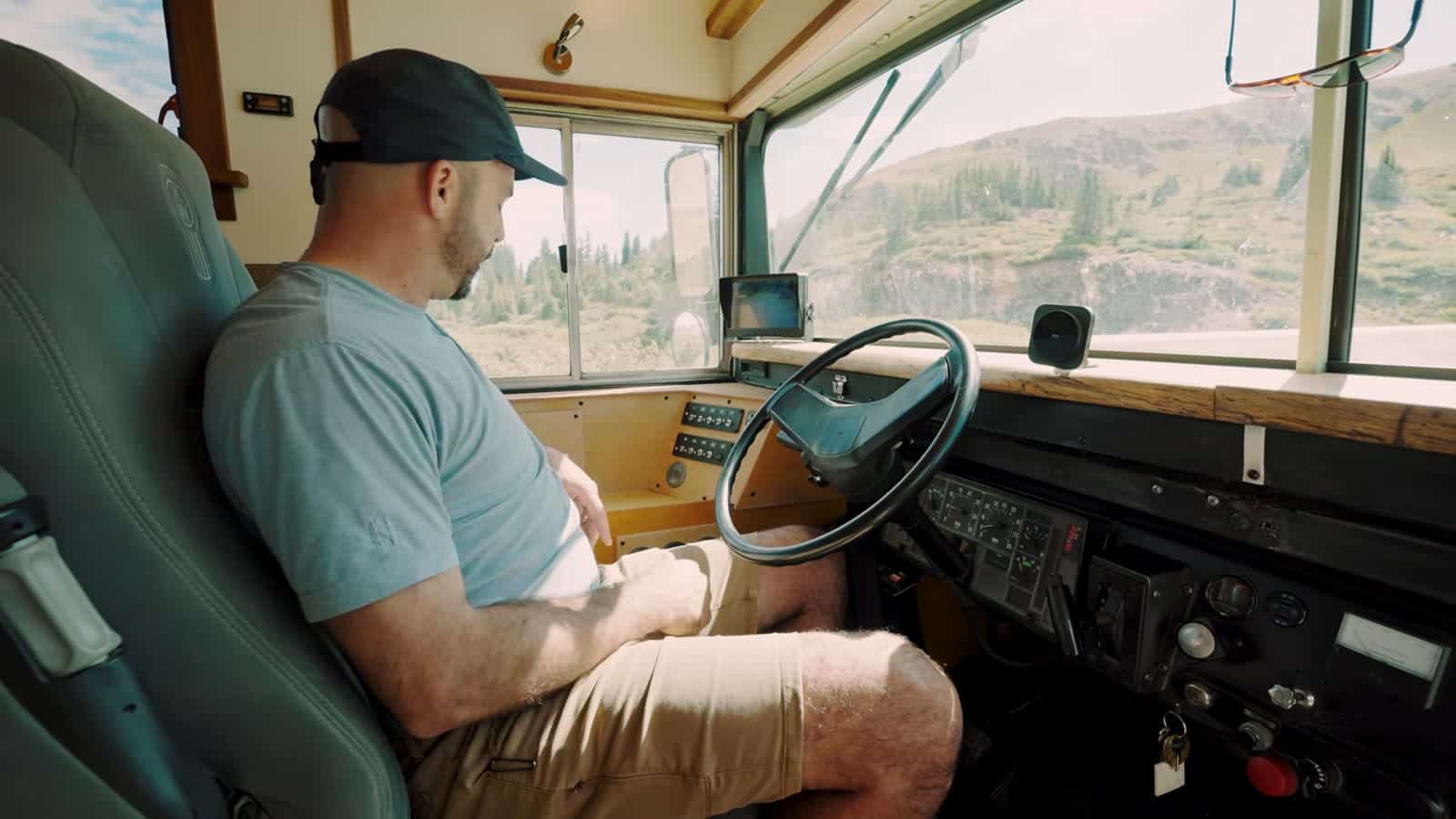
Image via Chuck Cassady/YouTube
A Rewired Driver Zone With the Gauges That Matter
Up front, a live-edge slab of quarter-sawn oak forms the dash, with its matching half under the upper windshield. All of the driver-area wiring is new. Switches run a heated seat, rock lights, the remote tank dump, a block heater powered by the house batteries, and DC-to-DC charging that sends up to 1,400 watts back to the house batteries while driving. Chuck doesn’t trust factory instrument clusters, so he added four gauges he considers essential: transmission temperature, turbo boost, engine temperature and exhaust gas temperature.
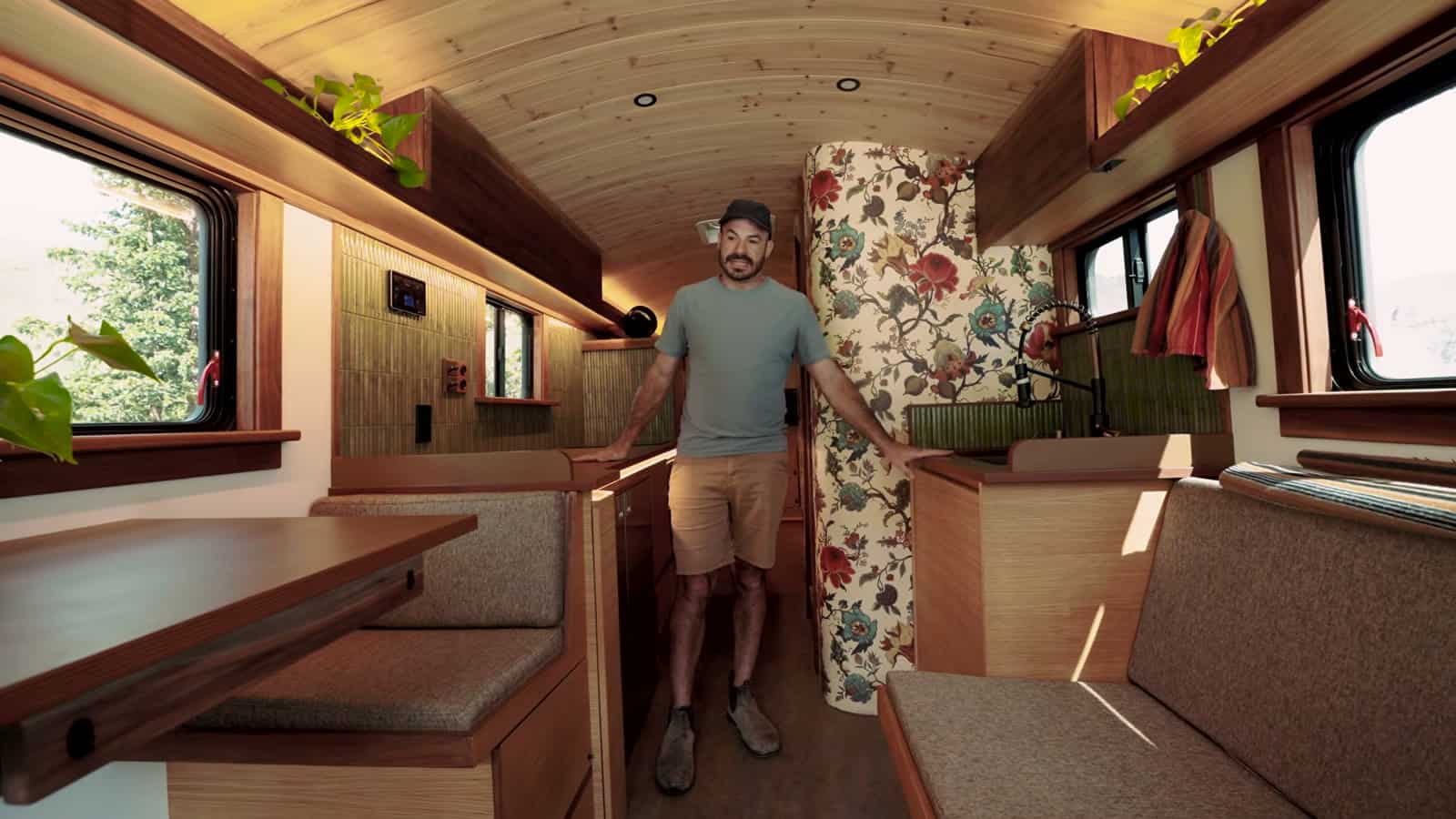
Image via Chuck Cassady/YouTube
A Couch Built for Storage, Not Guests
The living area starts with a custom-upholstered couch that deliberately doesn’t turn into a bed. With limited length and few overnight guests expected, Chuck used the space for storage instead. There are compartments behind the cushions, drawers that pull out from the front, and a lift-up top. The couch is also cantilevered off the floor, which makes the aisle feel wider and gives you a place to slide things out of the walkway.
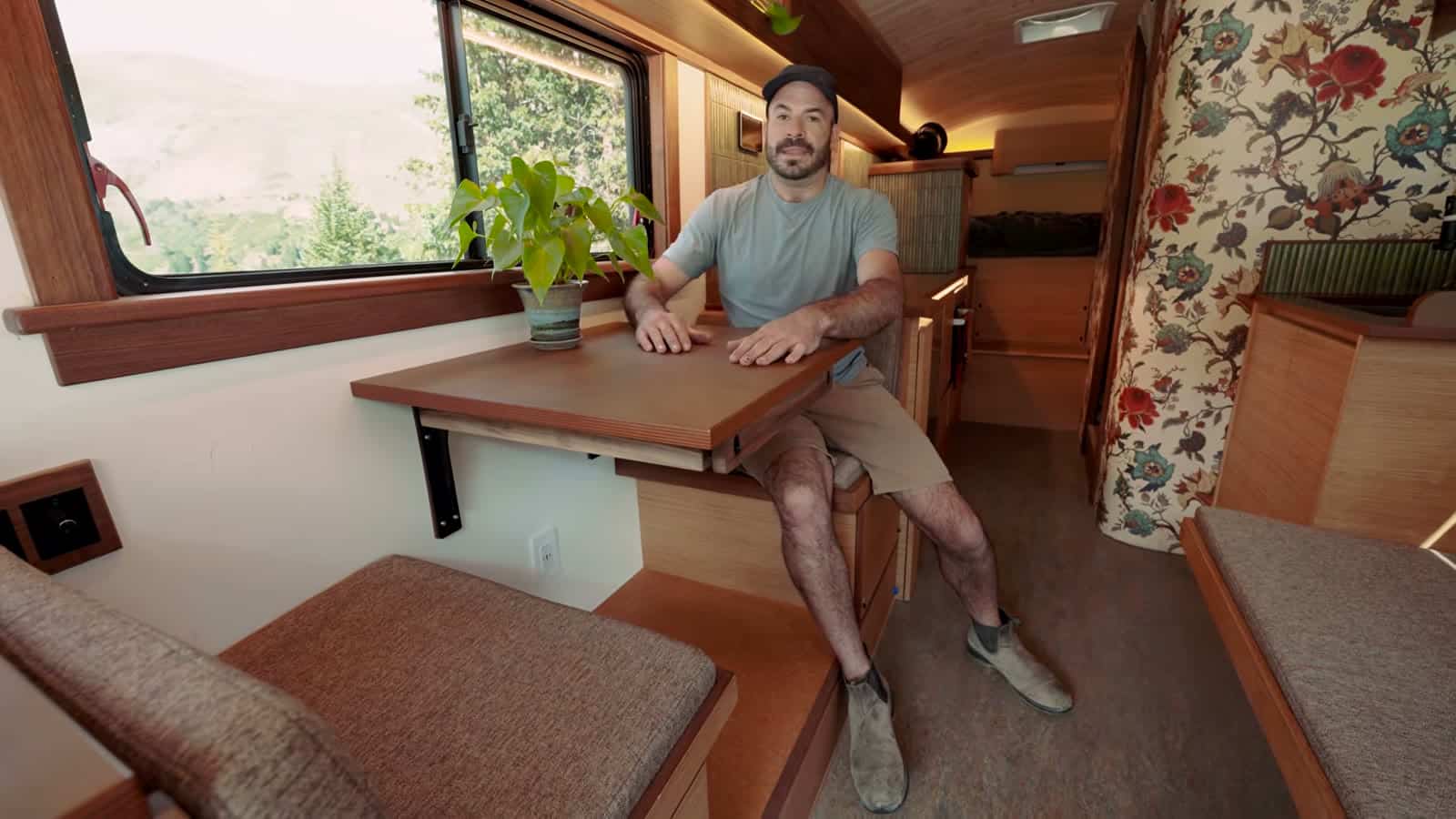
Image via Chuck Cassady/YouTube
A Raised Dinette That Hides an Entire Guitar
Across the aisle, the dinette floats with no legs and sits raised off the floor. Raising it created a drawer deep enough for an entire acoustic guitar, plus another large compartment and more drawers under the seats. The height also puts your eye line right at the window, making it a comfortable place to work, eat or play.
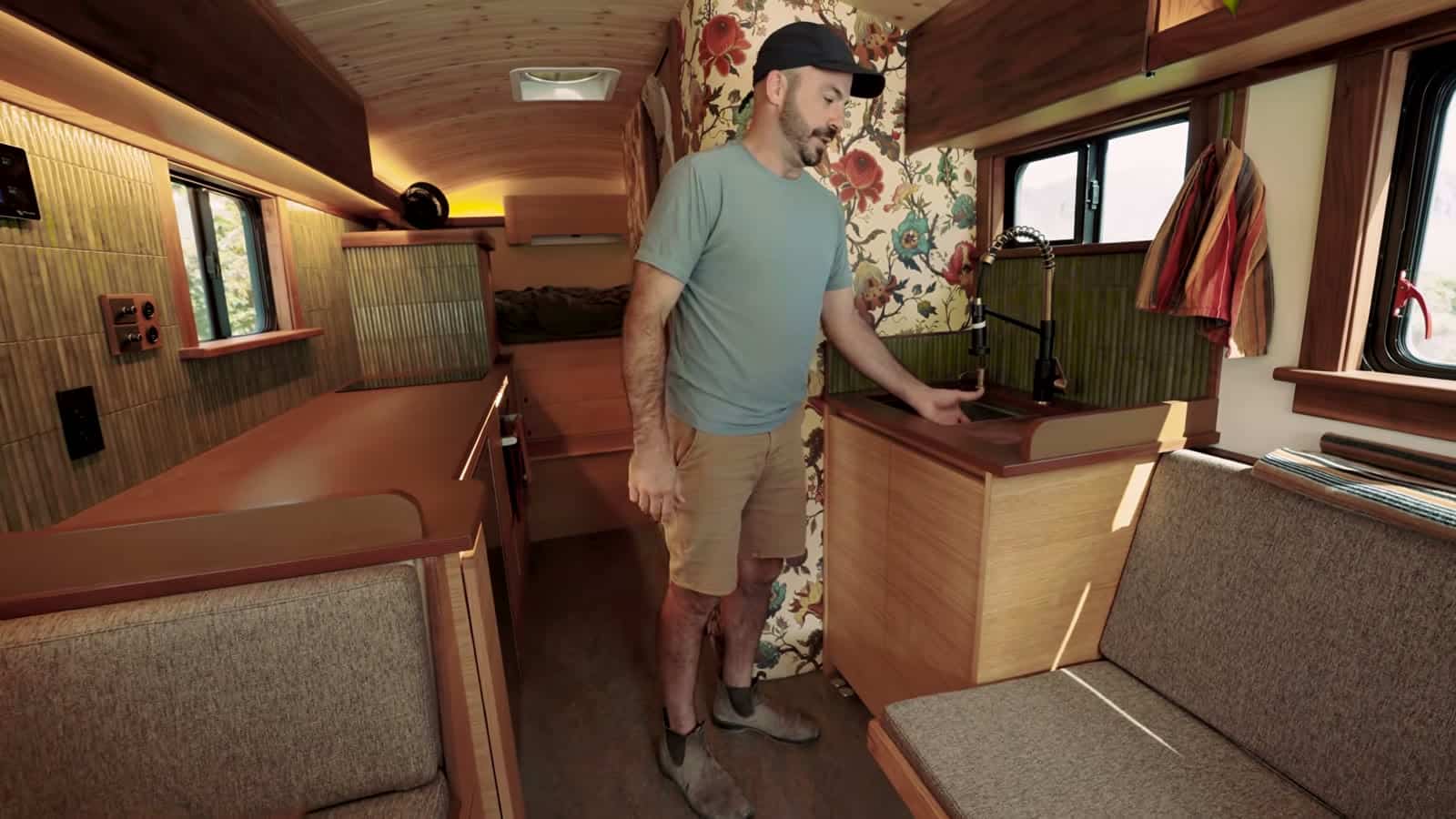
Image via Chuck Cassady/YouTube
A Kitchen Full of Small, Smart Upgrades
The kitchen is where many of the most copyable ideas live. The sink has a built-in cutting board and drain basket. Hot and cold water are controlled by foot pedals, which Chuck says cost about $25 each and are one of the easiest ways to cut water use. Reverse-osmosis water comes from the tap, with the monitor display hidden under the sink. There are built-in soap dispensers, a pull-out trash can, a big pull-out pantry, and latching upper shelves made from grain-matched black walnut.
The fridge is a DC-powered marine unit, built for a moving environment, so Chuck can switch off his large inverter on cloudy or winter days without losing his food. A Victron touchscreen shows water, waste and propane levels, temperatures, and switches for the water pump, water heater and inverter. The backsplash is tile set with epoxy grout, which needs no sealing and stays flexible on the road.
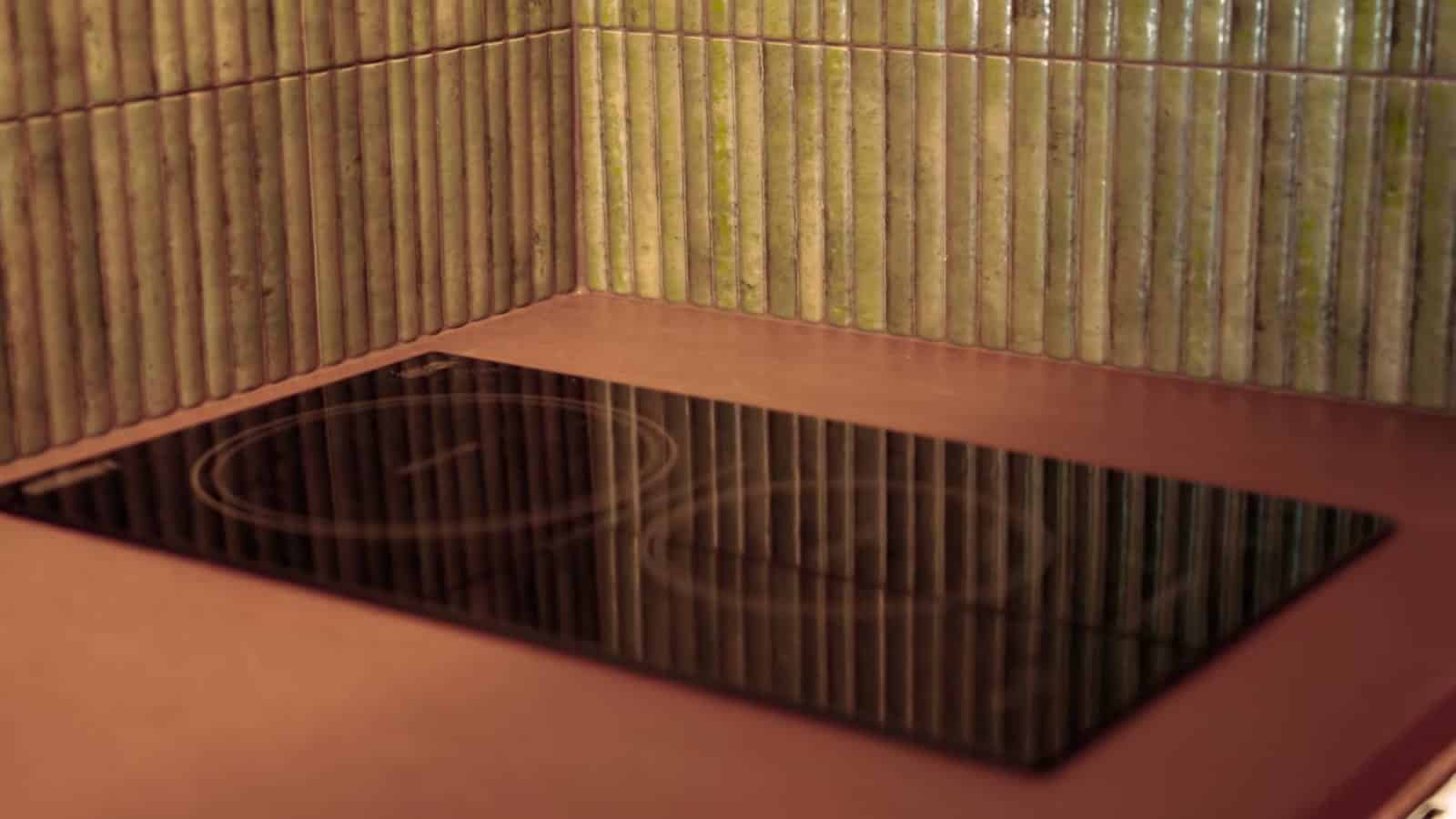
Image via Chuck Cassady/YouTube
Cooking All-Electric on 120 Volts
With no propane inside, cooking is electric. After plenty of testing, Chuck settled on the most powerful 120-volt induction cooktop he could find, a Summit unit. Below it sits an all-in-one convection oven, toaster oven and microwave. He points out that the microwave is one of the most efficient ways to cook off-grid. A MaxxAir fan with a rain cover keeps a very airtight bus from getting steamy.
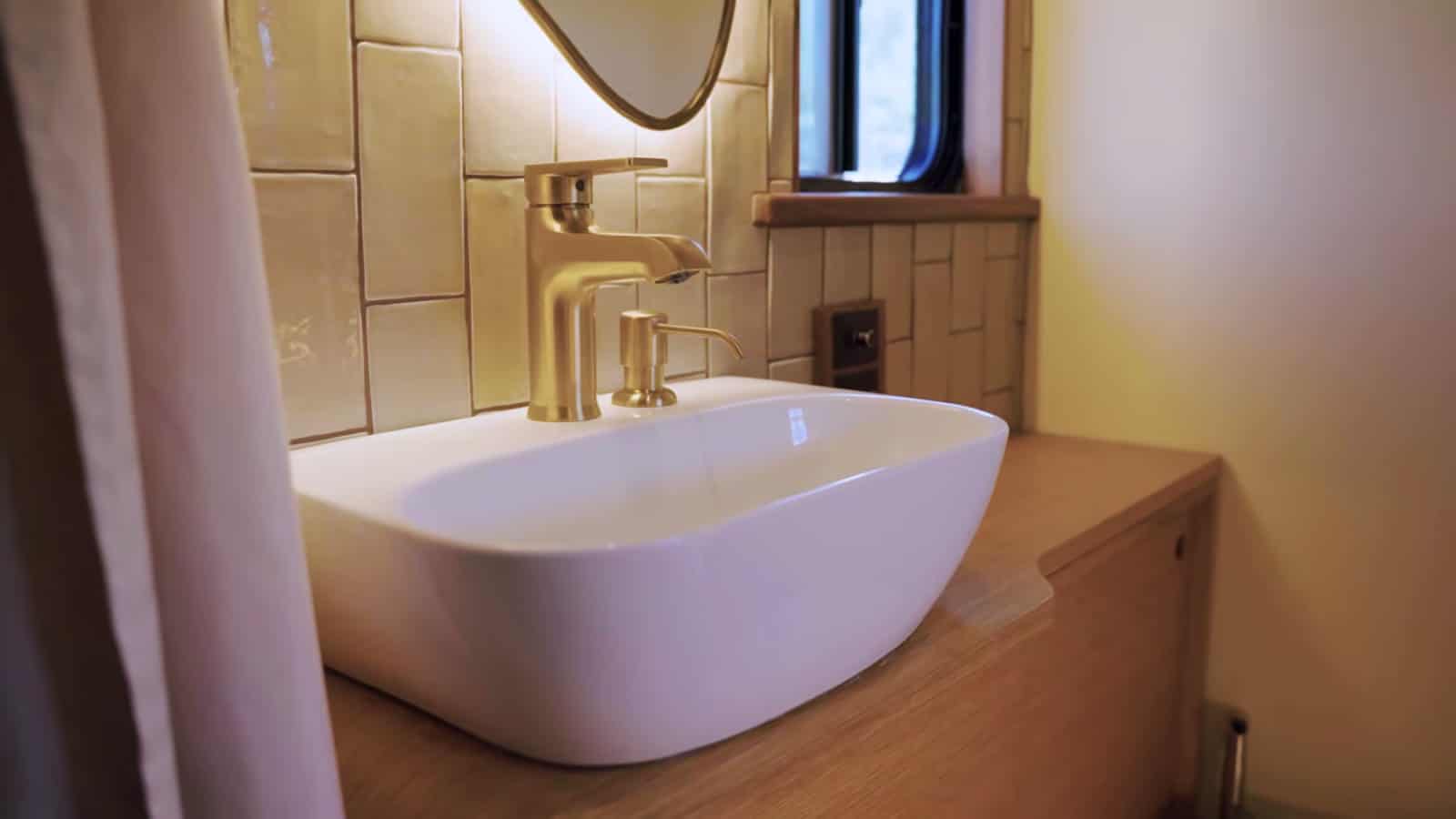
Image via Chuck Cassady/YouTube
A Tiled Bathroom With a Window and a Heated Floor
The bathroom has a window, an asymmetrical mirror he found on Etsy with backlighting of his own design, and a custom floating vanity that keeps the floor open and easy to clean. Tile runs continuously along the wall into the shower stall, which has a custom stainless-steel pan and brass fixtures. Chuck is 6’1″ and fits comfortably, helped by a pan dropped slightly into the raised bathroom floor. The low-flow High Sierra showerhead is, in his words, one of the best low-flow heads he’s found.
That raised floor covers the wheel well and does one more job. Heat from the diesel heater runs underneath it and out a vent, which keeps the pipes from freezing and gives the bathroom a poor man’s heated floor. It even warms the shower pan in winter.
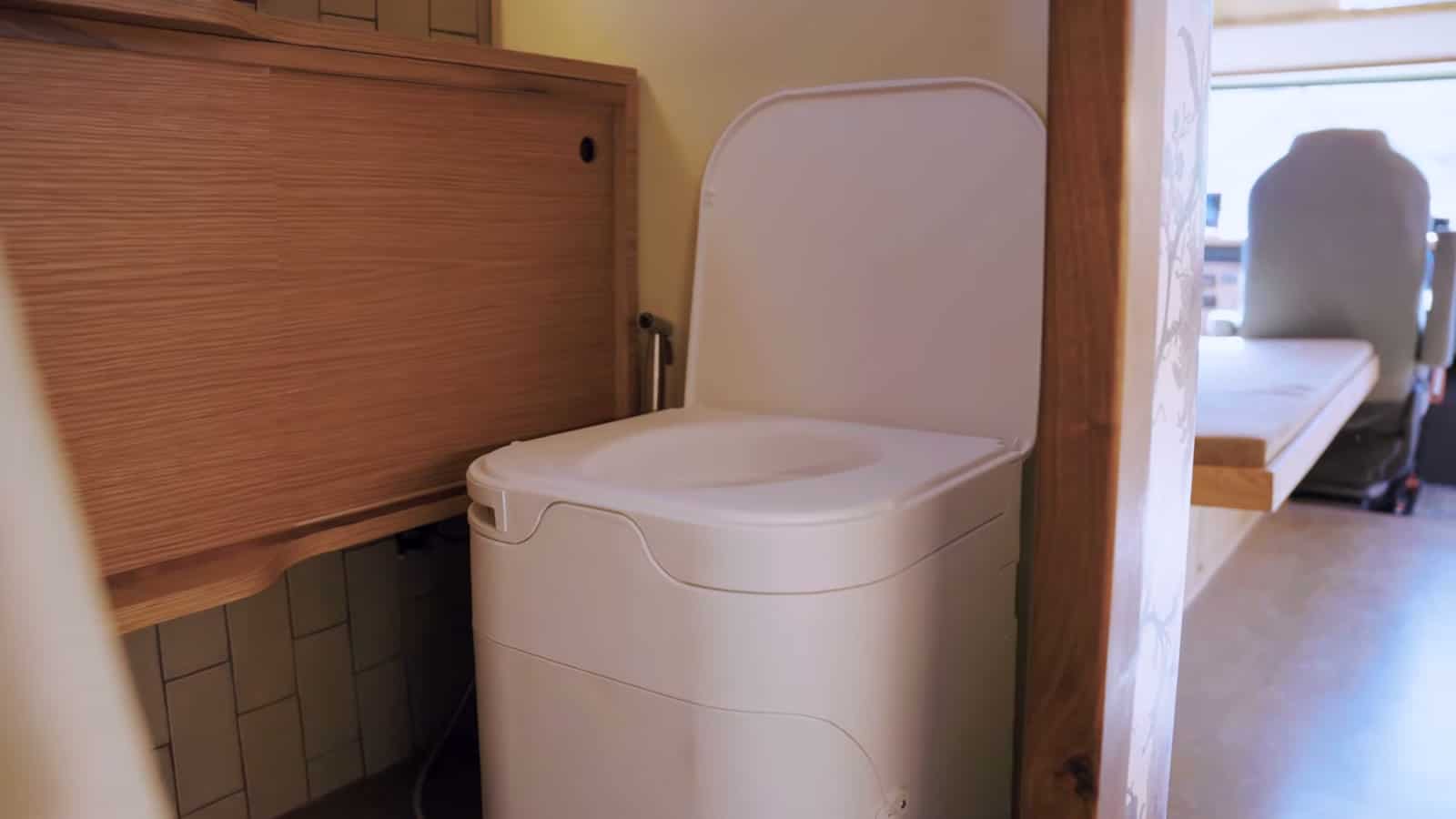
Image via Chuck Cassady/YouTube
An OGO Composting Toilet Plumbed to the Gray Tank
The toilet is an OGO composting toilet with an electric agitator, so there’s no hand-cranking. It has a removable compost bucket, and the urine side is plumbed straight into the gray tank, so there’s no jug to overflow. Instead of the usual spray bottle, a bidet sprayer handles both personal use and cleaning the bowl. A storage cabinet with an outlet sits next to it for toothbrushes and tools.
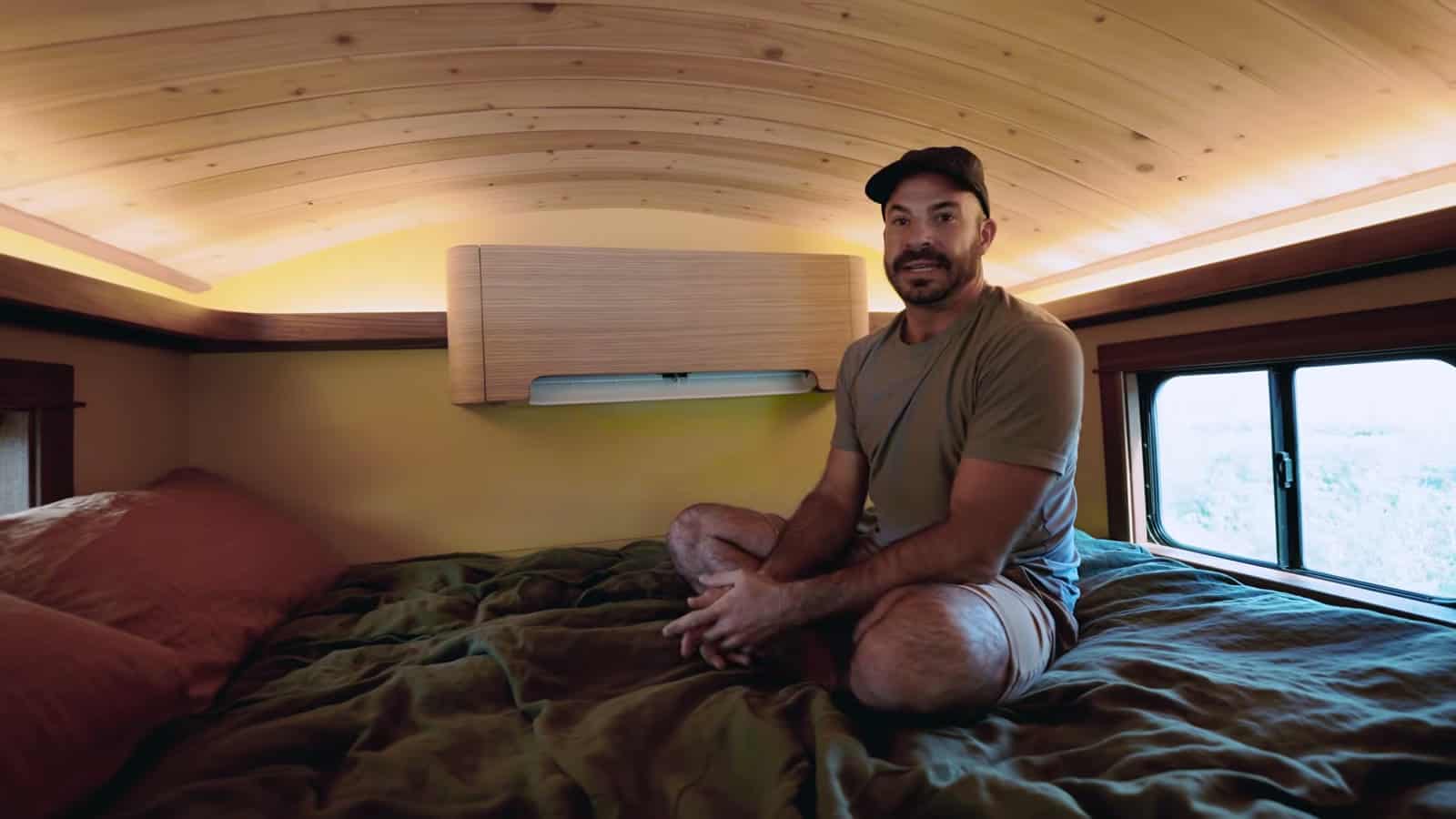
Image via Chuck Cassady/YouTube
A Bedroom With Hidden Batteries and a Hamper Step
The step up into the bedroom is also the dirty-clothes hamper. A drop-down closet holds clean clothes, and the solar batteries live in its bottom. Deep latching drawers run back under the bed, which is big enough for two. Wraparound shelves continue all the way around the room and end at the mini-split, whose wood cover is held on with magnets so servicing it takes seconds. A pop-up AC outlet, charging ports and dimmers for the reading lights, closet lights and cabinet underglow round it out.
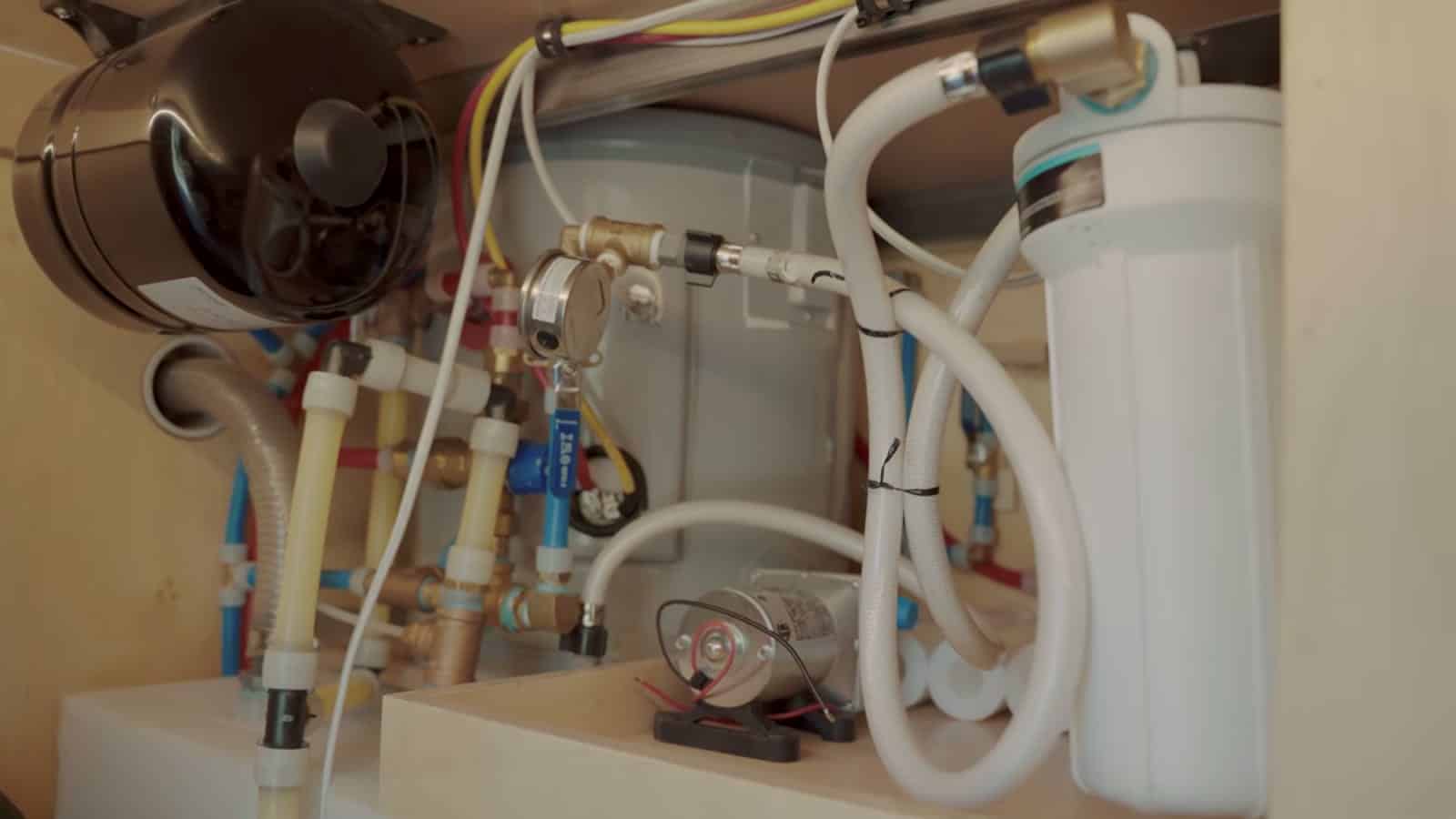
Image via Chuck Cassady/YouTube
The Garage: Systems in Front, Open Storage Behind
Chuck calls the rear garage his favorite part of the bus. His requirements were weeks of off-grid capability and room to carry the tools he needs to make a living on the road. It holds 125 gallons of fresh water, a 15-gallon electric water heater that runs directly on DC so it doesn’t use inverter capacity, and a water filtration system.
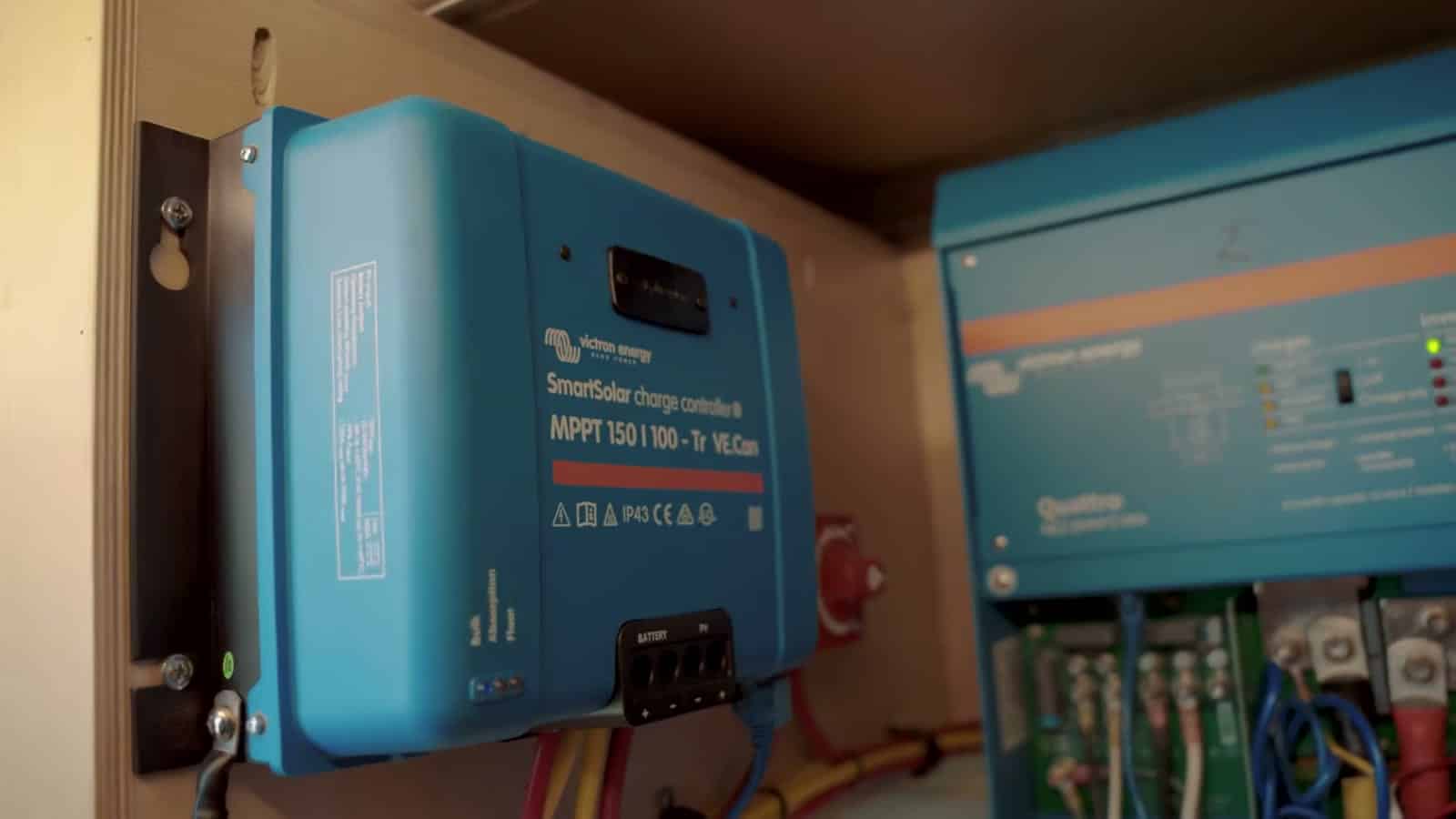
Image via Chuck Cassady/YouTube
The Victron system includes a 5,000-watt inverter, a 100-amp solar charge controller, dual Orion XS 1400 DC-to-DC chargers, step-down converters and a trickle charger for the starting batteries. There’s also a Starlink modem, a smoke detector and a fire extinguisher. All of that fits in the front half of the compartment, leaving more than half of it open for storage. The back of the under-bed drawers forms part of the garage wall, and the Victron gear vents into the closet through a small chimney.
Design Details
- Base vehicle: 1996 Thomas school bus on an International 3800 chassis
- Length: about 27½ feet bumper to bumper, with a 12-inch roof raise
- Engine: all-mechanical International DT466 with a Bosch inline P-pump, upgraded full-size radiator
- Transmission: Allison MT643 four-speed, plus a new rear-end gear ratio
- Insulation: 3″ closed-cell spray foam in the walls and ceiling, 4″ foam board in the floor
- Power: roof solar, Victron 5,000W inverter, 100A charge controller, dual Orion XS 1400 DC-DC chargers, backup propane generator
- Water: 125-gallon fresh tank, 65-gallon gray tank with remote dump, 15-gallon DC electric water heater, RO filtration
- Climate: MRCOOL mini-split, diesel heater with under-floor ducting, MaxxAir fan
- Kitchen: Summit 120V induction cooktop, convection/microwave combo oven, DC marine fridge
- Bathroom: OGO composting toilet, tiled shower with custom stainless pan
- Location: filmed in the Colorado mountains
Lessons From a Bus Builder’s Own Bus
- Buy for the mechanicals. Chuck bought the bus for its computer-free engine before he was ready to build. The drivetrain is the hardest thing to change later.
- Bigger underbelly boxes cost nothing extra. Going 23 inches deep instead of 14 to 18 is the same work for far more storage.
- Minimize hookups. Every fitting on the side of the bus is another chance for a leak.
- Not every seat needs to be a bed. If you rarely host guests, give the space to storage.
- Put DC loads on DC. A DC fridge and a DC water heater let you shut off a big inverter and save power in low-sun months.
- Plan homes for trash, laundry and soap. Unglamorous details make daily life in a small space much easier.
- Reuse waste heat. Running diesel heater exhaust air under the bathroom floor protects the plumbing and warms the floor.
Video Tour
In a twist at the very end of the video, Chuck reveals that this bus, the one he built for himself, has already been sold to a new owner named David. Watch the full tour below.
Learn More
- Video: I spent my life building buses, this is my last one
- Channel: Chuck Cassady on YouTube
- Consulting and resources: chuckcassady.com
- Monthly build support with Chuck and Mobile Dwellings: Skoolie Support
Highlights
- A skoolie builder’s own personal bus, about five years in the making
- Computer-free mechanical DT466 diesel with an Allison four-speed
- 12-inch roof raise and an upper windshield
- All-electric interior with solar and Victron power
- Raised floating dinette with a guitar-sized drawer
- Tiled bathroom with a heated floor and composting toilet
- Rear garage with 125 gallons of water and room for tools
Explore More
- Cabin-Like Skoolie Built with Milled 4x4s
- Her Raised Roof Short Bus Conversion
- Caballo Verde: Mid-Century Modern School Bus Conversion for Family Travel
- Couple’s Self-Built Bus Conversion Tiny Home: Aurora the Adventure Bus!
- Skoolies
Which upgrade would you steal for your own build: the guitar drawer, the foot-pedal faucet or the heated bathroom floor?
If you enjoyed this you’ll LOVE our Free Daily Tiny House Newsletter with even more!
You can also join our Small House Newsletter!
Also, try our Tiny Houses For Sale Newsletter! Thank you!
More Like This: Skoolies | School Bus Conversions | Bus Conversions | Video Tours
Disclosure: This post may contain affiliate links. If you purchase through one of our links, we may earn a commission at no additional cost to you.


Alex
Latest posts by Alex (see all)
- Skoolie Builder Chuck Cassady’s Own Bus: A Computer-Free DT466 and an All-Electric Interior - November 27, 2026
- Bronson Grace’s 90-Day Chevy Express Build: A Cedar-Lined High-Top Van - November 27, 2026
- A Clever VW Transporter Campervan with a Two-Way Fridge and a Bike Garage - November 27, 2026





Join the Conversation
No comments yet. Be the first to join the conversation.