
Disclosure: This post may contain affiliate links. If you purchase through one of our links, we may earn a commission at no additional cost to you.
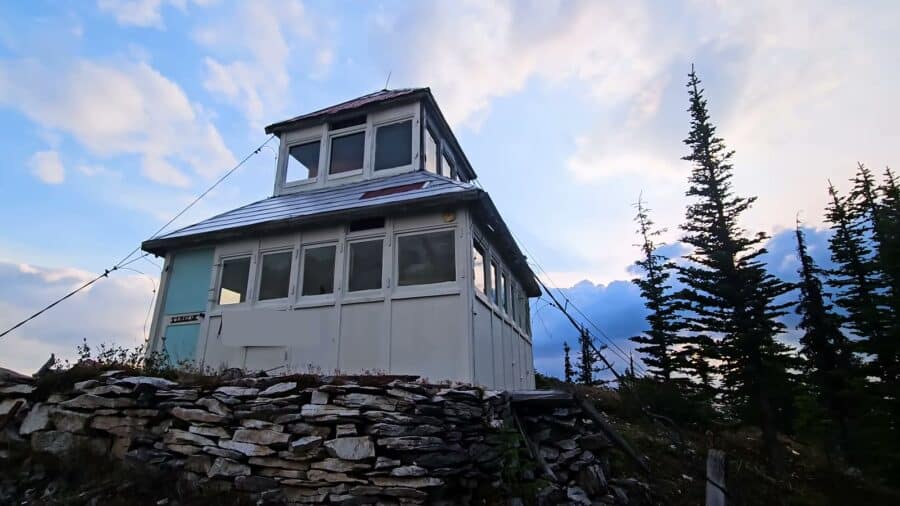
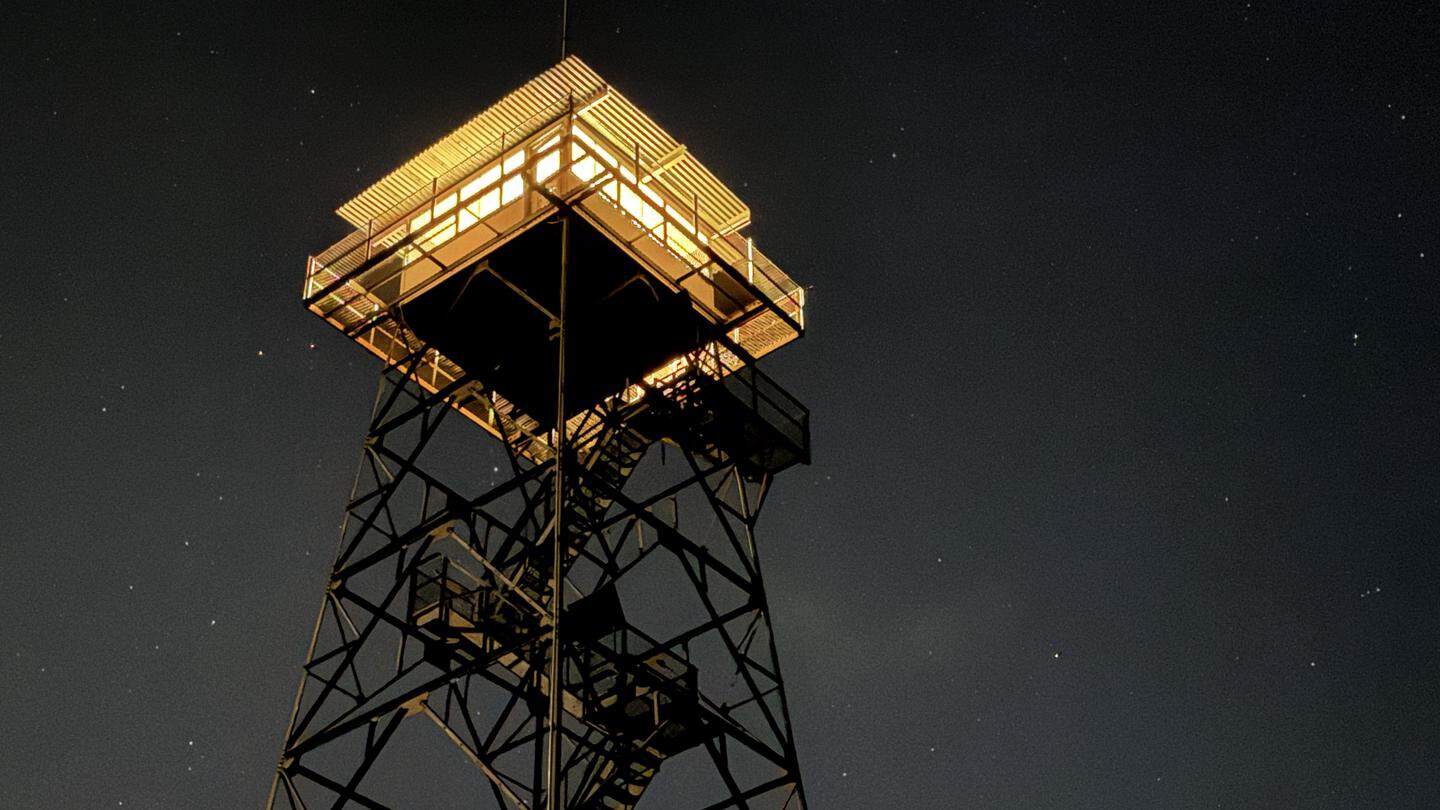
Rosa has spent the last nine years living out of her Honda Element, and lately she has picked up an unusual side mission: finding abandoned fire lookouts and bringing them back to life. In her latest project on her channel Life Out of My Element, she spent eight working days alone on a remote Canadian mountaintop, hauling every gallon of paint and every pane of plexiglass up a steep trail and repairing the old tower with hand tools.
The video has passed 2.7 million views. It’s an honest look at what a “rudimentary restoration,” as she calls it, actually takes: rat droppings, rot, swarms of flying ants, a bear cub at her car, wildfire smoke on the horizon, and about $1,700 Canadian in supplies. She keeps the lookout’s name and location to herself on purpose. Places like this survive partly because hardly anyone goes there.
A Lookout With Good Bones and Eight Missing Windows
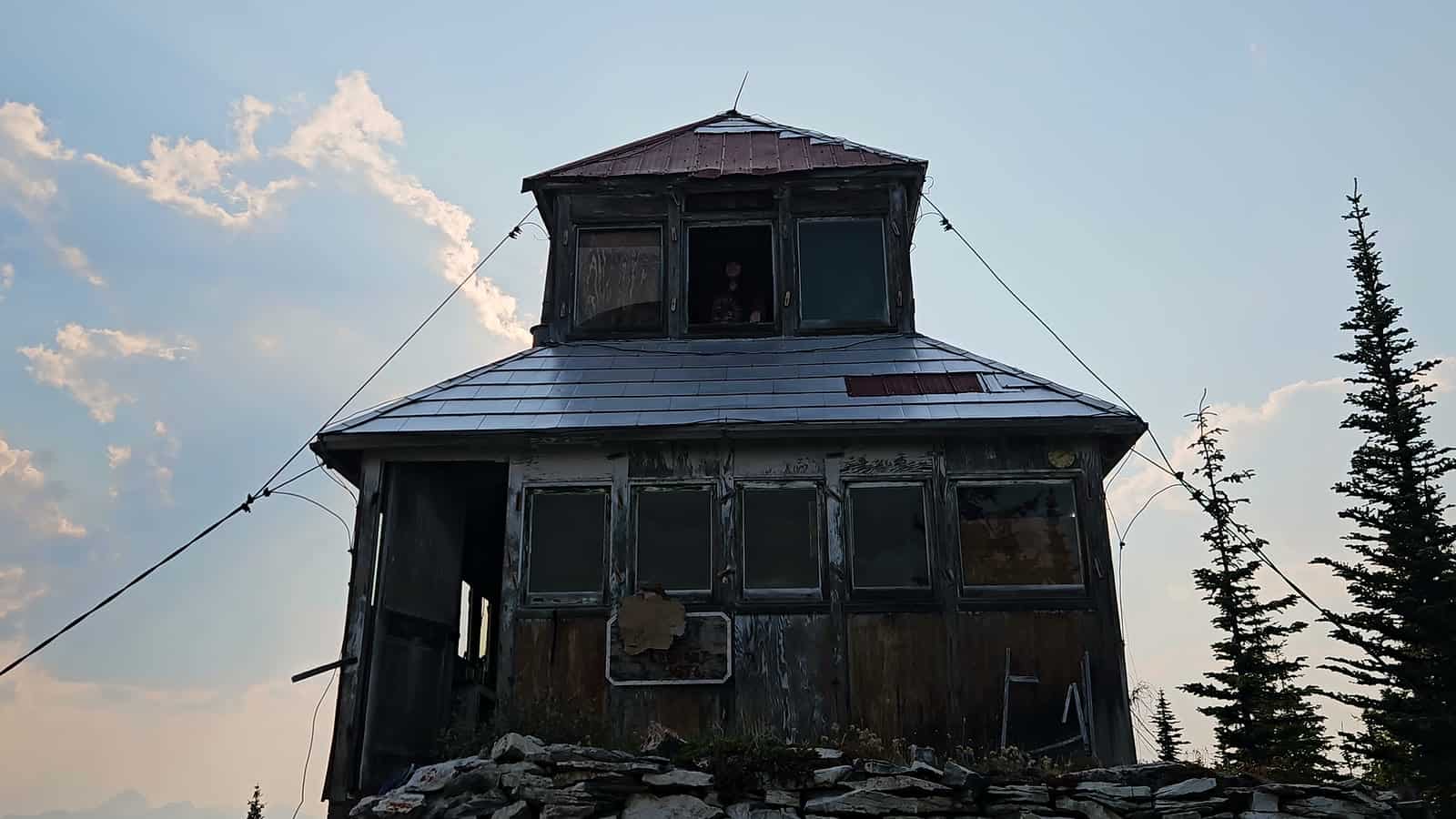
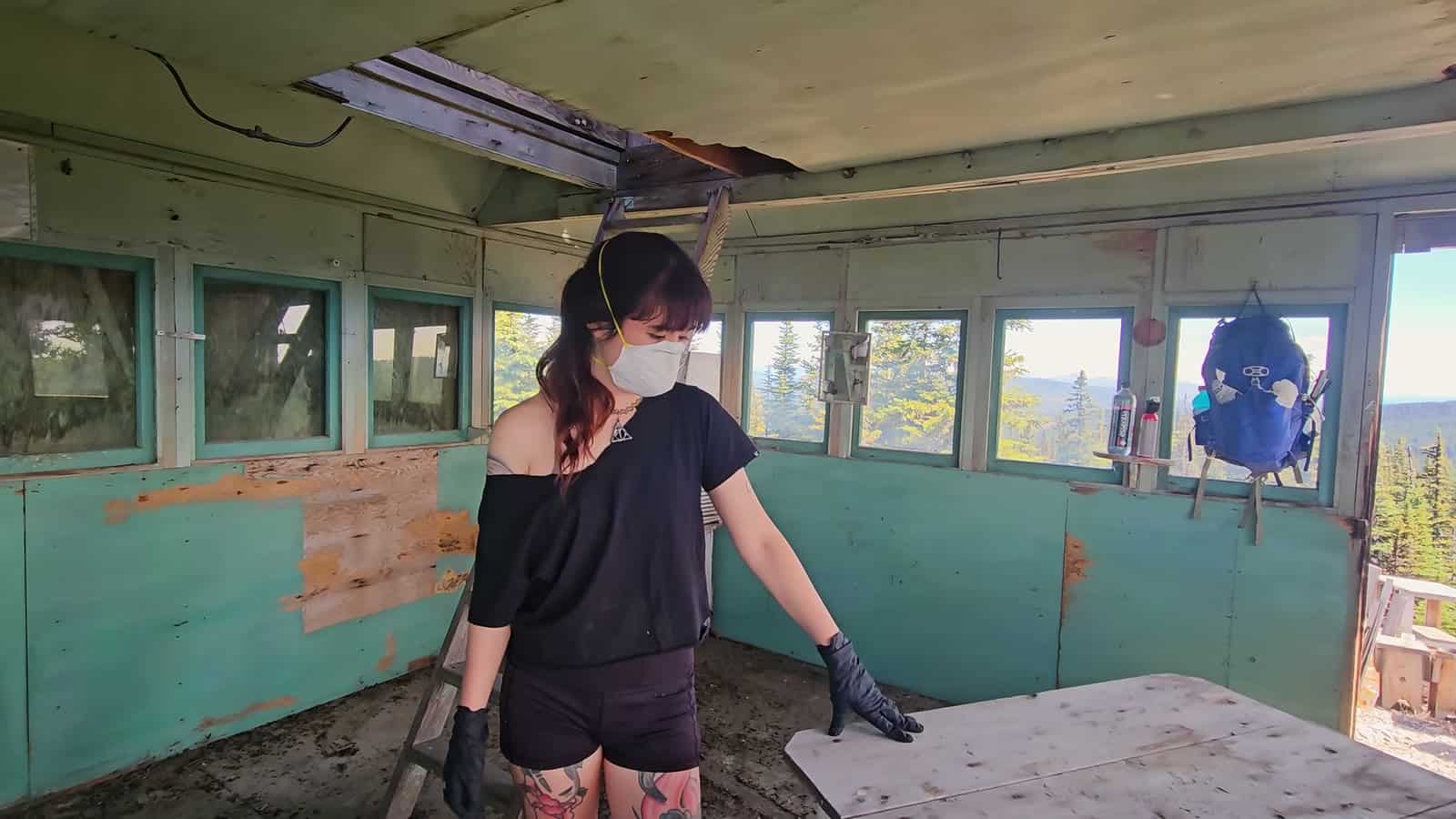
Rosa’s first visit was a scouting trip. Inside she found a corner piled with rocks, droppings everywhere, a dead bird, and an upper cab where most of the windows were broken or gone. She first counted six missing panes, then realized it was actually eight. The open windows were almost certainly how the rats were getting in.
She still decided it was worth saving. The structure was sound, and the logbook showed how isolated it was. The last entry was a few weeks old and the one before that was from the previous year. Later she worked out that she was only the third person to sign in over four years. That remoteness is exactly what she looks for. As she explains, lookouts near busy roads tend to get vandalized, so a restoration lasts longer on one that’s hard to reach.
The closest town with supplies was a few hours away, so the scouting trip doubled as a shopping list. She measured every window, took a paint sample from the walls, and decided early to do the work with hand tools rather than haul a power station up the hill.
Day One: Sweeping Out Decades of Rodents
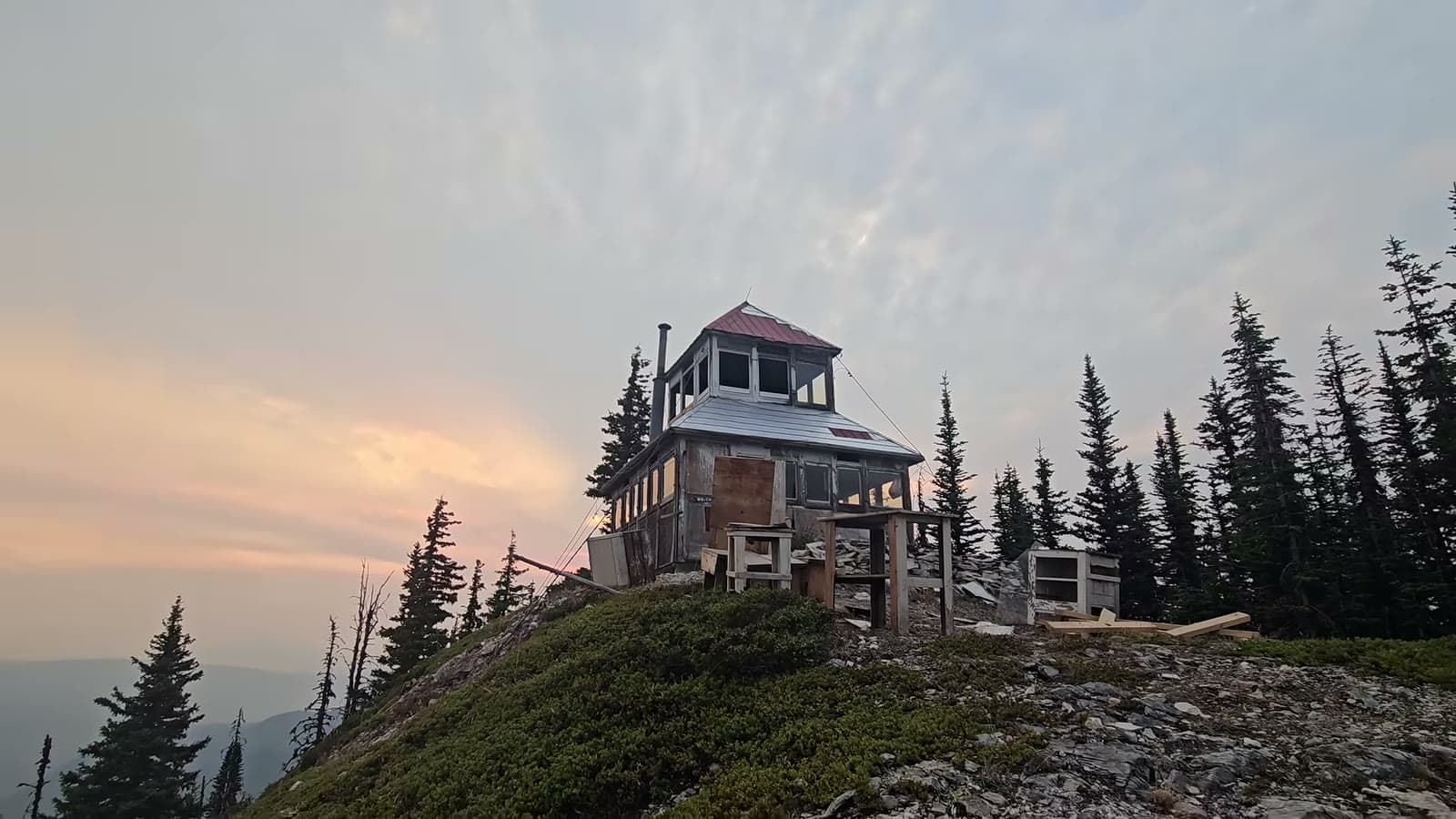
Every project starts with the worst job: clearing out the droppings so she could see what actually needed fixing. She wore a mask (mostly, she admits, so viewers wouldn’t scold her), covered a heavy table she couldn’t fit through the door with a cut-open trash bag to use as a workbench, and hauled the pile of rocks and broken glass out a bucket at a time.
Under that debris she found the rats’ second entrance. A floor hatch that once opened to the space under the lookout had broken loose, so she nailed it shut and covered the hole with scrap wood. Her test worked: the next morning there were fresh droppings upstairs, where the windows were still open, but none downstairs.
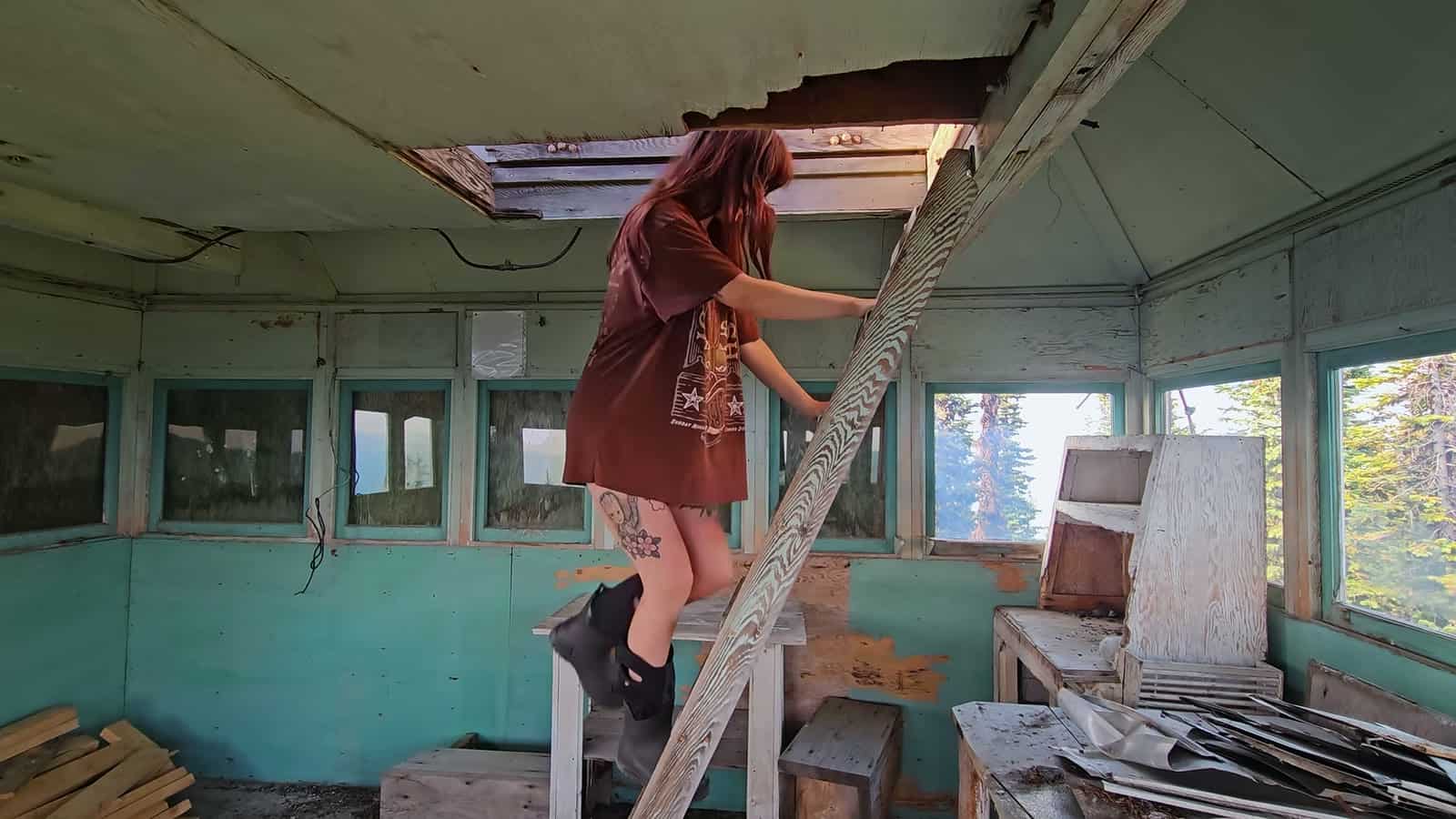
One buy turned out to be the MVP of the trip: a small cordless vacuum. With no power on the mountain, she ran it for about 15 minutes at a time, recharged it in her car overnight, and carried it back up the next morning. By the end she called it the best thing she brought and says she’ll take one on every restoration from now on.
Hauling Everything Up a Steep Trail
Day two was mostly carrying. The trail to the lookout is short but steep, and temperatures were in the 90s °F at the start of the week. Each trip up with her backpack included another gallon of paint, eight in all. There’s no water source at the summit either, so she packed in all her drinking water and showered with wipes back at the car.
In between loads she fixed small things that made the work easier. The lookout door had rotted around the latch and wouldn’t stay shut, so she cut a scrap of wood to fill the gap. It took five minutes, and she points out that small fixes like this can feel more satisfying than the big ones, because they remove a daily annoyance.
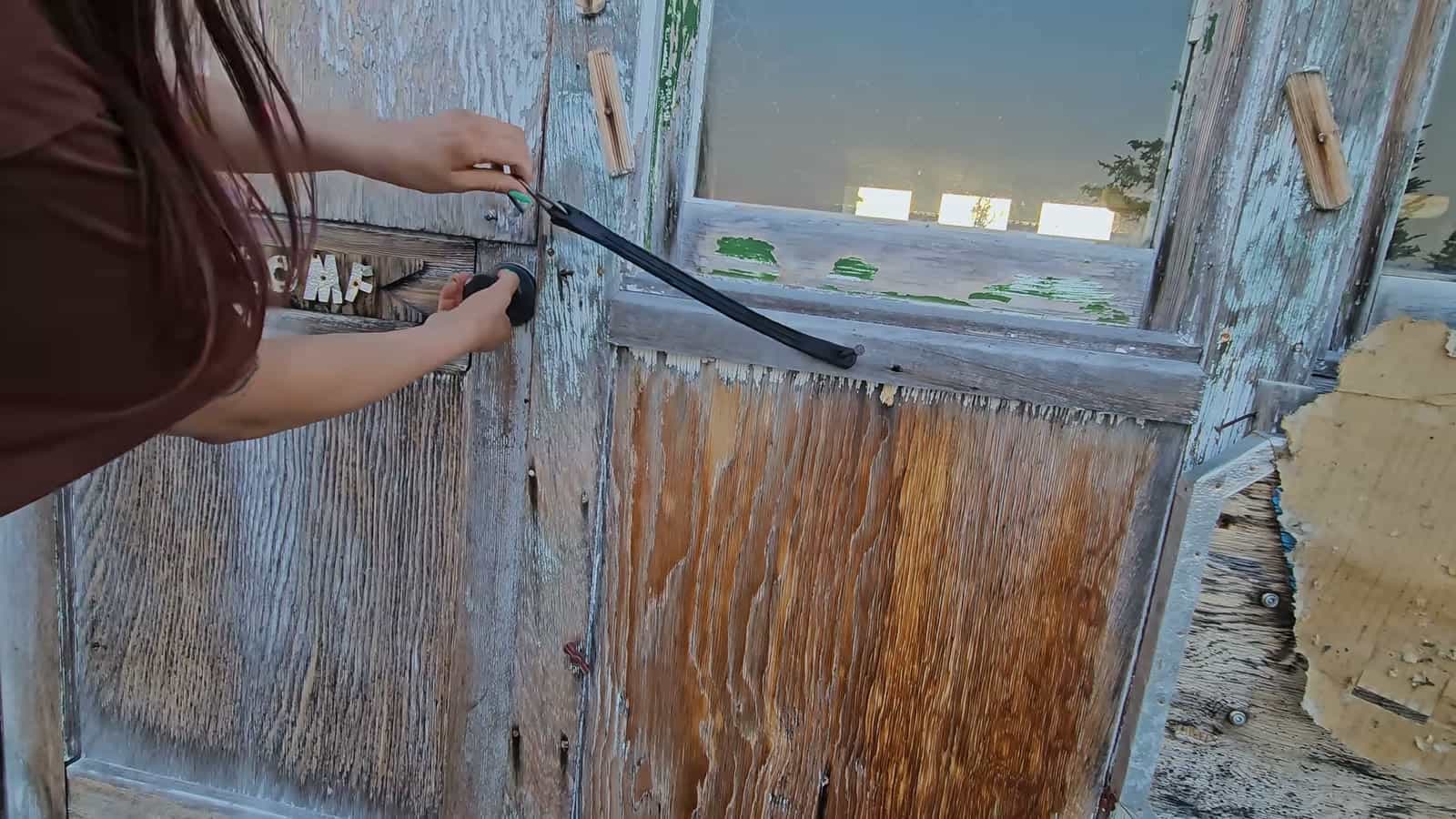
While cleaning she found a note saying the lookout had last been restored in 1995, the year she was born. Thirty-one years later she was the next person to take it on.
Fitting Pre-Cut Plexiglass Into Old Frames
The windows were the biggest technical problem. Some of the empty openings still had their original glazing frames and some didn’t, so the measurements didn’t match: roughly 27 by 34 inches on some and 23 by 30 on others. She didn’t want to cut plexiglass herself, so she bought eight pre-cut 24 by 28 inch sheets and planned to frame each opening down to fit.
That meant measuring and hand-sawing scrap 2x4s left at the lookout, nailing them into the frames, and then caulking the plexiglass in place. She spent half an hour looking for a better method before noticing that the surviving original windows had simply been set against the frame and caulked heavily. So that’s what she did. The openings missing the bottom of their frames needed extra blocking. It wasn’t pretty, she says, but it was the right height.
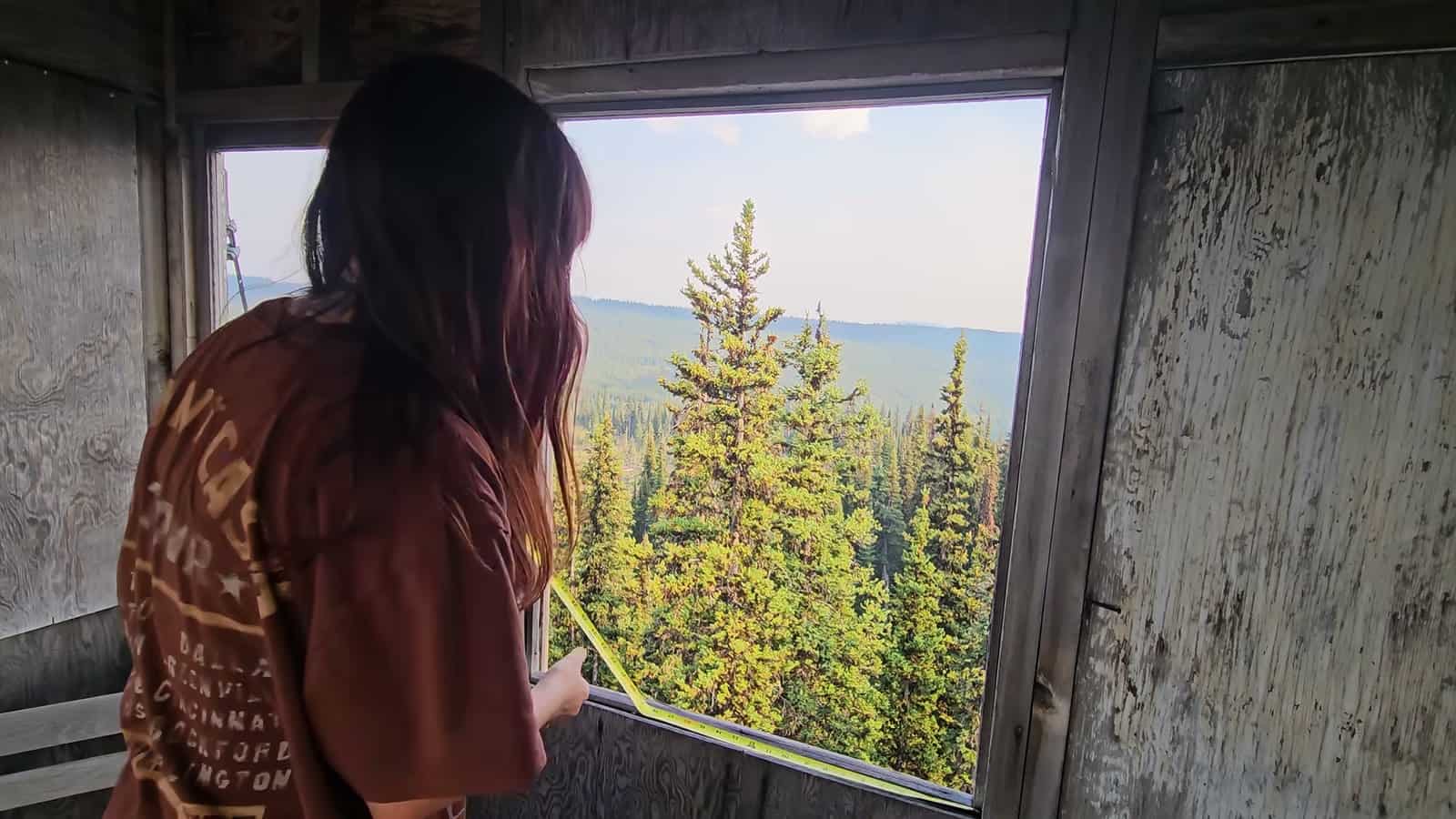
Before closing the cab in, she used the empty openings to her advantage. With no glass in the way she could lean out of each window and paint the upper exterior walls, which she couldn’t otherwise reach without scaffolding.
Flying Ants, a Bear Cub, and Wildfire Smoke
The mountain kept throwing surprises at her. On the third morning thousands of flying ants had filled the cab. She read up on it and learned that ants use high points for mating flights on hot, windless days. About an hour and a half later most of them had gone.
That evening a young black bear wandered near her car. She’d already seen several piles of scat on the forest road, which is why she sang loudly every time she walked the trail. Later in the week a wildfire about 22 kilometers away sent up a plume she could see from the windows, and smoke tinted the sunsets for days. Mosquitoes ended more than one workday early.
The weather swung hard, too. After a week of heat, a storm dropped the high to 55°F. One day was rained out completely, and she raced to get the first windows in before the rain hit.
Teal Inside, Snowfall White Outside
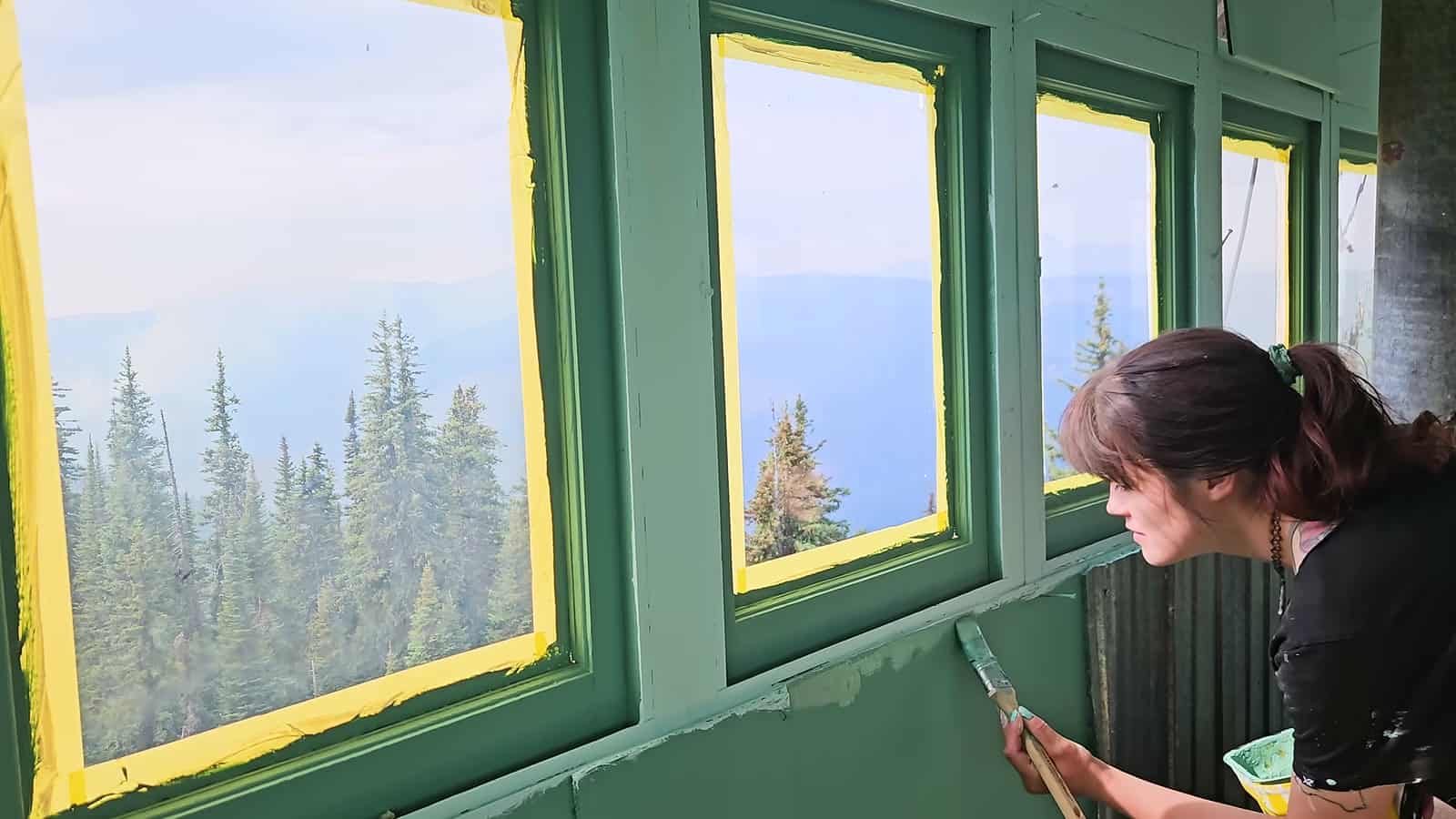
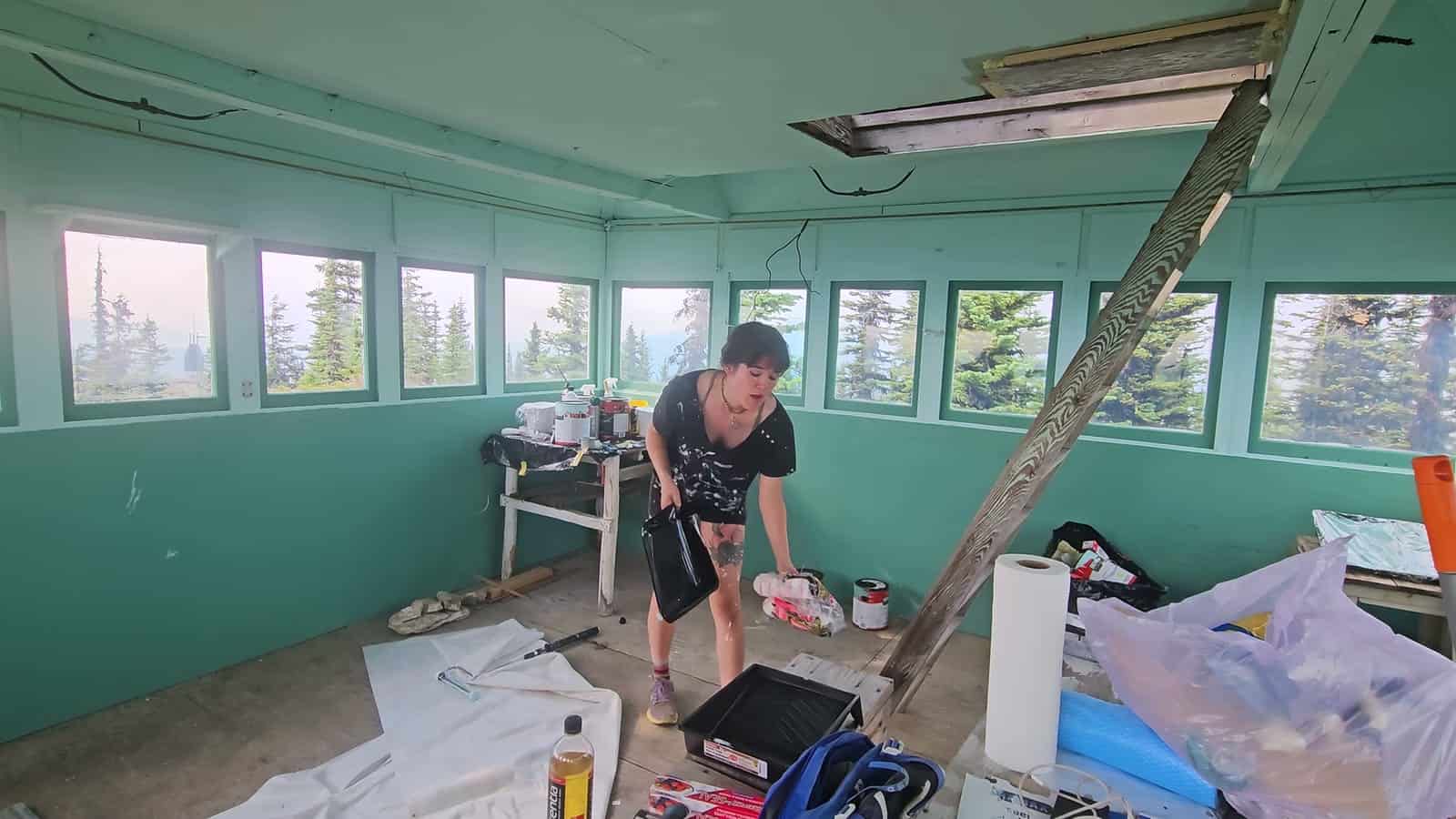
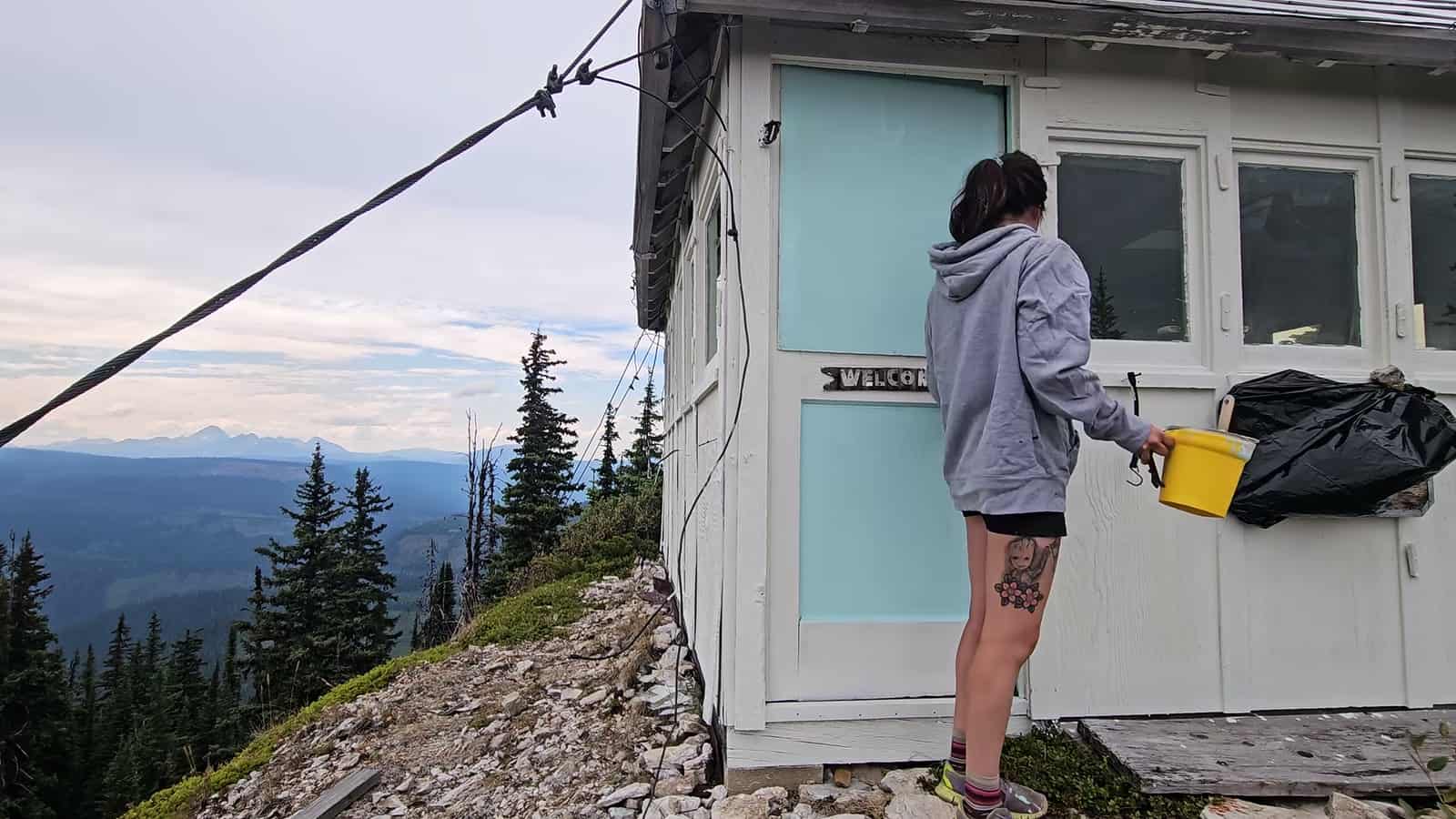
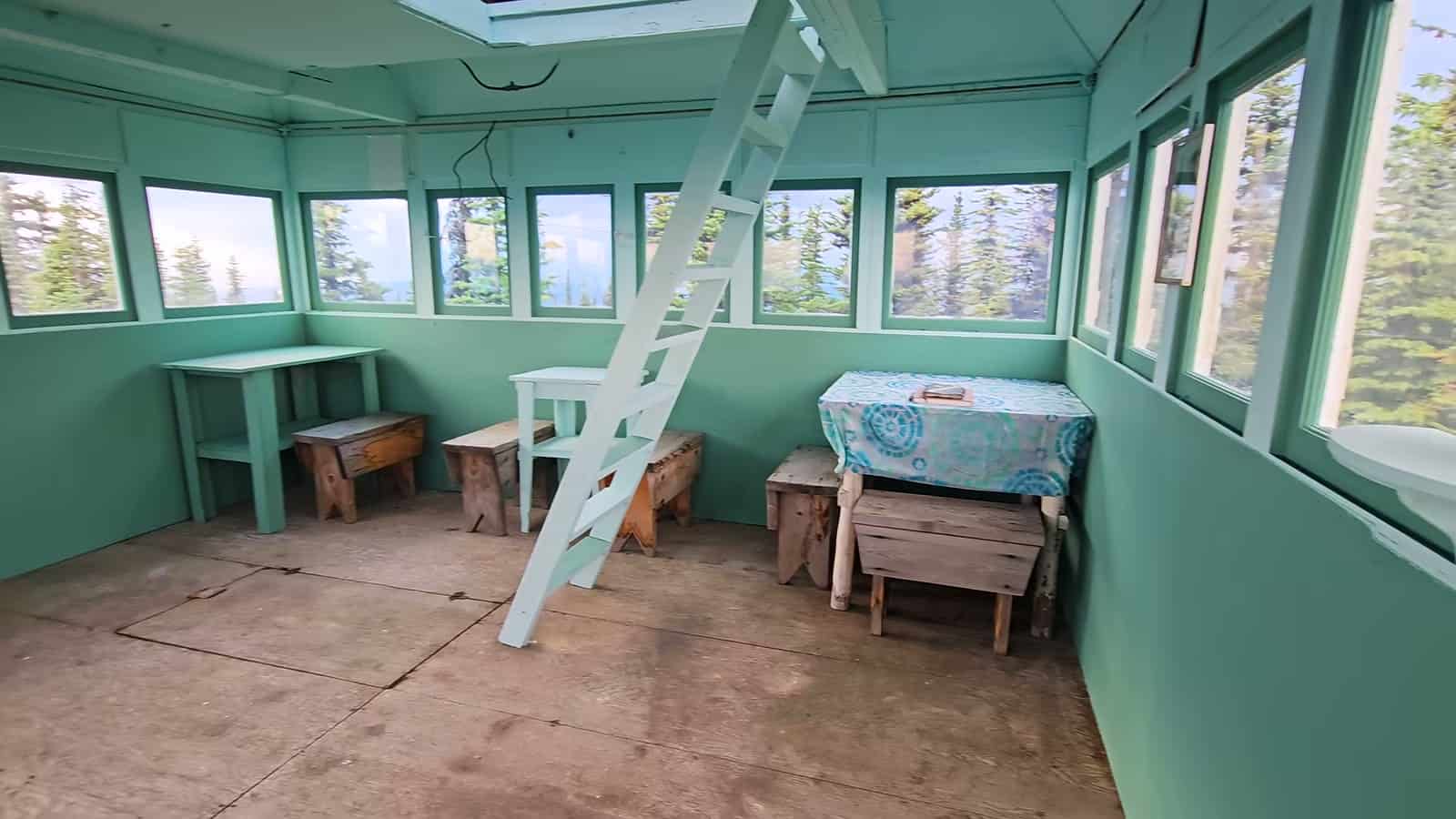
Rosa didn’t want to change the lookout’s character, just preserve it. She liked the interior’s faded teal and light blue so much that she had Home Depot color-match a paint chip she’d taken from the wall. The match came out close enough that she was delighted. She suspects those colors were chosen during the 1995 restoration, but they made her happy, so they stayed.
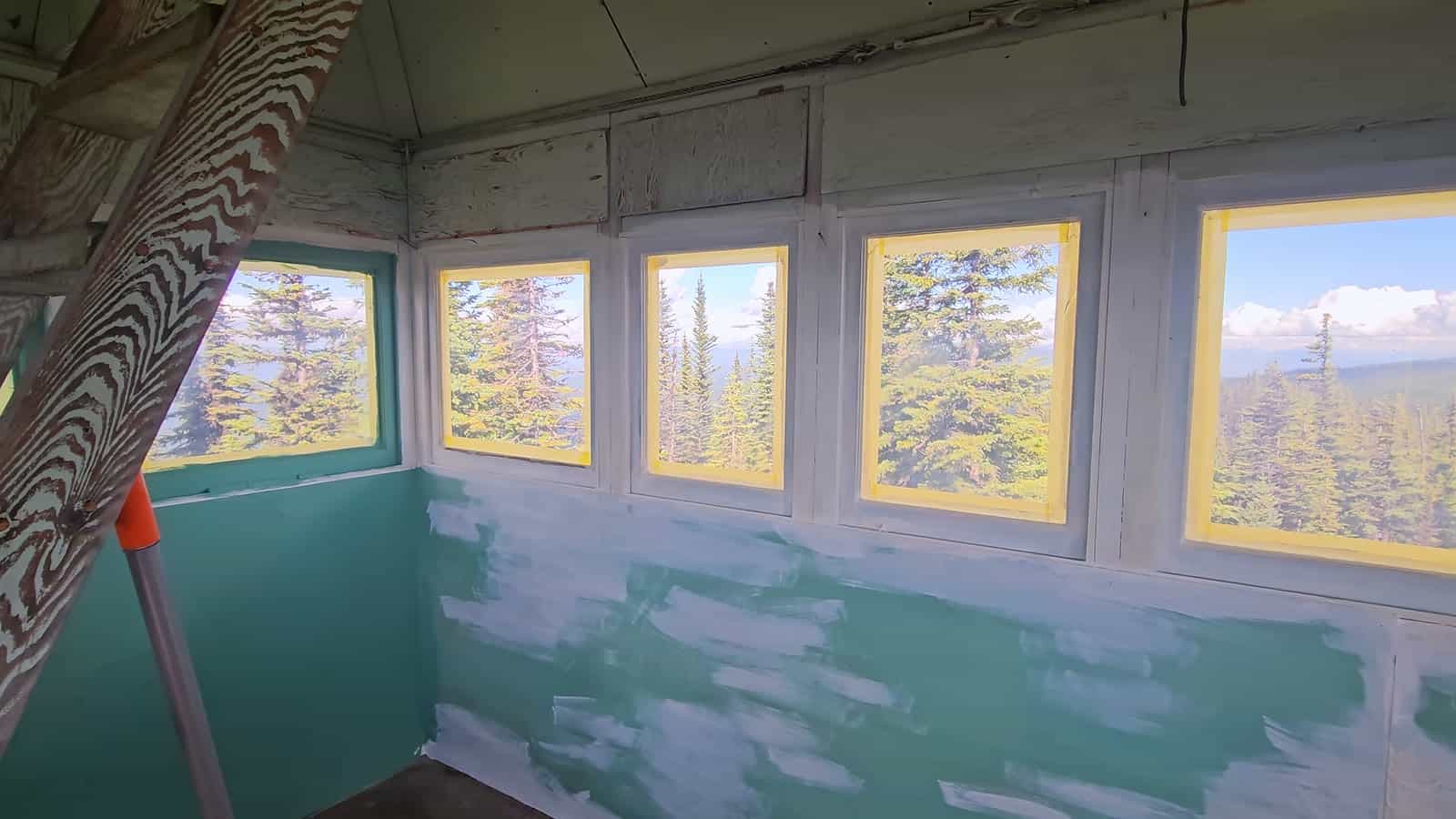
She taped every window before painting instead of scraping the glass afterward, and spot-primed the bare wood. She also learned a lesson about brushes. She used cheap dollar-store brushes for primer and a $10 brush for the finish coats, and the difference was big enough that she says she’ll never buy cheap brushes again.
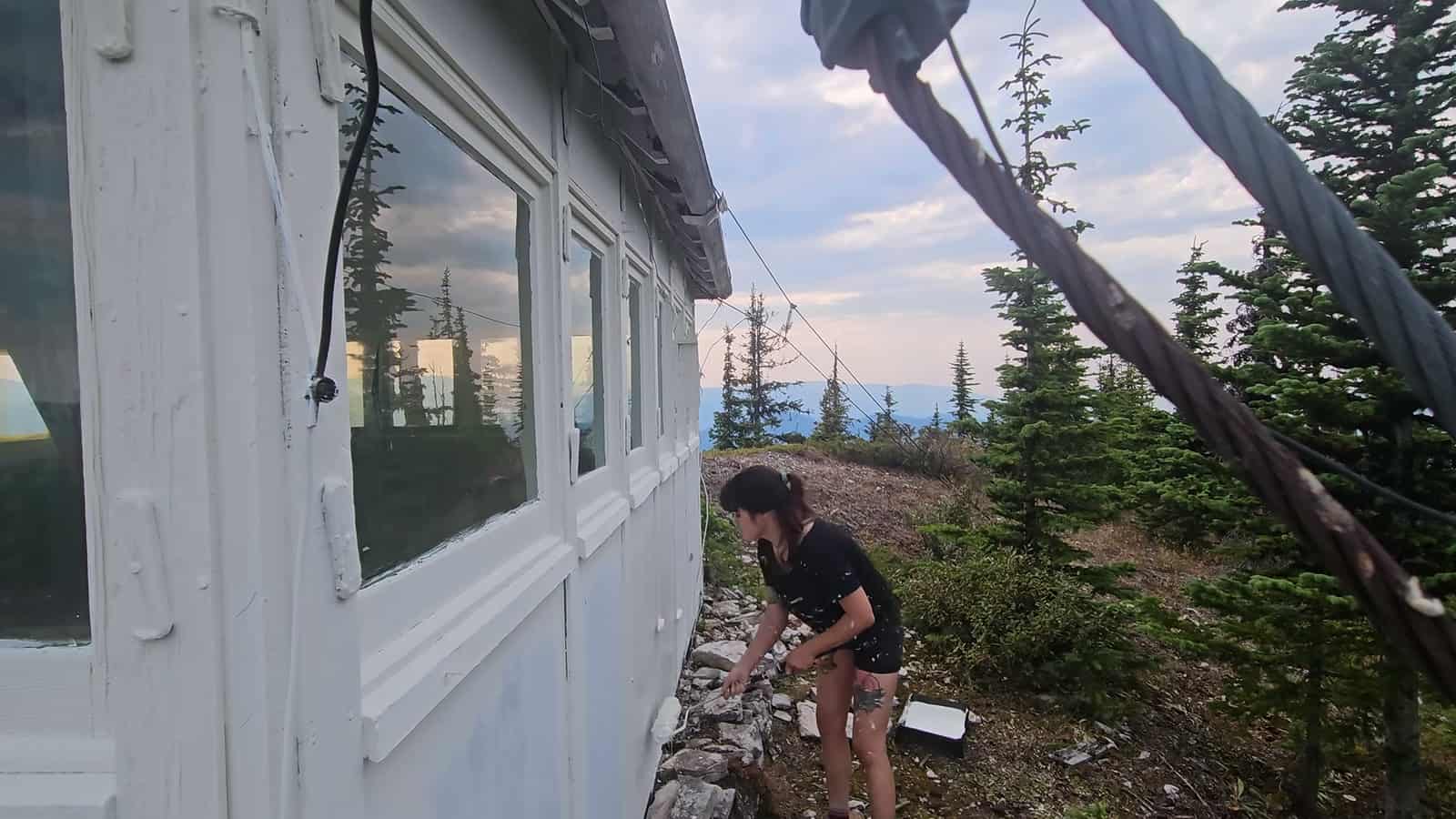
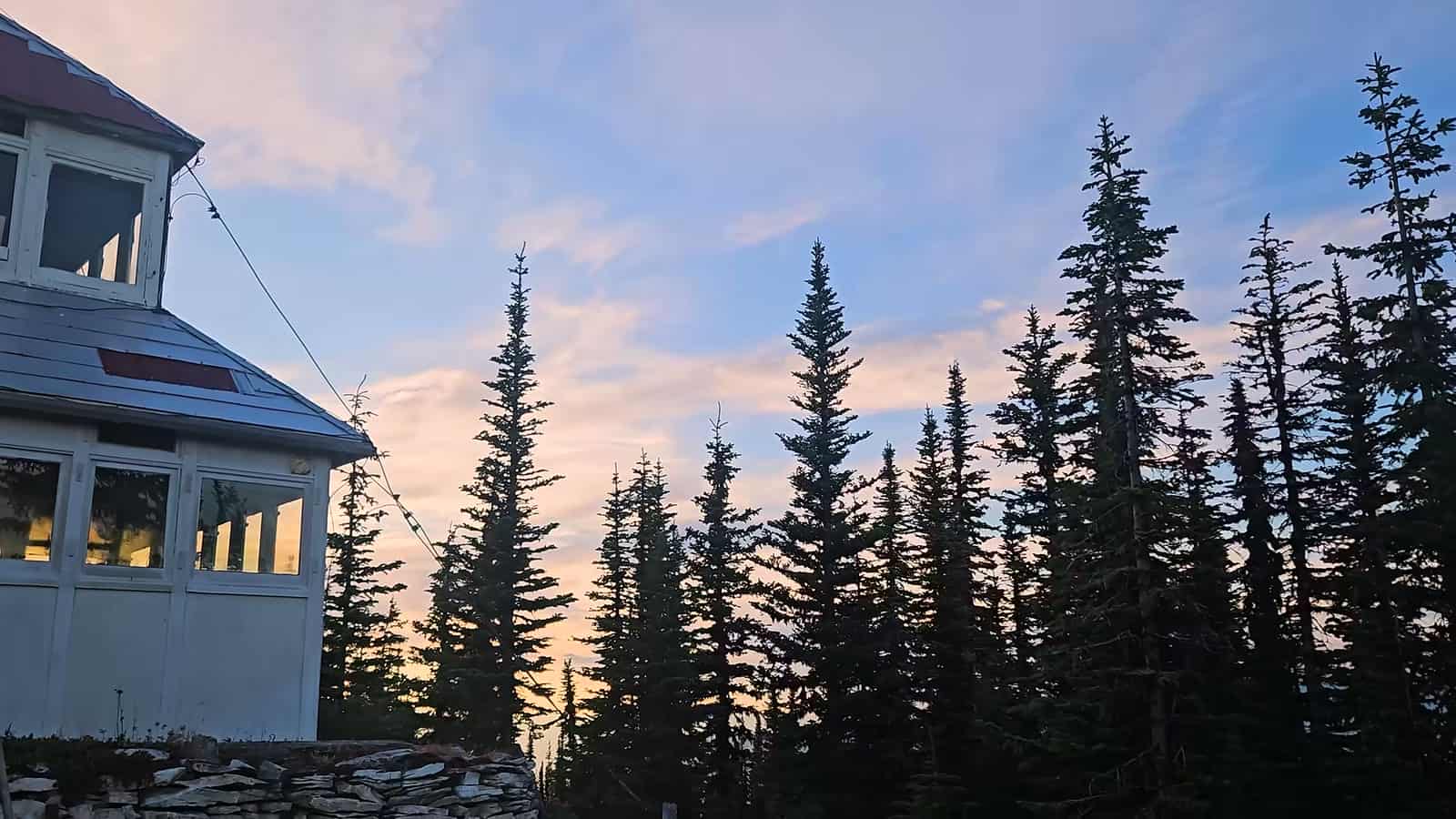
For the exterior she chose an off-white called Snowfall White in a flat finish. White wasn’t only about looks. These lookouts sit in full sun all day, and a light color helps keep them cooler inside. The old wood was so weathered that it soaked up all three gallons of primer, so she finished priming the last wall with the paint-and-primer exterior coat. To reach high spots she bungee-corded a brush to an extension pole.
Knowing When to Stop
On the last day Rosa had to make a hard call. Two of the eight openings had rot that went past the window frames and into the structure itself. She was also out of lumber. Putting plexiglass over those would only hide a problem that would keep getting worse. So she boarded them back up and left the two remaining plexiglass sheets and her last pieces of wood inside for whoever comes next.
That approach runs through the whole project. Her goal isn’t a full renovation. It’s to weatherproof and rodent-proof these buildings so they survive until a four-wheel-drive or ATV club, or someone with power tools and more skills, can take them further. She drove the board nails most of the way in but not flush, so a future volunteer can pull them easily.
The Finished Lookout
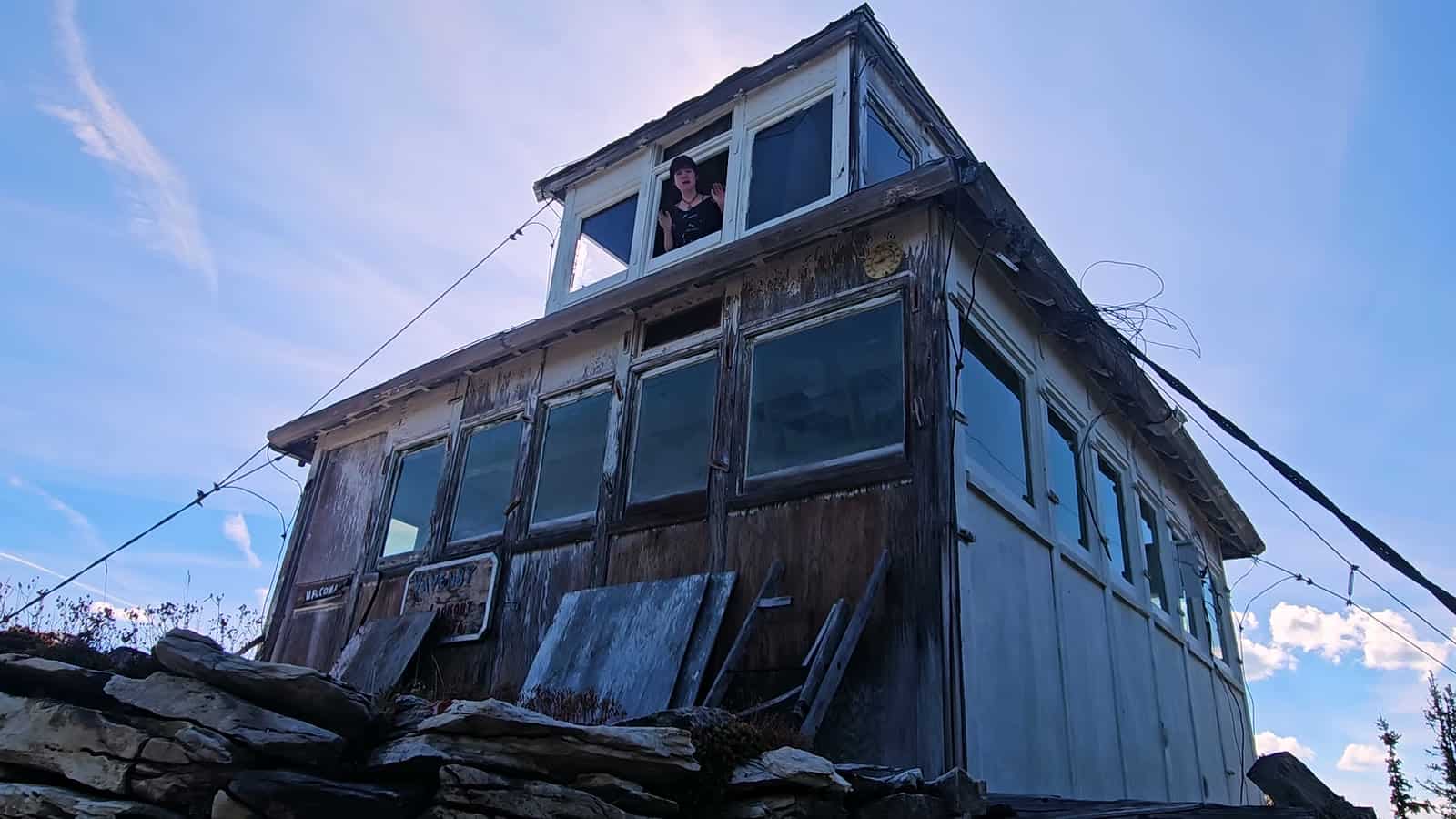
Six new windows, a sealed floor, two coats of teal inside, a fresh off-white exterior, and a ladder painted light blue. There wasn’t enough paint left for the upper cab, which she thinks may never have been painted, so it keeps its bare wood. She cleaned up and repainted one of the old tables, covered the other with a matching cloth, and threw out a dresser that was too full of droppings to save.
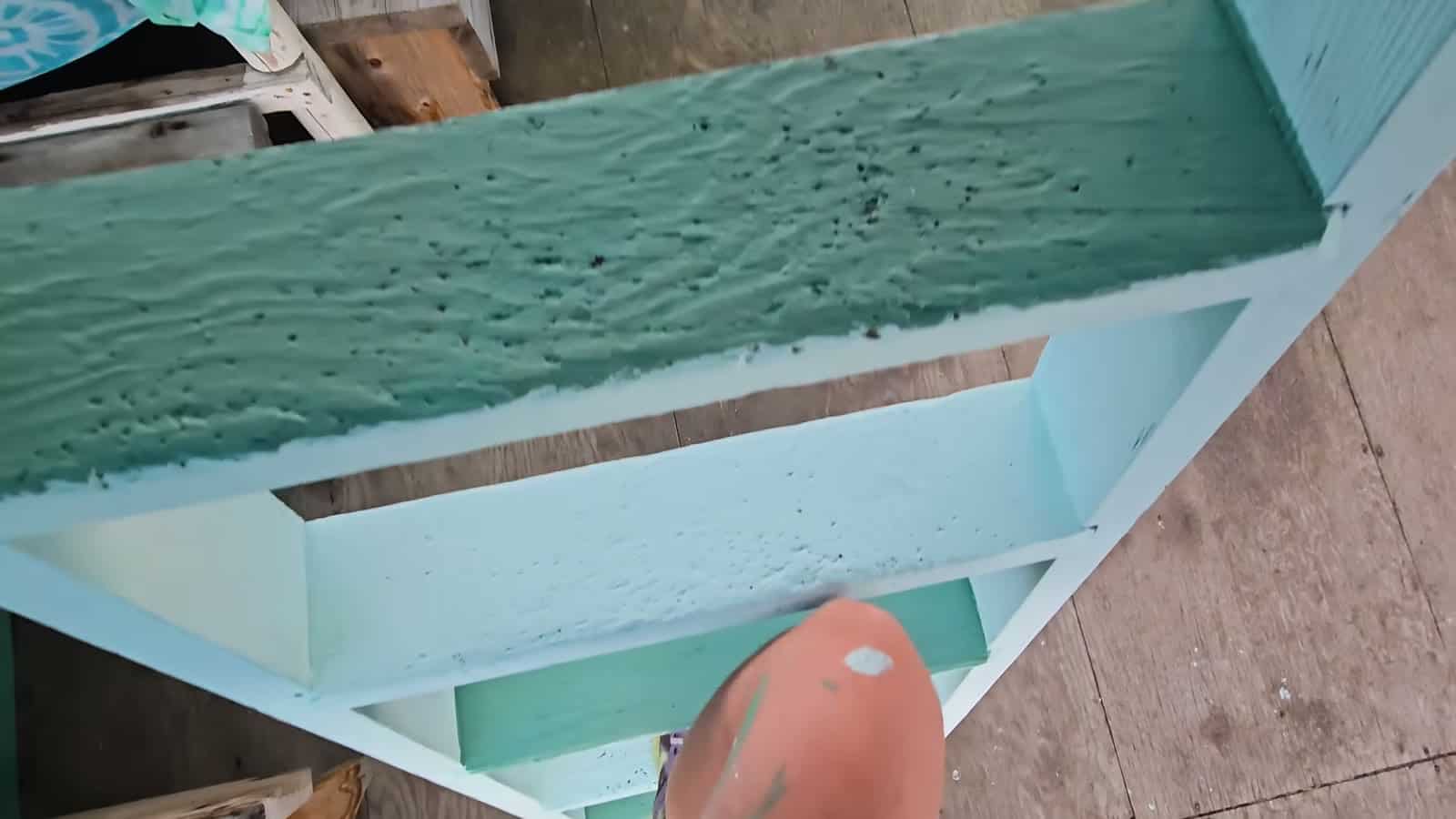
She also left a kit behind for the next visitor: the ladder, plus a bucket with a hammer, nails, expanding foam, steel wool, rat traps, a broom, and a dustpan. Next to the old logbook she added a new guest book with her own entry as the first page. Before leaving she boarded the windows on the windward side of the building, which takes the worst of the weather.
“I’m weirdly proud of myself right now,” she says at the end. She spent about $1,700 Canadian (roughly $1,300 US), mostly on paint and plexiglass, over eight working days.
Restoration Details
- Building: a remote two-story wooden fire lookout in Canada (location kept private)
- Last previous restoration: 1995, according to a note left in the lookout
- Time: 8 working days plus 1 rain day, working solo
- Cost: about $1,700 CAD (roughly $1,300 USD)
- Paint: 8 gallons in total: 3 primer, 2 exterior paint-and-primer (Snowfall White, flat), 2 light blue and 1 color-matched teal for the interior
- Windows: 8 openings; 6 fitted with pre-cut 24 x 28 inch plexiglass framed down with scrap 2x4s and caulk, 2 boarded up because of structural rot
- Tools: hand saw, hammer and nails, caulk gun, expanding foam, cordless vacuum, step ladder; no power tools
- Utilities: none. All water was packed in and the vacuum was charged in her car
Lessons From a Solo Lookout Restoration
- Pick remote over convenient. A building nobody visits is less likely to be vandalized after you leave.
- Find the rodent entrances first. Sealing a broken floor hatch and closing the window openings protected everything else she did.
- Buy stock sizes and frame down. Pre-cut plexiglass plus scrap-wood blocking was easier than cutting acrylic on a mountaintop.
- Bring a cordless vacuum. Brooms just move dust and droppings around in a building like this.
- Weathered wood drinks primer. Plan for more paint than you think you need. Eight gallons still wasn’t enough to finish the cab.
- Don’t cover up rot. If the damage reaches the structure, board it up and leave it for someone who can fix it properly.
- Leave supplies behind. A ladder, materials, and a fresh guest book make it easier for the next person to keep going.
Watch the Full Restoration
The full video runs about an hour and fifteen minutes, from the first scouting visit to the last board going back up.
Video: Rosa / Life Out of My Element, “solo restoration of abandoned fire lookout – start to finish” on YouTube.
Highlights
- One woman, eight working days, and no power tools
- Eight missing windows: six replaced with plexiglass, two boarded over rot
- Original teal interior color-matched from a paint chip and repainted
- Eight gallons of paint carried up a steep trail by backpack
- Flying ants, a bear cub, rainstorms, and a wildfire 22 km away
- About $1,700 CAD in supplies, with tools and materials left behind for the next volunteer
Learn More
Rosa / Life Out of My Element
YouTube: youtube.com/@lifeoutofmyelement
Instagram: @lifeinmyelement
Video stills: Rosa / Life Out of My Element.
Explore More
- Rosa Has Lived in Her Honda Element for 9 Years and Nearly 300,000 Miles
- She’s Been Living Out of Her Honda Element for Six Years
- She Bought an Abandoned Lake Erie Lighthouse at Auction and Spent 15 Years Making It a Home
- Calpine Lookout: Sleep in a 1934 Fire Lookout Tower in Tahoe National Forest
- Jersey Jim Lookout: Sleep in a 55-Foot Fire Tower in Colorado’s San Juan Mountains
- Red Oak Fire Lookout: An 80-Foot Steel Tower With a 14×14 Cab
Would you spend eight days alone on a mountaintop to save a lookout like this? Tell us in the comments.
If you enjoyed this you’ll LOVE our Free Daily Tiny House Newsletter with even more!
You can also join our Small House Newsletter!
Also, try our Tiny Houses For Sale Newsletter! Thank you!
More Like This: Alternatives | Tours & Features | Video Tours
Disclosure: This post may contain affiliate links. If you purchase through one of our links, we may earn a commission at no additional cost to you.


Alex
Latest posts by Alex (see all)
- She Restored an Abandoned Fire Lookout by Herself in 8 Days, Without Power Tools - November 19, 2026
- A Northwoods Cabin-Style Tiny House Shell with a Wood Stove in Michigan’s Upper Peninsula - November 19, 2026
- Owl Creek Cabin Grew Up: The Case for Building Small and Adding On Later - November 19, 2026










Join the Conversation
No comments yet. Be the first to join the conversation.