
Disclosure: This post may contain affiliate links. If you purchase through one of our links, we may earn a commission at no additional cost to you.
There’s something about a small cabin on the coast of Maine that just speaks to me. The Pine Cabin is a 420-square-foot retreat nestled on a former saltwater farm in Sedgwick, Maine, and it’s one of the most thoughtfully designed small cabins I’ve come across.
Architects Bill Bowick and David Bouffard discovered this waterfront property and knew it deserved something special. Working with builder Jon Ellsworth of Carding Brook Farm, they designed and constructed three boat-inspired cabins on the land. The Pine is the smallest of the three, and honestly, it might be my favorite. It’s a studio-style layout with everything you need and nothing you don’t.
What really sets this cabin apart is that it was built using pine milled right on the property. That kind of connection between the structure and the land it sits on is rare, and you can feel it the moment you step inside.
Don’t miss other amazing tiny homes like this – join our FREE Tiny House Newsletter for more!
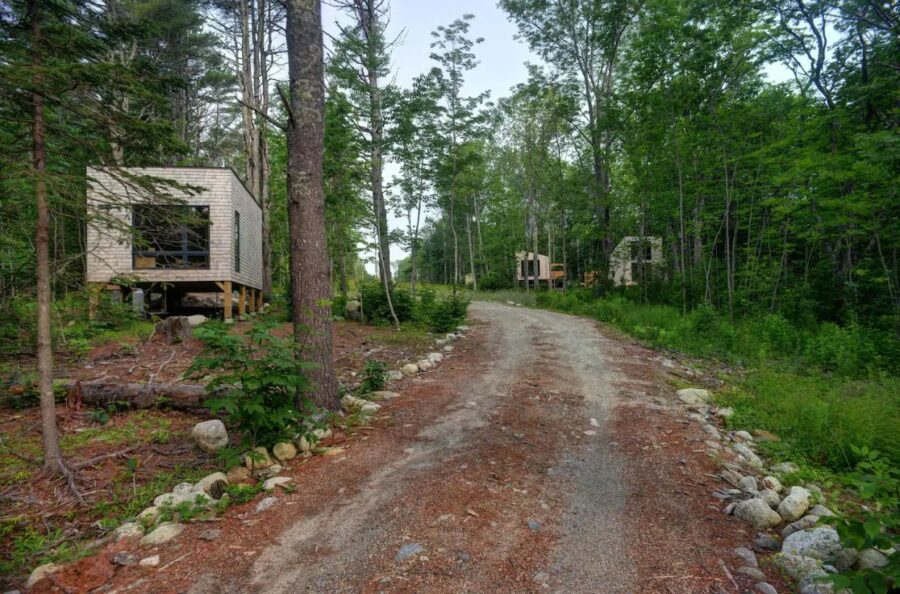
Built from Pine Milled Right on the Property
Images via @thecabinsatcurrierlanding/Instagram
The Pine Cabin uses standard 2×4 construction, while the other two cabins on the property are timber-framed. Even so, the use of locally milled pine gives it a warmth and character that you just don’t get from standard building materials. The architects drew inspiration from Maine’s boat-building tradition, and you can see that influence in the cabin’s clean lines and efficient use of space.
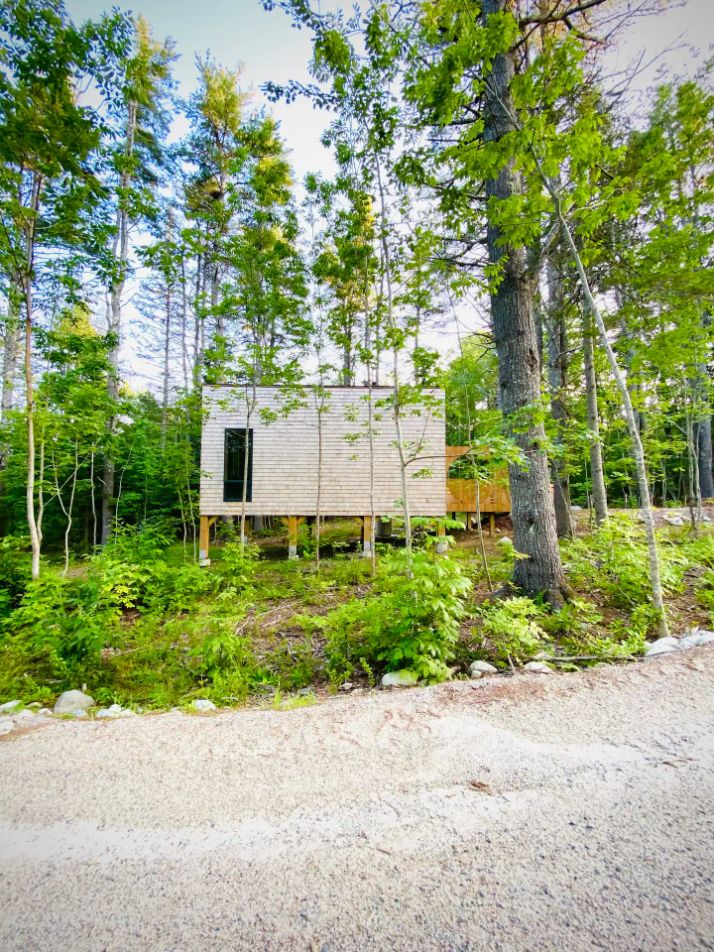
A Charming Cabin Tucked Along the Road
Images via @thecabinsatcurrierlanding/Instagram
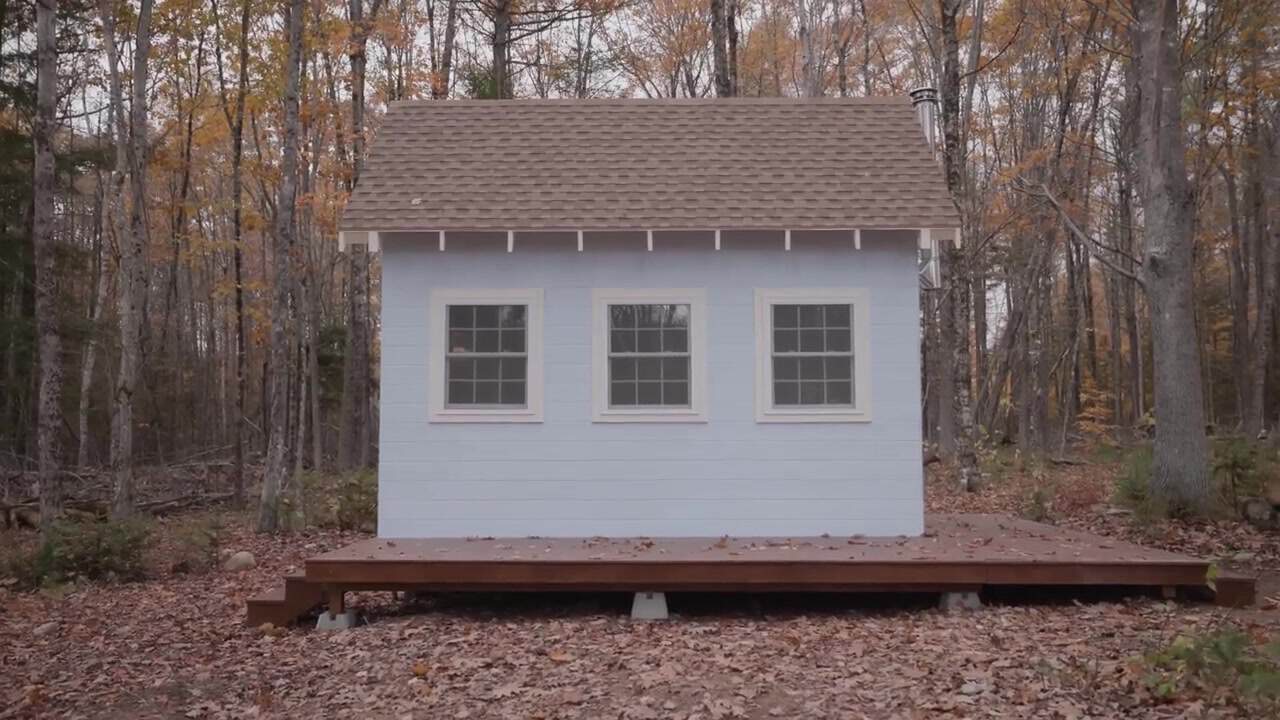
From the road, The Pine has this humble, unassuming presence that I really appreciate. It doesn’t try to be more than it is. It’s a well-built cabin that fits naturally into its wooded surroundings, and that’s exactly what makes it so appealing.
A Side Porch for Quiet Mornings

Images via @thecabinsatcurrierlanding/Instagram
The small side porch is one of those features that extends the cabin’s living space without adding square footage. I can picture sitting out here with a cup of coffee in the morning, listening to the birds and looking out at the trees. In a space this small, having that outdoor connection makes all the difference.
A Wood Stove That Heats the Whole Space

Images via @thecabinsatcurrierlanding/Instagram
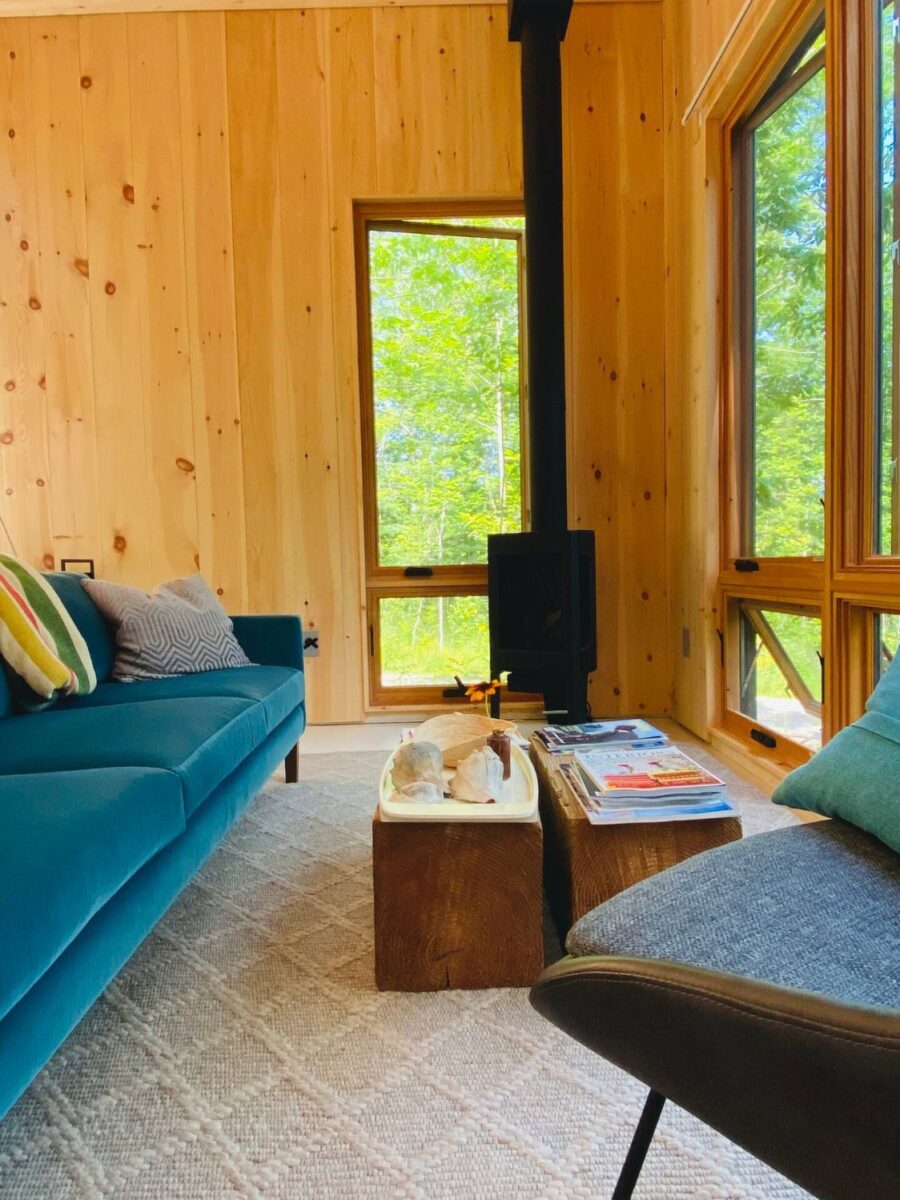
One of the best things about a 420-square-foot cabin? A single wood stove can heat the entire space. This stove sits in the corner and does the job beautifully. On a cold Maine evening, there’s nothing better than the crackle of a fire and the warmth filling every corner of the room. It’s one of the big advantages of small living — you’re never far from the heat source.
Comfortable Seating with Natural Light
Images via @thecabinsatcurrierlanding/Instagram
The living area features a sleek blue couch positioned right by the windows. I love how the designers prioritized natural light throughout this cabin — the windows are generous for a space this size, and they make the interior feel much bigger than 420 square feet. It’s a great spot to curl up with a book or just watch the trees sway outside.
A Skylight Over the Bed for Stargazing
Images via @thecabinsatcurrierlanding/Instagram
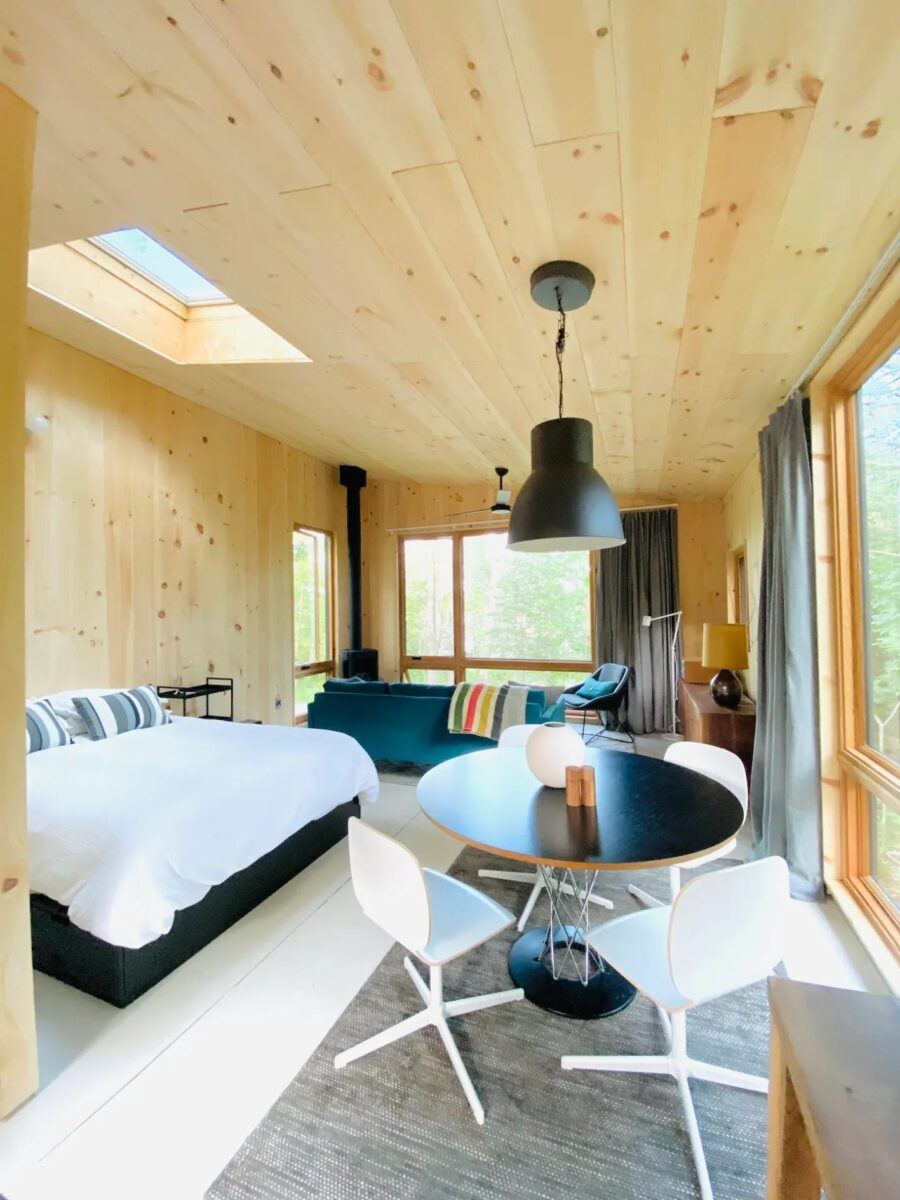
This is the detail that got me. There’s a skylight directly over the queen-sized bed, which means you can lie back and look up at the stars on a clear Maine night. It’s a small touch that turns a regular sleeping area into something really special. In a studio-style cabin where the bed is part of the main room, features like this help define the sleeping zone without needing walls.
A Dining Nook with Views of the Trees
Images via @thecabinsatcurrierlanding/Instagram
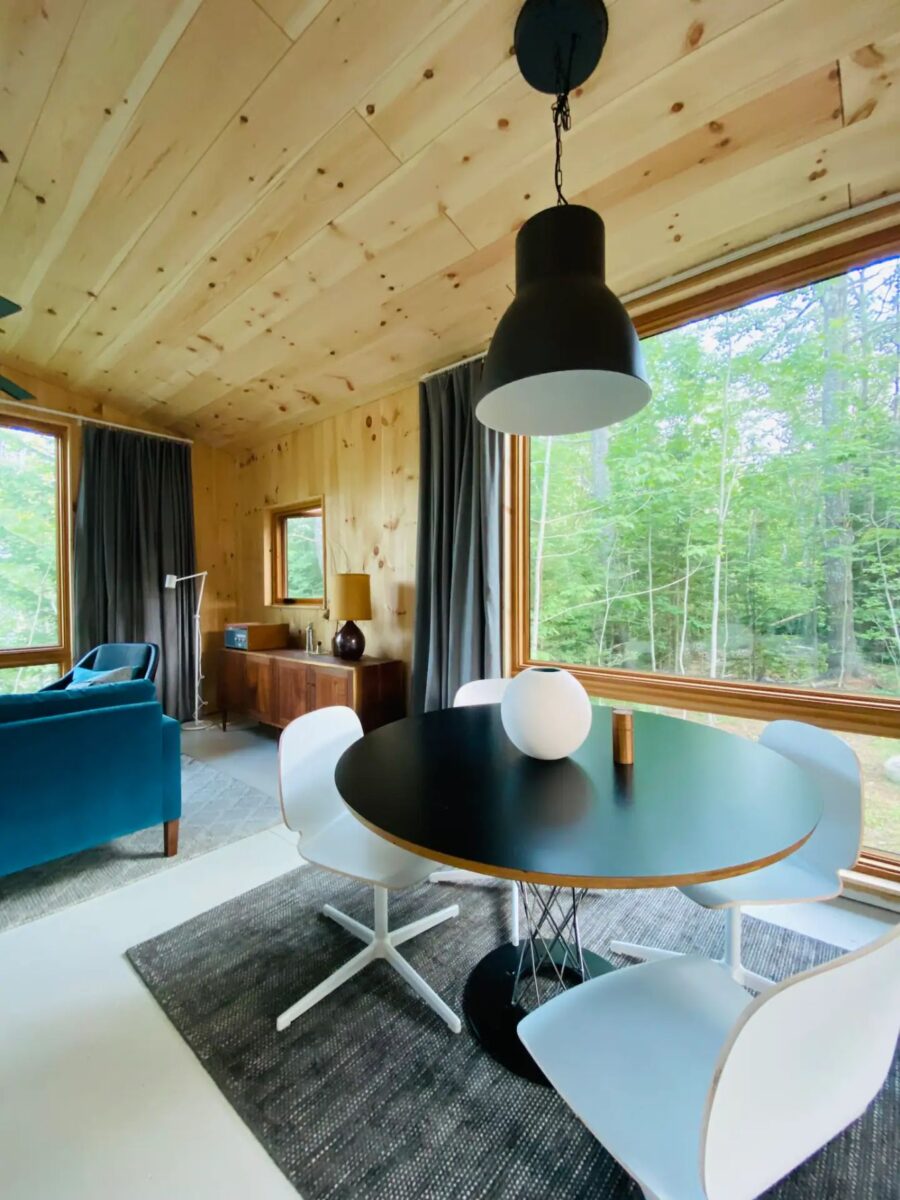
The dining area seats four and is positioned next to a large window, so every meal comes with a view. This is smart cabin design — putting the table by the window creates the feeling of eating outdoors while keeping you sheltered from the elements.
Rustic Wood Block Coffee Table
Images via @thecabinsatcurrierlanding/Instagram
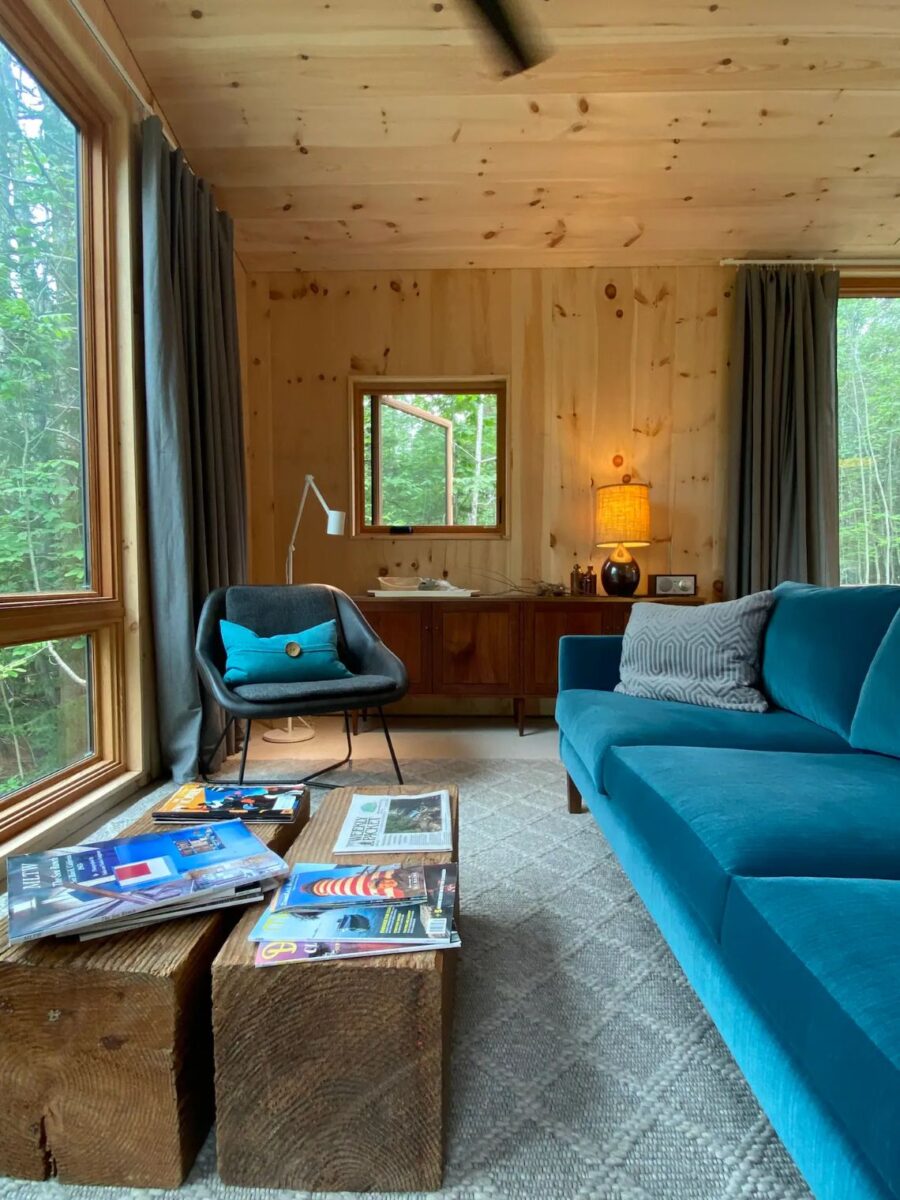
I love these big wooden blocks used as a coffee table. It’s a small detail, but it ties the whole interior back to the surrounding forest. Furniture like this — natural, sturdy, and simple — is exactly what works in a cabin setting. It doesn’t compete with the space; it complements it.
A Cozy Reading Corner

Images via @thecabinsatcurrierlanding/Instagram
There’s also an additional chair for reading or just relaxing. Having multiple seating options in a studio cabin is a smart move — it means two people can comfortably have their own space even in 420 square feet.
A Galley Kitchen with a View
Images via @thecabinsatcurrierlanding/Instagram
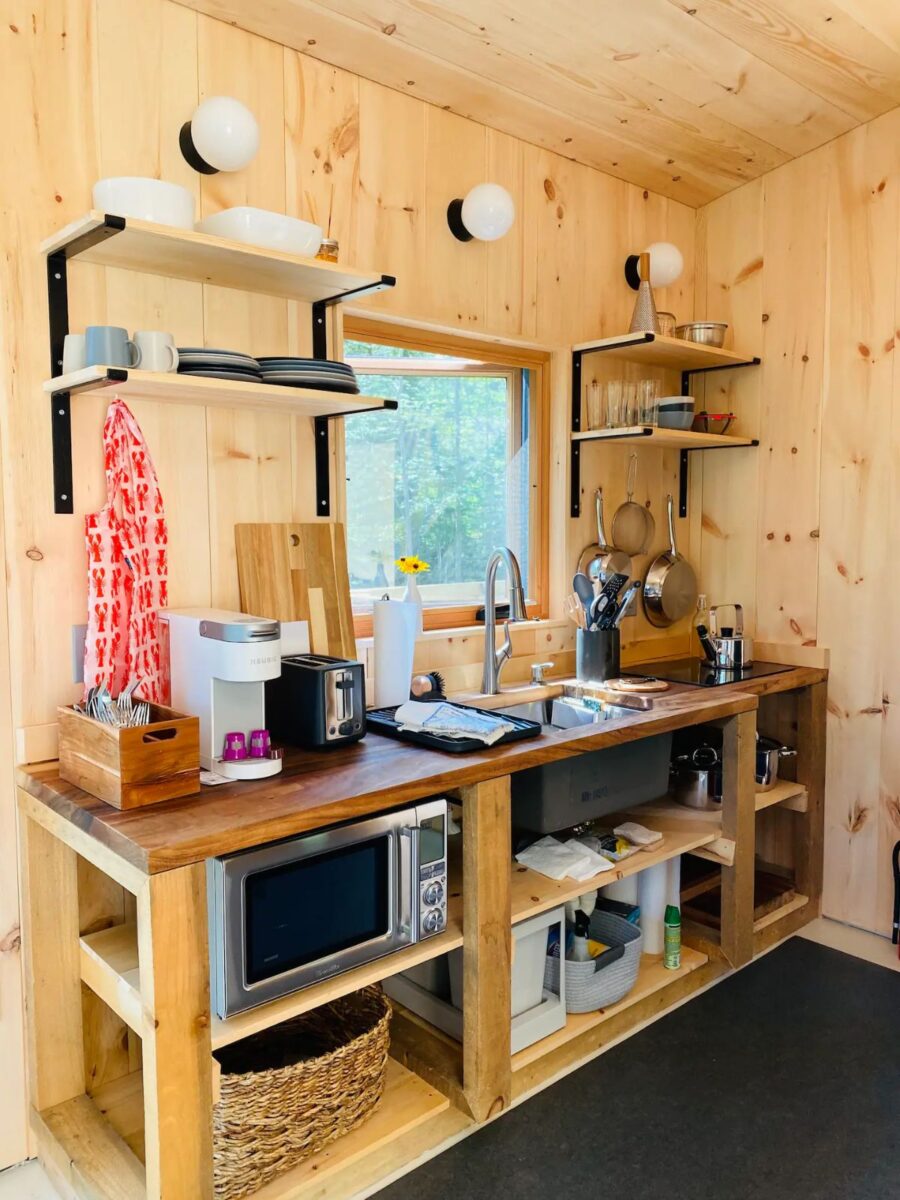
The galley kitchen is efficient and well-equipped. It includes a sink with a window directly above it — one of my favorite design choices in any small kitchen. Doing dishes becomes a lot more enjoyable when you’ve got a view of the Maine woods right in front of you. The kitchen also comes stocked with dishes, cups, and cutlery for guests.
A Two-Burner Cooktop for Simple Meals
Images via @thecabinsatcurrierlanding/Instagram
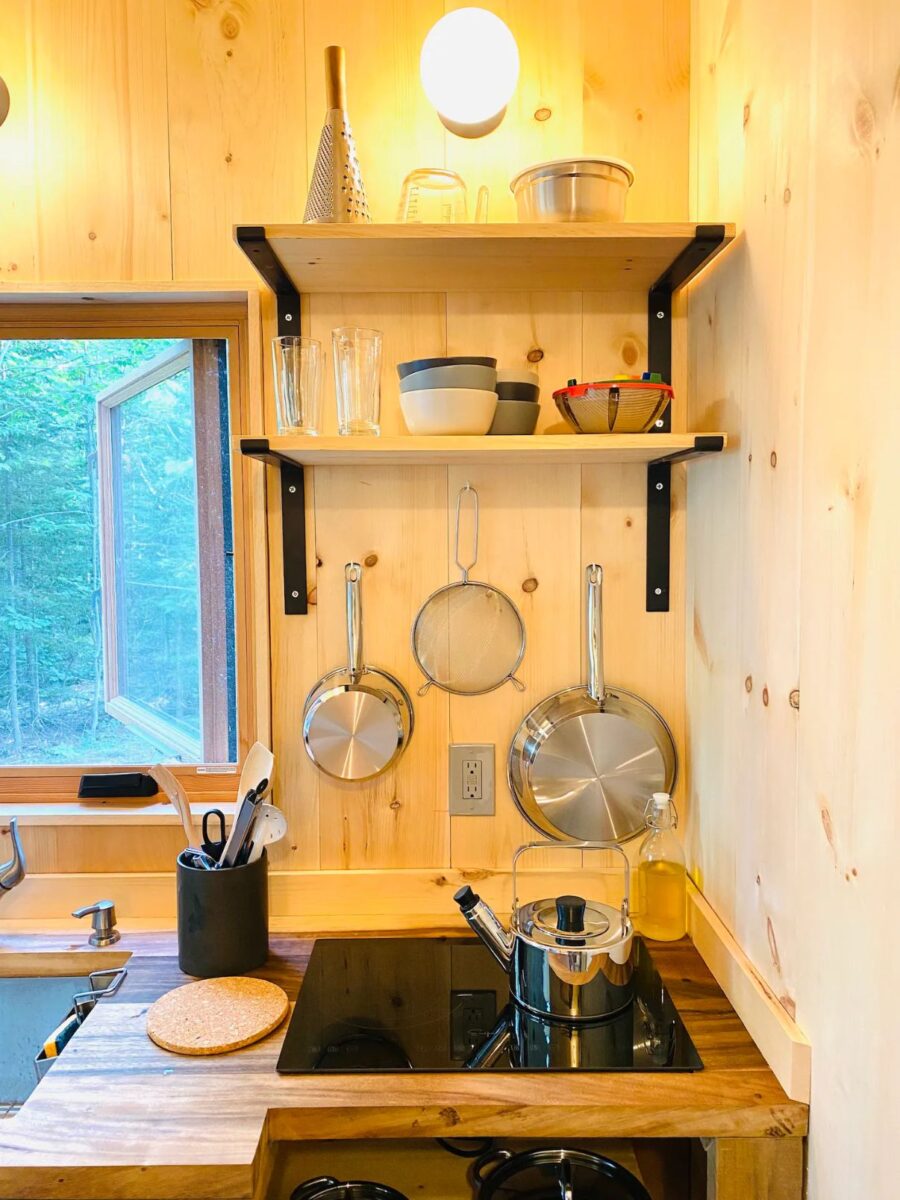
The two-burner cooktop and microwave give you everything you need for cooking meals during your stay. A galley layout is one of the most efficient kitchen designs for a small space because everything is within arm’s reach. You can prep, cook, and clean up all without taking a step.
A 3/4 Bathroom with a Standard Toilet

Images via @thecabinsatcurrierlanding/Instagram
The cabin has a 3/4 bathroom with a standard residential toilet — no composting setup here. For a vacation rental, this is exactly what most guests want to see. It’s clean, functional, and doesn’t require any special instructions.
A Shower with Custom Tile Inlay

Images via @thecabinsatcurrierlanding/Instagram
The shower stall has this beautiful custom tile inlay that adds a nice artistic touch. It’s the kind of detail that shows the builders cared about the craftsmanship, not just the function. Little things like this are what separate a thoughtfully designed cabin from a basic one.
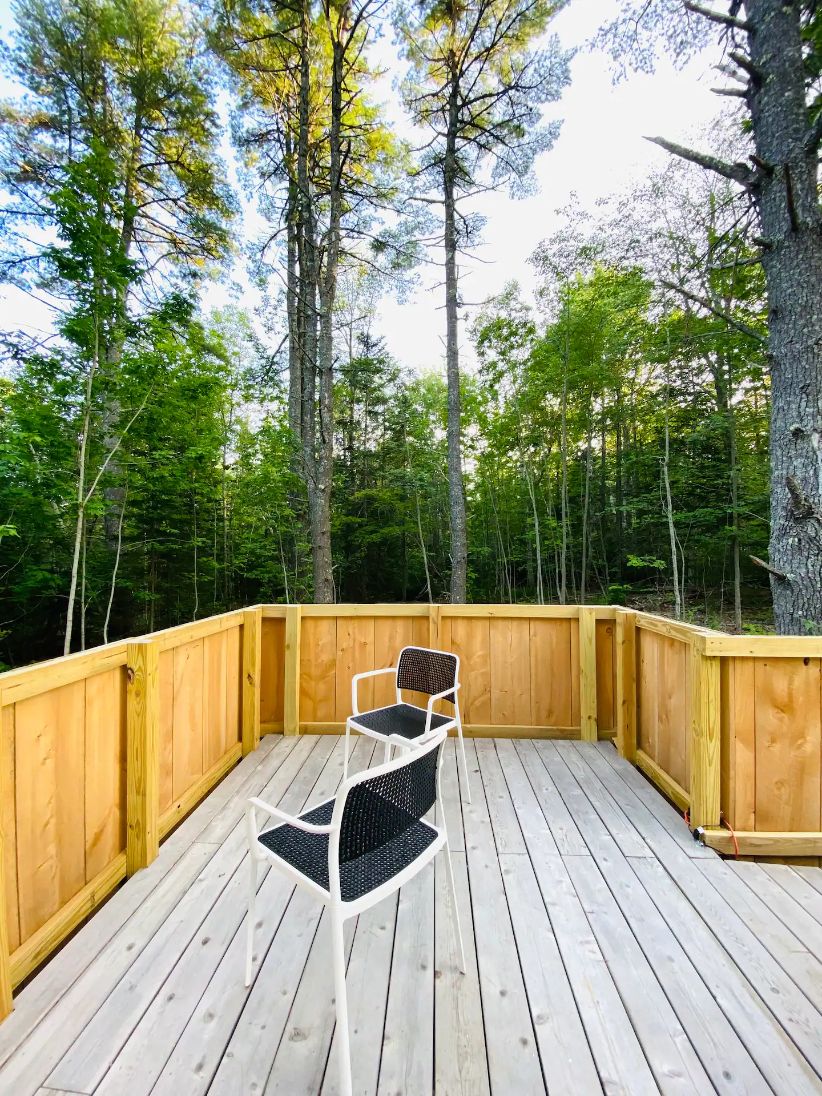
Your Private Deck Among the Trees
Images via @thecabinsatcurrierlanding/Instagram
The outdoor deck is surrounded by tall pine trees, and it extends your living space significantly. When the weather is nice, this is where you’ll want to spend most of your time. It’s private, quiet, and completely immersed in nature.
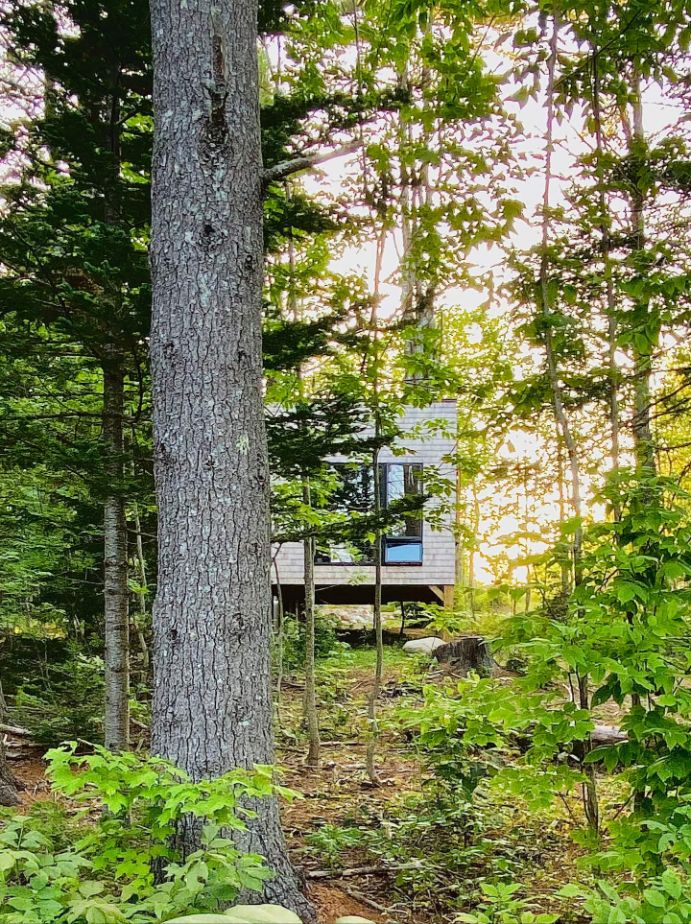
The Cabin Nestled in the Woods
Images via @thecabinsatcurrierlanding/Instagram
From the woods looking back, you can see how the cabin sits naturally in its environment. The property is a former saltwater farm with waterfront access, so you’re getting both forest and coast in one stay. That combination is hard to find.
Highlights of The Pine Cabin
- Size: 420 square feet, studio-style layout
- Construction: Standard 2×4 with pine milled on the property
- Architects: Bill Bowick and David Bouffard
- Builder: Jon Ellsworth of Carding Brook Farm
- Location: Sedgwick, Maine (former saltwater farm with waterfront access)
- Heating: Wood-burning stove
- Kitchen: Galley layout with two-burner cooktop, microwave, and sink
- Sleeping: Queen-sized bed with skylight above
- Bathroom: 3/4 bath with standard toilet and custom tile shower
- Outdoor Space: Side porch and private deck among the trees
- Dining: Indoor table seating four
- Best Feature: Skylight over the bed for stargazing on clear Maine nights
Why a Studio-Style Cabin Works
Studio-style cabins like The Pine offer some real advantages over layouts with separate rooms or lofts:
- Single-floor living: Everything is on one level, making it accessible and easy to navigate
- Open feel: Without interior walls eating up space, 420 square feet feels much larger than you’d expect
- Natural flow: You move from the kitchen to the living area to the bed without doors or hallways
- Easier to heat: A single wood stove can warm the entire space evenly
- More windows: Without interior walls, natural light reaches every corner
If you’re considering building a small cabin or looking for inspiration for a vacation rental property, The Pine Cabin shows how a clean studio layout with quality materials and thoughtful details can create something really special.
Learn More
- Dwell article about The Cabins at Currier Landing
- Book a stay at The Pine Cabin on Airbnb
- Follow The Cabins at Currier Landing on Instagram
Related Stories
- Moody Ranch Cabin in Colorado w/ Screened-In Porch
- Swiss-Roll-Style Cabin in Canterbury: Bumble Barn
- Peace Cabin: Modern Two-Bedroom Skylit Cabin
If you enjoyed this you’ll LOVE our Free Daily Tiny House Newsletter with even more!
You can also join our Small House Newsletter!
Also, try our Tiny Houses For Sale Newsletter! Thank you!
More Like This: Tiny Houses | Cabins | Cottages | Tiny House Vacations | Airbnbs
See The Latest: Go Back Home to See Our Latest Tiny Houses
Disclosure: This post may contain affiliate links. If you purchase through one of our links, we may earn a commission at no additional cost to you.


Alex
Latest posts by Alex (see all)
- A Hotel Designer’s 484 Sq Ft Milan Apartment with a Rotating Room Divider - October 9, 2026
- Hermosa Orchards Village: A Durango Tiny Home Community with Its Own Fruit Orchard - October 9, 2026
- The Sanctuary Minnesota: A Tiny House Village on 80 Acres of Woods - October 9, 2026





To be sure, when a description of a house is timber frame, there are certain expectations of what that looks like. This is not it. Very disappointing. In the further description you say that the other cabins are timber frame but the one pictured is 2 x 4 construction so it would have been better to describe it as that and not create expectations. And when the home is 420 sq. ft., one would expect a better kitchen, too. I was so looking forward to this particular post but I am sorely disappointed. Not that the home is lacking aesthetically or that it isn’t functional but timber frame is so fabulous and this, I’m afraid, is not.
Specifically, of the three cabins, Fern and Meadow are the two timber framed structures being referred to… Only the Pine Cabin is made from two-by-fours construction with insulation for year-round use.
It’s just that the Pine Cabin is the only interior shown above but the linked Dwell article shows the others.
However, something to keep in mind is Timber framing doesn’t mean no other types of construction won’t be mixed in for the whole structure.
Mind, framing is often covered up and it’s just that timber framing is not often covered up but exposed, especially in the interior, but there are times where it will be covered up and thus won’t be obvious that it was used.
While architects often will retain the right to be creative with how they design the structure and won’t always limit themselves to traditional design interpretations. So, it’s something to consider whenever architects are mentioned…
Builders can also use faux Timber Framing for the look but not actually use any real Timber Framing in the construction. So, keep in mind there is a distinction between the construction and appearance and that they don’t necessarily go hand in hand…
Some historical construction methods, like Japanese wooden houses, even intentionally hid the joinery instead of leaving it exposed, despite using similar timber framing methods. Just to show appearance was always something that could be separate from the construction method used…
Timber framing specifically refers to the type of joinery and use of beams in the construction but modern construction also has to consider other things like integrating technology, energy efficiency, insulation, etc. Along with costs, time, labor and other considerations.
So, it’s not like we are building these structures exactly like they used to be over a hundred years ago. Thus expectations should be tempered with the possibility of other factors being involved…