
Disclosure: This post may contain affiliate links. If you purchase through one of our links, we may earn a commission at no additional cost to you.
The Crescent Chalet from Deltec Homes demonstrates how round architecture solves the narrow lot problem by building vertically across three stories. This 24-by-36-foot prefabricated home maximizes views with its curved wall of windows while maintaining a compact footprint. Deltec Homes, based in Asheville, North Carolina, has specialized in round prefabricated residential structures since 1968 and ships their kit homes nationwide.
Don’t miss other interesting tiny homes like this – join our FREE Tiny House Newsletter for more!
Three-Story Round Home Exterior

Images via Deltec Homes/Instagram
Panoramic Windows on Upper Level
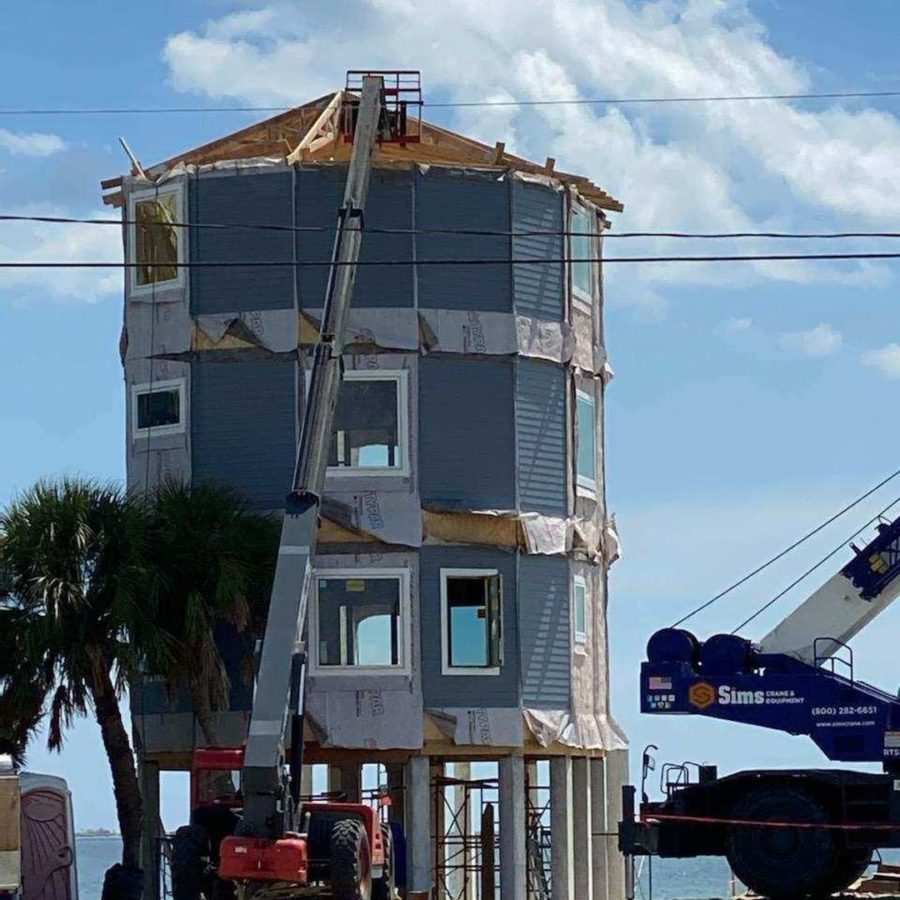
Images via Deltec Homes/Instagram
Interior Framing During Construction
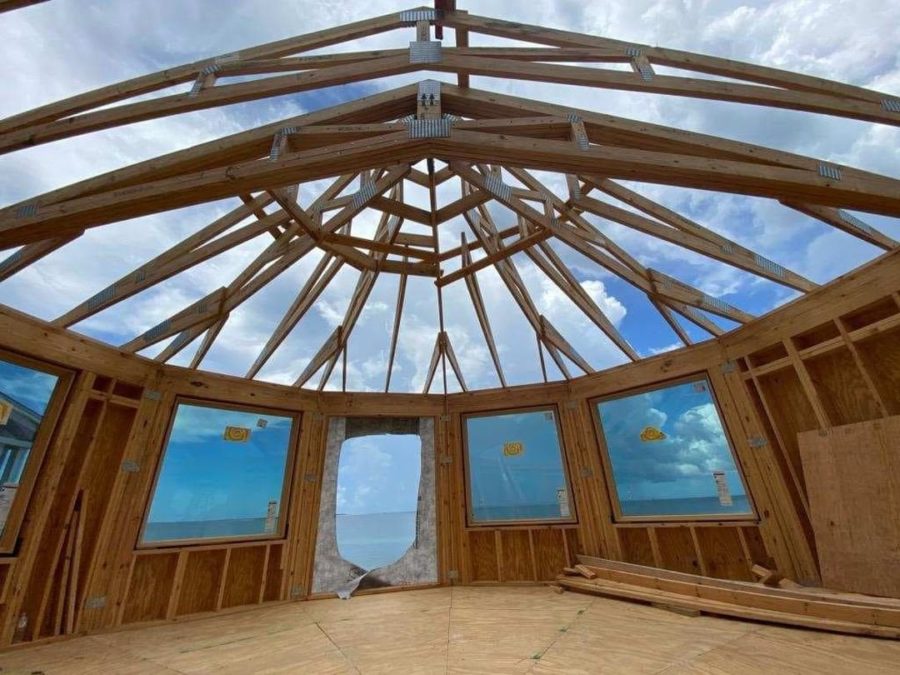
Images via Deltec Homes/Instagram
Prefabricated Round Structure
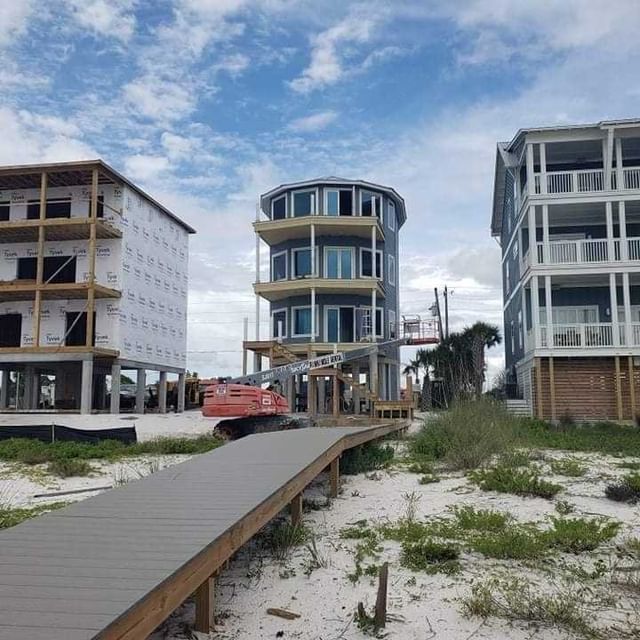
Images via Deltec Homes/Instagram
360-Degree View Potential
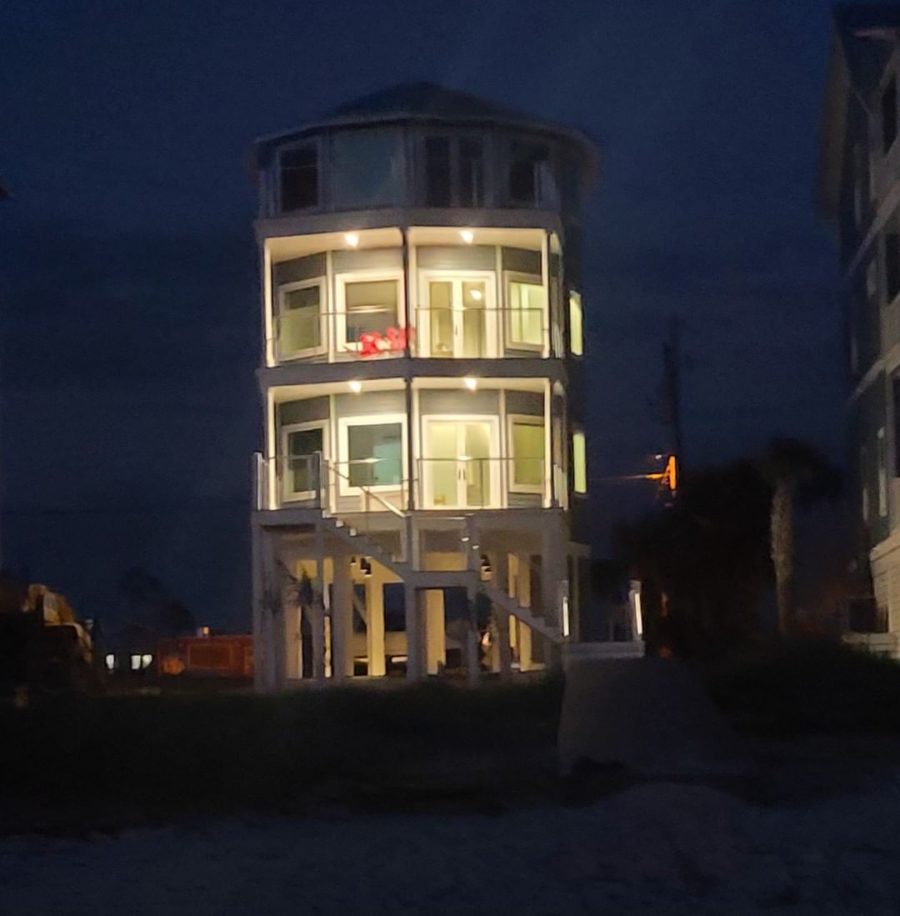
Images via Deltec Homes/Instagram
Design Details
- Model: Crescent Chalet
- Builder: Deltec Homes
- Location: Asheville, North Carolina (ships nationwide)
- Founded: 1968
- Dimensions: 24′ x 36′
- Stories: 3
- Design: Round/curved prefabricated structure
- Construction Type: Prefabricated kit home
- Specialty: Round prefabricated residential homes since 1995
- Windows: Curved panoramic windows for 360-degree views
- Ideal For: Narrow lots, view properties
Lessons from This Design
- Round Footprints Maximize Narrow Lots: A circular or crescent-shaped floor plan fits where rectangular homes cannot, making otherwise unbuildable narrow lots viable for residential construction
- Vertical Building Multiplies Usable Space: Going up three stories on a compact footprint provides the square footage of a larger home without consuming more land area
- Prefabrication Enables Complex Geometry: Round structures that would be difficult and expensive to frame on-site become practical when factory-built with precision jigs and repeatable processes
- Curved Walls Capture Panoramic Views: Unlike flat walls that face a single direction, curved window walls can capture views across a wide arc, making them ideal for scenic properties
- Kit Homes Ship Anywhere: Prefabricated kit construction allows specialized builders like Deltec to serve customers nationwide, not just those within driving distance of their facility
Learn More
Related Stories
- Shoal Creek Cabin on Stilts in TN
- Casa Maria 764-sq.-ft. Whimsical Cottage on Stilts in Costa Rica
- She Built A Beautiful Tiny Cottage on Stilts in Texas
You can share this using the e-mail and social media re-share buttons below. Thanks!
If you enjoyed this you’ll LOVE our Free Daily Tiny House Newsletter with even more!
Also, try our Tiny Houses For Sale Newsletter!
More Like This: Cabins | Cottages | Floor Plans | Manufactured | Prefab | Prefab Builders | Resources | Small House Plans | Small Houses
See The Latest: Go Back Home to See Our Latest Tiny Houses
Disclosure: This post may contain affiliate links. If you purchase through one of our links, we may earn a commission at no additional cost to you.


Alex
Latest posts by Alex (see all)
- Nicky and Judy’s Cape Breton Tiny House With a Dog Elevator Is Now for Sale - October 15, 2026
- Canoe Bay Village Lakeside Homes in Wisconsin: Tour Them at Escape’s Open House Weekend - October 15, 2026
- The Biblioteque: A Library Treehouse Wrapped Around a Texas Cypress - October 15, 2026





Very cool concept. Obviously in a place that is exposed to routine high water.
Here is my question. I have gone past many places in Florida that are now on “stilts” like this. Where do all these folks park their cars/pickups/motorcycles to keep them high and dry at times of storms that surprise them? I do not see garages at most of these residences. Raised community parking structures and then stay away from the house till the water recedes? Use boats during flooding? Stay at hotels or friends places during storms? Living on the beaches seems like it can be disruptive to everyday life. But, to each his/her own. Me, I live on a tall hill in Wisconsin. I just need to deal with higher winds.
Elevated garage platforms tend to be very costly. So typically it’s either not done, car may even be parked under the house and it’s either evacuated when a storm hits or considered a more acceptable loss than the home. Alternatively, a housing complex or HOA may have pooled resources and have a multi-level parking garage that’s strictly for the home owners use or apartment complex, depending on area, etc. Or there can be a nearby commercial multi-level parking garage building and you just rent a spot, provided it’s not full already, but unless it’s out of the way, small town, etc. there’s usually such options…
Or you can build a garage that is water tight and seals up when it floods or if you have the budget, build your own elevated garage but mind you also need a way to get the car there and back down again… If lot is large enough for a ramp, then that can work, otherwise part of high cost would be an elevator system…
Course, it also depends on the topography of the property, if there are high areas then that could be a place to put a garage as it doesn’t need to be as large as the foundation for the home…
. . .or when the time comes, you can just jump in your vehicle and get the hell outa’ there! ?
The homes that are on stilts almost always are raised because of zoning ordinances, building codes, FEMA, the insurance industry, etc. It’s seldom voluntary. The bottom levels are usually used as garage, storage and even kitchens and offices, and are required to be built so that the water flows through to prevent storm surges/high waves from knocking the building of the supports. People that live in an area prone to hurricanes and tropical storms generally have have plans for what to do when the next storm is on the way. Evacuation, driving as many vehicles away as possible as possible, is one solution. Taking vehicles to a higher and drier parking area–with no large trees–is a frequent and inexpensive alternative; in my neighborhood we drive up to the large hospital parking lot less than 1/10 of a mile away, and then walk home. And moving everything upstairs from the ground level to safe places in the building, evacuating with valuable, etc. As the season gets really underway, and storms brew, when you run into someone you haven’t seen for a while, sooner or later you get into the “What are you going to do if that hurricane heads toward us?” discussion.
Hope those windows are Cat 3 safe.
Building on the coasts has become exorbitant. The cost, the much more restrictive building codes. Then add high property taxes, flood insurance (still fairly low), wind insurance (very expensive) and regular insurance).
We just sold ours, rebuilt post Katrina with 35 feet of storm waters, but if you can afford it, enjoy!