Disclosure: This post may contain affiliate links. If you purchase through one of our links, we may earn a commission at no additional cost to you.
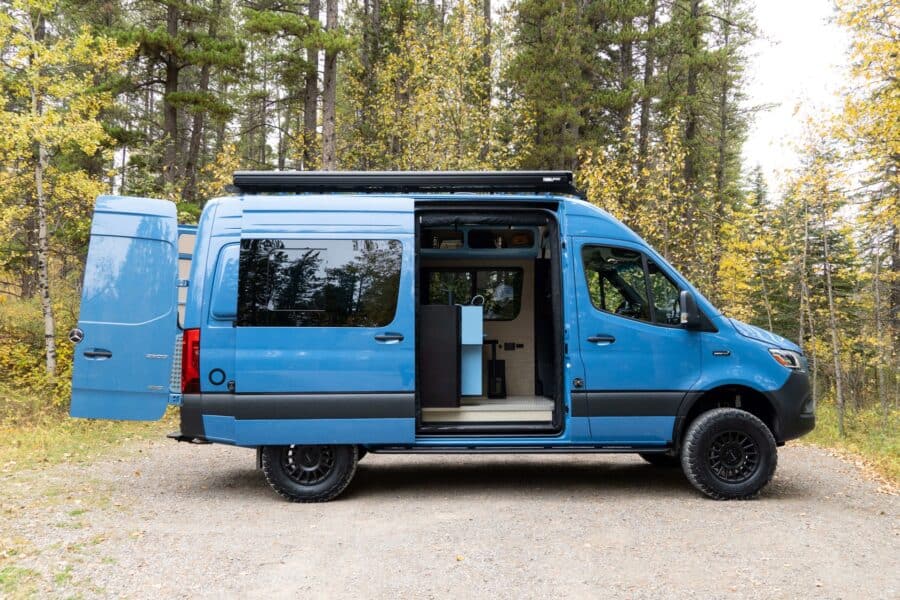
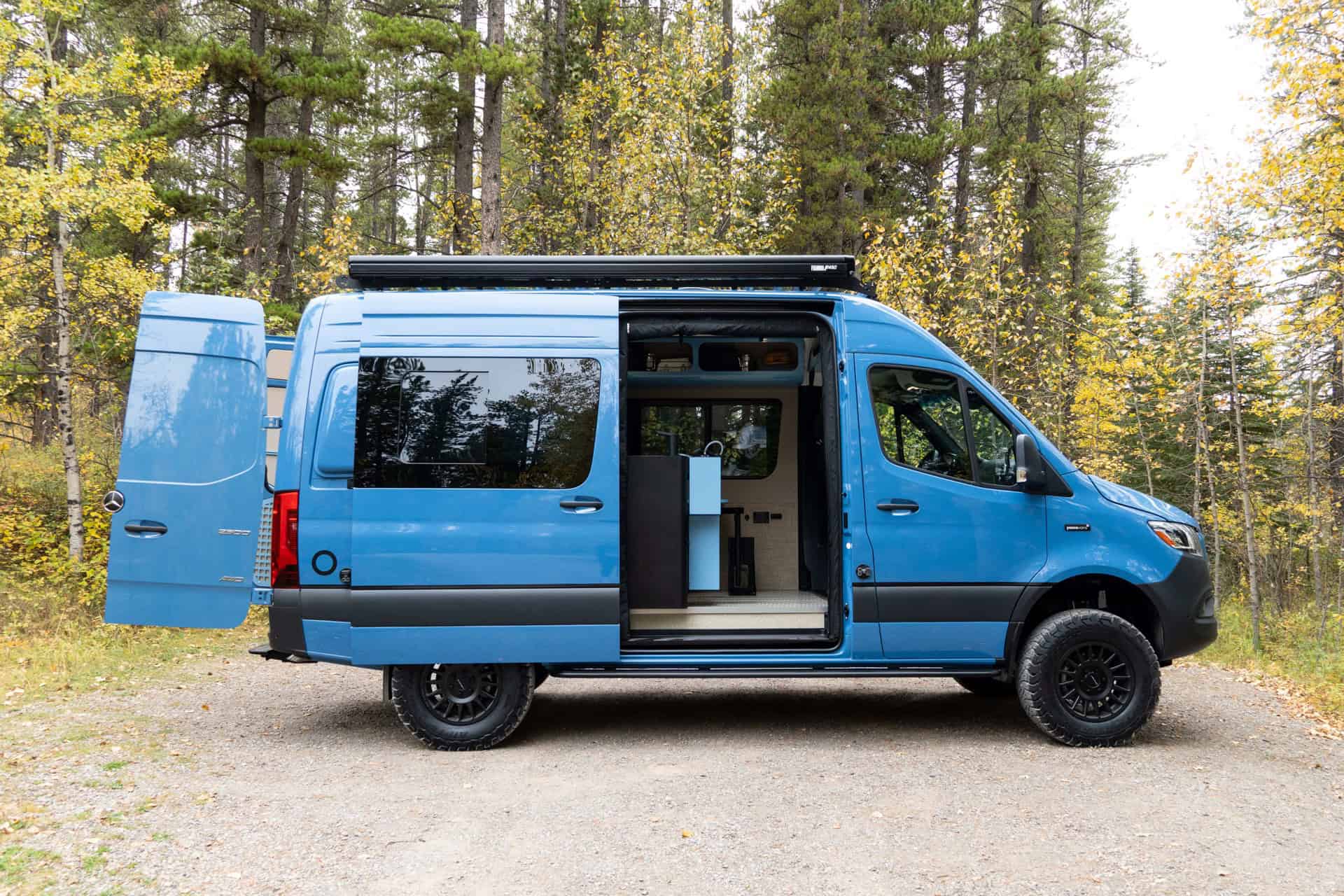
Yama Vans, a Canadian Sprinter upfitter, builds its adventure vans on a modular platform it calls the Gear Bus — “all of the thrills, some of the frills.” Peyto is one of those builds: a Mercedes-Benz Sprinter 144 with all-wheel drive, finished in a deep coastal blue and set up less like a rolling apartment and more like a garage you can sleep in.
The owner uses it as a practical daily driver on Vancouver Island — commuting, running quick errands, and spending long days exploring coastal roads and forest trails by bike. Almost every design decision reflects that pace: cab seats that swivel, a small and efficient galley, gear walls in place of bulky cabinets, and a bed that folds up and out of the way when the bikes need the floor.
Here’s a closer look at how it all works.
Images courtesy of Yama Vans
Built on an All-Wheel-Drive Sprinter 144
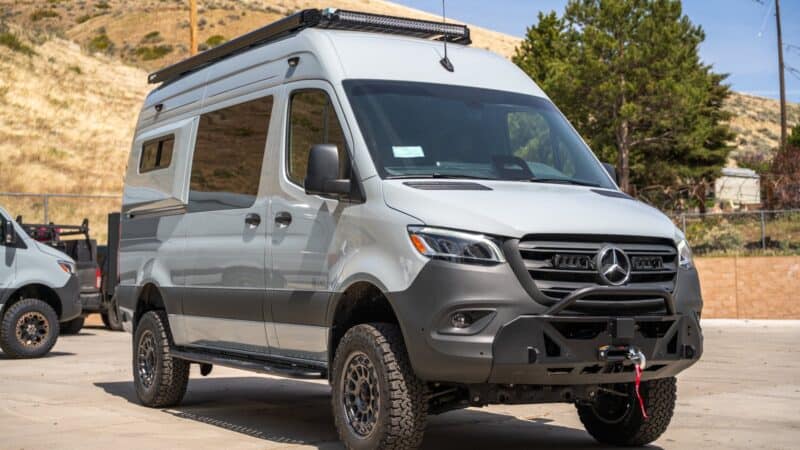
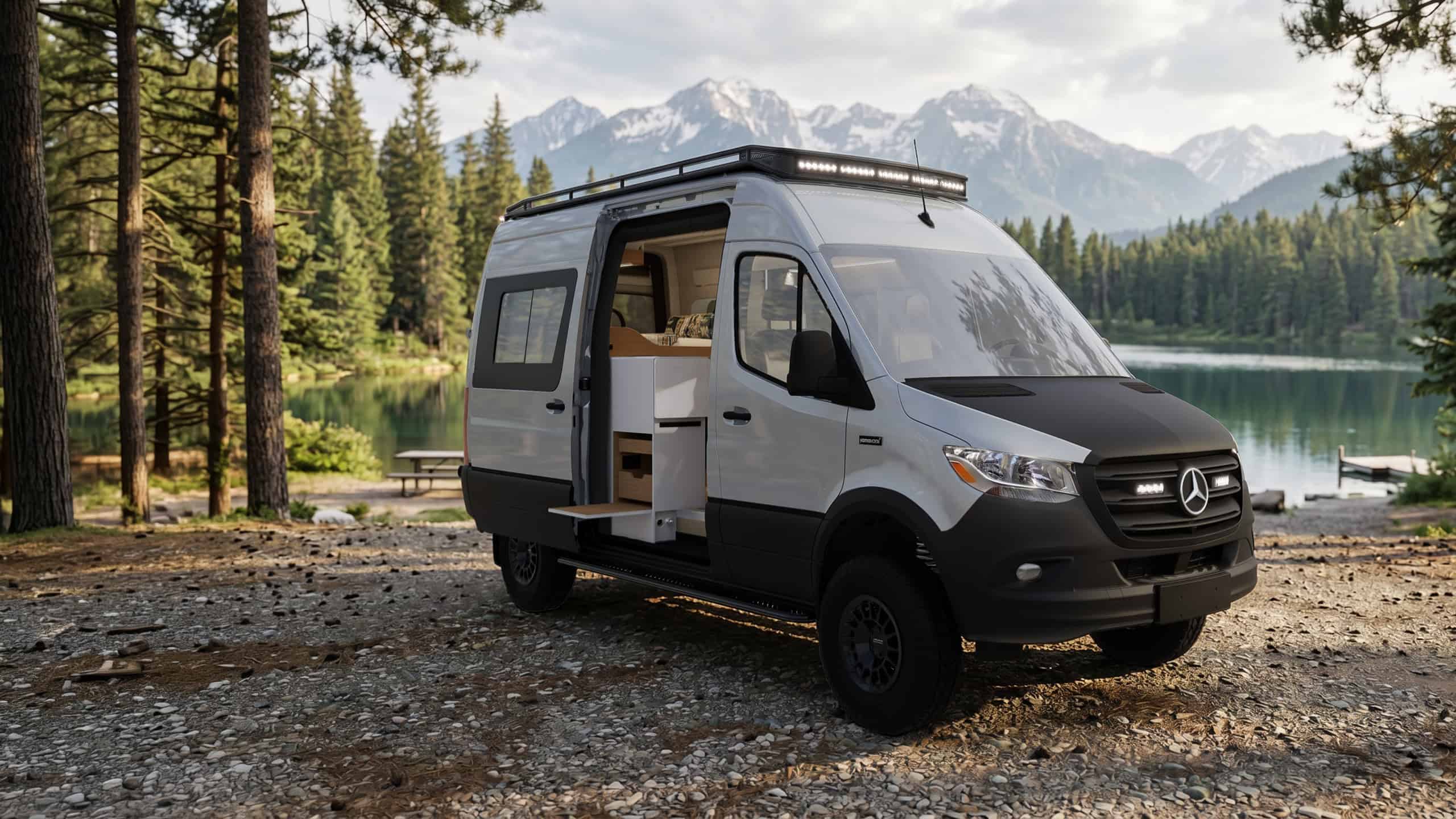
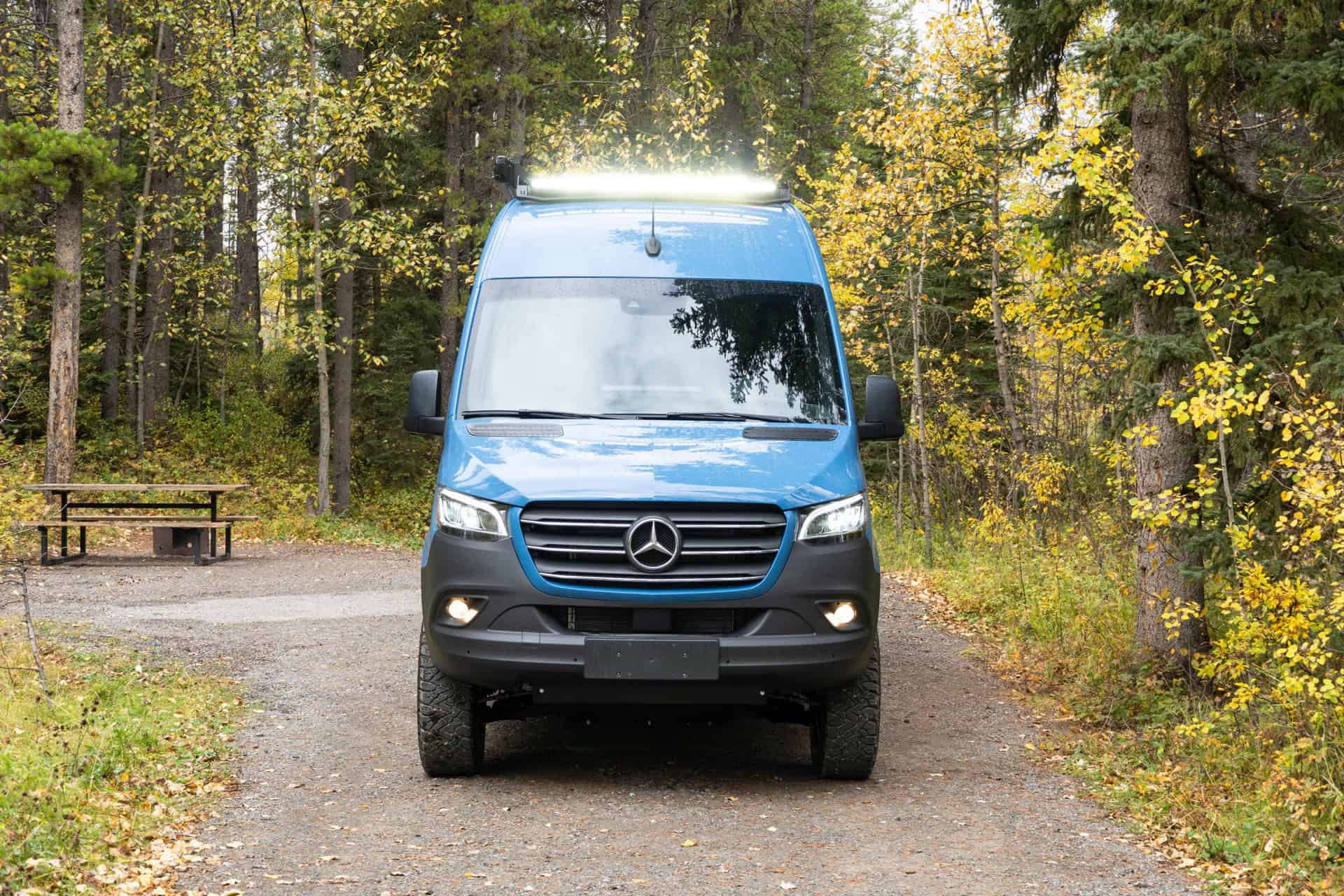
Peyto starts with the 144-inch-wheelbase Sprinter 2500 — the shorter of the two common Sprinter lengths, which keeps the van easy to park and genuinely daily-driveable while still leaving room for a complete interior. Power comes from Mercedes’ four-cylinder twin-turbo diesel paired with a nine-speed automatic, and the factory all-wheel-drive system means it doesn’t have to think twice about a wet boat ramp, a gravel logging road, or an early-season dusting of snow. The roof-mounted light bar and chunky all-terrain tires hint at where this one is willing to go after the pavement ends.
Images courtesy of Yama Vans
Cab Seats That Swivel to Face the Living Space
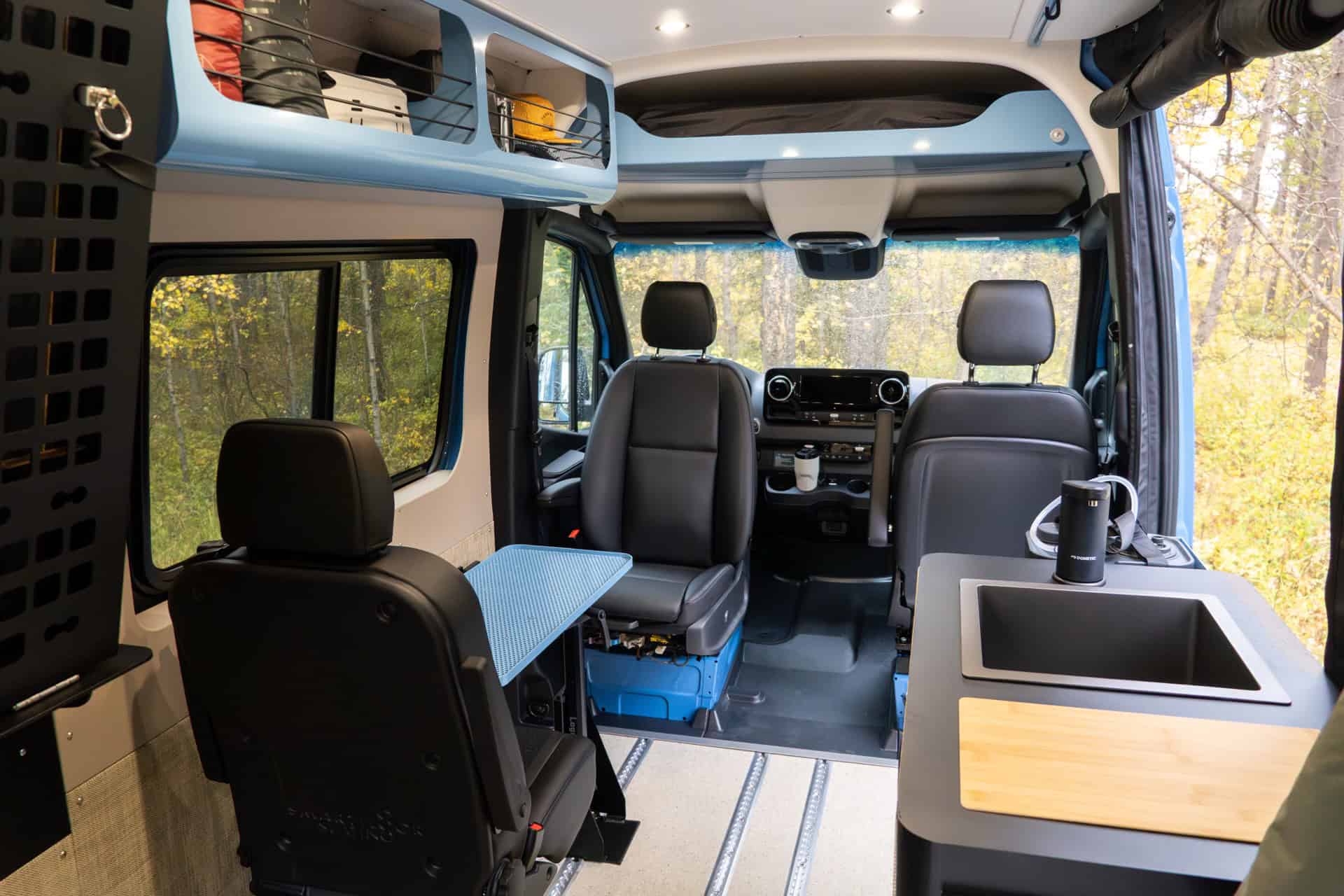
Both cab seats spin around to join the rear captain’s chairs, turning the front half of the van into the main living and social area — a smart move in a short van, because it borrows the cab’s square footage instead of wasting it. A compact pedestal table drops in between the seats for meals or laptop work, big sliding-door windows pull in the forest, and overhead cabinets with mesh fronts keep soft goods visible and ventilated.
Images courtesy of Yama Vans
A Compact Galley with a Slide-Out Fridge
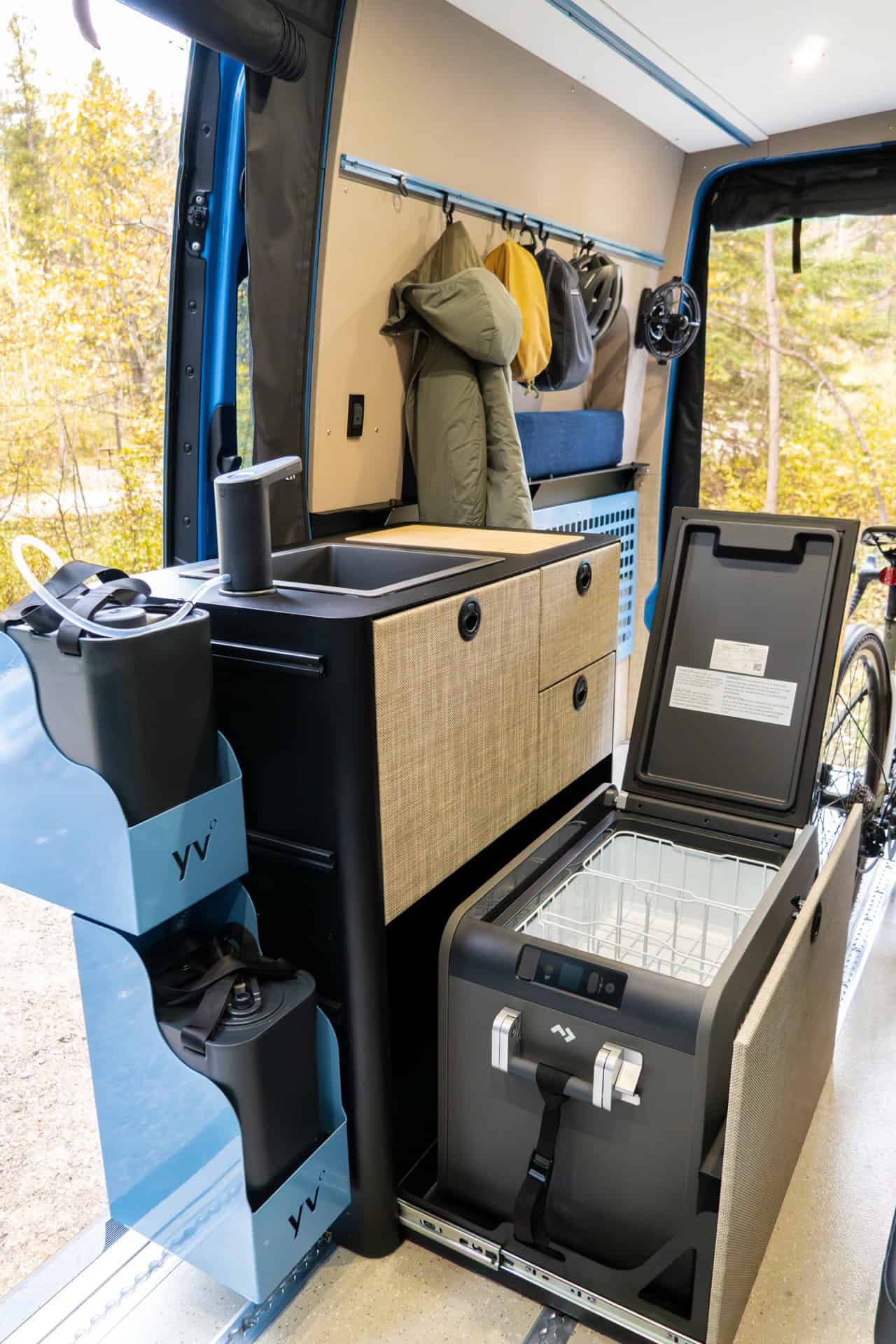
The kitchen is kept deliberately small and purposeful. A stainless sink wears a bamboo cutting-board cover that doubles its surface as counter space, cane-fronted drawers add a warm, textural note, and a slide-out fridge/freezer drawer pulls toward the sliding door so you can reach a cold drink from inside or out. Yama’s own door-pocket organizers — the branded “yv” pouches — corral water bottles and small gear right where you grab them.
Images courtesy of Yama Vans
Gear Walls in Place of Cabinets
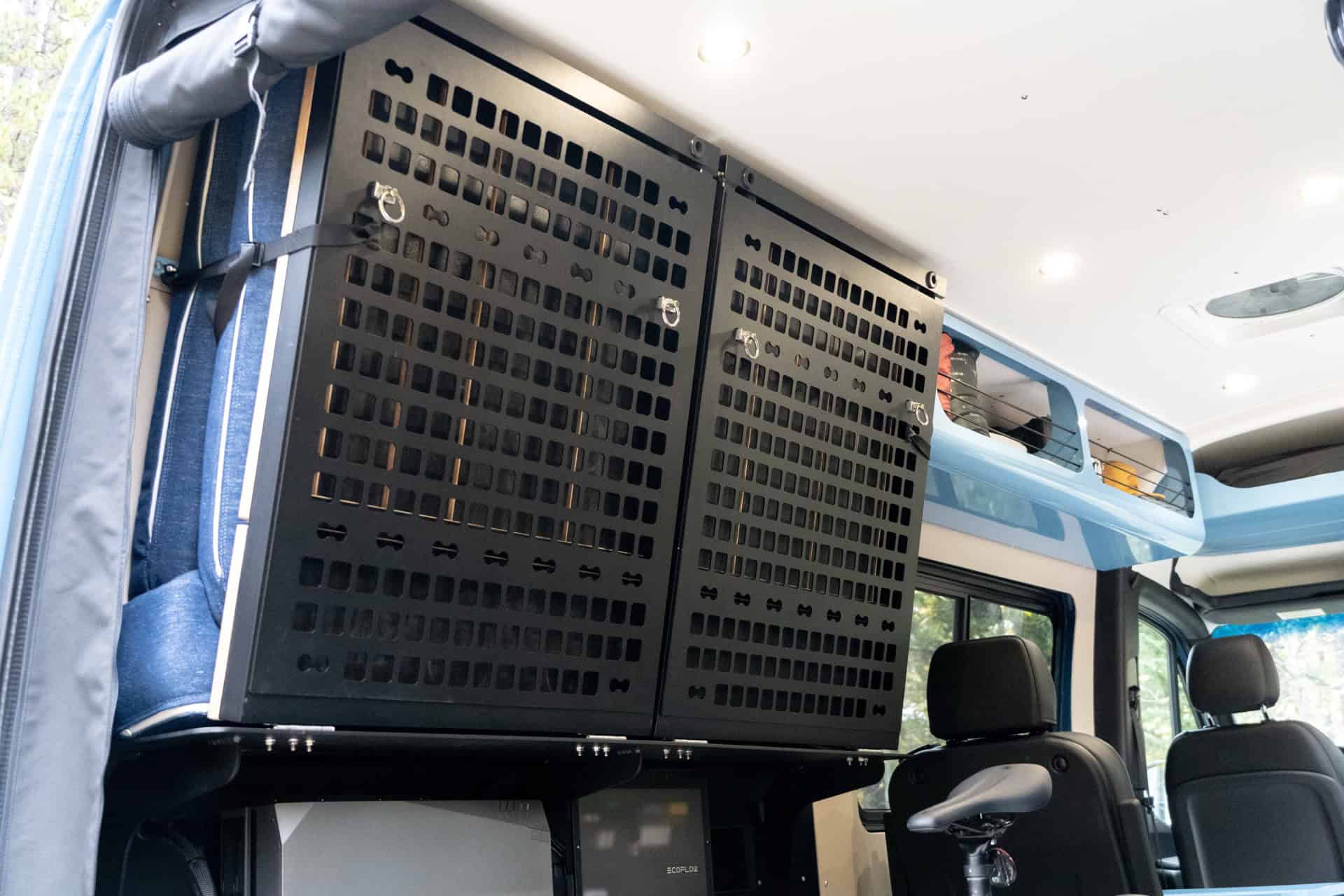
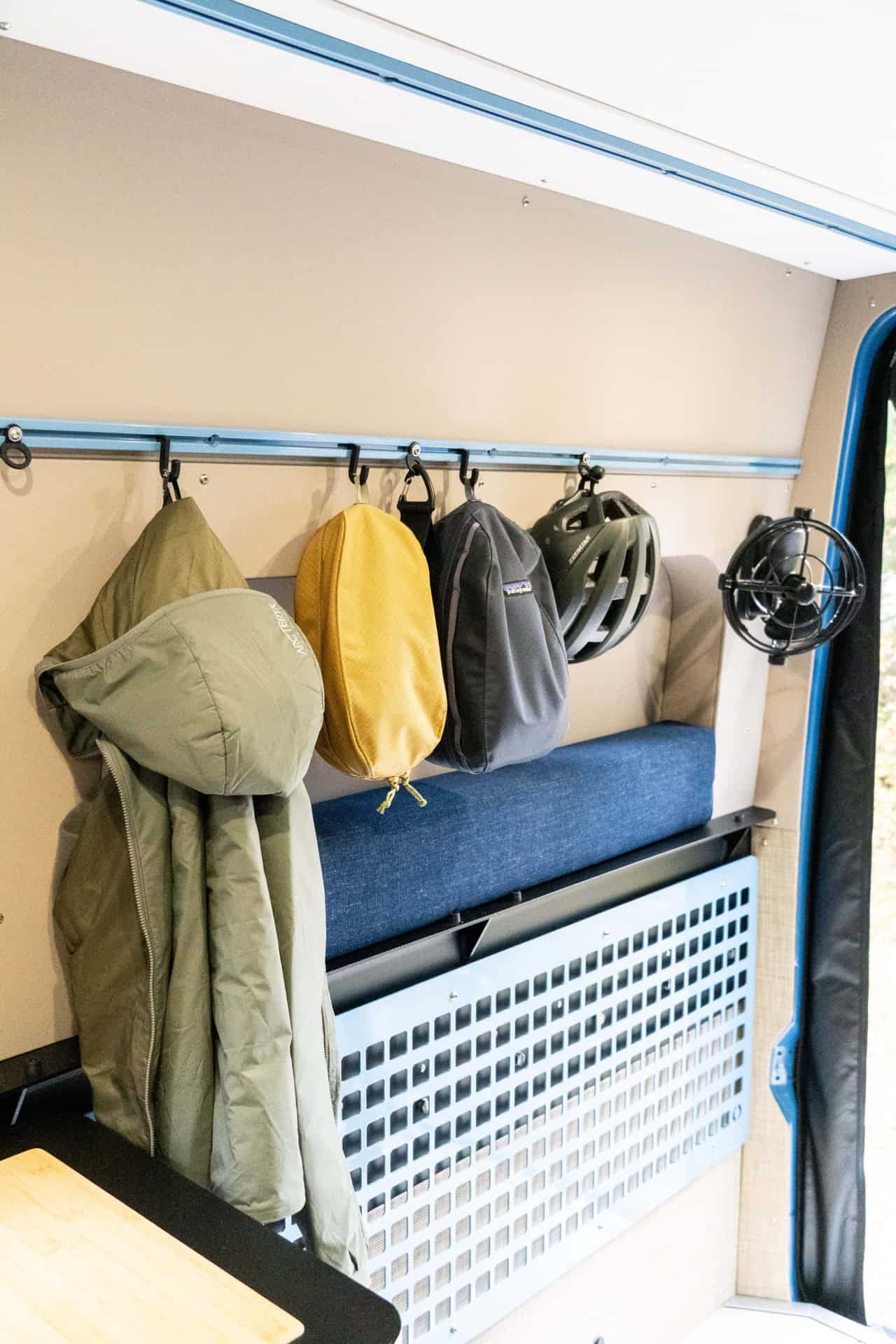
Instead of boxing everything behind enclosed uppers, Peyto lines its walls with black MOLLE panels and an L-track rail system. Jackets, helmets, hydration packs, and a clip-on fan all hang in plain sight and within reach — the kind of grab-and-go organization that makes a daily-use van fast to load and unload. The blue bench seat below gets the same treatment, with a rail of hooks above and a perforated panel beneath for even more mounting points.
Images courtesy of Yama Vans
Images courtesy of Yama Vans
A Sideways Murphy Bed Over the Bikes
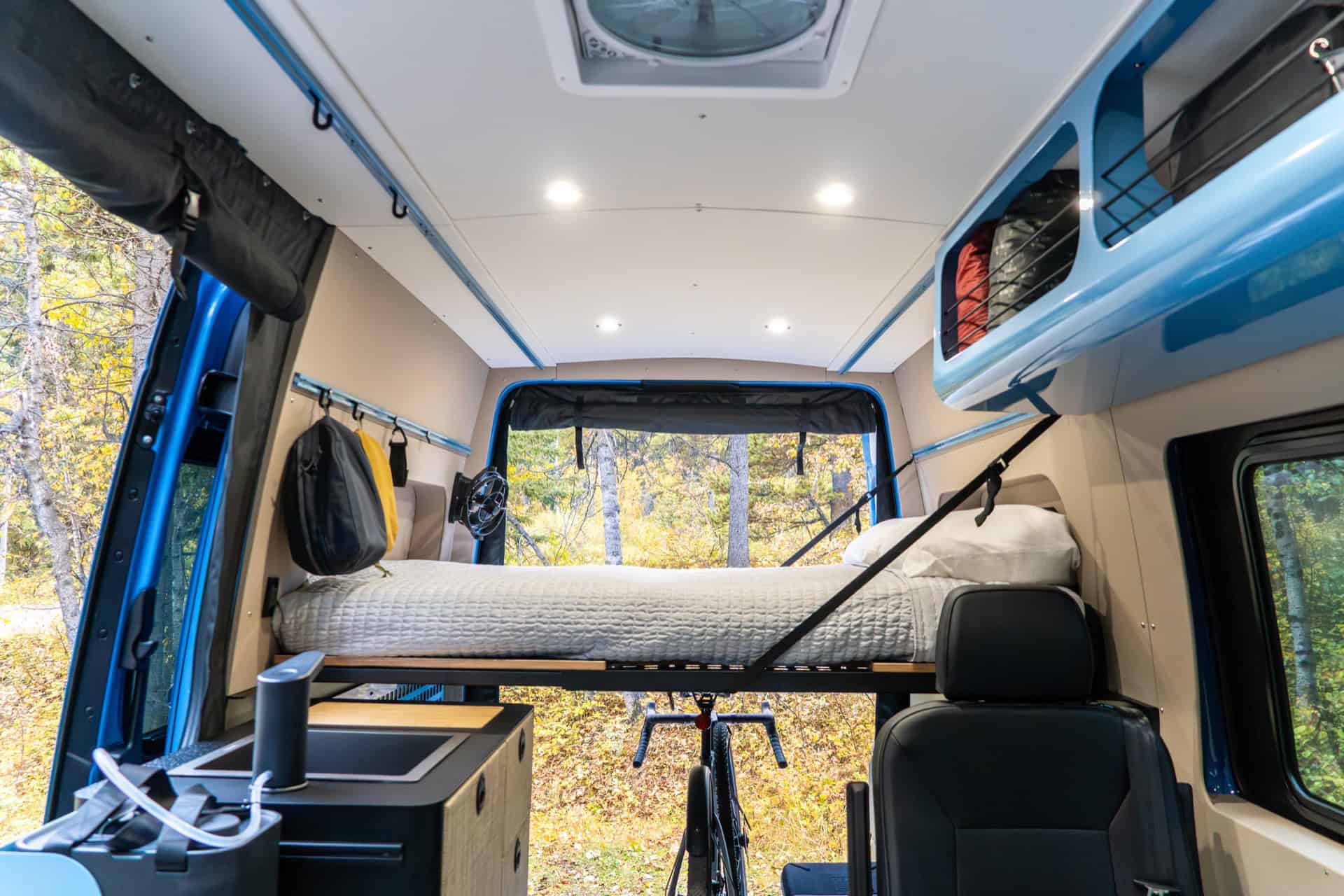
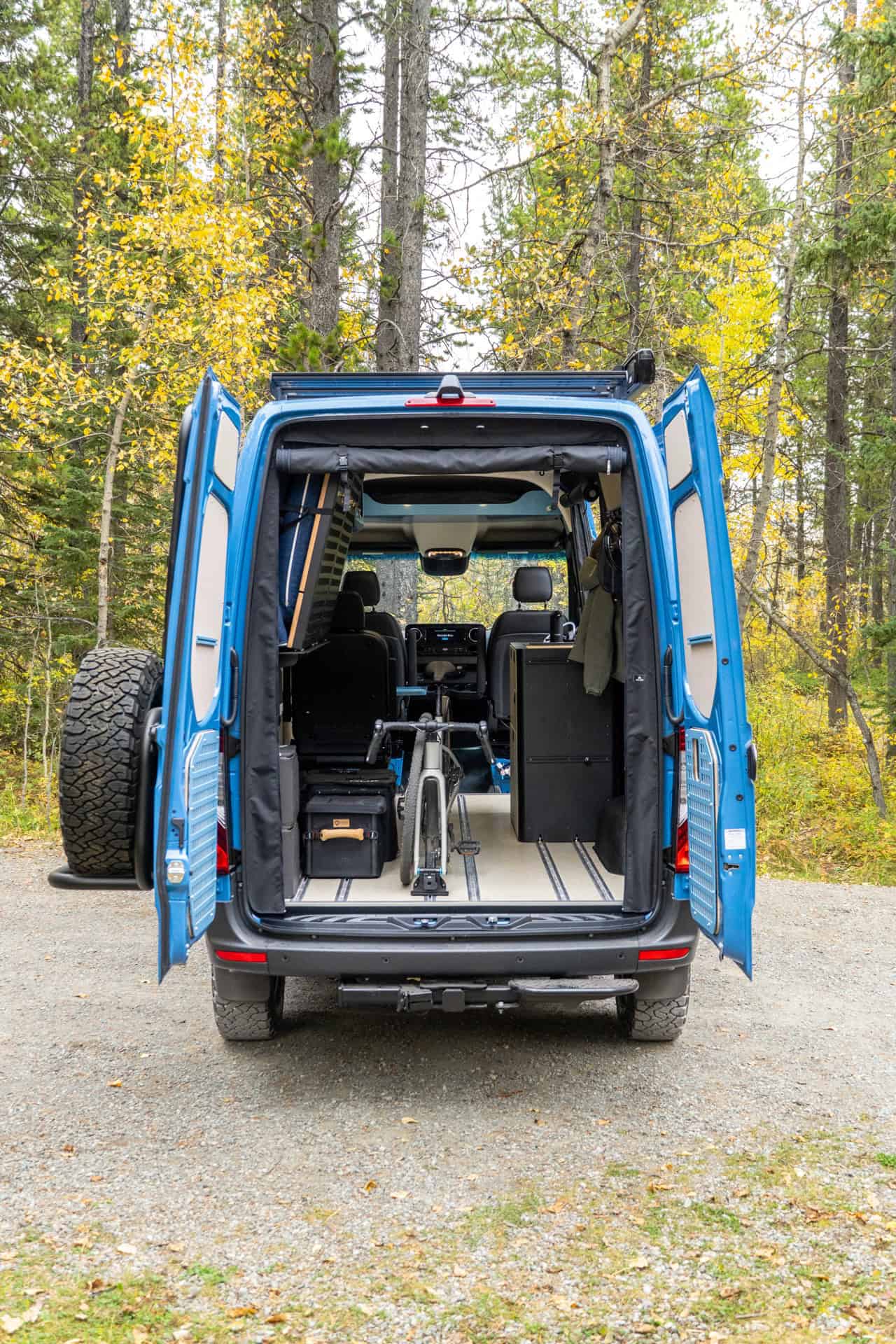
The bed is a Murphy-style platform that folds down sideways across the van at night and tucks back against the wall during the day. The clever part is its height: it sits high enough that a gravel bike stands fully upright underneath, so the same rear footprint is a bedroom after dark and a bike garage by day. It’s sized for sleepers up to about 6’1″, and a roof fan and skylight keep air moving overhead.
Images courtesy of Yama Vans
Designed to Carry Bikes Inside
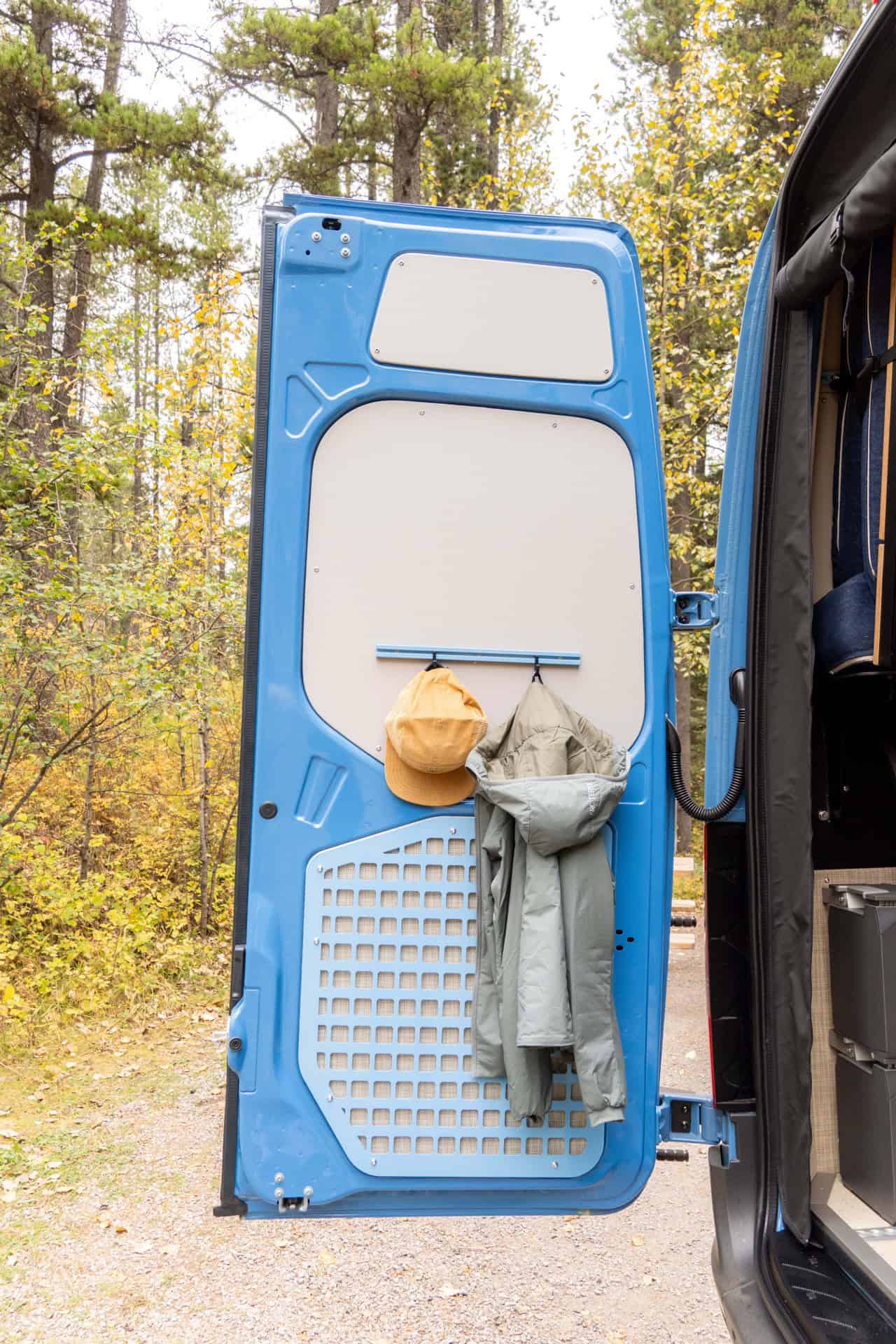
Carrying bikes inside rather than on a rear rack keeps them out of the weather, away from prying eyes, and free of the grit that coats everything on a wet logging road — a real advantage on Vancouver Island. Floor-mounted L-track anchors a bike securely for transit, and even the rear doors earn their keep with MOLLE panels for caps, rain shells, and the small stuff you want the moment you open the back.
Images courtesy of Yama Vans
Images courtesy of Yama Vans
Design Details
- Builder: Yama Vans (Canada)
- Platform: Gear Bus on a Mercedes-Benz Sprinter 144 2500
- Drivetrain: 4-cylinder twin-turbo diesel, 9-speed automatic, all-wheel drive
- Seating: 4 (swiveling cab seats plus rear captain’s chairs)
- Sleeping: sideways Murphy bed (fits up to ~6’1″)
- Galley: sink with bamboo cover, cane-front drawers, slide-out fridge/freezer
- Storage: MOLLE and L-track gear walls, interior bike bay, door organizers
- Power: 4 kWh lithium house battery with inverter/charger (Gear Bus platform)
- Heat: diesel air heater
- Rolling stock: all-terrain tires, roof-mounted light bar
- Palette: coastal blue exterior; tan, blue, bamboo, and cane interior
What Makes This Build Special
- Gear-first layout. Walls of MOLLE keep equipment visible and reachable instead of buried behind cabinet doors.
- The bed-over-bike-bay trick. A folding Murphy bed double-uses the rear floor — bedroom by night, bike garage by day.
- Bikes ride inside. Storing them in the cabin keeps them dry and secure on wet coastal and gravel roads.
- Swivel cab seats. Borrowing the cab’s footprint makes a short 144 feel noticeably bigger.
- A drawer fridge. A slide-out fridge/freezer is easier to load and reach than a top-loading cooler in a small galley.
Learn More
- See the Peyto build on Yama Vans: yamavans.com/van-gallery/peyto
- Explore the Gear Bus platform: yamavans.com/explore-gear-bus
More from Yama Vans
- The Fitz — a Grasmere-green, pop-top Sprinter for four
- The Taiyō — a Sprinter camper built for biking
- The Furō — a coastal Sprinter camper
- The Trekka — a bike-friendly Sprinter camper
- The Brio — a warm, ski-ready Sprinter camper
- The Fjord — a four-season ski van
- The Kōri — a hockey family’s 4×4 Sprinter
- Nanuq — an off-grid Sprinter built for two
- GB01 — the original modular AWD Gear Bus
- Gatsby — a loaded 4×4 Sprinter 170 (for sale)
- The Luna — an AWD Sprinter adventure van (coming soon)
Disclosure: This post may contain affiliate links. If you purchase through one of our links, we may earn a commission at no additional cost to you.


Alex
Latest posts by Alex (see all)
- This DIY E-Bike Camper Has Solar, Starlink and a TV - October 17, 2026
- The Rock ‘n’ Roll House at Tiny Digs: A 1950s Tiny House with a Record Player - October 17, 2026
- 2025 Villa Max: A Move-In-Ready 10-Ft-Wide Farmhouse Park Model by Tru Form Tiny - October 17, 2026