Disclosure: This post may contain affiliate links. If you purchase through one of our links, we may earn a commission at no additional cost to you.
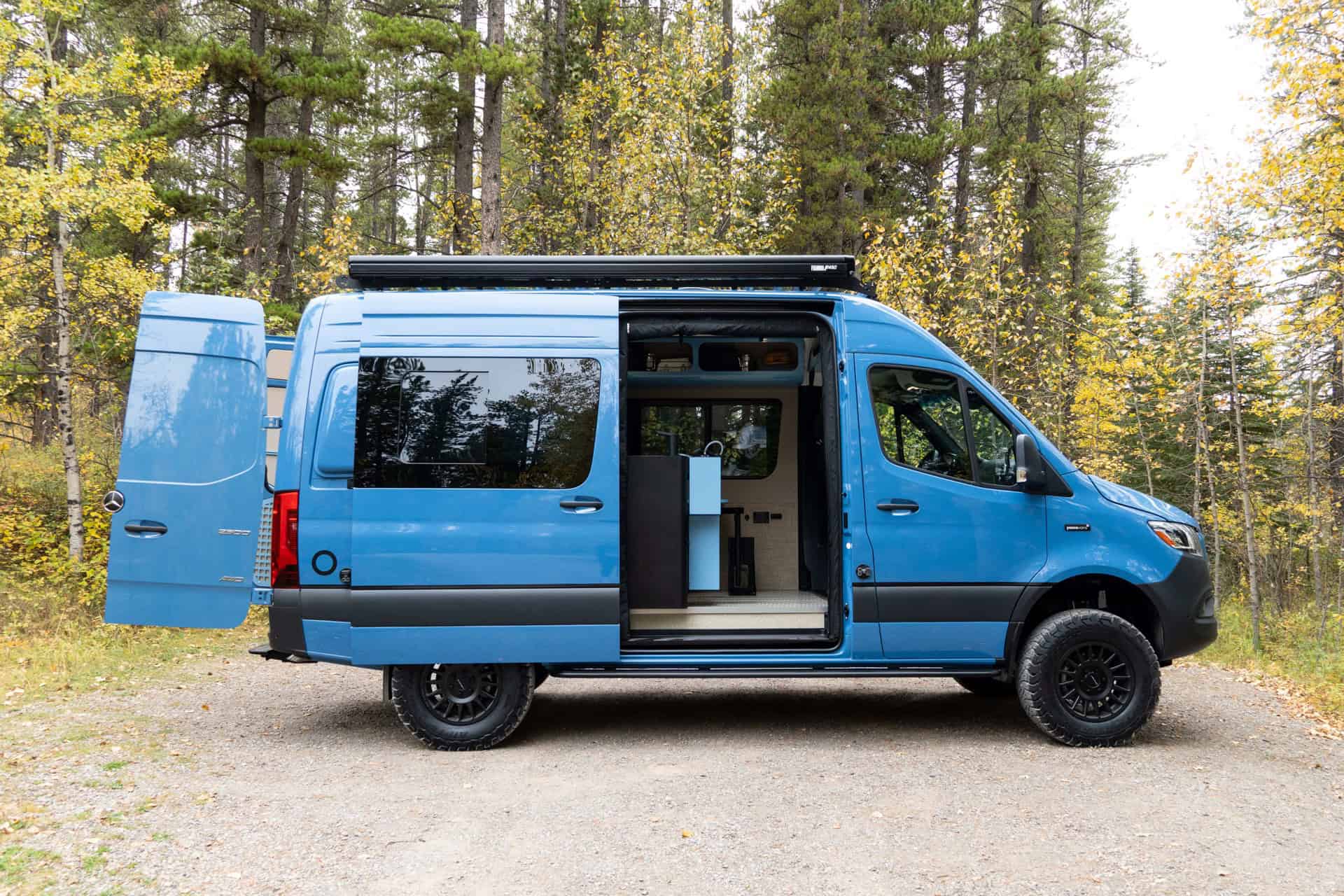
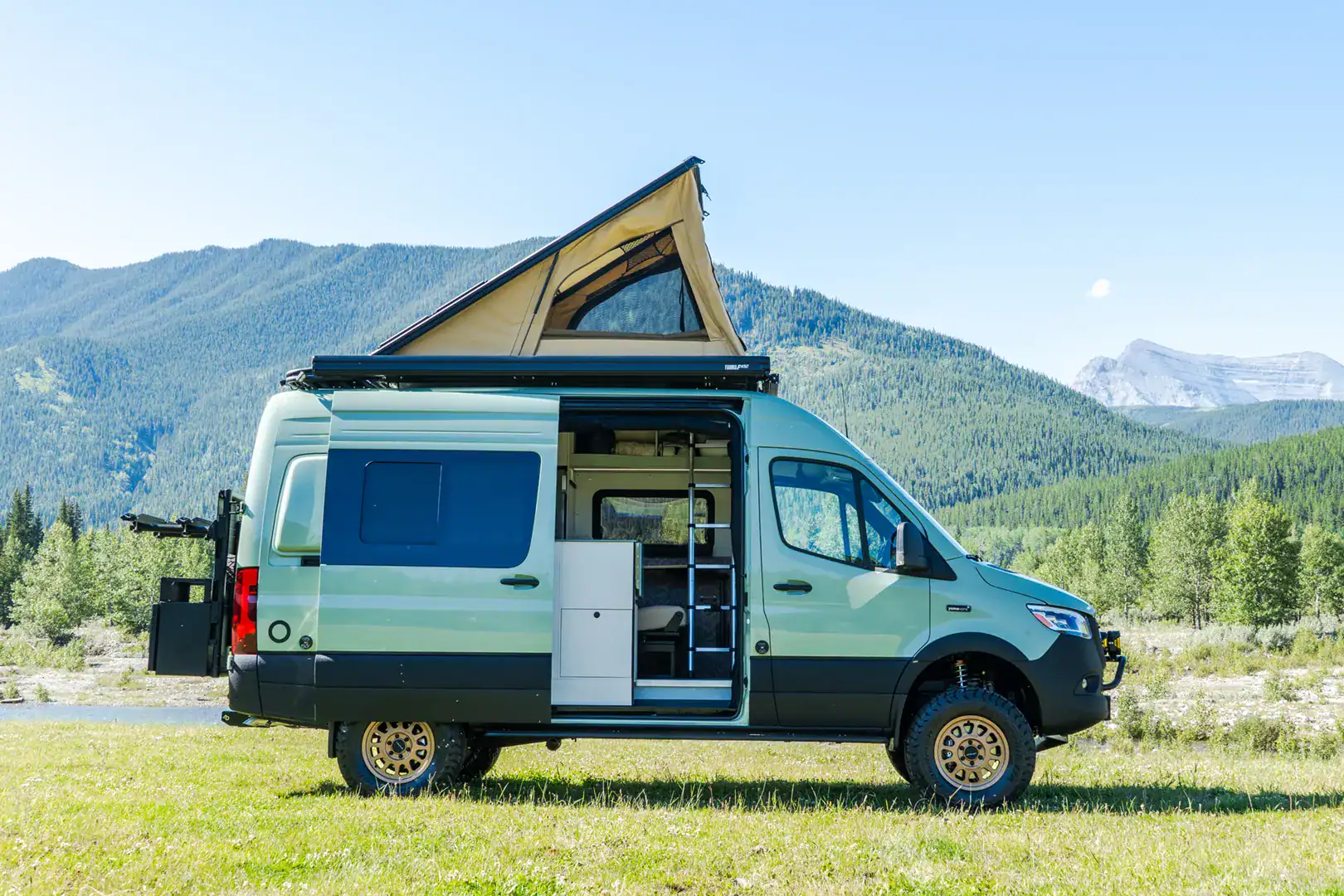
Most camper vans are built for a season, a trip, or a phase of life. Nanuq was built for a way of living. This Yama Vans conversion is the rolling home base for two Alaska-based dentists who split their year between remote clinical rotations and time spent deep in the wild places that drew them north in the first place. When your work takes you off the road grid and your time off takes you even further, you don’t need a weekend toy — you need a four-season basecamp that can keep up.
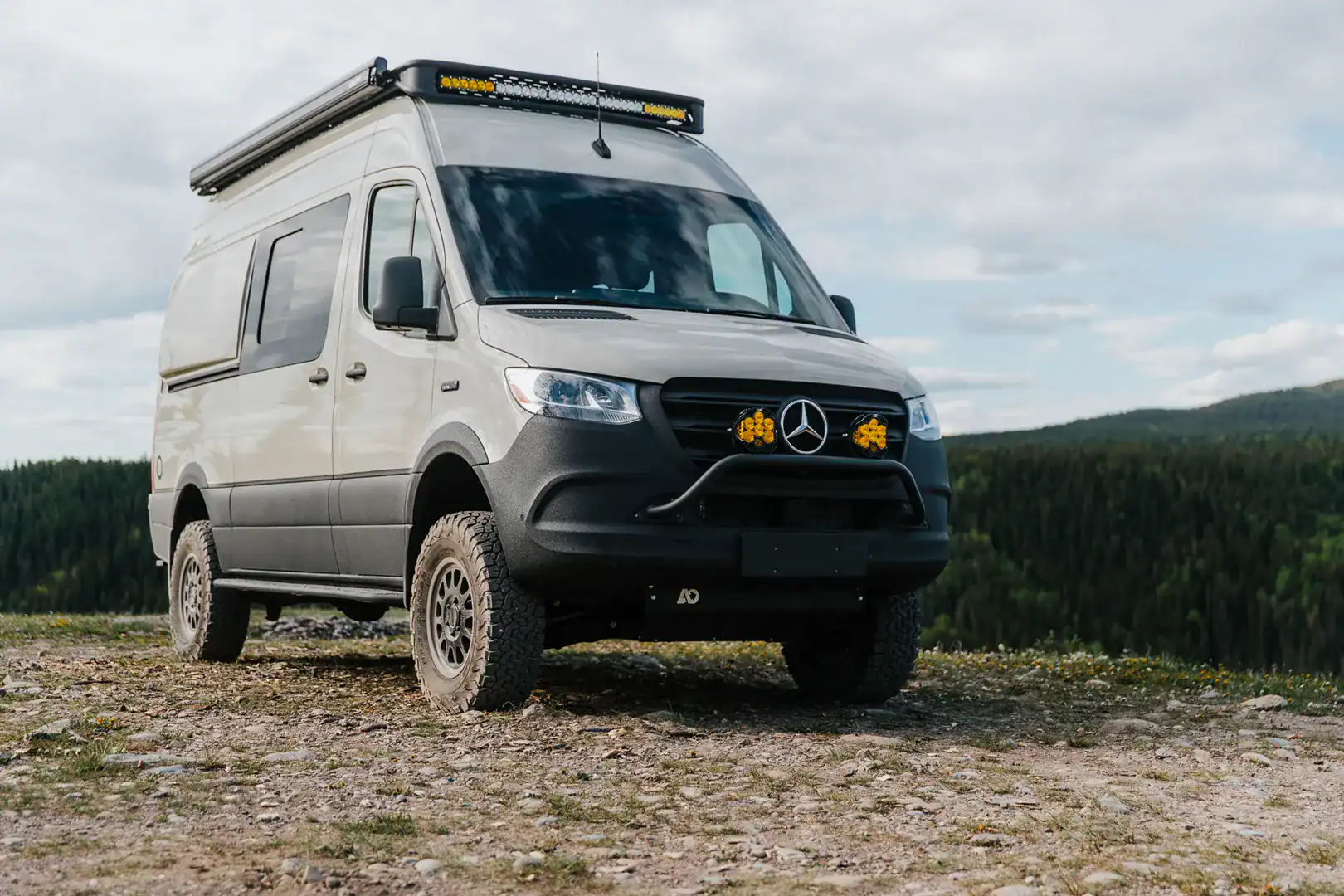
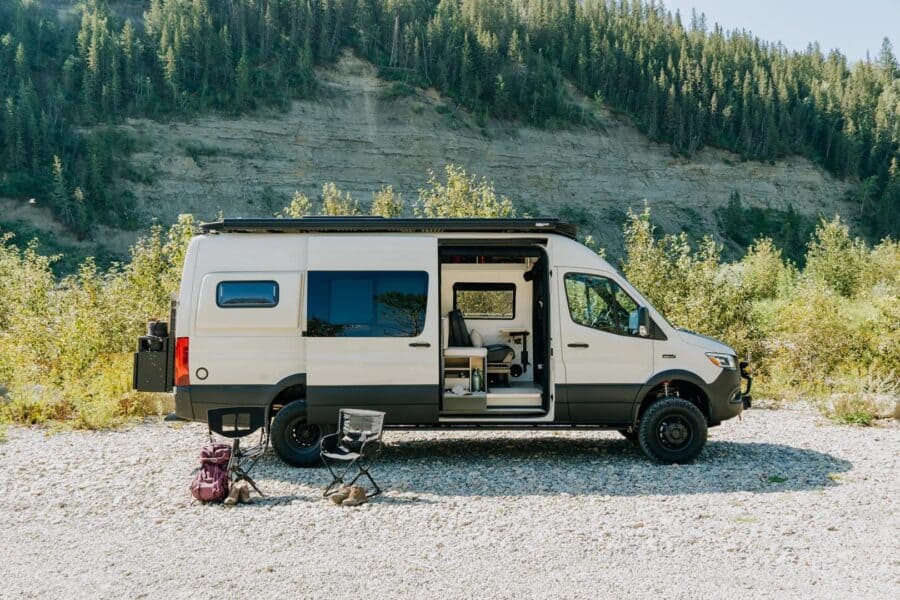
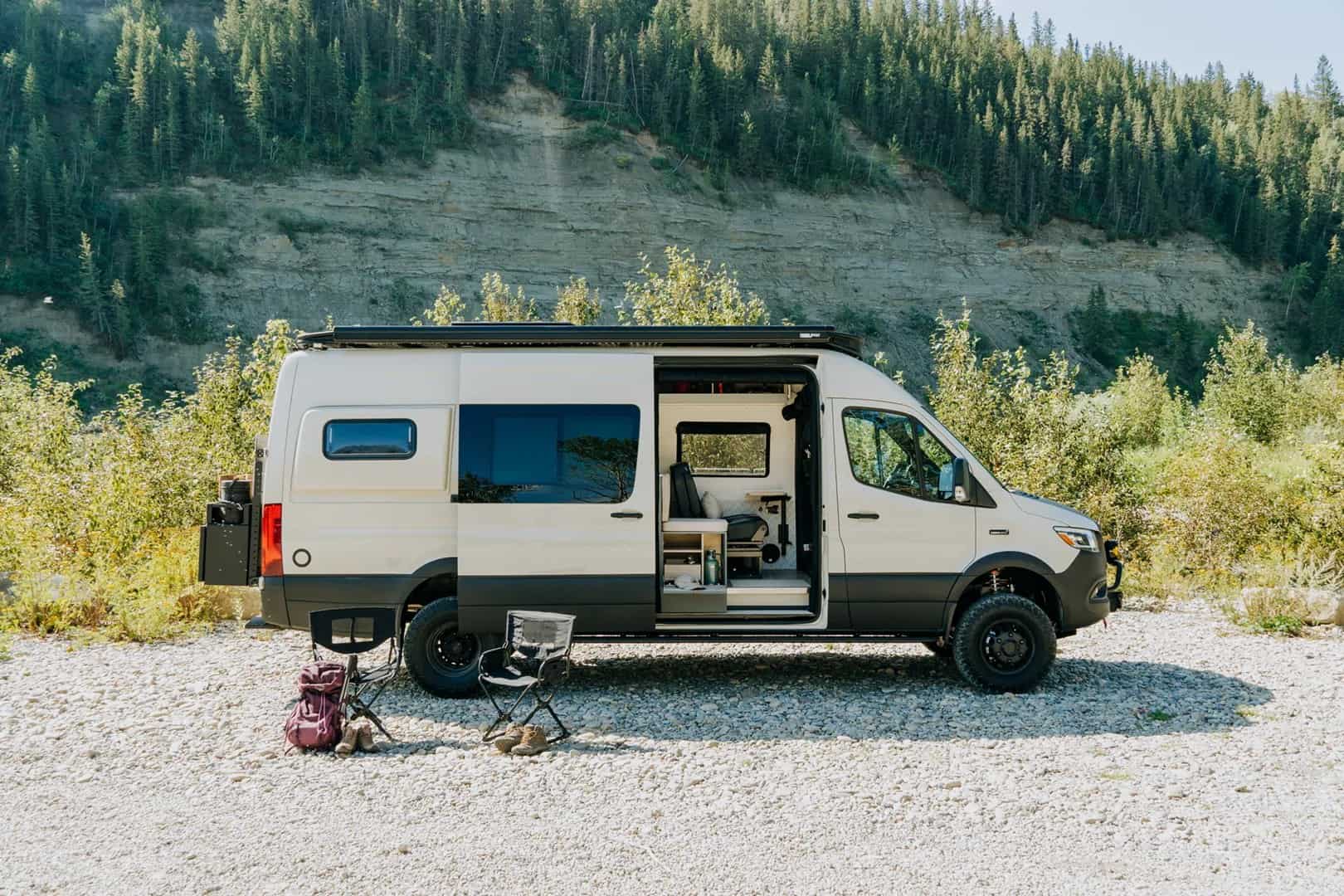
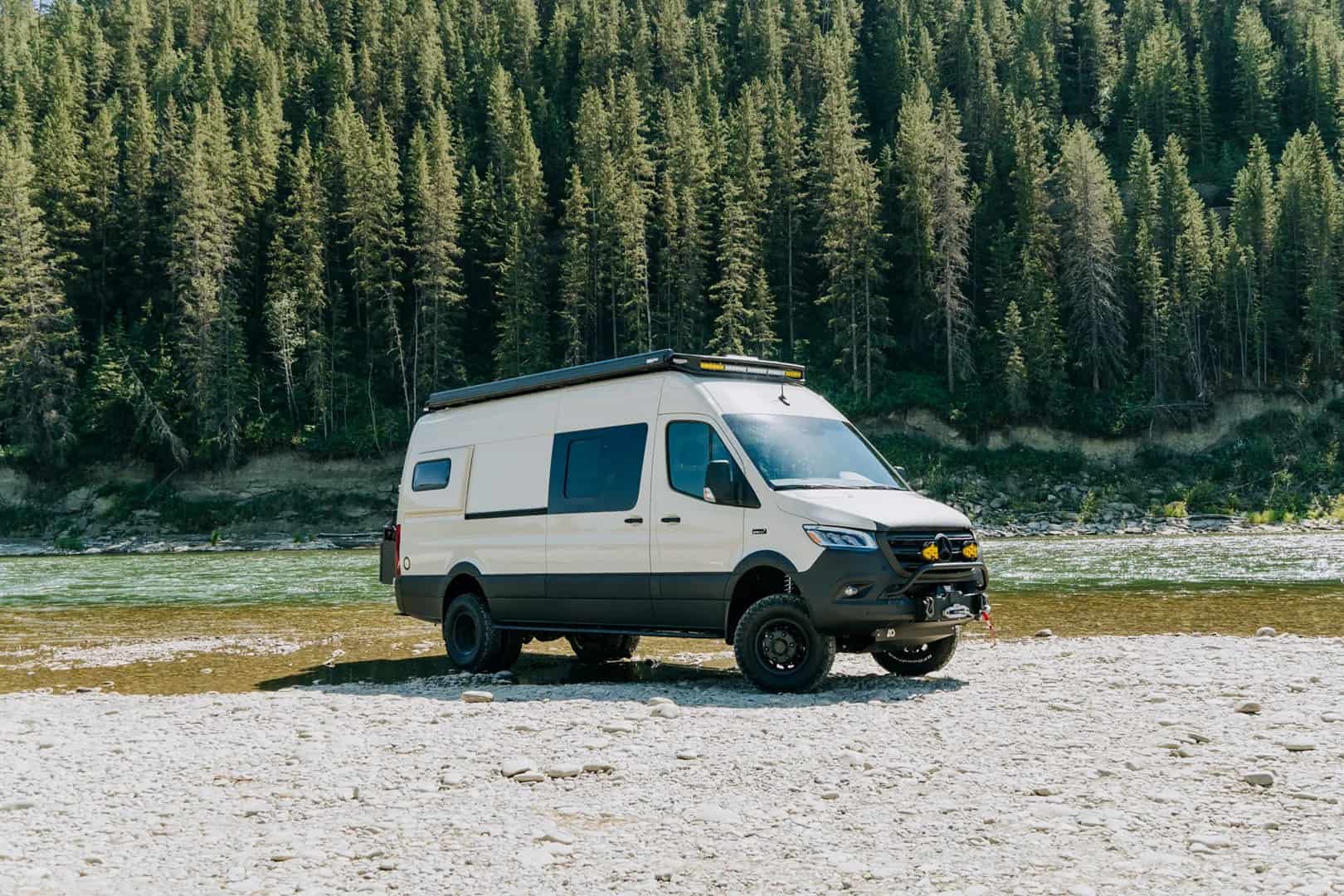
Named for the Inupiaq word for polar bear, Nanuq is built on Yama’s flagship Logan01N platform: a 170″ all-wheel-drive Mercedes-Benz Sprinter engineered from the chassis up to live comfortably off-grid for weeks at a time. It’s one of the most capable expedition vans we’ve featured, and the story behind it is a great reminder that the best builds start with how someone actually lives.
Images courtesy of Yama Vans
A Home Base Between Remote Rotations
What makes Nanuq interesting isn’t a single gadget — it’s the mission. Its owners work clinical rotations in places you can’t easily drive to, then decompress in country where there are no hookups, no cell service, and no quick trips to town. That rhythm demands a van that can be both a reliable commuter on the highway and a self-sufficient cabin once the pavement ends. The Logan01N platform was the answer: an AWD Sprinter that’s equally at home logging interstate miles and disappearing down a forest service road for two weeks.
Images courtesy of Yama Vans
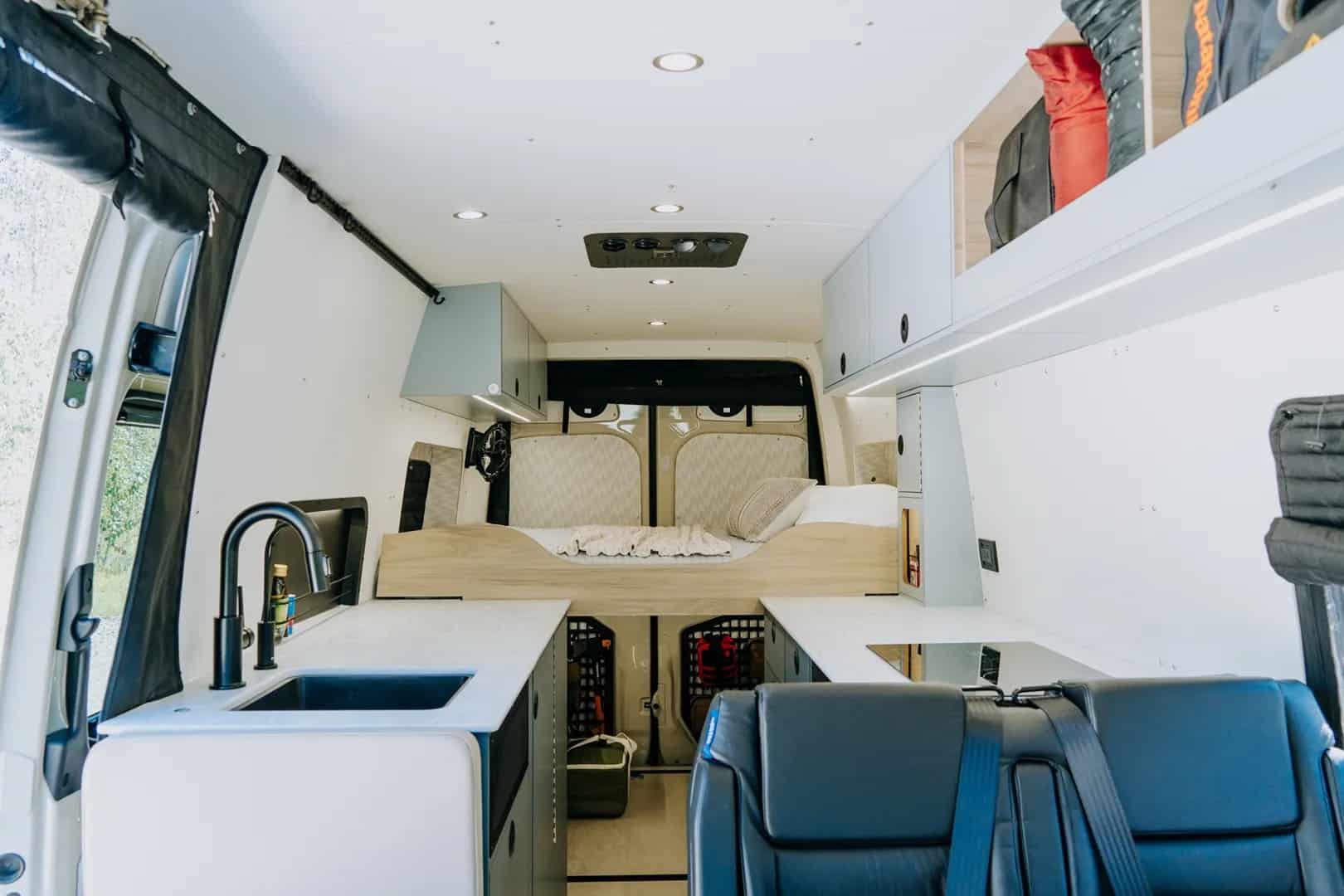
A Galley Built for Real Cooking Off-Grid
The kitchen is where a full-time van earns its keep, and Nanuq’s galley is built for people who actually cook rather than just reheat. A double-burner cooktop with induction capability sits alongside generous counter space and premium appliances, while a 0.4-micron filtration system turns the 28-gallon fresh tank into safe drinking water straight from the faucet. When you’re camped far from the nearest store, the ability to prepare real meals from your own water supply isn’t a luxury — it’s what makes long stays sustainable.
Images courtesy of Yama Vans
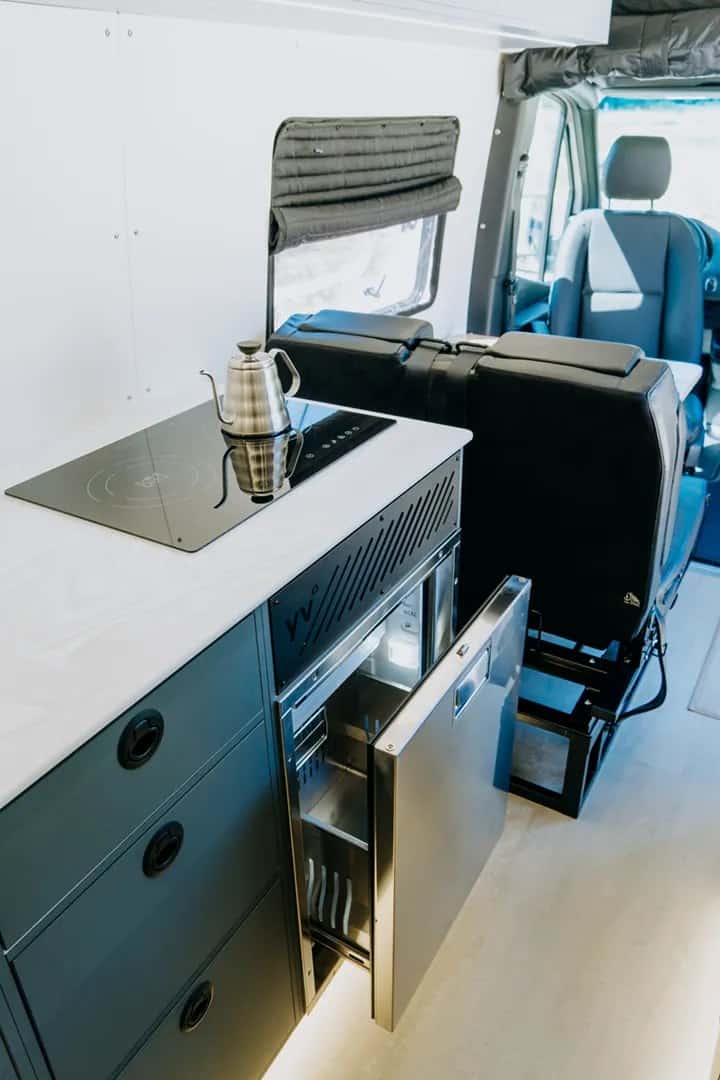
A Pop-Up Wetroom That Disappears When You’re Done
One of the smartest moves on the Logan01N is its approach to the bathroom. Rather than permanently sacrifice square footage to a shower stall, Yama uses a half-height CUBE Wetroom design with a collapsible shower that pops up when you need it and folds away when you don’t. Paired with a cassette toilet and a drying rack, it gives a couple full hygiene independence — critical when “town” might be a hundred miles and several days away — without the claustrophobic feel of a fixed wet bath eating into the living space all day long.
Images courtesy of Yama Vans
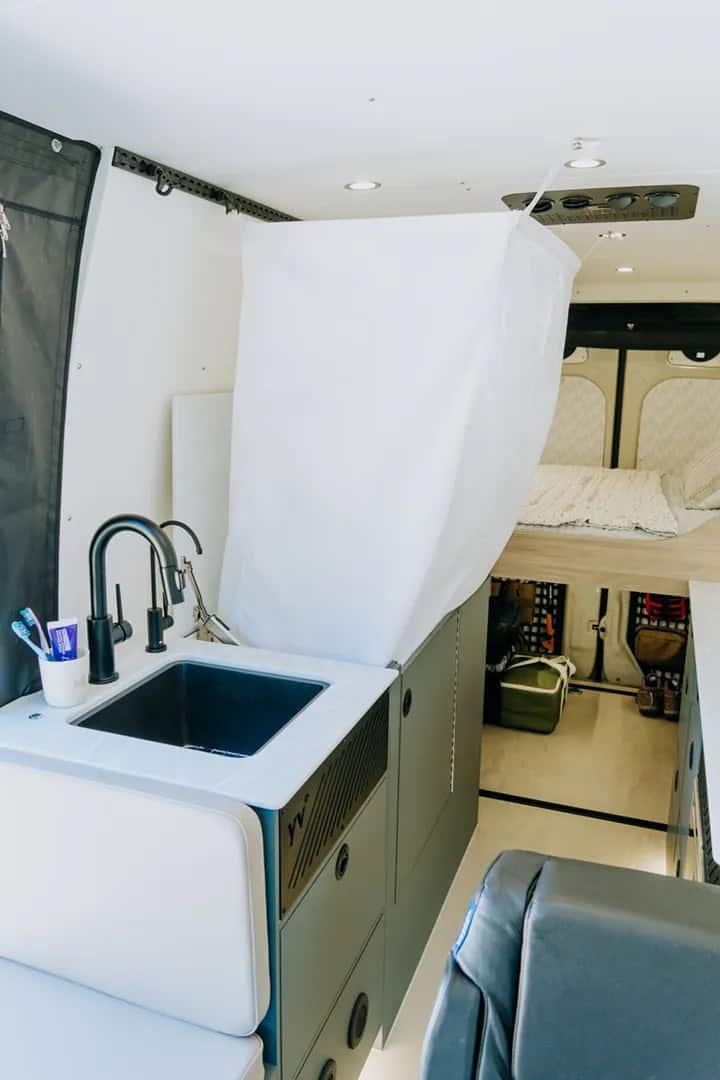
Sideways Sleeping and a Flexible Floor Plan
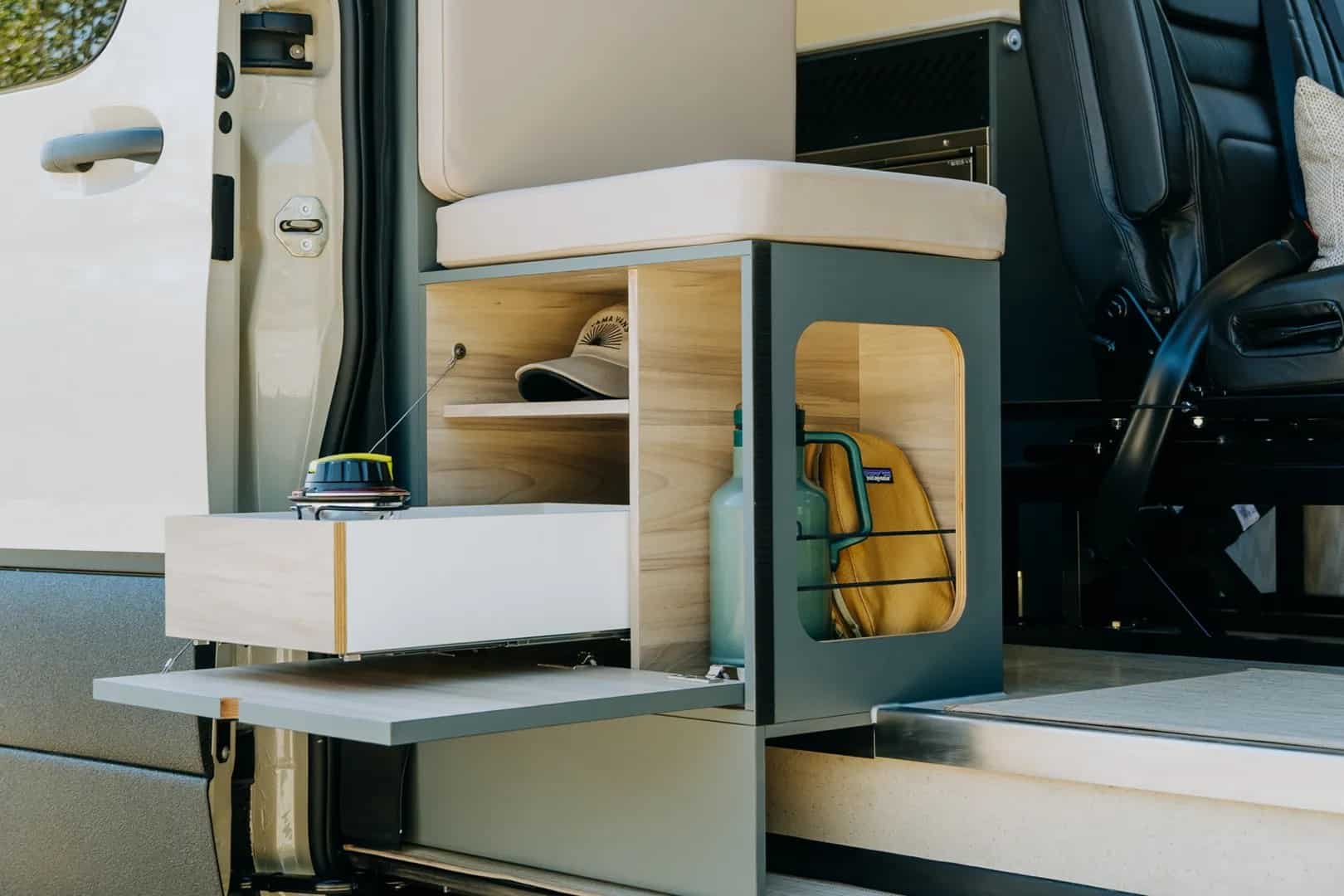
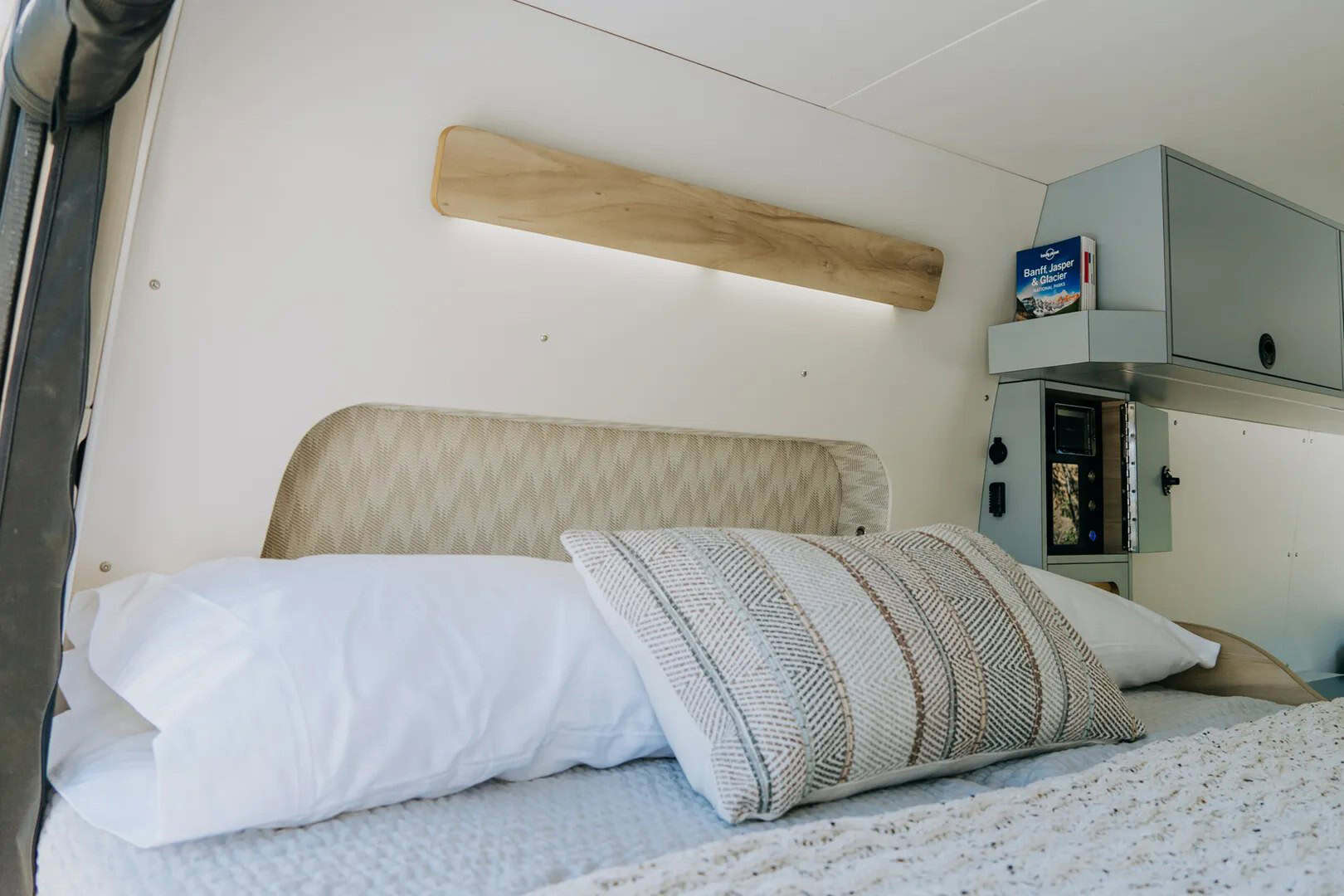
Nanuq sleeps two on Yama’s Signature Sliding Bed System, a sideways platform with a ventilated, dual-density mattress that accommodates people up to 6’1″ — no awkward diagonal sprawl required. Because the bed slides, the rear of the van can shift between a sleeping zone and open cargo space depending on the day. With seating for four and a convertible front seat, the layout flexes from “two people living slowly in the backcountry” to “carrying friends to the trailhead” without a major reconfiguration.
Images courtesy of Yama Vans
Power and Heat for Two Weeks Off the Grid
This is where Nanuq separates itself from the typical weekend van. Its electrical system is anchored by an 11.8 kWh lithium bank and a 3 kVA inverter charger — enough to run the van for two-plus weeks of typical use without a hookup. Three charging sources keep it topped up: 30-amp shore power, 200 watts of rooftop solar, and a 280-amp secondary alternator that recharges the batteries as you drive. Heat comes from a 21,000 BTU hydronic system that handles cabin air, on-demand hot water, and radiant in-floor warmth at once — the kind of integrated, fuel-fired heat that actually holds up to an Alaskan winter rather than just taking the edge off.
Images courtesy of Yama Vans
An 85-Cubic-Foot Gear Garage
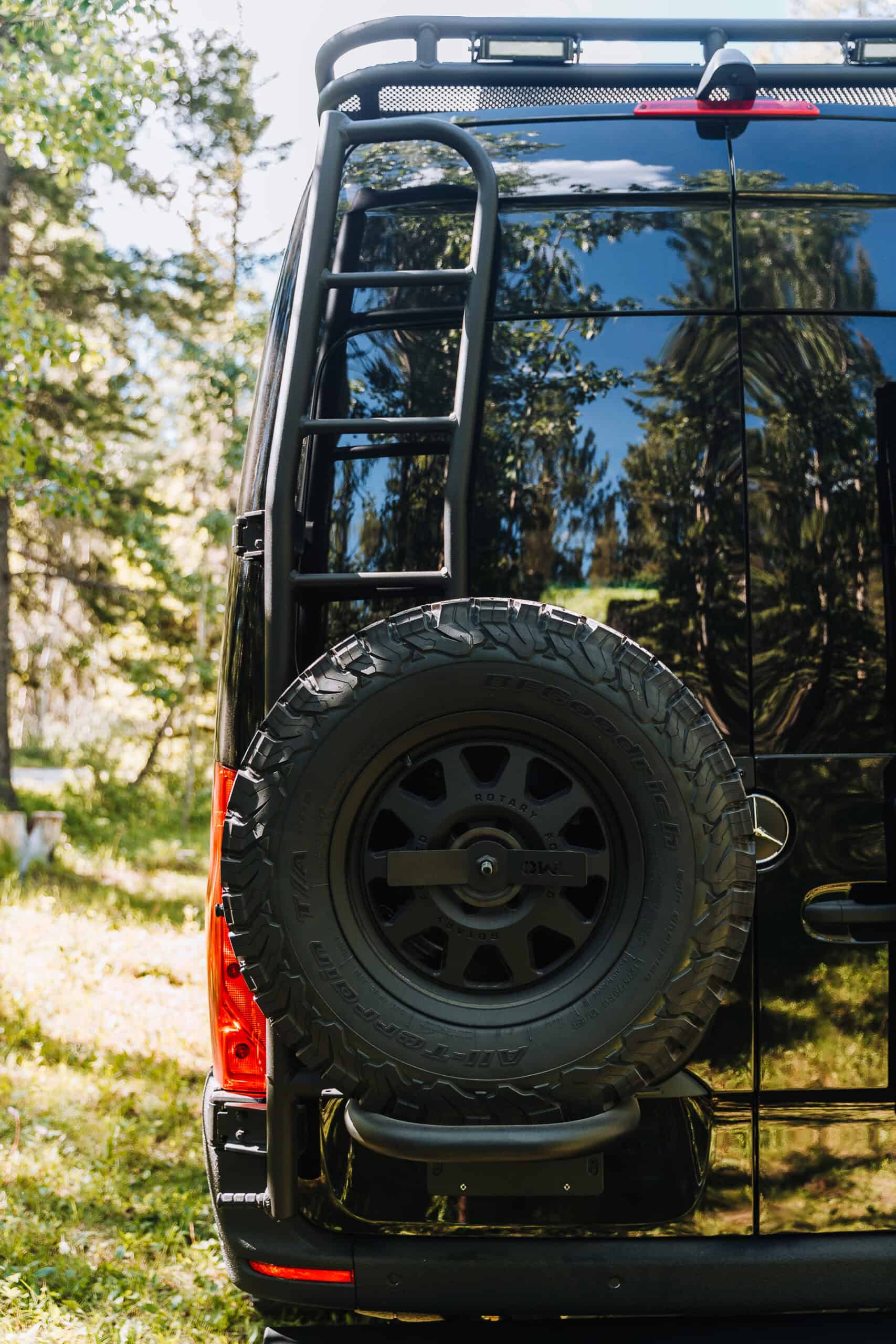
For a couple whose downtime revolves around the outdoors, storage is everything. Nanuq’s rear gear garage offers 85 cubic feet of dedicated cargo space with a T-track system, room for up to four bikes, and both 12V and 120V power for charging tools and drying equipment. An exterior wash station lets you rinse off muddy boots, skis, or a dog before anything comes inside — a small detail that makes a huge difference when the van is also your bedroom.
Images courtesy of Yama Vans
Design Details
- Builder: Yama Vans (Calgary, Alberta, Canada)
- Base model: Logan01N — Yama’s flagship platform
- Chassis: Mercedes-Benz Sprinter 170″ 3500XD twin-turbo diesel, AWD, 9G-TRONIC automatic
- Footprint: ~23 feet / 7 m; ~17 L/100 km fuel economy
- Seating / sleeping: Seats 4; sleeps 2 on the Signature Sliding Bed System (fits up to 6’1″), plus a convertible front seat
- Kitchen: Double-burner induction-capable cooktop, premium appliances, filtered drinking water
- Bathroom: Half-height CUBE Wetroom with collapsible shower, cassette toilet, drying rack
- Electrical: 11.8 kWh lithium, 3 kVA inverter charger, 200W solar, 280A second alternator, 30A shore — 2+ weeks off-grid
- Water: 106 L (28 gal) fresh, 60 L (16 gal) grey, 0.4-micron purification
- Heating: 21,000 BTU hydronic — cabin air, on-demand hot water, radiant in-floor
- Storage: 85 ft³ gear garage with T-track (up to 4 bikes), 12V/120V power, exterior wash station
- Extras: Four-season insulation, six dimmable LED zones, touchscreen + app monitoring, FOX shocks, BFG KO3 tires on 17″ alloys, Baja Designs 270° perimeter lighting
- Pricing: Logan01N builds start at $243,000 CAD (plus tax, excludes Sprinter chassis)
What Makes This Build Special
- Built around a lifestyle, not a spec sheet. Every choice — AWD, two weeks of power, a real galley — traces back to two dentists who live and work far off-grid.
- Genuine four-season capability. Hydronic heat with radiant floors and serious insulation make this a van you can actually winter in, not just camp in during shoulder season.
- Energy independence is the headline feature. An 11.8 kWh bank plus a 280-amp alternator means the van recharges as you drive and rarely needs a plug.
- Space that does double duty. A sliding bed and a pop-up shower let a 23-foot van feel like a cabin by night and a cargo hauler by day.
- The gear comes first. An 85-cubic-foot garage and an exterior wash station treat outdoor equipment as a core part of the floor plan, not an afterthought.
Learn More
Nanuq is a custom build on the Logan01N platform from Yama Vans, a made-to-order adventure van builder based in Calgary, Canada. You can see the full Nanuq gallery and Yama’s other signature models — Blanca01N, Robson01N, and Teton01N — on their build gallery.
Highlights
- AWD Mercedes Sprinter 170″ built for true four-season, off-grid living
- 11.8 kWh lithium system runs 2+ weeks without a hookup
- Pop-up CUBE Wetroom shower and cassette toilet for full independence
- Sideways sliding bed sleeps two up to 6’1″
- 85 ft³ gear garage with bike storage and exterior wash station
- Custom-built for two Alaska-based dentists who live far off the grid
More from Yama Vans
- The Fitz — a Grasmere-green, pop-top Sprinter for four
- The Taiyō — a Sprinter camper built for biking
- The Furō — a coastal Sprinter camper
- The Trekka — a bike-friendly Sprinter camper
- The Brio — a warm, ski-ready Sprinter camper
- The Fjord — a four-season ski van
- The Kōri — a hockey family’s 4×4 Sprinter
- Peyto — a bike-hauling AWD Gear Bus Sprinter
- GB01 — the original modular AWD Gear Bus
- Gatsby — a loaded 4×4 Sprinter 170 (for sale)
- The Luna — an AWD Sprinter adventure van (coming soon)
Disclosure: This post may contain affiliate links. If you purchase through one of our links, we may earn a commission at no additional cost to you.


Alex
Latest posts by Alex (see all)
- This DIY E-Bike Camper Has Solar, Starlink and a TV - October 17, 2026
- The Rock ‘n’ Roll House at Tiny Digs: A 1950s Tiny House with a Record Player - October 17, 2026
- 2025 Villa Max: A Move-In-Ready 10-Ft-Wide Farmhouse Park Model by Tru Form Tiny - October 17, 2026