
Disclosure: This post may contain affiliate links. If you purchase through one of our links, we may earn a commission at no additional cost to you.
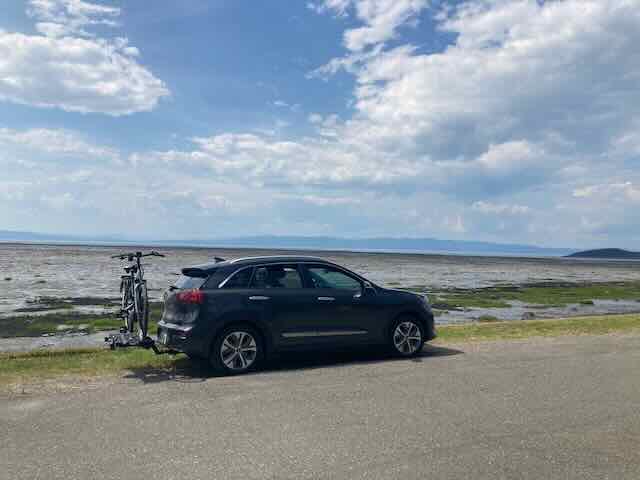
Blake converted a Kia Niro EV into a stealth camper car — proving you do not need a van or a truck to live on the road. The fully electric hatchback has a custom sleeping platform, a pull-out kitchen, solar power, a portable toilet setup, and enough storage for full-time travel. He documents the build and his travels on YouTube and Instagram.
Finding the Right EV in a Tough Market
Emerging from the pandemic, Blake began hunting for the perfect EV to replace his van. The search wasn’t easy — pandemic shortages meant high prices and long waitlists.
He considered the Kia Soul EV, Hyundai Kona, and even a used Tesla Model X, but hybrids like the Toyota Sienna were ruled out immediately since they couldn’t run climate control continuously without the engine kicking on every few minutes.
Eventually, he narrowed it down to the Kia Niro EV. At the time, there were only two used models available in Canada — one in Vancouver and one in Toronto. Blake bought the Toronto one: a 2020 Kia Niro EV SX with premium features like a Harman Kardon stereo, sunroof, heated/ventilated seats, and up to 500 km of range.
Winter Test: -20°C in Stealth Mode
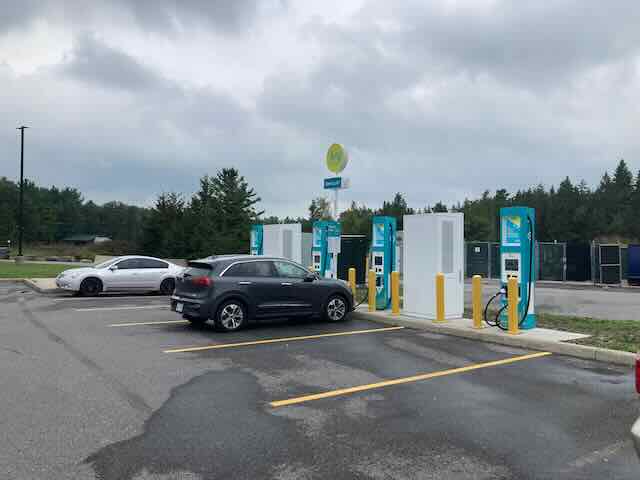
One of Blake’s first experiments was sleeping in the Niro during a Canadian January, when temperatures dropped to -20°C overnight.
With the heat set to +19°C for ten hours, the car only used 8% of its battery. From the outside, there was no sign it was running — no idling, no lights, no noise. Stealth camping at its finest.
Why Blake Ditched the Typical Car Camper Layout
Most car and minivan conversions use wide, raised beds with kitchen drawers that pull out from the rear hatch for outdoor cooking. But Blake saw three major problems with that approach:
- Not stealthy in urban areas.
- Not practical for winter when you’re trying to keep the heat in.
- Insect invasion in summer when cooking with the hatch open in mosquito country.
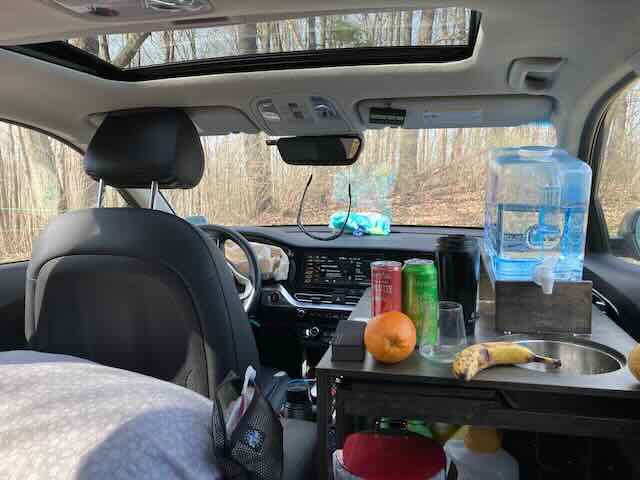
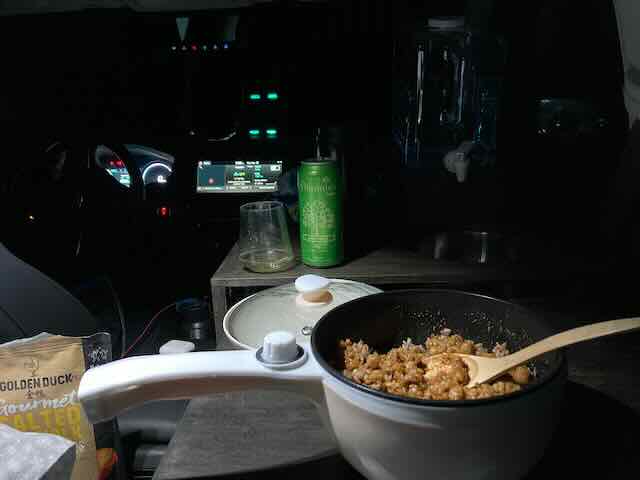
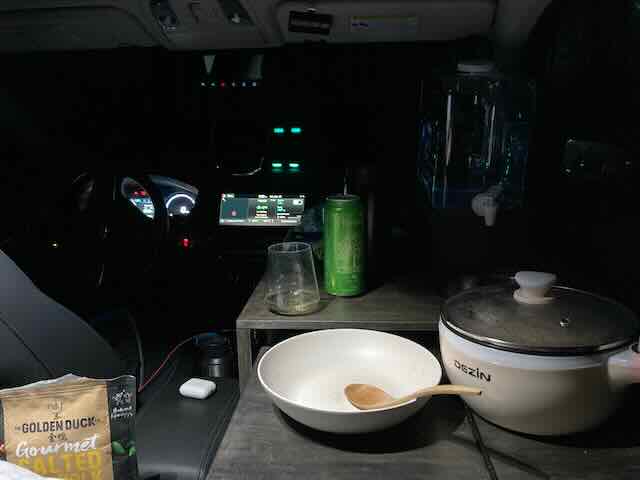
His solution? A fully indoor kitchen powered by electricity, usable in any weather, and discreet enough for city stealth camping.
Why the Niro EV Works So Well for Stealth Camping
- Fits in any standard parking space
- Access to tourist spots where campervans aren’t allowed
- Low travel costs compared to gas-powered vans
- Up to 4 days of heating/cooling in Utility Mode without recharging
- Easy to keep pets, food, and yourself comfortable in all weather
Key Features of the Build
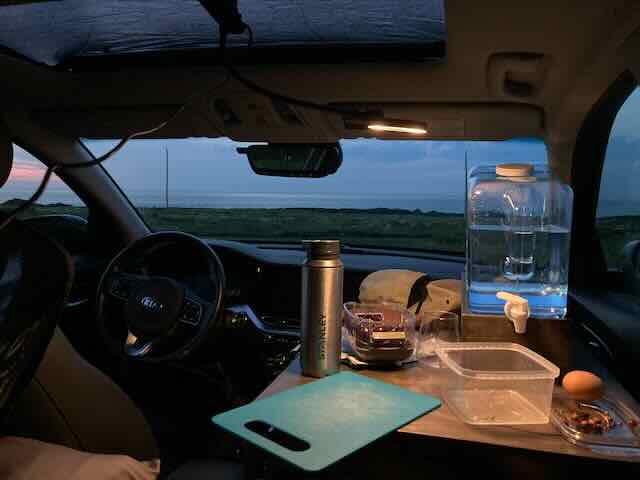
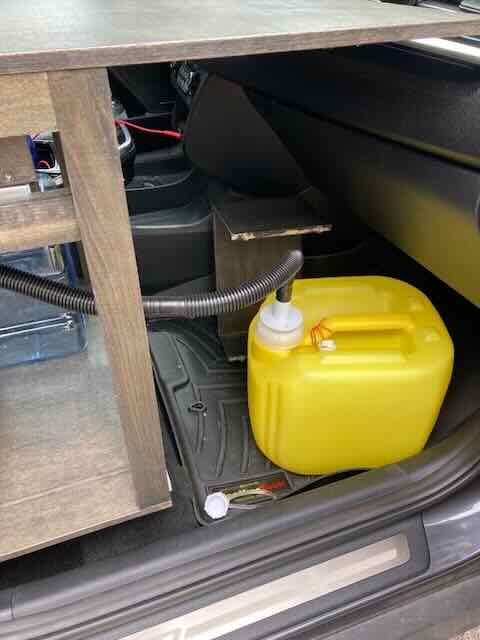
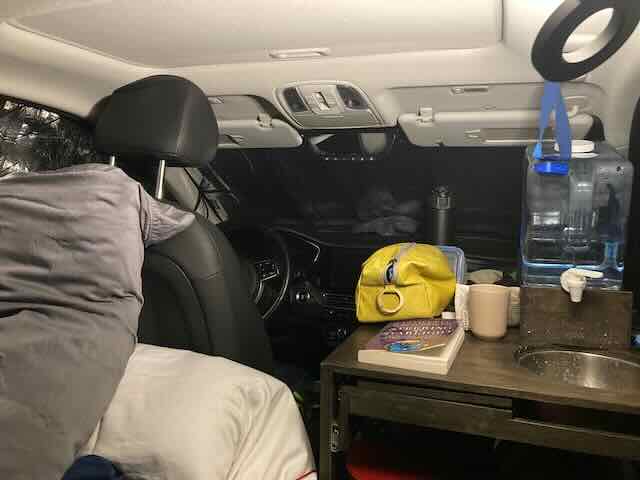
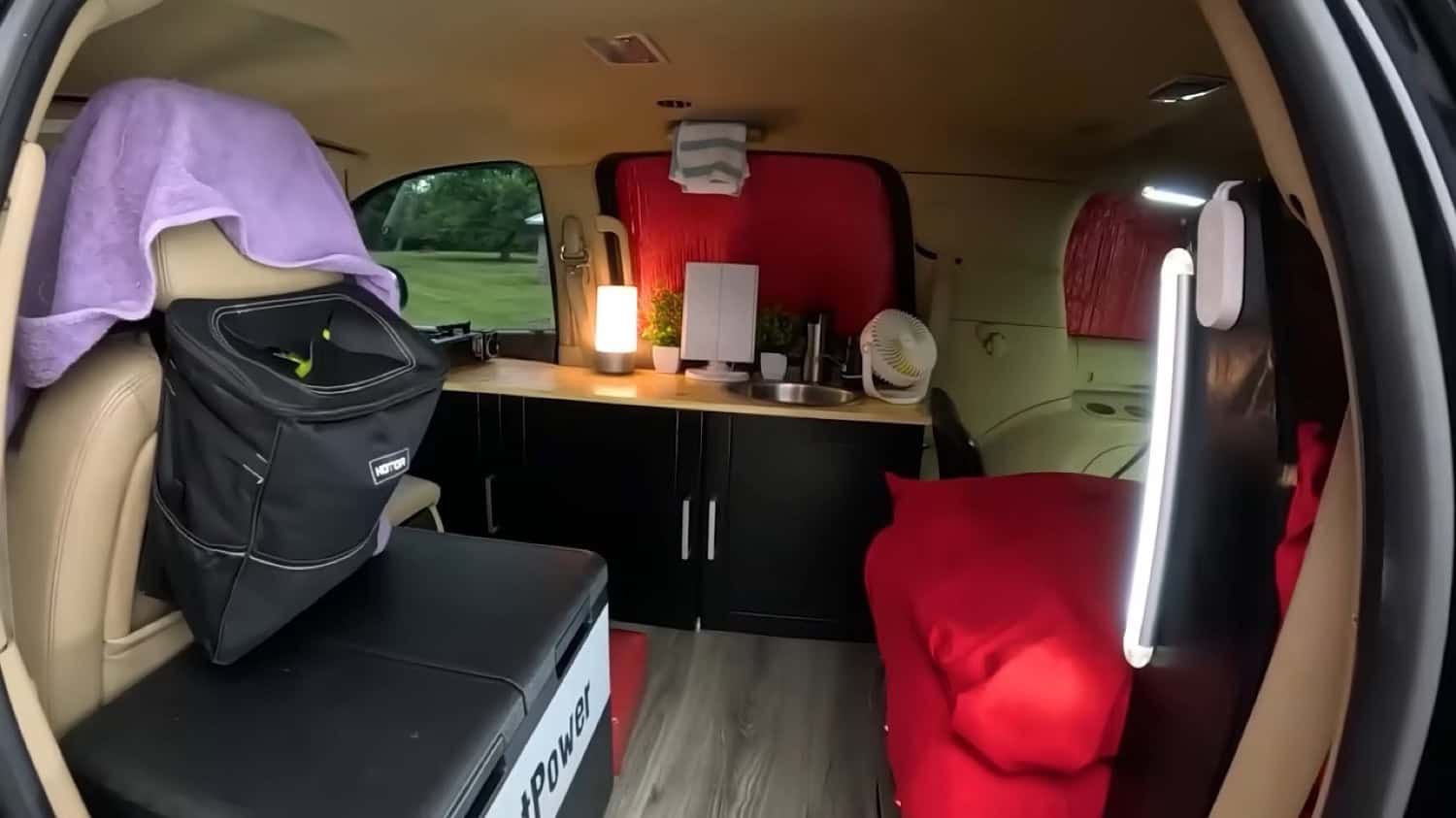
- Front passenger seat removed (inspired by Joey White’s build) to make room for a sink, storage, and a pull-out work/food prep shelf.
- Appliances & utilities:
- 12V 28L Bouge RV compressor fridge
- Sink with running water
- Portable toilet
- Power setup:
- Car’s 12V outlets and a 150W household socket (stay active in Utility Mode)
- Goal Zero Yeti 500X solar battery for off-grid use, charged via the car or folding solar panels
- Insulated, reversible WeatherTech window covers for privacy and temperature control
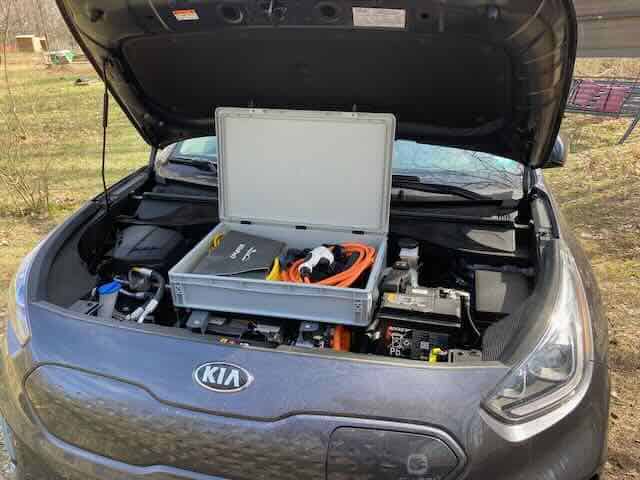
- Large carpet-lined underbed storage and aftermarket “frunk” for cables, extension cords, or valuables
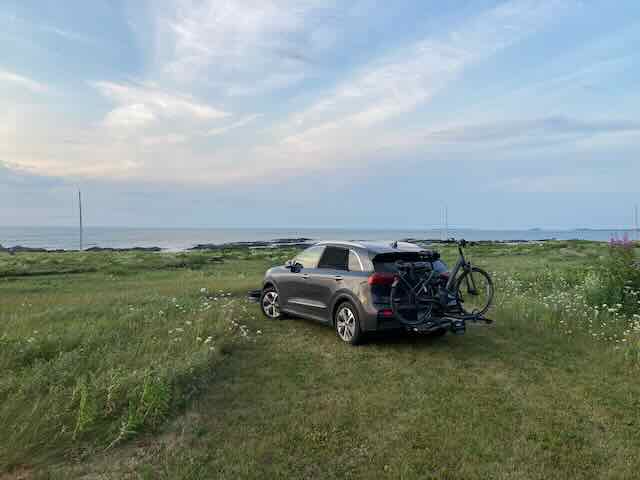
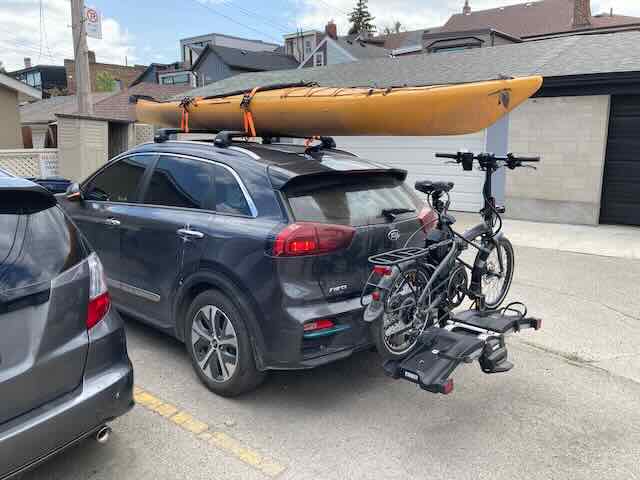
- 2” hitch with Thule bike carrier for e-bikes, recharged from the car’s socket
- Roof rails for a 16 ft sea kayak or rooftop carrier
- Flexible sleeping setups:
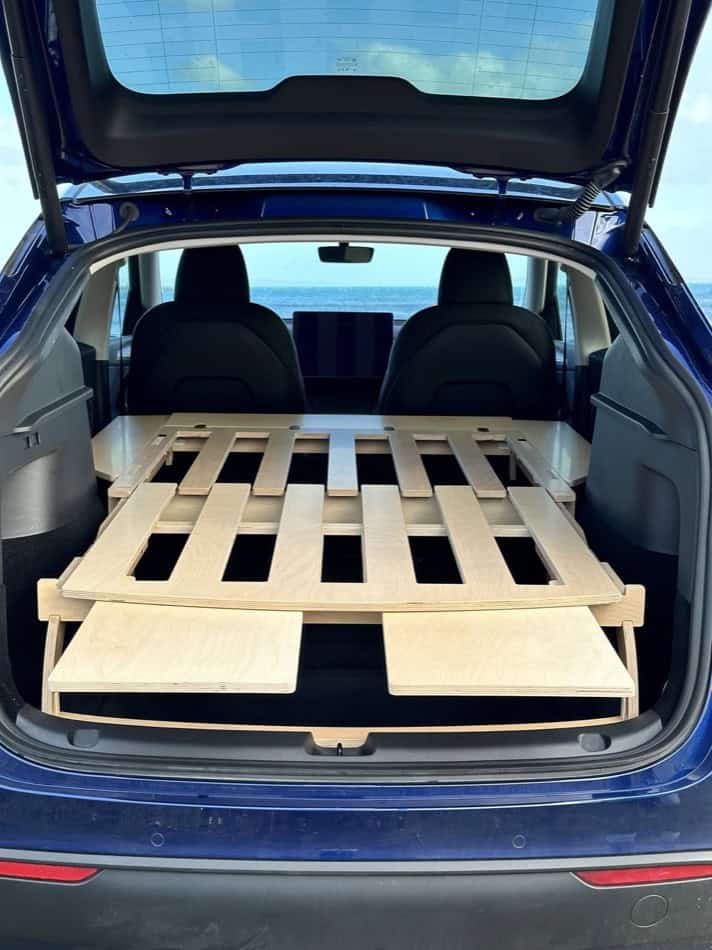
- Solo: Narrow bed with inflatable camping mattress on the 40% side of the rear seat
- Duo: Fold seats down for a Twin XL or larger mattress
Joey White’s Build Video Tour (Blake’s Inspiration for his micro car camper design)
Life on the Road in the Niro EV
Blake has traveled both solo and with a companion for up to three weeks straight, making most meals in the car and sleeping in it every night.
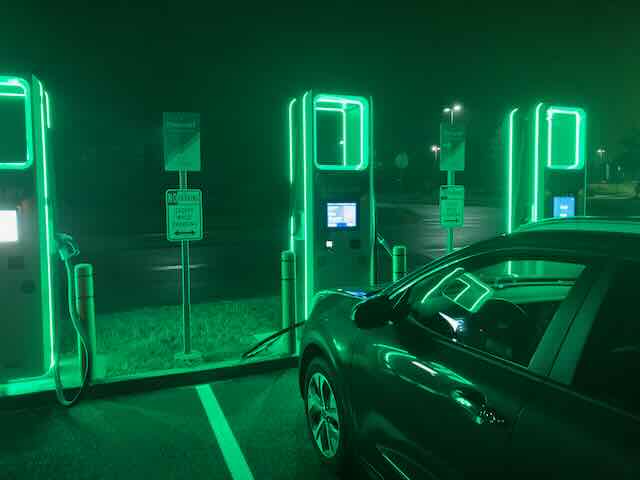
They’ve stealth camped everywhere from urban neighborhoods and Tim Hortons parking lots to truck stops, Kia dealerships, and free Level 2 chargers.
Costs averaged just $13–$25/day for 4–8 hours of driving using commercial fast chargers — and as little as $0/day when relying on free chargers. The savings allowed them to splurge on great food, enjoying one restaurant meal daily while still cooking high-quality meals inside the car.
Insulated, reversible window covers from WeatherTech allow for complete blackout and stealth.
Aftermarket “Frunk” under hood for storage of charging cables and extension cord (but also stealthy hideaway for laptop when parked at trailhead and off hiking).
2” hitch with Thule bike carrier for e-bike(s) (can recharge e-bike batteries from the 3-prong socket in the car)
Roof rails with attachments for 16ft sea kayak or Thule silver-top rooftop carrier.
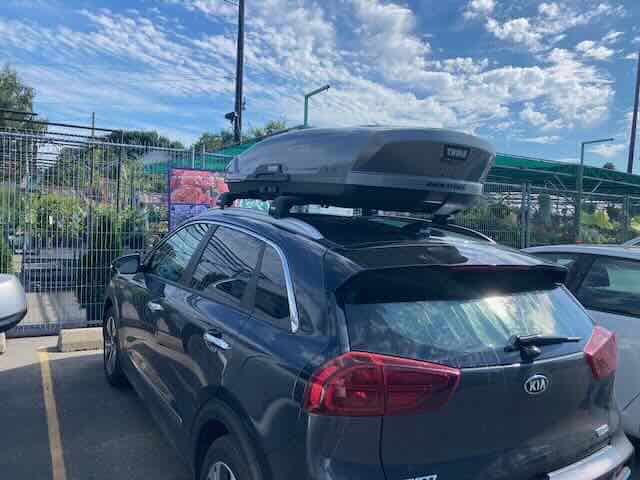
Video Tour: Blake’s Stealth Kia Niro EV Camper Conversion (WilloPad3)
Highlights
- Blake’s Kia Niro EV stealth camper, WilloPad3, offers a sustainable and efficient alternative to traditional camper vans, with the ability to maintain climate control for days in “camp mode.”
- The build includes unique features like interior cooking capabilities, avoiding the issues of outdoor cooking in adverse weather and maintaining stealth in urban settings.
- The camper’s compact size allows for easy parking in any spot and access to areas that restrict larger campervans, reducing travel costs significantly.
- Key modifications include the removal of the front passenger seat for additional storage and workspace, and a versatile bed setup for solo or duo travel.
- Power solutions involve using the car’s 12V outlets and a Goal Zero Yeti solar battery for off-grid power needs, enhancing the camper’s self-sufficiency.
- Additional features include a 12V compressor fridge, sink with running water, portable toilet, and insulated window covers for privacy and temperature control.
- The project demonstrates a cost-effective travel lifestyle, with significant savings on accommodation and the flexibility to explore various locations comfortably.
What’s Next for Blake?
With more frequent two-person travel, Blake is already considering doing a similar build with the larger Kia EV9.
Our big thanks to Blake for sharing!🙏
You can share this using the e-mail and social media re-share buttons below. Thanks!
If you enjoyed this you’ll LOVE our Free Daily Tiny House Newsletter with even more!
You can also join our Small House Newsletter!
Also, try our Tiny Houses For Sale Newsletter! Thank you!
Explore More: Tiny Houses | Builders | THOWs | Park Model Tiny Houses | Communities | Modern Tiny Houses | Real Estate | Reviews | Tiny Cabins | Tiny Cottages | Tiny Homes With No Lofts | Tiny House Interiors | Tiny House Living | Tiny Houses For Sale | Tiny Houses For Rent
The Latest: Go Back Home to See Our Latest Tiny Houses
Subscribe to our Newsletters:
Join the Tiny House Newsletter
=> tinyhousetalk.com/tinyhousenewsletter
Join The Small House Newsletter
=> tinyhousetalk.com/small-house-newsletter
Join Our Tiny Houses For Sale Newsletter
=> tinyhousetalk.com/tiny-houses-for-sale-newsletter
Disclosure: This post may contain affiliate links. If you purchase through one of our links, we may earn a commission at no additional cost to you.


Alex
Latest posts by Alex (see all)
- Studio Home Laurel: A One-Bedroom Backyard ADU in Four Architectural Styles - October 10, 2026
- A 6’5″ Man’s DIY Tiny House on Wheels, Permitted in Calgary - October 10, 2026
- A Long House: A Designer’s 603 Sq Ft Seoul Apartment Opened Up Around Morning Rituals - October 10, 2026








Thanks Alex for this lovely article. Regarding next steps we decided against the lovely EV9 (too pricey and ostentacious for us), and will stick with Niro. Happy to chat with anyone interested in the many benefits EVs offer for stealth camping / car dwelling / vanlife. As the article notes, staying cool in the summer heat, and warm in winter deep freeze is one of the biggest challenges vehicular nomads face, and EVs have that covered in a way that avoids the complexity (and added space needs) of add-on systems for heating and cooling (and powering those off-grid).
AFTERTHOUGHT: We subsequently (and only recently) learned that the little airbag light that comes on the dash when the front passenger seat is removed is not the little annoyance to be ignored that we thought it was, but rather may signal (according to one Kia service manager) the fact that the entire airbag and seatbelt tensioners etc system (for driver and passengers) may be deactivated. Since most EVs feature airbags and other safety equipment, we recommend not tampering with these in a way that might compromise safety.
All to say that we are modifying the design to retain both seats up front and create space for sink, fridge, toilet, kitchen and sleeping area into the back, behind the front seats. In a smallish EV like the Niro, this is a challenge, but we believe it can be done. Stay tuned for updates!
Thanks again, Blake! 😊 Really appreciate the update. Your experience with EVs in van life is super valuable for readers curious about efficiency and comfort. Feel free to send us photos or updates — we’d love to feature your progress! Hope all is well!
WOW! I have seen more people living in their cars because the rents are over the top in price. Where I live a 2 bedroom apartment is 2,000.00 per month plus you have to pay for utilities.
Hi Maria. Yes I’ve noticed that as well. Unfortunately a lot of places are cracking down now, and Trump’s new executive order could be problematic for car dwellers in urban areas in the USA, as Bob Wells (CheapRVLiving) and other vanlife influencers have noted.
You’re absolutely right, Maria! Housing costs have gone through the roof, and it’s no wonder more people are exploring van life or creative living options. Hopefully, as awareness grows, we’ll see more affordable housing solutions developed nationwide.