Disclosure: This post may contain affiliate links. If you purchase through one of our links, we may earn a commission at no additional cost to you.
Gypsy wagons have a romantic appeal that most tiny dwellings can only aspire to. There’s something about the curved rooflines, the compact self-contained interiors, and the connection to a centuries-old nomadic tradition that makes them feel less like a house and more like a story you can sleep inside.
Wooly Wagons, based in Russiaville, Indiana, has been building custom gypsy wagons, sheep wagons, tiny houses, and mobile dwellings since 2008. Founded by Steve Auth — a craftsman with over 40 years of building experience and a background as a horse owner and rancher — the company specializes in lightweight, towable structures built with welded aluminum framing and spray foam insulation.
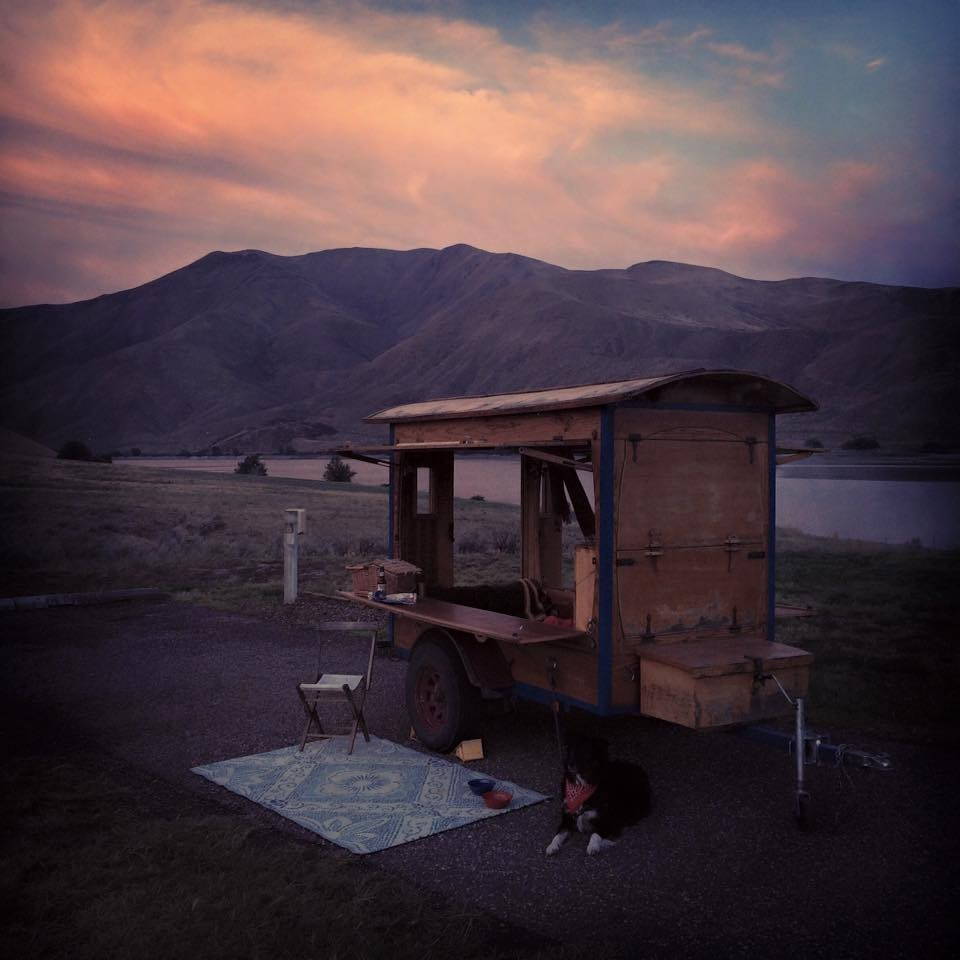
The wagon featured here is one of Wooly Wagons’ signature builds: a sheepherder-style gypsy wagon that packs a surprising amount of functionality into a footprint just 14 feet long and 8 feet wide.

A Sheepherder Wagon Reimagined for Modern Living
The Wooly Wagon takes its inspiration from the sheepherder wagons that were once a common sight across the American West. Shepherds would live in these compact, horse-drawn shelters for months at a time while tending their flocks in remote pastures. The design had to be efficient by necessity — every inch served a purpose, and the structure had to withstand wind, rain, and rough terrain.
Steve Auth recognized that the same design principles that made sheepherder wagons practical in the 1800s make them ideal for today’s tiny living movement: compact footprints, self-contained systems, and the ability to be towed to wherever you want to be. The key difference is modern materials and construction techniques that make these wagons far more comfortable and durable than their historical counterparts.
Inside the Gypsy Wagon
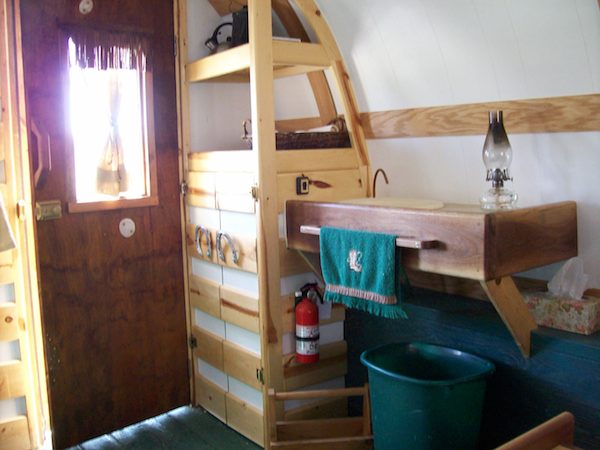
Despite its modest dimensions, this wagon includes everything you need for comfortable off-grid stays. The interior layout is a masterclass in compact efficiency, with each component carefully sized and positioned to maximize the usable space.
- Full bed and mattress — positioned to make the most of the wagon’s width
- Fresh water tank and water pump — self-contained water system for off-grid use
- Sink — connected to the onboard water system
- Slide-out table — tucks away when not in use, freeing up floor space
- Cabinets and storage — built into the walls and under the bed
- 12-volt power system with lights — solar-compatible electrical setup
The slide-out table is a particularly clever detail. In a space this compact, fixed furniture is a luxury you can’t afford. The ability to create a dining or work surface when you need it and stow it when you don’t is the kind of thinking that separates well-designed tiny spaces from cramped ones.
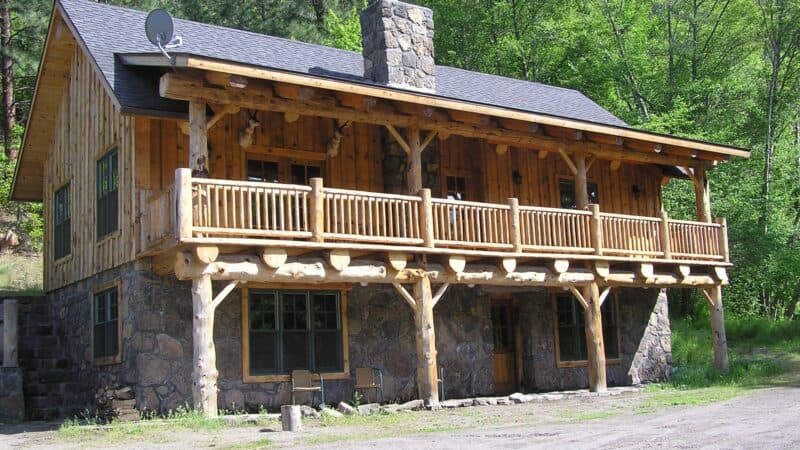
The Trapper’s Cabin: A Tiny Retreat in the Woods
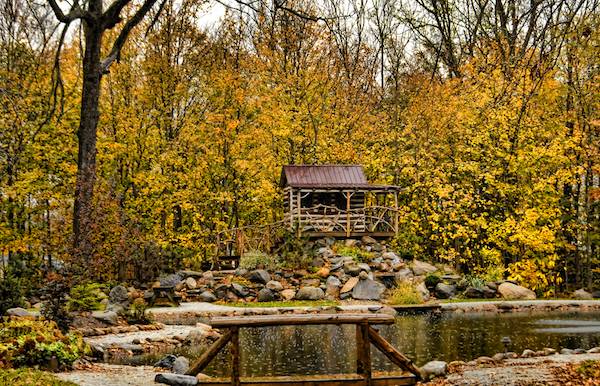
On the same property in central Indiana, there’s also a tiny cabin called the Trapper’s Cabin. Surrounded by nature and built in a classic rustic style, it offers a different flavor of tiny living — rooted rather than rolling, with a warmth and solidity that comes from being nestled into its landscape.
The cabin is a reminder that tiny living comes in many forms. Whether you’re drawn to the mobility of a gypsy wagon or the permanence of a woodland cabin, the core appeal is the same: a simple, intentional space that puts you closer to the world outside your door.
Design Details
- Type: Sheepherder-style gypsy wagon
- Dimensions: 14 feet long by 8 feet wide (also available in 10-foot width)
- Construction: Welded aluminum framing with spray foam insulation
- Roof: Insulated metal roof with classic curved profile
- Electrical: 12-volt system with lighting, solar panel compatible
- Water: Self-contained fresh water tank with pump and sink
- Sleeping: Full bed with mattress
- Storage: Built-in cabinets, slide-out table
- Towing: Lightweight design towable with a standard truck
- Builder: Wooly Wagons, Russiaville, Indiana (est. 2008)
- Warranty: 30-year structural framing warranty
- Starting price (new builds): From $22,500 for basic units; custom builds vary
What Makes This Build Special
- Aluminum framing is a game-changer for towable structures: Most tiny house builders use wood framing, which adds significant weight. Wooly Wagons’ welded aluminum approach keeps the structure light enough to tow with a standard pickup truck while maintaining a 30-year structural warranty. For anyone planning to move their dwelling regularly, that weight savings translates directly into fuel savings and towing ease.
- The sheepherder wagon heritage is more than aesthetic: These designs were battle-tested over a century of hard use in remote conditions. The curved roofline sheds water and snow efficiently, the compact layout forces functional efficiency, and the proportions are inherently stable during transport. Steve Auth is building on proven geometry, not reinventing it.
- Off-grid capability is built in, not bolted on: The 12-volt system, fresh water tank, and self-contained plumbing mean this wagon is ready for remote use out of the box. Many tiny builds treat off-grid as an upgrade package; here it’s foundational.
- The price point opens doors: With new custom builds starting at $22,500, Wooly Wagons occupies an accessible price range for the quality of construction. That’s significantly less than most professional tiny house builds, which typically start at $40,000-$60,000 or more.
Learn More
- Wooly Wagons website: woolywagons.com
- Contact: (765) 513-9104 or woolywagons428@gmail.com
- Location: Russiaville, Indiana — free consultations and complimentary stay experiences available
Highlights
- Sheepherder-style gypsy wagon built by Wooly Wagons of Russiaville, Indiana
- 14 feet long by 8 feet wide with insulated metal roof
- Self-contained with fresh water tank, pump, sink, and 12-volt power system
- Full bed, slide-out table, and built-in storage cabinets
- Welded aluminum framing with spray foam insulation — lightweight and towable
- 30-year structural framing warranty on all Wooly Wagons builds
- New custom builds start at $22,500
- Also on the property: the Trapper’s Cabin, a rustic tiny retreat surrounded by nature
- Wooly Wagons has been building custom gypsy wagons, sheep wagons, and tiny houses since 2008
Would you choose the mobility of a gypsy wagon or the rootedness of a woodland cabin? There’s no wrong answer — just different ways to live simply. Share your pick in the comments below.
You might also enjoy exploring:
Disclosure: This post may contain affiliate links. If you purchase through one of our links, we may earn a commission at no additional cost to you.


Alex
Latest posts by Alex (see all)
- BridgeWay Village: 18 Tiny Homes Helping Women and Families in Spartanburg Leave Homelessness - October 19, 2026
- Two Bedrooms, Sleeps Eight: An Off-Grid Log Cabin in Oregon’s White River Canyon - October 19, 2026
- Modern Tiny Living Catalina: A Retro Saltbox Tiny House with a First-Floor Master Bedroom - October 19, 2026