≡ Menu

Jay Shafer felt overwhelmed by the 4,000 square foot home he grew up in back in Iowa.

Time, energy and resources were spent maintaining space that added very little to their lives on the whole.

This distaste for wasted space emerged as a creative influence when Shafer was in his 20s.

After college, he started making blueprints of tiny homes just for fun.

Exploring how space is used, brainstorming how to use it more efficiently and learning about the materialism of our culture, he decided to pursue the passion further.

One of the legal difficulties he found right away was zoning laws that restrict how big anyone living establishment must be.

In most states, to be considered a house a building has to measure at least 220 square feet.


Please don’t miss other exciting tiny homesjoin our FREE Tiny House Newsletter!

Jay Shafer of Tumbleweed Tiny Houses

Photo Courtesy of Tumbleweed Houses

[continue reading…]

{ 1 comment }

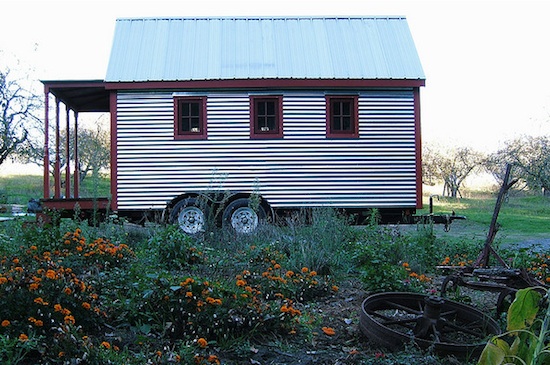
This is a Tiny House Poster designed by Jay Shafer back in the day.

It features the Anderjack Box Bungalow along with hollyhock flowers in front of it.

Don’t miss other interesting tiny house info like this – join our FREE Tiny House Newsletter!

Tumbleweed Tiny House Poster of the Old Anderjack Box Bungalow Design by Jay Shafer

Hollyhocks Anderjack Tiny House Poster

[continue reading…]

{ 10 comments }

Every Thursday I’ll be featuring a random set of tiny house plans here on Tiny House Talk.

Today I’m introducing you to Tumbleweed’s Beavan Box Bungalow design.

Beavan Box Bungalow Tiny House Plans

The Beavan is one of Tumbleweed Houses latest designs in the Box Bungalow category.

As you may already know all of this company’s house plans are designed by Jay Shafer, who has been living happily in really small spaces since 1997.

That’s over ten years of extremely simple living. That’s why he’s #1 when it comes to designing micro sized spaces for humans.

Jay Shafer and Tumbleweed Tiny Houses

Jay is at the forefront of today’s tiny house movement not because he is the first person to live so simply but because he has successfully shared his amazing ideas with the world.

In his Small House Book, he shows you the current generous loopholes which allow you to bypass minimum size housing building code restrictions in most areas.

The Beavan Box Bungalow

Let’s take a close look at this beautiful design which was recently featured on HGTV’s Design Star.

Beavan Box Bungalow Tiny House Plans by Jay Shafer of Tumbleweed Houses

Photo Courtesy of Tumbleweed Houses

[continue reading…]

{ 0 comments }

The Tumbleweed Popomo offers 170 square feet of living space on a flatbed-style trailer, making it the widest tiny house design in the Tumbleweed lineup that still requires no special permit to tow. At 8 feet 6 inches interior width, the Popomo provides significantly more living space than standard trailer-width designs while maintaining steel siding for durability.

Popomo Specifications

  • Designer: Tumbleweed Tiny House Company
  • Size: 170 square feet
  • Interior Width: 8 feet 6 inches
  • Trailer Type: Flatbed style (sits over wheels)
  • Exterior: Steel siding
  • Permit Required: No special permit to tow
  • Estimated Build Cost: Approximately $20,000 with new materials
  • DIY Friendly: Designed as easiest Tumbleweed to build

Popomo Exterior

Tumbleweed Popomo tiny house exterior view

[continue reading…]

{ 5 comments }

This two-part video interview with Jay Shafer, founder of Tumbleweed Tiny House Company, explores his design philosophy, personal story, and upcoming tiny house designs. Shafer pioneered the modern tiny house movement with his small house plans and has influenced countless builders seeking alternatives to conventional housing.

Interview Details

  • Guest: Jay Shafer
  • Company: Tumbleweed Tiny House Company
  • Format: Two-part video interview
  • Topics: Design philosophy, upcoming designs, personal story
  • Role: Founder and tiny house movement pioneer

Part One: Design Philosophy

[continue reading…]

{ 12 comments }

Tumbleweed Tiny House workshops teach participants how to build their own tiny houses from start to finish. These hands-on classes cover trailer foundations, framing, insulation, roofing, and systems installation. Attendees learn practical skills alongside other aspiring tiny house builders, gaining the knowledge needed to construct their own homes.

Workshop Curriculum

  • Foundation: Building on a trailer vs. permanent foundation
  • Tools: The essential tools needed for construction
  • Framing: Wall and roof framing techniques
  • Sheathing: Exterior sheathing installation
  • Insulation: Proper insulation and moisture management
  • Venting: Condensation prevention strategies
  • Roofing: Roof installation methods
  • Siding: Exterior siding techniques
  • Systems: Water heaters, appliances, toilets, air conditioning
  • Codes: Building codes, restrictions, and zoning information

Workshop Locations

Tumbleweed workshops have been held in cities across the United States including:

  • Orlando, FL
  • Santa Fe, NM
  • Nashville, TN
  • Honolulu, HI
  • Boston, MA
  • Olympia, WA
  • Washington DC
  • Chicago, IL
  • Los Angeles, CA
  • Portland, OR
  • New York, NY
  • Santa Rosa, CA

[continue reading…]

{ 9 comments }

The Tumbleweed Tarleton model features the largest kitchen of any Tumbleweed tiny house design. The layout places the kitchen in a dedicated 6′ x 4′ space, leaving the main living area more open with a sleeping loft above.

Design Details

  • Manufacturer: Tumbleweed Houses
  • Model: Tarleton
  • Kitchen: 6′ x 4′ dedicated space (largest Tumbleweed kitchen)
  • Sleeping: Upstairs loft
  • Features: Front porch, vaulted ceilings in main room, storage loft above entry
  • Similar Model: Lusby (with kitchen in living area instead)

Floor Plan and Dimensions

Tumbleweed Tarleton dimensions
Tumbleweed Tarleton floor plan

Exterior

Tumbleweed Tarleton tiny house exterior

Photo credits: Tumbleweed Houses

[continue reading…]

{ 5 comments }

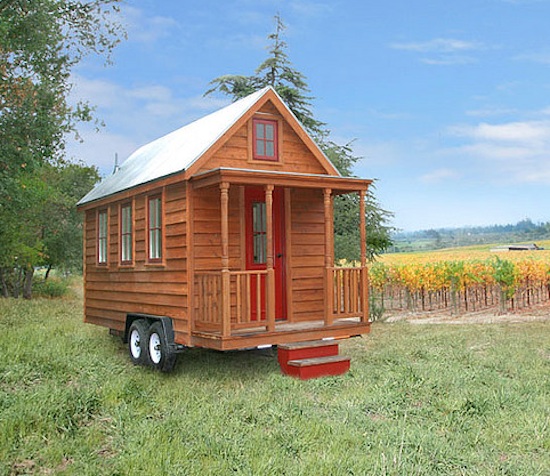
The Tumbleweed Lusby tiny house packs efficient living into 117 square feet. The design features an upstairs sleeping loft, a kitchen integrated into the main living area, and vaulted ceilings that make the compact space feel open and airy.

Design Details

  • Manufacturer: Tumbleweed Houses
  • Model: Lusby
  • Size: 117 square feet
  • Layout: Kitchen/living area with dining table, 6′ x 4′ back room, sleeping loft
  • Interior Finish: Pine
  • Exterior Finish: Cedar plank siding
  • Roof: Corrugated aluminum
  • Ceiling: Vaulted in main living area

Lusby Exterior

Tumbleweed Lusby tiny house exterior

Photo credits: Tumbleweed Houses

[continue reading…]

{ 9 comments }

Martin House Company, also known as Lodge on Wheels, builds custom tiny houses on trailers that are wider than the standard 8-foot designs. At 10 feet wide, these homes offer additional interior space but require permits or escorts for highway transport in most states.

Width Comparison

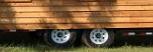
The difference between 8-foot and 10-foot wide tiny houses is visible in the trailer wheel placement. Lodge on Wheels uses wider trailers while companies like Tumbleweed stay within the 8-foot limit for easier transport.

Lodge on Wheels wider trailer width comparison

[continue reading…]

{ 8 comments }