Disclosure: This post may contain affiliate links. If you purchase through one of our links, we may earn a commission at no additional cost to you.
Every winter, something remarkable happens in the Arizona desert. As temperatures cool and the sun turns gentle, thousands of people from across the country roll into Quartzsite — a dusty town of just 3,500 permanent residents that swells to over 750,000 during the winter months. They come in converted vans, school buses, vintage Airstreams, Class A motorhomes, and fifth-wheel trailers. And most of them aren’t paying a dime in rent.
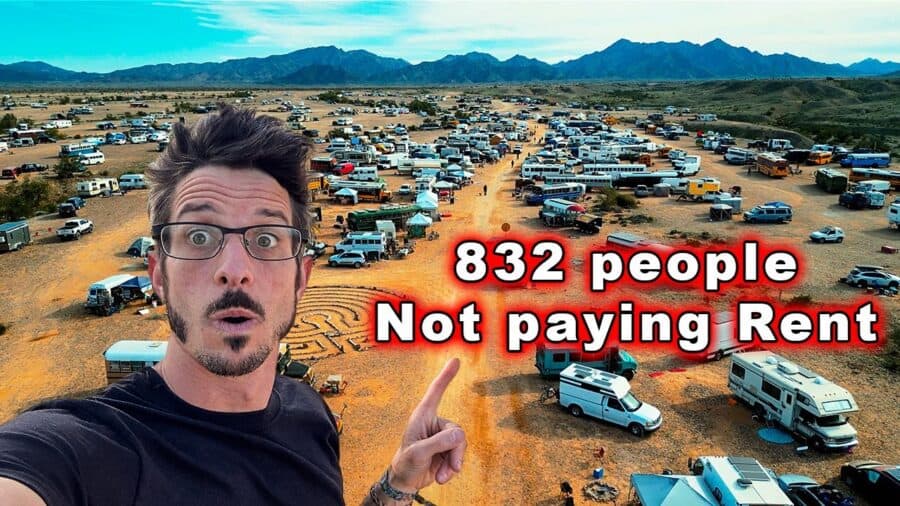
Video by Nomad Brad / YouTube
YouTuber Nomad Brad recently documented this phenomenon in a video that’s resonating with viewers. The title says it all: 832 people stopped paying rent and now live free in RVs in the Arizona desert. But the real number is far larger. Quartzsite and the surrounding Bureau of Land Management (BLM) land has become one of the largest free-living communities in the United States — a place where financial freedom, community, and the open road converge.
How Free Desert Camping Works on BLM Land
The Bureau of Land Management oversees more than 11,000 acres of public land surrounding Quartzsite, and much of it is open to free dispersed camping. The rules are straightforward: you can camp for up to 14 days in one spot, then you need to move at least 25 miles away before returning. There are no hookups, no reservations, and no fees. You simply drive out onto the desert floor, find a flat spot, and park.
Popular free camping areas include Plomosa Road, Road Runner, Dome Rock, and Scadden Wash — all within a short drive of town. For those who want to stay longer without moving every two weeks, the BLM offers Long-Term Visitor Areas (LTVAs), where a seasonal permit costs $180 for seven months (September through April). That works out to roughly $26 per month — or about 86 cents a day.
To put that in perspective, the national average rent in the United States is now over $1,600 per month. Someone living on an LTVA permit saves approximately $19,000 in housing costs alone.
Why Quartzsite Draws Hundreds of Thousands Each Winter
Quartzsite’s appeal goes beyond free parking. The town sits at the intersection of I-10 and Highway 95 in western Arizona, just across the Colorado River from California. Winter temperatures hover in the comfortable 60s and 70s during the day, with clear skies and almost no rain. For people living in vehicles without insulation for harsh winters, it’s one of the most livable climates in the country during those months.
But the real draw is community. What started as a scattered collection of snowbirds and rock hounds has evolved into a vibrant, self-organizing society. There are swap meets, gem shows, potlucks, music circles, yoga groups, and the massive annual Quartzsite RV Show (January 17-25, 2026). People who live alone in their vehicles for much of the year converge here and suddenly have hundreds of neighbors, all sharing a similar lifestyle and philosophy.
The demographics have shifted dramatically in recent years. It’s no longer just retirees. A growing number of working-age people — remote workers, gig economy participants, and those priced out of traditional housing — are joining the desert community. Rising rents across the country are pushing people to rethink what “home” means, and Quartzsite offers a compelling answer.
The Rubber Tramp Rendezvous: Where the Community Comes Together
The beating heart of the Quartzsite nomad community is the Rubber Tramp Rendezvous (RTR), an annual gathering organized by Homes on Wheels Alliance (HOWA) and popularized by Bob Wells, whose YouTube channel has introduced millions to the concept of vehicle dwelling. Founded in 2011, the RTR drew over 8,000 attendees in 2025 and continues to grow each year.
The event is completely free to attend. For roughly two weeks each January, nomads gather on BLM land outside Quartzsite for workshops on solar power, water systems, van builds, budgeting, and community support. There are seminars on everything from boondocking basics to building your own camper van. For many first-timers, the RTR is the moment they realize this lifestyle is not only possible but supported by a generous and experienced community.
The RTR was featured in the 2020 film Nomadland, which brought national attention to the growing movement of Americans choosing mobile living over traditional housing. Since then, attendance has surged and the surrounding community has grown even more diverse.
What It Actually Costs to Live on the Desert
The financial math is what draws many people in. Here’s a realistic breakdown of monthly costs for someone living in an RV on BLM land near Quartzsite:
- Camping: $0 (free dispersed) or $26/month (LTVA permit)
- Water: $5-15/month (fill stations charge roughly $0.25 per gallon)
- Propane: $15-30/month for cooking and heating
- Dump station fees: $8-20/month
- Fuel for local travel: $15-40/month
Total: approximately $60-130 per month for housing and basic utilities.
Compare that to the national average rent of $1,636 per month, and the savings are staggering — potentially $18,000 to $23,000 per year. Even factoring in vehicle insurance, maintenance, and the initial cost of an RV, many nomads find they come out significantly ahead financially.
Of course, there are trade-offs. There’s no running water on tap. Electricity is generated by solar panels and generators. Cell service can be spotty depending on your carrier and location. And the desert heat from May through September makes Quartzsite essentially uninhabitable for those without air conditioning, which is why most nomads migrate north for the summer months.
Who Lives Here and Why
The people who gather in the Arizona desert each winter defy easy categorization. There are:
- Retirees on fixed incomes who found that Social Security doesn’t stretch far enough for traditional housing
- Remote workers who realized they don’t need a permanent address to do their jobs
- Young adventurers choosing experiences over mortgages
- People recovering from financial setbacks — job losses, medical debt, divorce — who found RV living as a path back to stability
- Minimalists and environmentalists drawn to the low-impact, low-consumption lifestyle
- Content creators like Nomad Brad who document and share the lifestyle with growing online audiences
What unites them is a shared understanding that housing is the single biggest expense in most people’s budgets, and eliminating or drastically reducing it opens up entirely new possibilities for how to spend your time, energy, and money.
About Nomad Brad
Nomad Brad is a van life content creator who has been living on the road for over seven years. At 32, he left behind a career in the trades — selling his house and business — to pursue full-time van life. His YouTube channel focuses on practical, technical content: solar panel installation, electrical troubleshooting, and helping people on tight budgets build functional mobile homes.
What sets Brad apart from many van life influencers is his focus on accessibility. He shares free technical information and works directly with people to install equipment, making the transition to nomadic living more achievable for those who aren’t mechanically inclined. He spends his winters in the Arizona desert and has become a familiar presence in the Quartzsite community.
His video documenting the 832 people living rent-free in the desert captures both the practical reality and the deeper philosophy of this growing movement.
Watch the Full Video
Is This Lifestyle for You?
Living rent-free in the Arizona desert isn’t for everyone. It requires comfort with solitude (at least part of the year), mechanical self-sufficiency, and a willingness to live without many of the conveniences most people take for granted. But for a growing number of Americans, the math and the lifestyle make more sense than paying $1,600 a month for an apartment they barely spend time in.
If you’re curious about exploring this lifestyle, the Quartzsite area is one of the most beginner-friendly places to start. The BLM land is easy to access, the community is welcoming, and the winter weather is ideal. Many people test the waters with a two-week free camping trip before committing to anything more permanent.
The 832 people in Nomad Brad’s video are part of something much larger. Every winter, Quartzsite proves that community doesn’t require a zip code, and home doesn’t require a mortgage.
Key Takeaways
- Free BLM camping is available on over 11,000 acres surrounding Quartzsite, Arizona (14-day stay limit)
- LTVA permits cost just $180 for 7 months — roughly $26/month
- Total monthly cost of desert RV living: approximately $60-130 compared to $1,636+ national average rent
- Potential annual savings: $18,000-$23,000 on housing alone
- The Rubber Tramp Rendezvous draws 8,000+ attendees each January for free workshops and community
- Winter population in the Quartzsite area grows from 3,500 to over 750,000
- The community includes retirees, remote workers, adventurers, and people seeking affordable alternatives to traditional housing
Have you ever considered RV living as an alternative to paying rent? Would you spend a winter in the Arizona desert? Share your thoughts in the comments below.
Explore More Nomadic Living
Disclosure: This post may contain affiliate links. If you purchase through one of our links, we may earn a commission at no additional cost to you.


Alex
Latest posts by Alex (see all)
- A Hotel Designer’s 484 Sq Ft Milan Apartment with a Rotating Room Divider - October 9, 2026
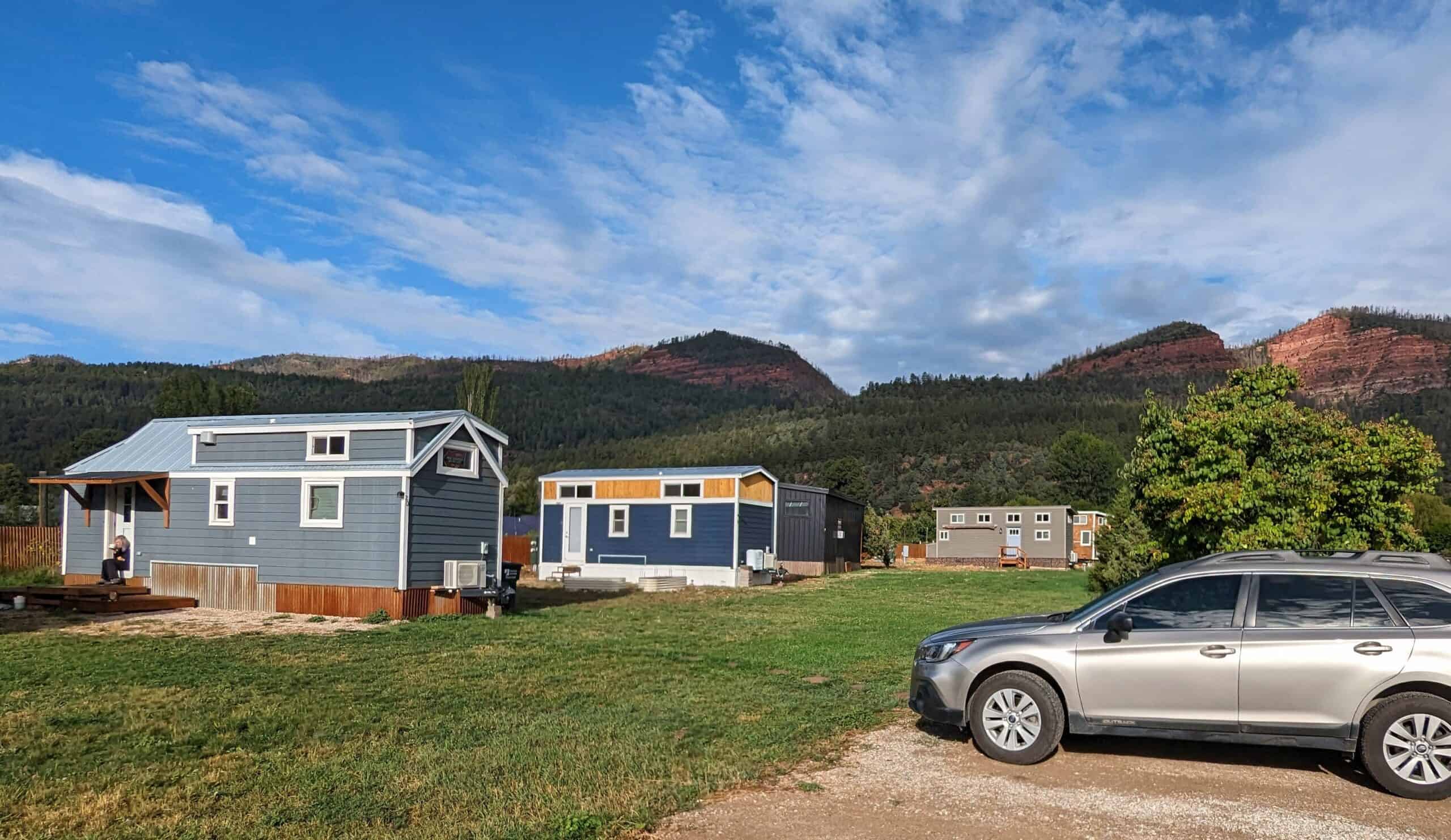
- Hermosa Orchards Village: A Durango Tiny Home Community with Its Own Fruit Orchard - October 9, 2026
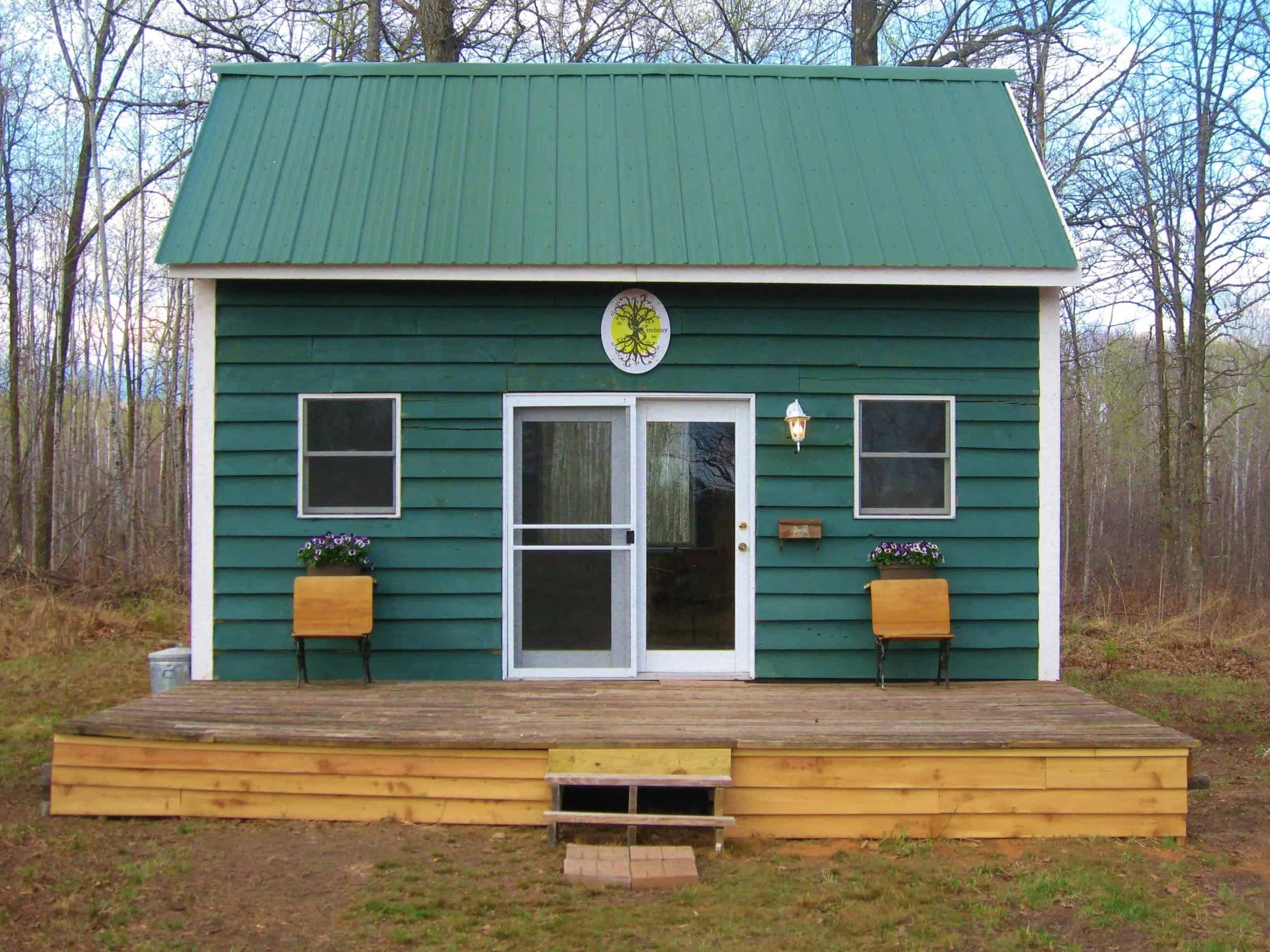
- The Sanctuary Minnesota: A Tiny House Village on 80 Acres of Woods - October 9, 2026