If you’re living in any sort of tiny house (whether that be an RV, boat, or shack) and you are having to refill your water supply an ultra low-flow shower head is a great investment.
Thanks to Evan and Gabby, we get to find out which one is the best.
It’s the one they chose for their tiny house on a trailer since their water heater only holds 7 gallons of water.
So it’s also a smart purchase to save on your water heating bill in addition to simply saving on the amount of water you use while taking a shower.
Are you looking for a low-flow faucet as well? For your kitchen/bath? Check these out.

If you want to order your own just visit Amazon.com using this link. You’ll also want to be sure to grab some TFE paste to seal right before installing. This will help prevent a pressured spill.
Did you find this post helpful? Help us share it using the buttons below and talk about it in the comments. Thanks!
{ }
I wanted to show you Big Al’s homemade camping trailer.
He has nicknamed it ALVAN the camper caravan.
It’s a pretty simple structure on a 8′ x 4′ trailer chasis that he ordered on eazytrailer.com.au.
Once he put that together he set up a foundation right on the trailer and began framing the walls.
Then he proceeded to add more of the camper’s features like:
- Lounge that folds to double bed
- A pop up roof
- Kitchenette area
- Windows
- Awning
- Aluminum cladding
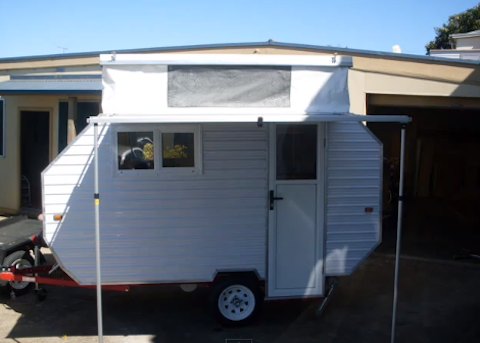
Photo Credit AlvanH on YouTube
In total the Alvan is 10′ by 5.25′. It can be towed with pretty much any small vehicle since it weighs less than 1000 lbs.
[continue reading…]
{ }
If you’re interested in living in the mountains, there is a lot of opportunity from Boulder to Granby to Winter Park and everywhere in between.
If, however, you want to scale down your square footage as well as your carbon footprint, a tiny house might be the right fit.
It’s all about planning, so break down the considerations into two categories: mountain living and tiny house living.
Mountain Life
Sewage and water are important considerations. Without a well, water can be tricky to access.
Consider a rain barrel system or, if available, hooking into another homeowner’s well.

Photo Credit iStockPhoto Stock #18455144
[continue reading…]
{ }
Architect Karl Wanaselja and partner Cate Leger created a unique small house in Berkeley, California.
They call it the McGee House. It consists of 104 salvaged car roofs which cover the upper side walls of the home. The inspiration behind the upper siding came from fish scales.
The lower wall siding is made out of a waste product from the furniture industry in clad form called poplar bark.
The awnings are side windows from America’s best-selling minivan, the Dodge Caravan.
It’s a 2 bedroom home with two levels and a gorgeous upstairs balcony.
From the outside, at just 14′ wide, it appears smaller than it’s actual size.
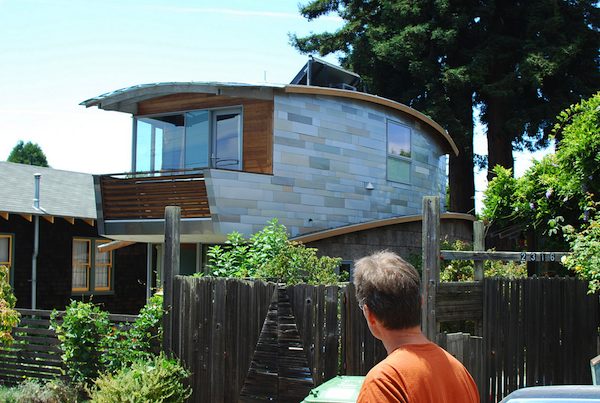
Photo Courtesy of Nicolas Boullosa
[continue reading…]
{ }
Some of you might already be familiar with SignaTour Campers, a small company who builds teardrop trailers in Tampa, Florida, from last year when we featured them on Tiny House Talk.
Since then they have added to their fleet of micro RVs to choose from and in this post, you’ll get a brief overview of each.
The 4′ x 7′ Daytona is their smallest at 600 lbs which makes it easy to tow with any car and some motorcycles and trikes. There’s a torsion axle to help with handling.
The next size up is the Venice at 5′ x 8′ and weighs approximately 800 lbs and features a rear entry which is a bit unique in the teardrop camping world.
The Biscayne is 5′ x 8′ also with double side entry, rear cabinetry and a front cargo area. You’ll get lots of natural lighting in this one because of the double entry glass doors and the two windows.
The Rockledge has a 3500 lb suspension, front storage box, and a standard roof rack installed. This one is geared towards the outdoors man.
All of the campers have a natural birch interior, indoor and outdoor carpeted floors, aluminum wheels and fenders, storage, and a host of available options.
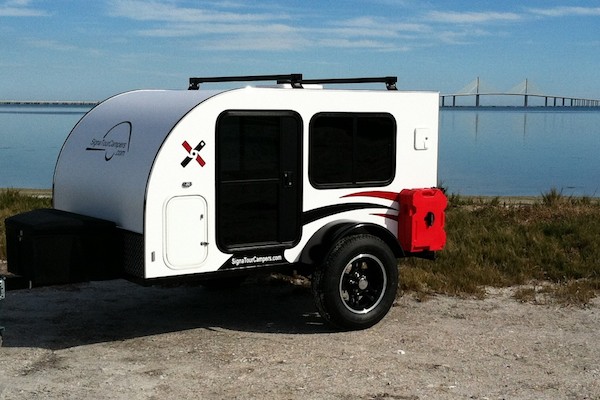
If you like what you see, enjoy the rest of the photos below: [continue reading…]
{ }
The thirty tiny apartments at 18 West Hastings Street are ideally located for young professionals who otherwise couldn’t afford to live downtown in notoriously expensive Vancouver, Canada. On the flipside, this new residential complex is located in a downtown neighborhood known for low incomes and high crime rates.
The Burns Block building that now offers micro lofts measuring less than 300 square feet used to provide cheap housing as a single room occupancy hotel. The new complex offers compact, high-end apartments for the up and coming but is it at the expense of the down and out?
When the building opened on December 19, the designers revealed the transformation from sketchy hotel to high-end housing complex. Politicians and supporters of the project cite it as part of Vancouver’s affordable housing strategy and claim creating mixed income neighborhoods is the best way to improve the area.
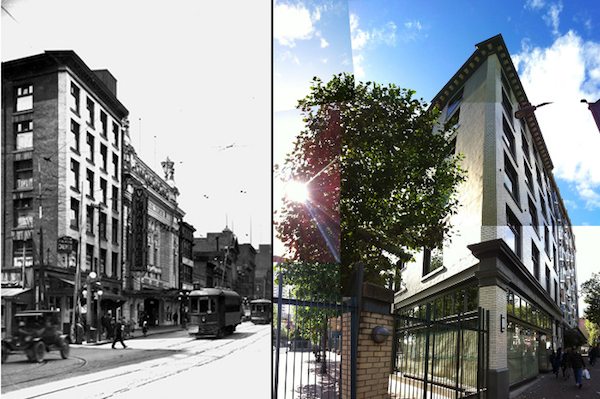
Photos Courtesy of Bruce Carscadden Architect
[continue reading…]
{ }
In late 2009 the downturn in the economy dramatically changed the overall substance of 30+ year business professional, Brenda Curtiss’s life.
In her words, “Even though I had always dreamed about and somewhat planned for the day I could be ‘free’ to full-time in a small RV or camper van, the need to do so financially, seemed to suddenly be thrust upon me when the once thriving Tax Planning Firm I managed for years, had to close due to the economic downturn.
I had bought a 2000 Astro High-Top Conversion Van with my meager savings and started my full-time vandwelling journey in it at a membership vacation community in the scenic North GA Mountains where I had bought memberships in better times.
When I started out I was on shore power (electric hook-up) the majority of the time and not very well equipped without it. It was a beautifully scenic area, but after I had explored it extensively, and entertained family and friends who came to visit throughout the year (staying in the cabins there) the excitement began to wane and the nomadic side of me that had always longed to explore God’s amazing artistry began to rise up in me once again.

Photos Courtesy of Brenda Curtiss
By the end of 2010 I was ready to hit the road to travel across the USA in my little campervan! Some good friends helped me get a good battery system set up and further ready my van to live more self-sustainably.
[continue reading…]
{ }
Greg Johnson of the Small House Society published a video on how city housing codes influence tiny house living.
In a 4 minute video he covers a viewers question, “where can you legally put a tiny house on wheels?”
Greg does a great job of explaining the problems we face in addition to different ways you can get around them.
He also briefly discusses cities that are beginning to allow this type of housing as completely legal accessory dwelling units.
Greg talks about the challenges faced by code enforcement to catch folks sleeping in recreational vehicles, campers, and tiny houses.
I’ll let him do the talking, Hope you enjoy and be sure to visit the Small House Society for more information related to the tiny house movement.

Photo Courtesy of the Small House Society and Greg Johnson on YouTube
If you want to listen to Greg’s tips on how to get around building codes and city zoning, I encourage you to watch his 4-minute video below: [continue reading…]
{ }
The Explorer Boxes are a hybrid of teardrop trailers and easy-to-set-up tent campers. Designed and developed by Compact Camping Concepts, LLC, they’re campers that you can easily build yourself.
The company has developed an 85-page set of building plans so that you can build your own tent trailer. They’re small in size and lightweight so you can tow with just about any vehicle including some motorcycles. The company likes to call it a Mobile Outdoor Adventure Bedroom. On their site, you’ll find different kinds of rooftop tents, changing rooms, ladder extensions, and more so that you can create the perfect camping solution for yourself.
But that’s not its only purpose. These compact tent trailers can also haul your bicycles, kayaks, and other gear. Enjoy the pictures below and if you’re interested Scott has included a special offer for you, readers of TinyHouseTalk.com. Just check out the bottom of this post for details.
Mobile Outdoor Adventure Bedroom (Tent Camper w/ Storage on Wheels!)

[continue reading…]
{ }

