
Disclosure: This post may contain affiliate links. If you purchase through one of our links, we may earn a commission at no additional cost to you.
When an architect designs a van conversion, you get something like the Ryovan Project — a Japanese teahouse-inspired Sprinter van built on a 2018 Mercedes Sprinter 2500 4×4 for owners Saul and Ayaka. Designed by architect Andrew Wade Keating and built by High Grade Partners, it blends zen aesthetics with serious off-road capability.
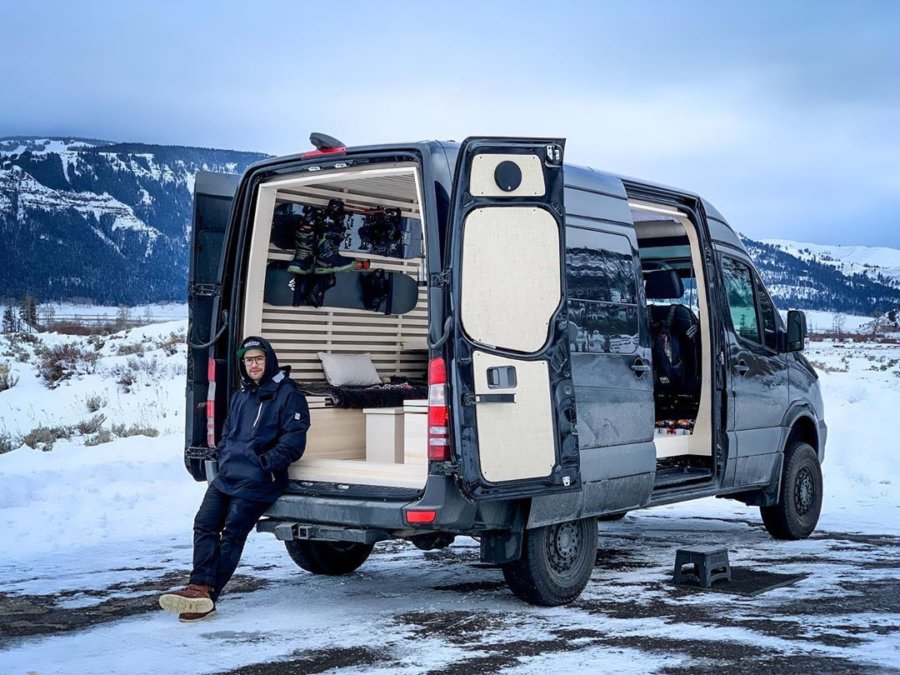
A Zen Cabin Inside a Cargo Van
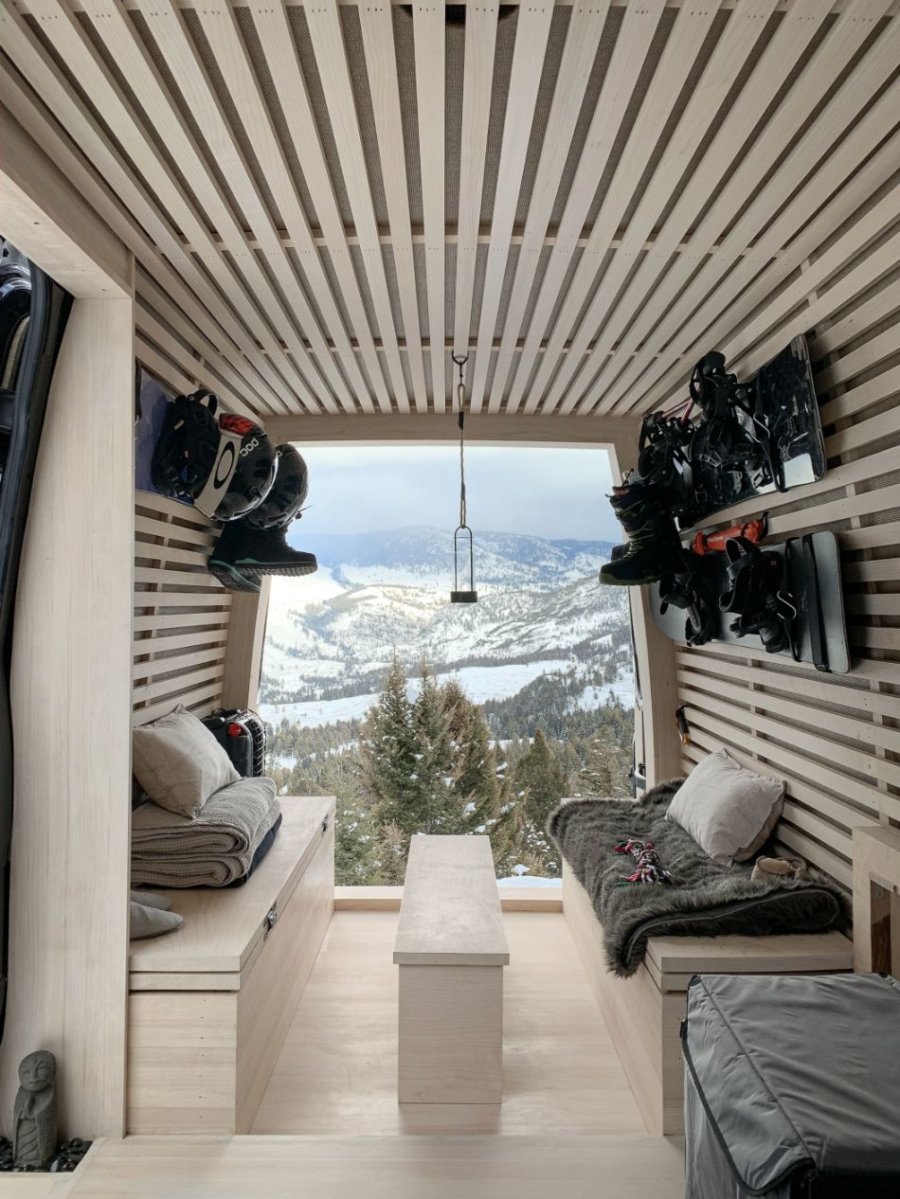
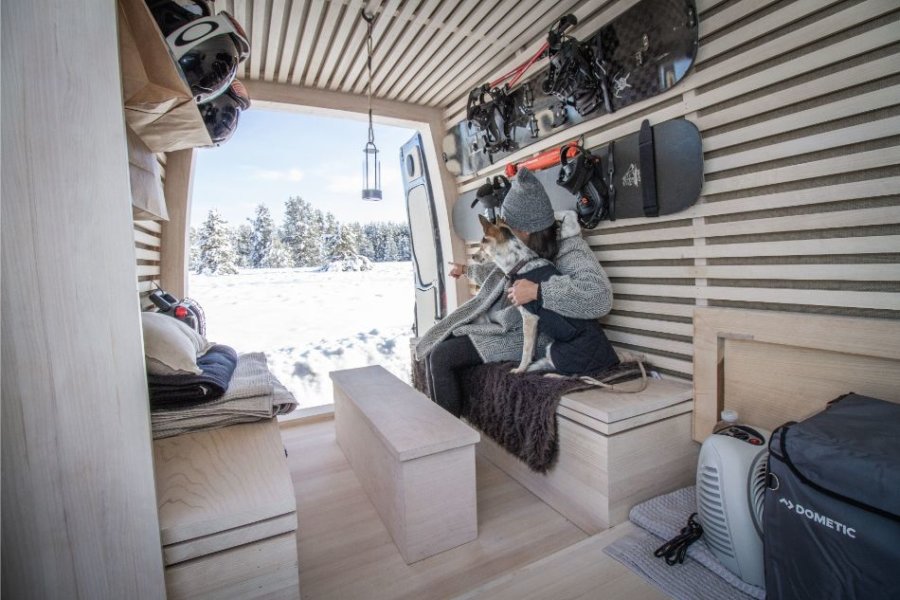
The interior transformation is what sets this build apart from every other Sprinter conversion out there. The wood finishes, quality hardware, and Japanese-inspired design details create a space that feels more like a boutique teahouse than a vehicle. Every surface has been considered with an architect’s eye for proportion and materials.
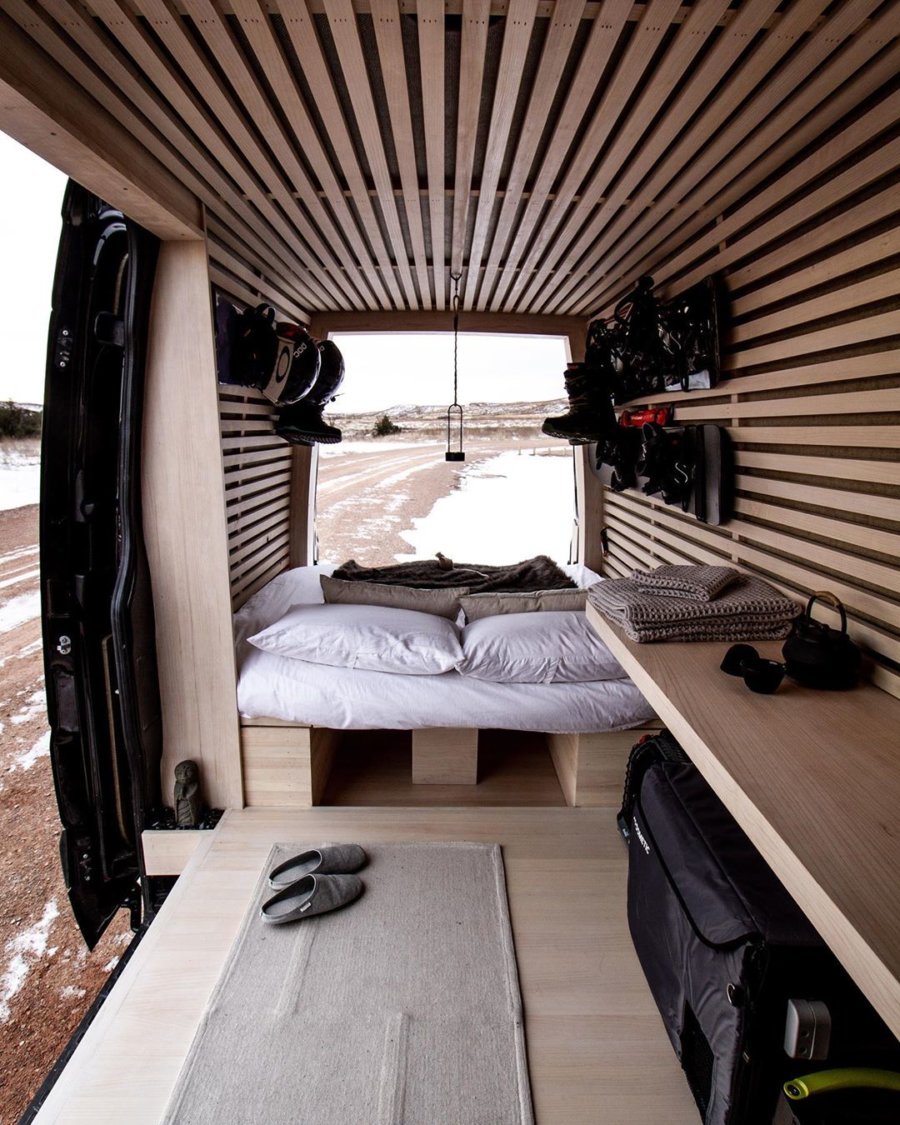
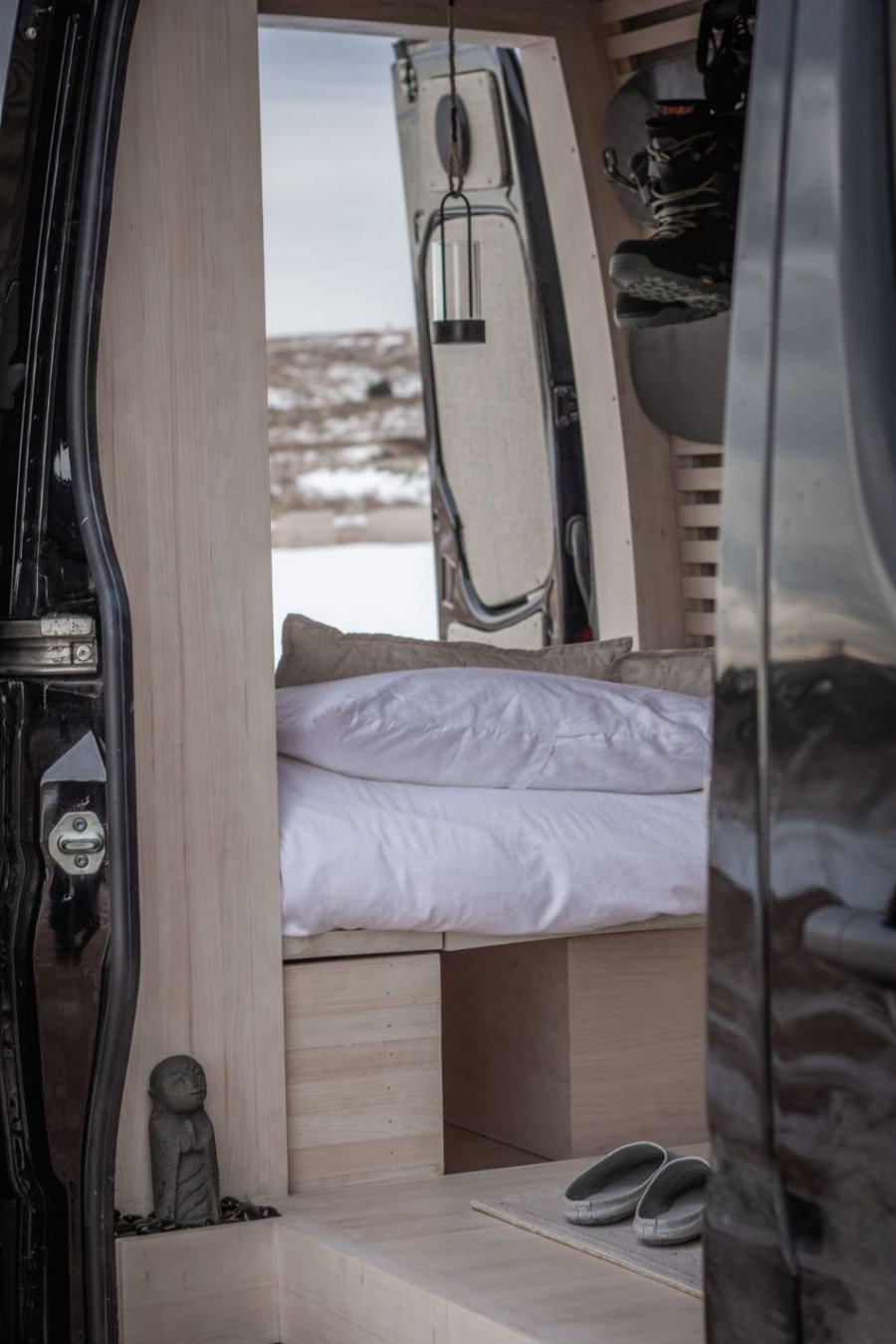
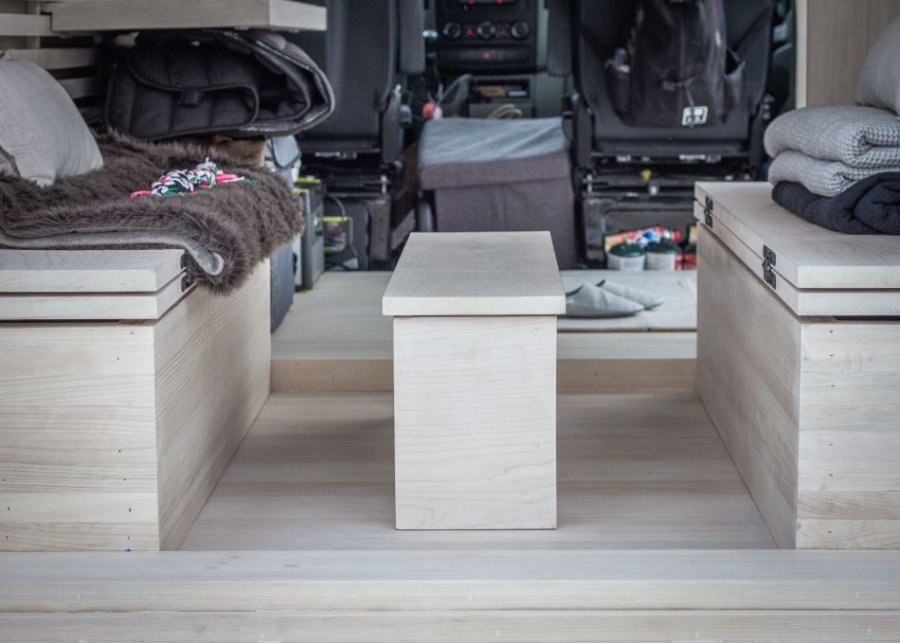
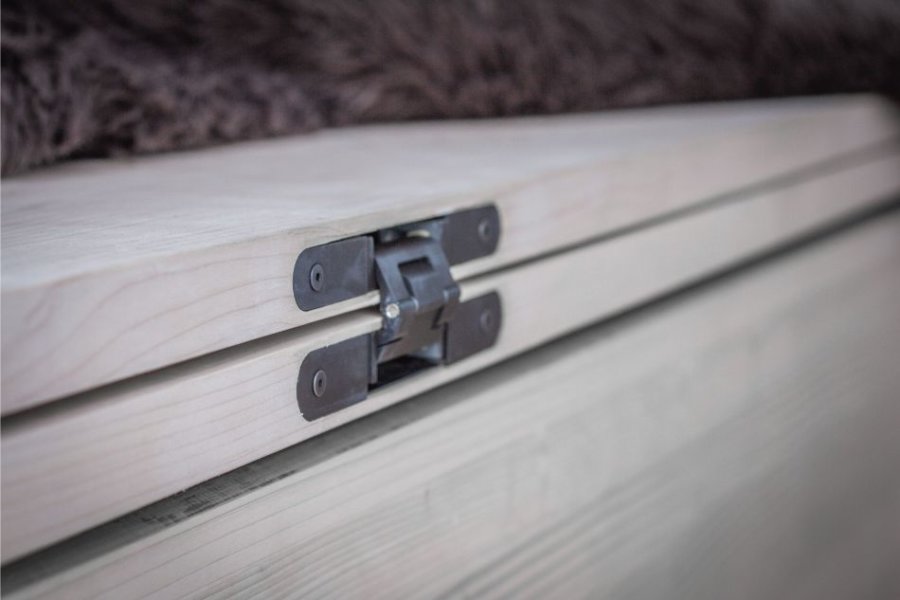

Living and Sleeping
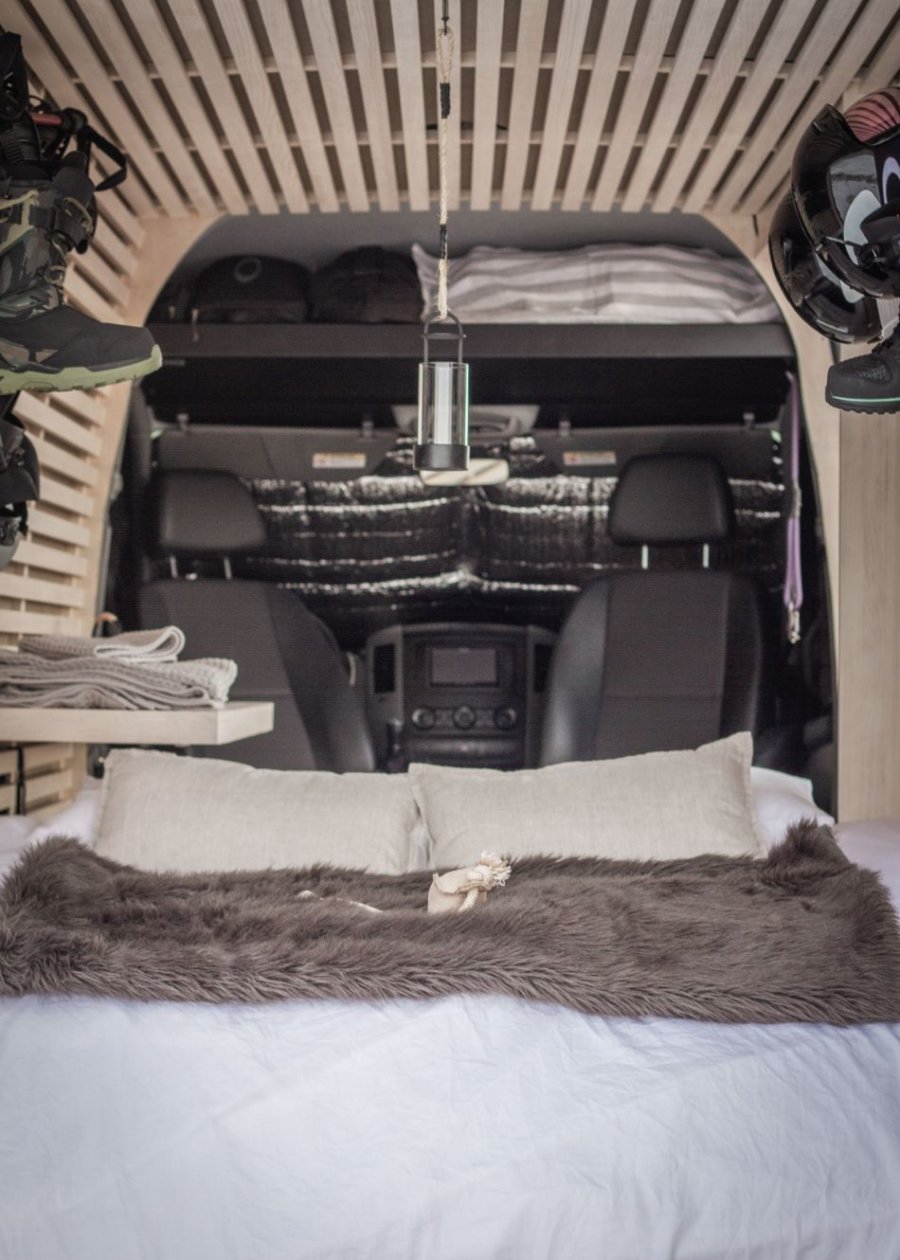
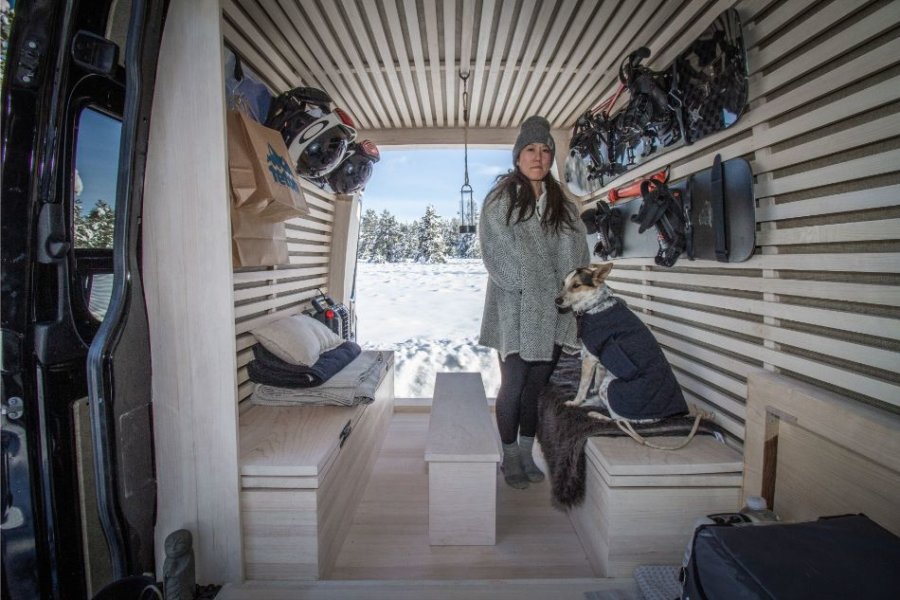
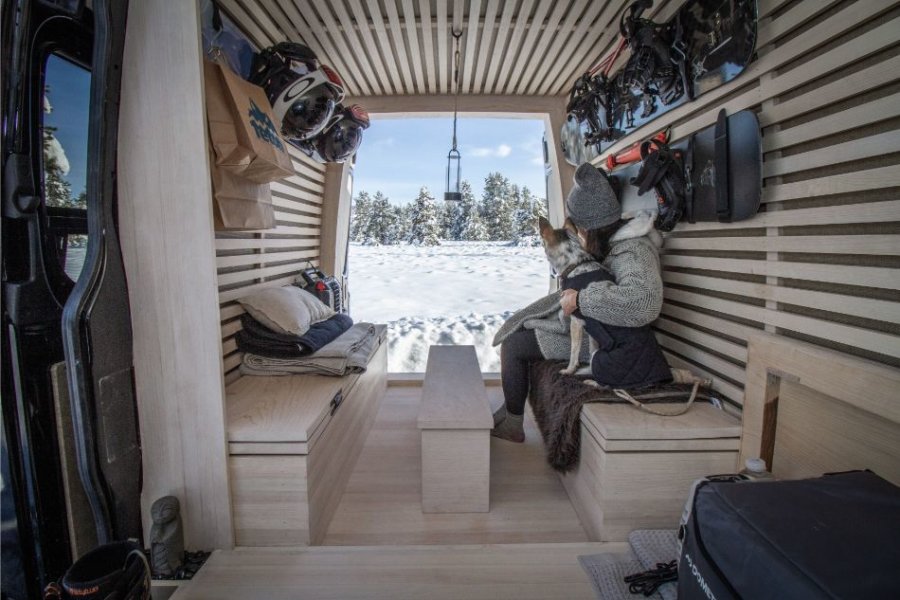
Gear Storage and Rack System

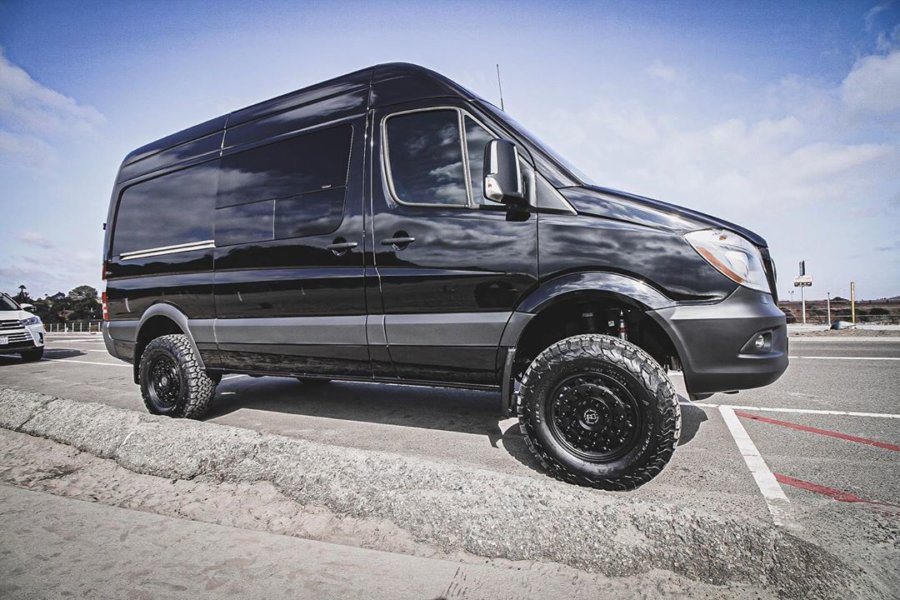
Adventure-Ready: 4×4, Lifted, and Off-Road Tires
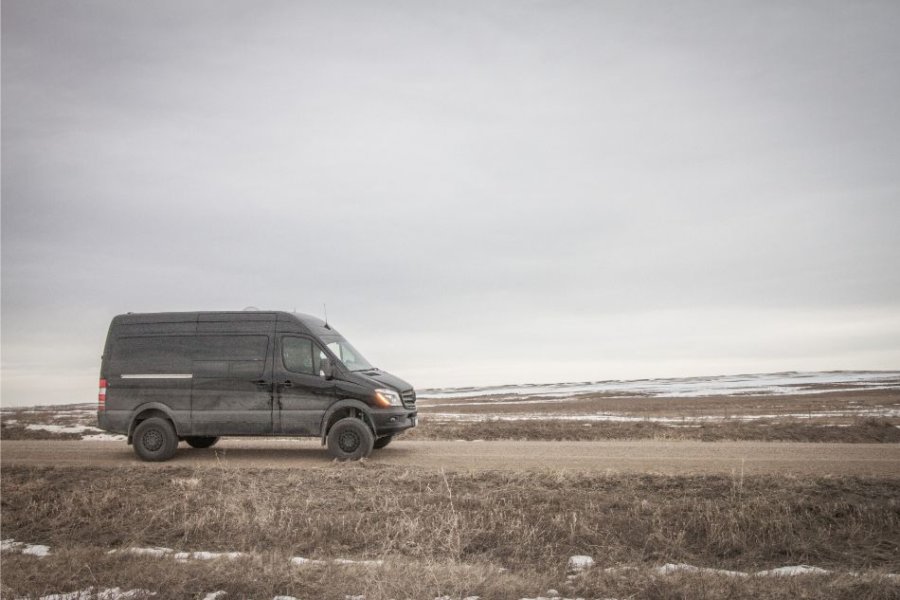
The Sprinter 2500 4×4 platform gives the Ryovan serious go-anywhere capability. It is slightly lifted and fitted with off-road tires, making it ready for backcountry roads and remote campsites that would stop a standard van in its tracks.



Highlights
- Japanese teahouse-inspired Sprinter van conversion called the Ryovan Project
- Built on a 2018 Mercedes Sprinter 2500 with 4×4
- Designed by architect Andrew Wade Keating, built by High Grade Partners
- Zen-inspired interior with high-quality wood finishes and hardware
- Rack system for gear storage
- Slightly lifted with off-road tires for backcountry capability
- Rear-view camera for security
- Room for the dog
- Owned and lived in by Saul and Ayaka
Learn More
Explore More
Subscribe to our Newsletters:
Join the Tiny House Newsletter
=> tinyhousetalk.com/tinyhousenewsletter
Join The Small House Newsletter
=> tinyhousetalk.com/small-house-newsletter
Join Our Tiny Houses For Sale Newsletter
=> tinyhousetalk.com/tiny-houses-for-sale-newsletter
Disclosure: This post may contain affiliate links. If you purchase through one of our links, we may earn a commission at no additional cost to you.


Alex
Latest posts by Alex (see all)
- Studio Home Laurel: A One-Bedroom Backyard ADU in Four Architectural Styles - October 10, 2026
- A 6’5″ Man’s DIY Tiny House on Wheels, Permitted in Calgary - October 10, 2026
- A Long House: A Designer’s 603 Sq Ft Seoul Apartment Opened Up Around Morning Rituals - October 10, 2026





A few other stories you may like, kind of like this:
Couple’s LEGAL Garage Tiny Home + Van Life
https://tinyhousetalk.com/couples-legal-garage-tiny-home-and-van-life/
Man Turns High Top Cargo Van Into Rolling Cabin
https://tinyhousetalk.com/man-turns-work-van-diy-motorhome-tiny-cabin/
He Shows You How To Convert a Work Van Into a Camper
https://tinyhousetalk.com/how-to-convert-a-work-van-into-your-own-diy-camper-van/
I really like this conversion. A no bullshit approach and it looks good.
Why do you keep calling things “Zen?” Do you know what it means? That van doesn’t have anything special that makes it zen. The word is overused and is becoming meaningless.
And while I’m at it…
Does this van levitate? Does it help one reach a higher form of being? It looks to me to be a cleverly designed van of some beauty, but I don’t think it would help me reach a meeting with God. Unless I died in it. Just saying…
I read your stuff every day. I am building a tiny cabin and I’ll send you pictures when I’m done. But if I describe it as being Zen, please shoot me. Thank you for encouraging my behavior.
Now that there was funny. I saw this “gap spacing” design from vans built back in the 80’s. It is not a new design. It was done back then as a weight reduction and cut the price of the wood being used by about 35%. Funny how ideas just come back around again.
Gap spacing structures goes back centuries, but what he did was a bit more complicated than that as behind the slats is a natural wall covering/wallpaper made from renewable wood pulp fibers, as they wanted something akin to Tatami for a textured look to contrast with the smooth wood finish.
While the spacing also works to make it easy to hang anything from the wall or ceiling and be able to move it to a different location if wanted… Almost as functional as a French Cleat wall…
It looks nice and clear. However, it lacks cooking, cooling and body care capabilities which means there is no kitchen and bathroom. How do you boil hot water for pictured tea, outside ?
Beside that storage space is limited to two benches and slats at walls are catching dust.
For me it is not suitable neither for weekend trips nor nomad living.
The great outdoors has been a natural bathroom for as long as man has lived. Many a camper/traveler choose sites with cooking and bathroom facilities close by. Not every culture is to your liking or what you are used to. Learn more of their side or ignore if you wish.
Hi.
Like Michael said above, the conversion looks nice and clear.
Apart from the points that he raised, what type of timber was used? And was it washed with a lime wash.
Thanks.
James
I agree. May be a good ad for architectural prowess, but without consideration of the practicalities of van accommodation. Pretty but impractical.
I really liked this build….liked the comments which shows different sides. It has made me think about material and simplicity…openness. Nice work.
I loved this van. It’s functional and flexible. That will be my future RV design. Please reply so we can chat for the project. Thanks.
Why do so many folks think *they* can design your perfect van better than *you* can?
Great job on the aesthetic. I picked up a few cool ideas (like the removable pedestal for the bed platform) and will tweak mine for surfing and a mobile office (as well as options for my family of 4) but I suppose that’s why I didn’t buy/build *your* van!!
Such a good point, Matt!
The wife (my wife) will demand having a potty. Although the decor looks cool, where is the fridge, or stove, or water tanks (black and grey). Good luck with the “Family of Four”.
@Will kolditz – Well, they’ve been using it for nearly 2 years now… So it’s working out just fine for them…
It’s just designed to be easily configurable for customizing it for whatever trip they have planned. Everything needed provided by portable solutions. Like they have a Dometic fridge that can be seen under the slat mounted wall table towards the middle of the van, any cookware can be carried on like you would for a hiking camping trip, etc. Basically, everything is modular… If a potty is needed then a camp style porta potti is easy enough to add, and layout is flexible so you can make room for kayaks, bikes, etc. as needed…
While avoiding tanks and water lines makes this much easier to take to places where it can get extremely cold, etc and not have to limit the trip time to just how long you can keep your plumbing warm enough to prevent it freezing and creating a disaster… Along with saving weight, having fewer things that can break and not work, etc.
Like most things that deal with outdoor activities, van conversions range from basic camping to luxury mobile home. So what works depends what type of use you intend for it as your needs for say extreme sports adventuring where you really interact with nature in even extreme conditions will be very different from luxury mobile home that you’re using just to enjoy the view and that’s about it… Add some people just prefer to be flexible instead of having it only optimized for only certain uses…
Great build.
Very clean and I love the peacefulness.
Could add a little cooking area but I really love the design.
I really like the clean lines in this build, but for me with no cooking or shower facilities and I couldn’t see any source of power it would not be practical. I am collecting ideas for the future build I will do, so it is great to see what your build was like. Thanks for sharing.
Something to keep in mind is how it will be used and where… In extremely cold environments, like going up into the mountains to snowboard, it’s essentially impossible to insulate a van well enough to adequately protect any plumbing needed for showers, etc. from the intense cold. You can do it for short periods, add heating elements to keep the pipes and tanks from freezing but for long term that won’t work and you’ll be one heating failure to a busted pipe that will ruin the van…
In such cases it can be preferable to have a base camp where other needs are to be met and use the vehicle for short trips/outings…
Otherwise, scale up to a little larger vehicle, like something equivalent to a Truck/Class C RV/mobile home that can be built out more like a tiny home with thicker walls, etc. Or avoid extreme environments…
I would have windows for when I have the doors closed running the air conditioner I have views of the outdoors and won’t feel boxed in.
I find it both annoying and amusing that semantics plays such an important role in the lives of some. Personally, that you used “Zen” to describe the vibe in this van is fine and does a good job of describing where the inspiration came from but some are more strict about word usage. I wish them well. I found the van to be a little too minimalist for practical purposes…lack of storage would be a problem for me…but I found the the design work inspiring and food for thought in my future projects. You did ask what we thought of the kind of wood that was used…which is beautiful, light and airy…but you don’t mention what kind of wood it is. I’m sure many are curious about that. Basically, if this works for those living in it, who am I to judge? Like I said, I found it inspiring even if not practical for me. Thanks for sharing it!
They used Port Orford Cedar, and behind the slats is a natural wall covering/wallpaper made from renewable wood pulp fibers, as they wanted something akin to Tatami for a textured look to contrast with the smooth wood finish.
Zen is perfectly fine as an adjective imho. I am a Zen student, as in someone who has practiced Zen meditation for years. Zen aspires to minimalism, emptiness, non judgment, a place to sit, non materialism. The builder even designed a save for a Buddha statute. To me this van adores these qualities – so using zen to describe the design seems appropriate.
Really beautiful and clever make over perfect for camping and travel. Lovely!
No, no cooking, wash and toilet facilities, only a car with a bed, ok, very beautiful, but not handy.
Always looking, where can I buy food?, where is a toilet?, yes, yes beautiful timber, but that’s it.
No, it’s much more than just timber as every square inch of it is functional. Like how they can hang equipment and anything they want anywhere there’s slats, making them nearly as functional as french cleats. So they can configure it for whatever type of adventuring they want to do and that can be different for every trip…
They just don’t need to have everything for every single trip, taking only what is needed for a particular trip, and you don’t really need much when you’re just going camping, adventuring, snowboarding, etc… Plenty of portable ways to cook, bring food with you, etc.
In the photos there’s a Dometic, probably a 12v fridge, and as they’re having tea then they obviously have a way to warm it up… Their snowboards, boots, and helmets are hanging on the walls… and they showed the bed can be converted to seating and a movable table… The whole structure is insulated and they have covers for the cab windows, with storage above… If you’re uncomfortable going out in nature and taking care of your business, there’s always the option of a camping porta potti, among other ways this can be configured as needed…
So it’s minimal but it’s more than just appearance and actually has functionality…