Disclosure: This post may contain affiliate links. If you purchase through one of our links, we may earn a commission at no additional cost to you.
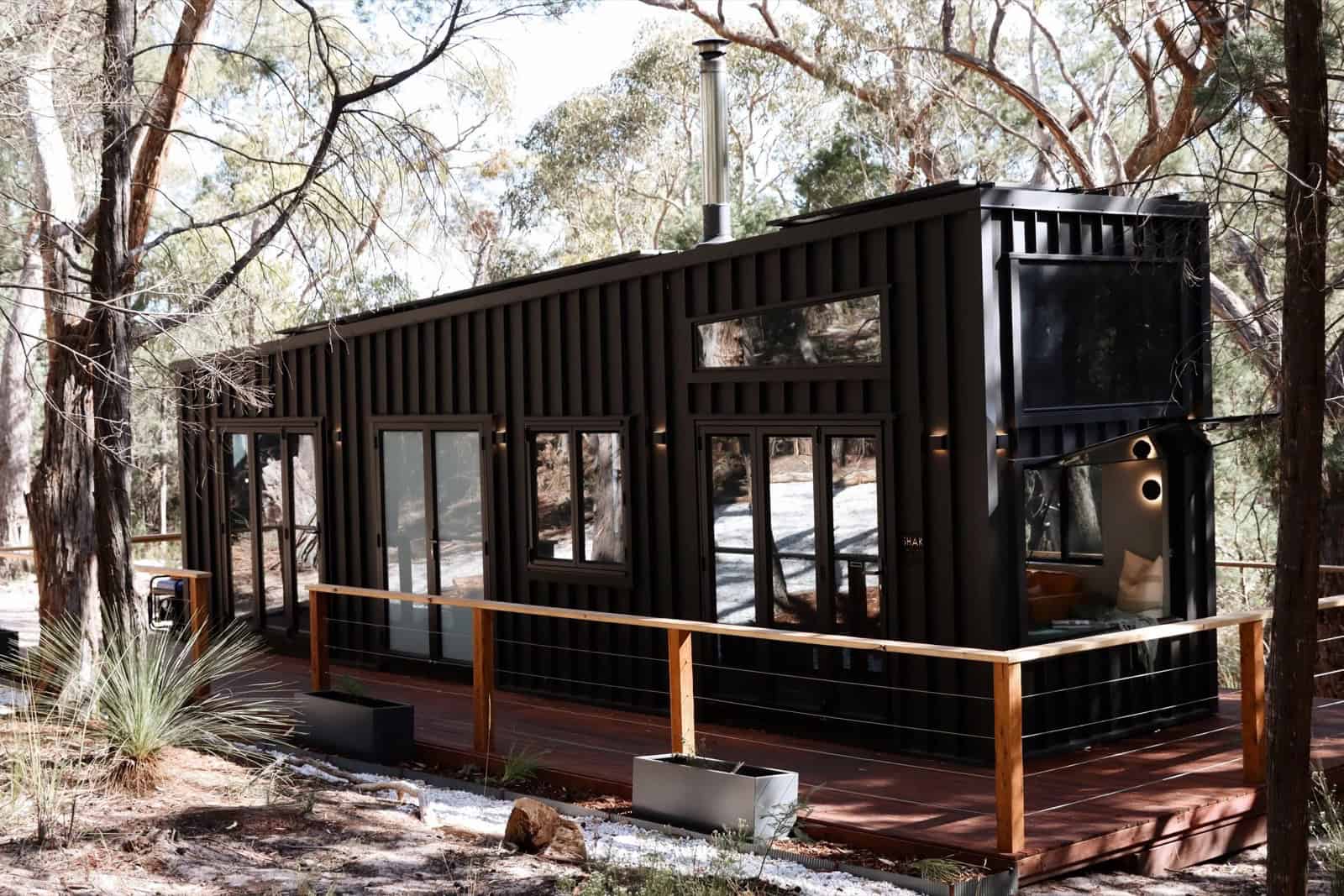
Most tiny houses ask you to give something up. A ladder instead of stairs. A camp-stove instead of a kitchen. A mattress wedged under a sloped ceiling instead of a real bedroom. The NOOSA, built by Australia’s two-time Tiny House Builder of the Year, LJM Tiny Homes, was designed around the opposite idea: that you should be able to live small without living like you’re camping.
Images courtesy of LJM Tiny Homes
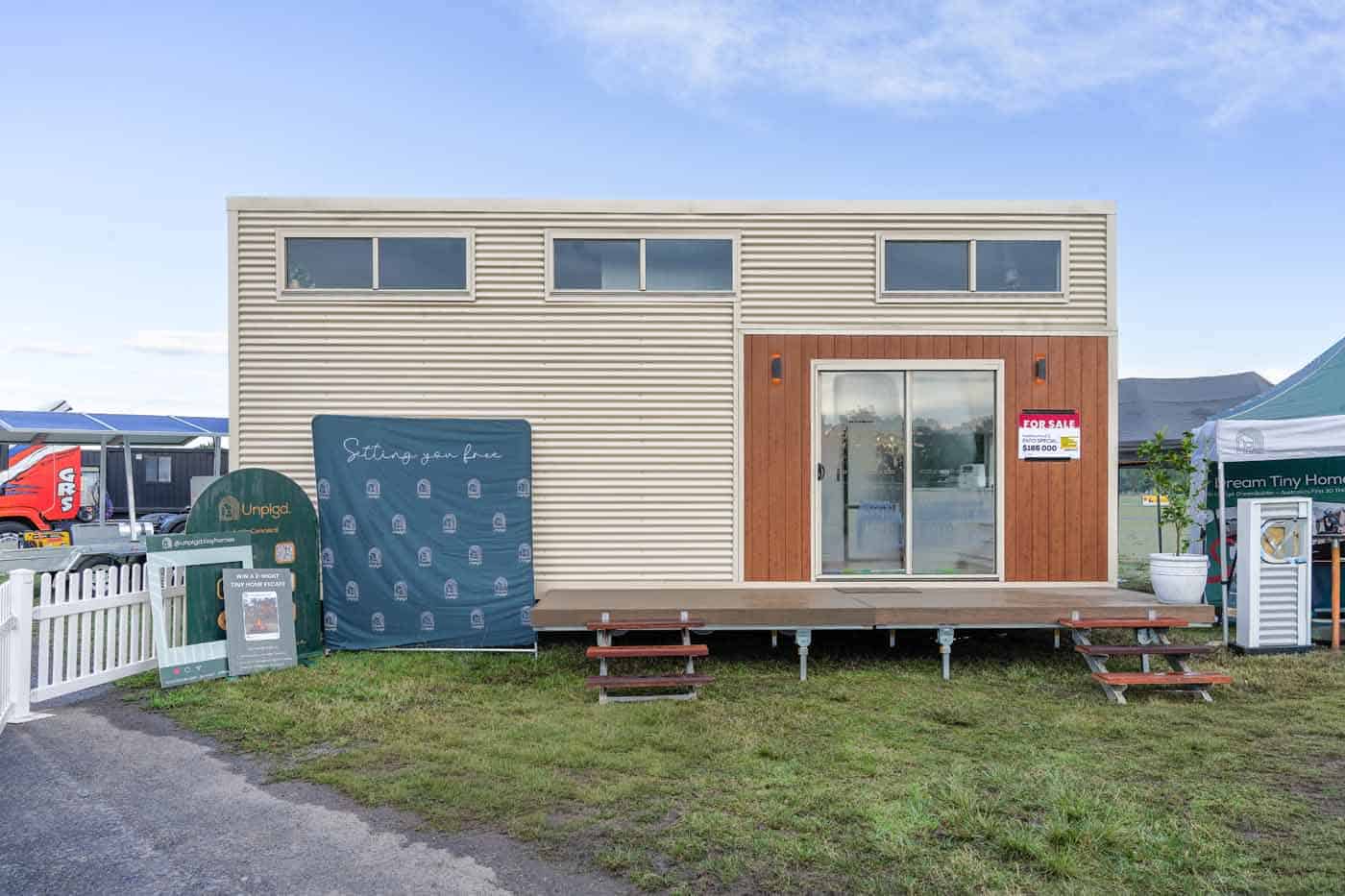
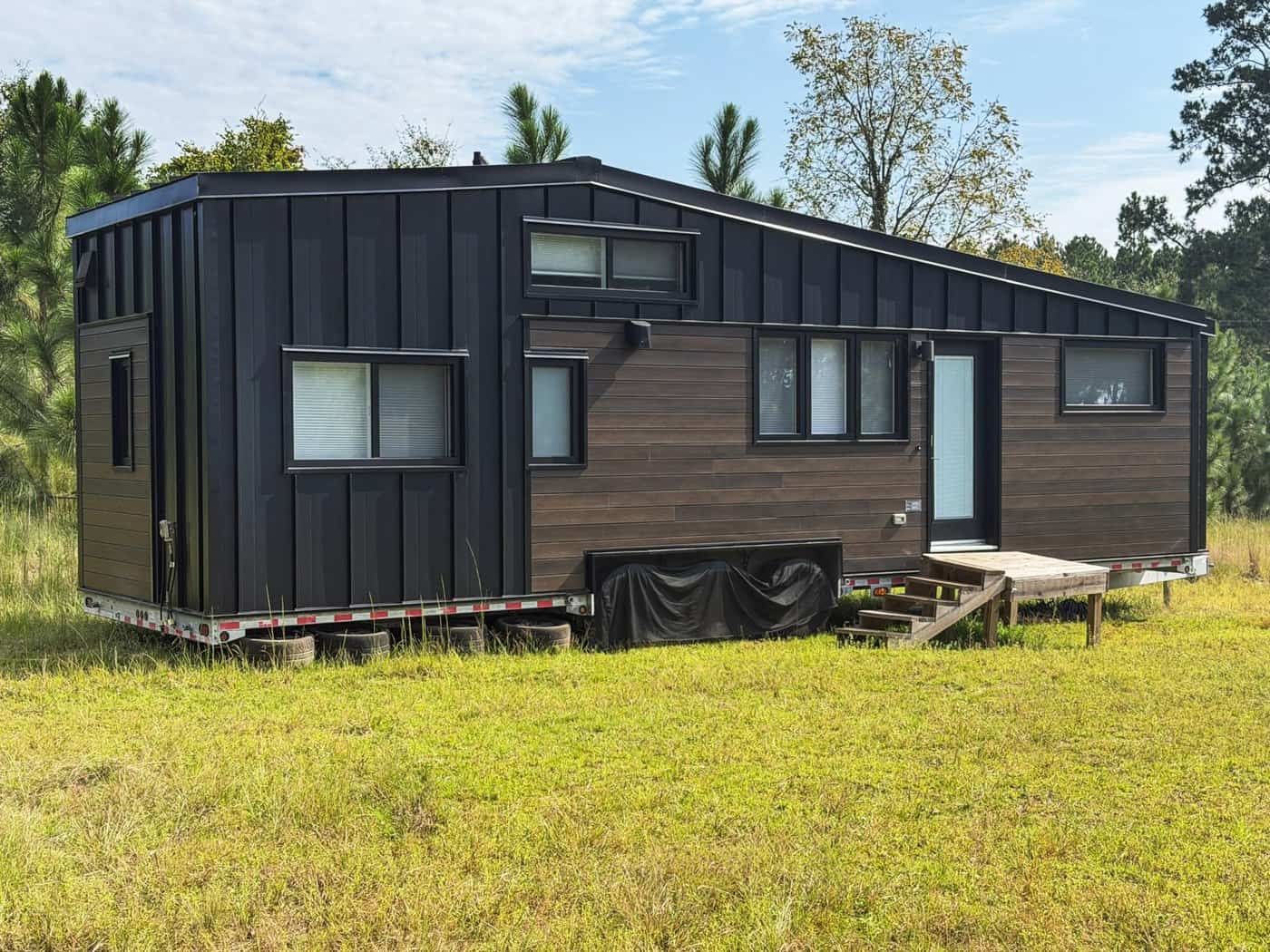
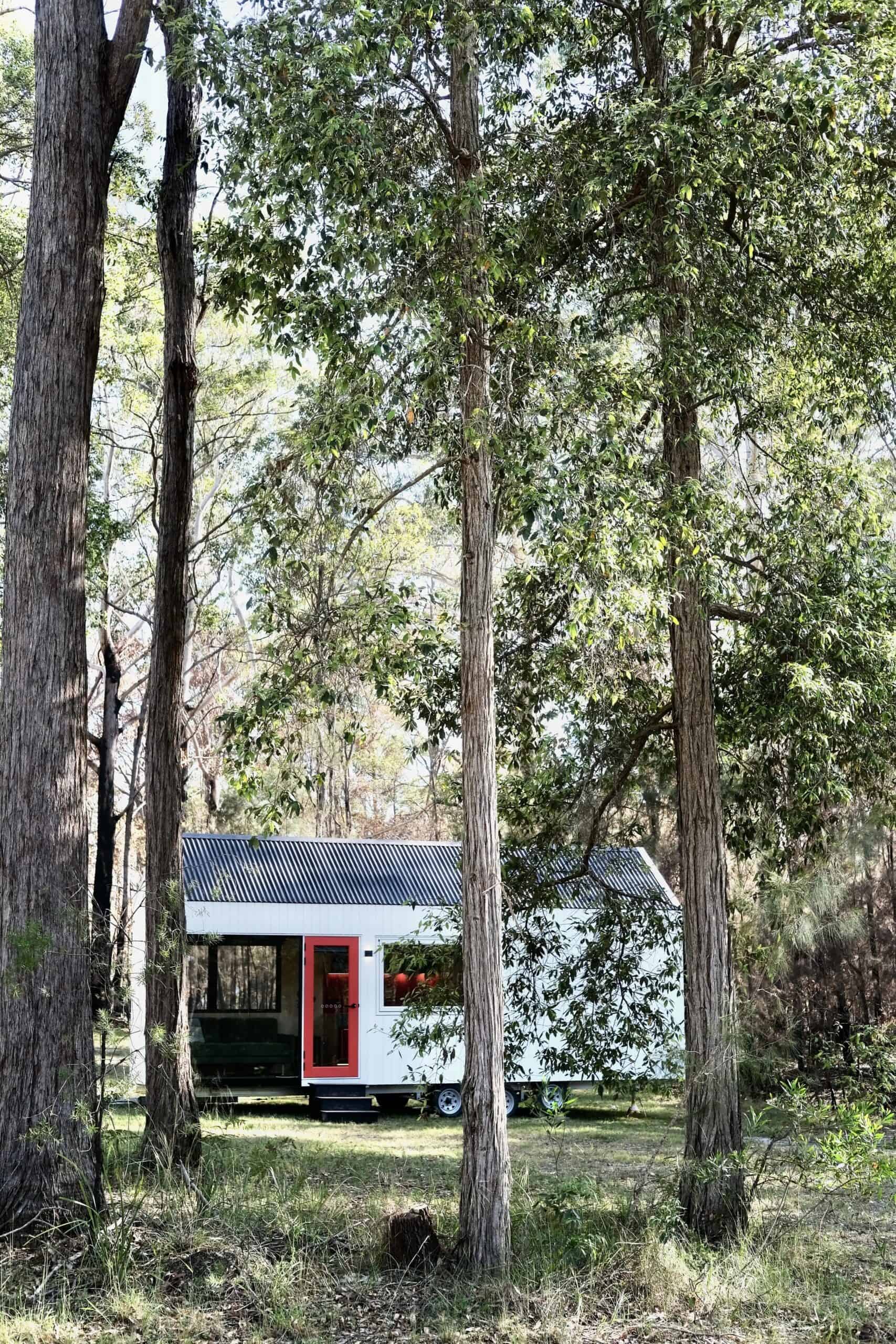
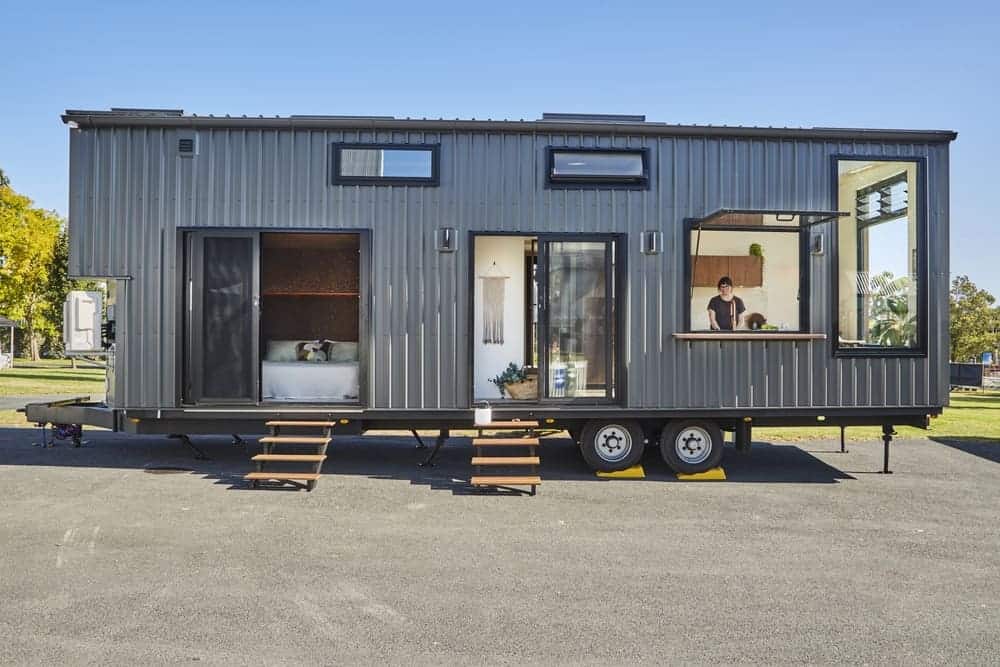
At 10 metres long, 3 metres wide, and 4.5 metres tall (roughly 320 square feet on the main floor, plus loft space), the NOOSA fits a genuine ground-floor master bedroom, a full kitchen with a proper pantry, a bathroom with a tub and a separate toilet, and an integrated laundry — all on a heavy-duty, road-rated chassis. It is a tiny house engineered for people who see small living as permanent, not experimental.
What makes it worth a closer look isn’t a single gimmick. It’s the way the build prioritizes the four things that actually make a small space livable long-term: proportion, light, storage, and durability. Let’s walk through it.
A Ground-Floor Bedroom That Changes Everything
The single most important decision in the NOOSA is putting the master bedroom on the ground floor rather than in a loft. It sounds simple, but it transforms the daily experience of the home. There’s no ladder to climb at midnight, no crouching under a roofline, and no giving up the loft as your only sleeping option. You get a room you can stand up in, walk around, and actually call a bedroom.
Images courtesy of LJM Tiny Homes
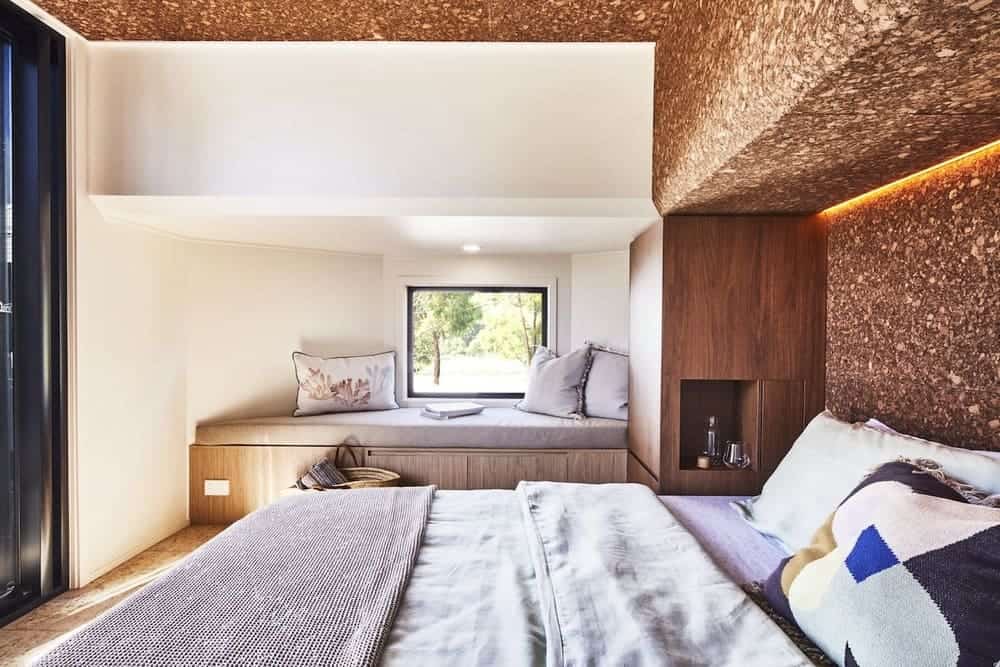
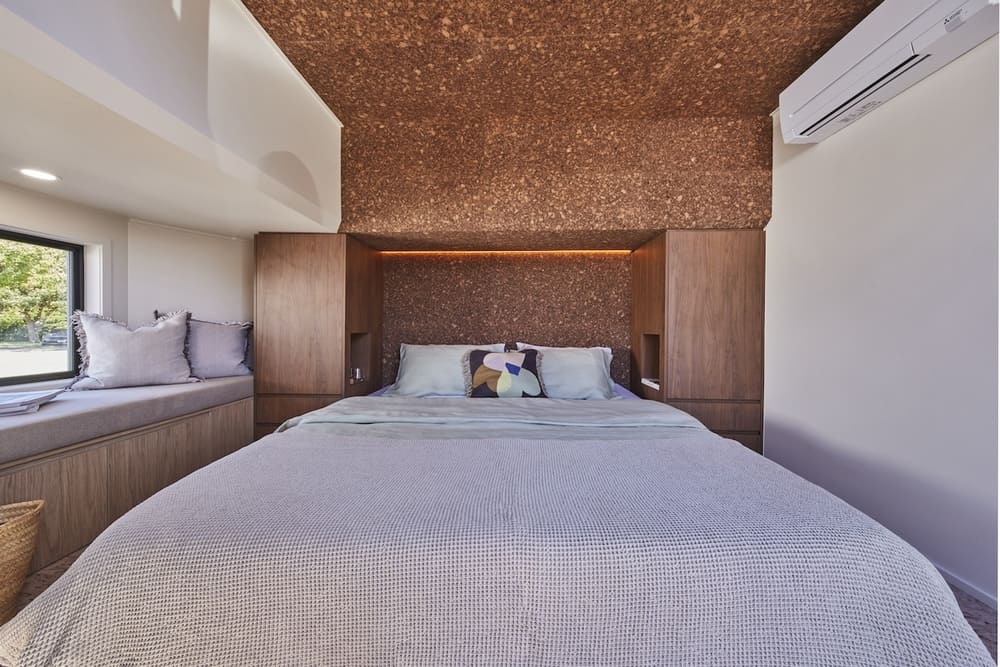
The design leans on a calm, contemporary palette — fresh white walls offset by a single dark feature wall that gives the room depth without making it feel smaller. A dedicated heat pump handles temperature control, so the bedroom stays comfortable year-round independent of the rest of the home.
Images courtesy of LJM Tiny Homes
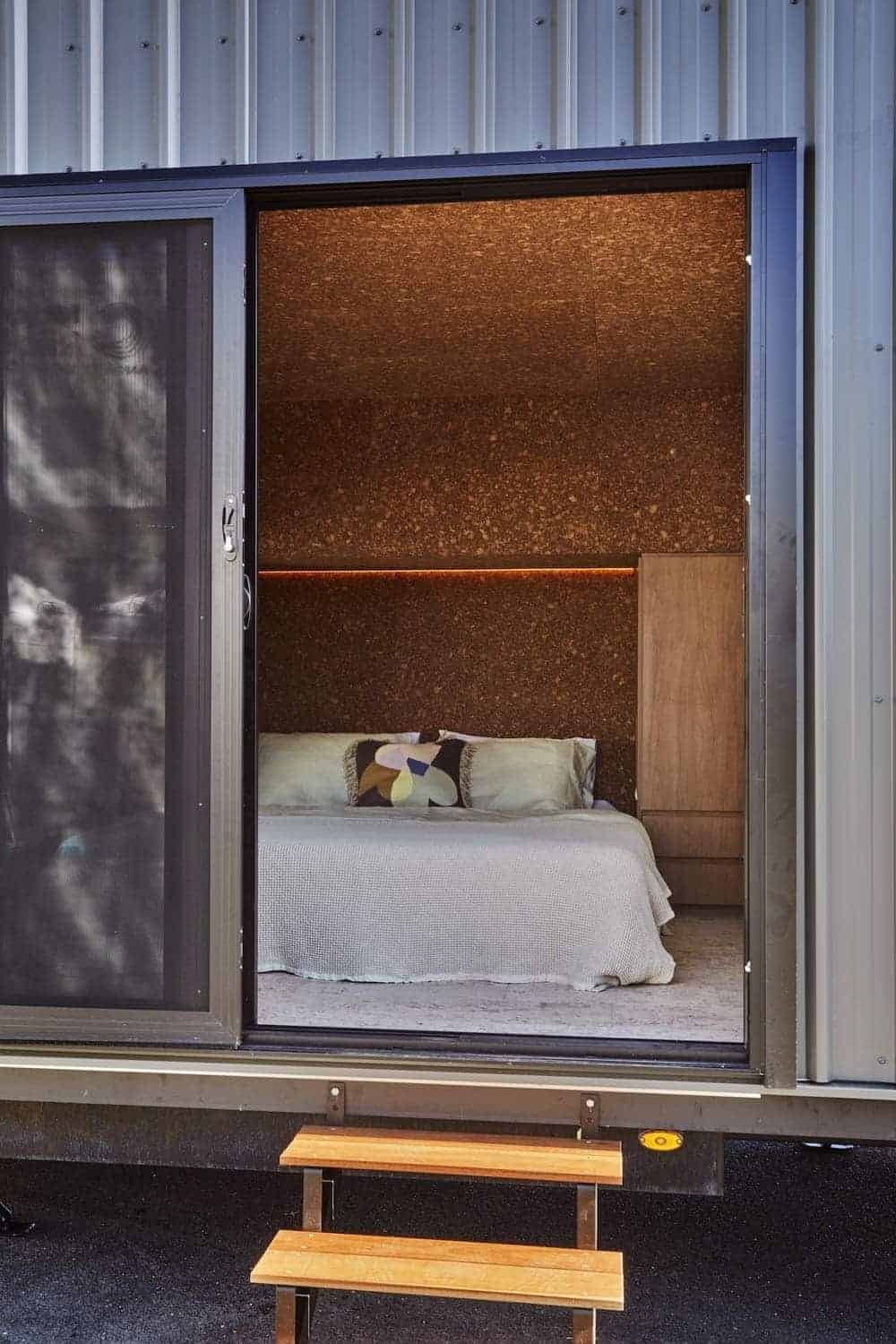
A cavity slider — a door that disappears into the wall rather than swinging into the room — separates the bedroom from the living space. Slid open, it lets the two areas flow together and share light; slid closed, it gives you a private, quiet room. In a footprint this size, a swinging door would waste square footage every time it opened, so the pocket door is exactly the kind of detail that signals a build designed by people who understand small spaces.
Images courtesy of LJM Tiny Homes
A built-in window seat adds a spot to read or pull on your shoes while sneaking in extra storage underneath. Throughout the room, windows are placed to pull in daylight and views rather than just meet a code minimum.
A Real Kitchen, Not a Kitchenette
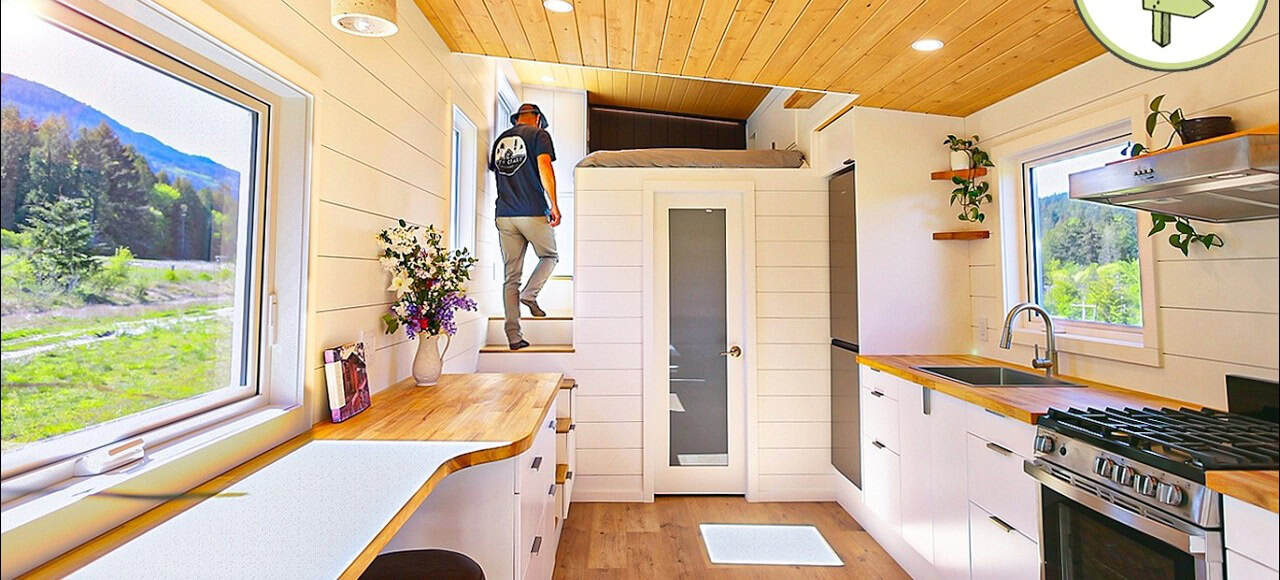
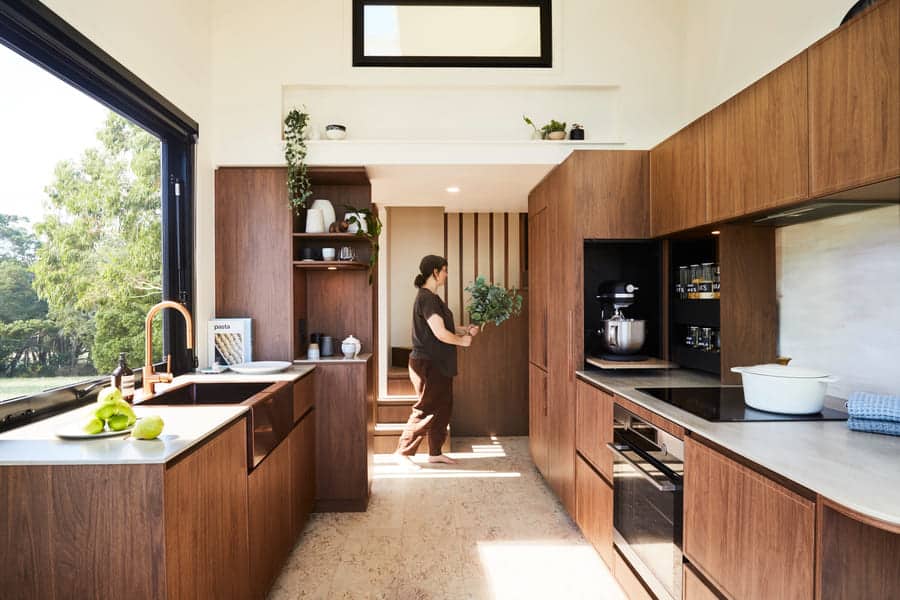
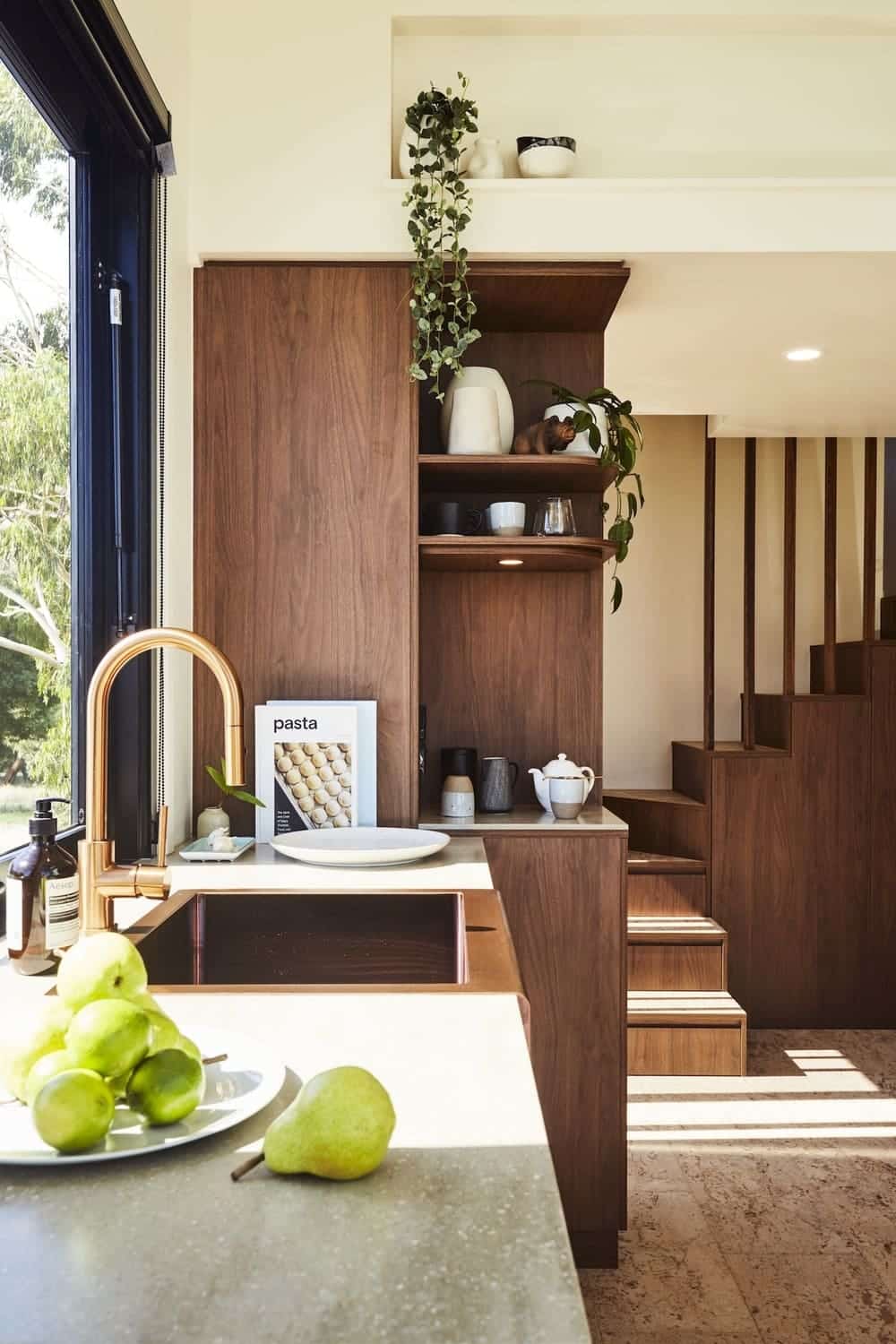
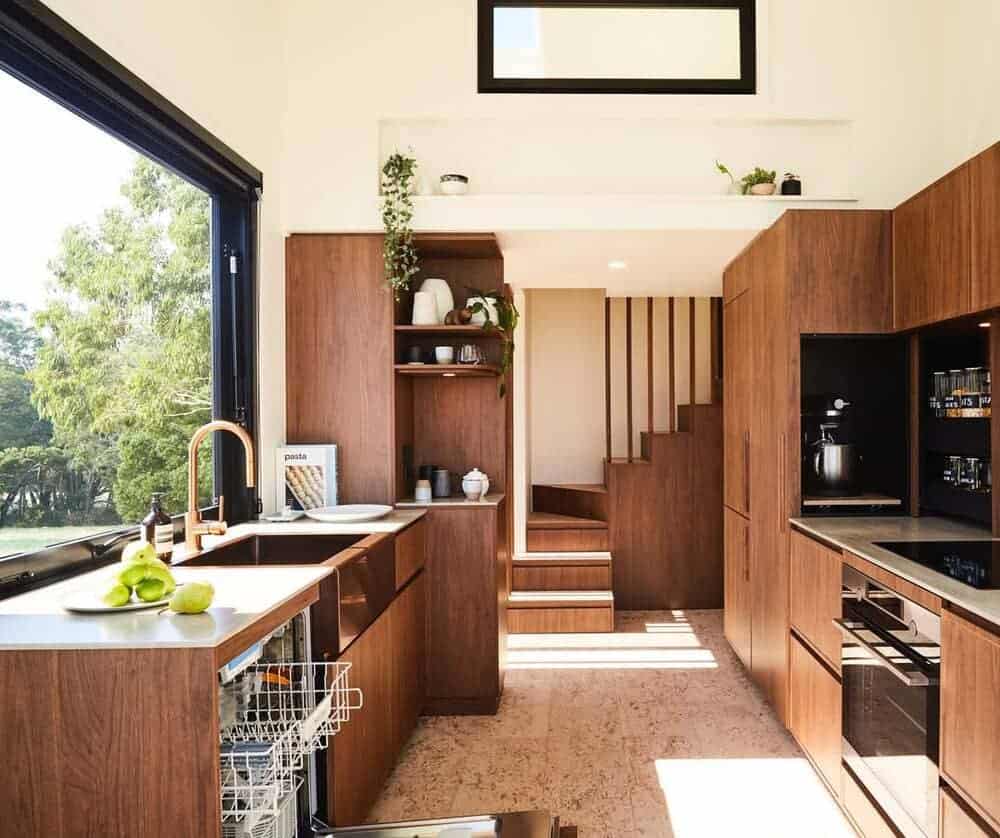
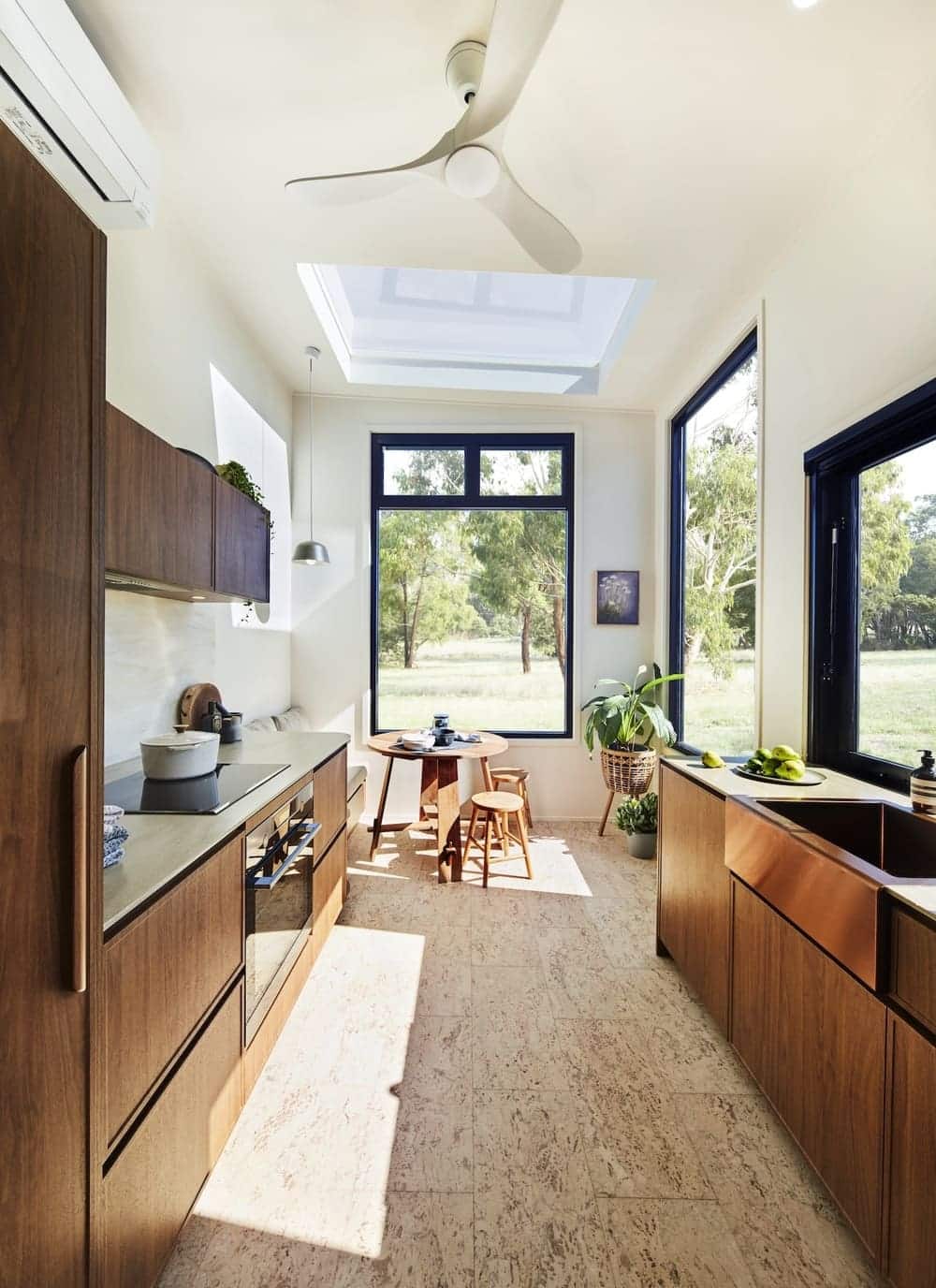
Tiny house kitchens are usually the first casualty of the floor plan. The NOOSA refuses to treat the kitchen as an afterthought. Instead of a token counter and a bar fridge, you get a long benchtop that flows into a breakfast bar, giving you real prep space and a place to eat or work.
Images courtesy of LJM Tiny Homes
The cabinetry is custom joinery built by LJM’s in-house joiner, finished in a rich, warm wood that anchors the whole interior. Because it’s purpose-built for the space rather than adapted from stock cabinets, every centimetre earns its place — including a pull-out pantry that gives you serious dry-goods storage in a slim vertical slot you’d otherwise lose.
Images courtesy of LJM Tiny Homes
Custom tapware and a generous window over the sink elevate the space beyond pure function. That window is another smart move: positioning the sink under glass means you’re looking outside while you do dishes, which makes the kitchen feel open instead of boxed in.
Images courtesy of LJM Tiny Homes
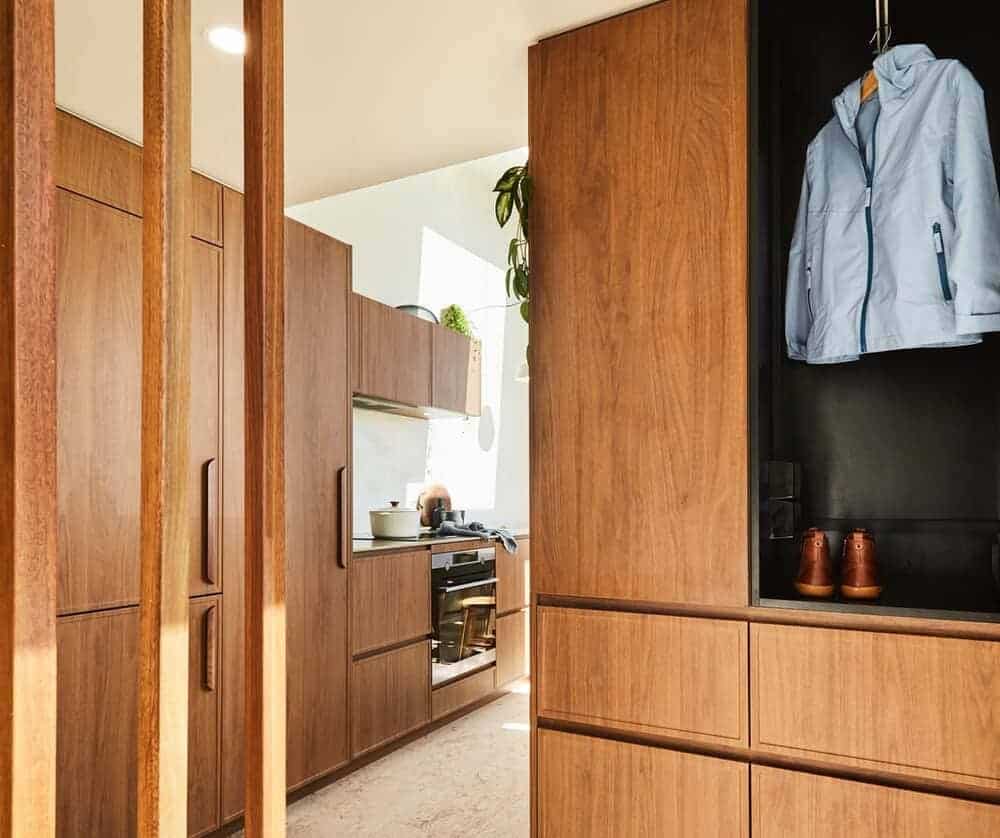
The warm wood cabinetry continues from the entry through the kitchen, tying the cooking zone visually into the rest of the home so it reads as one cohesive space rather than a series of cramped compartments.
Living and Dining Bathed in Natural Light
The living and dining area is built around a large picture window, the kind of single big pane that does more for a small home than a dozen tiny ones. It floods the main living zone with daylight and frames whatever the home is parked in front of, visually borrowing the outdoors to make the interior feel larger.
Images courtesy of LJM Tiny Homes
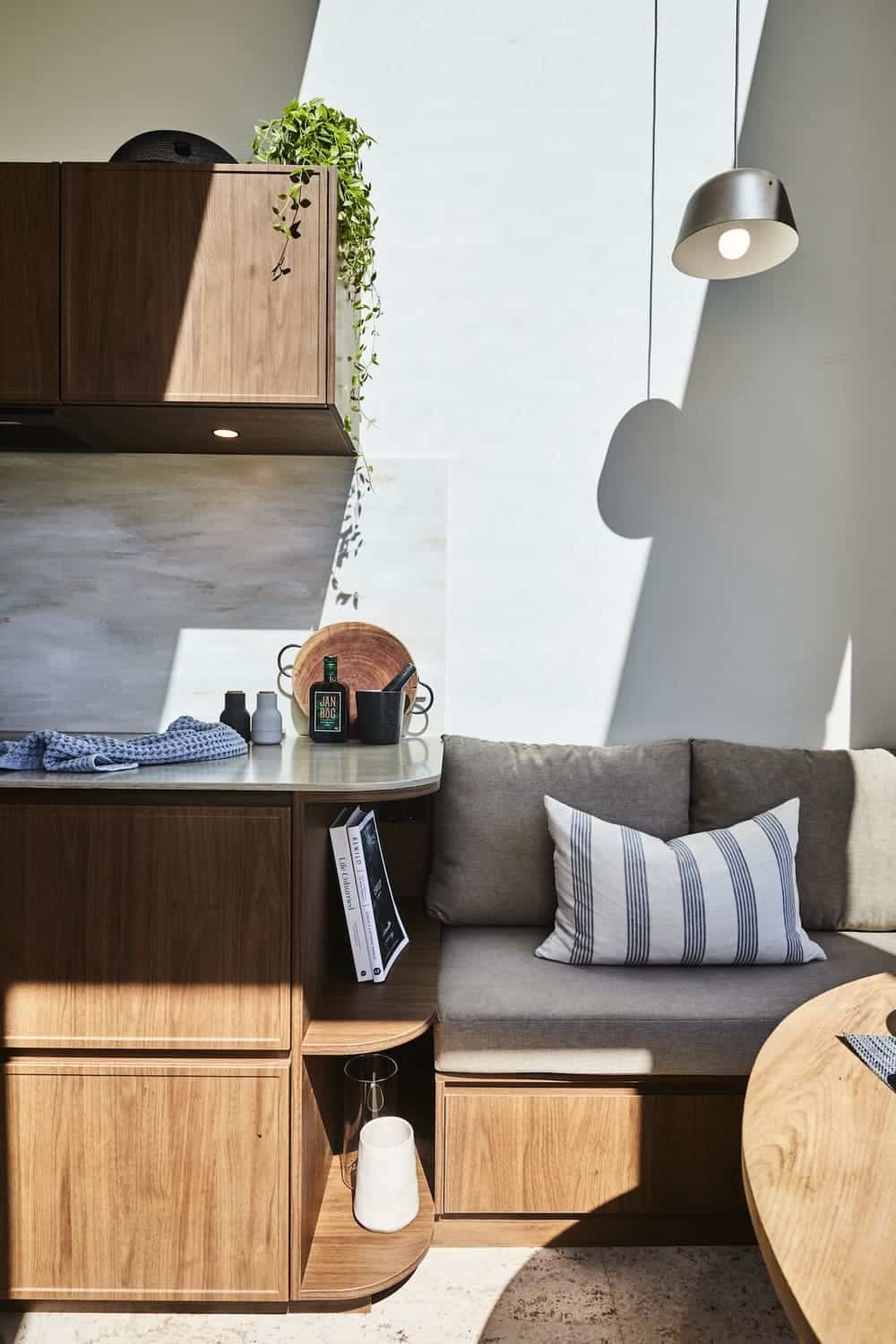
Light is one of the most underrated tools in small-space design. A well-lit room of 200 square feet feels dramatically more spacious than a dim one twice the size, and the NOOSA clearly treats glazing as a priority rather than an expense to trim.
Images courtesy of LJM Tiny Homes
A cosy lounge corner rounds out the living area, with storage tucked in nearby so blankets, books, and everyday clutter have somewhere to disappear. It’s the kind of corner that makes a tiny house feel like a home you’d settle into rather than just sleep in.
A Full Bathroom with a Tub and a Separate Toilet
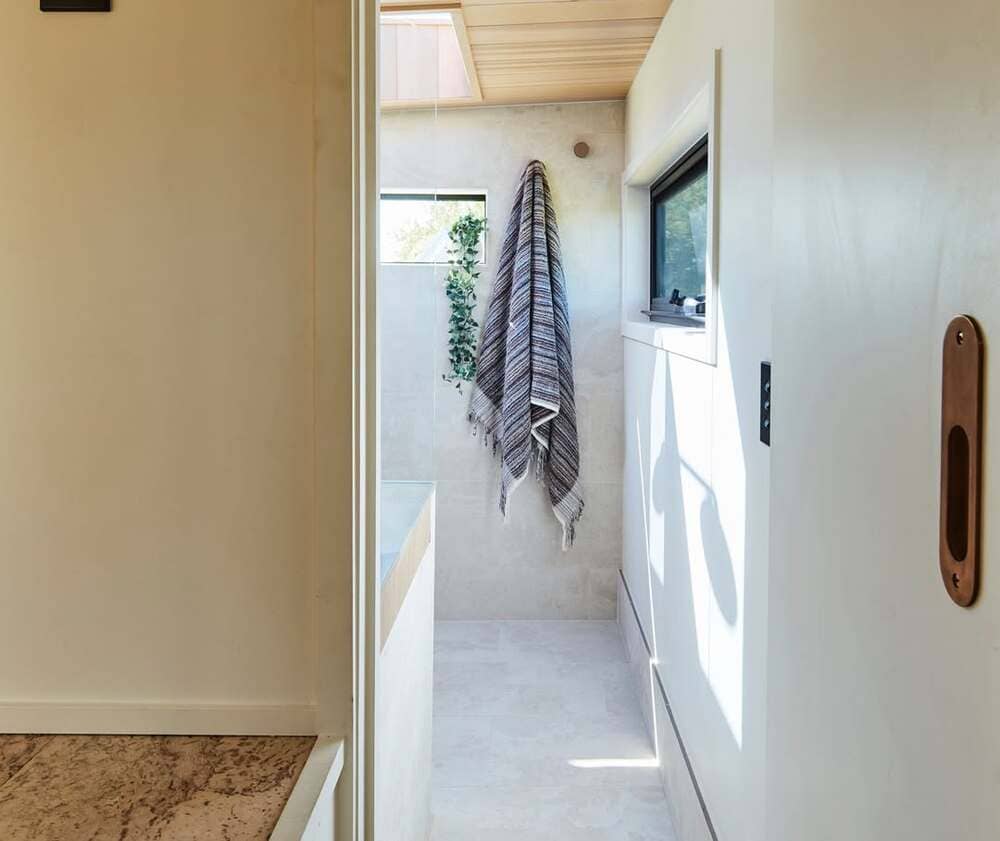
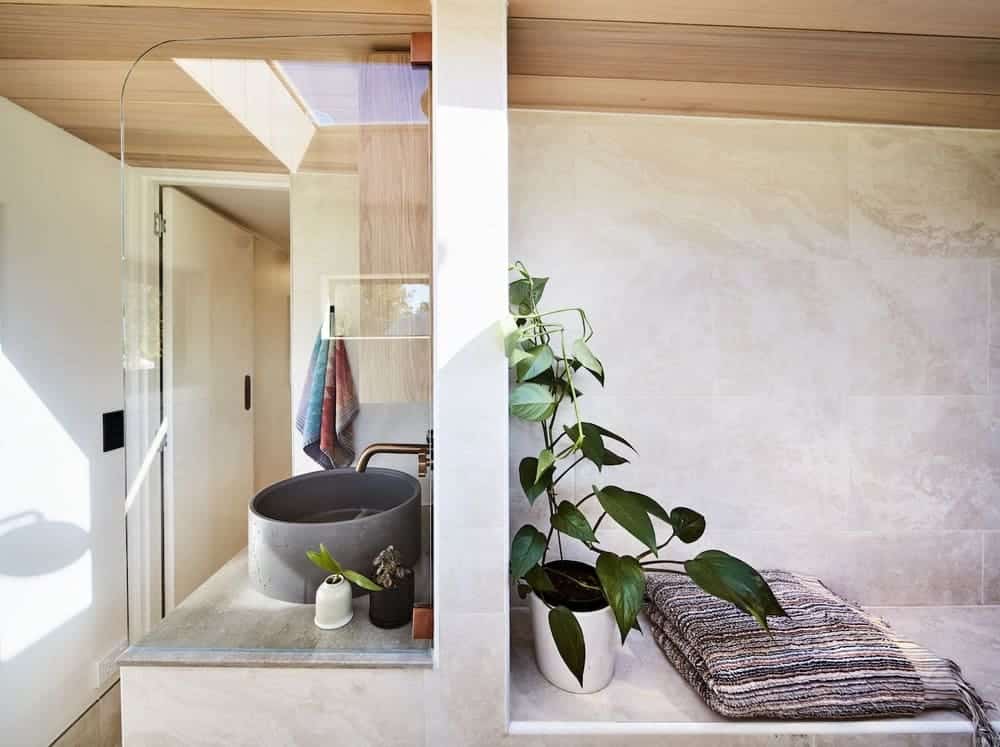
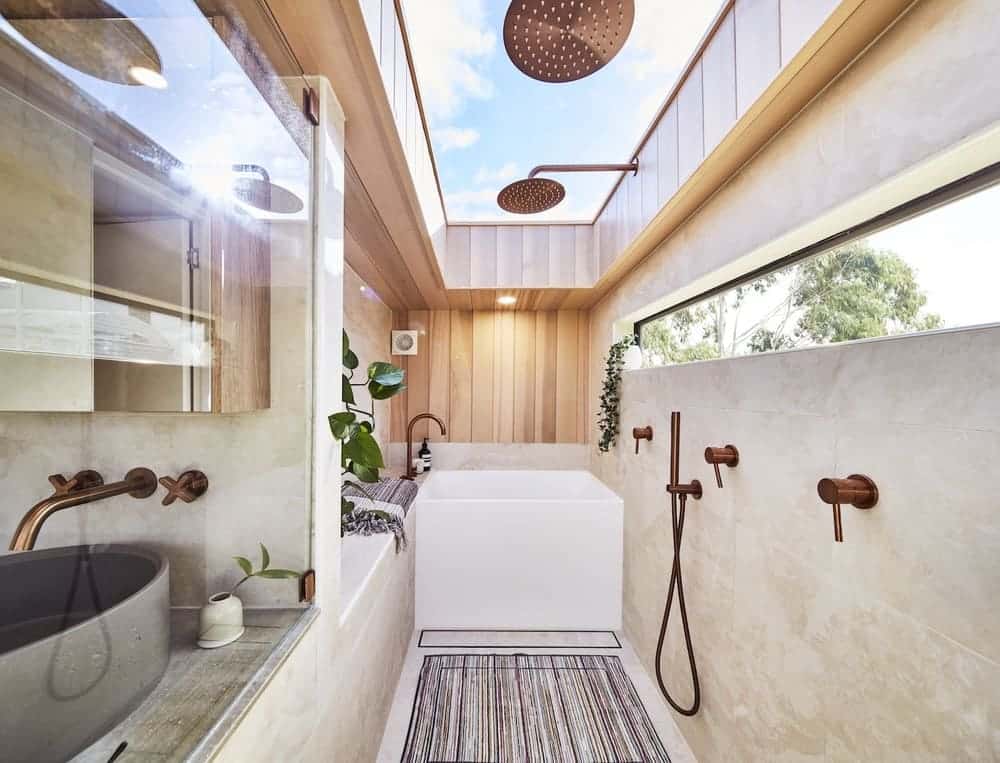
Here’s where the NOOSA really separates itself from typical tiny builds. The bathroom isn’t a wet-room compromise — it’s a full bathroom with an open shower, a sink, a bathtub, and a separate, walled-off toilet.
Images courtesy of LJM Tiny Homes
The shower comes in your choice of a 900mm x 900mm or a larger 1200mm x 900mm footprint, fitted with a dual rainfall head. Earthy, natural-toned materials give the room a spa-like calm rather than the plastic, prefab feel that drags down a lot of tiny bathrooms.
Images courtesy of LJM Tiny Homes
Images courtesy of LJM Tiny Homes
Fitting an actual bathtub into a tiny house is a genuine luxury, and it speaks to the home’s full-time-living mission. A gas hot water system delivers instant, high-pressure hot water, so you’re not rationing lukewarm showers the way you might in a more basic build.
Images courtesy of LJM Tiny Homes
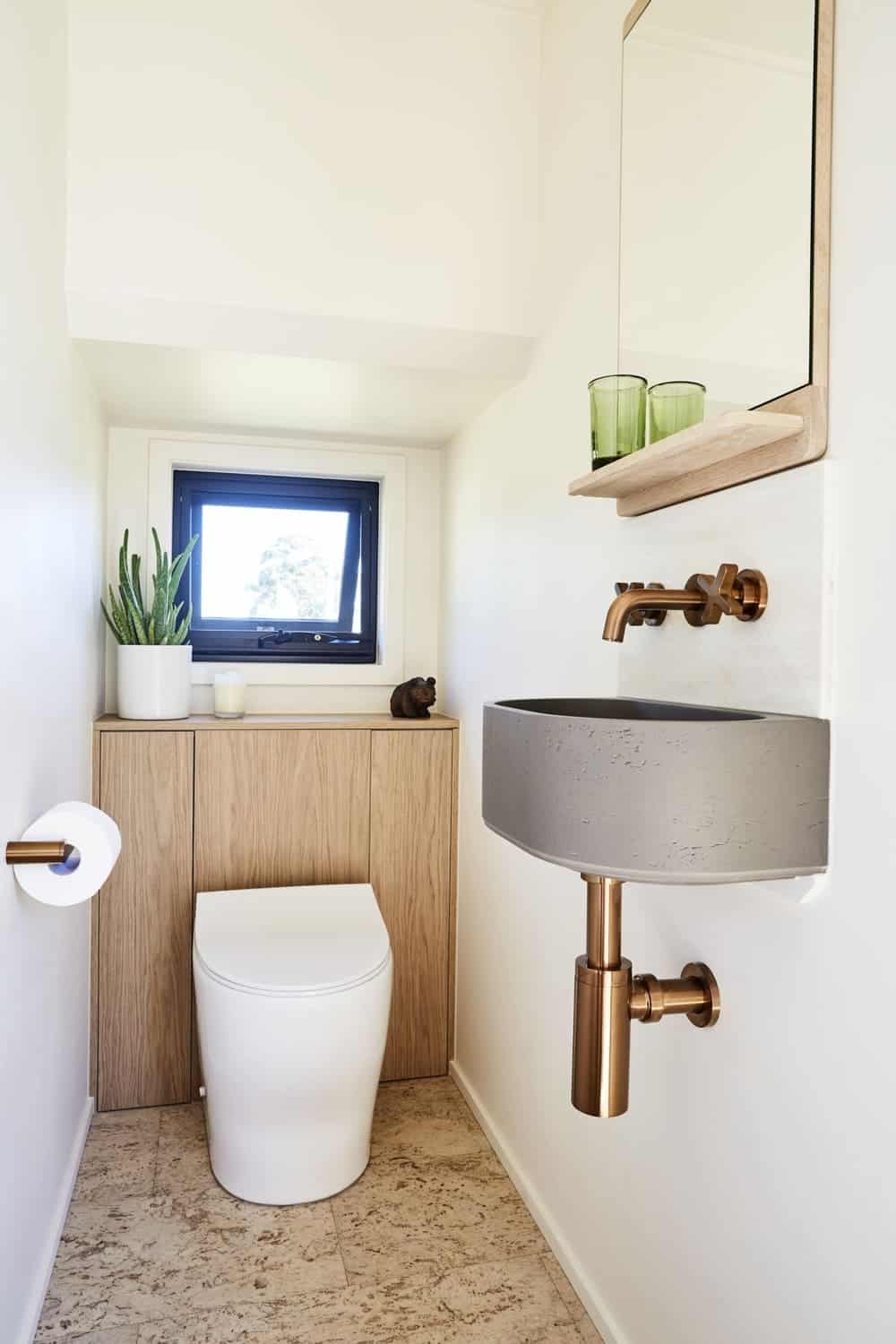
Walling the toilet off into its own little room is a quietly brilliant choice for anyone planning to share the home: someone can shower while someone else uses the toilet, with privacy intact. In a house this size, that’s the difference between two people coexisting comfortably and constantly negotiating one tiny room.
Storage Engineered Into Every Surface
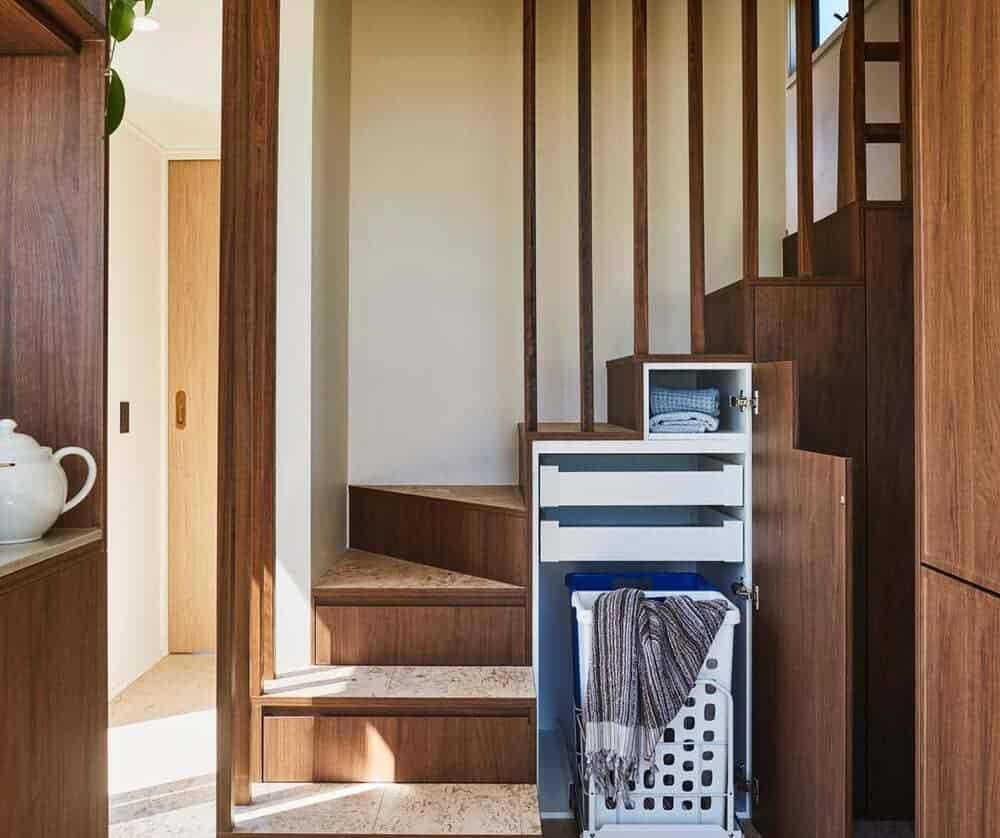
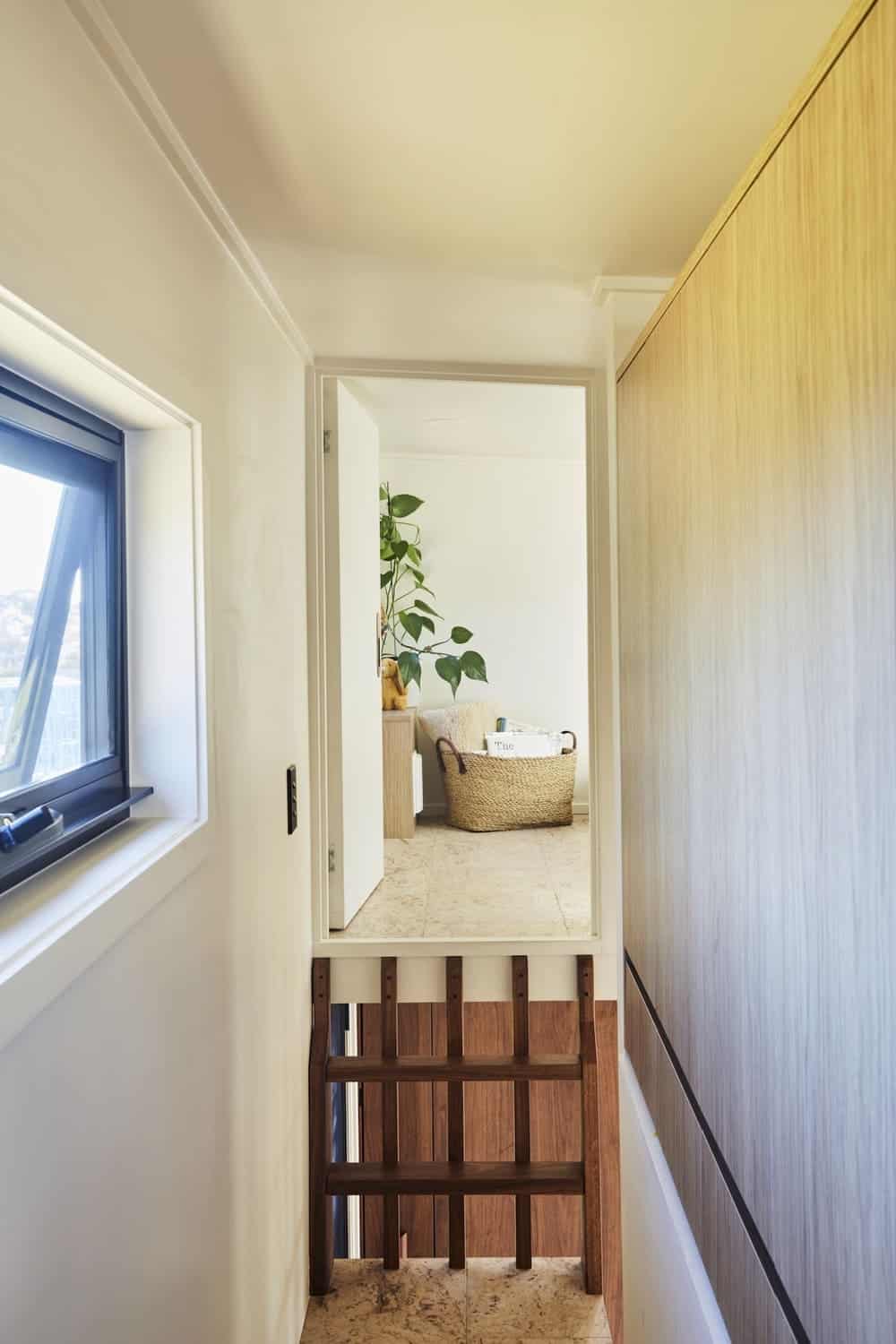
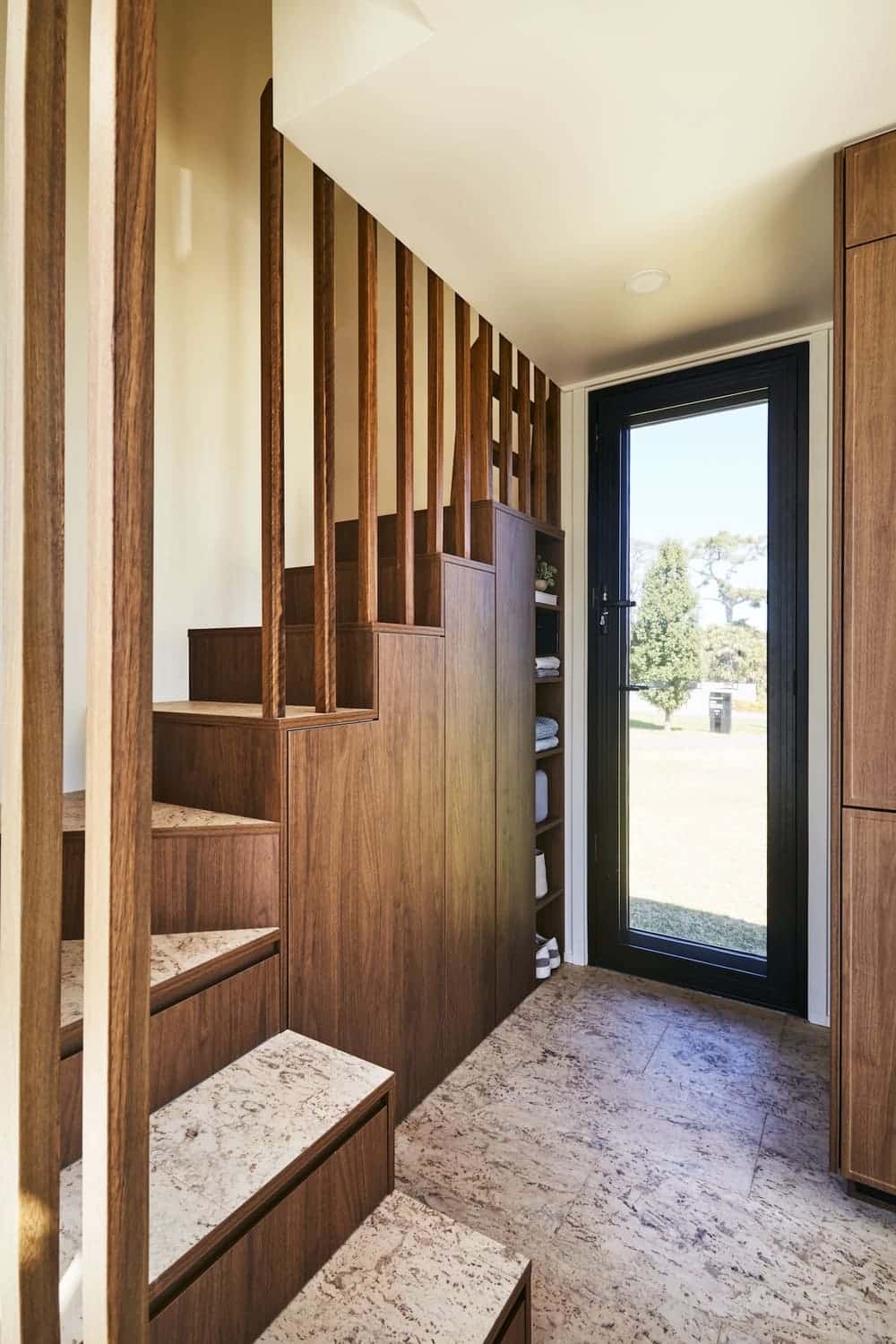
Storage is what makes or breaks long-term tiny living, and the NOOSA treats it as a structural priority rather than an afterthought. The standout is the staircase storage system: every step doing double duty as a drawer or cabinet, turning the path to the loft into a wall of hidden capacity.
Images courtesy of LJM Tiny Homes
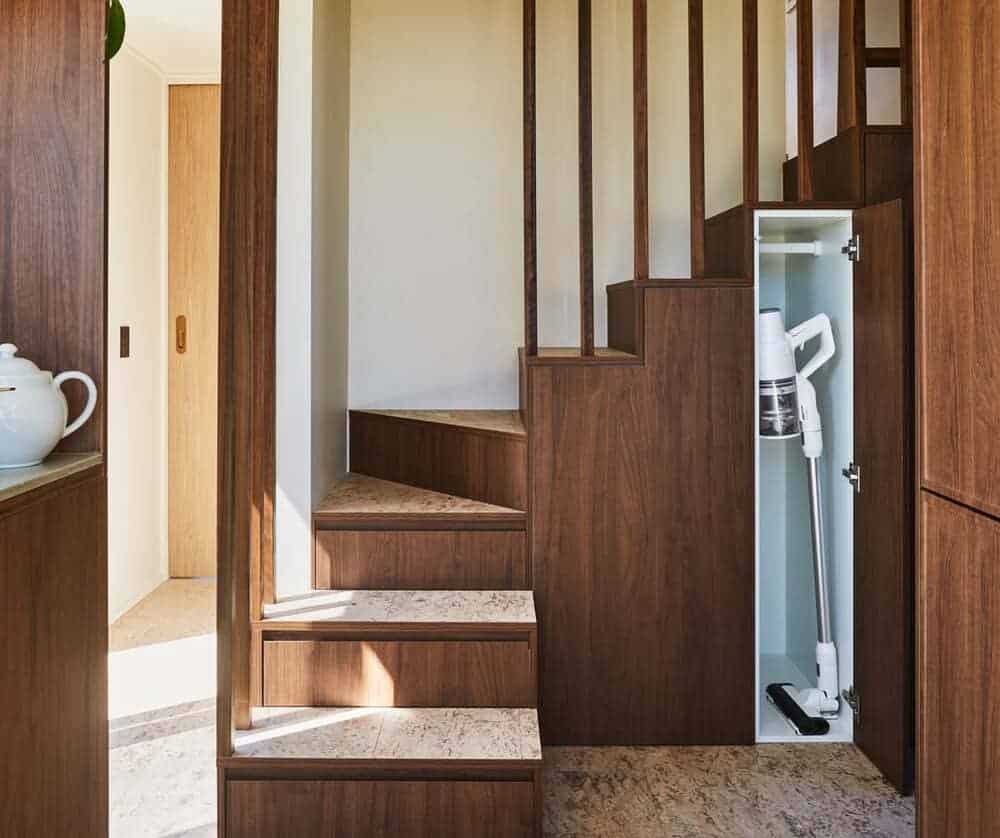
Stairs in a tiny house are often dismissed as a luxury that eats floor space compared to a ladder. The NOOSA flips that logic by making the staircase one of the home’s biggest storage assets — you get safe, easy loft access and a bank of drawers in the same footprint.
Images courtesy of LJM Tiny Homes
Beyond the stairs, cabinets and drawers are worked into surfaces throughout the home, with space planned for the bulky, unglamorous items that real life requires — washing baskets, a vacuum, cleaning supplies. Accounting for those is a hallmark of a build designed by people who’ve actually lived tiny, not just toured it.
Flexible Loft Options Up Top
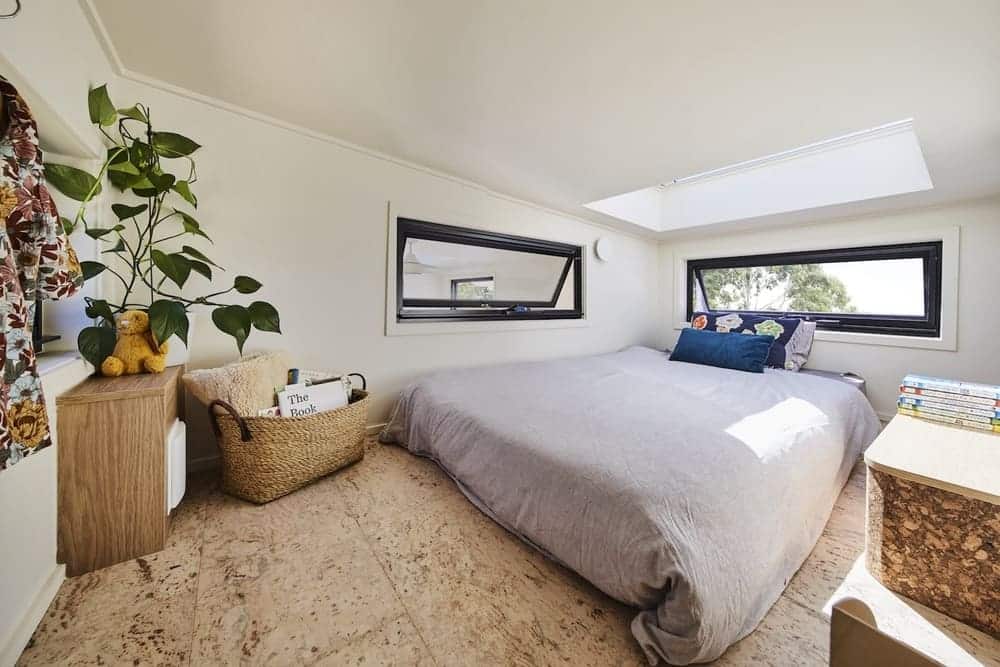
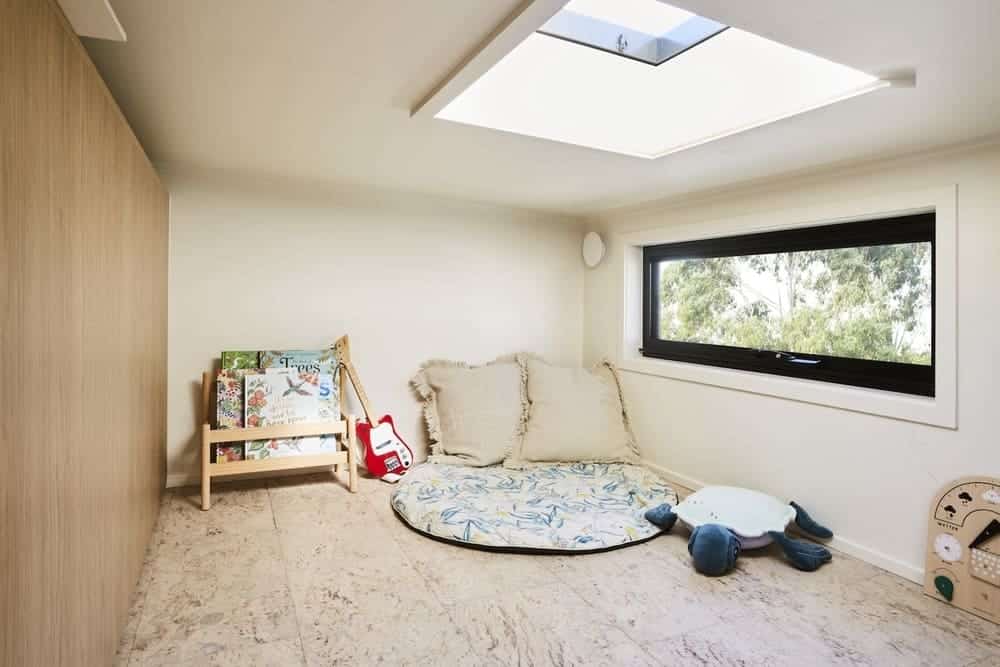
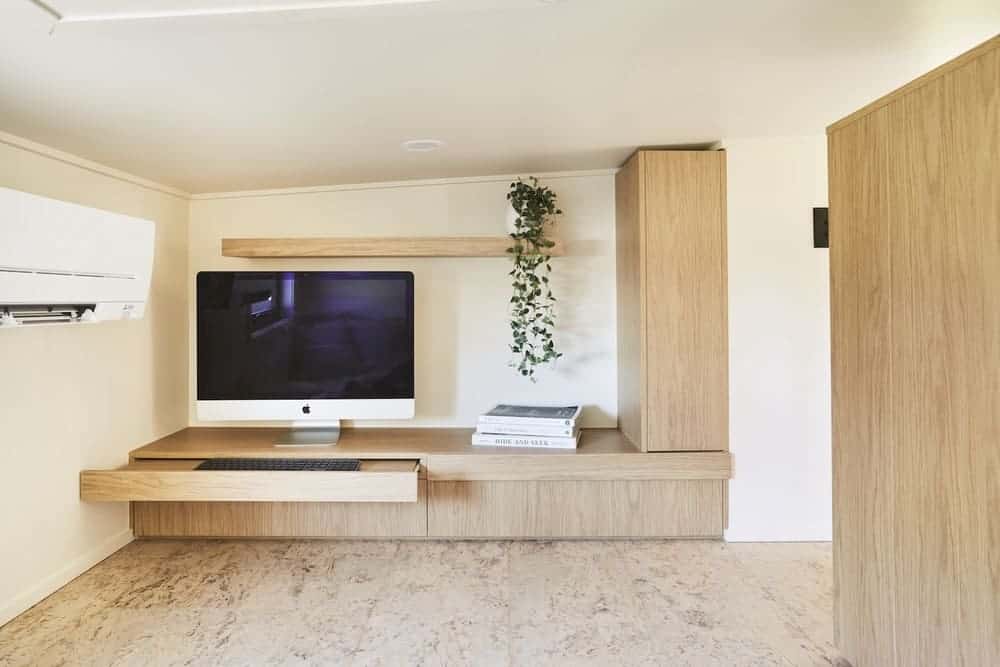
Because the master bedroom lives on the ground floor, the loft is freed up to be whatever you need it to be. LJM offers single or double loft configurations, so the same shell can suit a solo dweller, a couple who wants a guest space, or a small family needing room for kids.
Images courtesy of LJM Tiny Homes
Images courtesy of LJM Tiny Homes
It’s a flexible second sleeping zone, a home office, a reading nook, or simply more storage — a bonus area rather than the only place to sleep. That distinction matters: when the loft is optional rather than mandatory, climbing up there becomes a choice, not a nightly chore.
Images courtesy of LJM Tiny Homes
Images courtesy of LJM Tiny Homes
And thanks to those storage stairs, getting to the loft is a safe, comfortable walk up rather than a white-knuckle climb — one more way the NOOSA designs out the daily friction that wears people down in lesser tiny homes.
Built to Travel: The Chassis and Trailer
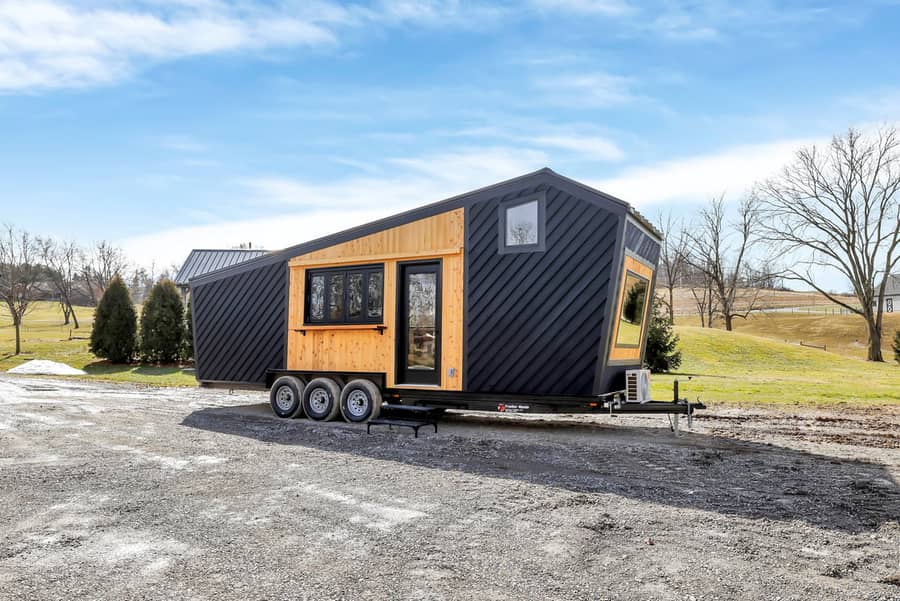
A tiny house on wheels is only as good as the platform underneath it, and this is an area LJM clearly takes seriously. The NOOSA sits on a heavy-duty chassis rated to 10 tonnes, with dual axles, air brakes, and a heavy-duty suspension system — Australian-engineered trailer technology built for real roads, not just a one-time delivery.
Images courtesy of LJM Tiny Homes
That engineering is what justifies the home’s full-time-living ambitions. A robust, properly braked trailer means the house can be relocated safely and confidently when life changes, without the structure or finishes rattling apart in transit. It’s the unglamorous foundation that makes everything above it possible.
Design Details
- Builder: LJM Tiny Homes (Australia) — two-time Tiny House Builder of the Year at the Australian Tiny House Industry Awards
- Model: The NOOSA
- Dimensions: 10 m long × 3 m wide × 4.5 m tall (approx. 320 sq ft main floor, plus loft)
- Bedroom: Ground-floor master with dark feature wall, dedicated heat pump, cavity slider door, and built-in window seat
- Kitchen: Long benchtop with breakfast bar, custom wood joinery, pull-out pantry, custom tapware, window over the sink
- Bathroom: Open shower (900×900mm or 1200×900mm) with dual rainfall head, bathtub, sink, and separate enclosed toilet; gas instant hot water
- Loft: Single or double configuration options
- Storage: Staircase storage system plus cabinets and drawers throughout; integrated laundry
- Chassis: 10-tonne-rated, dual axles, air brakes, heavy-duty suspension
- Build options: Turn-key (factory-finished) or lock-up (shell complete, owner finishes the interior)
What Makes This Build Special
- The bedroom is on the ground floor. Eliminating the nightly loft climb is the change that most makes a tiny house feel like permanent home rather than a clever campsite.
- Nothing essential was cut. Full kitchen, real bathtub, separate toilet, and a laundry mean you’re not constantly working around what’s missing.
- The staircase pulls double duty. Safe loft access and a wall of drawers in the same footprint — storage stairs are one of the smartest moves in small-space design.
- Light is treated as a priority. A large picture window and well-placed glazing make the interior feel far bigger than its footprint.
- The trailer is engineered to travel. A 10-tonne chassis with air brakes backs up the promise of genuine, relocatable full-time living.
- Two ways to buy. The lock-up option lets hands-on owners save significantly by finishing the interior themselves.
Turn-Key or Lock-Up: Two Ways to Buy
LJM offers the NOOSA in two formats to suit different budgets and skill levels. The turn-key model is finished in the factory and arrives essentially ready to live in, needing only the finishing touches — curtains, blinds, furnishings, and on-site setup. The lock-up model delivers the exterior and structure complete with an open interior, letting owners handle the interior fit-out themselves and save a meaningful amount in the process.
At the time of writing, pricing was listed at roughly AUD $195,000 (about USD $135,500) for the turn-key model and AUD $133,500 (about USD $94,150) for the lock-up. As with any custom build, pricing and specifications can change over time and with options, so confirm current figures directly with the builder.
Learn More
-
- Builder: LJM Tiny Homes
Highlights
- Ground-floor master bedroom — no loft climb required
- Full kitchen with breakfast bar, pull-out pantry, and custom wood joinery
- Full bathroom with a bathtub, dual-rainfall shower, and a separate toilet
- Integrated laundry and storage built into every surface, including the stairs
- Single or double loft options for flexible extra space
- Heavy-duty 10-tonne chassis with air brakes for genuine relocatable living
- Available turn-key or as a lower-cost lock-up shell
Explore More Tiny Houses
Don’t miss our best tiny houses — join our free newsletters:
- Join the Tiny House Newsletter => https://tinyhousetalk.com/tinyhousenewsletter
- Join The Small House Newsletter => https://tinyhousetalk.com/small-house-newsletter/
- Join Our Tiny Houses For Sale Newsletter => https://tinyhousetalk.com/tiny-houses-for-sale-newsletter
Disclosure: This post may contain affiliate links. If you purchase through one of our links, we may earn a commission at no additional cost to you.


Alex
Latest posts by Alex (see all)
- A Hotel Designer’s 484 Sq Ft Milan Apartment with a Rotating Room Divider - October 9, 2026
- Hermosa Orchards Village: A Durango Tiny Home Community with Its Own Fruit Orchard - October 9, 2026
- The Sanctuary Minnesota: A Tiny House Village on 80 Acres of Woods - October 9, 2026