Disclosure: This post may contain affiliate links. If you purchase through one of our links, we may earn a commission at no additional cost to you.
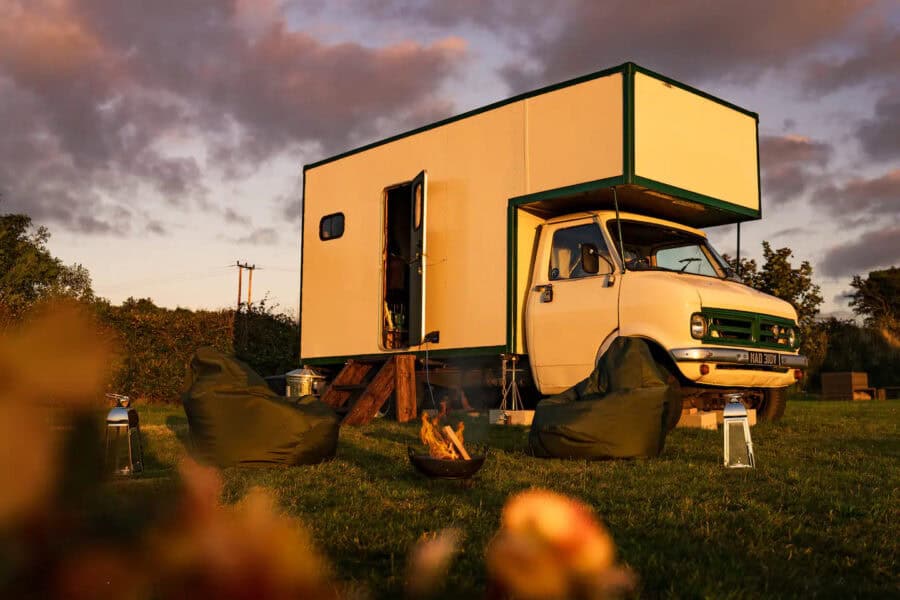
When most people picture a van conversion, they imagine a sleek Sprinter with white walls and a fold-down bed. Lucy and Ben went the other way entirely. The British couple took a rusty 1979 Bedford CF chassis cab they bought for just £450 (about $570) and spent two years hand-building it into a richly detailed 1970s-style cabin — complete with a full-size waterfall shower, a live-edge kitchen, and a sleeping nook crowned by a glowing skylight dome.
The result feels less like a campervan and more like a gypsy wagon crossed with a woodland cabin: green corduroy seating, reclaimed elm worktops, hand-carved window frames charred with a blowtorch, and a vintage radio crackling in the corner. After six years of full-time travel across Europe in an LDV Convoy, the pair parked this build on a three-acre camping meadow near the north Cornwall coast, where it now welcomes couples as a one-of-a-kind Airbnb stay.
Love tours like this one? Join our free Tiny House Newsletter for more inspiring tiny homes, cabins, and van conversions delivered to your inbox.
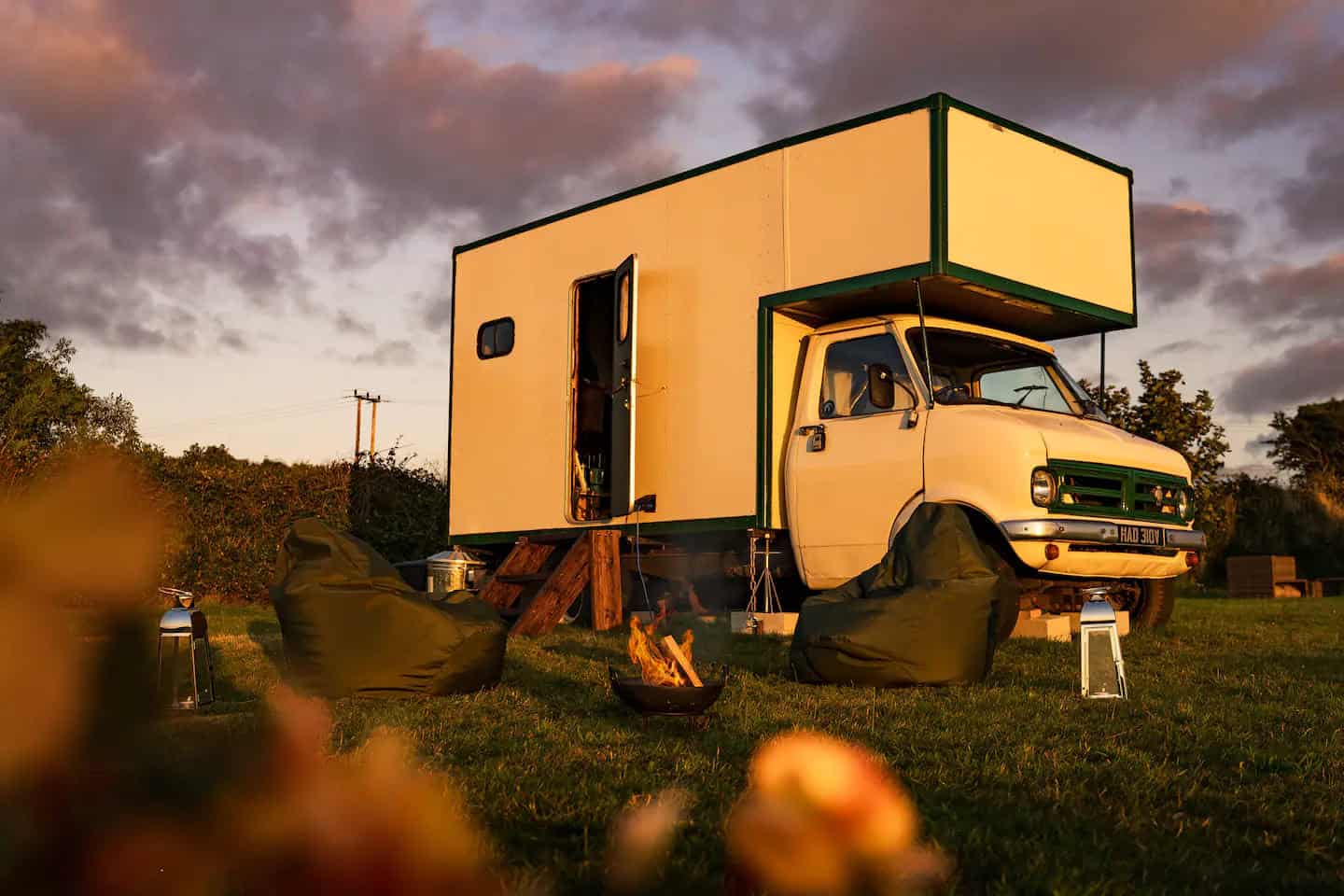
Images courtesy of From Rust to Road Trip
From a £450 Chassis Cab to a Hand-Built Cabin
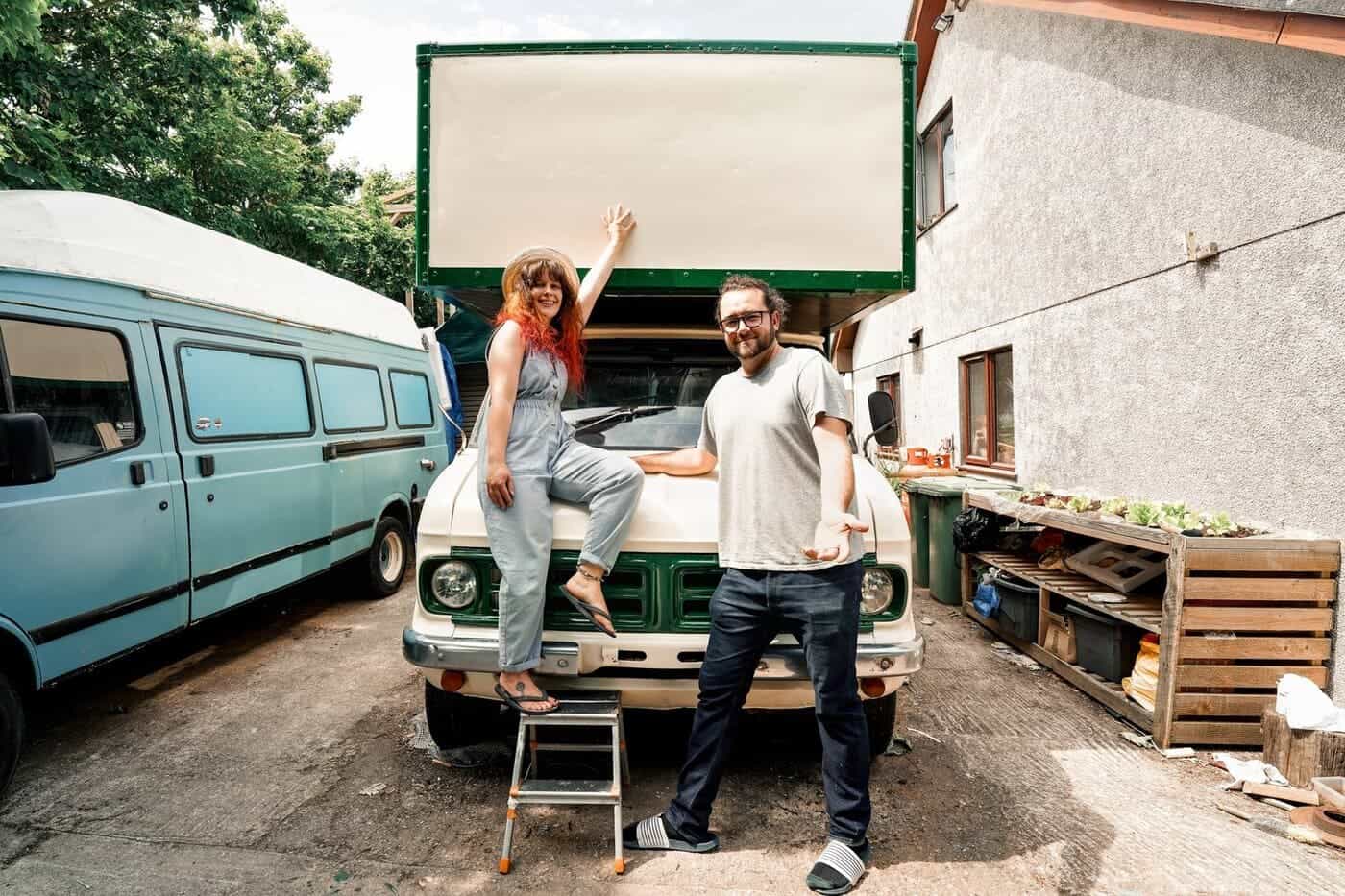
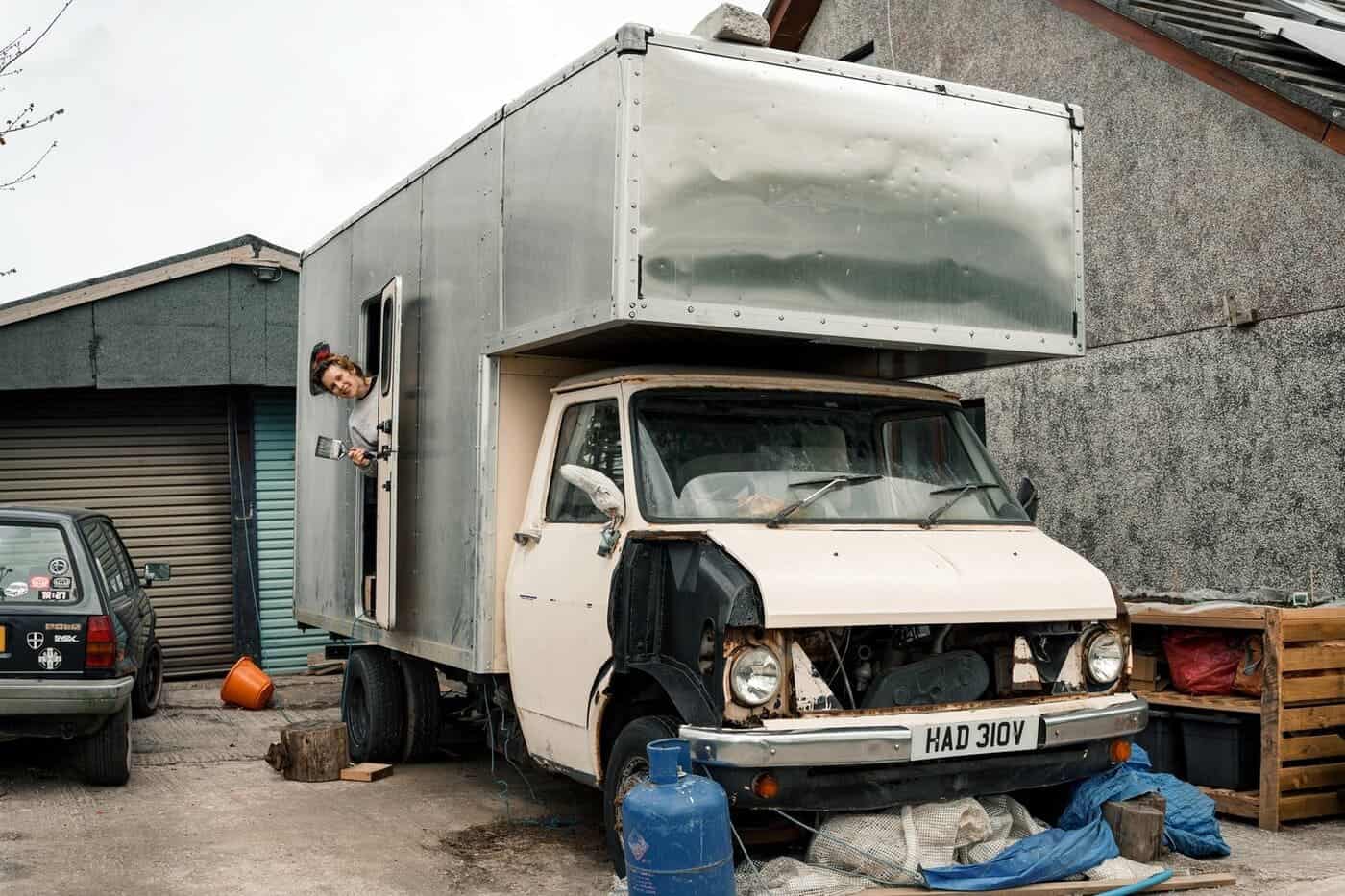
The Bedford started life as a bare chassis cab — no box, no walls, just an engine and a windscreen. Rather than buy a ready-made body, Lucy and Ben fabricated their own aluminum frame and box structure, pop-riveting it together panel by panel. Buffalo board went down for the floors, the aluminum walls were insulated with 25mm Celotex and clad in plywood, and the original 1979 cab — big steering wheel, vinyl seats, no power steering — was left proudly authentic.
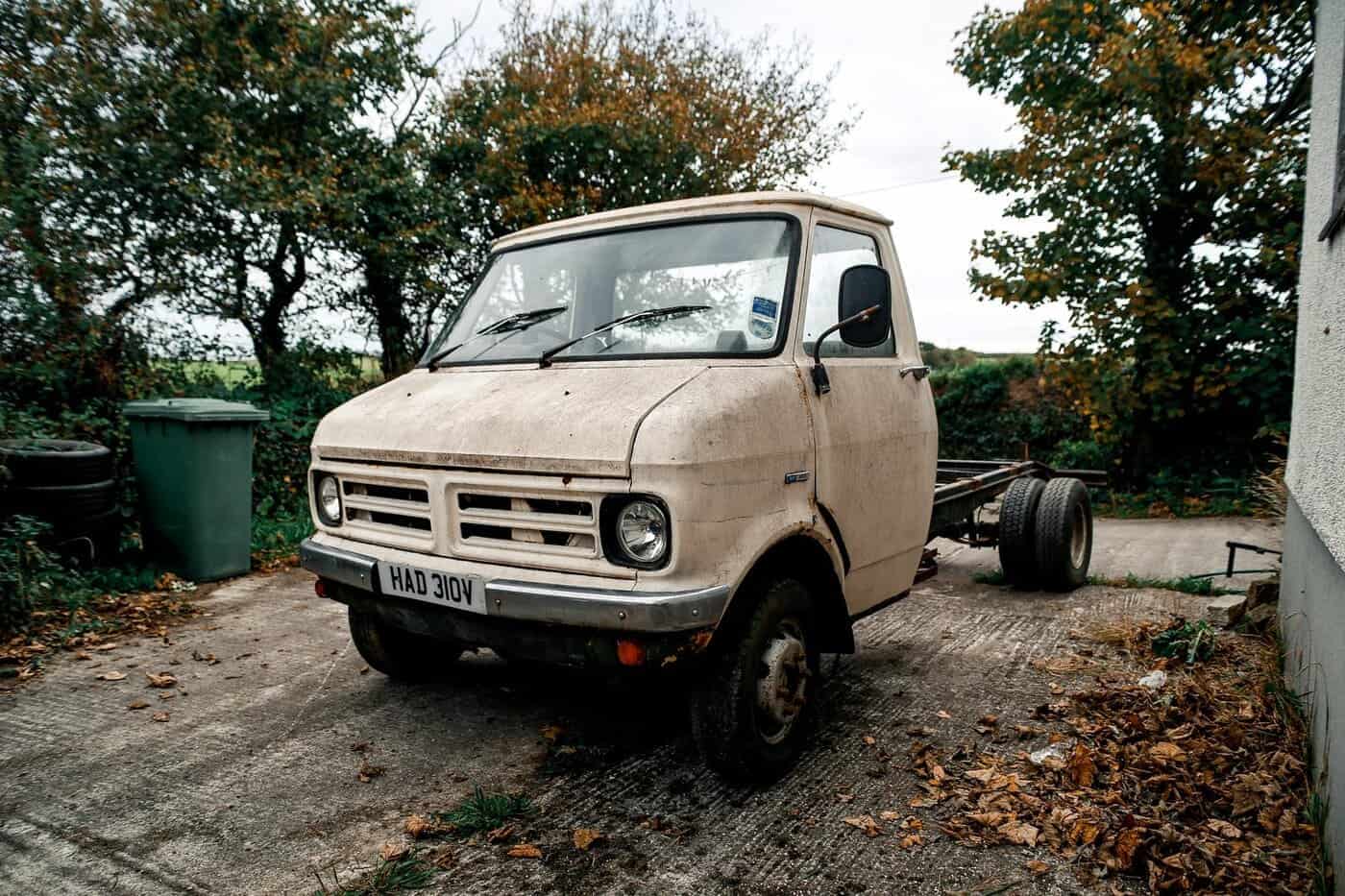
Images courtesy of From Rust to Road Trip
It was a true labor of love. The couple “stopped counting” what they spent, but the build ran to more than £16,000 (roughly $20,300) on top of the purchase price, with pandemic-era material costs pushing the total higher. Two years of work later, the rolling shell had become a home.
Images courtesy of From Rust to Road Trip
Images courtesy of From Rust to Road Trip
A 1970s Woodland Interior
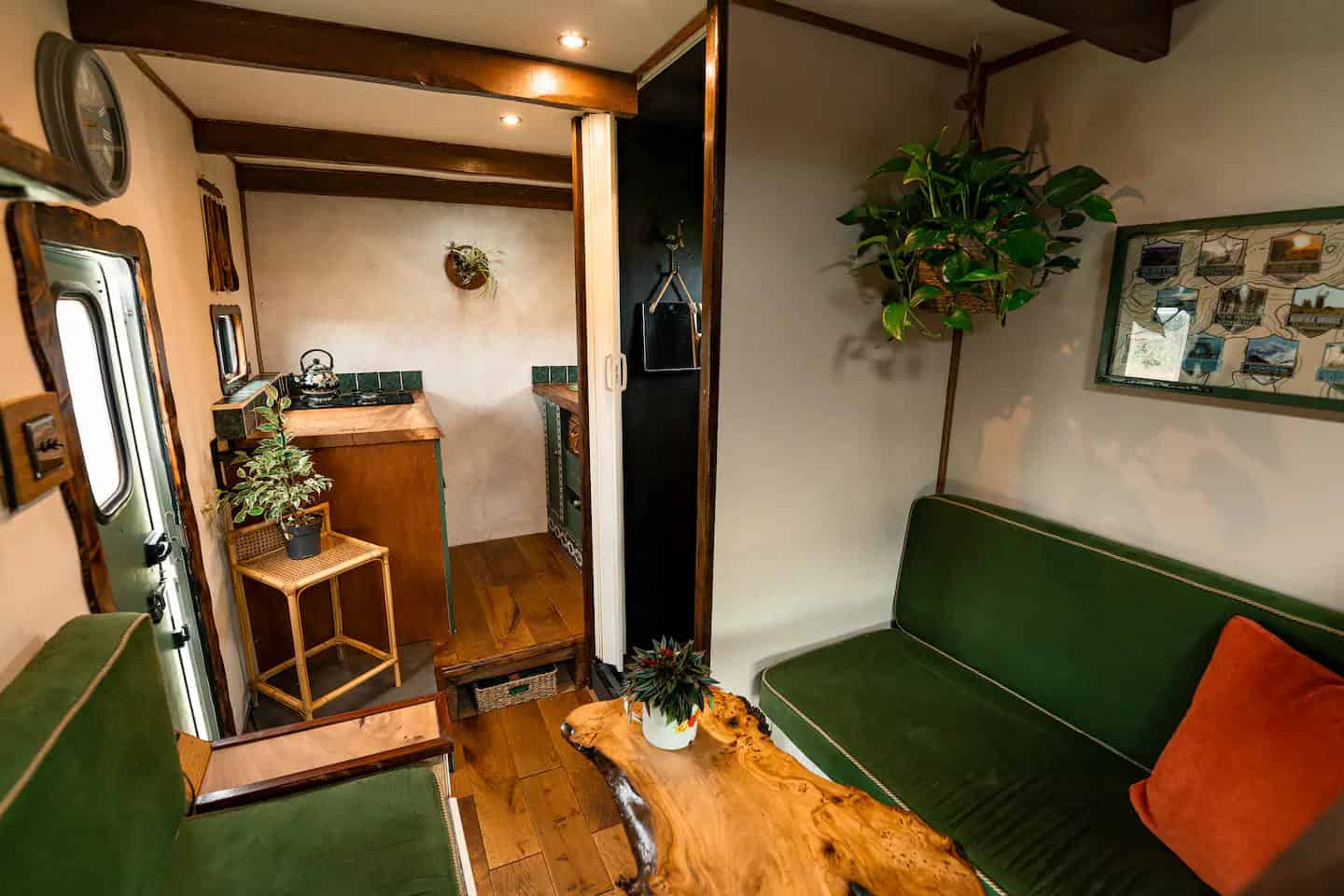
Step inside and the era is unmistakable. Deep green corduroy benches with burnt-orange cushions wrap the living area, a hanging pothos trails from the ceiling, and faux wood beams (sourced secondhand and pre-carved to save weight) cross overhead. Every surface leans into warmth and texture rather than the minimalist white that dominates modern van builds.
Images courtesy of From Rust to Road Trip
Cozy Living with a Vintage Radio and Flame-Effect Fire
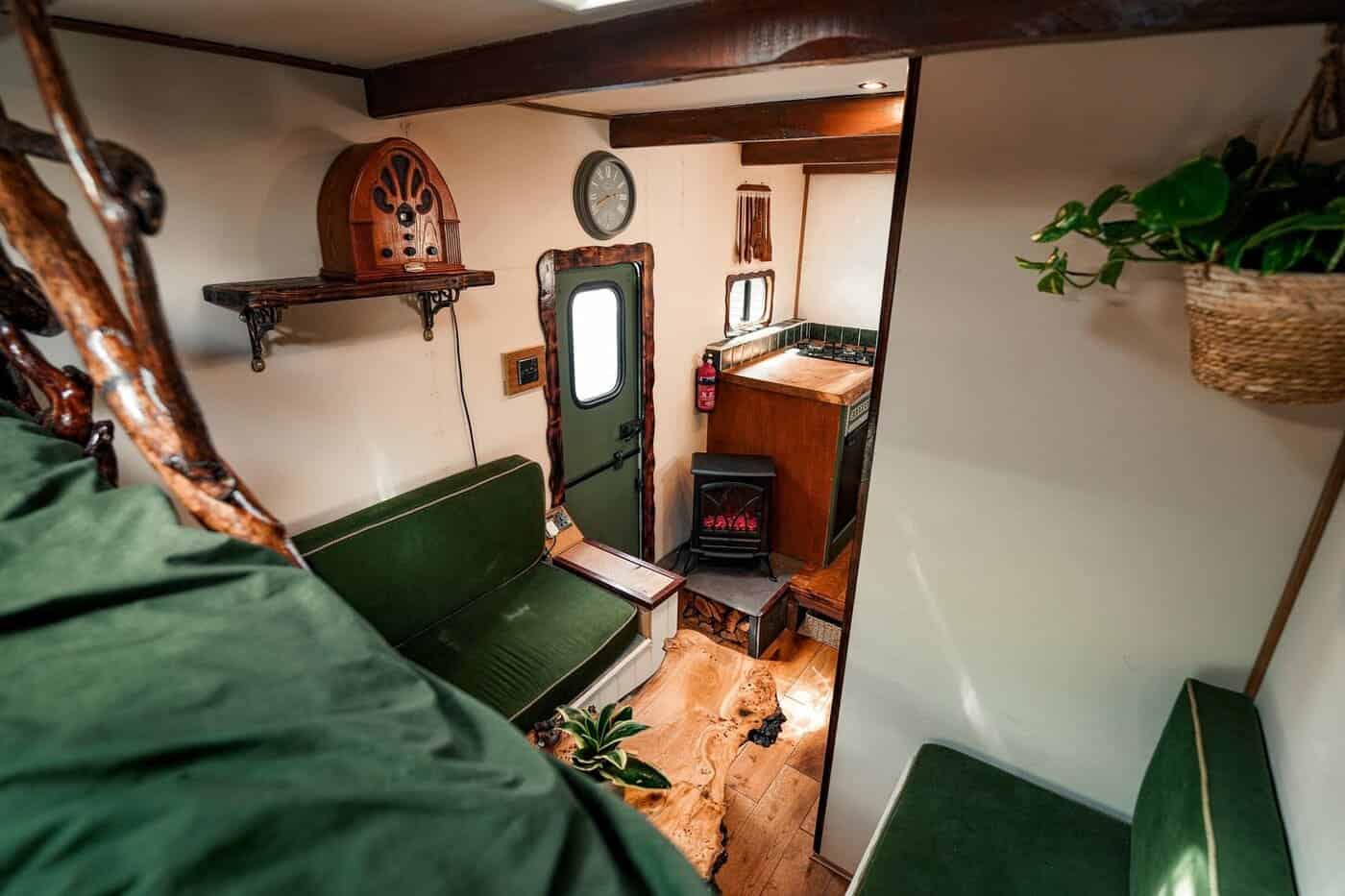
Because a real wood burner was a non-starter for insurance in a timber-lined van, the couple installed an electric fire with a convincing flame effect to anchor the living space. Beside it sits a 1920s valve radio with a crackling dial, while a hand-carved frame surrounds the rear door window. It is the kind of detailing that makes the whole space feel collected over decades rather than bolted together in a workshop.
Images courtesy of From Rust to Road Trip
A Live-Edge Dining Nook That Becomes a Bed
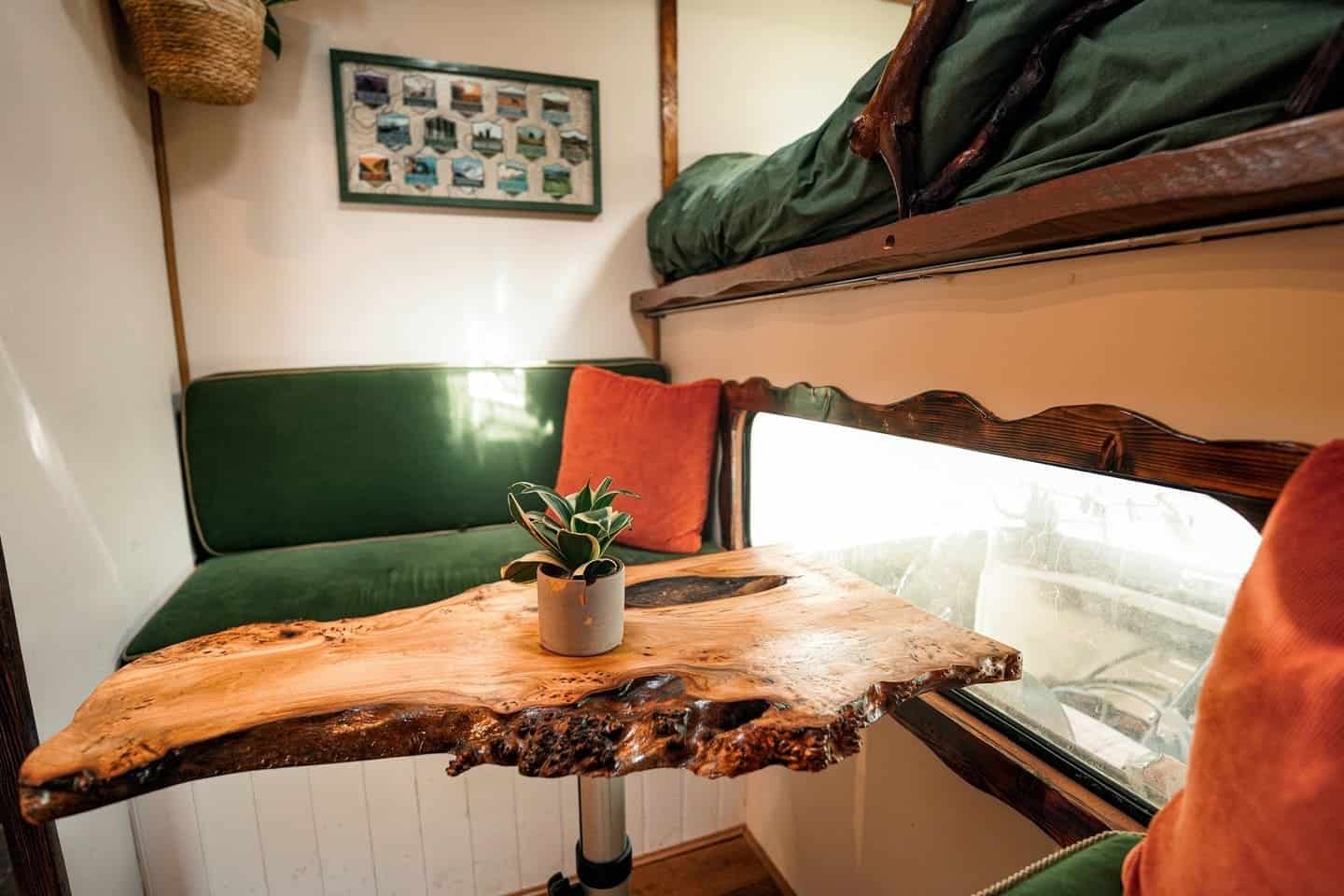
The dining nook is built around a live-edge British elm table that Lucy and Ben hand-sanded and oiled themselves. The bench seating converts into a double bed, and the van’s 24-volt mains hookup and AC-to-DC converter are tucked discreetly beneath the right-hand bench. Hand-carved, irregular window frames — charred with a blowtorch and then stained for an aged look — frame the view out.
Images courtesy of From Rust to Road Trip
A Galley Kitchen Full of Gypsy-Caravan Character
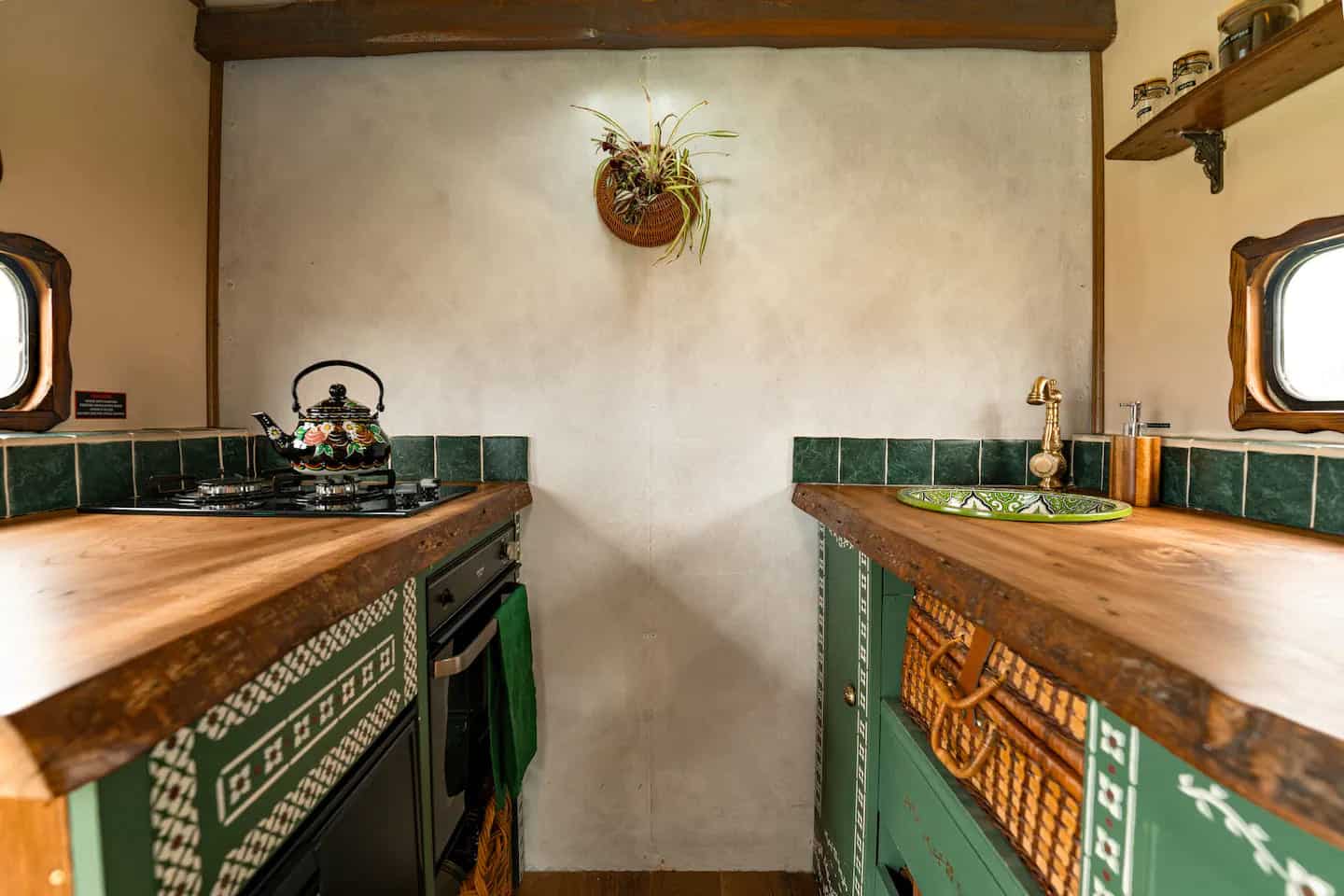
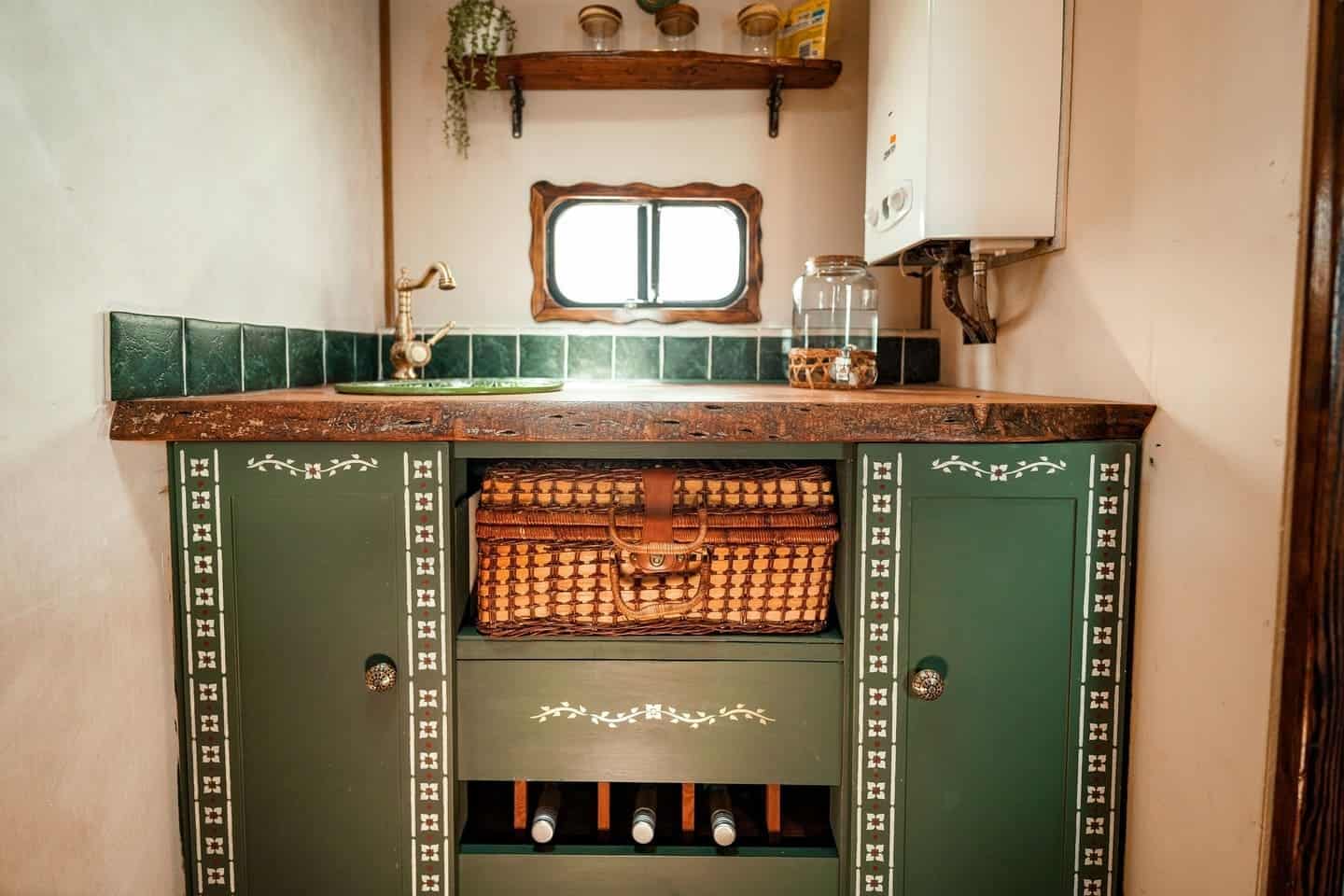
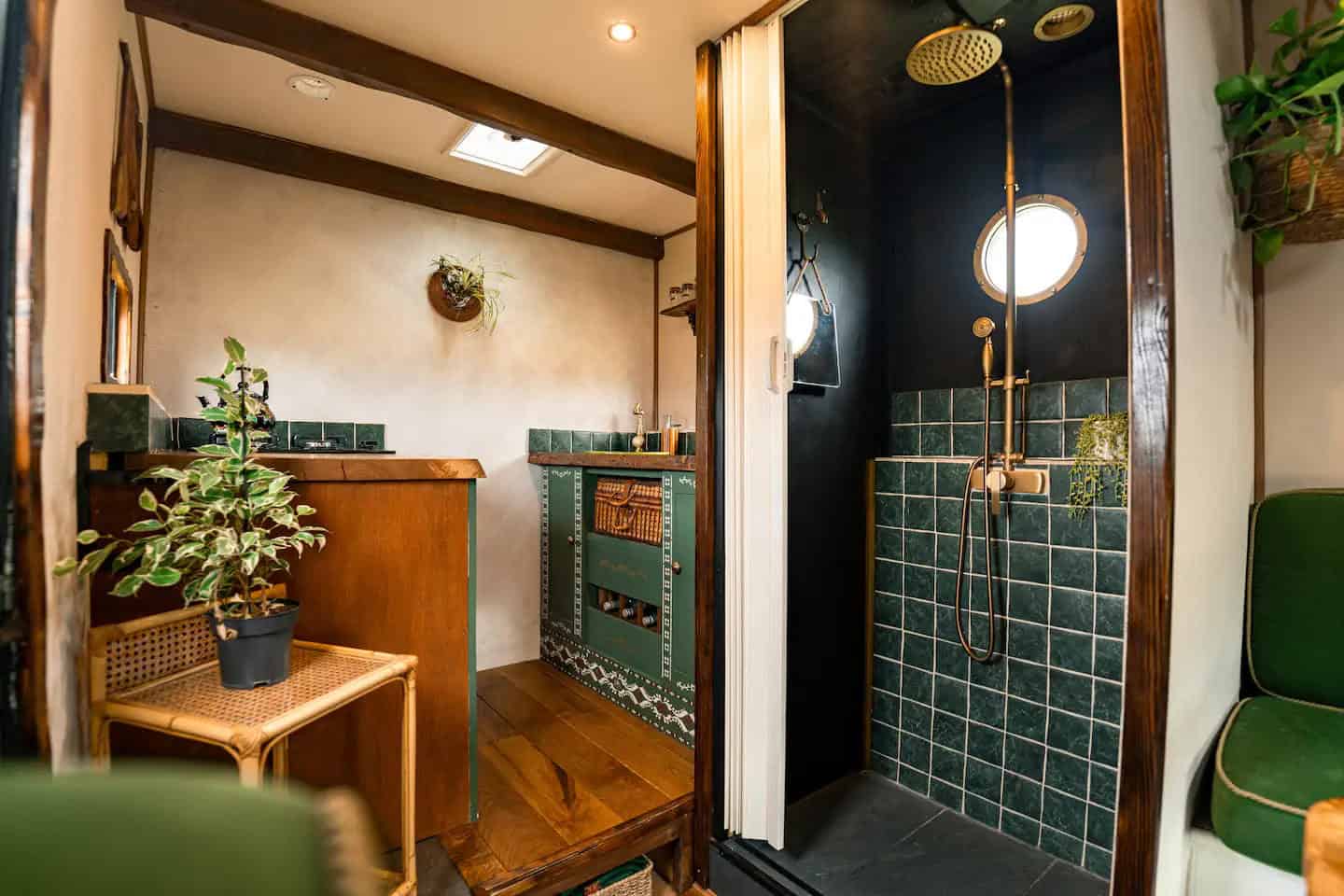
The galley kitchen is where the build really shows off. Reclaimed elm worktops sit on pine cabinet frames painted deep green and finished with hand-stenciled fronts inspired by gypsy caravans. A Moroccan hand-painted enamel sink pairs with an ornate brass tap, and a green rustic marble tile backsplash ties the room to the shower next door. A Thetford gas oven, an Indel B Cruise mini fridge, and a Quantra LPG boiler keep it fully functional.
Images courtesy of From Rust to Road Trip
Rather than hide everything behind cupboard doors, the couple deliberately bucked the trend with open, characterful storage: a vintage wicker picnic hamper holds the crockery, a driftwood shelf carries spice jars, a wine rack sits below, and a basket of retro 1970s pots and pans waits by the floor. Water comes from a 60-liter tank fed by a 12-volt pump, with the LPG boiler heating both the kitchen tap and the shower.
Images courtesy of From Rust to Road Trip
A Waterfall Wet Room with a Brass Porthole
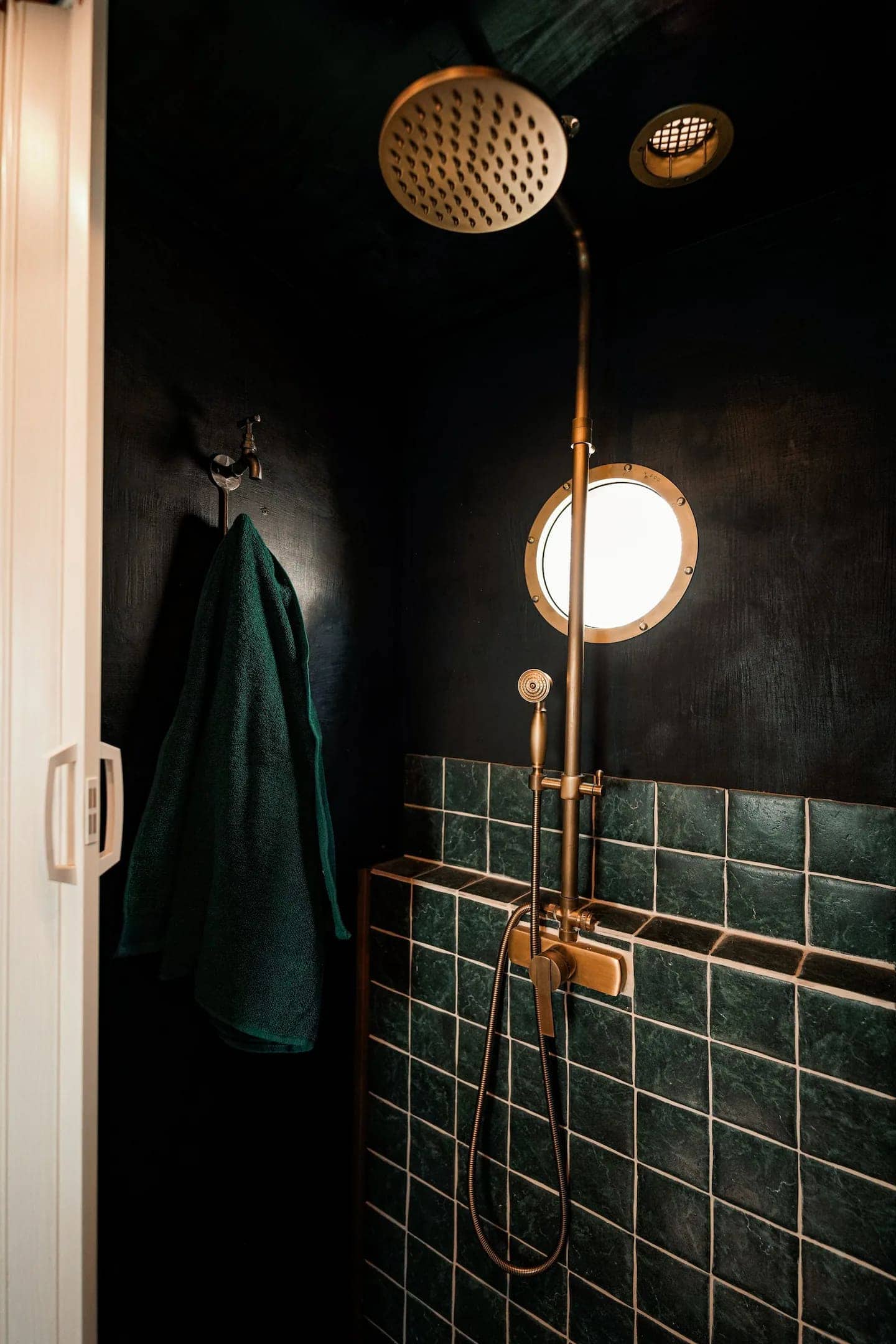
The headline feature — and a major draw for guests — is the full-size waterfall shower. The couple built a proper wet room with tanked plywood walls finished in limewash and a moody black textured paint, then lined it in green rustic marble tiles. Brass fittings (matching the kitchen) feed a rainfall head, and a spray-painted brass porthole and mushroom vent let in light and air while playing up the nautical, 1970s feel.
Images courtesy of From Rust to Road Trip
Images courtesy of From Rust to Road Trip
A Skylight Dome Over the Sleeping Nook
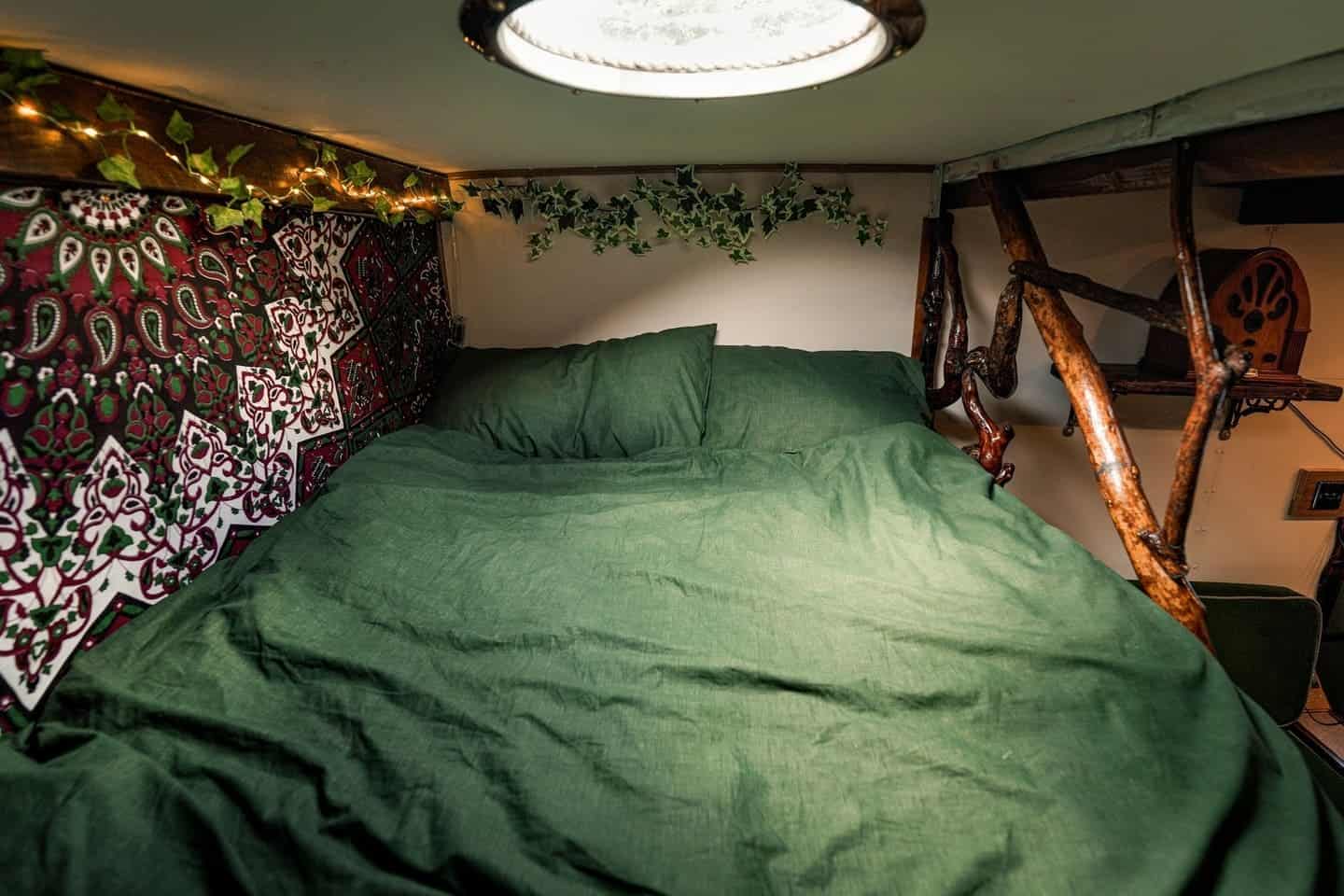
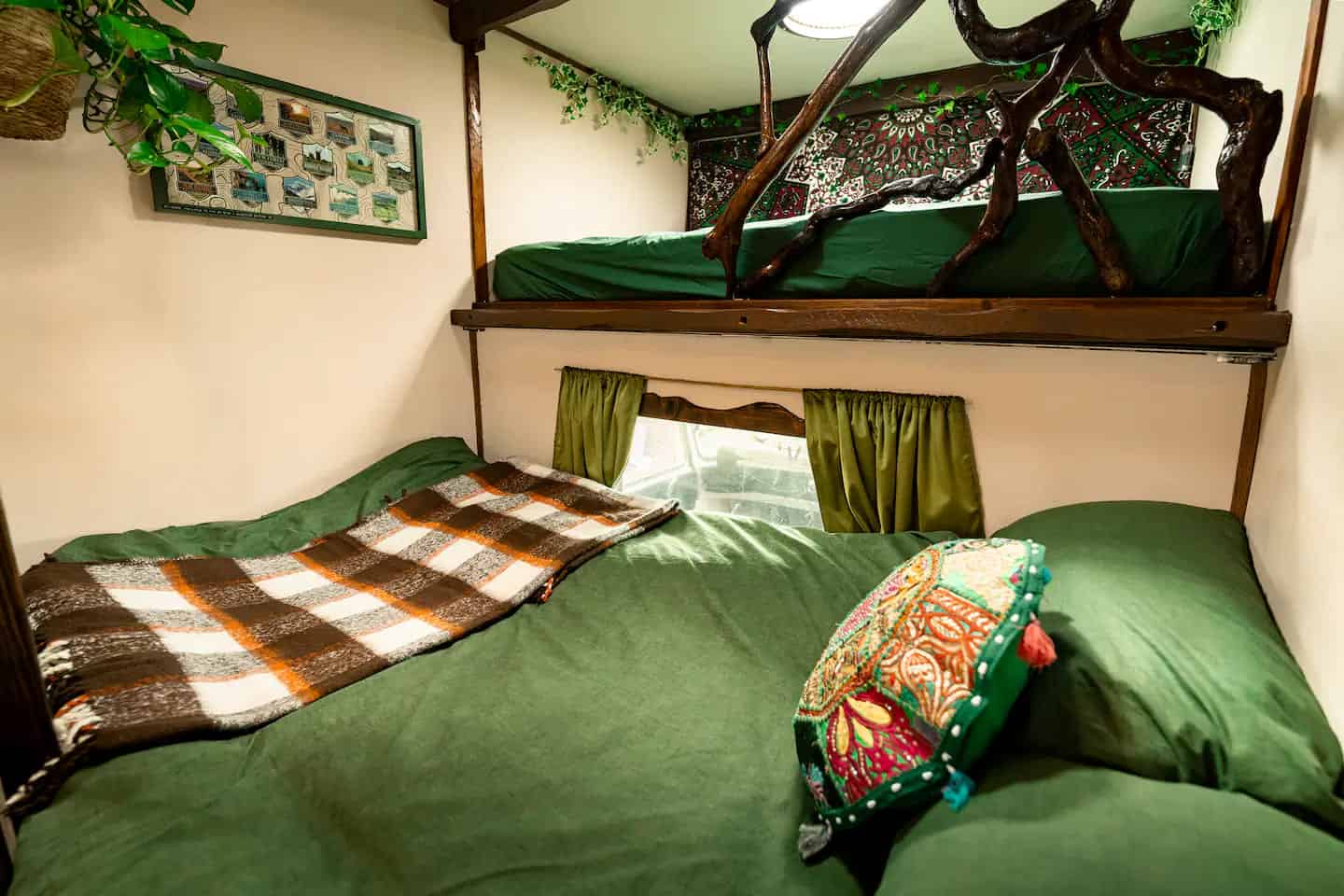
Above the cab sits a full-size double bed wrapped in a woodland-meets-gypsy-wagon aesthetic: a paisley tapestry headboard, trailing ivy, fairy lights, green bedding, and a driftwood divider gathered from the local beach. The crowning touch is a plastic dome skylight finished with a vintage brass porthole effect — a detail Lucy and Ben improvised from an old dinner plate, slightly charred and trimmed with mirror screws and rope.
Images courtesy of From Rust to Road Trip
Downstairs, the dining nook converts into a second double bed, so the van comfortably sleeps two couples or a small family. There’s no indoor toilet by design — a composting toilet, outdoor showers, and drinking water are all available on the meadow, alongside a communal fire pit.
Images courtesy of From Rust to Road Trip
Design Details
- Builders / Owners: Lucy and Ben (From Rust to Road Trip)
- Base vehicle: 1979 Bedford CF chassis cab
- Purchase price: £450 (~$570)
- Conversion cost: £16,000+ (~$20,300)
- Build time: Roughly two years
- Body: Hand-built, pop-riveted aluminum box on an aluminum frame
- Insulation: 25mm–50mm Celotex with plywood and Buffalo board
- Style: 1970s gypsy-caravan / woodland cabin
- Kitchen: Reclaimed elm worktops, stenciled green cabinets, Moroccan enamel sink, Thetford oven, Indel B fridge
- Bathroom: Full wet room with waterfall shower, green marble tile, brass fittings
- Water: 60-liter tank, 12V pump, LPG boiler for hot water
- Power: 24V mains hookup with AC-to-DC 12V converter
- Sleeping: Two double beds (upper nook + convertible dining nook)
- Location: Stationary Airbnb on a 3-acre meadow near the north Cornwall coast
What Makes This Bedford Conversion Special
Beyond the wow factor, there’s a lot here that other builders can learn from:
- Character beats convention. Open storage like the picnic hamper and pots-and-pans basket gives the space soul that hidden cupboards never could.
- Reclaimed materials do double duty. Live-edge elm, driftwood, and a secondhand radio add warmth while keeping costs and weight down.
- A real wet room is possible in a tiny footprint. Proper tanking and tile turned a van corner into a genuine waterfall shower — the single feature guests love most.
- Work with the rules, not against them. An electric flame-effect fire delivered the cozy wood-burner look without the insurance headache.
- Small details carry the theme. A charred dinner plate became a brass porthole; a blowtorch aged the window frames. Resourcefulness, not budget, defined the look.
See More from From Rust to Road Trip
This build is the work of Lucy and Ben, who document their projects under the name From Rust to Road Trip. Be sure to follow and support the original creators:
- Website: fromrusttoroadtrip.com
- YouTube: From Rust to Road Trip (full video tour)
- Instagram: @fromrusttoroadtrip
- Facebook: From Rust to Road Trip
Story spotted via Living in a Shoebox.
Related Stories
- 1978 Chevy G30 4×4 Camper Van: A Fully Upgraded Vintage Van Conversion
- Vintage, Original Balboa Motorhome Built on 1970s Dodge Van Chassis
- Van Life in his Vintage Turquoise 1969 VW Bus
- 11 Van Conversions That Will Make You Want to Quit Your 9-5
- From Homeless to Home: Van Life to Vintage Camper with Fenced Backyard
Disclosure: This post may contain affiliate links. If you purchase through one of our links, we may earn a commission at no additional cost to you.


Alex
Latest posts by Alex (see all)
- Forestville Cabin: A Restored 1964 Redwood Cabin on an Acre of Redwoods - October 8, 2026
- El Capitan Canyon’s Safari Cabin: A Hilltop Two-Bedroom Cabin With Ocean Views and an Outdoor Shower - October 8, 2026
- High Camp Teardrop: A Portland-Built Aluminum Camper with a Slide-Out Kitchen - October 8, 2026